


SweetloreEncyclopedia of World Sweets (834)

Bánh In
Bánh in
A celebratory sweet of Huế, with patterns raised by pressing flour
Sugar Confections / Huế, Vietnam

Unwrap a single colored wrapper and the character 寿 ("longevity") stands out on the face of a square sweet. The lines are not painted on the surface in color; they are the shape left when the powder was pressed into a mold and turned out. Vietnamese bánh in is a sweet made by combining flours such as mung bean, glutinous rice, and starch with sugar and packing the mixture into a patterned mold. In Kim Long in Huế, in central Vietnam, square ones made with mung beans are sold in five-colored wrappers. They are offered on ancestral altars at Tết or served one at a time with New Year tea. Small molded sweets are sometimes also stacked in tiers to make a tower offered before the Buddha and elsewhere.
Evening Out the Grains of Flour and Sugar Before Molding
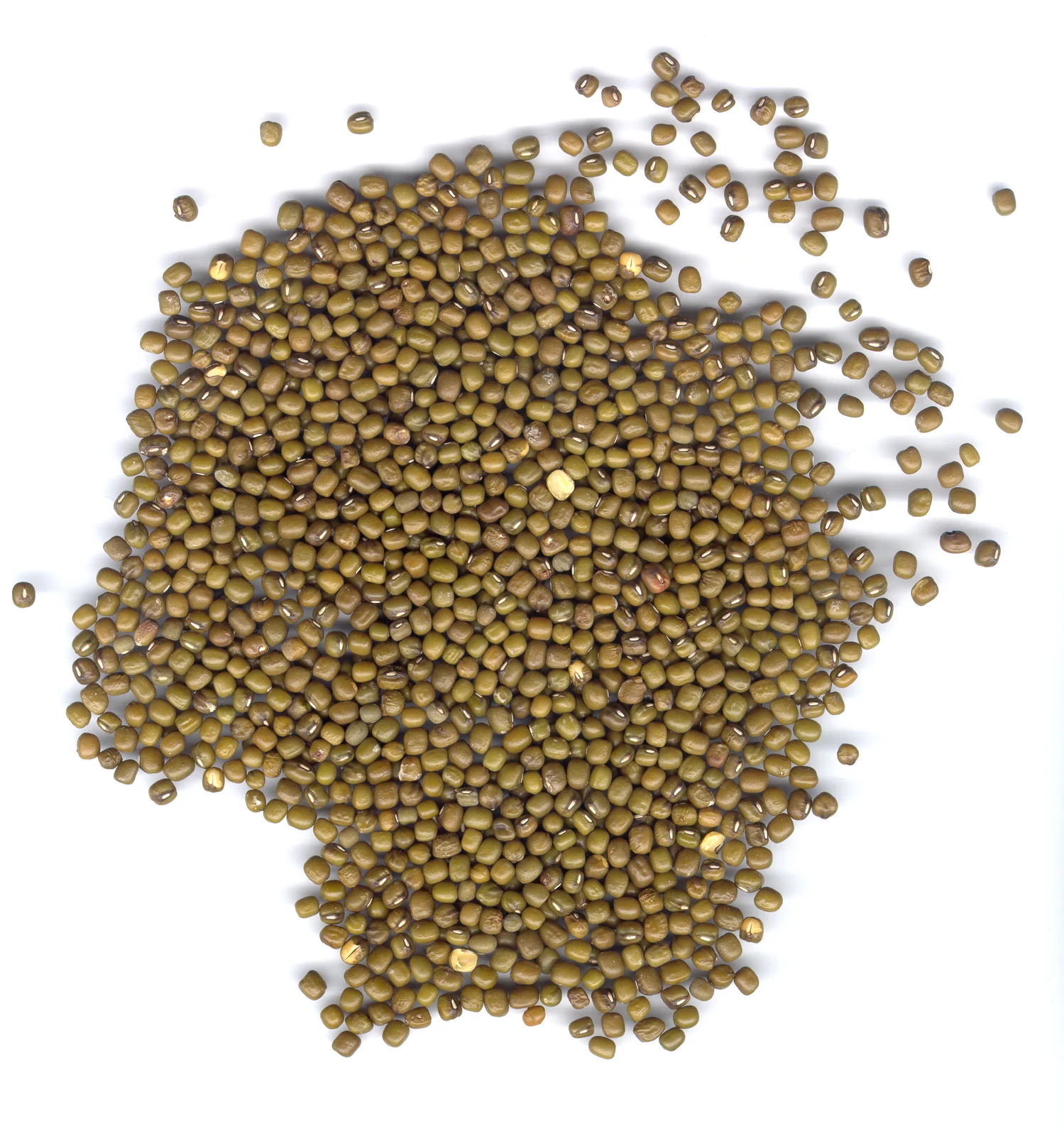
In a recollection from Quảng Nam in materials from the Committee for Overseas Vietnamese, fragrant glutinous rice is washed, drained, and toasted until the grains turn slightly yellow. Mung beans are likewise split, soaked in water, stripped of their thin skins, and then toasted. Each is cooked separately and ground fine on a stone mill. The aroma is not developed by baking the outside after pressing in the mold; the rice and beans are heated at the stage before they are milled into flour. Even when the rice has finished toasting, the doneness of the mung beans is judged separately. Though the unmolded sweets may look the same color, the fragrance in the mouth comes from toasting the beans and rice before they are made into flour.
At the workshop of Mai Thi Thuy Lien in Kim Long, Huế, which was reported on in 2026, mung beans are selected, skinned, cooked until soft, then pounded and combined with sugar. When the skins are removed, the beans are handled so as not to break them more than necessary. The shape is kept here not in order to leave grains in the sweet. It is so that the beans, once skinned and cooked in a pot, can then be made fine enough to pack into the mold. Compared with the recollection’s method of toasting glutinous rice and beans and then moving them to a stone mill, the sequence differs in where the mung beans are heated and where they are broken down.
In the recollection that uses toasted flour, white sugar is heated and adjusted, then cooled before being combined with the flour. It is rubbed together repeatedly with a bottle or pestle so that the sugar blends with the rice and bean flours. A Huế newspaper article likewise describes placing a little of the rubbed-together flour on the tongue to judge whether the sugar remains as coarse grains. Even if coarse sugar remains, the characters of the mold may still be transferred, but the grittiness when bitten changes. Rather than adding sugar after the sweet is finished, the maker tests it on the tongue while the flour can still be handled loose, so that sweetness spreads through every part of the sweet.
The Huế newspaper article mentions a version made only with glutinous rice flour, a version mixed with flour from skinned mung beans, and a version using tapioca starch. A recipe that combines flour and sugar in equal weights is a different formulation from one that uses 700 grams of white sugar per kilogram of tapioca starch and adds juice squeezed from 300 grams of dried coconut flesh, or pandan. One pandan procedure does not toast all the flour at once; it mixes in about 200 grams at a time with the leaves and watches for the leaves to turn a moss-like green. Unlike decorating the baked surface with leaves, this lets the leaf aroma pass into the flour while it is still in the pot.
Pressing in Wooden or Copper Molds and Turning Out Without Breaking
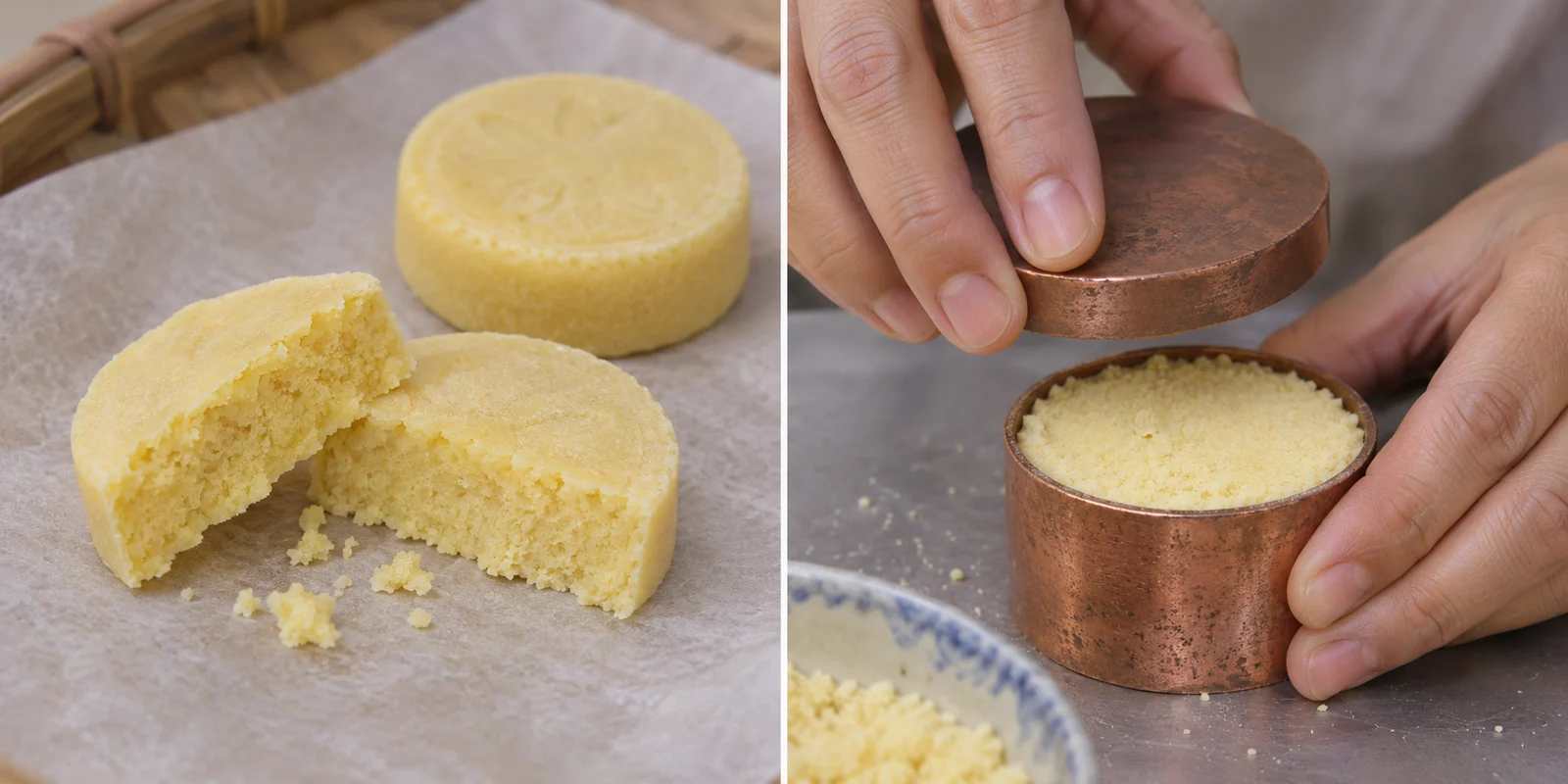
In the Quảng Nam recollection, a little tapioca starch is sprinkled into the wooden mold before the sugared flour goes in. This helps the sweet release from the mold and gives it a smooth surface. The wooden molds were carved with rounds, squares, and hearts, as well as peacocks, phoenixes, fish, and the characters 福 (fortune), 禄 (prosperity), and 寿 (longevity). In the photograph taken at the Kim Long workshop, the face that bears the character 寿 lies over a square copper mold. When the flour is packed in and pressed with both hands to just the right degree, it reaches not only the outline but also the fine parts of the design, and remains as raised and recessed areas on the face when turned out. Even though mung beans are among the ingredients, no step involves painting green or black onto the surface to form the characters.
The Huế newspaper also mentions molds carved from jackfruit wood. One round mold is about 3 centimeters in diameter, and another measures 3 centimeters × 5 centimeters; both are small enough to fit in a child’s hand. With a mold that has corners, the flour is packed into the corners; with a round one, it is pressed to an even thickness out to the rim of the circle. To pick up carved flowers, plants, or characters, the flour has to enter not just the outline of the mold but the hollows and ridges of the design meant to show on the surface. The account of dusting the wooden mold with starch before filling it and the photograph of a workshop with characters carved into the lid of a copper mold each show, through different tools, where the face bearing the character is made.
Another example in the newspaper puts the lower layer of flour in the mold, sets filling in the center, adds more flour on top, covers it, and presses. A way of quickly moving flour that has fallen through a sieve into the mold is also described. Pressed too hard, the sweet turns hard after several days; pressed too lightly, it chips when moved out of the mold. The example that waits about 15 minutes before moving it does so to avoid lifting the sweet while the newly formed surface is still fragile. Even when the shape of the mold has come through clearly, whether the sweet crumbles pleasantly in the mouth and whether it holds together when picked up also depend on how the flour was rubbed together and on the force applied in the mold.
At the Kim Long workshop, the sweets taken out of the mold are dried over charcoal and wrapped in five colors. In the example in the Huế newspaper, they are arranged on a paper-lined tray and given the gentle heat of charcoal, which firms them while spreading the sugar through the flour. The Kim Long report does not record a waiting time after shaping. This does not mean that a just-pressed shape can be handled after the same 15 minutes as in the newspaper example; rather, the two sources separately show the work done before and after the firming that makes the sweets ready to transport. A lotus-shaped sweet of glutinous rice flour is also explained as keeping its stickiness and aroma. Even if the pattern can be produced as with the square mung bean sweet, the feel once dried and eaten is not the same.
Wrapped in Five Colors, Given Out One at a Time or Built into a Tower
At Lien’s workshop, which uses mung beans, the square sweets turned out of the mold are wrapped in five colors. In the older method described in the Huế newspaper, paper in red, yellow, brown, green, and purple is cut to the size of the sweet and pasted on with starch glue. The newspaper also notes later examples that use glossy colored wrapping materials. The five colors seen from the outside are not the result of dividing the bean dough into five colors. The person who receives one opens a colored end and sees the character pressed into the pale sweet inside. The finish that shows color at a celebration and the pattern that touches the mouth when the sweet is eaten are applied at different stages.
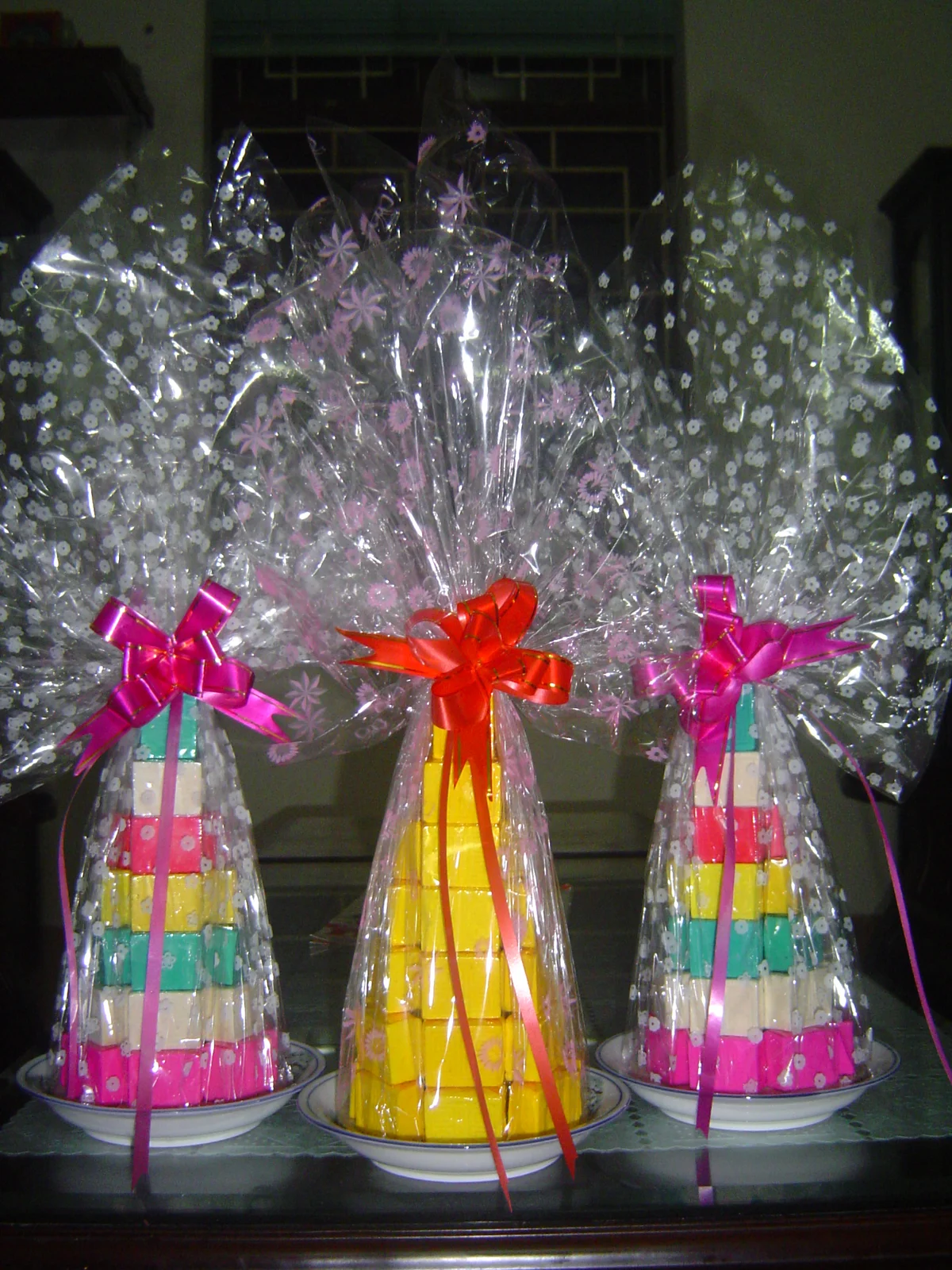
In Huế, there is an example of making offerings to ancestors before Tết and taking one sweet from a box for guests at New Year. Before the Buddha is placed a tower called bánh tháp, built from many small sweets, and in one example a glutinous rice sweet with a lotus pattern is used as an offering for New Year’s Eve. Because a single piece in the hand is small, it can be broken up and shared among several people, or lined up facing the same way in many tiers. Pressing the mold one piece at a time differs from simply cutting a large slab to the same size afterward: each piece’s outline and wrapper color remain even when the pieces are stacked.
In Kim Long they are made all year, and work increases from the beginning of the twelfth lunar month toward Tết. In the 2026 report, Lien said she prepares several thousand mung bean bánh in in a day, selling not only to local customers but also to merchants who carry them to other regions. That figure describes one workshop in its busy season. Even when orders are taken in bulk, the sequence remains the same: cooking and pounding the beans, packing the mold, and wrapping what has been dried over charcoal. The work of producing many identical shapes also connects to opening them one by one in a house serving tea, and to matching the number of offerings.
On Pham Thi Lien Street, where Lien’s workshop stands, the report says that at the lunar year-end the sound of pounding flour and of machines can be heard, and the scent of mung beans drifts through. According to a local official, fewer households make them than before, and those that remain mainly prepare offerings to ancestors. As for what to serve guests, the Huế newspaper also gives an example of choosing bánh man, made with glutinous rice, coconut, and sesame. Even within the same Tết, the occasion each piece serves overlaps yet differs among the box offered to ancestors, the New Year’s Eve table bearing the lotus pattern, and the guest’s plate.
There is a story that a king of the Nguyễn dynasty asked for sweets to accompany Tết tea, and the people of Kim Long pressed mung beans and sugar into molds, marked them with the 寿 seal, and presented them to him. The newspaper presents it as a story told by local elders. It does not record which king ordered what, or when. As the image of a celebratory sweet, a small piece that dissolves between the teeth when tea is served is told together with the character 寿 that catches the eye before the sweet is eaten. A writer from Quảng Nam likewise recalls that in the 1980s families made the sweets just before Tết and drank tea with family and friends at New Year.
Charcoal Fire in Hội An, and the Form Offered to the Moon in Sóc Trăng
The molded mung bean sweet that is also called bánh đậu xanh in Hội An contains glutinous rice and sugar as well. According to the town’s heritage materials, the moist type is made round or square and has a stickiness that keeps it from crumbling right away in the mouth. The dry type is pressed in a small wooden mold and then dried over charcoal; it breaks between the teeth and then slowly loosens. There is also a dry type with a meat filling. When one piece is broken open, some examples continue as the same flour from the patterned outside to the center, while others have a boundary where the meat filling begins; so the name of the mold and the name of the ingredients that reach the mouth remain separate things.
A tourism source on Sóc Trăng in the south says that bánh in, called bánh Trăng, is offered to the Mid-Autumn moon and later shared with family and neighbors. It is linked to the observances of the Teochew people, and is based on glutinous rice flour and sugar, with versions that use coconut milk and versions filled with mung bean paste or durian. For filled ones, the filling is placed in the center of the mold, covered with flour, and pressed. Designs on the molds include flowers, auspicious characters, and the rabbit in the moon. The source says the sweets are not baked or steamed after shaping, but there are methods that toast the flour before use. What is carved into the mold, and what is done after pressing, make the difference from Huế at Tết and from Hội An, where the sweets are dried over charcoal.
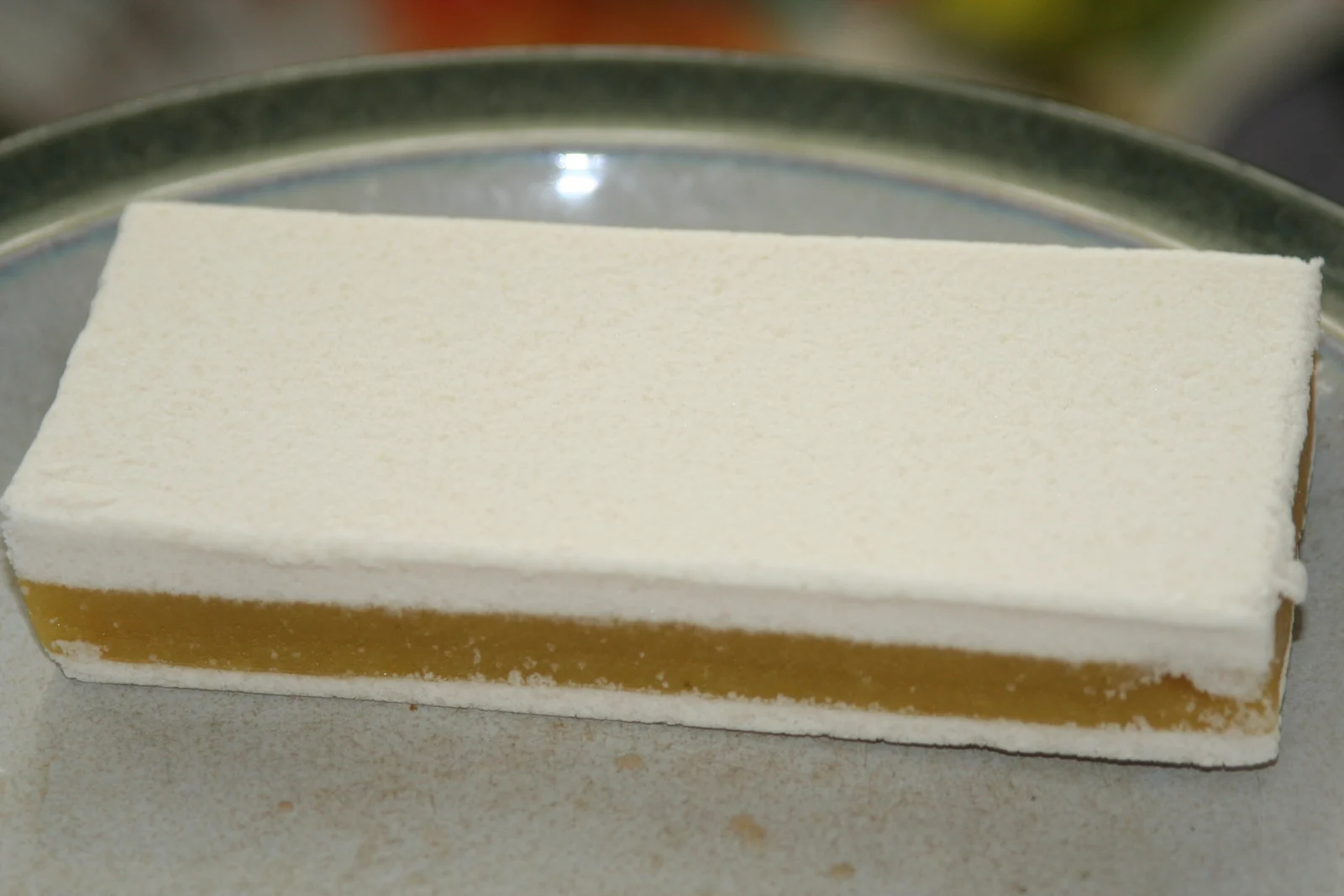
The Sóc Trăng source also lists a version in which the dough is bound with water instead of coconut, versions with black sesame filling, and versions with no filling. After the offering to the moon, large ones are cut up and shared, or served with jasmine or oolong tea. A large sweet pressed in a single mold so that the moon’s pattern appears differs from the Huế tower of many small pieces in the order in which it is shared. Only when it is cut to a bite-sized piece can one see whether there is filling, so what is visible differs between the surface of the sweet as offered to the moon and the cut face on the family’s plate.
If you take a square Huế sweet bearing 寿, in the example formed by pressing mung beans, the bean dough continues through the center when it is broken open. A filled Sóc Trăng piece shows patterned flour from the outside, and breaking it reveals a separate filling at the center. Since the Huế newspaper also gives an example that uses filling, telling them apart means checking whose sweet it is, not just its shape. The occasion also changes who first sees the characters on the mold or the wrapper: eating what was offered to ancestors together with tea, or sharing what was offered to the moon with neighbors.
Glossary
- In (in)
- To mark or imprint. Here, it refers to the work of pressing a flour mixture in a patterned mold so that characters or designs appear on the surface.
- Kim Long
- A district in Huế. Records exist of workshops there that make molded mung bean sweets for Tết and wrap them in five colors.
- Bánh tháp
- A tower built from small molded sweets. In Huế it is described as something offered before the Buddha.
- Tết
- The Vietnamese Lunar New Year. In Huế it is described as the season when offerings are made to ancestors at year’s end and sweets are served to guests at New Year.
- Bánh Trăng
- One of the names for molded sweets in Sóc Trăng. It is described in the context of offerings to the Mid-Autumn moon.


