


SweetloreEncyclopedia of World Sweets (834)

Goxua
Goxua
Layered cream and sponge, finished with burnt sugar
Desserts / Vitoria, Basque Country, Spain

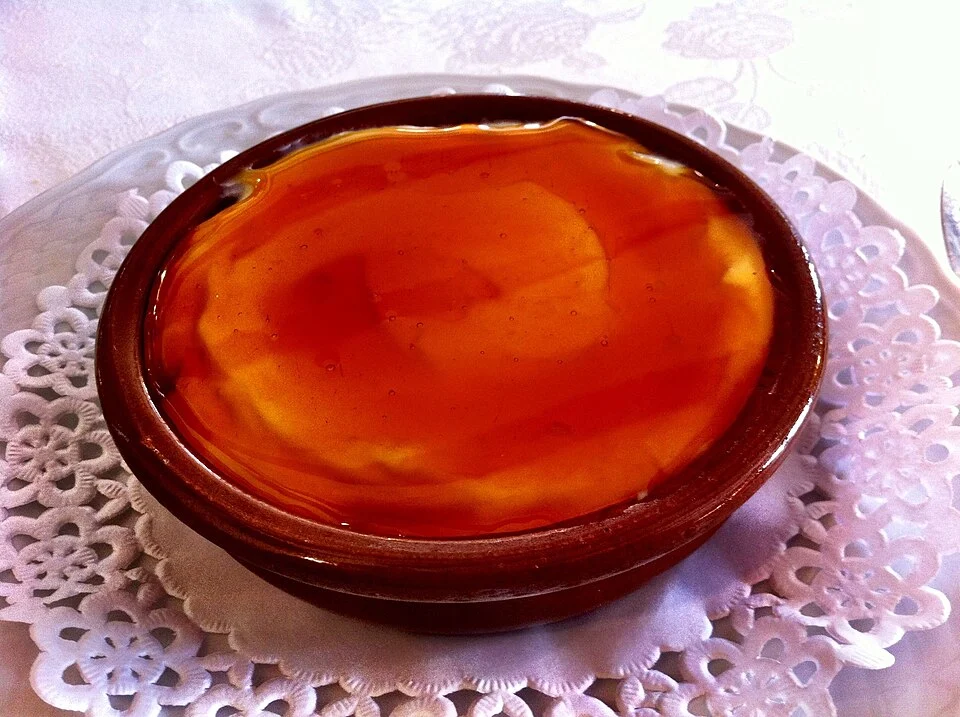
Served in a small earthenware dish, goxua (Goxua) first shows its amber surface. Put a spoon under the caramel and you bring up smooth custard, syrup-soaked sponge and airy whipped cream together. This chilled dessert, associated with Vitoria-Gasteiz in the Basque Country, comes in two versions: one in which sugar is burnt on the custard surface, and one in which liquid caramel, made beforehand in a pan, is poured over. The first spoonful feels different when you break a thin, hardened film of sugar than when glossy caramel clings to the cream.
The Cream Below Receives the Syrup-Soaked Sponge
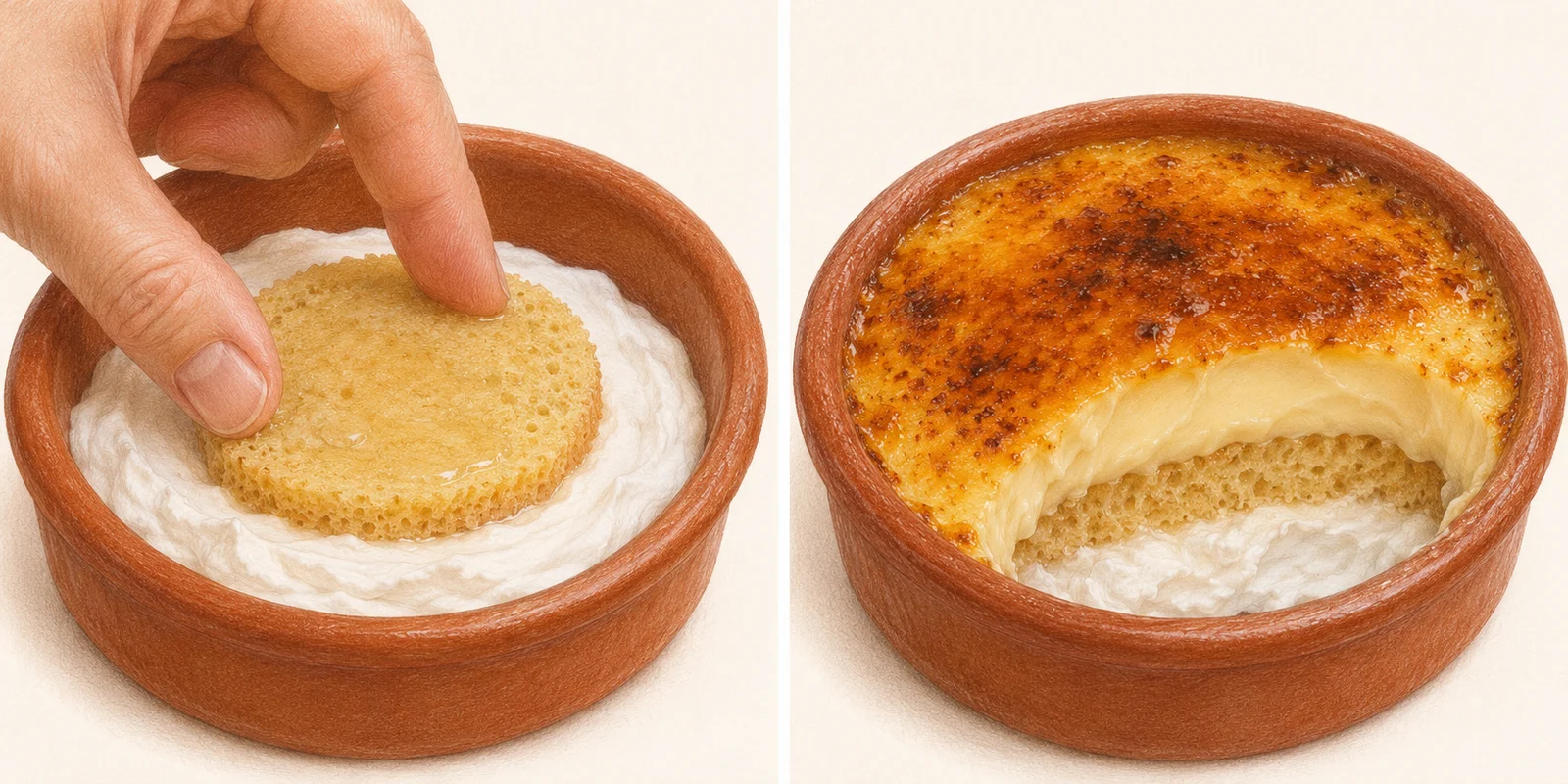
According to the Basque Government’s tourism guide, five rounds, each about the size of a palm, are cut from a sheet of baked sponge. The sponge is soaked in syrup, the rounds are set on whipped cream placed in the dish, and the top is covered with custard. The dairy layer placed at the bottom of each dish receives the syrup-soaked sponge from below. If the sponge is baked on a sheet, the rounds can be cut to a width that fits the dish. At Sosoaga’s shop, they reportedly used trimmed offcuts of the sheet sponge made for tarts and mousses. If the dessert is assembled inside the dish, with cream above and below, the sponge does not have to be the same circle each time to form a syrup-soaked layer.
The chef Luis Mokoroa whips cold cream with sugar and divides it among glasses or earthenware dishes. He tops it with elongated, baked bizcocho de soletilla (sponge fingers) soaked in syrup. Mantala’s version covers the bottom of the dish to the edge with whipped cream, making that layer thicker than the custard above. The sponge is flavored with rum or brandy, and the custard, made of milk, eggs, sugar and cornstarch, is flavored with cinnamon and lemon. The ingredient list in the regional tourism guide mentions no alcohol, and puts cinnamon on the very top, together with sugar. The height at which the aroma is placed differs between the liquid soaked into the sponge and the layer the tongue touches first.
The syrup that Mokoroa makes from water and sugar includes lemon juice. The milk for the custard is heated, and lemon peel and cinnamon are then steeped in it overnight. In the mouth, the sponge soaked in sugar syrup carries the juice, and the thick custard carries the scent of citrus peel and spice. The cook at the Parador in Argómaniz uses a syrup of reduced sugar water, with a little rum added if desired. Because the baked sponge absorbs the liquid, the choice of syrup changes the aroma of the central layer in the recipes of makers who live in different places.
To cook the custard, eggs, milk, sugar and cornstarch are combined and heated. Mokoroa thickens it in a pot while stirring. While it cools after being moved to a container, film is laid directly on the surface to prevent a skin from forming. In the Parador’s version, hot milk is combined with the egg mixture and strained once, then heated and stirred continuously. Once it has thickened, butter is melted into it in a separate container, and it is chilled. In both versions, the custard is cooled before the dessert is assembled. The bowl for whipping the cream and the pot for the custard, which is heated and then chilled, finally come together in the same dish.
Carlos Arguiñano’s recipe for four uses 300 ml of milk and 200 ml of liquid cream for the custard, flavored with a vanilla pod. Part of the milk is set aside before boiling and mixed, still cold, with the sugar and cornstarch. The warmed milk is strained and combined with the eggs, then thickened over low heat with stirring. The cold cream to be whipped is prepared separately. Even when cream goes in both above and below, the feel on the spoon differs: below, it is a foam, and above, it is a layer of cooked egg and starch.
Hot Metal and Pot-Made Caramel
The regional tourism guide gives a method in which sugar and cinnamon are sprinkled over the assembled custard and burnt with the heat from the base of a frying pan held over a flame. Mokoroa scatters white sugar and brown cane sugar and uses a small cooking torch. The heat reaches the sugar spread over the cold custard. The sugar melts and takes on color, then sets into a thin layer as it cools. When pressed with a spoon, this layer cracks first, and the burnt aroma mixes with the smooth layer below.
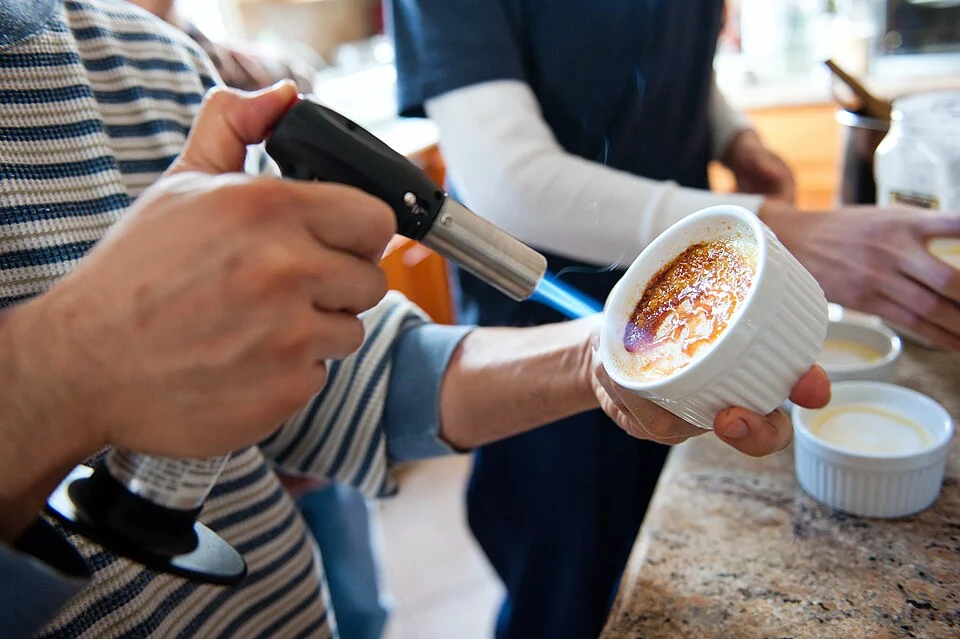
Arguiñano chills both the custard and the whipped cream, and burns the sugar only just before serving, after the dessert has been plated. If left standing, the surface of the sugar film gradually softens from the moisture of the cream below. Briefly heating only the surface of a chilled dessert lets you taste cold cream and dry sugar together when the spoon goes in. The work of layering sponge and cream in the container can be finished the night before, and the sugar can be burnt to match the time the dish is brought out. Glasses kept chilled until eating are taken out of the refrigerator just before being brought to the table.
At first, Sosoaga’s shop burnt each small earthenware dish one at a time. As orders increased and heating the dishes one by one became time-consuming, the shop’s records say, it switched to a caramel made separately and thinned lightly with water. Mantala’s recipe also pours on a lightly thinned caramel after the custard has been leveled with a spatula. Smoothing out the unevenness of the cream lets the amber spread from the center of the dish to the rim. What the shop wanted to keep was the gloss and the taste of burnt sugar. Instead of a baked-on sugar crust that cracks, the thinned caramel flows over the white cream as it is scooped.
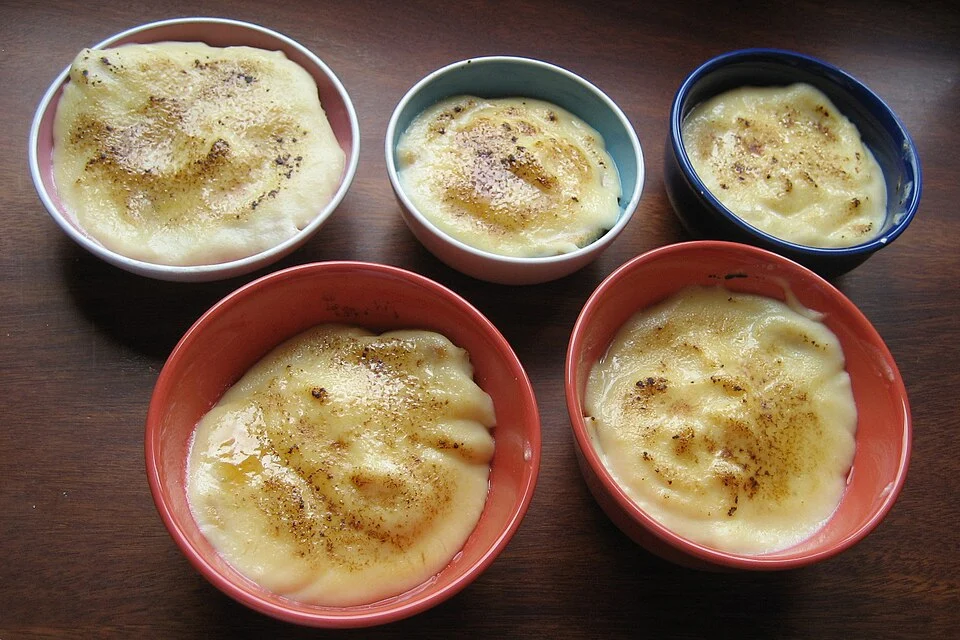
In crema catalana, which Sosoaga named as one of his inspirations, milk is flavored with lemon peel and cinnamon, and egg yolks and cornstarch are mixed in and cooked. In the example in a Catalan tourism guide, the custard is divided into earthenware dishes and chilled, and sugar is sprinkled on and burnt at the point of serving. The early goxua dish shares with it the earthenware and the aroma of freshly burnt sugar. In crema catalana, the custard lies right under the cracked sugar; in goxua, when the spoon goes further down, syrup-soaked sponge and whipped cream come up together.
Served from a Shared Earthenware Dish, or One Glass at a Time
A diner who visited Casa Rufo in Bilbao described the layers of syrup-soaked sponge, cream and custard, and photographed a single portion in a small earthenware dish. In the Parador’s version, one sponge layer goes at the bottom of a clear glass, followed by cream, another sponge layer, custard and caramel. The whipped cream is sandwiched between the two layers of sponge. If bizcocho de soletilla is unavailable, the recipe says, magdalenas (small baked cakes) can be sliced into rounds instead. In every case, the baked sponge is prepared first, soaked in syrup and layered, and the assembled glass is chilled until it is eaten.
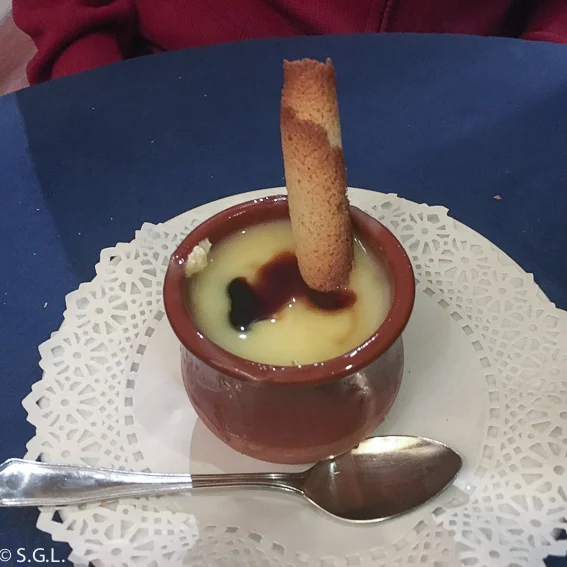
Arguiñano also cuts magdalenas to fit the width of the glass. In his version, whipped cream is piped into the bottom, the sponge is placed on top and brushed with rum syrup so that it soaks in, and the custard is laid on so that it is level. Compared with soaking the sponge in syrup outside and then moving it to the dish, here the sponge absorbs the sweet liquid on top of the cream already in the container. Because the same shape is divided among four glasses, the depth of the glass serves as a guide for the thickness at which the sponge is cut. For when no alcohol is used, he also names vanilla and orange juice as flavorings.
At La Peña Dulce in Gasteiz, the sweet called postre vasco is offered in earthenware dishes for four, six and eight people. When portioning from a large dish, scooping only the cream on top leaves the sponge behind in the dish. The dessert should be cut down to the bottom of the dish so that each plate gets several layers. In Mokoroa’s method of assembling single portions in glasses, each layer has already been distributed before the guest puts in a spoon. The Basque-language tourism guide describes it as a dessert that spread from Gasteiz across the region. The Parador in Argómaniz also lists it in its Basque-language guide as one of the restaurant’s signature dishes.
The Story That Reached Vitoria’s Shops from Araya
In a 2008 interview, Luis López de Sosoaga said that in 1976 he drew his inspiration from a home dessert he had eaten in Araya and from crema catalana. He sent a dozen trial pieces to the restaurant Zábala in Vitoria, and after they were well received, the name goxua was given to the dessert in 1977. The shop’s history takes the words of Zábala’s owner, who tasted it, as the origin of the name. It is a name that means sweet or delicious in Basque. In his own recollection, there is a one-year gap between the year he first tried it and the year the name was used at the sales counter.
Mantala, citing José María Gorrochategui’s 1987 Repostería Vasca, writes that it was in 1977 that he encountered the earthenware dish at a meal in Araya. This differs by one year in the year of inspiration from his own recollection in 2008. Both accounts tell the same course of events: seeing the dish in Araya, making his own at the shop, and delivering samples to a restaurant in Vitoria. He had made a dozen first, and no description allows one to trace, through order slips or ingredient lists, which present-day product that recipe corresponds to.
La Peña Dulce in the same town says that its founder, José Murguía, made the shop’s postre vasco in 1968. Its history records that from the start it used earthenware dishes of different sizes and filled them with cream made with caramel, or cream with a burnt surface. The product name the shop presents today is also postre vasco. In Gasteiz, two records thus survive side by side: the account of the sweet being called goxua at Zábala’s counter, and the shop’s record of calling a sweet served in an earthenware dish postre vasco.
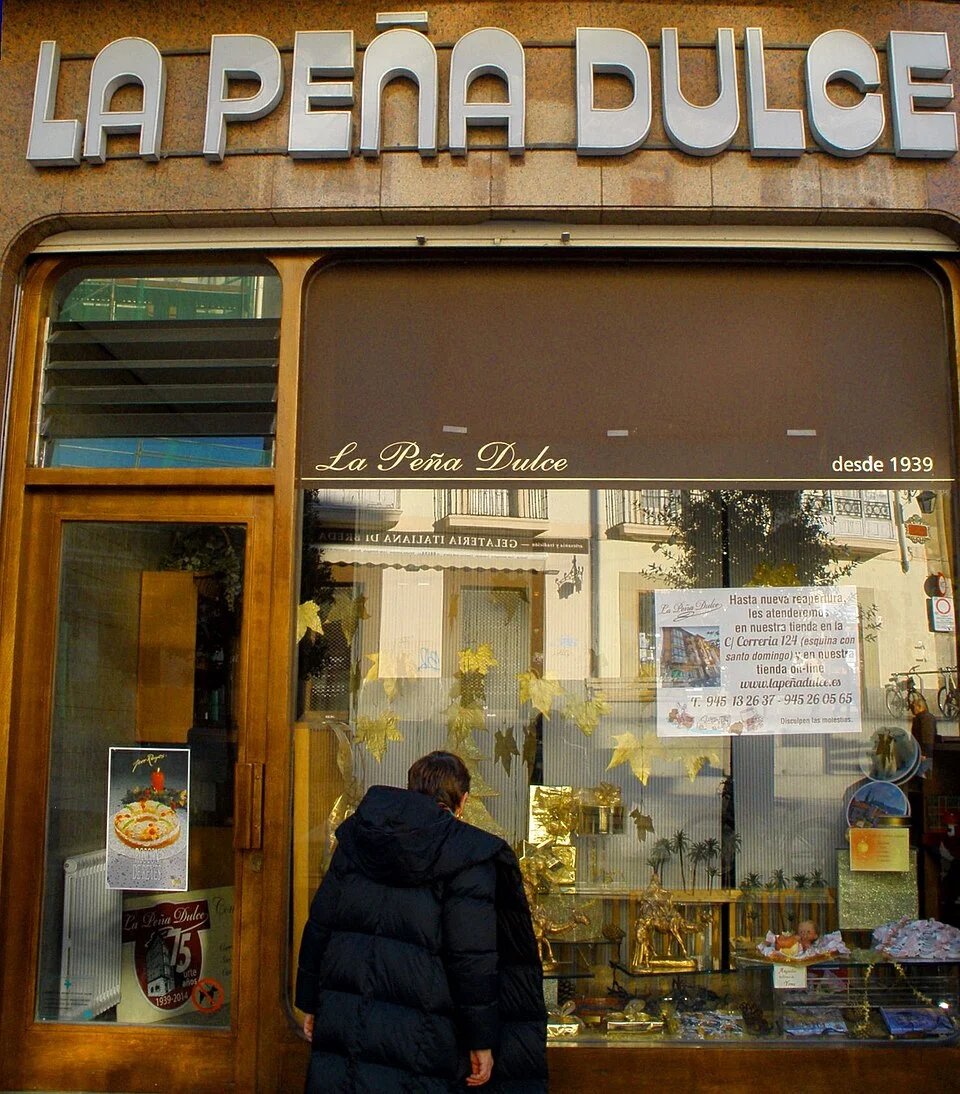
The sizes of the postre vasco dishes that the shop now shows are described by the number of people in a family or among guests that one dish can serve. Whether someone breaks the surface and eats a single serving, or the person portioning starts cutting first, changes the moment the spoon goes into the caramel. The earthenware dishes that the shop, which tells the origin of the name, still lists assume a different number of people at the table than individual glasses do.
A tourism guide notes that in Miranda de Ebro, in Burgos province next to Álava, there is also a sweet called Goshúa (Goshúa) that combines whipped cream, sponge and syrup with liquid caramel. The artisan Alberto Bornachea said that his father made it based on crema catalana and called it cazuelita. This word refers to a small earthenware pot or dish. The several names for the vessel, and the account of a person who received a dish at the shop, show what names a sweet topped with caramel took in each town. When the spoon goes to the bottom, what is carried to the mouth is not only the scent of sugar but also whipped cream and syrup-soaked sponge.
Glossary
- Goxua
- The name of the dessert of Vitoria-Gasteiz, taken from the Basque word meaning sweet or delicious.
- Bizcocho
- Spanish for a baked, sponge-like cake. In goxua, some versions cut rounds from a sheet of sponge, and others use elongated bizcocho de soletilla.
- Crema pastelera
- Pastry custard. Milk, eggs, sugar, starch and other ingredients are combined and cooked.
- Crema catalana
- A Catalan dessert. Sosoaga names it as one of the inspirations for his own goxua.
- Cazuelita
- A small earthenware pot or dish. In the account of a maker in Miranda de Ebro, it is also the name used for the sweet.


