


SweetloreEncyclopedia of World Sweets (834)

Hanseaten
Hanseaten Gebäck
A northern German confection with fruit between its layers, under a red-and-white glaze
Cakes / Northern Germany, including Lübeck

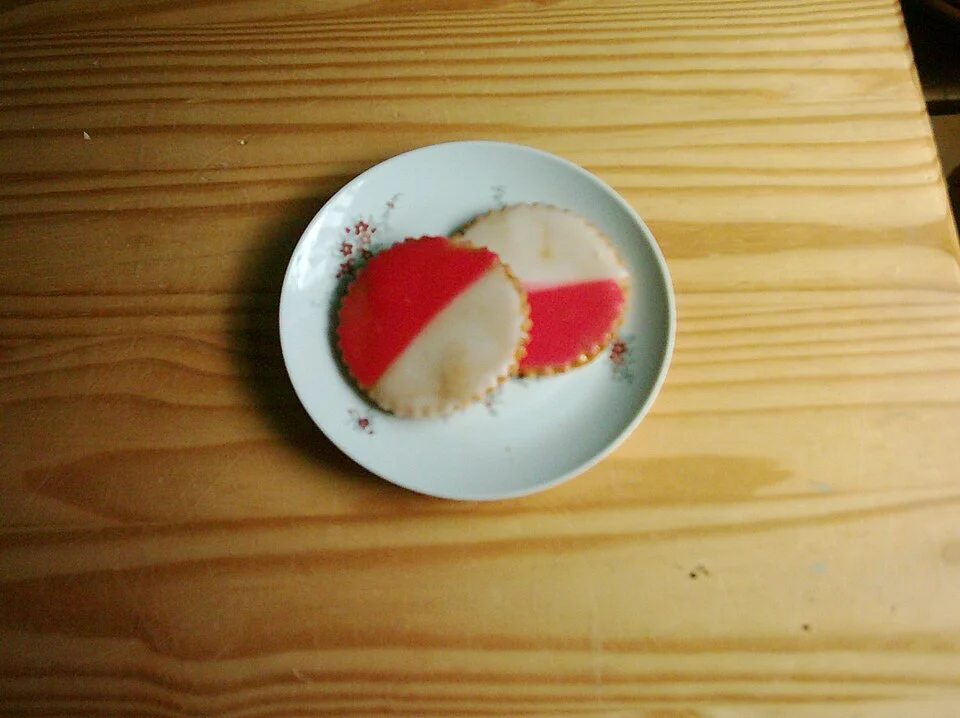
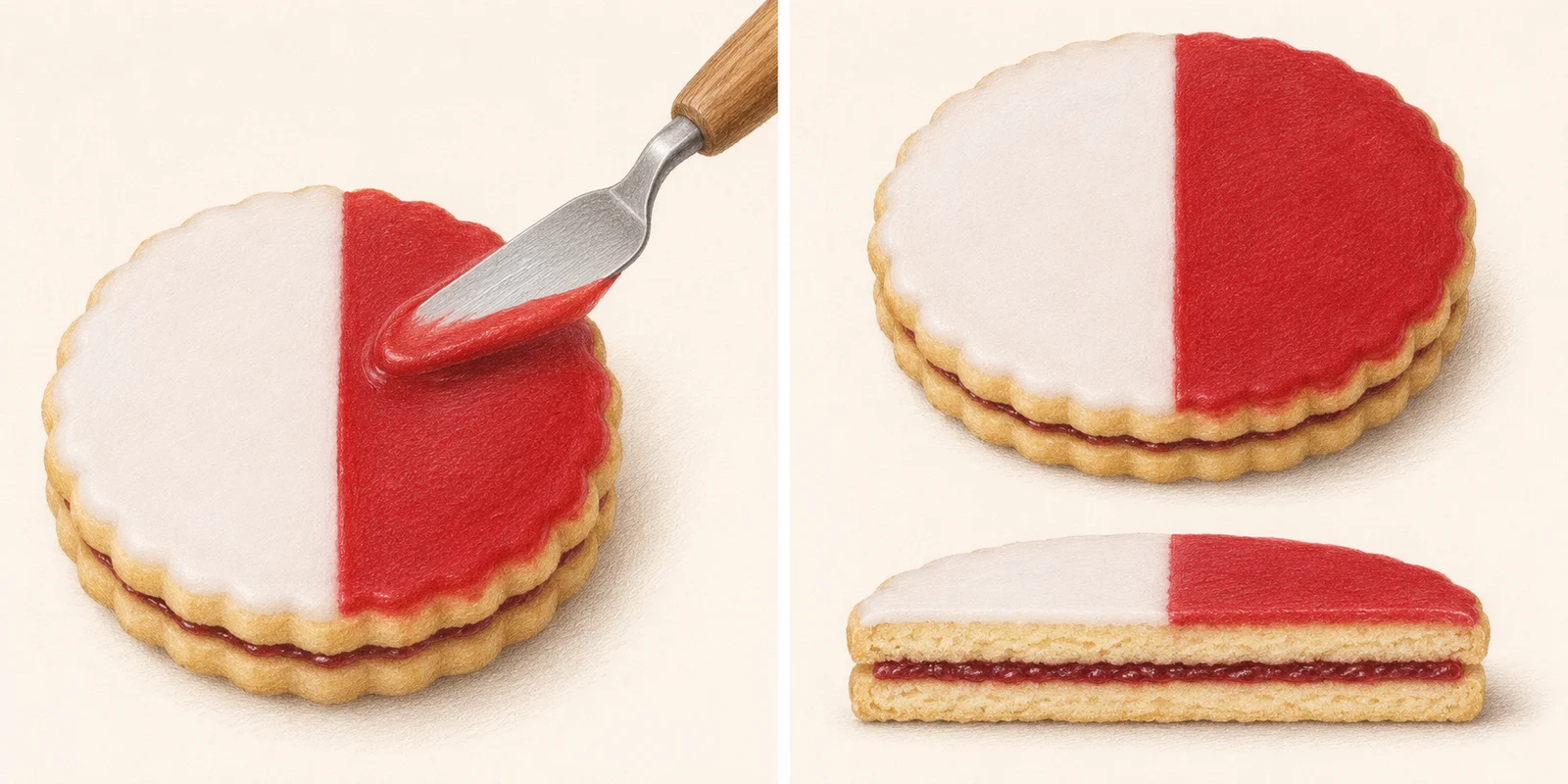
Hanseaten are confections baked in Lübeck and elsewhere in northern Germany, topped with a red-and-white glaze. A single one is called a Hanseat. Two thin baked rounds are stacked, and a thin layer of red fruit shows along the side. The edges are usually cut with a scalloped cutter, and the top is covered half in white and half in red icing. Bite in, and the soft sweet-tartness of the fruit emerges from between the dry icing and the crumbly dough. Some versions use the same fruit for the red of the surface and the red of the filling.
Baking two rounds with matching scalloped edges
Mürbeteig (shortcrust pastry) is a crumbly dough made by working fat into flour. In the Lübeck version presented by UNESCO World Heritage Sites Germany (UNESCO-Welterbestätten Deutschland), the main ingredients are 300 grams of flour, 200 grams of butter and 100 grams of sugar, a ratio of 3:2:1. Eggs and other ingredients are added to this. Dee’s Küche, a home-baking site, uses the same ratio of flour, butter and sugar and adds an egg and baking powder. The ratio alone does not decide the thickness or the baking. That comes from the baker’s hands: how many millimeters to roll the dough and how many centimeters wide to cut it.
In a home recipe published by a local newspaper in Neustadt, Schleswig-Holstein, baking powder is mixed into the flour, and sugar, egg, soft butter or margarine and vanilla flavoring are added. The dough is worked smooth with the mixer’s dough hooks, first at low speed and then at high speed, then wrapped and chilled for about 30 minutes. In the Nordzucker recipe, it rests in the refrigerator for about 1 hour. Right after the dough comes together, the fat-rich mass is soft. If it is chilled until it settles before rolling, the scalloped edges hold their shape and the rounds are easier to transfer to the baking sheet.
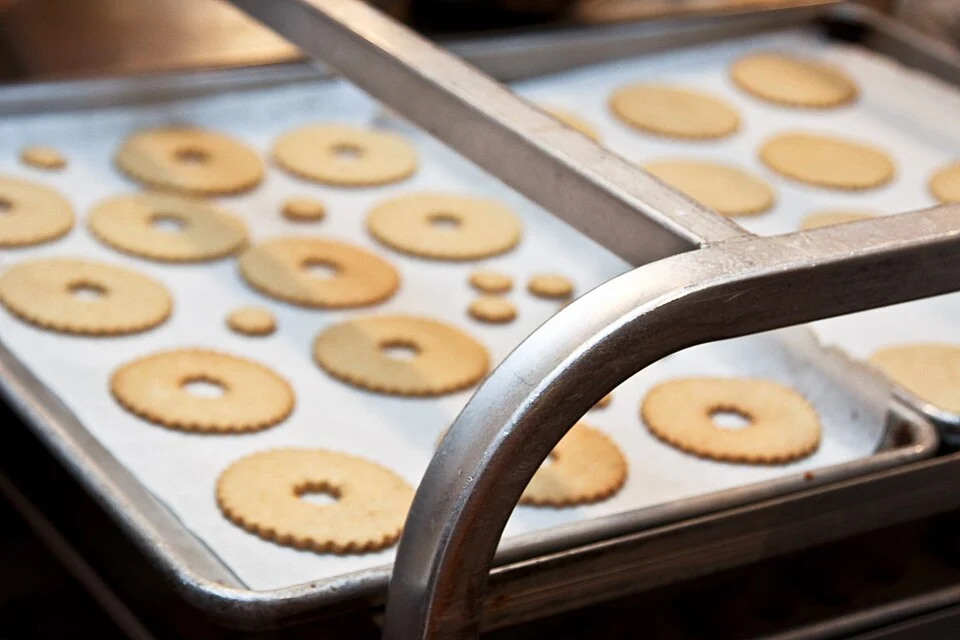
The recipe from the World Heritage association rolls the dough to 4 mm, and the Neustadt recipe to about 5 mm, and both cut rounds about 6 cm in diameter. Nordzucker uses a scalloped cutter about 8 cm in diameter. Sixteen rounds are cut, and because they are paired two by two once cooled, the finished confections number eight. When the scallops of the top and bottom rounds match in size, the thin streak of fruit shows between the two thicknesses. While looking at one round lifted from the cutter, the baker makes its partner match.
In the Neustadt recipe, the oven is preheated to 180 °C for top and bottom heat, or 160 °C for fan-assisted, and the rounds bake on the middle rack for about 12 minutes. The Nordzucker recipe calls for 10 to 12 minutes at 180 °C. In Neustadt, the baking paper is pulled off the sheet with the rounds on it and moved to a rack. Because each round is baked separately and left to cool, two well-colored rounds can be chosen and their edges lined up when it is time to join them with fruit. The cooling continues while the baker spreads fruit on one face or prepares the two colors of icing.
In Dr. Oetker’s home recipe, 150 grams of fat go with 300 grams of flour, and soft butter or margarine may be chosen. The flour weight is the same as in the Lübeck recipe presented by the association, but the fat is 50 grams less, and the use of egg and leavening must also be taken into account. Bäcker Schlüter in Halstenbek also lists baker’s margarine on the ingredient label of its product and describes its own shortcrust dough as soft. Beyond the differences in formula, dough straight from the oven and a finished confection sold with fruit between its layers also reach the mouth at different stages.
The amount of fruit shows at the edge
The fruit between the baked rounds is strawberry in the World Heritage association’s recipe. Nordzucker uses slightly warmed currant jelly, and the Halstenbek shop combines raspberry and currant. When softened jelly is spread on a cooled round and its partner is placed on top, that layer holds the two together. If the fruit reaches close to the scalloped edge, a thin line of color is visible when the confection is picked up. When the fruit is concentrated in the middle, it may only be when the confection is broken open that one sees how far the fruit has spread.
The Nordzucker formula for eight pieces lists 200 grams of currant jelly and 200 grams of powdered sugar. The jelly is warmed and used to join the baked rounds, and a little is also taken and mixed into the red icing. The powdered sugar is stirred with 2 to 3 tablespoons of lemon juice and applied to both the white half and the red half. The same 200 grams appears twice in the ingredient list, but the jar of fruit and the bag of powdered sugar each split into two roles partway through the finishing.
In Neustadt, a baked round is turned over, spread with red confiture, and topped with the remaining round. Dee’s Küche places a currant fruit preparation in the center of the bottom round and joins it with the top round, which has already been glazed. When the fruit is spread over the whole face before the rounds are stacked, it is at the spreading stage that the fruit is carried close to the edge of the dough. When it is placed in the center, the pressure of setting the second round on top pushes the central fruit outward. Which of the two thin baked rounds is picked up first changes the steps for adjusting where fruit and dough meet.
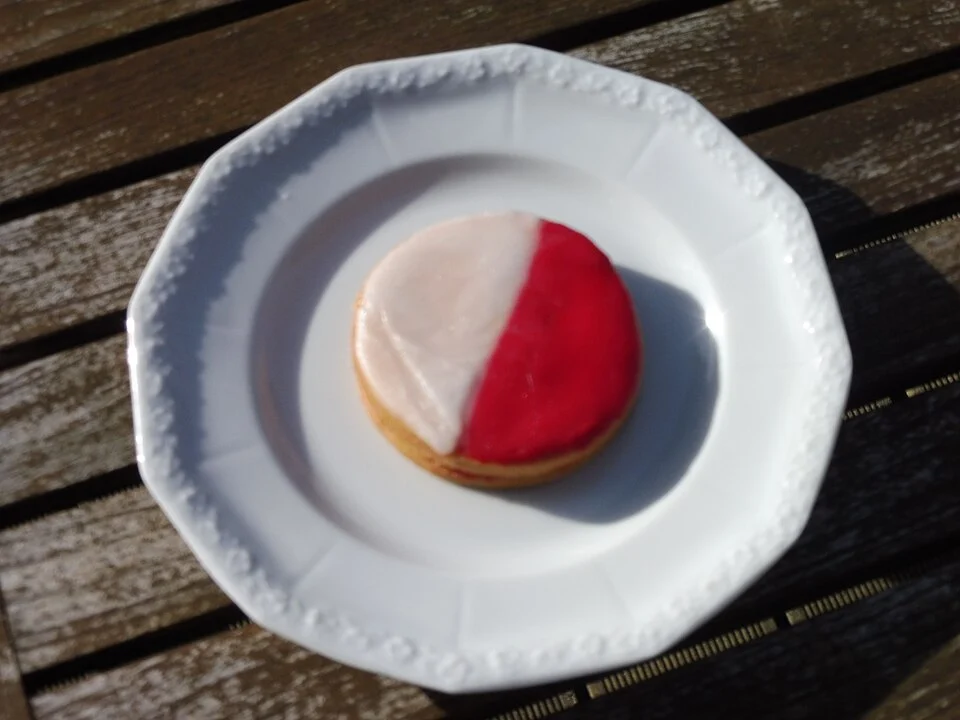
The product presented by Bäckerbote in northern Hamburg likewise has a raspberry and currant confiture filling and a red and white fondant coating. The shop explains that, kept in a closed tin, it stays soft and can be served with coffee to unexpected guests. The state of the dough when the teeth meet it differs between right after the two rounds are lifted onto a rack to cool and after the fruit is added and the confection is stored in a tin. The softness the shop describes applies at the point of eating the assembled confection.
White first, with red beside it
The Nordzucker ingredients are powdered sugar and lemon juice. First one half of the top is coated with a white glaze made by dissolving powdered sugar, then currant jelly is mixed into the remaining white and placed on the other half. Because it is the same jelly as the one between the layers, the red visible on the surface connects with the fruit that comes out when one bites in. Inside, the jelly stays soft and joins the two rounds. On the surface, it blends with the powdered sugar and lemon juice and becomes a thin, dry film. Even though the colors look alike, the order in which they break down in the mouth is different.
In the Neustadt recipe, egg white is whipped stiff, powdered sugar is folded in, and lemon juice is mixed in partway through. The glossy icing is divided between two bowls, and one is tinted with red food coloring. Here, it is the layer between the two rounds that carries the fruit flavor to the mouth. In the recipe presented by the association, the white half is brushed on and left to dry, and the red, colored with currant juice, is brushed on next to it. Because the brush can advance to the boundary once the white laid down first has dried, the seam between red and white is less likely to bleed.
Keeping the icing from running off the dough also depends on its thickness just before it is applied. The Dee’s Küche recipe adds lemon juice to the powdered sugar little by little and judges the consistency by whether it stays on the top surface. In this recipe, the round that will be the top is glazed first and then placed on the bottom round that carries the fruit. In Neustadt, the two rounds are first assembled with fruit and the top is then decorated while the aligned edges are checked. Coating all the way to the edge and matching top to bottom come in different orders, and that difference cannot be seen in the same red-and-white result.
Two colors from the Lübeck flag
Under the Main Statute of the City of Lübeck, the city flag is divided horizontally, white above and red below. A double-headed eagle is placed in the upper part, near the flagpole. What the confection shows is not the eagle motif but the white and red set side by side on a single surface divided in two. The Nordzucker booklet on northern German confections likewise explains these two colors by linking them to the Hanseatic flag. The arrangement of the current flag conveyed by the statute and a document recording what the craftsman intended when he devised the confection are separate things.
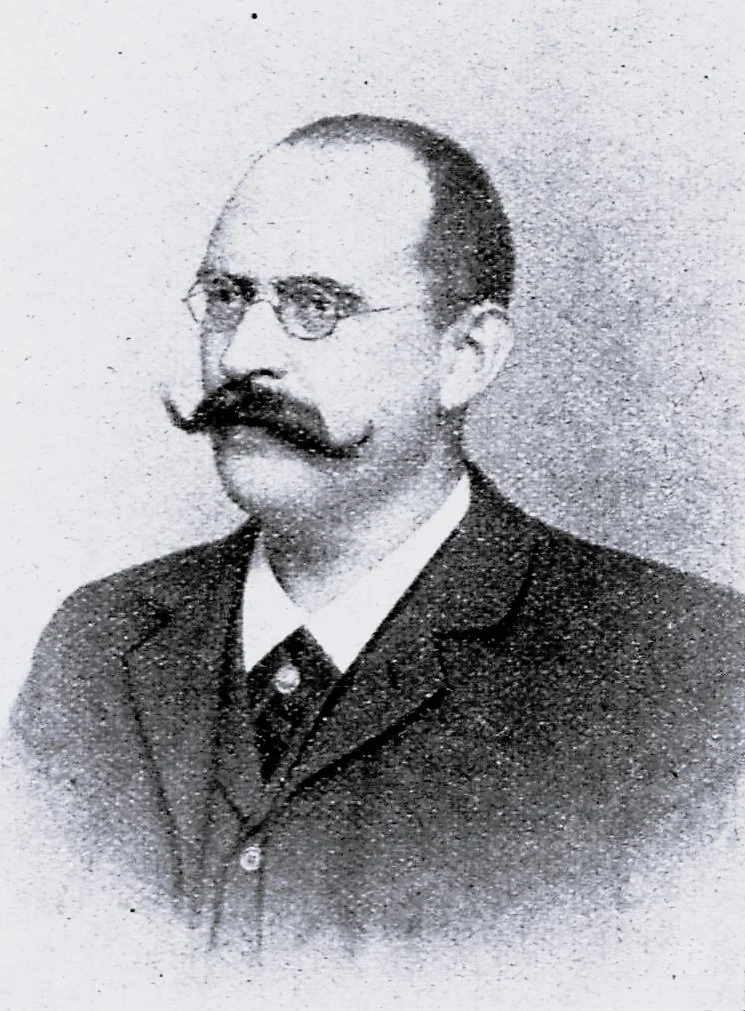
The city of Lübeck presents the baker Heinrich Schabbel as the creator of this confection. After his death in 1904, most of his estate remained with the city as a foundation and was used to preserve for posterity the home of a wealthy merchant. The Schabbelhaus in the old town carries his name. The building and foundation descriptions do not reveal which fruit was first placed between the rounds or when the confection first appeared in shops. That strawberry and currant are confirmed in modern recipes is one thing; knowing which fruit the craftsman first chose would require records from the kitchen of the time.
The first building the city provided to the foundation was at Mengstraße 36. It burned down in 1942, and afterward an association of Lübeck merchants renovated numbers 48 and 50 on the same street in 1954. A newspaper article carrying Schabbel’s portrait dates from 1905. Visiting on foot the building that now carries the name, one sees the work of a foundation that has continued from the craftsman’s time and the work of a city that handed it on to another building. The original building and the present one stand on the same street, and following the street numbers, the town’s memory remains in two places.
Keeping the two rounds and changing the color on top
In April 2022, a craftspeople’s association in Schleswig-Holstein celebrated its 35th anniversary in Lübeck. After a ceremony at the town hall, the party found at dinner in the Schabbelhaus a Hanseat with the association’s emblem on top. Dagmar Tschudai of Café Tschudai had baked the confections, and the venue welcomed guests by placing one at each person’s plate as a gift. Simply placing white and red side by side on the flat top is enough to identify the shop’s confection, and an emblem set on the same surface also tells which gathering the piece was prepared for. In a place where the building and the maker’s name are linked, the confection too carries the name of a local craftsperson.
In 2022, Bäcker Heinz in Hamburg painted the top in blue and yellow, after the flag of Ukraine. A baking trade magazine reported that the glaze was changed while the two rounds of dough and the fruit layer were kept, and that the confection was sold for a limited time to raise donations. The Hamburg campaign planned 20 days of sales at five shops and partner outlets, and at the time of the interview the owner said donations had reached €2,000 in the first six days. This €2,000 is a figure from partway through the campaign. In Lübeck an association’s emblem was added, and in Hamburg the colors changed while the boundary between two colors remained. The look from above when choosing one at the counter, and the layering of dough and fruit that remains in a broken piece, are each places where the maker can make changes.
Even with the usual red and white, breaking along the boundary lets one taste one color at a time, and breaking diagonally gets both colors in the same piece. The red inside also changes the tartness and aroma that linger in the mouth, depending on whether warmed currant jelly is used, raspberry is mixed with currant, or strawberry is used. The work of stacking thin rounds supports the fruit layer, and the boundary between the two colors painted on top becomes a cue for where to begin eating the piece.
Glossary
- Mürbeteig
- A crumbly dough made by mixing flour with fat and other ingredients. For this confection it is cut into thin rounds and baked separately.
- Confiture
- A preparation made by cooking fruit with sugar and other ingredients. In this article it forms the layer that joins the baked rounds. Some recipes use currant jelly.
- Schabbelhaus
- A building in Lübeck that bears the name of the baker Heinrich Schabbel.


