


SweetloreEncyclopedia of World Sweets (834)

Bandar Laddu
Bandar Laddu
A town sweet in which thinly fried bean dough is rolled with syrup
Sugar Confections / Machilipatnam, Andhra Pradesh, India

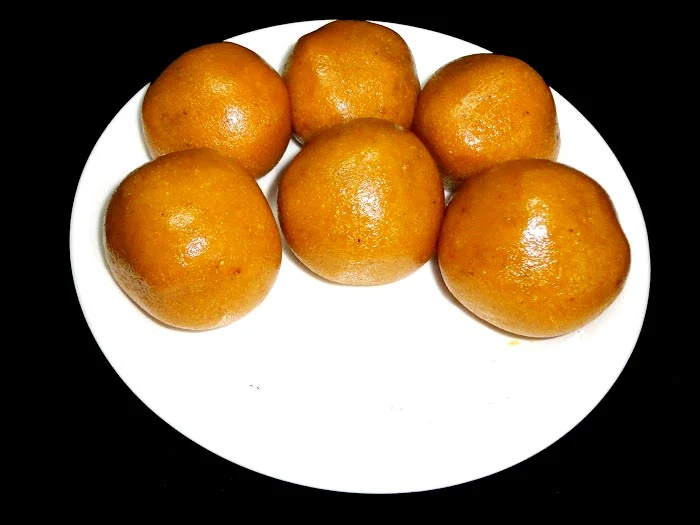
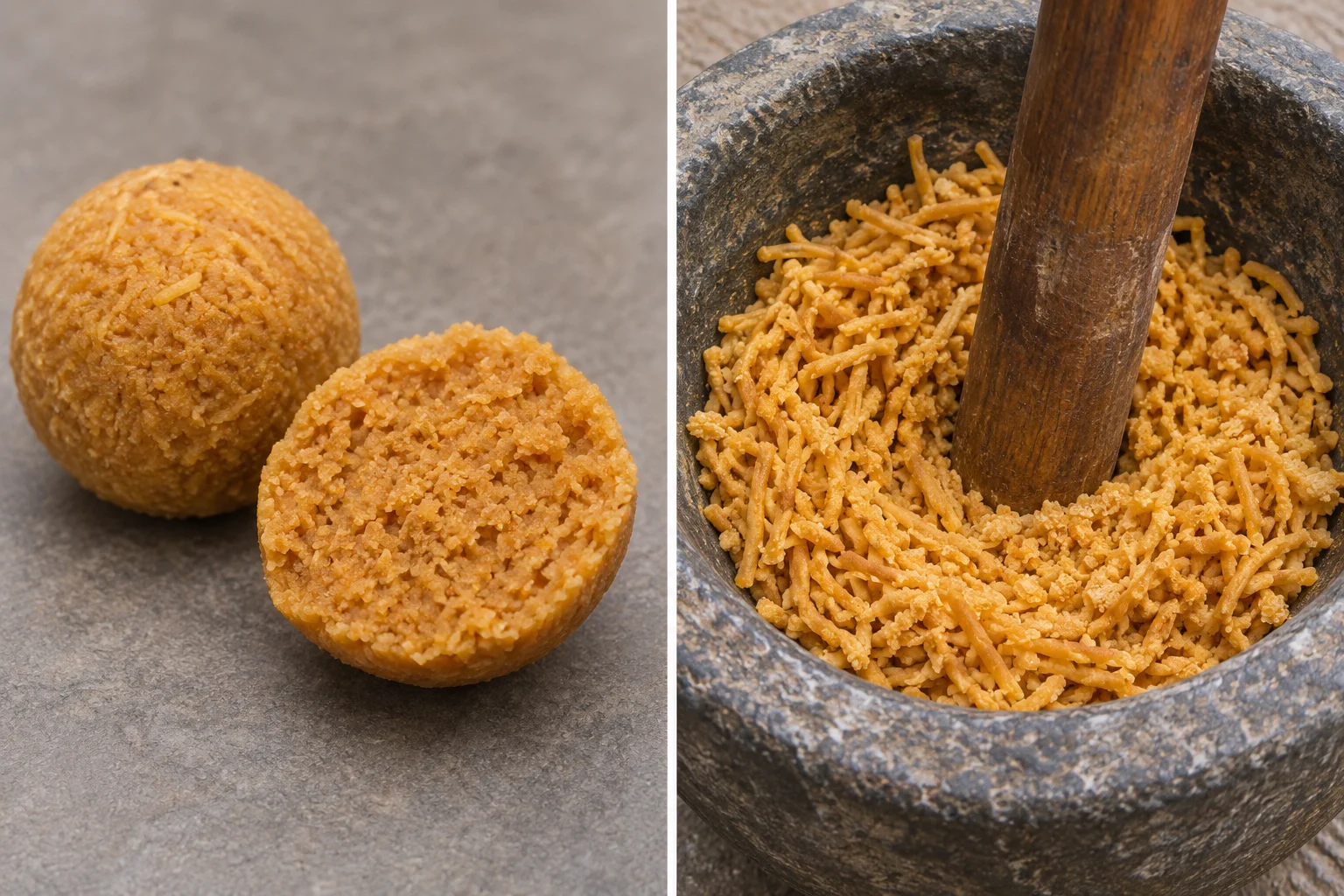
Bandar laddu (బందరు లడ్డూ, Bandar laddu) is a round sweet made in Machilipatnam, a port town in Andhra Pradesh in southeastern India. Besan, a chickpea flour, is kneaded with water, pressed out into thin strands and fried in ghee. The fried dough is crushed, pounded together with a syrup made by boiling down sugarcane sugar, and rolled by hand once it has cooled. Some are decorated with a cashew nut on the surface. Breaking a ball open reveals granules of fried bean dough packed inside. The name Bandar is another name for Machilipatnam, the town where the sweet has long been made.
Two Rounds of Pounding in Every Laddu
Rolling the laddu into a round comes last, and before that the dough is pounded twice. First, the thin dough, fried in ghee and cooled, is put into a stone mortar and pounded with a long wooden pestle. The manufacturers’ association calls this mortar and pestle rollu and rokali in Telugu. Here the dough, which was joined in strands when fried, breaks into short pieces and becomes coarse granules that the syrup can be mixed through. What goes into the mortar is not raw bean flour taken from a sack, but dough that has been kneaded with water, formed into thin strands and fully cooked. In methods that roast flour in a pan, the fat touches the flour; in this sweet, the surface of the long, thin strands meets the ghee first.
The second pounding comes after the hot jaggery syrup has been added. The association writes that the crushed dough is mixed with the syrup and, over about 5 hours of cooling, pounded from time to time to even out the granules. While the syrup is hot, it spreads between the granules; when the mixture is pounded again as it cools and begins to set, large lumps are loosened and the whole is made uniform. The first pestle work is to crush what has been fried; the second is to blend the syrup and the granules. Satyanarayana, a local confectioner with 50 years of experience at the time of the interview, also says in it that he pounds the syrup-added mixture by hand at intervals over 5 to 6 hours. The figure of just over 5 hours is a rough guide to the work of cooling the fried dough, once combined with syrup, until it can be shaped into balls.
The glossy, fat-sheened exterior is finished by shaping with ghee-coated hands. Taking equal portions of the pounded mixture and pressing them by hand makes the syrup-coated granules hold together, so each ball can be made the same size without a round mould. Ghee is a fat made by heating butter to separate out the water and milk solids; it is used to fry the dough at the start and, at the end, to keep the mixture from sticking to the hands. The work of smoothing the round surface and the work of producing the fine granules seen inside a broken ball belong to different stages.
Frying Golden Strands, Making Syrup in a Separate Pan
The flour for Bandar laddu is besan, ground from a type of chickpea called Bengal gram. In the association’s method, the flour is sieved, water is added and it is kneaded by hand. Removing lumps from the flour makes it easier to keep the strands an even thickness when the dough is passed through holes for frying. Ghee is heated in a deep pan, the kadai, and the dough is pressed against a perforated ladle held over it, so that the strands pushed through the holes fall straight into the pan. This is the part the association calls chakli. Changing the diameter of the holes changes the thickness of the strands, and compared with frying the dough as a broad mass, the same quantity has a larger surface in contact with the oil. The strands are lifted out when golden, the excess ghee is drained off, and once cooled they become the first material pounded in the mortar.
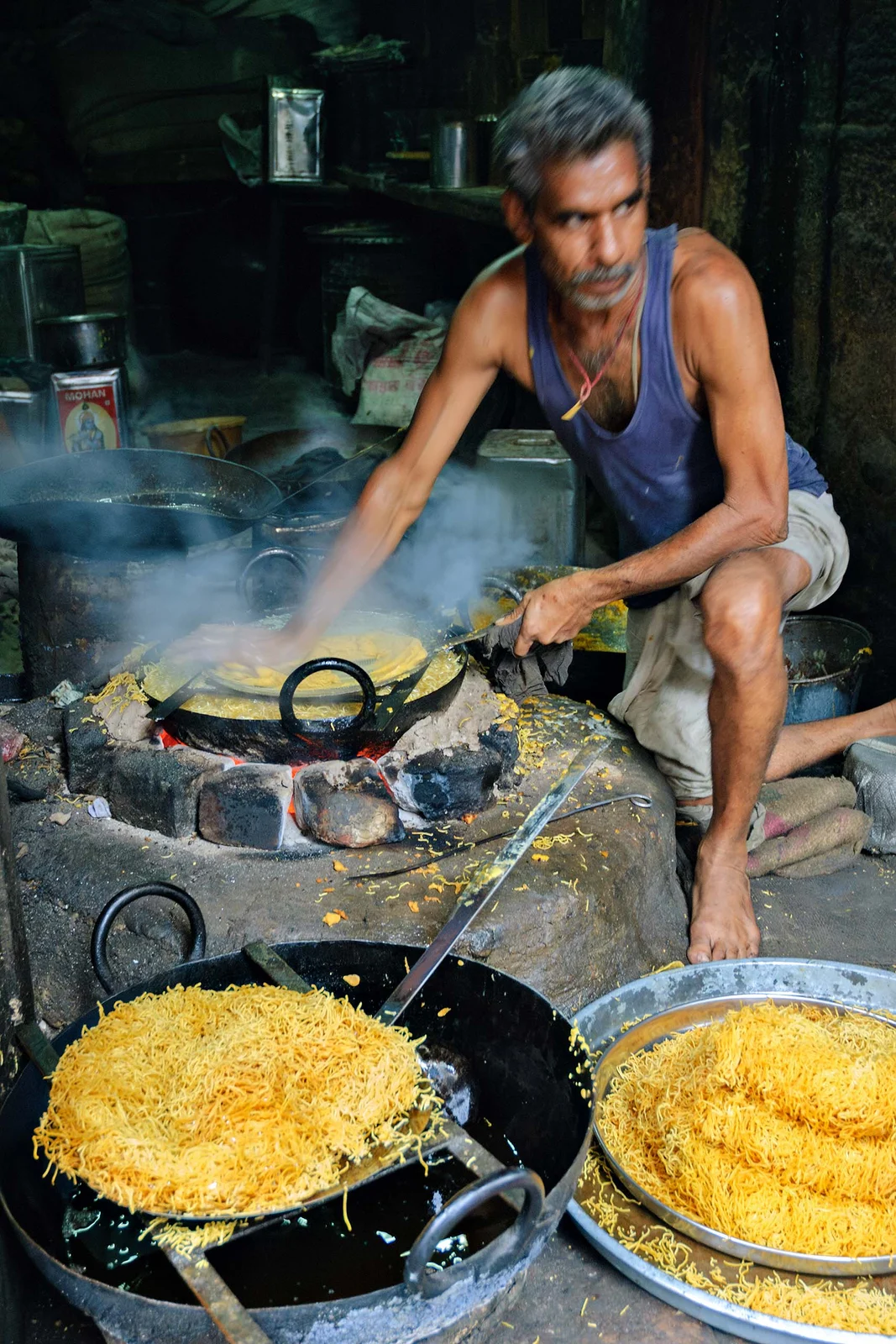
What the association’s entry in the Journal shows is a hand-held perforated ladle above the pan. In the interview with Satyanarayana, an example appears in which bean dough is put into a sieve and dropped from a machine into the ghee to make thin strands called karapusa. Even where equipment is used at the stage of dropping the dough into the pan, the work of crushing the cooled dough, adding syrup and pounding by hand continues. Foods in India such as sev, in which bean dough is fried after being passed through holes, can also be served in their thin form. In Bandar laddu, that form is broken up and remains as fine granules inside the round sweet.
Crushed jaggery and water go into the pan for the sweetening. Jaggery here is a block of sugar made by boiling down sugarcane juice, and the association cites as a good example the jaggery of Anakapalle in the state. According to the Journal, to separate sand and fine sediment mixed into the sugar, milk is added to the simmering liquid and the liquid is passed through cloth to make a clear syrup. In Telugu this syrup is called paagu. The water for kneading the bean flour is used so that the dough can be fried thin; the water added to the sugar is used to dissolve the blocks so that the syrup coats the fried granules. The two meet only at the pounding stage. According to the Journal, boiling the sugar syrup to a suitable consistency is also a condition for balancing the bite of the granules with the softness of the rolled mixture.
In versions that add cardamom powder, the aroma spreads among the granules held together by the syrup. The cashew nuts and raisins that the association lists are fried separately in ghee and mixed in, so they remain as distinct pieces in the rolled mixture. By contrast, in versions with a single cashew nut set on the surface, the nut can be seen before the sweet ball is broken. Depending on where the addition is placed (powder mixed in, fried pieces mixed in, or a decoration on the surface), the aroma and texture differ even within a single piece.
The Same Round Shape, but a Different Shape When Fried
The Tirupati laddu, also well known in the same state of Andhra Pradesh, is offered at the temple in Tirumala. According to Tirumala Tirupati Devasthanams, which administers the temple, boondi, fried granules of besan dough, is prepared in the kitchen called the potu. Where thin strands are fried and then pounded in a mortar, as with Bandar laddu, and where granules are fried as granules from the start, the order in which the individual pieces for the syrup are made differs. Whereas the Tirumala sweet is supported by the temple kitchen and the system for distributing offerings, the Journal entry for Bandar laddu describes town workshops making the sweet, packing it in boxes and delivering it to several outlets.
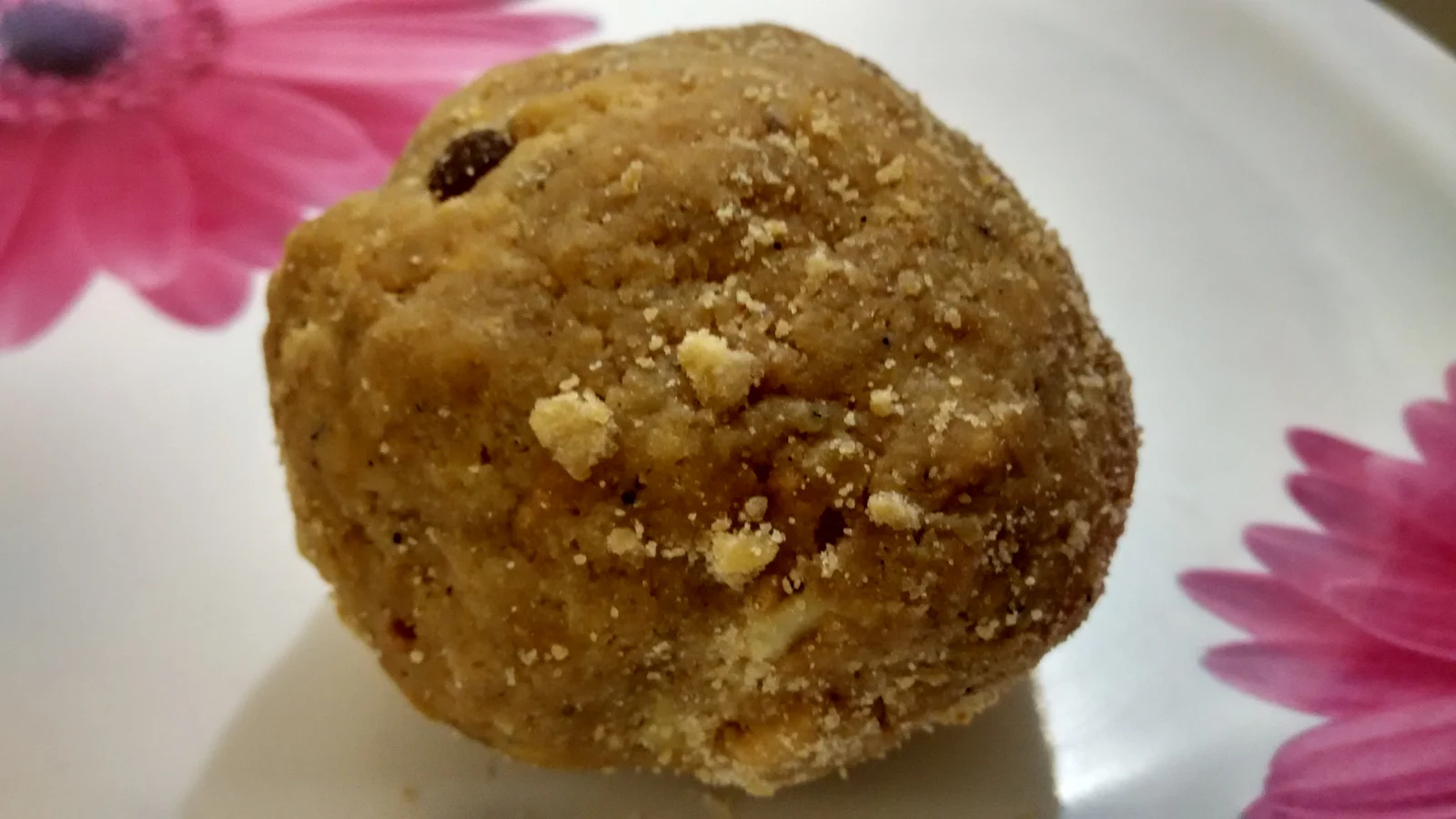
The process of crushing fried pieces, sweetening them and rolling them is also seen in churma ladoo from Rajasthan in northwestern India. In the version by the cook Sanjyot Keer presented in Sweetlore’s Ladoo, a stiffly kneaded wheat-flour dough is shaped into rods, fried, and coarsely crushed once cooled. Bandar laddu, in which bean dough is fried in thin strands through holes, differs in both the flour and the thickness at frying. Even where the balls look alike, the mouthfeel of the crushed granules and the syrup changes depending on whether they began as wheat rods, thin chickpea strands, or bean dough fried one granule at a time.
Under a Port Town’s Name, with Surrounding Towns Also Reaching the Stalls
Bandar is a name for Machilipatnam, and the town also has a halwa that bears the same name, Bandar. Of the two specialties presented together by The News Minute, which reported locally, the one made by frying thin bean dough, crushing it and rolling it with syrup is the laddu. Selling them with the names halwa and laddu added conveys the difference between the sweets in the box, which the shared town name alone does not. According to The News Minute’s reporting, Bandar halwa is made by combining a milky liquid extracted from wheat flour with hot jaggery syrup and cooking it over low heat for hours. Cashew nuts and ghee are mixed into the thickened mass, which is poured onto trays to cool. A sweet of bean flour in granules rolled one at a time by hand, and a sweet of wheat liquid reduced and set into a tray shape, grew up in the same town.
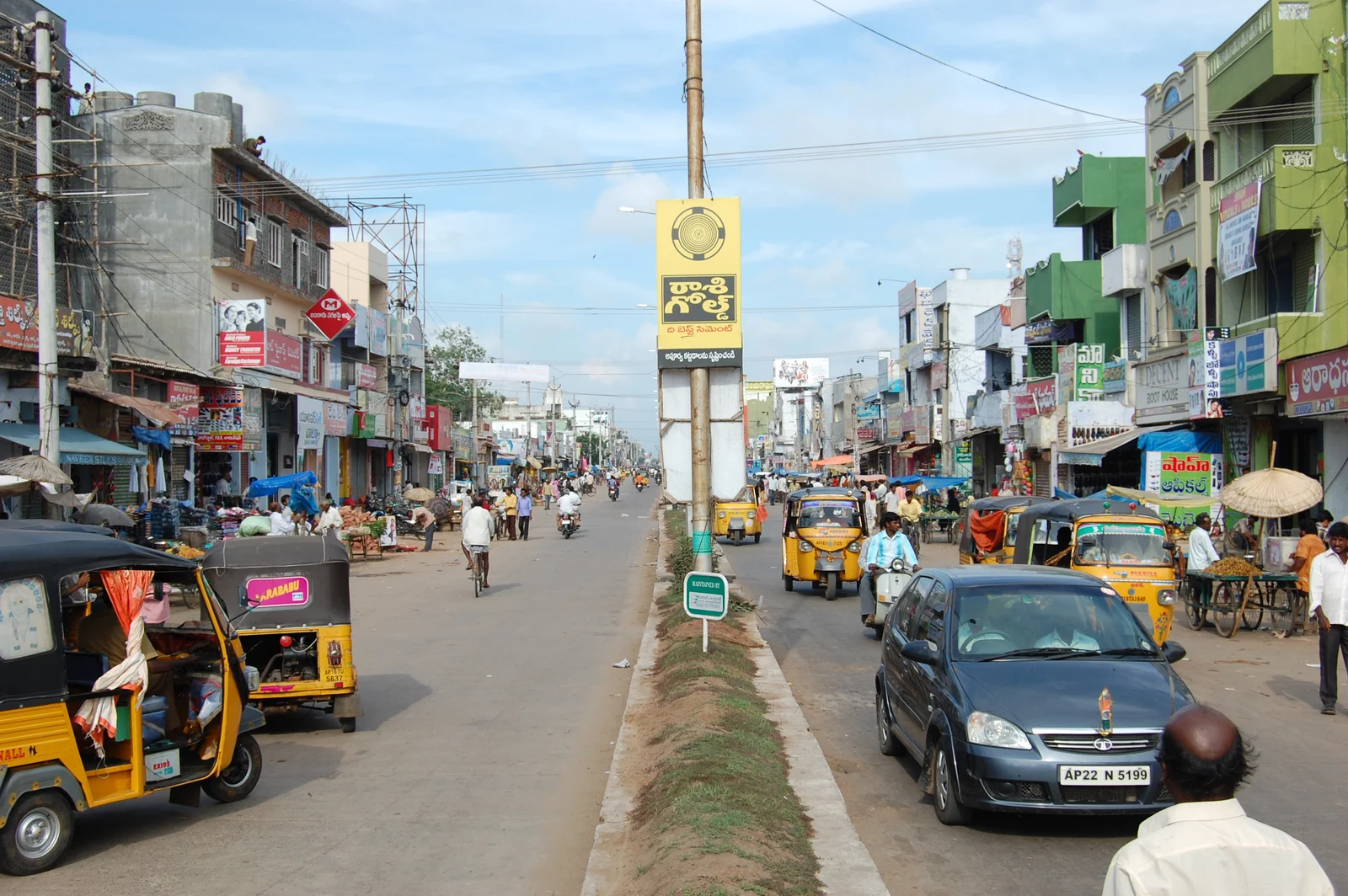
The production area of Bandar laddu recorded in the geographical indication Journal is the urban area of Machilipatnam and surroundings including Pedana, Gudur, Polavaram and Nidumolu. The raw materials listed are dried Bengal gram, local jaggery, and ghee from nearby dairy producers. The range in which the workshops stand and the range from which materials arrive can be read along the place names and map recorded in 2016.
Several accounts remain about the people who passed on the method. The association writes that the Bondili people moved from Bundelkhand and that their work was passed on to the town’s artisans. A BBC report in Telugu also carries a local account that the Bondili settled and began making sweets. In an article in which The News Minute visited local shops, an account is given that people who came from Rajasthan after the 1857 rebellion introduced it. Memories about the settlers preserve how the makers themselves tell the sweet’s origins. No contemporary record is known showing when the present process, using a perforated ladle and pestle, came together.
The Krishna district’s product guide features the Bandar Laddu manufacturers’ welfare association and Gowra Venkateswara Rao of Mallaiah Sweets, who served as its president. The district writes that at least 250 households in the town are engaged in production. What the association applied for was a geographical indication that presents the work of frying, making syrup, pounding and rolling together with the town’s name. In the Indian registry, Application 433 reads Bandar Laddu; the certificate date column shows 26 April 2017, and the registration certificate in the document list shows the 29th of the same month. A 2019 government reply in the Lok Sabha, the lower house of India’s Parliament, gives 29 April as the registration date. The registry records that the application was filed on 29 July 2013; that year has a different significance from the accounts of the sweet’s origins before the twentieth century.
In 2012, makers from the association brought sweets from the town to the traditional-food venue of the Fourth World Telugu Conference, held in Tirupati. The venue and year of the conference can be confirmed from a speech preserved by the Office of the President of India. TV9 Telugu reports that local makers set up a stall and also showed participants how the sweet is made. Although the name Tirupati appears here too, what was made and sold here was the sweet brought by artisans from Machilipatnam. At ordinary outlets, balls rounded to the same size are boxed according to the number the customer wants. A piece taken from the box is round and smooth, and when broken open and put in the mouth, the granules fall apart: bean dough fried once as thin strands, then pounded until the syrup cooled.
A box may also reach the celebrations of people with ties to the town. The News Minute, which visited the shops, reports that both Bandar sweets are served at weddings and receptions, and also at university welcome and farewell parties. The destinations the shop owners named included London, Australia and the United States. As for how much reaches overseas, according to the 2019 reply to the Lok Sabha, there is no trade item code specific to Bandar laddu, and no country-by-country export figures are compiled. What the shops remember about shipping destinations are examples of people who have left their hometown bringing the town’s sweet to celebrations as well.
Glossary
- Besan
- Chickpea flour made from the chickpea known as Bengal gram. For this sweet it is kneaded with water and then fried in ghee.
- Ghee
- A fat made by heating butter to separate out the water and milk solids. Used as frying fat and during shaping.
- Chakli
- In this article, besan dough pressed through holes into long, thin strands and fried in ghee. The term used in the association’s application.
- Jaggery
- In this article, sugar made by boiling down sugarcane juice. The blocks are crushed and water is added to make a syrup.
- Paagu
- The Telugu name for sugar syrup. In this article, the syrup made by boiling and straining jaggery.
- Rollu and rokali
- Stone mortar and wooden pestle. Used to pound the fried chakli.
- Boondi
- Flour dough fried into small granules. Cited in this article as an ingredient of the Tirumala laddu.
- Bondili
- The people said, by the manufacturers’ association and in local tradition, to have passed on the Bandar sweets.


