


SweetloreEncyclopedia of World Sweets (834)

Batheet
Batheet
Roasted wheat and dates, kneaded and served with coffee
Sugar Confections / United Arab Emirates

When roasted flour is added to dates, it spreads through the flesh and loosens into crumbs, yet it holds together when pressed by hand. Served on a plate and portioned a little at a time, or rolled into bite-size balls and arranged on a dish, it is batheet (البثيث, Batheet) of the United Arab Emirates (UAE). There are stories of households packing it for journeys long ago, and methods for serving it at celebrations today. Both use fragrant flour and the sweet date flesh that holds the flour together.
Roasting the Flour Before Mixing It with Dates
The dates are pitted, with the long, slender stone removed, and the flesh is used. Fully ripe, soft fruit can be mashed by hand and combined with the flour. The nutrition guide of the National Multiple Sclerosis Society in the UAE gives a method that uses commercial date paste, and another in which 250 g of pitted dates are soaked in hot water for about 15 minutes, drained and blended. In an Omani example, pitted dates are mashed with a little water. Even when the ingredient goes by the same name, the condition of the flesh at the start differs.
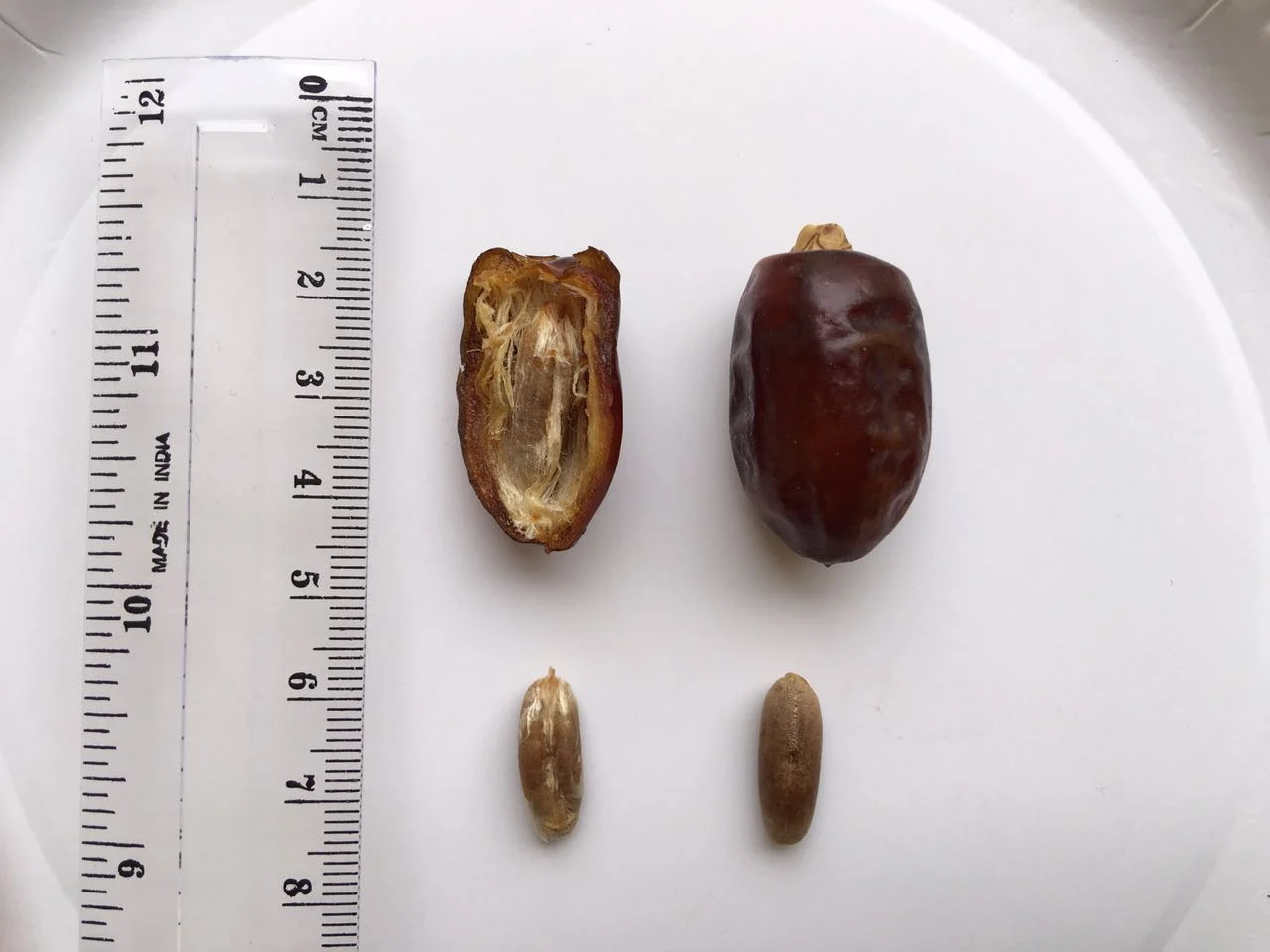
In the recipe by the chef Nabhan Abdulrahman published by House of Emirati Cuisine, fine wheat flour is set over low to medium heat and stirred constantly in a frying pan. The cue is that the flour turns from golden to brownish and gives off a toasty aroma. The pitted dates are mixed beforehand with samn, a clarified butter, and ground cardamom. The roasted flour is added while still warm so that its heat softens the dates and makes them easier to work together by hand.
In the nutrition guide, sifted whole wheat flour is stirred constantly in a heavy-bottomed pot for about 10 minutes to develop color and aroma. The pot is taken off the heat, and date paste, melted samn, cardamom, ginger and coarsely chopped nuts are added to the roasted flour. The guide also notes that if the mixture is too stiff to handle by hand, it can be warmed again briefly. In the chef’s method, the fat is worked into the dates first; in the guide’s method, the other ingredients go into the warm flour. So the place where mixing begins is reversed.
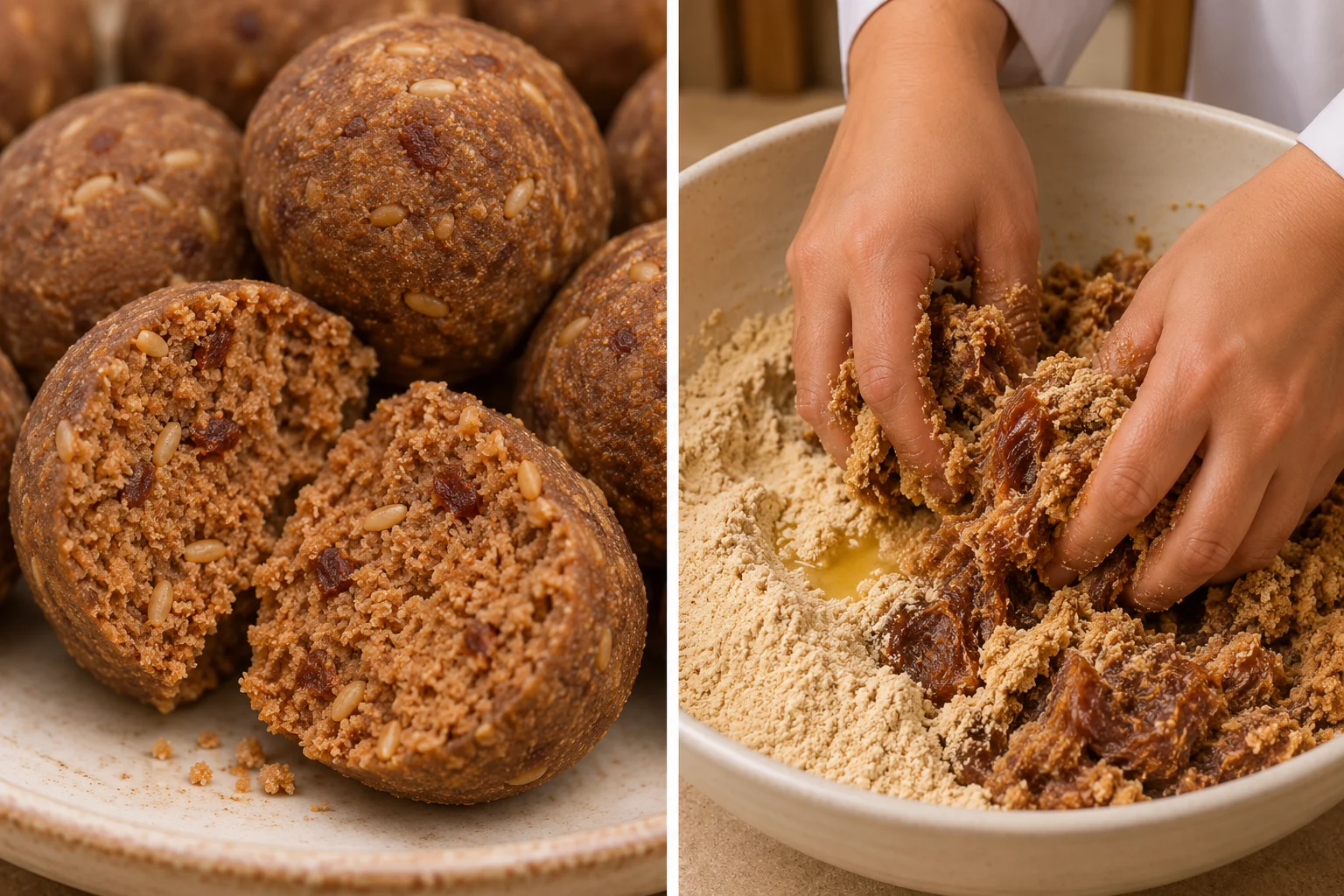
The quantities also differ between the two methods. The chef uses about 320 g of dates, 125 g of fine flour and about 30 g of samn. The nutrition guide calls for 1 cup each of whole wheat flour and date paste and half a cup of melted samn. One gives weights and the other volumes, so the corresponding figures alone cannot be used to compare the proportions of flour and fat. What can be seen is that, even though the type of flour and the condition of the dates differ, the flour is first cooked and only then combined with the date flesh.
Mixing in a Bowl, Returning to the Pot, Shaping by Hand
In the method Aisha Hamad AlMidfa contributed to Gulf Today, 1 cup of pitted dates is paired with a total of 2 cups of white or brown flour. The sifted flour is browned and transferred to a bowl, and butter, samn and date paste are mixed in. The mixture then goes back into the pot, and saffron, cardamom and fennel seeds are added as it is combined over medium heat. Crushed almonds and pistachios are the finishing touch. Besides the time spent roasting the flour alone, there is a further heating step to mix the flesh and flour again and to add the spices.
Traditional Dishes of Arabian Gulf, published in 1996, also has a version that is heated after mixing. It is for two servings and uses 140 g of dried dates, 68 g of flour, 50 g of butter and 2 g of ground cardamom. After the flour is dry-roasted, all the ingredients are kneaded together and heated over low heat until browned, and the book says it can be served either warm or cooled. The photograph shows a dark dough spread on a shallow round plate. It indicates that there were choices not only in how far to heat in the kitchen but also in the temperature and shape at serving.
In contrast, the example of the cookbook author Fatima bint Muhammad in the 2007 newspaper Al Etihad uses 1 kg of pitted dates. Cumin and fennel are first fried in butter, and the dates are added. The pan is then taken off the heat, and separately roasted flour, ground cardamom and cinnamon, roasted sesame seeds and grated nuts are mixed in, then kneaded by hand and rolled. She says that if the mixture is scooped with a measuring spoon before rolling, the pieces come out the same size and can be placed on paper. Here the spices are not all added at once; the seeds and the powders go in at separate stages. Set beside the 1996 cookbook and AlMidfa’s method, in which the flour is combined with the dates and then heated, this example shows that even with the same pot, the final mixing is done off the heat.
In the method the Omani media outlet Atheer gives, drawing on that country’s children’s encyclopedia, dates are mashed with a little water and kneaded with roasted flour. Once the mixture holds together in the hand, samn and either ground cardamom or a spice called "red seeds" are added. It is also called basisa; it is rolled and served at celebrations and the like, and may be coated with coconut or roasted sesame seeds. Because the flour and dates are bound first and the fat is added afterward, the order is the reverse of that used by the UAE chef, who adds warm flour to dates already mixed with fat.
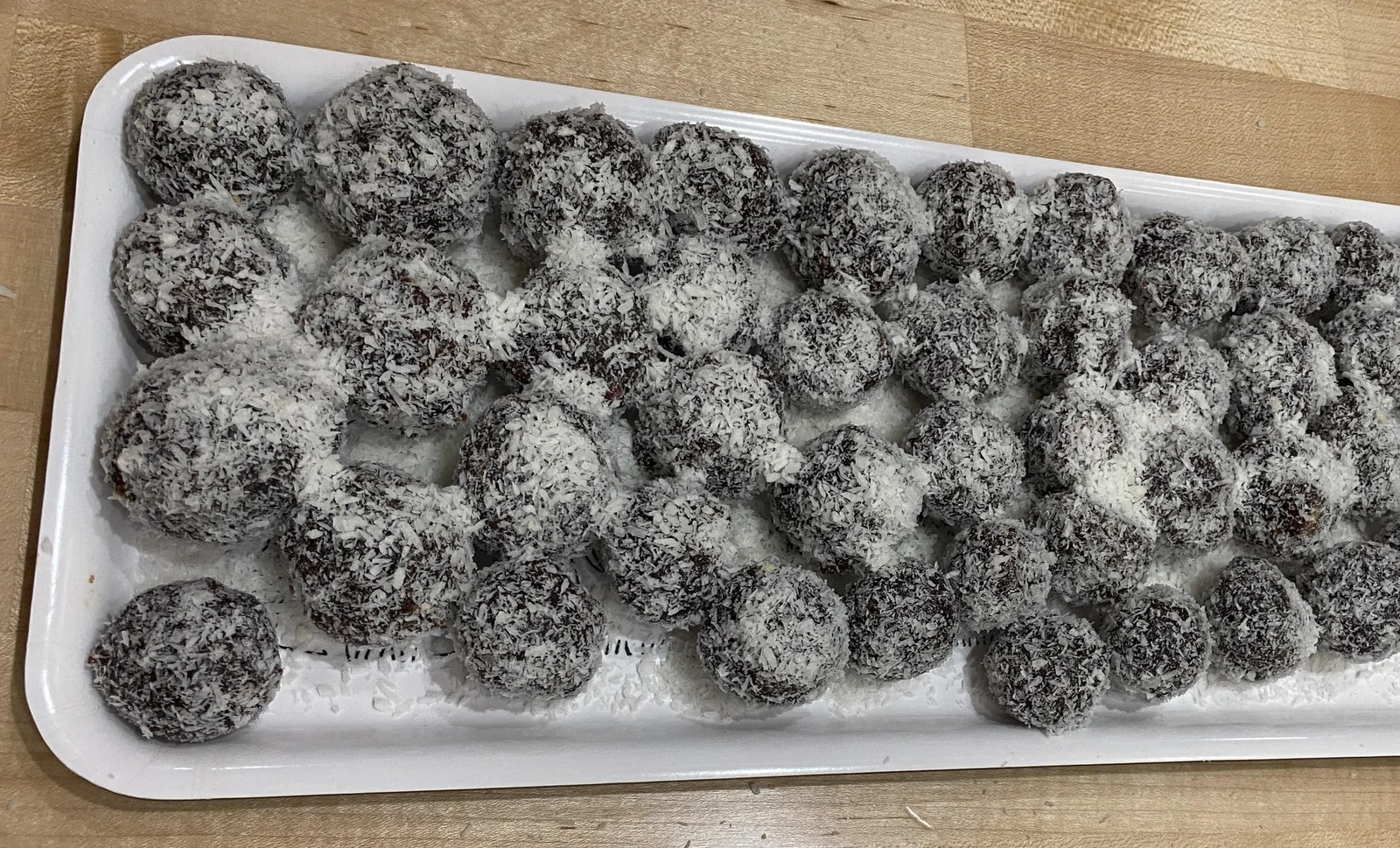
Batheet served on a plate is portioned with the dough in a crumbled state. For bite-size pieces, it is pressed together in the hand, and packing it into a mold, as in the nutrition guide, gives uniform outlines. The coatings the nutrition guide gives as examples include sesame and coconut, and in Bethica Das’s home recipe, crushed pistachios, roasted sesame seeds, coconut and dried rose petals are each used. The dates supply the sweetness, the flour and fat hold everything together, and nuts and seeds can remain on the surface. That is why both plated and individually portioned versions are possible.
Days for Floral Scent, and Days for Making a Similar Wheat Sweet
Das combines roasted whole wheat flour, pitted dates and butter with cardamom and saffron soaked in rose water. The Recipes Arabia recipe says rose water and saffron may be used to taste. Where Fatima’s cumin and fennel have their aroma drawn out first in fat, Das uses saffron whose aroma has been infused into water. The green of crushed nuts and the color of dried petals can also be added, but there is no need to layer all of them onto a single piece.
Umm Muhammad, interviewed by the newspaper Emirates Today in 2025, roasts the flour, adds samn and dates, and kneads them by hand. She explains that, because of this kneading, it is also called madrooka, and she adds cardamom, ginger and saffron afterward. Nuts and sesame are used to taste. Because the aroma is added to dough that has already been kneaded, the step of warming the flour and the step of deciding the combination of spices are separate.
Khabees, which appears in the Abu Dhabi cultural heritage register, also uses dry-roasted wheat flour. Here, sugar or honey is dissolved in water and boiled, then absorbed by the roasted flour. Over the heat, samn, cardamom, saffron and rose water are added, and the reserved sweet liquid is poured in to give a thickness like porridge. Khabees is adjusted for stiffness by stirring in the pot, and the register records the process through to transferring it to a dish for serving. In batheet, what binds the roasted flour is mainly the date flesh and the fat. Even if the flour is roasted over similar heat, whether it is simmered in a sweet liquid or kneaded into the date flesh decides the result: a sweet served in a dish and scooped, or one divided into small pieces by hand.
From Beside the Coffee to the Seas Where Pearls Were Gathered
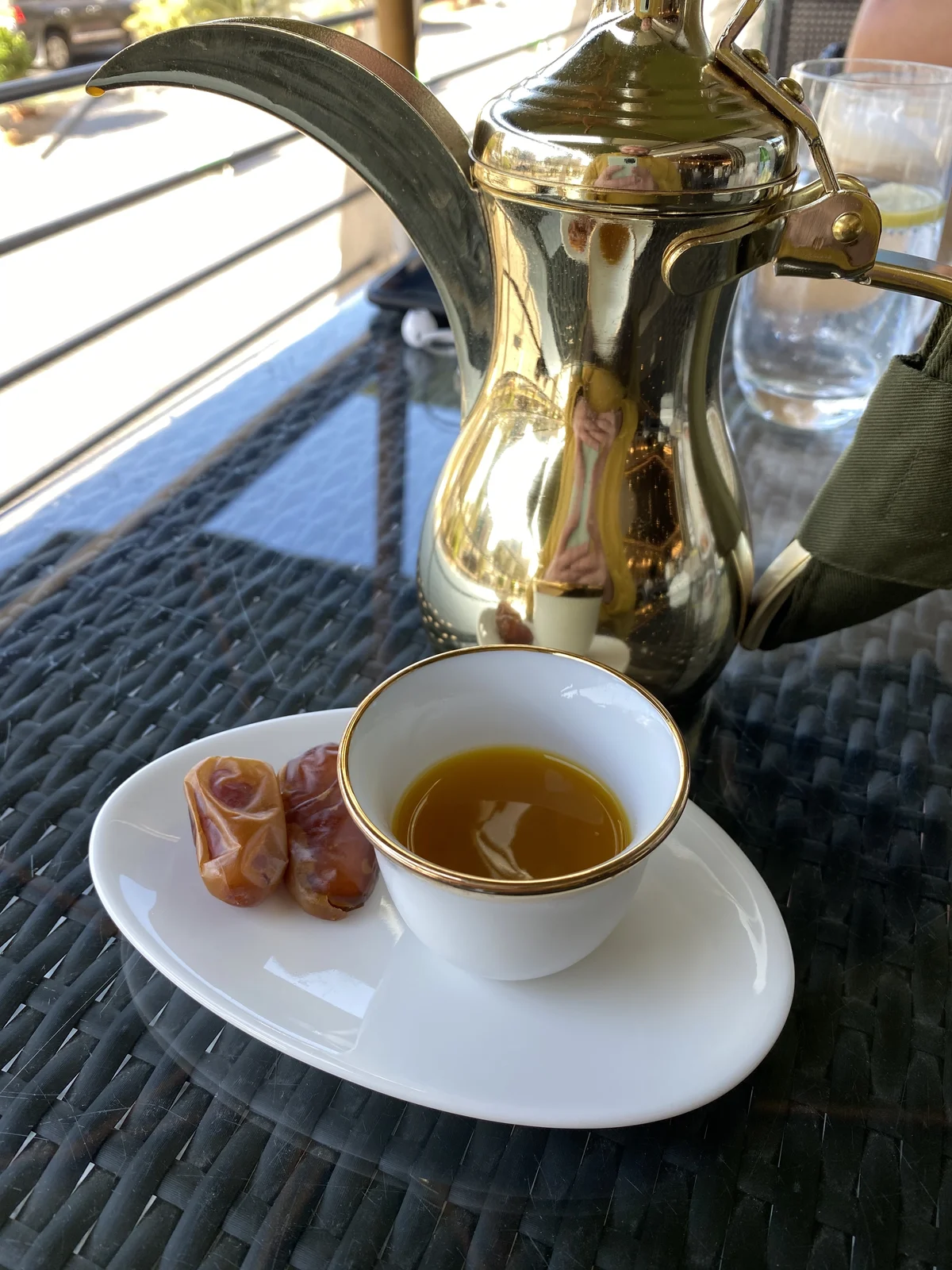
House of Emirati Cuisine says that batheet is served with warm Arabic coffee at family gatherings and celebrations. In the UAE government’s guide to food culture, coffee flavored with cardamom or saffron is poured into small handleless cups. Reading together the cook who grinds cardamom into the sweet and the household record of scented coffee, the same spices appear in both the date sweet and the drink. From a plate, a larger or smaller portion can be taken, and if the batheet is rolled, each guest can be handed a single piece.
Umm Muhammad says that she makes this sweet at any time, but that more people ask for it in winter and that she makes it during Ramadan as well. In the past, she says, it was also prepared for people setting out on pilgrimage and for those carrying supplies with caravans. The Emirates News Agency also records a Bedouin method in which flour, dates and samn are combined over heat and formed into a mass to be carried. AlMidfa recalled that her grandmother sent batheet along when the family went on a trip. Just as it can be portioned before being brought to the table, it was a sweet that could also be finished into a cohesive form that could be carried on a journey.
A 2013 trade magazine of the Emirates Culinary Guild describes betheetha (バティーサ), made by combining dry-roasted flour, dates and cardamom, as an item taken on pearl-diving voyages. There is an account of it being packed in large aluminum containers, and AlMidfa also relates that large quantities were carried on long sea voyages. Records of taking it away from home exist for both land and sea, but these sources do not reveal when the sweet of roasted wheat flour combined with dates was first made.
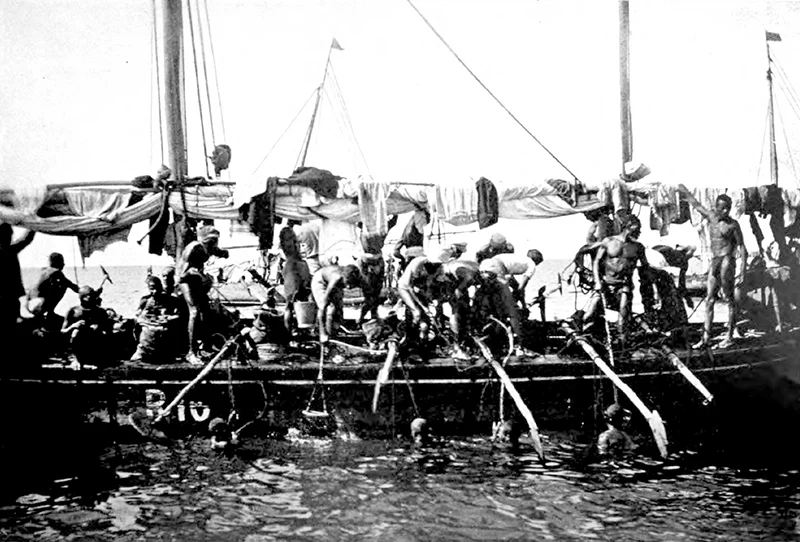
In another article on food culture, the Emirates News Agency lists fish dishes of the coastal areas, while naming batheet and madbas among the sweets made from the abundant dates. Batheet, which appears there as food of the divers who gathered pearls, uses dates grown on land, ground wheat and fat. The account of preparing sweets before going out to sea also preserves the ingenuity of turning a fruit grown on land into a form that could be carried elsewhere.
At Liwa, Passing On Knowledge from the Fruit to the Sweet
At the Liwa Date Festival and Auction in 2023, held in Liwa in the western part of the Emirate of Abu Dhabi (Al Dhafra), the cultural exhibition at the venue had 17 stations. It presented the steps of sorting out damaged fruit and the like from the dates taken off the tree, washing the dust from the surface, and soaking and drying them according to how they would be stored. Apart from the dishes that use the flesh, there was also a demonstration of a drink made by washing, roasting and grinding the removed pits and then brewing them. The pit, which is the first thing removed for batheet, had another use of its own, even though it comes from the same fruit.
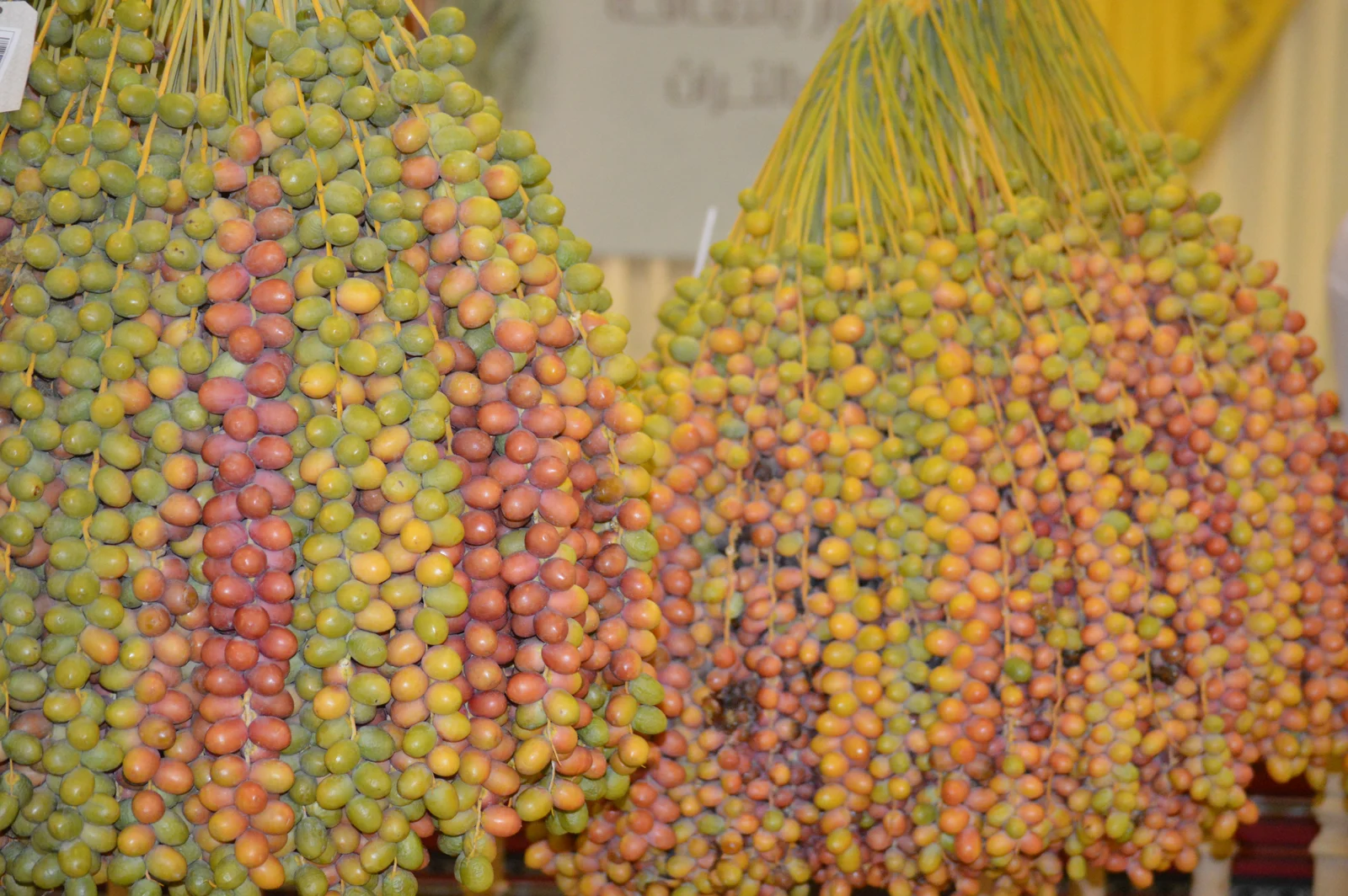
According to the Emirates News Agency, batheet was made at that cultural exhibition alongside mamrousa and shaasa, which also use dates, and the cooking and plating were taught to girls and mothers. The stories of packing food for a journey survive in memories and old articles, while at the festival the order of the cook’s hand movements can be seen. The aroma of the roasted flour, the softness of the date flesh and the way the mixture holds together when pressed by hand are passed on both for serving on a dish and for dividing into individual pieces.
Glossary
- Dates
- The fruit of the date palm. Here the pitted flesh or paste is used.
- Samn
- The Arabic word for fat. In the recipes presented here, it is used as clarified butter.
- Cardamom
- A spice that is ground and used to scent the sweet.


