


SweetloreEncyclopedia of World Sweets (834)

Louz of Yazd
Loz Yazdi
Sweetened nuts and coconut, cut into diamonds
Sugar Confections / Yazd, Iran

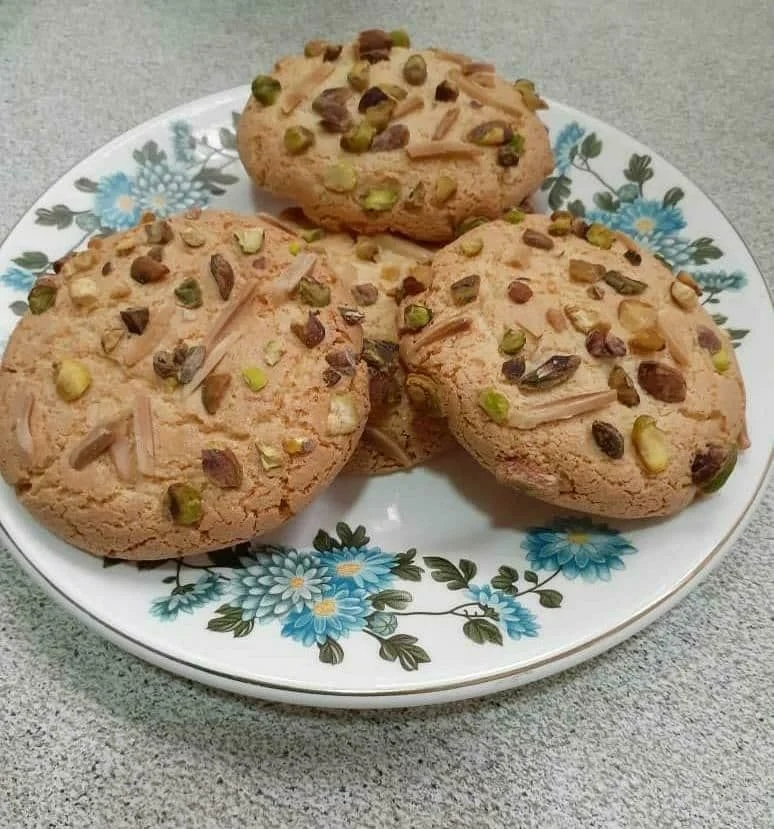
On top of one diamond-shaped piece sits a small amount of green pistachio. Bite in, and beneath the grains on the surface, the flavor of finely ground almond spreads. Louz of Yazd (لوز یزدی) is an Iranian confection in which almonds, pistachios, coconut and other ingredients are sweetened and bound together, pressed flat and cut. Some versions are scented with floral aromas, and some hold two colors in a single piece. When several flavors are lined up as a souvenir of a trip, the pieces share the same diamond shape, but the ingredients inside and what is placed on top differ from one to the next.
Grinding Almonds and Layering Floral Scent
The almond louz described in travel guides is made by bringing finely ground almonds, sugar and cardamom together into a dense dough and cutting it into diamonds. Some versions place a single almond or pistachio, whole or in a sliver, on top. The ground almond runs through the inside of each piece, while an intact nut remains on the surface. The almond forming the body of the sweet and the pistachio showing as a garnish are not in conflict. The small touch of green you see does not represent all of the ingredients beneath it.
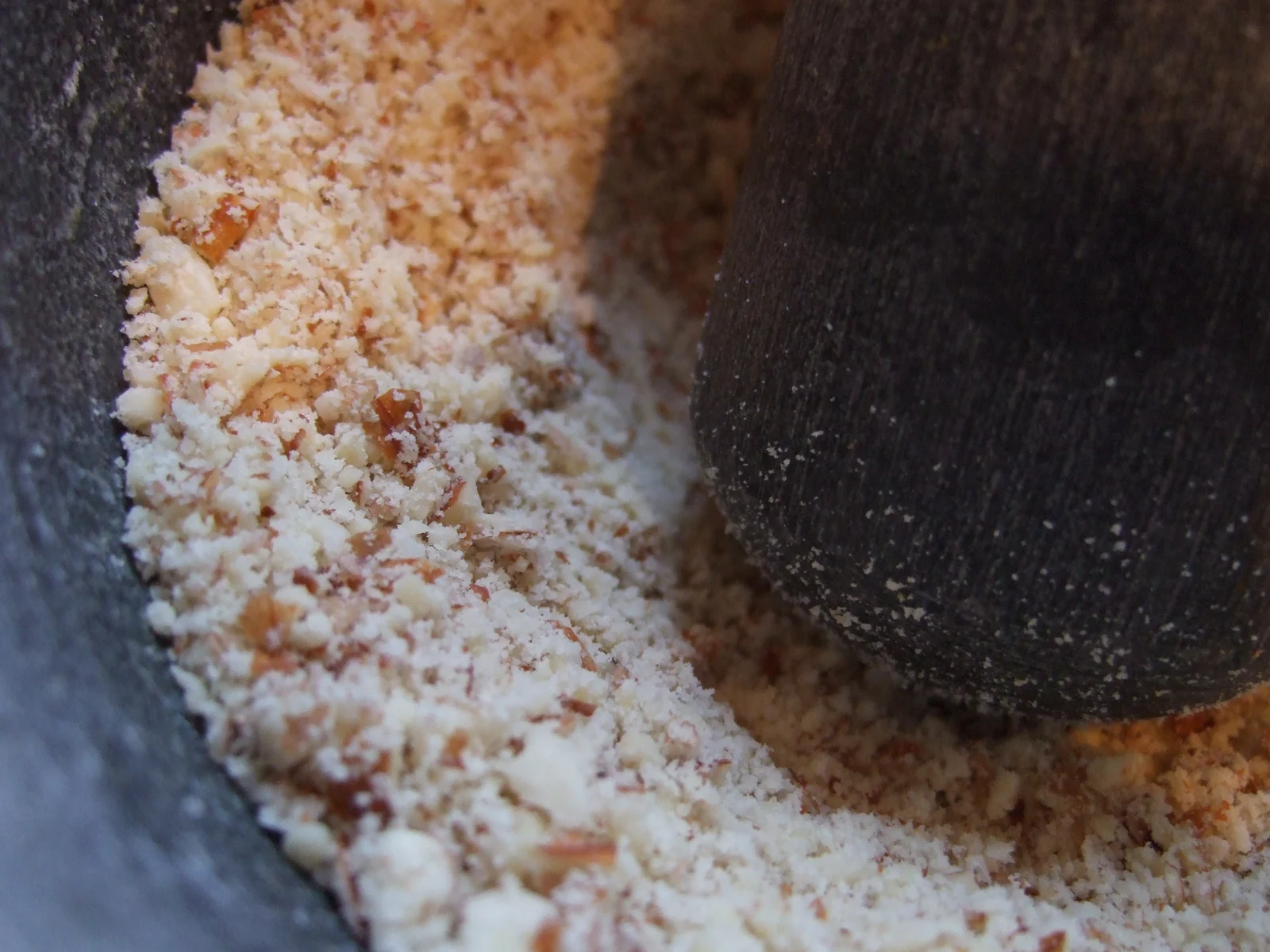
Dad Hotel’s souvenir guide and Persian-language articles include a sweet that combines almonds with bidmeshk. Bidmeshk is a fragrant relative of the willow, and for sweets its aromatic distilled water is used. In the version described, almond flour, sugar and egg white are combined with this scented water. Cardamom adds the aroma of its seeds, whereas bidmeshk carries a floral aroma in liquid form. Even when ground almond is the base of the sweet, the point at which the aroma is added changes the flavor when it is eaten.
The same souvenir guide also lists louz made mainly with coconut or pistachio. When a little green pistachio is placed on a white dough, and when pistachio is ground into a green dough itself, the same nut is met in a different part of the piece. Dad Hotel also presents a piece that holds two colors, pistachio and coconut. Whether two bands of color appear when the piece is seen from the side, or green is scattered only on top, is a clue to where the ingredients were placed.
Coconut, Combined with Egg White Divided in Two
A Persian-language home-cooking post for “Yazd coconut louz” calls for 1 cup of water, 1 heaped cup of sugar, 1 egg white and 2.5 cups of finely ground coconut, plus a further half cup of coconut, a small amount of citric acid and pistachios for garnish. The sugar and water are boiled down, citric acid is added at the end, and the syrup is reduced to about 1 cup, a little under a level cup. After checking the amount once it has boiled down, it is left to cool, and the ground coconut is combined later in a separate bowl.
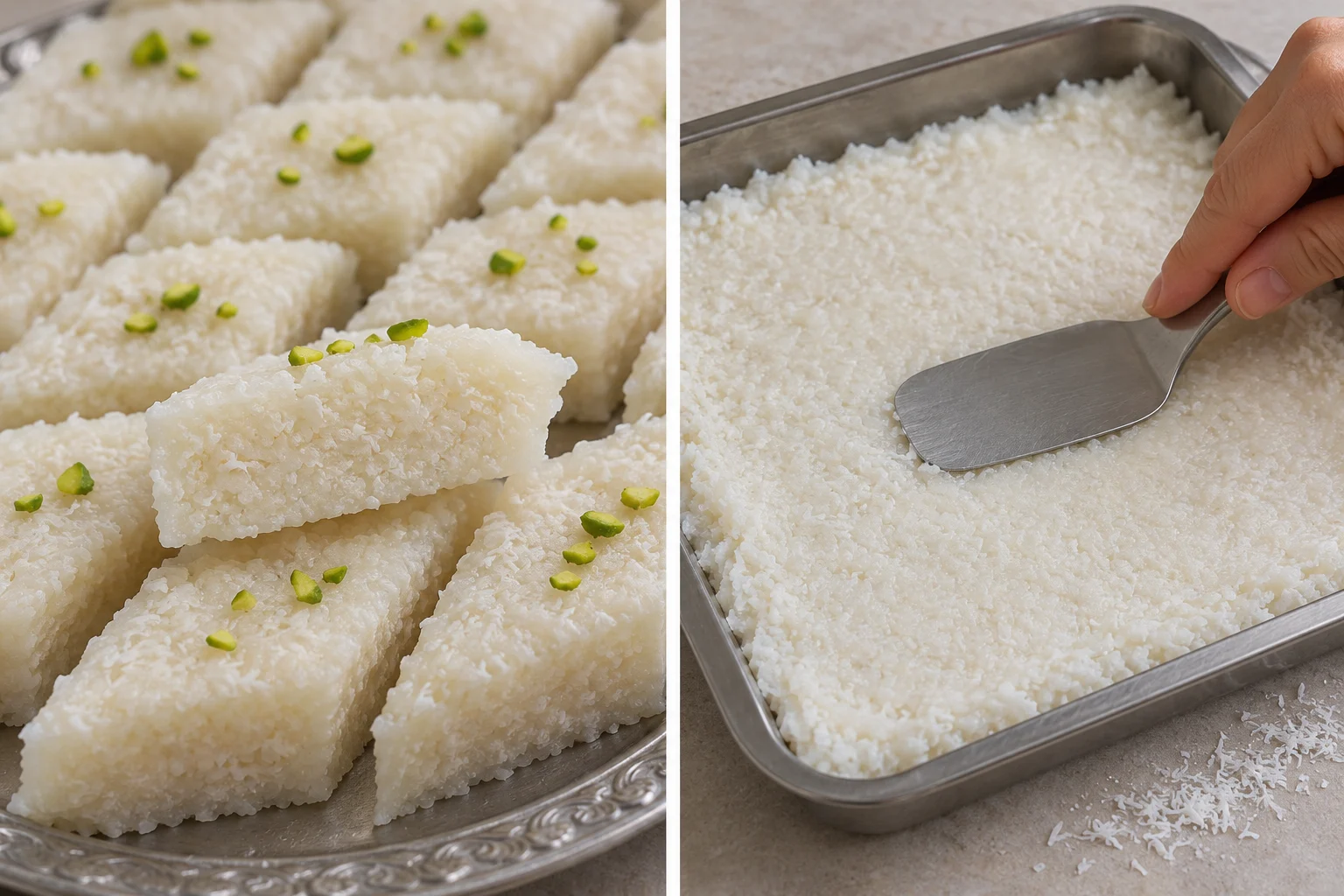
After the egg white is whipped, half of it is mixed with the cooled syrup and the other half with the ground coconut. The two are then combined, transferred to the bottom of a pan sprinkled with coconut, leveled with a spatula and sprinkled with pistachios. After resting in the refrigerator for several hours, it is cut into diamonds. Part of the coconut used in this white sweet is in the dough, another part is at the bottom of the pan, and the pistachios remain on top at the end. Because different things are placed at the bottom, middle and top before cutting, what shows on the sides and on the surface also differs when a piece is lifted out.
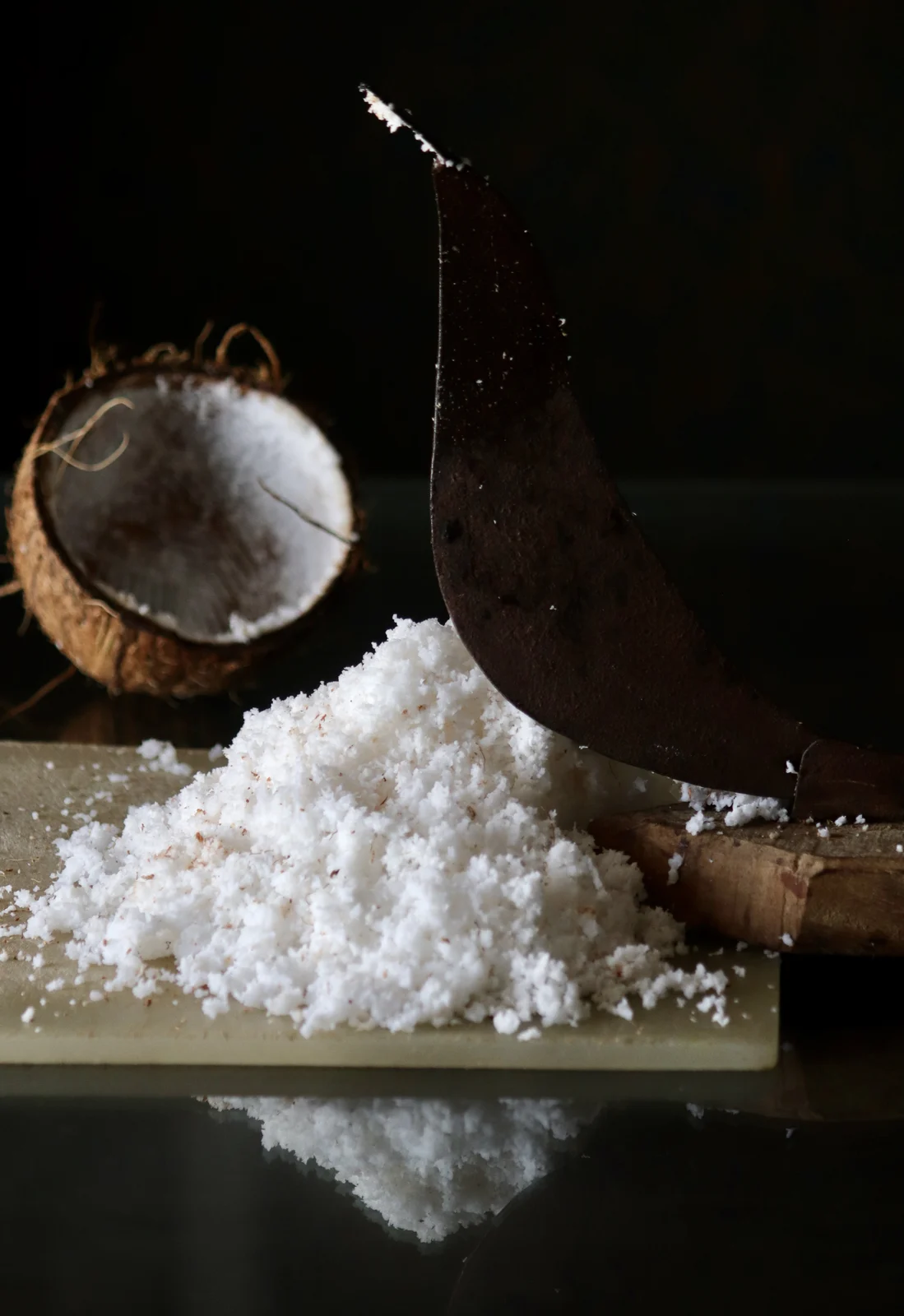
Rajiyeh Ghadimi, who published this post in 2019, lives in Bojnurd, North Khorasan Province, far from Yazd. Although it carries the name of Yazd, this is the procedure of a household in a different region making this sweet. The size or formulation of a piece sold in a shop cannot be determined from these quantities. It is, however, an example for tracing the order of work: a liquid is mixed into one portion of the egg white and the ground coconut into the other, and the mixture is chilled after being brought together.
Ghadimi uses a baklava pan as the vessel in which to scatter the coconut. Baklava is a sweet in which many thin sheets of dough are layered, with chopped nuts and the like placed between them. Even though the pan can be shared, here a single layer of white dough is poured over the coconut laid down and spread to an even thickness. When a cut piece is taken out, there is no separate sheet of pastry enclosing nuts, and coconut is visible all the way to the inside. The same shallow pan, kept close at hand, is used both for a baked sweet and for a sweet that is chilled and cut.
Pistachio Oil and Rose Water to Bind
The recipe in a Persian-language article that cites 365 Days with Iranian Vegetarian Cooking as its source uses 4 cups of pistachios, 1 tablespoon of rice flour, dark brown sugar or honey in the amount desired, and rose water. The pistachios are ground to a powder and then ground further until a little oil emerges and they approach a paste. The rice flour is toasted for a few minutes and combined with the ground nuts. After the rose water and honey are added and kneaded in, the mixture is spread in a rectangular pan lightly greased with oil. Here it is cut into diamonds and then chilled in the refrigerator for 2–3 hours. In the egg-white version, the sweet is chilled and allowed to settle before being cut. Both divide a single slab into several pieces, but the knife goes in before chilling in one and after chilling in the other.
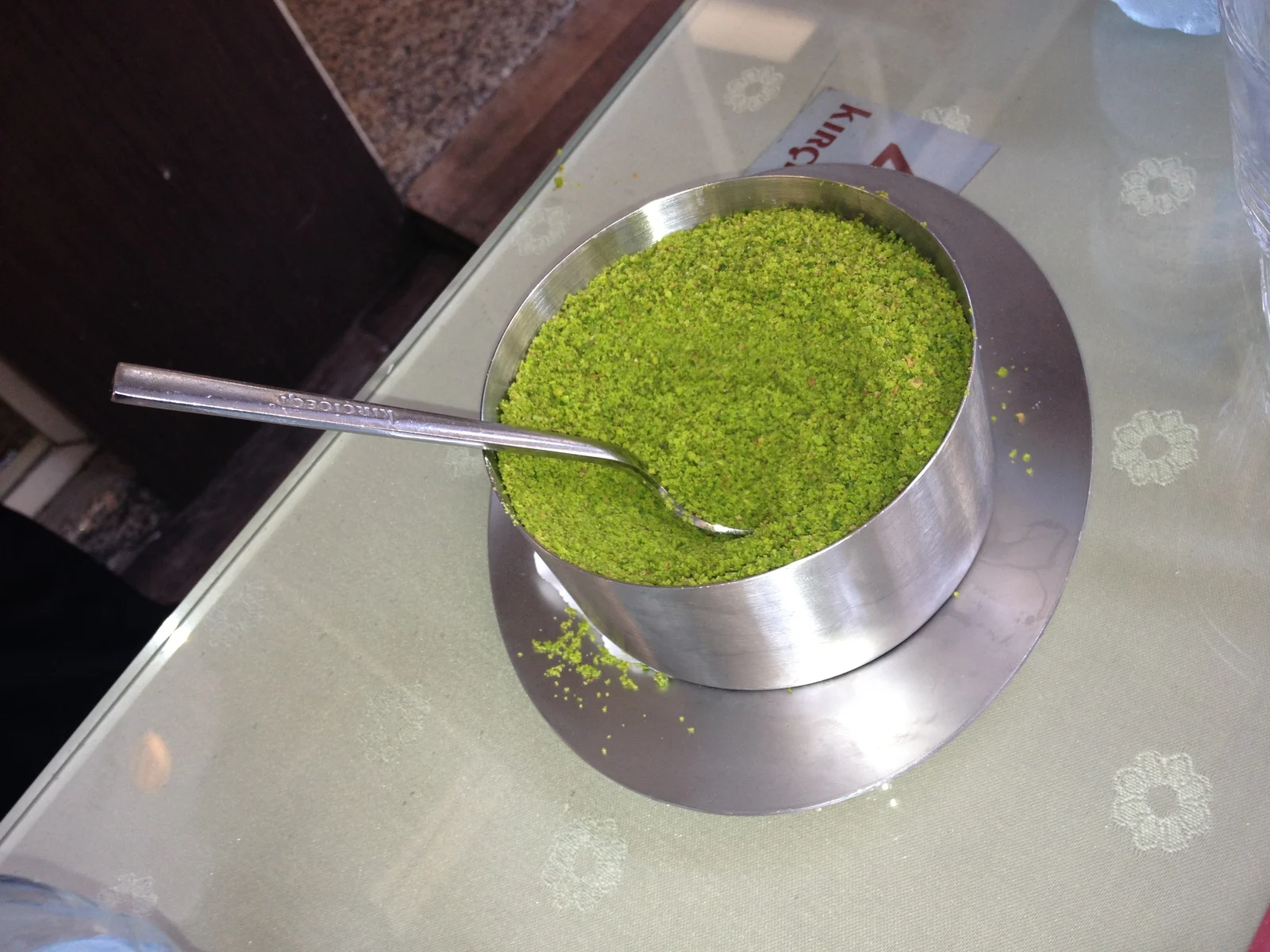
In the coconut version, the sugar syrup is heated first, then cooled and combined with the egg white before being moved to the pan. The pistachios are ground until oil comes out of the nuts, and a small amount of rice flour is also toasted and kneaded in together with the scented water and honey. The distilled water from rose flowers, and the bidmeshk in the almond version, carry the scents of different plants. Before the sweet is chilled to adjust its firmness, or a garnish is chosen by looking at the color of the surface, each dough has been given an ingredient that binds it into one mass.
A source that introduces two-colored louz lists a combination of pistachio and coconut. The order of layering and the temperatures used for shop-made pieces are unknown, but in the home coconut example the ingredients are divided between the bottom of the pan and the surface before chilling, and in the pistachio example the powder goes through the whole dough. When looking at a piece that places two colors together, you can tell whether the visible color is a garnish or part of the dough by whether green grains sit outside the white dough or green continues through the cut surface.
Whitening the Mixture and Adding Saffron in Tabriz
In the Tabriz louz published by the Persian Cultural Center in San Diego, USA, the almonds are blanched by changing the hot water to loosen the skins, and the peeled nuts are spread on a clean cloth and dried overnight. They are ground finely, and the Persian-language instructions have them sifted. Using commercial almond flour is also an option. The recipe calls for 5 cups of almond flour, 2 cups of sugar and 1 cup of water, and also uses powdered sugar, saffron and crushed pistachios. The flour and sugar are shared with the Yazd almond version, but what the center describes is one example from Tabriz.
Once the water and sugar have been boiled down and fully cooled, vinegar is added and the mixture is beaten with an electric mixer for 10–15 minutes until it is nearly white. Saffron prepared in hot water is added and mixed in further, and the almond flour is added little by little. The saffron is ground beforehand, combined with hot water and left for 10–15 minutes so that its color passes into the liquid. In the coconut version, the white foam comes from egg white. In this Tabriz example, the sugar syrup is whitened by mixing it with vinegar, color is added with saffron, and only then does the flour go in. When the mixture forms a mass that no longer sticks to the hands, it is moved to a shallow pan lined with paper or plastic wrap.
Plastic wrap is also placed over the dough, which is flattened, scattered with pistachios and leveled once more with a rolling pin. After chilling in the refrigerator for at least 8 hours or overnight, it is cut into diamonds or rectangles. The coconut version is also chilled before cutting, but what is laid on the bottom of the pan there is white coconut. The second pass of the rolling pin in the Tabriz example serves to even out the surface to which the green grains are attached. With an eye to which face will be shown to the guest and which ingredients will fill the inside of a piece, the cook prepares to cut pieces of the same size.
For Tabriz qurabiya, there is a method that uses almonds, sugar and egg white, pipes the mixture one piece at a time into rounds, scatters nuts on top and bakes them. The Yazd louz versions press finely chopped nuts into a single flat sheet and then divide it into diamonds. Even if nuts are visible on the plate, the order in which one piece is made differs between qurabiya, which is baked and then picked up as a single round, and louz, in which a knife goes into a mass of pressed dough.
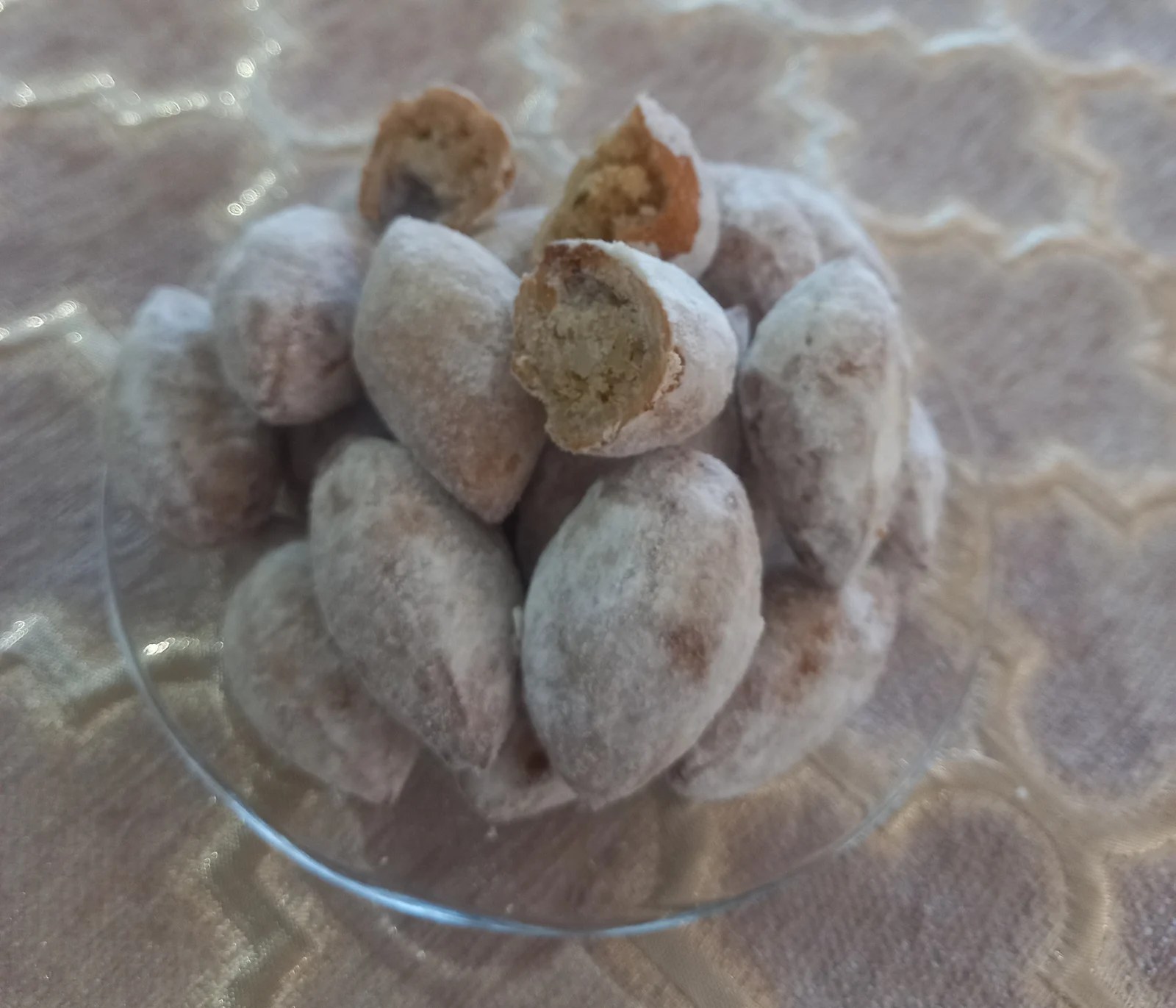
Yazd’s qottab is also an almond sweet, and a version in which a filling is wrapped in a shell and fried is well known. In the photograph of one broken open, the boundary between the powder-coated exterior and the fine filling is visible. Louz is not covered with a separate shell; the dough made by pressing ground nuts together is itself cut. Even with the same nuts, the surface first touched by the teeth differs between a sweet whose dough is closed and then heated and one in which a flattened sheet is divided.
Arranging the Pieces One by One in a Souvenir Box
The louz listed as Yazd louz in Persian-language souvenir guides are made with almond and bidmeshk, coconut, pistachio and other ingredients. Dad Hotel also presents them, including a two-colored one. Because sweets are also made under the name louz in other places, the name given at the time of purchase and the ingredients and aroma inside are clues to which version it is. Some accounts say that Yazd louz is an old sweet. Records of present-day methods and the range of souvenir products cannot confirm the year or place where it began to be made, or how it was transmitted in relation to Tabriz.
The Yazd confectionery shop of Haji Khalifeh Ali Rahbar states in its company history that it opened a small workshop in the city’s Haji Ghanbar Bazaar in 1916. In the shop’s metal box called “Five Louz,” it lines up two rows each of coconut, saffron louz and baklava, and one row each of pistachio louz and almond louz. Though the name is Five Louz, the baklava in the same box is a sweet of layered dough and nuts. Nor are the four kinds of louz a single formulation made smaller. By lining up different flavors in long rows, the box lets the buyer choose among colors and aromas on opening it. The workshop’s founding year is that shop’s own record. The year in which Yazd louz as a whole began is not known.
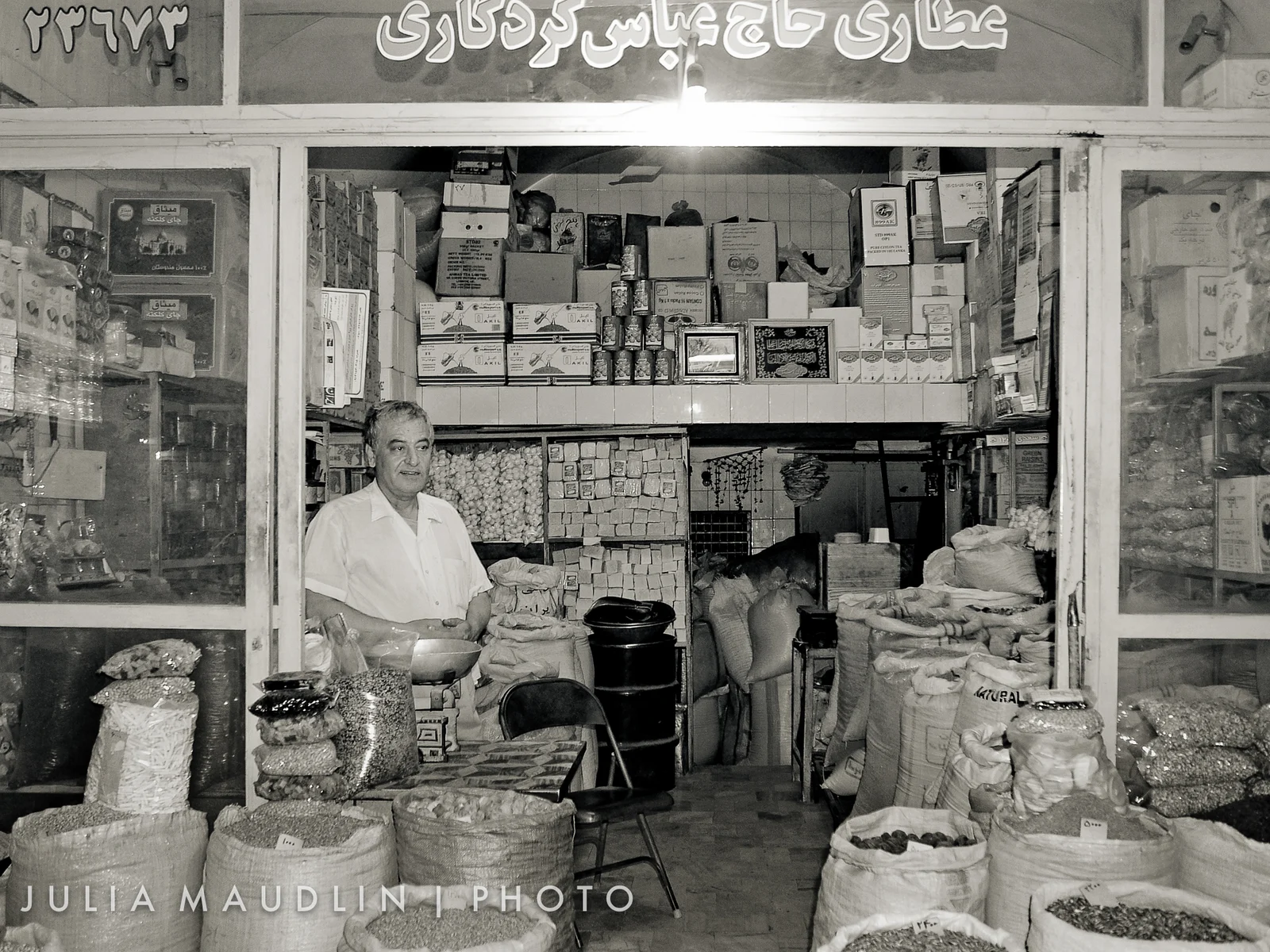
A teaching resource for studying the industries of Yazd Province lists coconut louz along with baklava, qottab, pashmak and others. It is recorded by name both as something placed in the souvenir boxes of visitors to the city and as something made locally. In photographs of markets taken in Yazd, nuts and dried fruits sit in baskets and sacks as raw ingredients. The form in which they are sold differs from photographs of finished products packed in boxes at confectionery shops. In the markets, ingredients are sold with their colors and grain sizes in view, but when they are made into louz, the powder is kneaded little by little to the thickness of a piece. Even for the same green nut, the maker chooses whether it remains as grains until it goes into the box or is ground and set within the surface. The green sprinkled on top and the green inside a piece are in different places when you open the box and look. With almond, the flavor of the ground nut is inside the bite, whereas green on white coconut is a garnish. While the diamond outlines are lined up, one can choose pieces of differing colors and aromas one at a time.
Glossary
- Louz
- a name for sweets in which ground nuts, coconut and the like are sweetened, bound together and cut into pieces.
- Bidmeshk
- a fragrant relative of the willow. Its aromatic floral distilled water is used in sweets and elsewhere.
- Rose water
- fragrant water obtained when rose petals are distilled.
- Cardamom
- a spice used for the aroma of its seeds.


