


SweetloreEncyclopedia of World Sweets (834)

Bertolina
Bertolina
Baking strongly scented grapes whole in autumn Crema
Cakes / Crema, Lombardy, Italy

Bertolina (torta Bertolina) is a sweet made in and around Crema, in the northern Italian region of Lombardy, in which autumn grapes are baked together with the dough. It uses uva fragola, a small, strongly scented grape, which is either layered between sheets of bread dough or mixed into a soft cake batter. As the berries cook and split, their juice seeps into the dough and leaves small hollows on the surface. A cut slice has soft pulp and the slight crunch of seeds, and the surrounding dough ranges from something close to bread to a crumbly tart pastry.
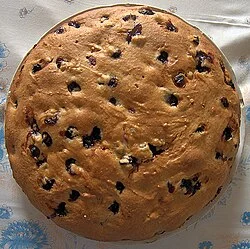
Whole Berries Go In Unbroken, and the Oven Brings Out the Juice
The Crema tourist information page also calls uva fragola "uva americana." The grape is small, but its sweetness and acidity are intense, and its flesh is soft like jelly. The clusters are washed, the berries are removed one by one and dried, and they are added to the dough without being crushed. Spots of pulp and juice colour appear on the cut surface because the berries are not all mixed in and crushed before baking. According to the city’s page, the seeds become easier to crush between the teeth once cooked, leaving a small bite within the soft dough.
The food atlas of ERSAF, the Lombardy regional agency for agriculture and forestry, lists wheat flour, corn flour, sugar, powdered sugar, butter, oil, eggs, vanilla and grapes as ingredients in the Crema area. Some versions use baker’s yeast, and others use a chemical leavening agent to save time. One round example weighs about 1.5 kg. It is put into a heated oven and baked until the berries split and the dough turns from golden to brown, then dusted with powdered sugar. In an account of a household that used bread dough, grape juice ran out of the layered dough and left colours from brown to purple. Besides the unevenness of the baked surface, the areas rich in juice show as colour on the cut surface. In shops it is described as a fresh pastry placed in a box at the time of purchase.
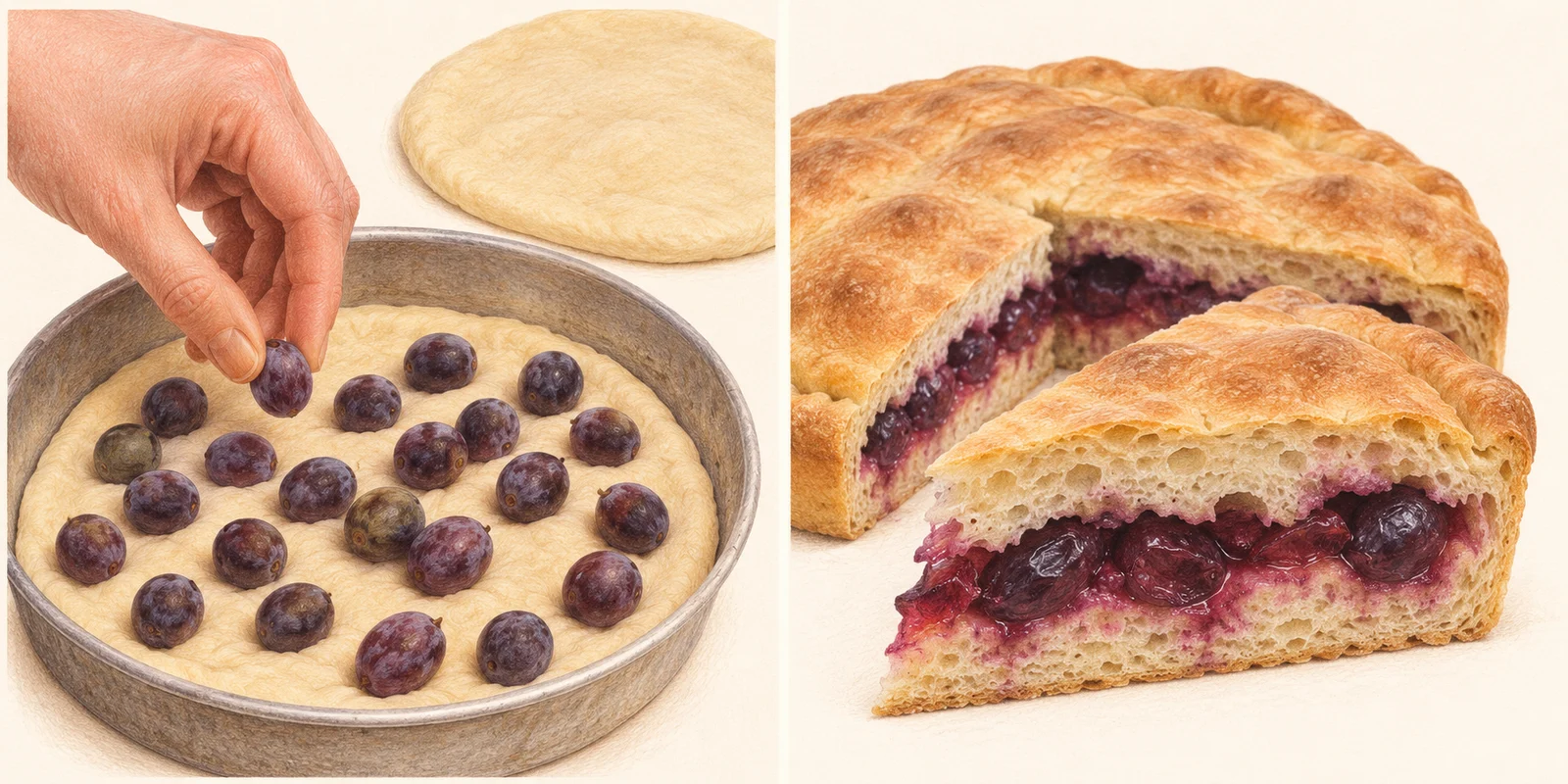
Layers of Bread Dough, and a Slice with Berries Mixed In
The city of Crema lists four ways of making it: grapes mixed into a yeast-leavened focaccia; bread dough used as a lid to enclose the fruit; a tart enclosing the fruit in frolla made with corn flour and olive oil; and a cake batter leavened with a raising agent, with the berries mixed in. When berries are scattered through the dough, the pulp appears sparsely in a cut slice. When the grapes are arranged between layers of dough and baked, the pulp and juice gather into layers. Whether the berries are mixed in or layered, the places where the same grape’s aroma spreads also change.
In the method of Carla and others, collected by a Crema food-culture association, risen bread dough is laid in a tall round pan greased with fat, dried grapes are placed on top and sprinkled with sugar, and more dough and berries are layered over them. Carla remembers a tall, strongly scented sweet. She recalls sprinkling extra sugar whenever it could be had, and how the juice that spilled over after baking stained tongues and even clothes. Also recorded are the grape arbors of the Pergolette district and carrying the sweet to the communal oven in autumn. The purple streaks that run through a slice of the tall sweet come from the fruit having been arranged together between the layers of bread dough.
In the bread-dough version relayed by the national federation of food-culture associations, the cook used lard or butter, which farm households had on hand, plus a handful of fioretto, a fine corn flour used for polenta. Sugar was precious, and some households used little of it. After covering the fruit with bread dough, sugar was scattered on top, a cloth was laid over the pan, and it was left in a warm place for about 2 hours to rise. The household kitchen handled the work up to enclosing the fruit; once the dough had risen, the pan was taken to the oven.
Another account says the pan was wrapped in a sturdy cloth, the four corners were tied, and it was entrusted to the children to carry. At the village oven, the pan went in after the last of the bread had been baked. The sweet, collected after waiting until the afternoon, was still lukewarm, and juice sometimes spilled from the dough. The time needed to carry it to the oven and the order in which bread was taken out also affected the hour at which the sweet could be eaten. This arrangement, in which a village shared a single oven, differs from today, when a home oven can be used at any time.
The 2018 survey by the Cremona delegation of the Accademia Italiana della Cucina also includes households that layer bread dough and grapes in two or three layers. In some households, sugar and grapes were cooked separately, and the fragrant juice was poured over the sweet after it came out of the oven. Apart from the juice that soaks into the dough layers, this can add grape aroma to the surface, where the sugar bakes into a thin crust. It is a method that involves both baking with the fruit held inside the dough and pouring juice over it after baking.
In the recipe (ingredient proportions and method) of a Crema contest winner, presented by the national federation of food-culture associations, 700 g of black grapes removed from their stems are used for 500 g of flour. A soft dough of eggs, butter, olive oil, milk, a little corn flour and a leavening agent is spread into the pan with a fork; about one third of the whole forms the first layer, and half of the lightly floured berries are placed on it. The berries are arranged out to the edge, sugar and oil are added, and a second layer is built up in the same way. The remaining dough is laid over the top and smoothed with oiled fingers, then sugar is sprinkled on and it is baked at 200°C for 40–50 minutes. The berries and streaks of juice that show through resemble the bread-dough versions, but the dough is one containing egg and milk and leavened with a raising agent, rather than a fermented bread dough.
Franco Cremonesi of the Dossena pastry shop, presented by the same federation, recommends using more than twice as much grape as flour. The contest example uses 700 g for 500 g. Both have a high proportion of fruit, and the amount varies. The cook Stefano Fagioli presents a version in which a crumbly, sabbiosa-style dough is served with grape sauce. Besides the form in which layered berries are chewed together with the dough, there is a form in which the grapes are made into a sauce that adds flavour to a crumbly dough.
Local Grapes, and a Winter Sweet Called by the Same Name
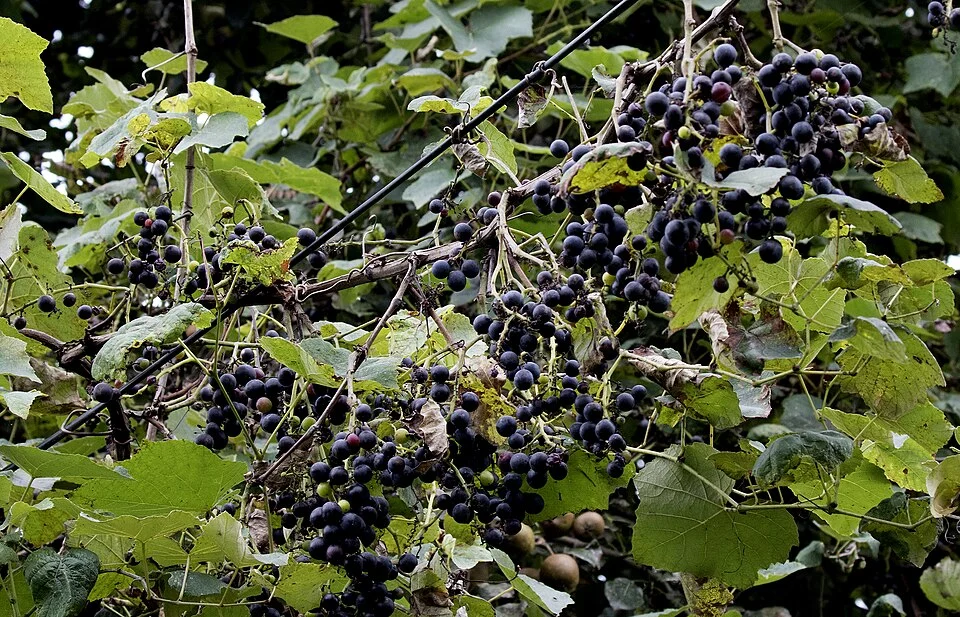
In the 2008 issue of the Crema city journal Insula Fulcheria, Vincenzo De Cesare describes bertolina as an autumn sweet that households make with the local Clinton grape. He cites page 60 of a 2001 book on the region’s food culture. The same grape was once also used to make a local wine called Cremaschi. In the Treccani dictionary, Clinton is a hybrid of two North American grape species, with nearly black round berries and a flavour reminiscent of strawberry, and is said to have been grown in Europe from around the second half of the 19th century. The uva fragola of the city of Crema is a broader name, and its introduction from North America is explained as having taken place in the 19th century. Which grape name was used is a clue to household ingredients, separate from the question of when the sweet came into being.
The city of Crema also relays the story of sisters who sold bread and sweets in Trescore Cremasco. Some see the name as recalling the peasant father and son Bertoldo and Bertoldino, since the sweet is rooted in farming villages. The sisters’ story and the explanation of the name are tradition and conjecture. Looking at the ingredients of other sweets that remain in Crema, as given in the same journal, spongarda wraps a kneaded mixture of nuts, candied fruit, raisins, honey and spices in pastry, and treccia d’oro puts candied orange and citron and raisins into a folded dough. Their seasonal conditions differ from those of the two sweets that use preserved fruit; bertolina is recorded as a household sweet baked with fresh autumn berries.
Sources from the nearby city of Cremona mention a winter sweet that is presented in connection with the same name. In the diary of Giuseppe Bresciani from 1638, what appears is a Christmas focaccia. In Giovanni Ronati’s 1898 work, which the city presents, the name bertolina is used for a winter focaccia with small onions, sweetened with powdered sugar. A scene in which a character takes it out during a theatre interval and the surrounding spectators notice the smell of onion is included in the Accademia Italiana della Cucina survey. The turta bertuina recorded in Soresina, also in the province of Cremona, likewise has no uva americana among its ingredients. The autumn grape version, the winter small-onion version and the Soresina ingredients are each recorded with their own place and period.
The modern bertolina that the city of Cremona entered in its municipal denomination register (De.Co.) on 19 December 2007 is an autumn grape sweet. The recipe the city gives uses 600 g of grapes, 350 g of flour, 150 g of corn flour and 75 g of sugar, with olive oil and a leavening agent, baked at 180°C for 45 minutes. The dough of flour and sugar is rested once, the berries are added, and it is rested again. The round shape, the powdered sugar on the surface and the hollows left by split berries are also found in the regional description that covers Crema and its surroundings.
Comparing Versions in Piazza Duomo
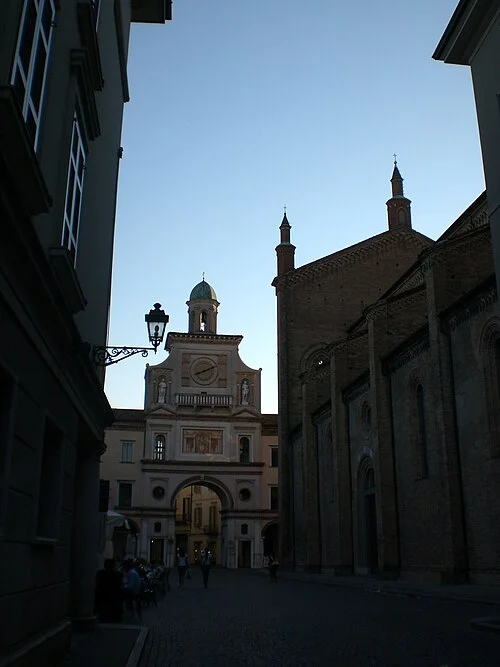
The Crema tourist association announced food stalls and a contest for the 46th Sagra della Bertolina, held in Piazza Duomo on 13 September 2026. The federation of food-culture associations records the festival in the same piazza as continuing since 1980. According to local reporting in 2025, the contest judged appearance and baking, whether the entry was made with bread dough, cake batter or frolla, the proportion of dough to grapes, and taste. The judges look not only at the weight of the grapes but also at the type of dough enclosing the fruit and at the baking. That year there were 54 entries, and local reports say ten judges, including pastry makers and tasting specialists, evaluated them. Rather than competing on a single standardised recipe, the festival judges the fruit proportion and baking of each entry one by one, which reflects its acceptance of many kinds of dough.
Matteo Barbaria, who covered the festival, compared four versions: a soft cake, one made with bread dough, one enclosed in frolla, and a light one in the style of torta paradiso. He writes that the bread dough had a chew, that in the frolla version one could taste the dough enclosing the fruit, and that the paradiso-style version was light. Sweets that were once carried from homes to the communal oven now gather in the piazza in different bakes. Because each household makes it differently, a dish with the same name lets one see the differences when chewing pulp and dough together.
In Prato, in Tuscany, there is also a harvest-season pan con l’uva. The traditional grape presented by the tourist office is canaiolo, which is small but has many seeds, and it appears in shops from the end of August to the beginning of October. The way juice enters the bread dough and leaves purple of varying depth is similar to the bread-dough bertolina of Crema. A slice from Crema carries the sweet-tart aroma of uva fragola, and besides versions close to bread, there are also cakes and frolla into which abundant juice is mixed.
Glossary
- Uva fragola
- The name used in Crema sources for a small grape with a sweet-tart aroma. The berries go into the sweet whole.
- Clinton
- A hybrid grape of North American origin. It is recorded as an ingredient of bertolina in research on Crema’s food culture.
- Frolla
- A dough used for tarts and enclosed bakes. In Crema there is a version made with corn flour and olive oil that encloses the grapes.
- De.Co. (denominazione comunale)
- A municipal denomination register by which a local authority records the specialities of its area. The city of Cremona lists bertolina in its municipal list.


