


SweetloreEncyclopedia of World Sweets (834)

Tarta de Mondoñedo
Tarta de Mondoñedo
A tart in a Galician town that layers pumpkin filling and almonds
Cakes / Galicia, Spain

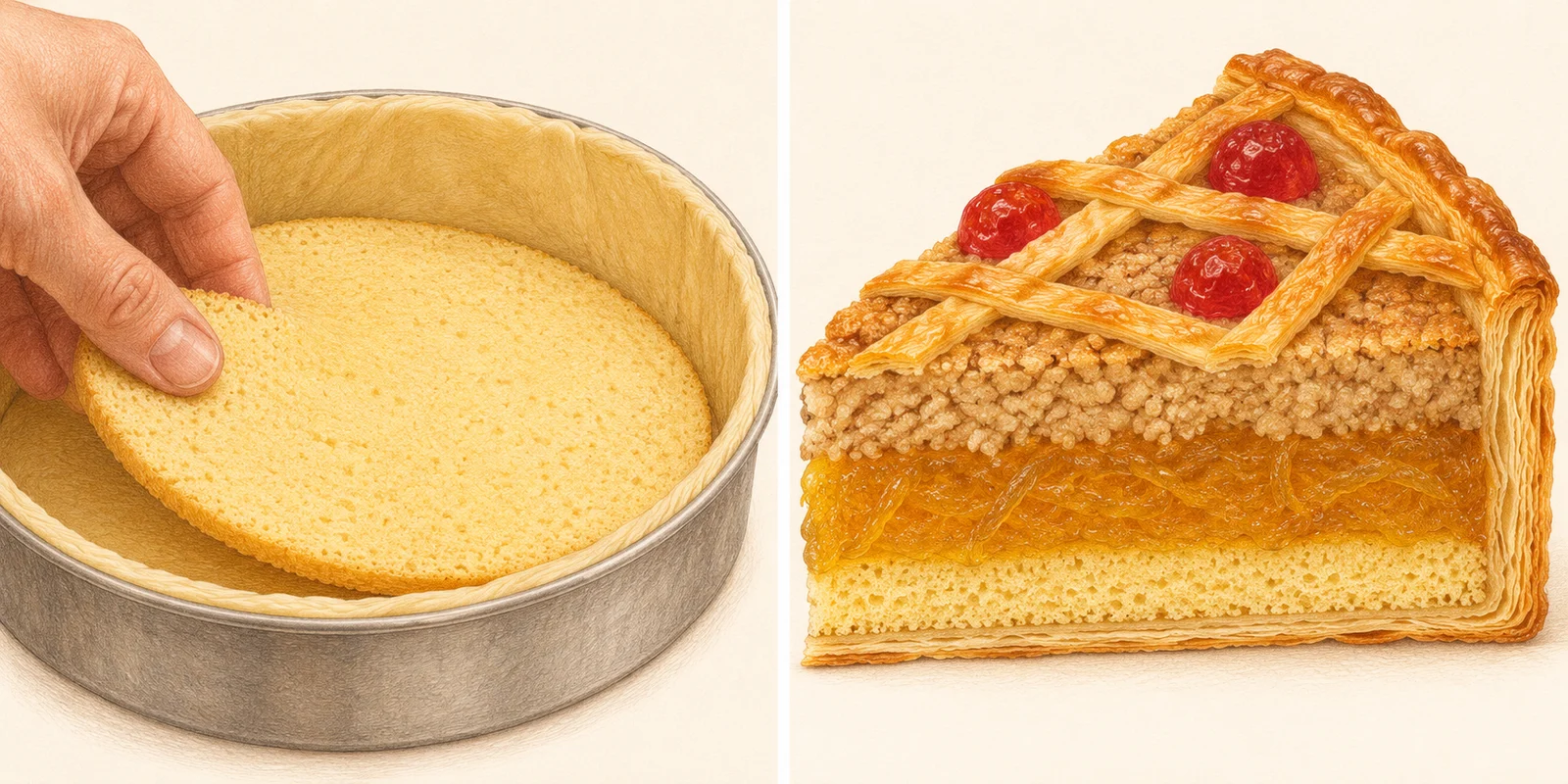
Cut a slice, lattice strips and all, and you find at the bottom a sponge soaked in syrup, above it a filling that keeps the fine fibers of pumpkin, and on top almonds coated in syrup. This is the tarta de Mondoñedo, from Mondoñedo in the province of Lugo, Galicia, in northwest Spain. Puff pastry supports the three layers from beneath and also crosses over the top in thin strips. Some versions add candied fruit in red, green or orange after baking. On a plate, a slice stacks a frame that cracks crisply, a moist sponge, threadlike pulp and chopped almonds.
A Sponge Baked First, Laid in the Pastry Shell
Puff pastry is called hojaldre in Spanish and follado in Galician. Laid in a round mold and carried from the base up the sides, the dough becomes a shell to hold the filling. The home recipe from Bon Viveur uses a mold 20 cm in diameter and 5 cm high. A rectangle of dough is fitted to the outline of the mold, and the part that overhangs the rim is saved for the lattice strips later. Dough from a single sheet forms a wall around the filling when the tart is cut, and a frame that does not entirely hide the layers when seen from above.
The same recipe bakes only the sponge first. Eggs and sugar are whisked, flour is folded in, and the batter is baked at 180°C for about 20 minutes. From the cooled sponge, 125 g is taken, crumbled and soaked with four to five tablespoons of syrup. Even when soft ingredients are added afterward, the base already holds a sponge that has been cooked and given its crumb. Because the sponge is placed in the assembled pastry shell, the outer dough and the ingredient that stays moist inside are prepared separately before the whole tart is baked.
For the sponge in this recipe, 75 g of wheat flour is sifted and folded with a spatula into the whisked eggs and sugar. As the batter is baked as a single sponge, air bubbles remain in it, and when it is crumbled later, the syrup enters that crumb. The ingredient that becomes the moist layer of the finished tart is here baked once on its own. A pulp filling cooked in a pot and a sponge baked in advance may hold the same moisture, yet they register differently within a single slice.
In the home recipe, 150 g each of water and sugar, with lemon juice added, are boiled for about 10 minutes and left to cool. Poured over the sponge, the syrup soaks into the crumbled pieces. About six tablespoons of it are set aside and mixed into the 150 g of chopped almonds used for the top layer. The rest is brushed over the lattice after baking. In Spanish, bizcocho borracho refers to a sponge soaked in liquid, and some versions include liquor. In this home recipe, the sweet liquid, boiled once beforehand, does three jobs: moistening, binding the pieces together and giving the surface a gloss.
Pulp Called Angel Hair, Set Under the Almonds
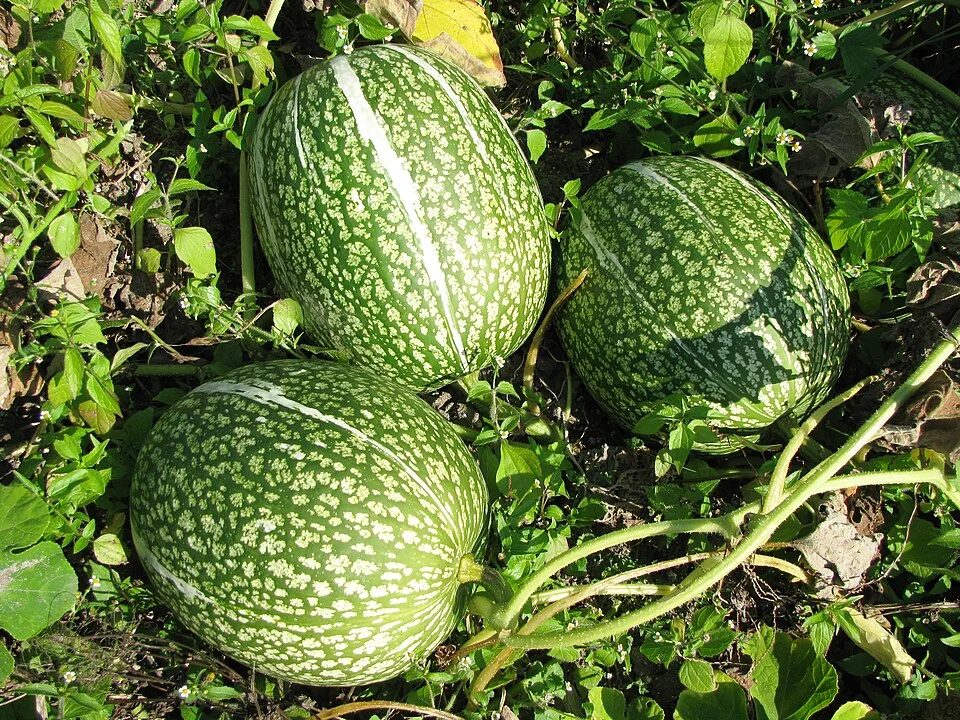
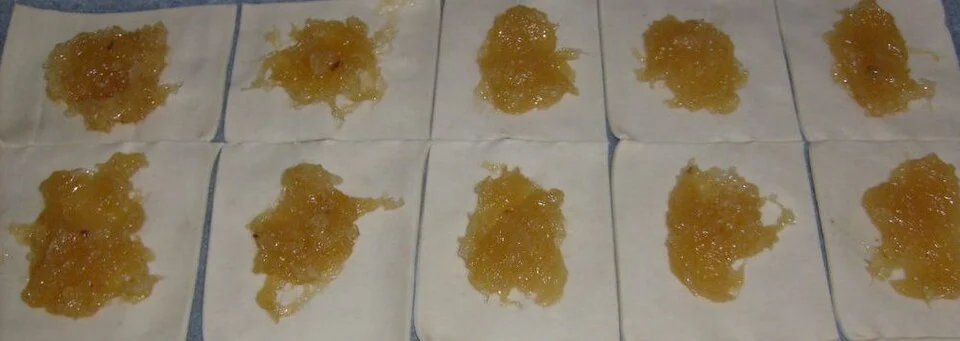
The fruit layer above the sponge is called cabello de ángel in Spanish and cabelo de anxo in Galician; both names mean "angel hair." The typical pumpkin used has the scientific name Cucurbita ficifolia, and Spain’s inventory of agricultural biodiversity lists names for it that include the Galician caiota. When the whitish flesh is cooked, its fibers come apart. Even after it is cooked sweet and gathered into one mass, the filling lets you feel the pulp strand by strand on the tongue.
The 20 cm home mold takes 500 g of pumpkin filling. Because it is spread over the soaked sponge, the amount is not just enough to decorate the gaps between pastry strips but enough to form a layer in its own right when the tart is cut. This figure describes one tart in this recipe. It does not prescribe the size of a tart made in a shop, or the thickness of its dough and almonds. The description from the Galician pastry workshop Santa Emilia also names a syrup-soaked sponge and a layer of fruit with threads. Even when sweet ingredients are stacked, the crumb made first and the fibers of the pulp do not become the same bite.
Coarsely chopped almonds on top leave the shape of the pieces on the tongue. The Galician technical specification for artisan foods lists almonds cooked in syrup as a basic ingredient, while in the Bon Viveur home recipe, chopped pieces are mixed with cooled syrup and placed on the moist pulp. They differ in whether the almonds are cooked in the syrup or soaked in it afterward, and in the mouth a fibrous layer is followed by the bite of nuts. The base, pulp and nuts are not combined and poured into one mold. Each is prepared first and then layered, so three textures show in cross-section.
Baking a Six-Strip Lattice and Placing Fruit on the Cooled Surface
The dough for the rim of the mold is held back, and in the home recipe it is divided into six strips that cross over the almonds. Excess dough at the edge is folded inward, brushed with milk or beaten egg, and baked at 180°C for about 40 minutes. Because the almond layer shows between the strips, the color that deepens during baking appears on both the pastry strips and the nuts beside them. After the tart is cooled on a rack and removed from the mold, the remaining syrup is brushed over the lattice and candied fruit is added as decoration. Because lattice and fruit are not decorated at the same moment, the gloss of the baked pastry and the color of the fruit itself are layered.
The town guide describes red, green and orange decorations, using candied figs and cherries. The Bon Viveur recipe substitutes red and green cherries for figs, which are hard to find. The appearance that Turismo de Galicia calls a Baroque sweet comes from the layers stacked in cross-section, together with the lattice outside and the colors added after cooling. Whether fruit is placed on each slice or at intervals on the round tart also changes which part of the lattice and fruit falls to each serving when it is cut.
The assembled tart is heavy, and Bon Viveur uses a disposable aluminum mold that is easy to remove. For a reusable mold, the recipe also suggests one with a removable base. Heat comes from above and below in the oven, the mold sits a little below the middle rack, and the tart is cooled on a rack after baking. The mold is not chosen as a vessel for eating the tart warm. Cooling is treated as part of assembly, so that the pastry and filling layers hold together when the tart is lifted from the base.
The technical specification for artisan foods set out in the 2022 official gazette of Galicia lists pumpkin filling, almonds cooked in syrup, syrup-soaked sponge, puff pastry and candied fruit as basic ingredients. Among the conditions shared by the pastry workshops is not using ready-made commercial dough or frozen dough made beforehand. A home recipe published with ready-made puff pastry and a workshop making its dough from scratch under the specification differ in what work comes before the base on which the layers are stacked. The number of strips laid across the top and similar details are figures for that home recipe’s version.
Carvings, Rose Windows and Pulp in Old Books
Spain’s agricultural inventory finds a use of Cucurbita ficifolia pulp cooked sweet in a natural history of the Canary Islands from the early 19th century. This is an early record for considering its cultivation and processing in Spain, but it is separate from the date when the pulp was first put into pastry in Mondoñedo. The writer Álvaro Cunqueiro, born in Mondoñedo, wrote in A cociña galega about puff pastry, pumpkin filling, sponge, coarsely ground almonds and plentiful syrup. The list of ingredients in the text quoted in the regional guide differs from the order of layers, bottom to top, in the home recipe.
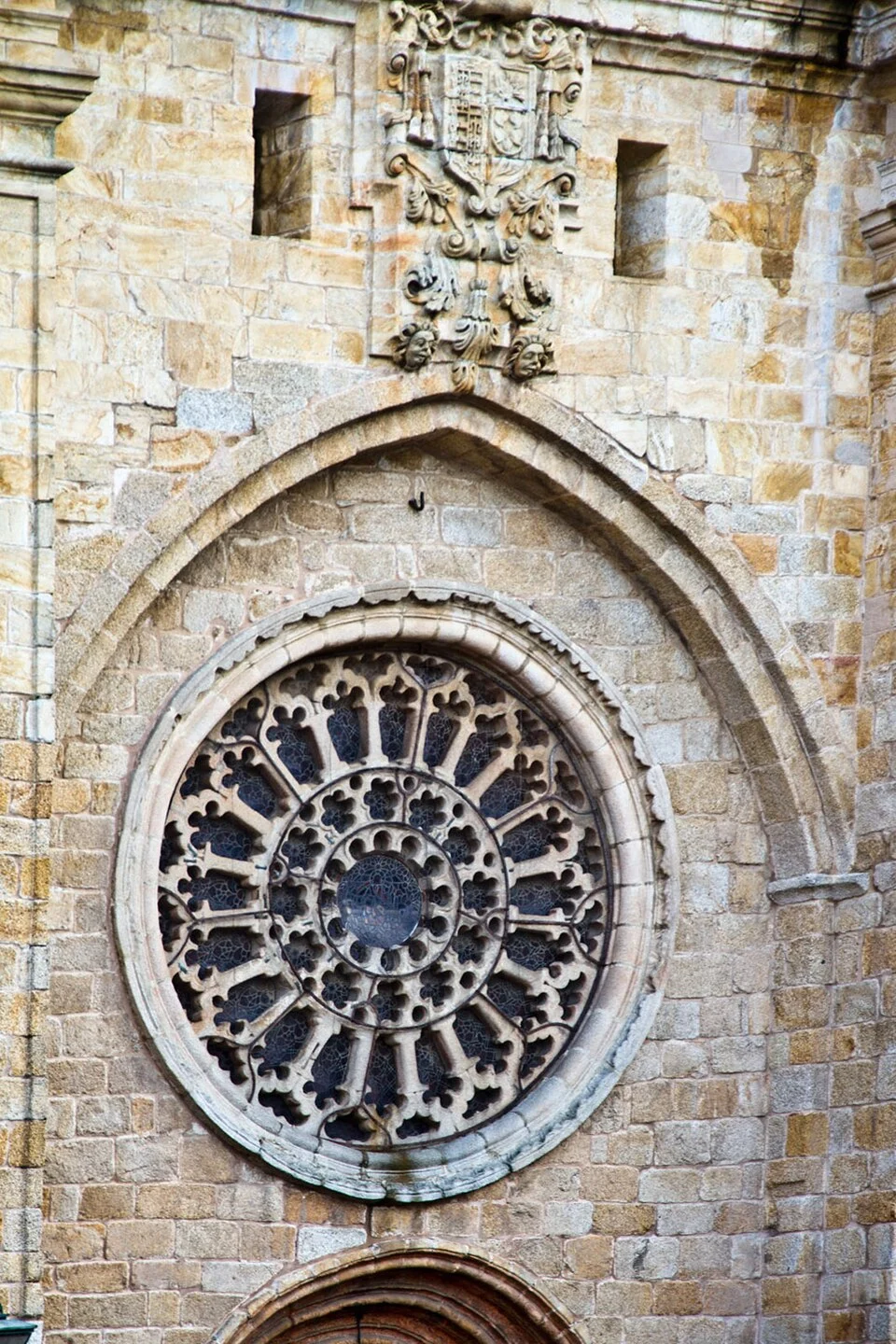
One origin story linked to Cunqueiro is the table carved on the lintel of the Gelmírez Palace in Santiago de Compostela. A round food is depicted there, and one interpretation sees in it an early form of this tart. Another account links the rose window of Mondoñedo Cathedral to the pattern of the tart. A table or window in stone does not show that there was a sponge at the bottom or that pumpkin fibers were cooked sweet. The tale of seeing a shape familiar to the town in a pastry can be followed separately from the culinary records that convey ingredients and layered form.
The Shops That Inherited the Workshops, and the Tart That Left Town
Bakeries and pastry shops line Bispo Sarmiento Street in Mondoñedo. Turismo de Galicia’s walking guide to the town introduces Val de Brea, which sells the tart, and plaques connected with the birthplace, pastry shop and museum of Carlos Folgueira. For another shop’s family business, local records say that Ricardo López opened La Dulce Alianza in 1892, and that around 1950 Jesús Redondas took it over and the shop’s name changed. Combining the places one can trace on a walk along the street with the names of those who inherited the workshops shows that preparing and selling ingredients in the town was work that goes beyond the account of a single pastry maker.
Carlos Folgueira’s nickname, O Rei das Tartas, means "the King of Tarts." The shop of the same name, run by his family, explains that Folgueira perfected his own version in the 1950s and spread the town’s pastry. The current product guide lists the Mondoñedo tart made with pumpkin filling alongside a separate product with chocolate added. Even if the local shop sells both, the basic ingredients shown in the regional specification differ from what is layered inside a product the shop adapted and named separately.
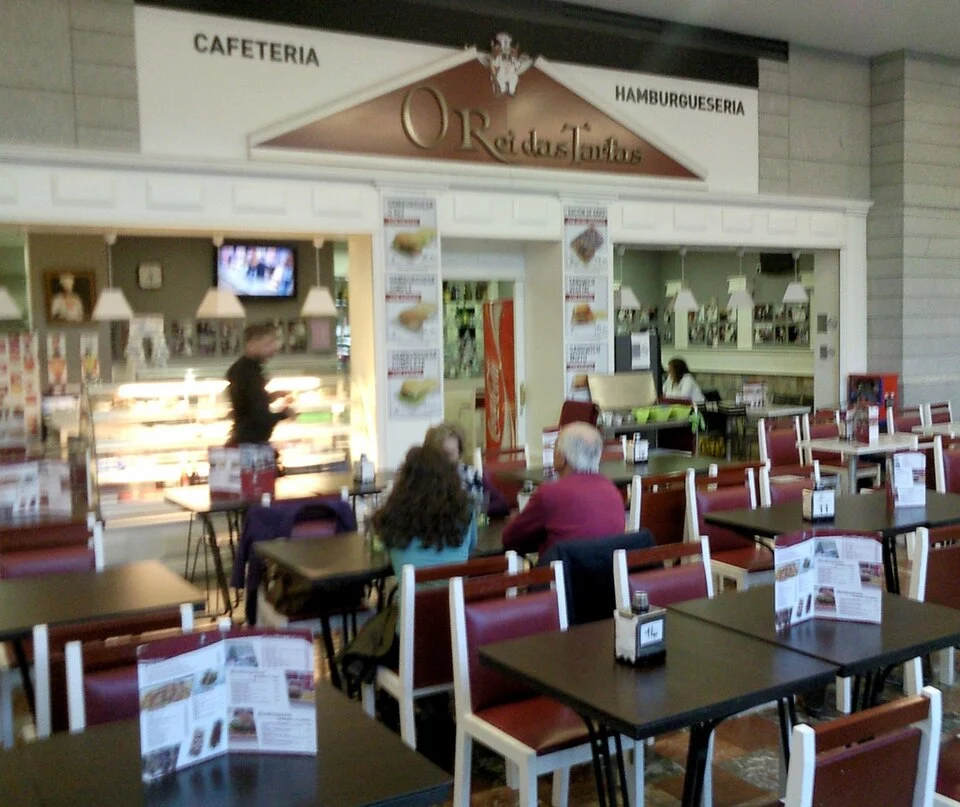
The Folgueira shop’s history records that its pastry maker was honored by a confectioners’ association and that its products were served at celebrations. The plaque on the street keeps the shop’s founder in the town, and at outlets outside the town one can buy its pastries under the shop’s name. Even when the place of sale changes, which tart you are choosing can be checked from the shop’s product name and description of ingredients. The history of the workshop on the street and the pumpkin layer, invisible from outside until the box is opened, are connected through the name.
In the Galician tarta de Santiago, almonds, sugar and eggs form a single batter. Under the specification for its protected geographical indication, almonds make up at least 33% of the basic batter. Corineta, also known near Mondoñedo, likewise appears in versions that use eggs, sugar and ground almonds and are baked without flour. A pastry in which eggs are mixed into the almond batter itself and a tart with a layer of almonds over fruit filling differ in where the knife meets the nuts. Cut a slice in Mondoñedo, and past the lattice lie chopped almonds, then the threadlike filling, the moist sponge and the dough at the base.
Glossary
- Cabello de ángel
- A filling of fibrous pumpkin cooked in sugar. In Galician, cabelo de anxo.
- Bizcocho borracho
- A sponge soaked in syrup or similar liquid. Depending on the recipe, the syrup contains liquor.
- Hojaldre
- A dough baked in folded layers. In the Mondoñedo tart it is used for the base and the lattice on top.
- O Rei das Tartas
- Carlos Folgueira’s nickname. It is also used by the family-run pastry shop.


