


SweetloreEncyclopedia of World Sweets (834)

Camotes de Santa Clara
Camotes de Santa Clara
Slender sweets of Puebla made from worked and dried sweet potato
Sugar Confections / Puebla, Mexico

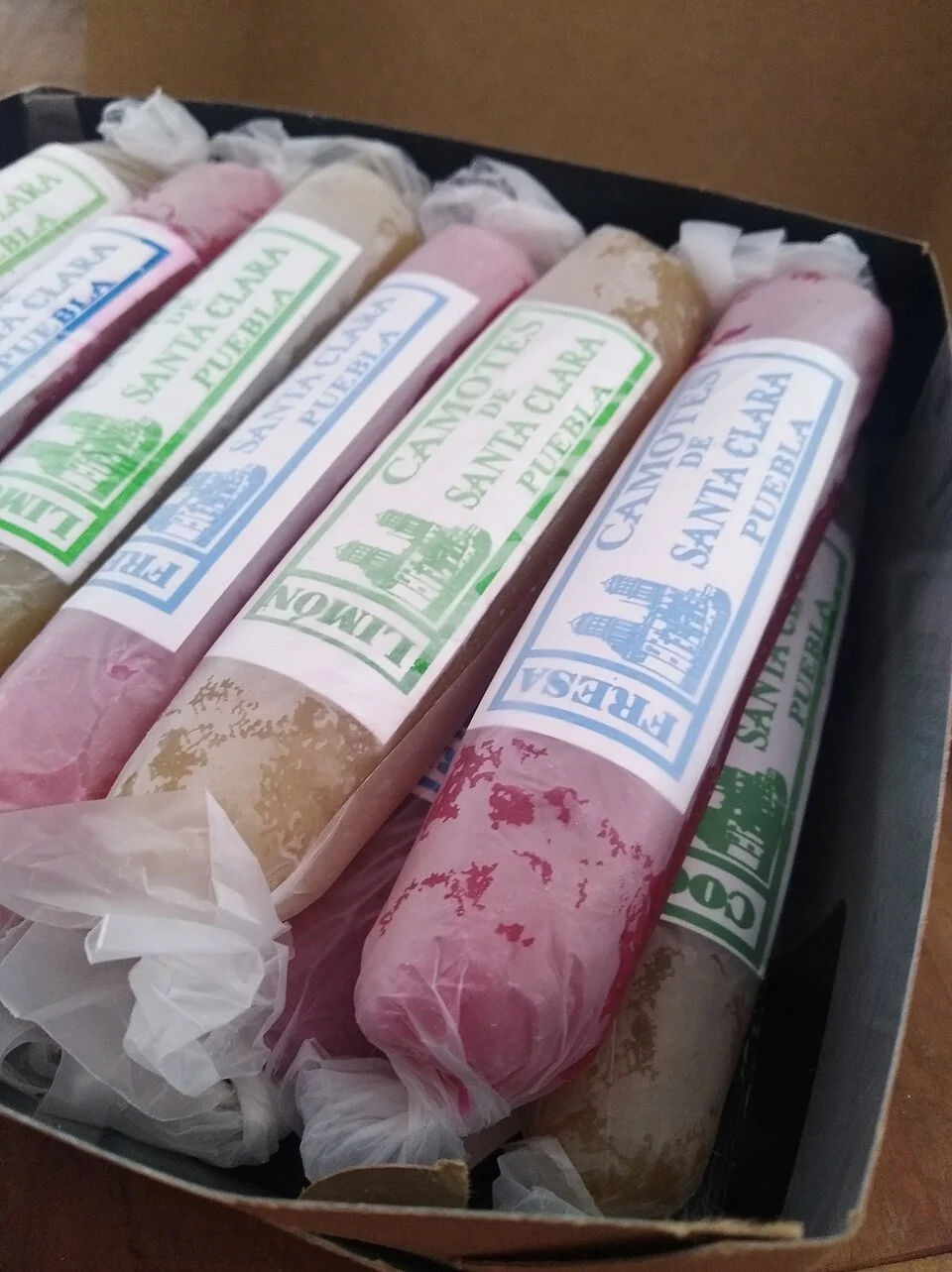
Unwrap the thin paper and bite in: beneath the dry sugar coating lies a smooth, sweet potato paste. Camotes de Santa Clara are slender sweets popular in Puebla, Mexico. Sweet potatoes are boiled until soft, strained, worked with sugar syrup, and shaped one at a time. Each piece is then brushed with a second syrup, dried, and wrapped in paper. The name is tied to the former Convent of Santa Clara in Puebla, but nineteenth-century cookbooks also list the sweet under a different name, as small sweet potato confections of Puebla.
Straining the Sweet Potato and Combining It with a Separately Boiled Syrup
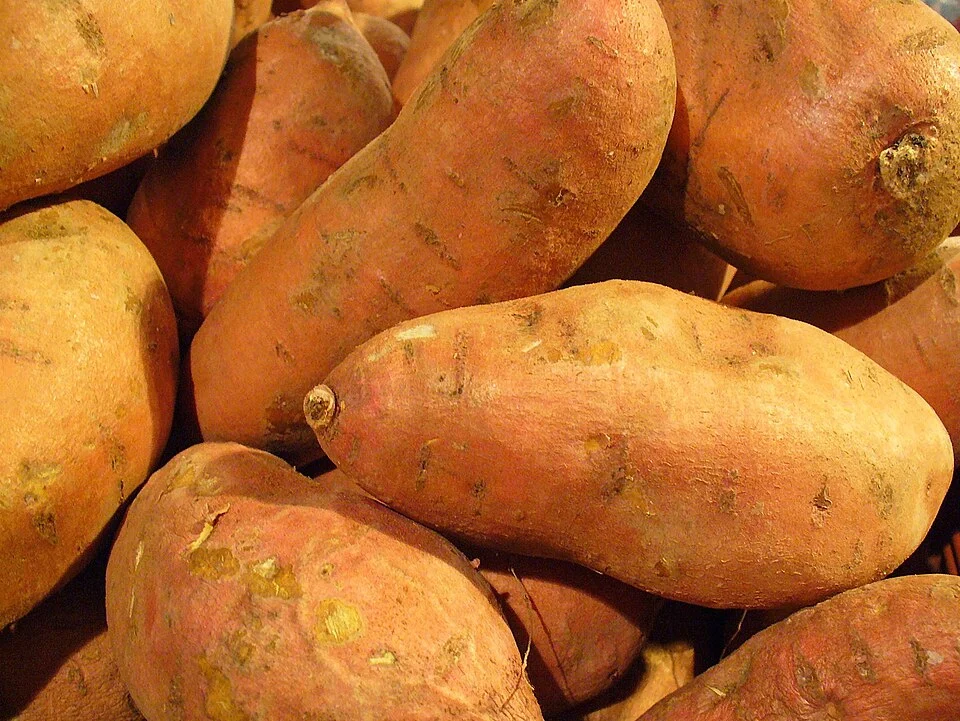
In La Cocina familiar en el estado de Puebla, a collection of Puebla home cooking, the recipe calls for 2 kilograms of sweet potatoes, cooked, peeled, and strained, along with 1.5 kilograms of sugar and 2 cups of water. To make the syrup, the sugar and water are heated before the sweet potato goes in. Once the syrup reaches the hard-ball stage, when a small drop in water forms a hard ball, the strained sweet potato is added and worked in the pot. The sugar in this formula is the amount measured against the weight of the sweet potato prepared beforehand. It is not a share of the finished product after heating has changed its moisture content.
The sweet potato is strained here so that what is worked in the pot becomes a dough free of lumps and skin. In sweets that keep their shape by being steeped in sugar syrup, the cut surface of the sweet potato remains in the finished piece. For camotes de Santa Clara, the boiled sweet potato is first reduced to a fine paste, and the mixed dough is formed into a new shape. The stick-like appearance, therefore, does not come from choosing long, slender sweet potatoes. The mixture of strained sweet potato and reduced syrup is shaped by hand, one piece at a time, afterward.
In the recipe from the home cooking collection, the sweet potato and sugar are cooked and worked together, and the mixture continues to be stirred after the heat is turned off until it cools. While soft, the sticks lose their shape easily; once cooled, the mixture can be handled piece by piece. After shaping, the pieces are set on a board lined with waxed paper and left as they are for a day. Cooking the sweet potato in the pot is one task, but there are also tasks of waiting, from shaping and resting the sticks to finishing the surface with another syrup. The day the sweet potato and syrup are cooked does not carry the work through to wrapping in paper.
The Sugar That Sets the Sweet Potato and the Sugar That Dries the Surface
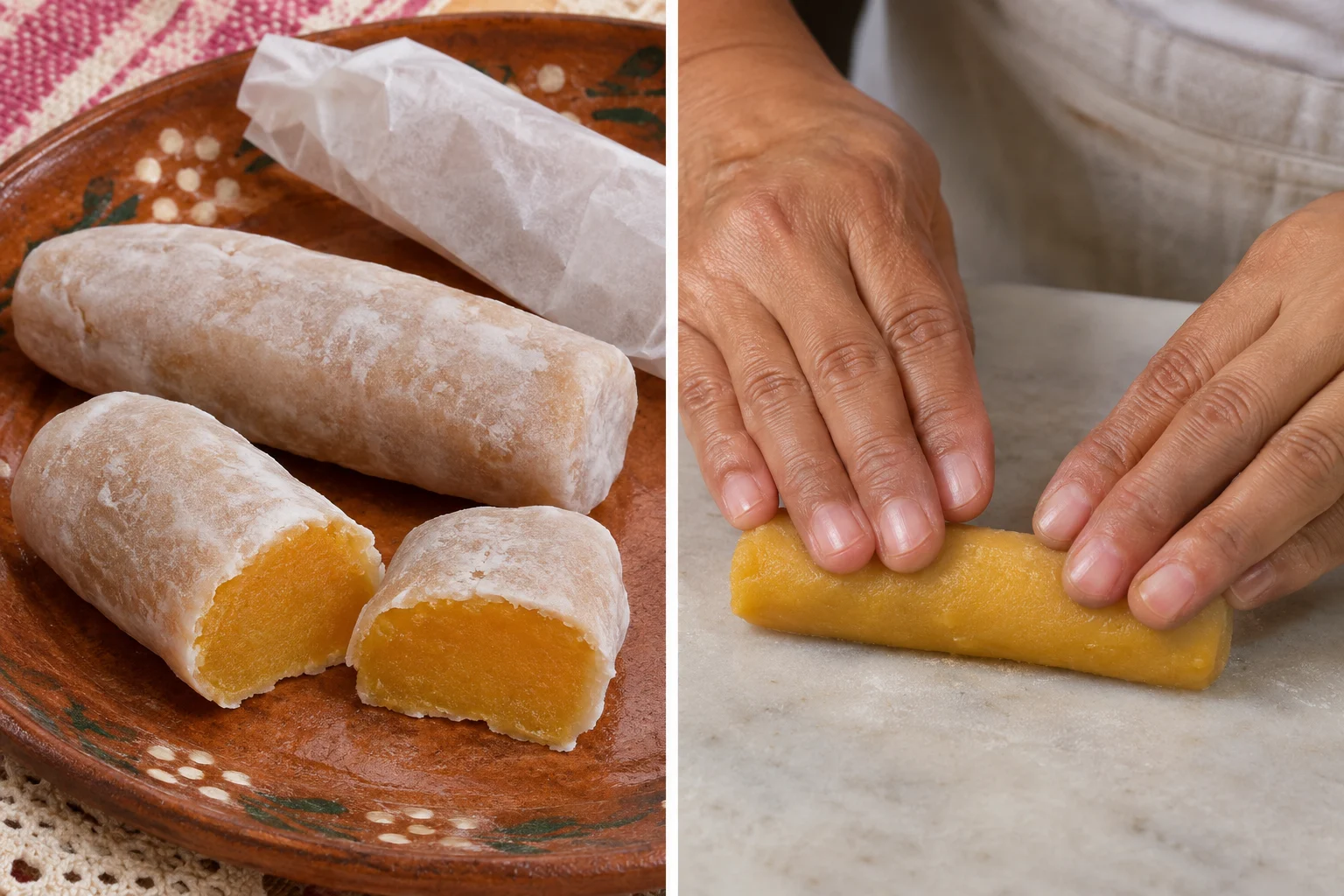
For the coating, the home cooking collection uses 450 grams of sugar and 125 milliliters of water, separate from the sugar mixed into the sweet potato. This syrup is boiled until it forms a thick thread that does not break easily, and it is then brushed on. The syrup worked into the sweet potato is judged at the hard-ball stage, so the two syrups are not judged by the same standard. The sugar inside combines with the strained sweet potato to make a dough that can be shaped. The sugar on the outside is laid over a stick of sweet potato that already has its form, and it creates a dry surface. Sweetness enters twice because the first and second additions act on different things.
Cocina Cinco Fuegos, which has researched the food culture of Puebla, presents a recipe in which the drying step depends on the weather. The sweet potato pieces are set on a board in the sun, and once the surface has firmed, a thick syrup is brushed on, and they are dried thoroughly again. They are not wrapped while still wet; they are dried until a thin paper can be wrapped around them without the shape collapsing. Some examples take several days once the waiting time is counted, because there are steps like this besides boiling the sweet potato.
For wrapping, makers use a thin paper called papel de China, or paper treated with paraffin and similar materials. The waxed paper used when the pieces rest for a day after shaping is for setting the shaped sweets on the board. The thin paper that the eater unwraps is the packaging used to carry and sell a dried stick. In both cases paper touches the sweet, but one is used for drying on the board and the other for wrapping the finished piece. A form dry enough to be wrapped in paper is not a feature of sweet potato dough worked in a pot and served as it is in a dish.
Comparing Sugar Quantities and Shaping in Nineteenth-Century Cookbooks
The nineteenth-century cookbook El Cocinero Mejicano was published in 1831, and its third volume, which covers sweets and preserves, has an entry titled camotitos poblanos. What Cocina Cinco Fuegos presents with photographs and a transcription is the third volume of the 1834 edition. There, sweet potatoes that have been boiled, peeled, ground, and strained are combined with an equal weight of sugar. The sugar is first made into a syrup, the sweet potato is added and mixed in, and the mixture goes back on the heat until it pulls away from the pot. In judging this stage, instead of fixing the boiling time by a number, the cook watches how the worked dough clings to the surface of the pot.
The same recipe calls for a small amount of orange flower water, and for coating the hands with finely sifted sugar when shaping the cooled sweet potato by hand. The flower water scents the dough in the pot, and the sugar on the hands is used to keep the cooled dough from sticking to them. Another version in the same book uses 2 pounds of sugar to 3 pounds of sweet potato and, when shaping, wets the hands with water instead of coating them with sugar. This shows that, even among cookbooks of the same period, there were choices both in the formula of the filling and in how the hands were handled.
In that other version, the shaped sweet potato pieces are set on a board in the sun, and once they have hardened, a thick syrup is brushed on to firm the outside. Another method is also listed, in which the syrup is mixed with fine sugar, beaten well, and applied with a feather. The tool used at first to work the sweet potato and sugar differs from the one used to put syrup on the surface of each stick. The Puebla home cooking collection’s recipe likewise keeps the sequence of resting on a board, brushing on syrup, and waiting for the pieces to dry. Even where the formulas differ, the steps of finishing the surface after the form is made can be compared.
The 1888 El Nuevo Cocinero Mejicano adds a recipe that deals with camotitos of different colors. According to the passage presented by Cocina Cinco Fuegos, if they are to be served at the end of a meal or at a light gathering, they are made smaller than the Puebla ones, which were then said to be about 3 inches. The length of each piece could change depending on the occasion and how it was served. The same study also states that some present-day examples are about 5 inches. The dimensions seen in old books and those seen in shops at the time of the survey cannot be brought to a single standard.
The second edition of Manual de cocina, published in 1911, includes a recipe using white sweet potatoes as one of the recipes collected by María Isla. In the text presented by Cocina Cinco Fuegos, the cooked sweet potatoes, still whole, are soaked in water, and the juice of limes or similar fruit is added, and they are left for one or two days. Rather than straining the white sweet potatoes and going straight to working them with sugar, the recipe exposes the sweet potatoes, before straining, to water and citrus. This is written as a step intended to give the dough a translucent quality, and it is not a step required for all camotes.
The same 1911 recipe uses 2 pounds 4 ounces of sugar and the juice of half a pineapple for 3 pounds of strained sweet potato. In the pot, the syrup is boiled down first, and after the sweet potato is combined with it, the recipe explains that the mixture is boiled down even more than cajeta, a sweet made of reduced milk. Here cajeta is not an ingredient to be added but a comparison to convey how thick the sweet potato in the pot has become. Set beside the nineteenth-century recipes that add orange flower water, this recipe shows one that uses citrus in preparing the sweet potato and pineapple to scent the dough.
In 1943, Irene O. de Anaya of the Puebla branch of a cooking school contributed a recipe titled with the name Santa Clara to a cooking magazine. According to Cocina Cinco Fuegos, which presents it, 800 grams of sugar are combined with 1 kilogram of strained sweet potato. After the mixture is taken off the heat, any scent desired is added before the dough is beaten. This is a method in which the weight of the sugar going into the pot is decided first and the scent is adjusted after the mixture is off the heat. By contrast, the orange flower water in the nineteenth century appears in the description of the steps on the heat.
In de Anaya’s recipe, the shaped sweet potato is set on a board lined with waxed paper and placed in the sun; the next day a thick syrup is brushed on and the pieces are put in the sun again. The home cooking collection published in 2000 likewise gives the steps of shaping, leaving the pieces for a day, brushing on syrup, drying, and wrapping in paper. The amounts of sugar are 800 grams and 750 grams per kilogram of sweet potato, respectively. The sweet is not finished merely by cooking the sweet potato down; drying time is allowed twice, before and after the syrup is brushed on. One can see both the differences in the figures and the shared order of finishing at once.
Sold on the Street Where the Convent’s Name Remains
According to architectural records from Mexico’s Ministry of Culture, the church of the former Convent of Santa Clara in Puebla stands at the corner of today’s 2 Norte and 6 Oriente streets. The records state that the convent was known for sweet potato sweets as well as alfajores and marzipan, and that there are shops selling sweets around the former convent. What this shows is the relation between the place named in the sweet’s name and the place nearby where the sweet is bought. It does not mean that the year the convent was founded is the same as the year when the present quantity of sugar or paper wrapping was set.
The same records also describe how the nuns left the convent under the reform laws of the nineteenth century. The present use of the building has changed, but the name remains in the place where the sweets are sold. The photographic materials published by Cocina Cinco Fuegos show sweets being dried in the sun in a courtyard and camotes de Santa Clara being sold in a shop. The photographs do not reveal the amount of sugar or the number of days of drying. The work of carrying out the steps in the cookbooks outside the building, wrapping the sweets in paper, and handing them over in a shop gives a scene that can be seen with the eye.
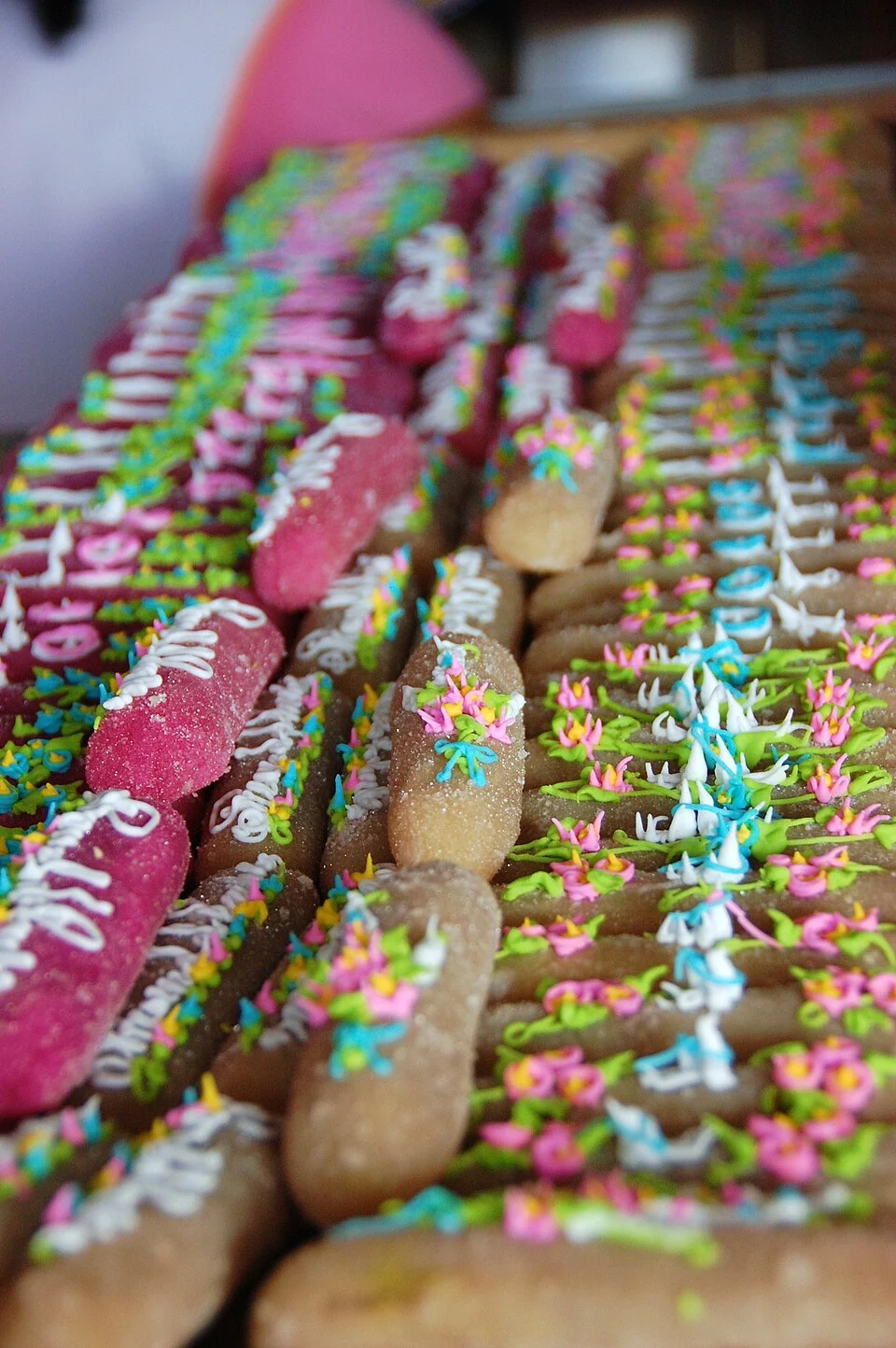
In local press coverage of visits to shops on 6 Oriente street, there is an example of a shop that makes Puebla camotes selling flavors such as strawberry, orange, lime, pineapple, and vanilla in different sizes. Another shop offers baked goods and milk sweets bearing the name Santa Clara alongside the camotes. The street does not offer only sweet potato sweets; buyers can choose flavors and sizes and take them home together with other sweets. Selling single wrapped sticks is also useful when choosing sweets on that street.
How They Differ from Sweets in Which Whole Sweet Potato Is Simmered in Syrup
Camotes enmielados, another Mexican sweet potato sweet, has a recipe in which sweet potato is boiled in a syrup made with piloncillo and cinnamon. Both combine sweet potato and sugar, but when the sweet potato sits in the syrup and is served in a dish, the shape of the cut sweet potato remains. For camotes de Santa Clara, the sweet potato is strained to break down its form, the sticks that are made anew are dried, and each stick is wrapped in paper. When the sugar syrup is made, whether the sweet potato is simmered in the syrup and eaten that way, or combined with the syrup after straining and then shaped, is a clue for telling the two sweets apart.
Glossary
- Camote
- A word for sweet potato in Mexico and elsewhere. For camotes de Santa Clara it is boiled, strained, and worked with sugar.
- Camotitos poblanos
- The name given in nineteenth-century Mexican cookbooks to the sweet potato sweets of Puebla.
- María Isla
- The person who collected the recipes included in the second edition of the cookbook published in 1911. A recipe using white sweet potatoes is presented.
- Irene O. de Anaya
- The head of a cooking school in Puebla. In 1943 she contributed to a cooking magazine a recipe for camotes titled with the name Santa Clara.
- Hard ball (punto de bola dura)
- The stage at which a small amount of boiled syrup dropped into water forms a hard ball. In the recipes in the text, it is the guide for the syrup combined with the sweet potato.
- Papel de China
- A thin paper used to wrap dried sweets one by one.
- Piloncillo
- Sugar made by boiling down sugarcane juice and letting it set. It is used in the syrup for simmering sweet potatoes in camotes enmielados and in similar preparations.
- Camotes enmielados
- A sweet in which sweet potatoes are simmered in syrup. Its steps differ from those of camotes de Santa Clara, in which the sweet potato is strained and shaped.


