


SweetloreEncyclopedia of World Sweets (834)

Hummingbird Cake
Hummingbird cake
A fruit cake named for a Jamaican bird, spread across the American South as a three-layer cake
Cakes / Links to the American South and Jamaica

Hummingbird cake is a cinnamon-spiced cake with banana and pineapple mixed into the batter. In the American South, it is best known as layers of baked fruit batter covered in sweet cream cheese frosting. Each slice combines moist crumb, soft fruit and a tangy, milky cream. In Jamaica, a version called Doctor Bird Cake is baked as a single ring in one pan and dusted with powdered sugar if desired. The same two fruits have been made in different pans and finished differently on the island and in the American South.
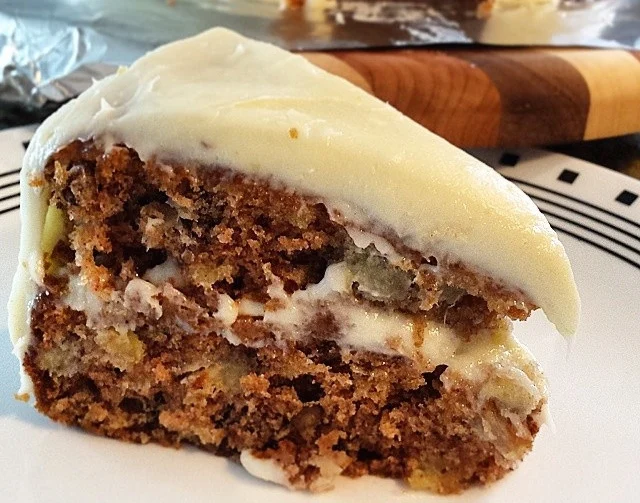
Keeping the Fruit Pieces and Juice in the Batter
The recipe presented by the Jamaica Tourist Board uses 3 cups of flour, 2 cups of diced banana and one can of crushed pineapple. Vegetable oil and milk are poured over the flour, sugar, cinnamon, leavening and other dry ingredients, then the pineapple and eggs are added and everything is mixed with a wooden spoon or rubber spatula. The bananas go in after the batter has come together, so they do not have to be worked while the other ingredients are combined, and they stay in larger pieces than the pineapple. Unlike a cake with fruit only as decoration on top, this one shows pieces of fruit inside each slice. Because the cinnamon is combined with the flour, it scents not only the fruity parts but also the batter around them. The 1971 newspaper cited by the Board also mentions the cake’s moist crumb.
In the version reprinted by the Southern food magazine Southern Living, vanilla, chopped banana, pineapple and toasted pecans are stirred in once the dry ingredients are fully moistened with eggs and vegetable oil. Here too the banana keeps its shape, and the chopped fruit is scattered through the batter. The pineapple is used with the juice from its can, so the moisture and flavor of that juice spread around the pieces of fruit visible in a cut slice. The pecans are scattered like the fruit, but when bitten they keep a nutty firmness unlike the soft banana.
Both use 3 cups of flour. The Jamaica Tourist Board’s formula has half a cup of vegetable oil and 1 cup of milk, while the American South reprint has 1½ cups of vegetable oil. The latter’s ingredient list contains no milk. Even if the volume of liquid poured in is the same, milk is rich in water and vegetable oil adds fat, so the proportions of moisture and fat in the batter differ. The leavening also differs: the Jamaica Tourist Board’s version uses baking soda and baking powder, and the reprint uses baking soda. Even though banana and pineapple are common to both, simply replacing milk with oil does not turn one formula into the other.
Baked as a Ring, Cut Differently from Stacked Layers
The Jamaica Tourist Board’s method greases and flours a Bundt pan with a capacity of 3 quarts, then pours in all the batter at once and bakes it. Because a metal tube stands in the center, heat enters not only from the outer sides but also from the inside of the ring. It is baked for 60 minutes at 350°F (about 177°C), and if the center is not cooked through, for another 5 to 10 minutes. After the pan has rested on a rack for 20 minutes, the cake is released; the surface browned against the pan becomes the outside, and the cut face shows one continuous crumb containing pieces of fruit.
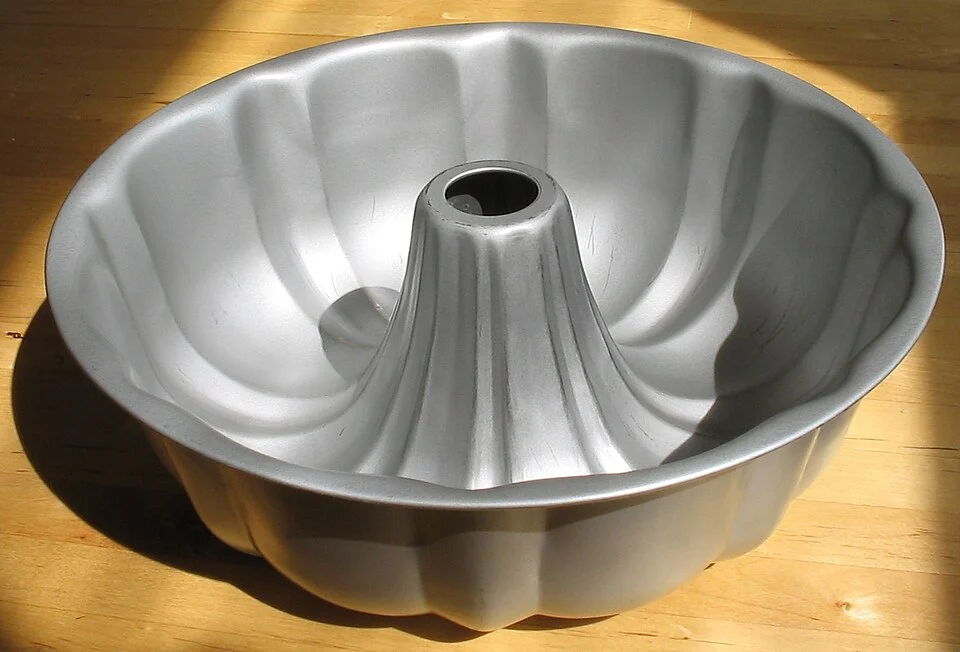
Dusting the ring with powdered sugar adds sweetness in a very thin layer that touches the tongue. Sliced banana and small pieces of pineapple are also listed as accompaniments. Because the added fruit has not been cooked in the batter, a single plate offers both the baked, softened fruit and freshly cut fruit. This method puts no cream in the middle, so even with powdered sugar or fresh fruit alongside, the crumb within each slice continues without a break.
With a ring pan, wherever it is cut, each slice includes the browned outer surface that touched the pan and the inner side facing the hollow. When round layers are stacked flat, by contrast, each bite from top to bottom passes through the boundary between cake and cream several times. What distinguishes the two cross-sections is the choice of pan and the assembly after baking, more than the kind of fruit mixed in.
Although it is also baked at 350°F, the Southern Living reprint divides the batter among three 9-inch round pans. Each layer is baked, left to cool in its pan for 10 minutes, moved to a rack and assembled only when completely cool. Unlike baking one cake and slicing it horizontally, this produces three layers that each have a baked surface, with cream between them. The frosting, made by mixing cream cheese and butter and adding powdered sugar and vanilla, is spread 1 cup at a time between the layers, and the rest covers the top and sides. The tang of the cream and the sweetness of the powdered sugar combine with the sweetness of the baked banana and the cinnamon. The pecans are chopped inside the batter, while on top large halves are arranged. The same nut reaches the mouth in different sizes depending on where it sits.
An Airline Carries an Island Bird’s Name Aboard
Doctor bird is the name given to the hummingbird that is Jamaica’s national bird. The male has long feathers extending from the tail, and Air Jamaica also used the bird as its emblem. According to the Jamaica Tourist Board, the newspaper The Daily Gleaner of February 4, 1971 ran a feature called "Air Jamaica Cuisine" presenting the dishes served aboard Air Jamaica. A moist cake made with pineapple and banana was presented there under the name Doctor Bird Cake. By giving a fruit-filled cake the name of the island’s emblematic bird, even a slice eaten on a plane offered a cue to remember the name of the place.
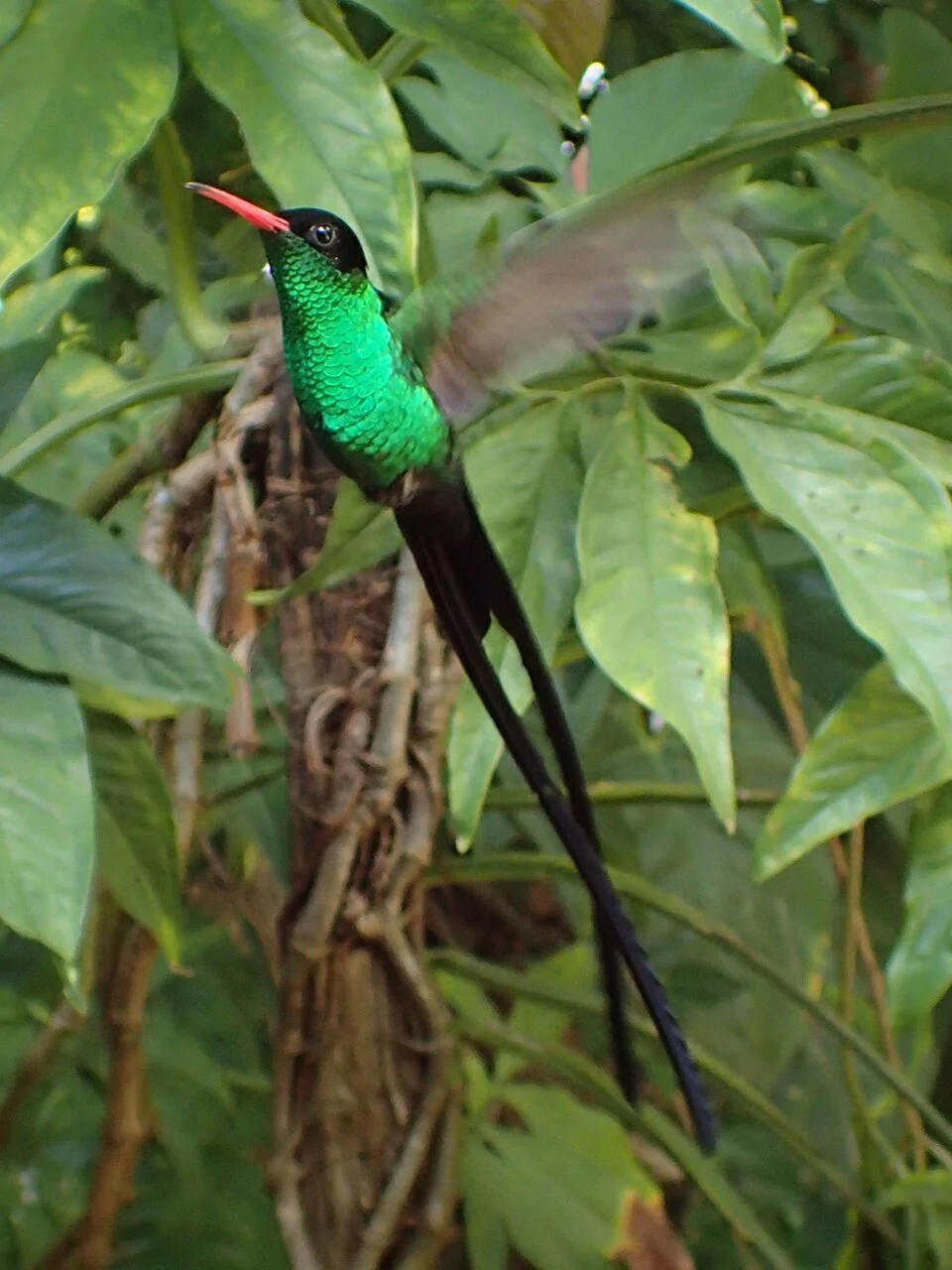
The Board explains that Air Jamaica and the island’s tourism bodies introduced the cake in the 1970s. The home recipe that the Board presents gives the pan and ingredients, conveying the cake as a sweet that can be baked in a kitchen oven as well as served on a plane. What this article shows is that, around a date that can be verified, the cake was presented as an airline dish. The newspaper’s publication date does not settle when it was invented or how often it was made at home. The hummingbird known in the United States also refers to the bird in English. The link to the bird remains, but where and by whom the cake’s name was changed cannot be determined from these two published records.
A Three-Layer Cake Magazine Readers Make at Home
In the United States, a recipe sent in by Mrs. L. H. Wiggins of Greensboro, North Carolina, appeared in Southern Living in 1978. In its 2016 feature for the magazine’s 50th anniversary, the magazine recalls it as one of the dishes most often requested by readers in its publishing history. The name of a cake introduced as in-flight food becomes, in the American South, the name of a sweet that readers share in the magazine’s pages and in their kitchens. The character of the formula shows even in the ingredients people reach for when baking it at home.
The magazine’s editorial staff are said to have used canned pineapple in a variety of dishes in the 1970s, as their readers did. In this cake too, the banana is chopped with a knife, but the pineapple does not need to be cut to a uniform size before peeling. A can holds finely processed fruit and juice, and stating the weight of one can tells readers in distant regions what kind of pineapple to use. That the juice also goes into the finished batter was tied to the way canned goods like this reached kitchens.
Food historian Gil Marks cites an example: in April 1977 The Washington Post received a reader’s inquiry about how to make the cake and published a recipe on May 19 of the same year. It was baked all at once in a tube pan or Bundt pan, and the cream cheese topping could be left out. This record shows that a single-cake version under the same name had been published in the United States before the 1978 three-layer recipe. The Kentucky Derby Museum Cook Book, which Marks cites, also records an award in 1978 at a Kentucky competition. It is an example of the same sweet being baked and presented to the public in a place other than the home of the Greensboro reader who submitted the recipe.
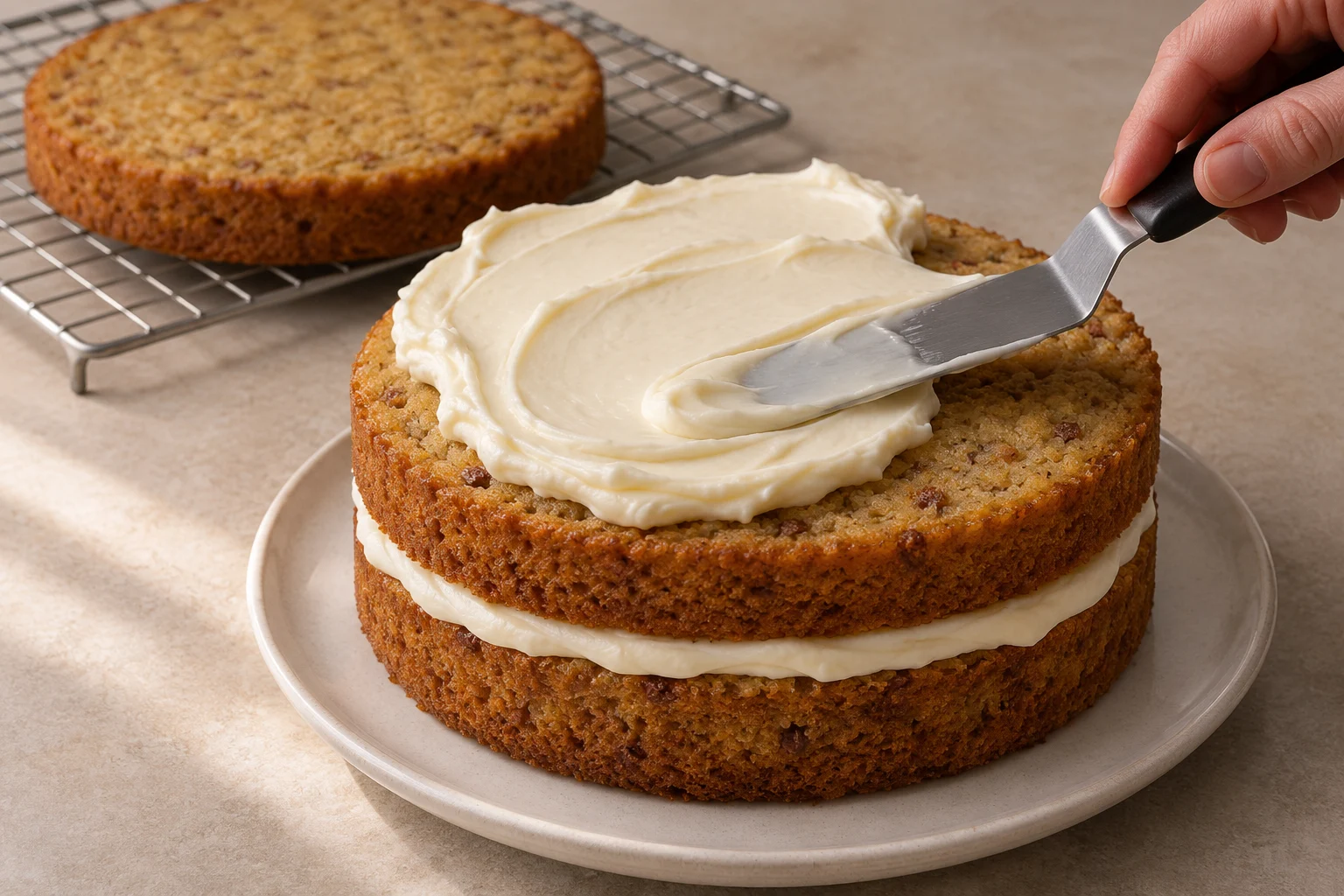
Even Stacked in Four Layers, the Fruit Is in the Batter
A later Epicurious recipe bakes the cake in two 9-inch pans at 325°F (about 163°C). The two cakes are each cut horizontally and stacked in four layers. Because one cooled cake is cut in two, the faces of the cake that touch the cream between layers also differ from those of the three layers in Southern Living, where each layer is baked with its own outer surface. This version adds sour cream to vegetable oil and coconut oil, and uses not only cinnamon but also cardamom and rose petals. Dairy goes into both the frosting and the batter, and the way the aromas layer also changes.
The Epicurious writer recommends choosing very ripe bananas and canned pineapple packed in juice. Substituting fresh pineapple changes how finely the fruit is prepared and how much juice goes into the batter. The sweetness and softness of the banana change with ripeness, and whether the fruit is mashed or cut into pieces that keep their corners changes the grains visible in a cut slice. That the Jamaican version adds diced banana at the end, and that the Southern Living version combines chopped fruit with the juice from the can, is a clue that, although the aromas are similar, the form of fruit each formula wants to leave in a bite differs.
Fields recalls that her mother often baked hummingbird cake for the holidays and that for a long time she thought her mother had given the cake its bird name. Even a sweet known from magazines and airplanes is remembered as the family’s own cake if the name was first heard in a home kitchen. As it was handed down as a taste of home, some bakers began adding carrot or coconut. Fields suggests finishing with pecans, either arranged as halves around the edge of the top or crushed and pressed onto the sides. The nut is the same, but a large piece meeting the mouth from above and small bits at the side change the texture of the first bite.
Seen from the side, the layered American South form also resembles carrot cake, which likewise uses a spiced batter and cream cheese frosting. A variation of hummingbird cake with carrot also appears on Epicurious. What the island’s ring and the Southern three layers share when cut is banana and pineapple inside the batter. Whether the batter is poured into one pan or stacked in three or four layers, changing the shape of the batter and cream around the fruit, the method of baking in two fruits of differing firmness has been passed down along with the bird’s name.
Glossary
- Doctor bird
- The name for the hummingbird that is Jamaica’s national bird. It is also used in the name of the Jamaican version.
- Bundt pan
- A cake pan with a tube in the center that bakes the cake into a ring. The Jamaica Tourist Board’s version uses a pan with a capacity of 3 quarts.
- Pecan
- A tree nut. In the American South version, toasted and chopped pecans go into the batter and halves are arranged on top.
- Cream cheese frosting
- A finish made by mixing cream cheese, butter, powdered sugar and other ingredients, spread on cakes that have been baked and cooled.


