


SweetloreEncyclopedia of World Sweets (834)

Khubi ka Lai
Khubi ka lai
A Barh sweet of puffed seeds and concentrated milk, shaped together
Sugar Confections / India, Bihar, Barh

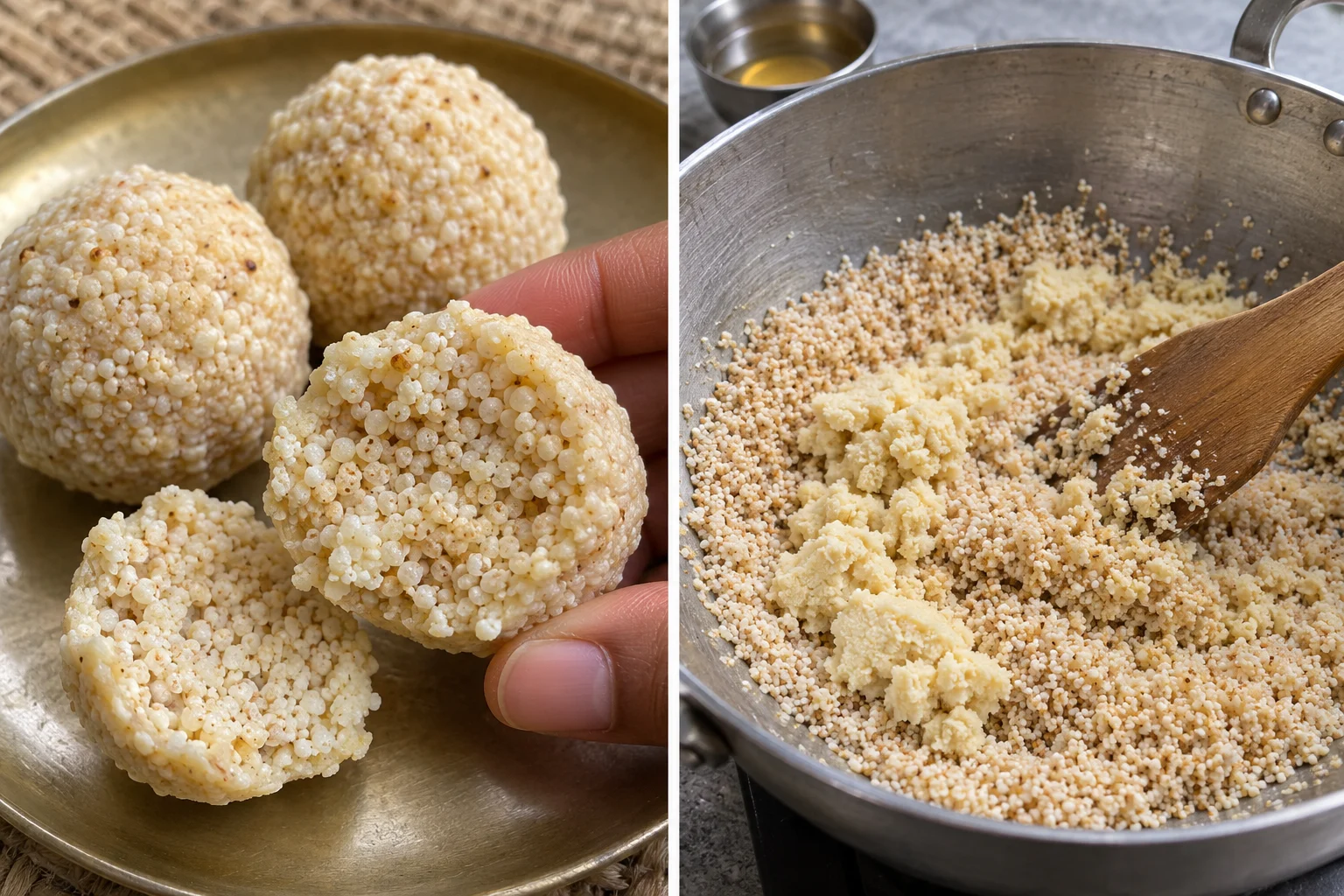
Small puffed grains bound with khoa, milk cooked down, and sugar. Khubi ka Lai (Khubi ka Lai / खोबी की लाई) of Barh, Bihar, looks like a cluster of grains but also contains a milk ingredient. The state’s food guide lists two forms, round and slab. Following the method, the grains and the khoa are cooked separately, combined with sugar, and then settle into a single shape.
Puffed grains bound together with milk and sugar
The materials attached to the geographical indication application that a Barh producers’ association filed for "Barh Laai" include a two-day example. In the evening, khoa is roasted in a large pan and a sugar syrup is made separately; the next day, puffed khubahi grains are mixed into the khoa. The syrup is poured over, the mixture is flavored with cardamom, and it is shaped into rounds of about 20–25 g each. Preparing the grains, heating the khoa and turning the sugar into syrup are each finished before shaping. More recent examples that add nuts or saffron are also listed, but the temperature for roasting the grains and any procedure shared by every shop in town are not recorded.
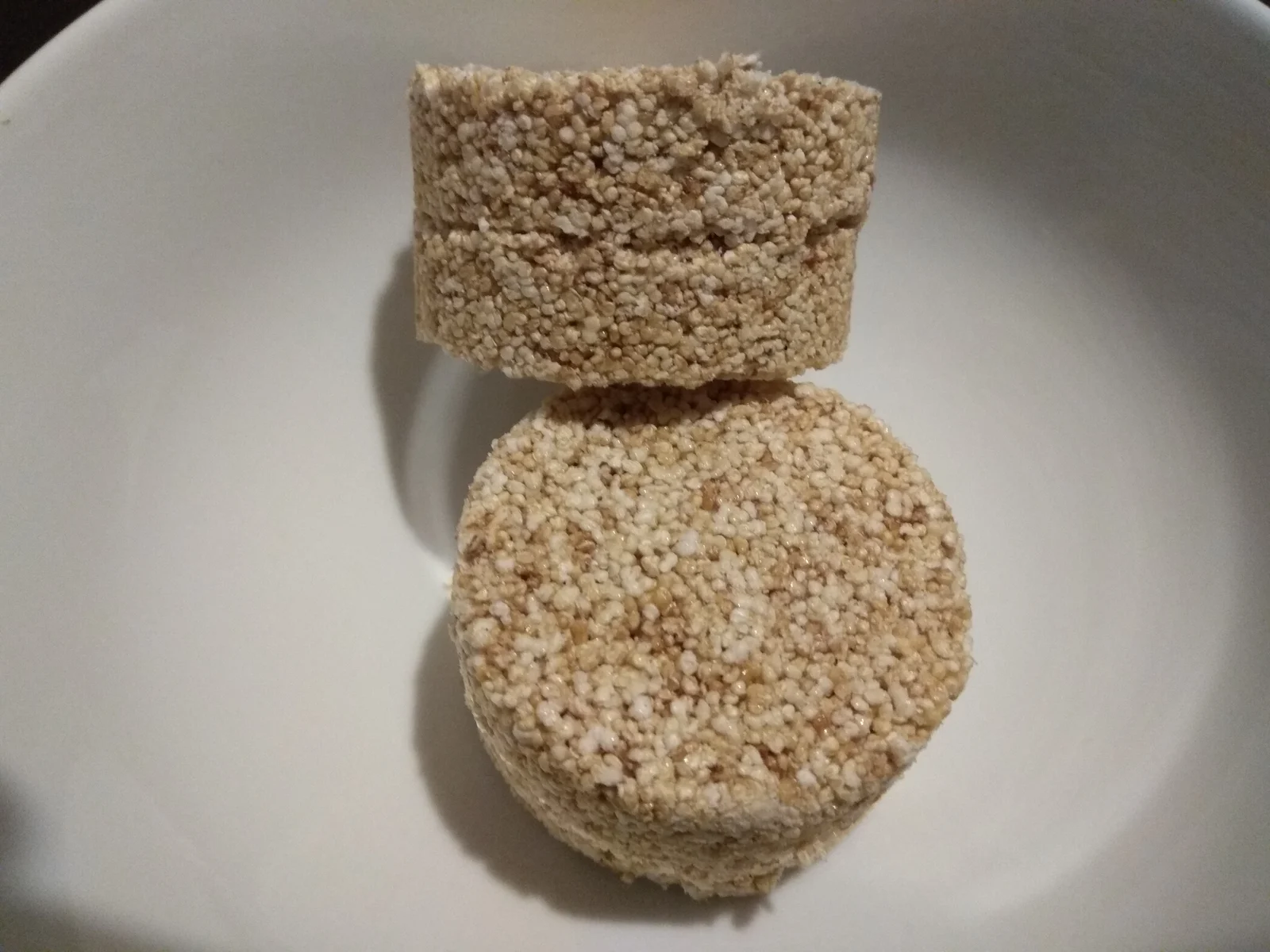
Forms vary even within the state. The state’s Bihar Foundation lists the sweet of Barh, in Patna district between Bakhtiyarpur and Mokama, as "Khoye-Ki-Laai" and gives both round and slab forms. In the state tourism department’s page on lai, the example from the region that includes Gaya is disc-shaped. There, processed ramdana is combined with khoa, and the sweetener is sugar or jaggery. Jaggery is sugar made by boiling down the juice of sugarcane and other plants. Sphere, slab and disc all appear in the sources as shapes in which grains are gathered and set. The word "laddu" in the heading of Bhushan’s recipe is a clue for finding round examples, and the flat lai presented in the same state can be traced through town names and ingredients. The name of a shape alone cannot determine which place each sweet comes from.
On the same state tourism page, a description of mixing khoa into the disc-shaped form sits next to a statement that Khubi ka Lai contains no solid dairy product. In the method in the Barh application, khoa is roasted and added, and both the Bihar Foundation guide and dairy research name khoa as an ingredient. Whether grains are visible from outside and whether a milk ingredient is included need to be checked separately. When reading Barh sources, looking at the town name and the ingredients together helps identify which lai is being described.
Khobi and ramdana: where the names of the grains overlap
In the Bihar Foundation’s food guide, the seeds used in Barh lai are khobi or ramdana, the latter explained as amaranth. A Hindi newspaper in Saran district describes khobi as a small black grain that puffs when roasted, like ramdana, though the grains are slightly larger. Setting sources from the same state side by side shows that the names for the seed as an ingredient and the names used when describing the roasted grains that are eaten overlap.
In the materials attached to the Barh geographical indication application, Seema Sinha of Bihar Agricultural University records the seed locally called khubahi as Schoenoplectiella articulata, a member of the sedge family (Cyperaceae). There is also a record of roasting seeds of this plant in Madhubani district, North Bihar: an ethnobotanical report that puffed grains resembling amaranth have been sold under the name ramdana. While the species named in the town’s application can be traced to a scientific name, grains sold under the same trade name may also come from other plants. The University of Melbourne’s plant name database lists both ramdana and rajgira as names that apply to several amaranth species. Identifying the ingredient at a given shop requires checking which seed that shop uses.
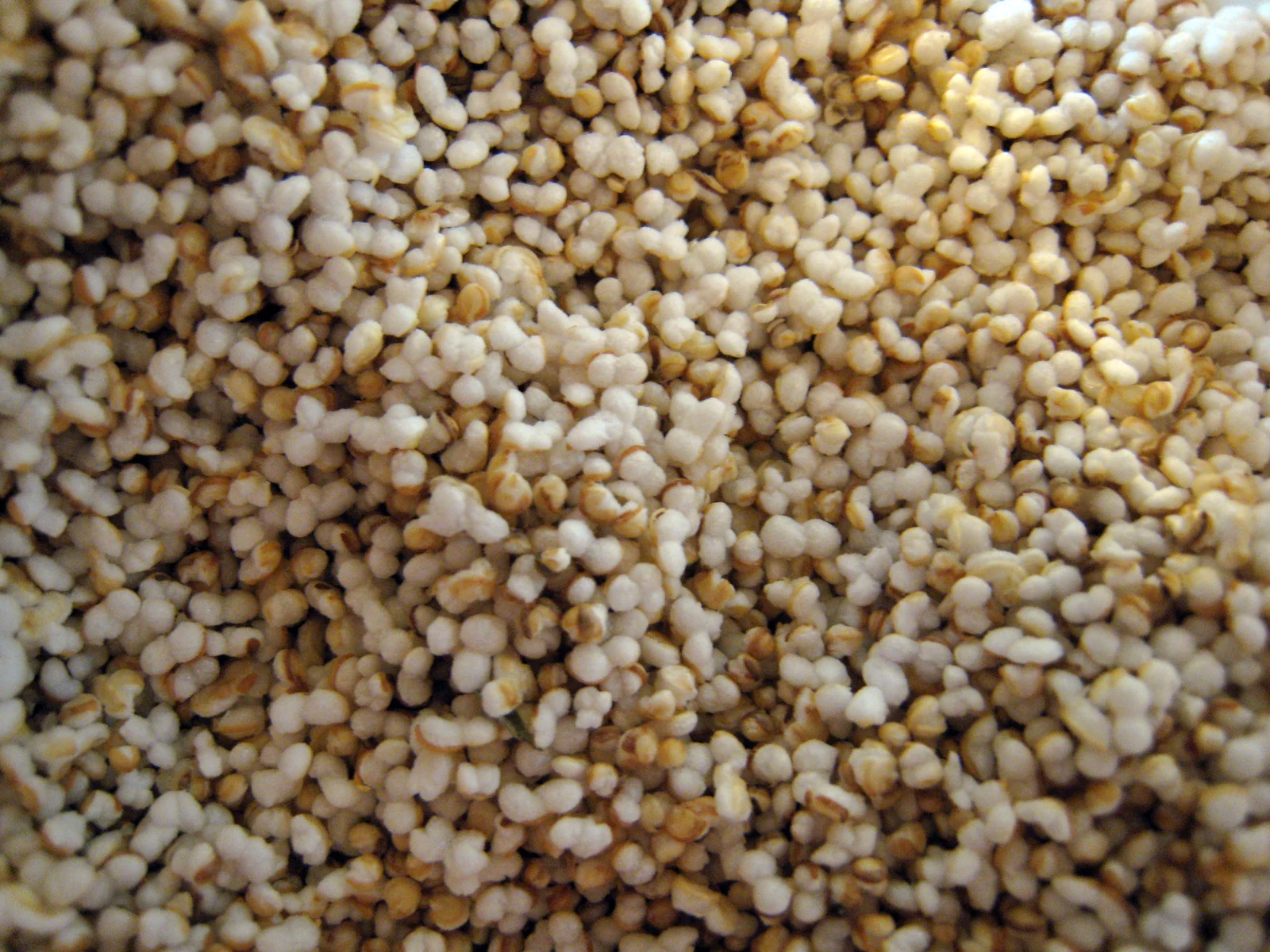
A report from Jalalpur in Saran district also covers the work done before the black grains go into the pan. Around Kumna village, khobi grows wild in low-lying land where water collects, and residents carry the cut plants on their shoulders. After drying them in the sun for several days, they shake the seeds off the stalks and sort them by winnowing in a winnowing basket. In the district the article covered, gathering the seeds also supports household income. It is one example from Saran, but it describes the work of collecting the sweet’s raw material, which cannot be seen from bagged grains in a market. The article does not say where the shops in Barh source their grains.
Khoa is a semi-solid ingredient made by boiling milk down to drive off its water. Indian dairy teaching materials distinguish types such as firm pindi and grainy danedar. This is the range of textures seen in khoa generally, not a classification specifying the type used for Barh lai. When a recipe or shop description says only "khoa," one can tell that a concentrated milk ingredient is included, but not how firm it is.
Starting from freshly roasted grains, or from grains already puffed
The home lai ka laddu presented by the food writer Nandini Bhushan begins with roasting the grains in a heavy-bottomed pan, stirring as they cook. When the grains puff, the heat is turned off and khoa is roasted in another pan. Jaggery is warmed with a little water into a syrup, ghee is added, and the syrup is combined with the grains and khoa. Because the mixture becomes harder to shape as it cools, ghee is also rubbed on the hands and the mixture is rolled while warm. It is a home example with two points of judgment: how far the grains have puffed in the pan, and the temperature at which the mixture is easy to roll in the palm.
A home recipe in a Hindi newspaper, by contrast, starts from ramdana that has already been puffed. It is combined with khoa, sugar and cardamom are mixed in, and saffron is added to taste. With ghee-coated hands, the cook shapes it into round laddus or a flat form and leaves it for a while to set. In Bhushan’s example the syrup is made from jaggery and a little water, while the application materials prepare the sugar syrup the previous day. Bringing together roasted grains, a milk ingredient and sugar is common to all three examples; the differences appear in when the grains are puffed and in what state the sugar is added. There is no record that every shop in Barh uses any one of these formulas or heating orders.
Names in the shop, and differences that show up when measured
Retail sites do not settle on a single finished form either. Bihari Items, which sells Bihar foods, lists "Kacha Khoya" and "Bhuna" separately as spherical lai from Barh. The listed ingredients include khobi or ramdana, khoa, and sugar or jaggery. The fact that the names are separate can be confirmed from the shop’s materials, but they do not say how the type of khoa, the heating time or the sugar proportion differ. Even if color and shape are compared in photographs, the shop’s own description is needed to support any claim about the process.
A dairy study published in 2021 collected a total of 36 samples of khoa-based ramdana lai from several locations in Bihar and examined aroma, appearance, hardness, color, texture and other attributes. The survey found variation in aroma, appearance and hardness, with moisture of about 16.8–20.8% and fat of about 9.3–12.0%. Even in a sweet that looks like gathered small grains, samples containing a milk ingredient show this kind of range. Because the figures come from samples collected at the time of the survey, they cannot be used as values representing every shop in town or seasonal products, nor as a formula for making the sweet at home.
In addition to hardness, the study found differences among samples in attributes related to how readily the sweet springs back after being pressed and how cohesive it is when chewed. Whether it breaks up coarsely when chewed or springs back when pressed is hard to tell from the look of the grains. The figures are for khoa-containing samples; whether types without khoa show the same range is outside the scope of the study. Both moisture and texture differences were measured, but the sample comparison in the abstract does not determine which heating procedure produced them.
Bihar Animal Sciences University’s 2019–20 report records research on vacuum packaging, in addition to production technology for khoa-based ramdana lai and evaluation of market samples. When the finished sweet is distributed, even if ingredients and shape are similar, storage is a separate issue. The mention of this research alone cannot determine the shelf life or storage conditions of unpackaged products.
Lai taken home from the town, lai delivered to celebrations
Bhushan remembers an aunt who wrapped up lai ka laddu every time Bhushan visited Barh. In a wedding reminiscence in the Hindi newspaper Prabhat Khabar as well, Barh’s khobi ka lai appears alongside Shilao’s khaja and Maner’s laddu. The account describes ordering sweets associated with various places from local artisans to suit a wedding. Both the parcel taken home and the wedding order show a sweet remembered together with a town name.
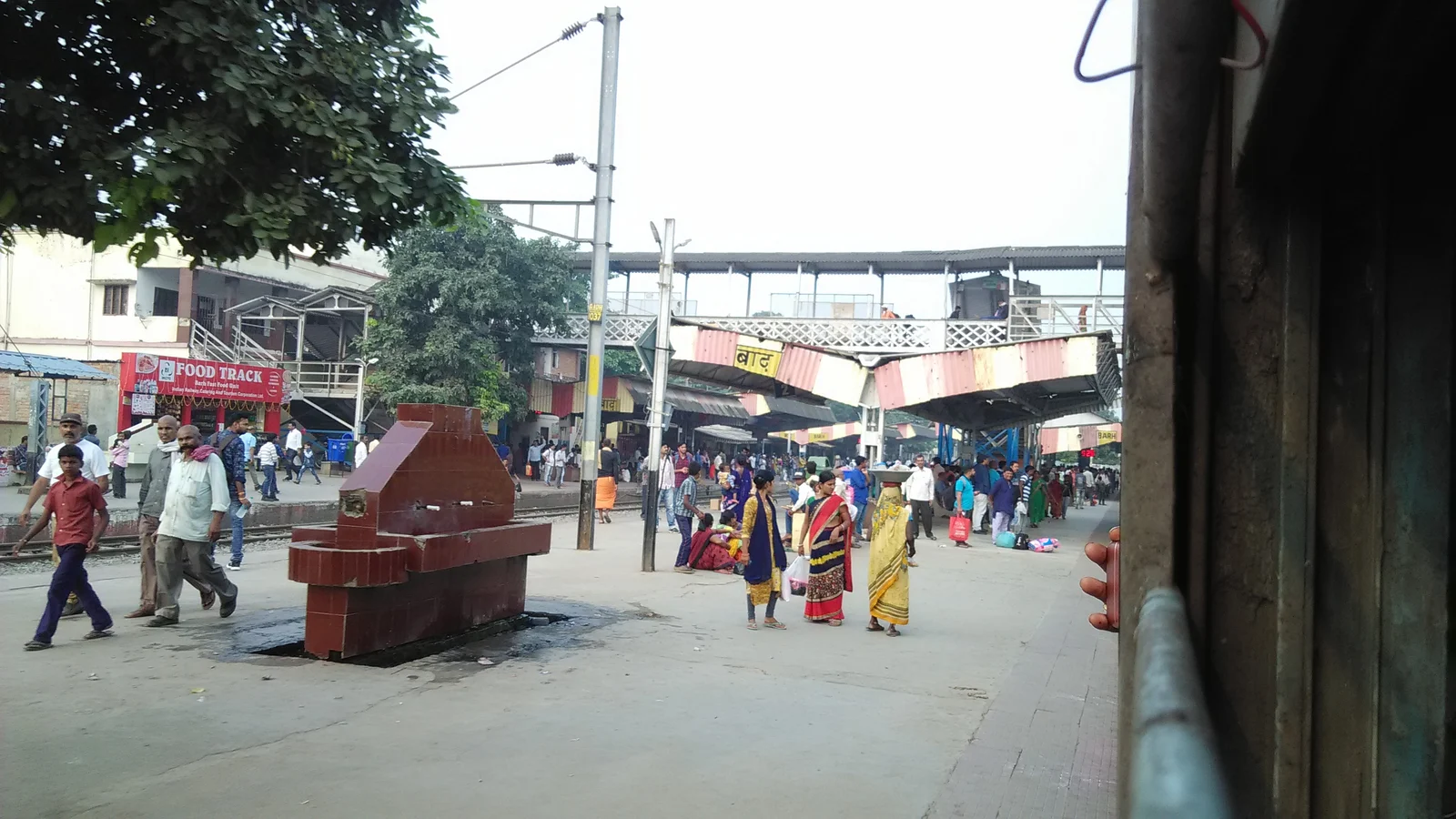
The state tourism department presents lai as a sweet of the state served at festivals and weddings. In Saran district, khobi sweets are made by households and small producers, and demand was reported to rise around fasting, worship and wedding seasons. The materials attached to the Barh application say it is used at weddings and in the tilak and mundan rites, and is sought around Magh Purnima, Diwali and Chhath. Each source looks at a different place and occasion, and no statistics confirm that it is served on the same day in every household in Barh.
Records of the town that can be verified
A table from the Patna District Industrial Centre, reproduced in a geography article, lists Barh and Dhanarua as clusters of small ramdana lai enterprises. The table gives 100 units for Barh and 25 for Dhanarua. This is a tally from the time the table was compiled. A 2020 state tourism brochure also lists Barh’s spherical and slab lai made with ramdana, khoa and sugar, and a university report from the same period covers research on market samples and packaging. Tourism guides and industry and university materials thus record the regional sweet from different angles: form, production and distribution.
The Barh producers’ association filed a geographical indication application for "Barh Laai" on 19 May 2025. In 2026, the legislator elected from Barh asked in the state assembly about efforts toward registration, and it was reported that Barh’s lai, made with khobi or ramdana, khoa and sugar, was included in the list of 18 regional dishes the state government released the same year. As of a check on 14 November 2026, application 1544 is at the pre-examination stage in the Indian registry. The assembly question says the sweet has been made for centuries, but no record showing the first maker or the year production began could be confirmed.
Pick up a piece of Barh lai and the first thing that catches the eye is a mass of roasted, puffed grains. Reading the application materials and home examples shows that the grains, the milk cooked down and the sugar are each prepared separately before a single piece is shaped. With several names for the grains, and with both spherical and slab forms on record, the town’s lai can be described concretely because examples survive in which khoa is combined with the grains to finish it.
Glossary
- Khobi
- A name for a seed that appears in Bihar sources. The species listed under the name khubahi in the Barh application materials is Schoenoplectiella articulata.
- Ramdana
- A seed explained as amaranth in the state’s food guide.
- Khoa / khoya
- A semi-solid ingredient made by heating milk to reduce its water.
- Jaggery
- Sugar made by boiling down the juice of sugarcane and other plants.


