


SweetloreEncyclopedia of World Sweets (834)

Lapis Legit
Lapis legit
Thin batter baked layer upon layer, each etched with spice
Cakes / Indonesia

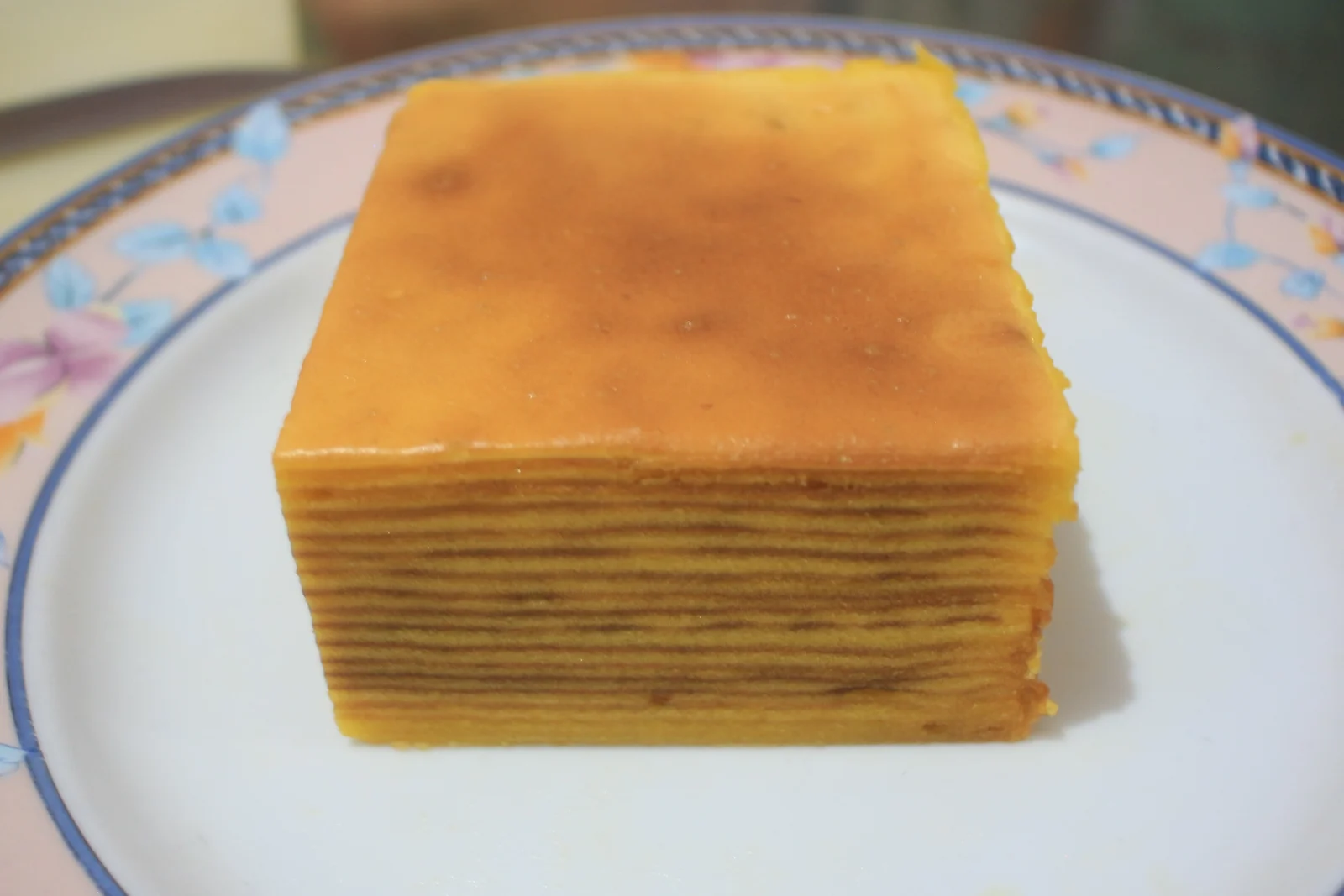
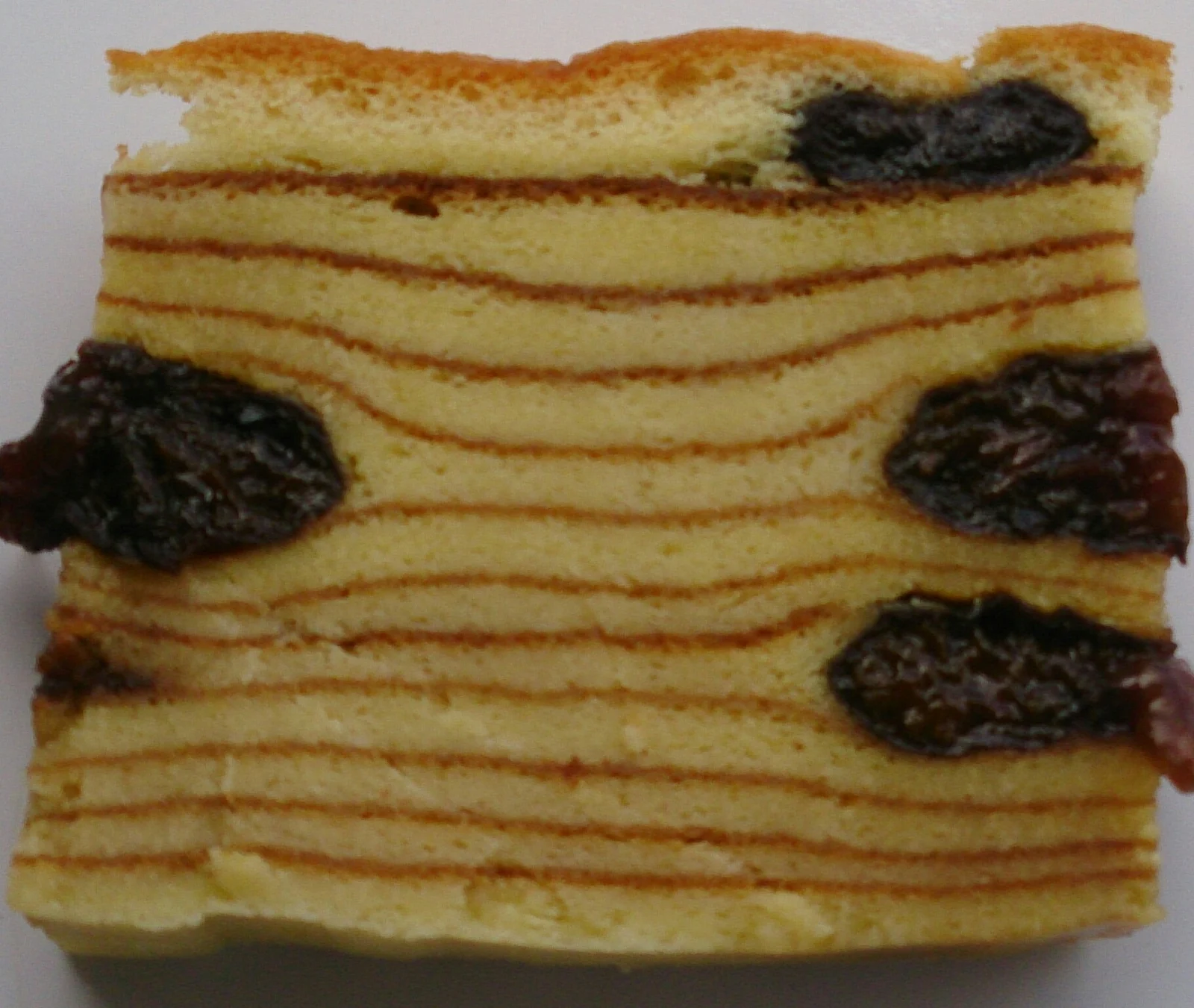
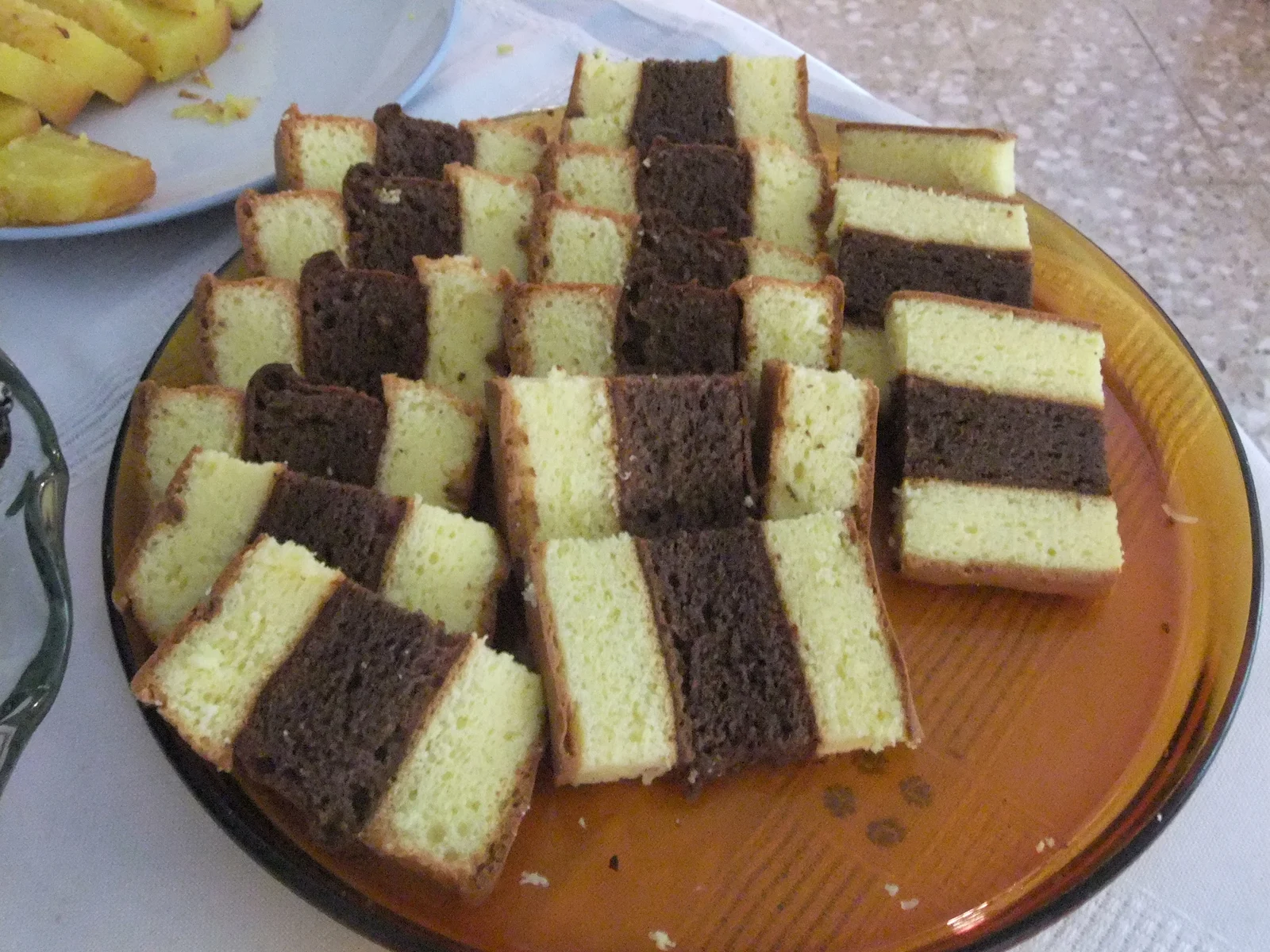
Lapis legit is an Indonesian cake made by baking a batter rich in egg yolks and butter in thin layers, one on top of another. When a square cake is cut into thin slices, several brown lines run through the pale batter. Each line marks where new batter was poured onto a surface that had already browned. Each bite contains many thin layers, and the dense, moist batter carries the aroma of butter, cinnamon and cloves.
Pouring the Next Batter onto a Browned Surface
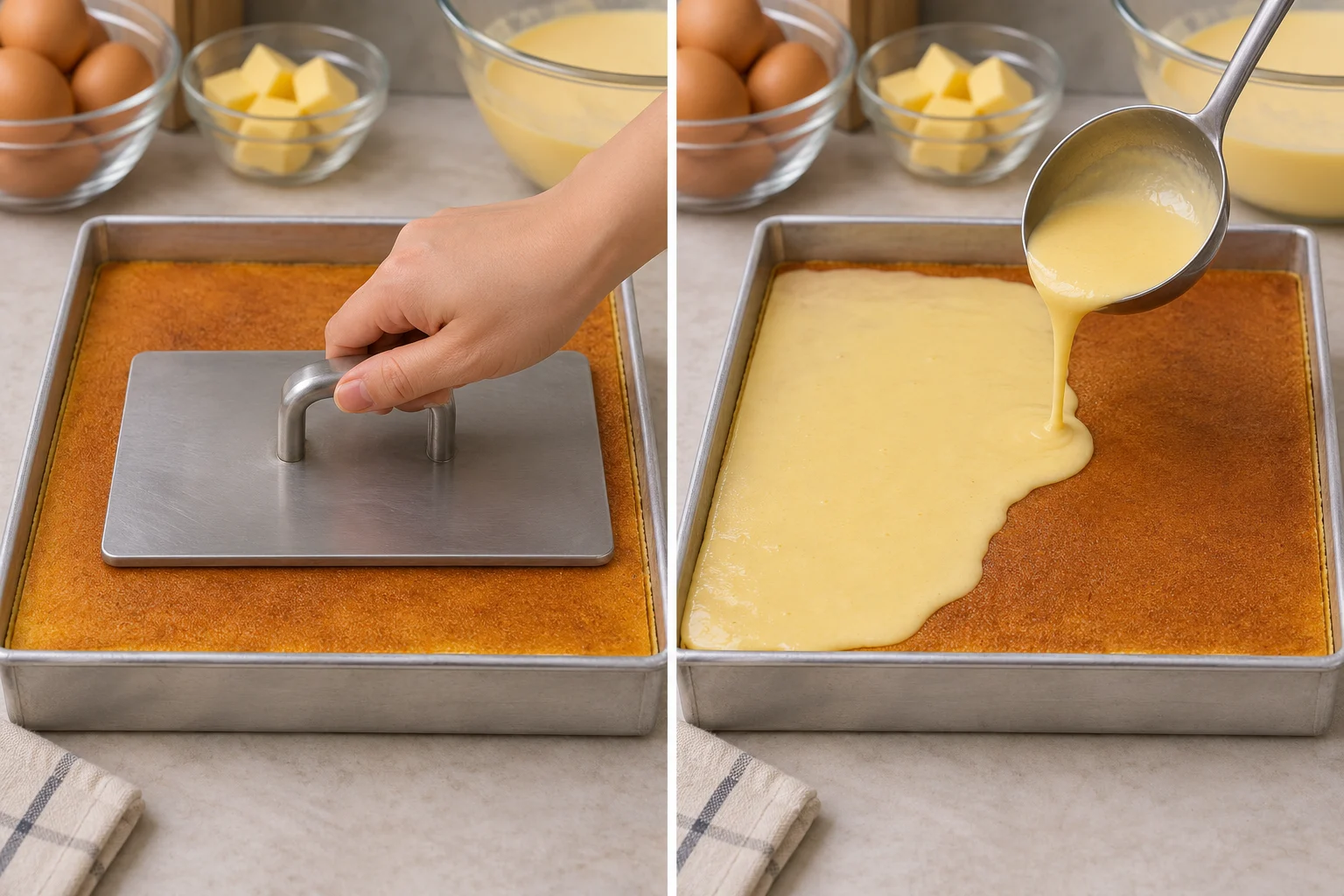
A small amount of batter is spread over the bottom of a box-shaped pan and cooked until the surface browns. When new batter is poured on top, the browned surface stays beneath it. If the next layer is browned in the same way, the boundary between pale batter and browning increases by one. The layers are not baked until they dry out. Each is cooked only until it is firm enough to support the next one, and the batter is built up in this way, so the finished cake can be cut without the layers coming apart. The layers are easy to keep even because roughly the same amount of batter is poured into a pan of the same area.
The first layer is baked on the bottom of the pan. In a version by the spice shop Cairo Food, a 20 cm square pan is used: the first layer is baked for 15 minutes at 170°C with top and bottom heat, and the second and later layers are baked with top heat only. In a home-style example from Bangka, posted online and also using a 20 cm square pan, the first layer is baked for 8 minutes at 160°C with top and bottom heat, and later layers switch to top heat. Because a baked layer is already underneath, the heat from above reaches the surface of the newly poured batter. After the last layer is baked, the Cairo Food version returns the cake to top and bottom heat for another 5 minutes, and the cake is cooled thoroughly before being removed from the pan so that it comes out without crumbling.
Even with the same 20 cm square pan, the commercial ingredient maker PRB specifies 70–80 g per layer, while the Bangka home example uses about 100 g. Weighing the batter is a way of keeping the thickness even within a single cake; there is no single weight per layer shared by all makers. In the Bangka example, the baked layer is lightly pressed to level the surface, brushed with butter, and covered with the next batter, and chopped kenari nuts are scattered on the last layer. The pan goes in and out of the oven each time a layer browns, so the work cannot be done in a single bake. Cairo Food gives a cooking time of 5 hours and the Bangka post 4 hours; each is an individual estimate that includes this repetition.
LapisPonti, a Pontianak producer, gives 15–25 layers as an example, and a book on food culture published by Indonesia’s language agency gives about 18–23. The English name "thousand layer cake" also appears in an article based on a visit to a Jakarta bakery. It names a sweet made by baking thin batter many times over; the actual number of layers varies with the recipe and the amount of batter per layer.
Thin Layers from Small Portions, Moistness from Yolks and Fat
Lapis legit has thin layers because it is baked in many separate stages. The dense feel of the layers when bitten into, by contrast, comes from the composition of the batter. It uses flour and sugar, but is distinguished by a high proportion of egg yolks and fat relative to the flour. For example, Cairo Food’s 20 cm square cake contains 30 egg yolks, 450 g butter, 250 g powdered sugar and 100 g wheat flour, along with 185 g sweetened condensed milk and 4.5 g spices. It is one example of a moist batter with a distinct butter flavour. The number of yolks varies with the size of the cake and its proportions to the other ingredients.
The order in which the batter is combined also differs. Cairo Food whips the butter, adds condensed milk and powdered sugar, and then mixes in the egg yolks one at a time. PRB’s commercial formula whips pastry fat with sweetened condensed milk and spices, then combines it with separately whipped egg yolks and sugar. To 864 g of egg yolks it adds 40 g of cake flour and 60 g of milk powder, and after the flour goes in, the mixing is done with a spatula instead of a whisk. Both are whipped batters, but because they are baked in thin layers poured into the pan, they differ in crumb fineness and texture from a cake in which whipped eggs are made to rise in one large sponge.
The flavouring, bumbu spekuk, is a blend of several spices. The book from Indonesia’s language agency lists cardamom, cloves, mace, cinnamon and anise. Mace is the dried covering that surrounds the nutmeg seed. Which spices are combined, and in what amounts, varies from maker to maker and product to product; when the spices are mixed into the base batter, each layer carries their aroma even when poured thin. There is also a range in what is paired with the rich batter, from Pontianak makers who let the aroma of butter take the lead to a producer in the same city who places prunes between the layers.
This range of flavours is not limited to today’s shops. An Indonesian cookbook from 1986, introduced in BiblioAsia, the National Library Board Singapore’s publication, by the food historian Christopher Tan, gives methods for 11 kinds, including chempedak, durian and mocha. Whatever flavouring or filling is added, the layers are made in common by browning the surface of thin batter one layer after another.
The Name Spekkoek, and Batters of Different Colours
In Indonesian, lapis means "layer" and legit refers to rich sweetness. In the Dutch name spekkoek, spek means bacon and koek means cake. Tan considers the name to compare the stripes of the cross-section to bacon. The Dutch-Indonesian chef Jeff Keasberry offers the explanation based on the stripes while also mentioning other theories. The Indonesian government tourism site and the public radio broadcaster RRI describe it as a sweet that joined European techniques encountered during the Dutch colonial period with Indonesian ingredients and flavours. Who first made it, and when it arrived at its present name and recipe, has not been established.
Looking at the recorded batter methods in chronological order shows how makers produced the stripes. The example Tan found in Kokki Bitja, a cookbook published in Batavia in 1859, uses one batter. Besides cloves and cardamom, the flavourings include white pepper, citrus peel (Tan notes mandarin), kenari nuts and brandy. The spekkoek in the 1895 Recipes of the Hague Cooking School combines butter, sugar, eggs and flour, mixes in finely ground spices, and brushes butter on after each thin layer is baked. Even where the aroma is made strong enough that 65 cloves are specified, the procedure of brushing fat over the baked layer and adding the next batter is close to the way it is made in Bangka homes.
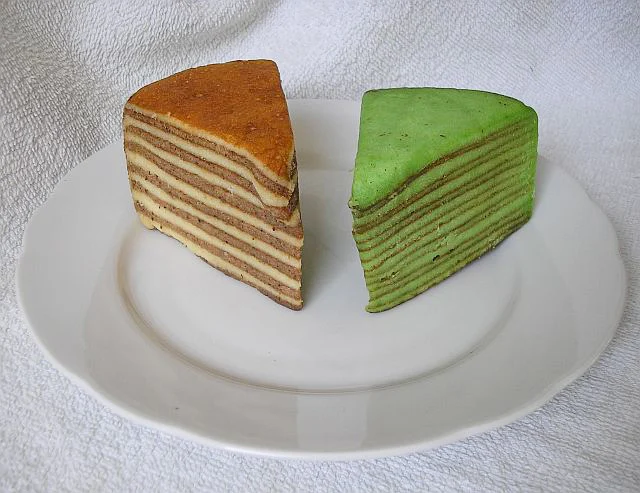
One example in the New Complete East Indies Cookbook of 1925 uses 30 eggs and has two people make separate batters at the same time, so that neither batter is left waiting and ends up in a different condition. One batter receives spices and red yeast rice for colour; the other stays pale. The method is to whip egg yolks with sugar for a long time, add flour and butter, and then fold in separately whipped egg whites a little at a time. For the pale batter, 16 egg yolks are used and are whipped with the sugar for one hour. A small broom-shaped whisk and an egg whisk are used; the first layer is baked well and pressed down, melted butter is brushed on, and the next layer is added. After four layers have been baked, a needle is inserted to check that the cake is cooked through. In this way, a difference in the colour of the batter itself is added to the thin browned lines.
Another spekkoek in the same cookbook has no red yeast rice, and its ratio of eggs to butter and its spices differ. The book also gives a simpler method that uses one batter and sprinkles spices over each layer once it is baked. Tan has found examples with one batter in several books from the 19th and early 20th centuries. The method of sprinkling spices over baked layers in Singapore is also what the cook Hajjah Asfiah, in a 1983 newspaper interview, called kue bawul lapis and said she sold at Ramadan markets. Each cookbook’s procedure and each seller’s memory survives, and no single recipe can be said to represent every home of the period.
What Keasberry distinguishes as Dutch-Indonesian spekkoek is a version with relatively few layers, in which two batters of different colours are stacked alternately. For typical Indonesian lapis legit, he gives a version in which a single batter is baked thinner, in at least 18 layers. He himself adds that there are examples in Dutch, American and Indonesian homes in which two batters are made into more than 20 layers. When looking at a cross-section, the colour of the batter and the lines of browning offer clues, but the number of layers alone does not decide the name of the cake.
Three Sponges, and Rings Baked onto a Core
Indonesia’s lapis Surabaya also has "layer" in its name. The method Tan cites, from the same 1925 cookbook, as the form leading to today’s lapis Surabaya is to bake three thick sponges separately and put something jelly-like between them. It differs from lapis legit, in which thin batter is joined into one cake in the oven layer by layer, in the thickness of each sheet and in the point at which the layers are stacked. Happy Bakery in Jakarta makes both, so the two ways of layering can be compared at the same bakery.
The German Baumkuchen is also baked one layer at a time rather than heated through all at once. Because the batter is applied to a rotating core, rings appear in the cross-section. BiblioAsia discusses its resemblance to cakes such as spekkoek and the possibility of technical influence, but records supporting the circumstances of its early origins are limited. Among the sweets Indonesian calls kue lapis are also some in which rice-flour batter is steamed and stacked. To understand why lines appear in a cross-section, it helps to ask whether the core was turned over an open fire, the batter was set with steam, or the surface was browned in a pan.
Holidays When Orders Increase, a Dish Served in Thin Slices
Work that handles thin batter over and over grows in volume when orders gather before celebrations. According to the Indonesian newspaper Kompas, the craftsman Sunny Gunawan has taken orders since 1985 and in 1987 replaced the charcoal fire with a gas oven. The paper also heard from his son Evan Kanoko that, when he was a child, his mother baked over charcoal. Burning charcoal produced a lot of smoke and required a large outdoor space, and before Chinese New Year they sometimes made 200–300 cakes. Even after changing equipment, Gunawan says baking over charcoal gives a moister, richer result. This is the impression of the same maker who has used both charcoal and gas.
Lapis legit can be an everyday snack or a celebratory gift. A Pontianak producer presents it as a souvenir, a gift and a holiday sweet. RRI names Lebaran, which marks the end of the Islamic fast, and Chinese New Year. An article from Channel NewsAsia on a visit to a Jakarta bakery includes a celebratory interpretation among Indonesian Chinese that links each layer with good fortune. Which occasion it is served on, and what meaning is given to it, varies with the region, the household and the faith. This sweet, concentrated in the flavours of butter and egg yolk, keeps its aroma even when cut thin. Whether served with hot tea or black coffee, every slice contains baked layers from one edge to the other.
Glossary
- Lapis
- The Indonesian word for "layer."
- Spekkoek
- A Dutch name said to compare the striped pattern to pork fat. Some makers distinguish it from lapis legit.
- Bumbu spekuk
- A mixed spice blend used for this cake and others.
- Mace
- A spice made by drying the aril that surrounds the nutmeg seed.
- Kenari
- Here, the nut used on the last layer in the Bangka version and added in the 1859 Batavia version.


