


SweetloreEncyclopedia of World Sweets (834)

Massini
Massini Uruguay
Thin sponge sandwiching cream, with a burnt egg layer on top
Cakes / Uruguay

When a fork breaks through the burnt sugar on top, a thick layer of white cream appears between thin sheets of sponge. Massini (also spelled masini) is a Uruguayan sweet in which whipped cream is sandwiched between two thin sheets of sponge, the top is spread with an egg cream, and sugar is burnt onto it. The thin pionono used top and bottom holds the shape, and the white layer between them spreads out softly. Because the burnt sugar, egg cream, whipped cream and sponge are each prepared separately, each leaves a different texture within a single slice.
A thin pionono supports a thick layer of cream
For homemade pionono, the same cooking site gives a recipe in which eggs are whisked with sugar, sifted flour is folded in little by little, the batter is spread on a baking sheet, and it is baked for 8 to 10 minutes. The flour is not mixed vigorously so that the egg foam is preserved. Batter poured onto a sheet, unlike sponge put into a deep pan, can be kept thin even before baking. Because two of these thin sheets are prepared to sandwich the filling, the central cream layer looks large when seen from the side. This is one published example of a base; the batter formula used by Carrera is not given in the shop’s description.
Pionono is not limited to use as a base for sweets; the same home recipe presents it as a dough that can be used with both sweet and savory fillings. In massini, keeping the two sheets flat, rather than rolling them, lets the sponge support the thick cream from above and below. The upper sponge also serves as the surface on which the egg cream is spread with a spatula and the sugar is burnt. Using a soft pionono and forming a thin layer of burnt sugar on the surface come together in a single preparation.
According to the recipe on the Montevideo cooking site, the thickness of a slice comes from 2 to 3 centimeters of cream spread between the upper and lower pionono. Because the cream is sandwiched between flat sheets rather than rolled in, the white layer appears as a compact band between the thin baked sheets when the cake is cut. Carrera’s product description for its large size also states the combination of two pionono layers and chantilly. The amount of filling is large relative to the sponge, so the proportions of the cross-section differ from those of a cake with thick stacked layers of sponge.
The cream in the published recipe is not simply whipped cream. Sugar is added to two egg whites, which are heated over low heat, removed from the heat before they boil, and whisked until stiff peaks form. Gelatin softened in water is first combined with a small amount of the meringue and then mixed into the whole. Separately, cream whipped with icing sugar is combined with that meringue, and the mixture is sandwiched between the pionono. Carrera’s published product description makes no statement about the formulation, such as the use of this gelatin or meringue.
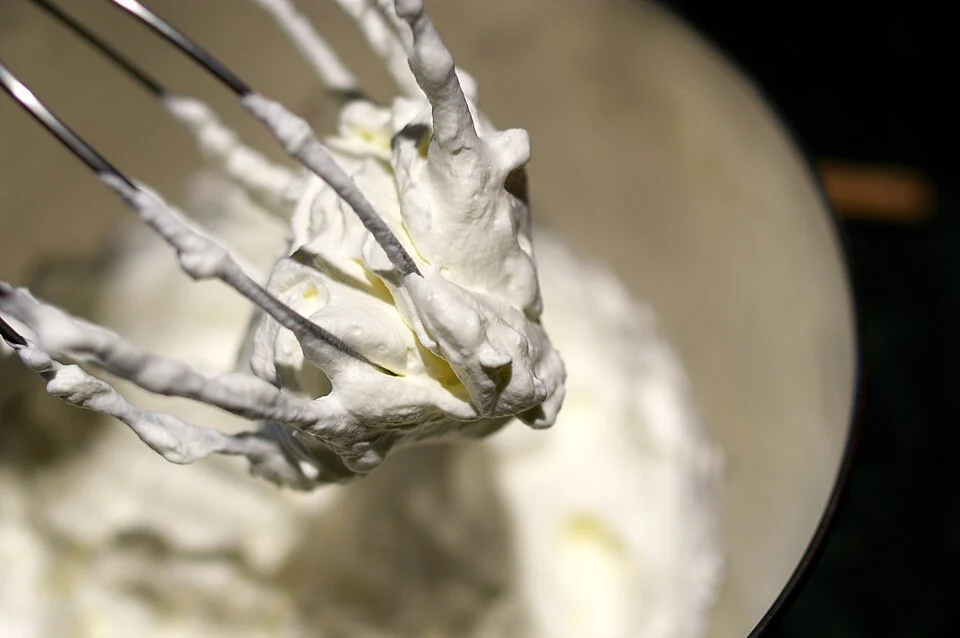
Mixing the gelatin first into a small amount of foam makes it easier to blend with the rest of the foam than adding it all at once in liquid form. In this recipe, the meringue is mixed in, whisking continues, and once the mixture has cooled it is combined with the whipped cream. The chilled white layer keeps its thickness between the two sponges, but because it is an aerated layer, it also stays soft when cut. The instruction to serve it chilled from the refrigerator is also a point of difference from sweets that are served warm after sugar is burnt on top.
Spreading the egg layer and browning the sugar
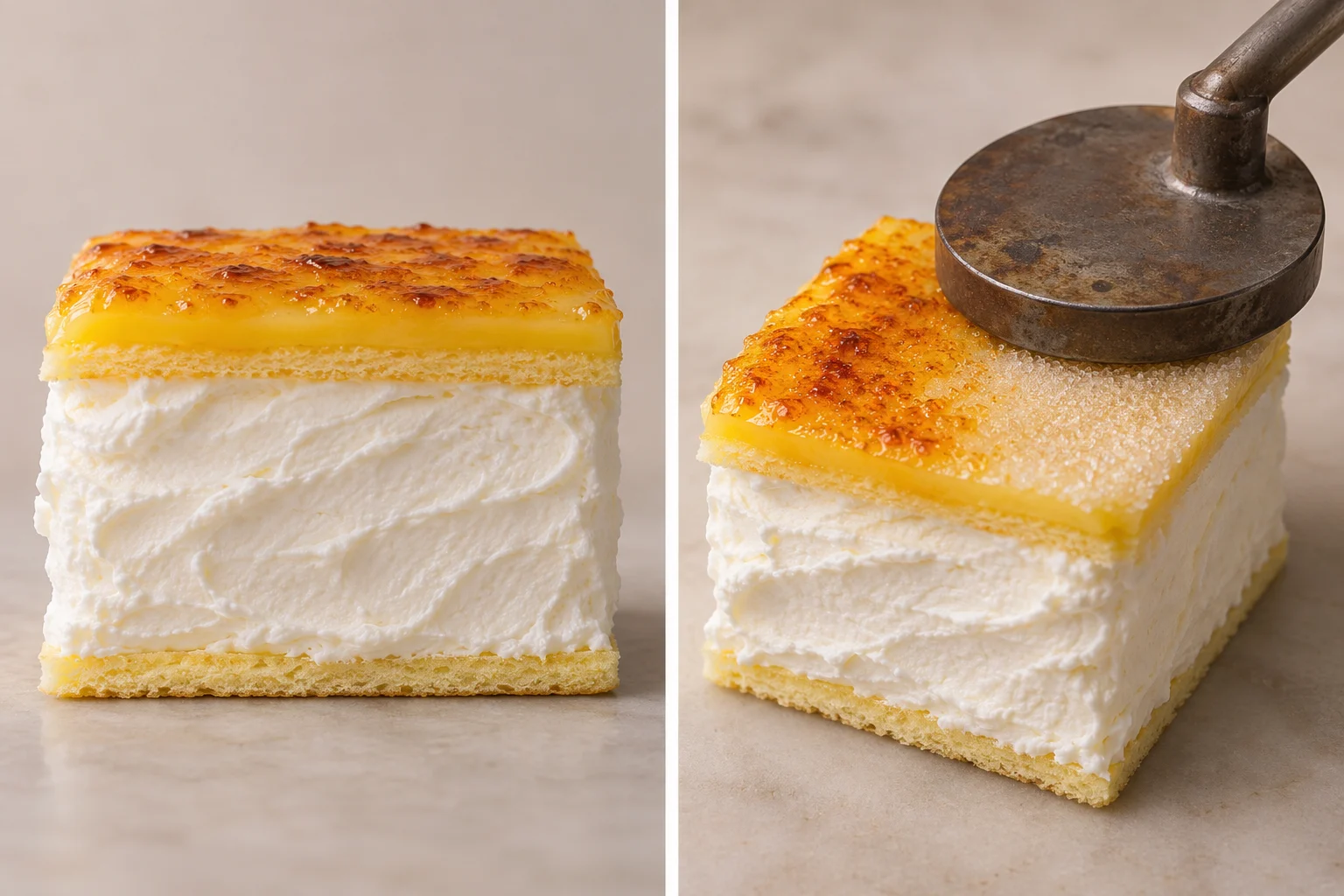
The same published recipe makes the cream spread on top with three whole eggs, three egg yolks and 200 grams of sugar. It is thickened by heating over low heat while stirring, and vanilla is added after it is taken off the heat. After the two sheets of pionono are stacked, this egg cream is spread over the upper sheet, sugar is sprinkled on, and the surface is burnt with a searing iron or a kitchen torch. The white layer below is chilled to set its shape, while the top is colored by brief heating, so separate steps show up in a single cross-section.
The white cream contains air, above it is a layer of thickly cooked egg, and the surface of that layer is browned. When eating, the fork passes from the top through the egg layer and the thin sheet of sponge into the thick cream. Only the top surface is burnt, not the whole sweet, so the cream in the middle does not take on a burnt flavor. Carrera emphasizes the color and gloss of the top in its product description because that part is visible.
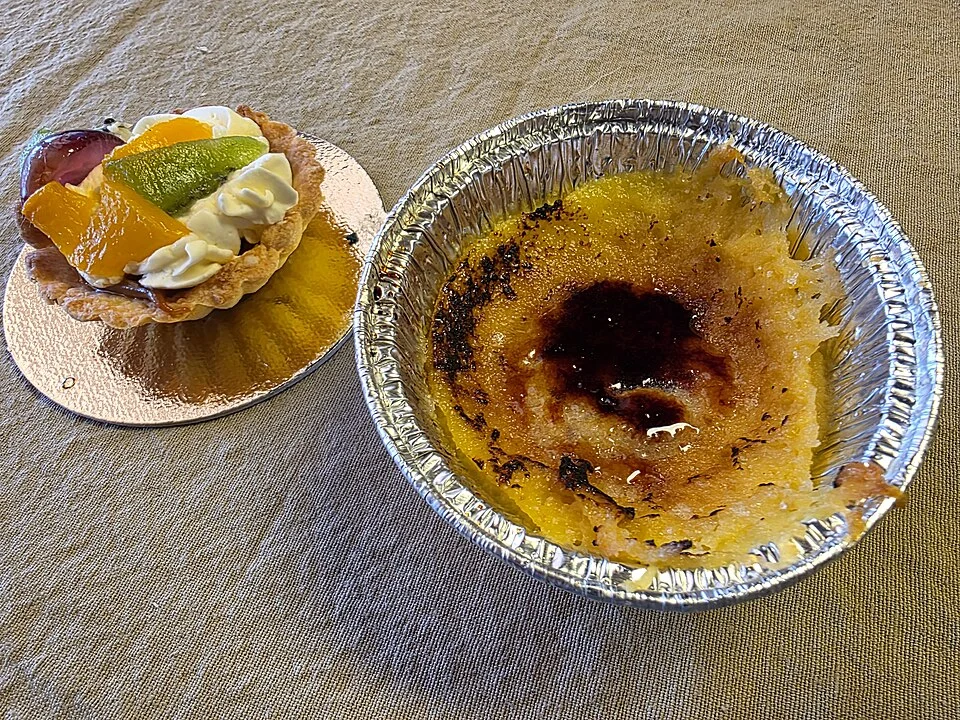
The published recipe from Montevideo describes cutting the finished cake into squares or long rectangles and serving them on paper. Carrera sells single-serving products and boxes of six, and it also lists a large dessert format. When the sweet is cut into individual pieces, the cross-section of thin sheets and cream is visible from the start. When a large one is brought to the table and shared, the same assembly is used, but the difference lies in whether the sugar on the top is burnt before the cake is cut or after. With a box of six, the same form can be handed to each person without cutting with a knife after arriving home.
From selling on the beach to a Montevideo confectionery shop
The slice with a thick white layer and a burnt-sugar top became widely known through a Montevideo confectionery shop called Carrera. Gustavo Laborde’s study of food culture cites a work by Titina Núñez and reports a record that the Catalan-born pastry maker Pedro Carrera sold it from 27 April 1951. This is a date traced from the description in a cookbook published later. The weekly Búsqueda, which interviewed the family, also describes how the shop began in 1951. The period in which the sweet is associated with the shop in Montevideo can be confirmed, but the original menu or formulation of the opening day is not given in these sources.
The family interview also relates that Pedro, who had moved from Catalonia, sold xuixos he had made at home with his son on the beach before opening the shop. The xuixo is a different sweet: fried dough filled with custard. Among the items sold after the family’s migration were a sweet that sandwiches cream between thin sponge and a sweet made of dough that is fried before being eaten. Setting aside any account that identifies the origin of massini, this is an example showing how a family that worked in confectionery built up outlets for its sweets locally.
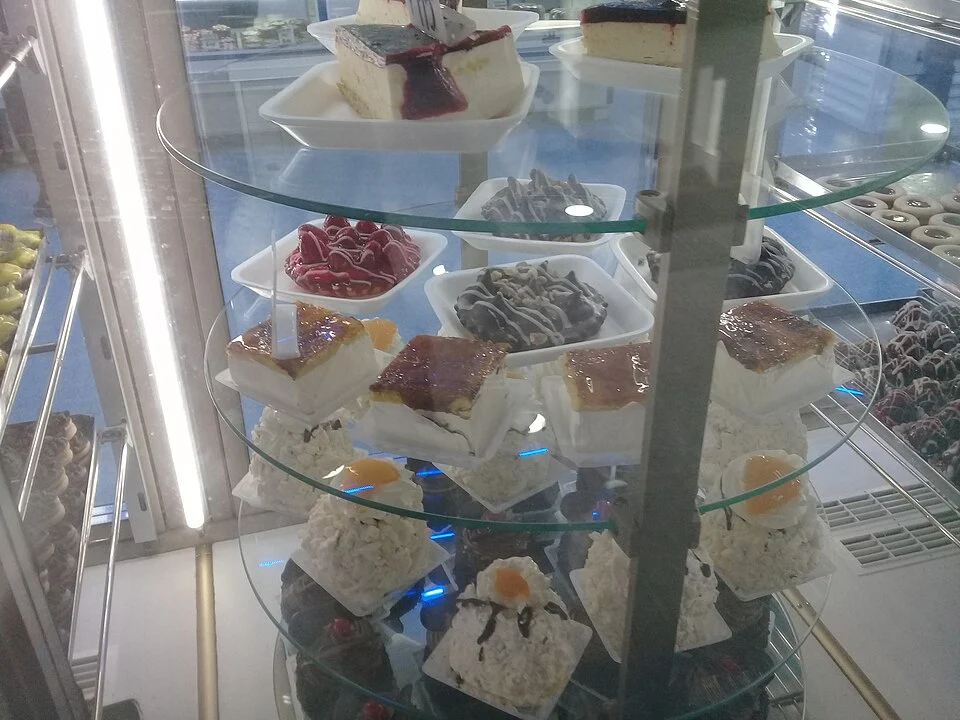
The company’s person in charge, Álvaro Rodríguez, explained in an interview with El País that massini was not made as a keepable sweet but was produced every day. He gave examples of delivering small quantities to restaurants in Montevideo’s Colón district and in Las Piedras, Canelones Department, and said that the way the sugar is burnt and the handling of the cream have not changed since the founding. This is what the company says about its own work. It conveys the sales circumstances: beyond individuals buying at the shop, the sweet made that day has been made available at other eateries as well.
Mercedes de Castro, who writes about Montevideo’s food culture, recalls that her grandmother bought massini at Carrera on Saturday afternoons and took it home together with cream-filled ensaimadas. Carrera itself also presents the sweet as one chosen as a gift to bring when visiting. The recollection of a family buying at the shop and eating at home, and the fact that the shop offers boxed and large sizes in addition to single servings, can be confirmed from separate sources. Depending on the occasion on which the sweet is eaten, the way the same layers are used changes between small cut pieces and one prepared whole.
In Catalan shops, chocolate layers also appear
Ochiai, a pastry shop in Barcelona, states in its product description that its massini sandwiches whipped cream and trufa between sponge, with a thinly burnt egg layer on top. Another Barcelona shop, Baixas, combines syrup-soaked sponge with a ganache made from 70% cacao chocolate and whipped cream, and puts on top a cream made from milk, eggs, sugar, flour and vanilla, which is browned. Because Carrera’s standard version in Montevideo features a white chantilly layer, compared with the two-layer Catalan examples, the way the white and brown show on the cut face and the chocolate aroma are different.
In an example from a Catalan-language cooking article, the sponge is soaked with syrup and brandy, trufa prepared separately is whipped and spread over the lower layer, and whipped white cream is layered on top of it. The upper and lower sponges are leveled, the cream is worked into the corners with a spatula, and then the upper sponge is put back. If the white and brown layers differ in thickness from place to place, the cut slice looks tilted. Even when cream is simply sandwiched between thin sheets, which layer is laid down first and how far it is spread determine the shape of the cross-section.
The same article gives a ratio of 8 parts syrup to 2 parts brandy and includes a step of moistening the sponge. The recipe published in Montevideo sandwiches cream between two sheets of pionono and includes a step of burning the top, but it has no instruction to soak the batter in a liquor-flavored syrup. Comparing the two examples shows differences not only in the kind of whipped layer but also in the liquid the sponge absorbs from the start. These are differences that can be grasped within the scope of shop descriptions and actual recipes, without extending one published example into a national standard.
Carrera’s product list also includes a separate item, "Masini de Chocolate", in addition to its standard version. From the shop’s description of its standard version and the Catalan shops’ descriptions of sandwiching both trufa and whipped cream, each example can be compared. On the other hand, dividing the preparations only by which country has a chocolate flavor would hide a separate product from the same Montevideo shop. What can be confirmed in the Catalan examples is, beyond simply the presence of chocolate, that brown trufa and white cream are layered separately.
A singer’s surname lives on in a sweet
The Catalan public broadcaster 3Cat presents an account that links the sweet’s name to the Italian tenor Angelo Masini. According to the broadcaster, the singer appeared in performances at Barcelona’s Liceu theatre from 1881 to 1887. However, it notes that even after interviewing pastry makers’ associations and people involved, as well as food historians, it found no written document confirming an invention in Barcelona. The period of his appearances at the theatre and the period when the sweet was sold under that name are matters that need to be verified in different sources.
The Uruguayan cookbook cited by Laborde explains that an association of Barcelona pastry makers created the sweet in the 1930s in honor of the singer. As the public broadcaster’s inquiry shows, there is still uncertainty about contemporary records tied to the names of specific shops or craftspeople. In Uruguay, Carrera spells the name "Masini", and a Catalan shop gives "Massini" as an example. Looking separately at the spelling the shops use, the cookbook’s account of the naming, and the fact that the singer performed, makes it possible to read without confusing the fact that the sweet survives in two places with how far the naming story can be trusted.
Glossary
- Pionono
- A thinly baked sheet of sponge. In this article, it forms the upper and lower sheets that sandwich the cream.
- Chantilly
- Whipped cream. In Carrera’s standard version, it goes between the sponge sheets.
- Trufa
- In the Catalan sweets discussed in this article, a layer of chocolate-flavored whipped cream.
- Yema quemada
- A finish in which sugar is sprinkled over an egg-based topping and browned.
- Confitería
- A confectionery shop. In the Montevideo discussion in this article, it appears in the name of Carrera’s shop.


