


SweetloreEncyclopedia of World Sweets (834)

Mazariner
Mazariner
Almonds in a small shell, finished with white icing
Tarts / Sweden

Seen from the side, a Swedish mazariner (singular: mazarin) has white icing sitting inside a browned rim. Break one open, and the pastry shell, which is made in a small mold, crumbles lightly, and your teeth reach the moist almond filling. Sugar is used not only in the filling but also on the top, which is baked and cooled first. On a fika plate, the coffee-break tradition, each person can be served one without any slicing. The 1911 Iduns kokbok records a version in which almonds are ground, strawberry jam is added to the bottom if desired, and a water icing is spread over the top.
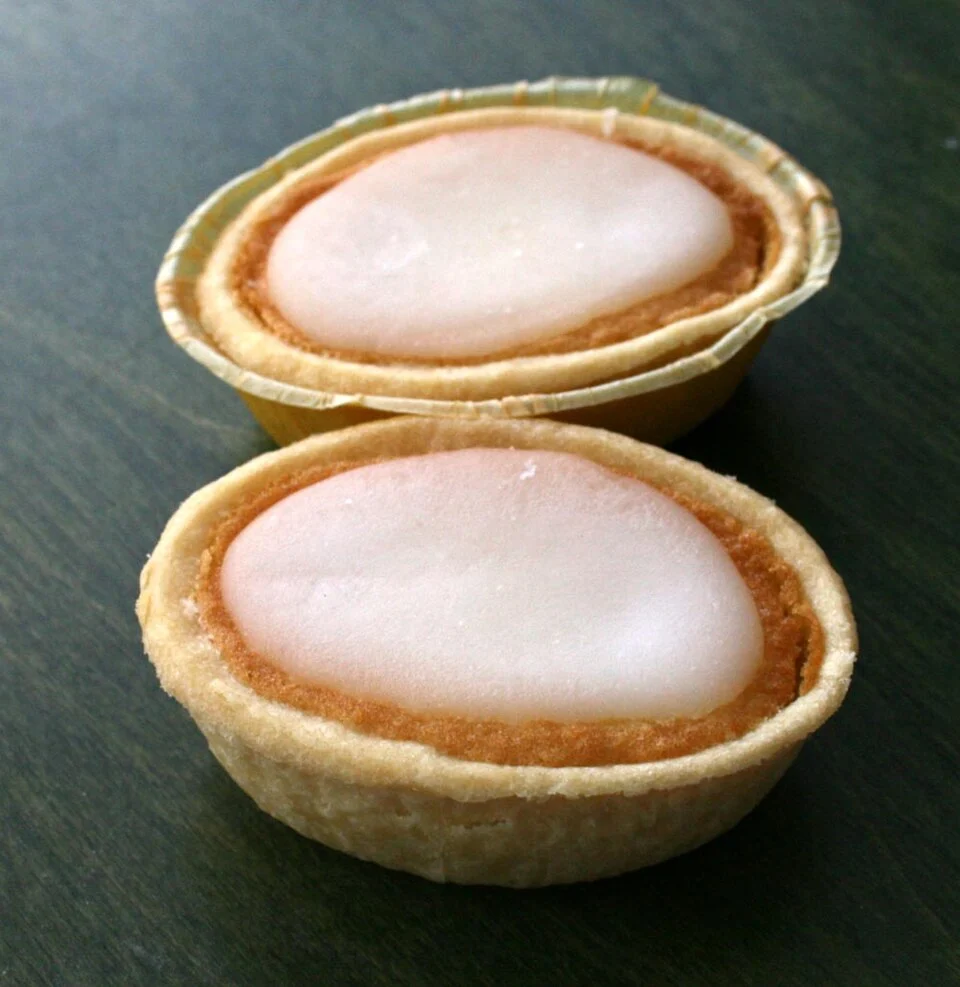
A pastry shell pressed into the mold holds one portion of almond filling
The outer mördeg (a crumbly shortcrust dough) is made from flour, butter, sugar and other ingredients, and breaks with a light crumble from the rim once baked. In No. 997 of the 1911 Iduns kokbok, butter and powdered sugar are beaten until white and fluffy, egg yolk is added, and a raising agent and sifted flour are mixed in. The dough rests for about two hours, is rolled thin, is cut with a round cutter, and is fitted into greased tartlet molds. Even if a circle is cut out on the work surface, pressing it into the mold forms the sides as well as the base. When the pastry is removed from the mold after baking, it keeps a shape that holds the filling.
The recipe from the Swedish retailer ICA uses an oval mold measuring 8.5 cm long, 6.5 cm wide and 2.5 cm deep. Paper or metal molds are greased, the dough rests in the refrigerator for at least 30 minutes, and it is pressed into the mold or rolled out and fitted in. Compared with the round-cutter method in Iduns kokbok, the shape of the shell here follows the curve of the paper or metal rim. If the dough of the base and the dough of the sides join without a break, the egg-based filling, transferred from a separate bowl, stays within a single mold. The baked color shows on the parts that were first pressed against the mold, apart from the top, which the icing covers later.
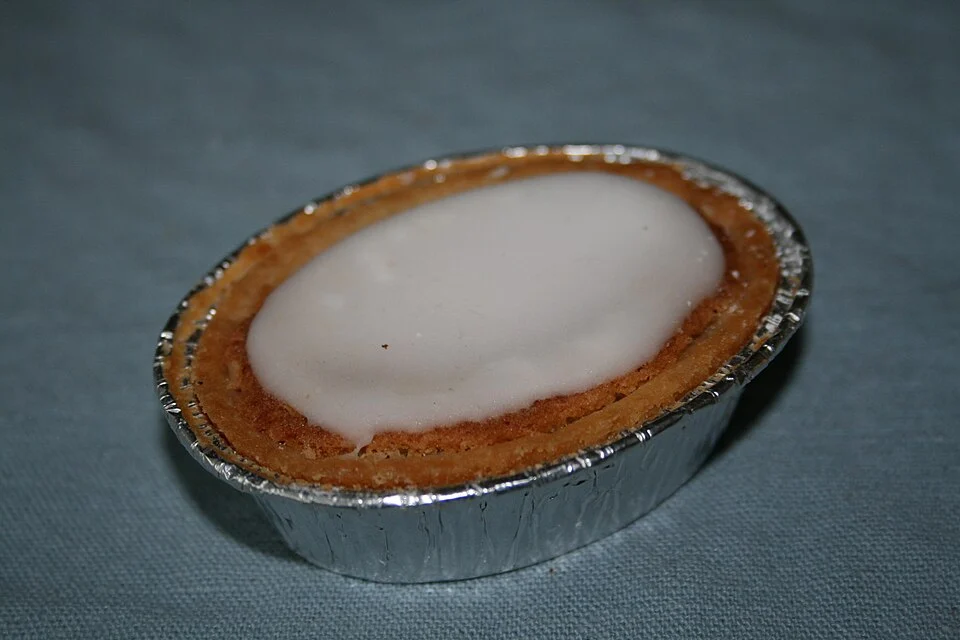
The ingredient list for the 1911 dough gives 75 g butter, 35 g powdered sugar, 1 egg yolk, 90 g flour and 2 g raising agent, with a separate 15 g of butter for greasing the molds. The fat that goes into the dough to give a crumbly bite and the fat spread thinly on the mold so the pastry releases easily are weighed separately. Comparing the photograph of a baked piece still in its metal mold with one removed from the mold shows how the dough, held on the inside, keeps its rim after being released.
The 1911 filling, for about 12 pieces, uses 70 g sweet almonds, 2 whole eggs and 120 g sugar. The almonds are blanched in hot water, skinned and ground with a special tool. The eggs and sugar are beaten for 15 minutes, and then the ground almonds are added. The modern recipe from the dairy company Arla also starts with almonds that are blanched, skinned and finely ground. Here, however, the almonds, sugar and butter are combined first, and the eggs are mixed in afterward. Both grind the almonds fine, but the bowls you use and the order of steps differ between adding nuts to beaten eggs and sugar, and adding eggs afterward to fat and nuts.
The form in which the almonds are prepared is not the same everywhere either. The Swedish encyclopedia describes a filling made with almond paste, mandelmassa. ICA’s recipe for small pastries lists almond flour, eggs, sugar and melted, cooled butter. If you prepare ground almonds yourself from scratch, you can weigh the sugar and fat separately. In a recipe that uses a paste containing sugar, the amount of that paste is built into the formula. Before the sweet filling goes into the small mold, the recipes differ in where the nuts are made fine and at what point they are combined with sugar.
In ICA’s filling, eggs and sugar are whisked until fluffy, and then 200 g almond flour, melted and cooled butter and bitter almond oil are added. In a recipe where the nuts are blanched and ground in the home kitchen, the cook can decide there how fine the nuts should be. In a recipe that starts with prepared flour, the order in which it is mixed into the whisked eggs appears in the method instead. Even for the same moist part that goes into the same small mold, there are different choices when preparing the nuts and when bringing the filling together.
Leaving room to rise, then finishing in white after cooling
The 1911 book has the almond filling put in nearly to the rim of the mold and baked in a not-too-hot oven. A thin twig is pushed into the middle, and doneness is judged by whether it comes out dry. "Tippan’s Mazariner," handed down in Skåne, is made by filling the molds about two-thirds full and baking at 200°C for about 10 to 15 minutes. The modern ICA recipe uses 200°C for about 15 minutes. Even when the depth to the rim is the same, how full you fill the mold changes the room the filling has to rise. Temperature and time are best read together with the mold and filling used, as a guide to baking without spilling over the mold.
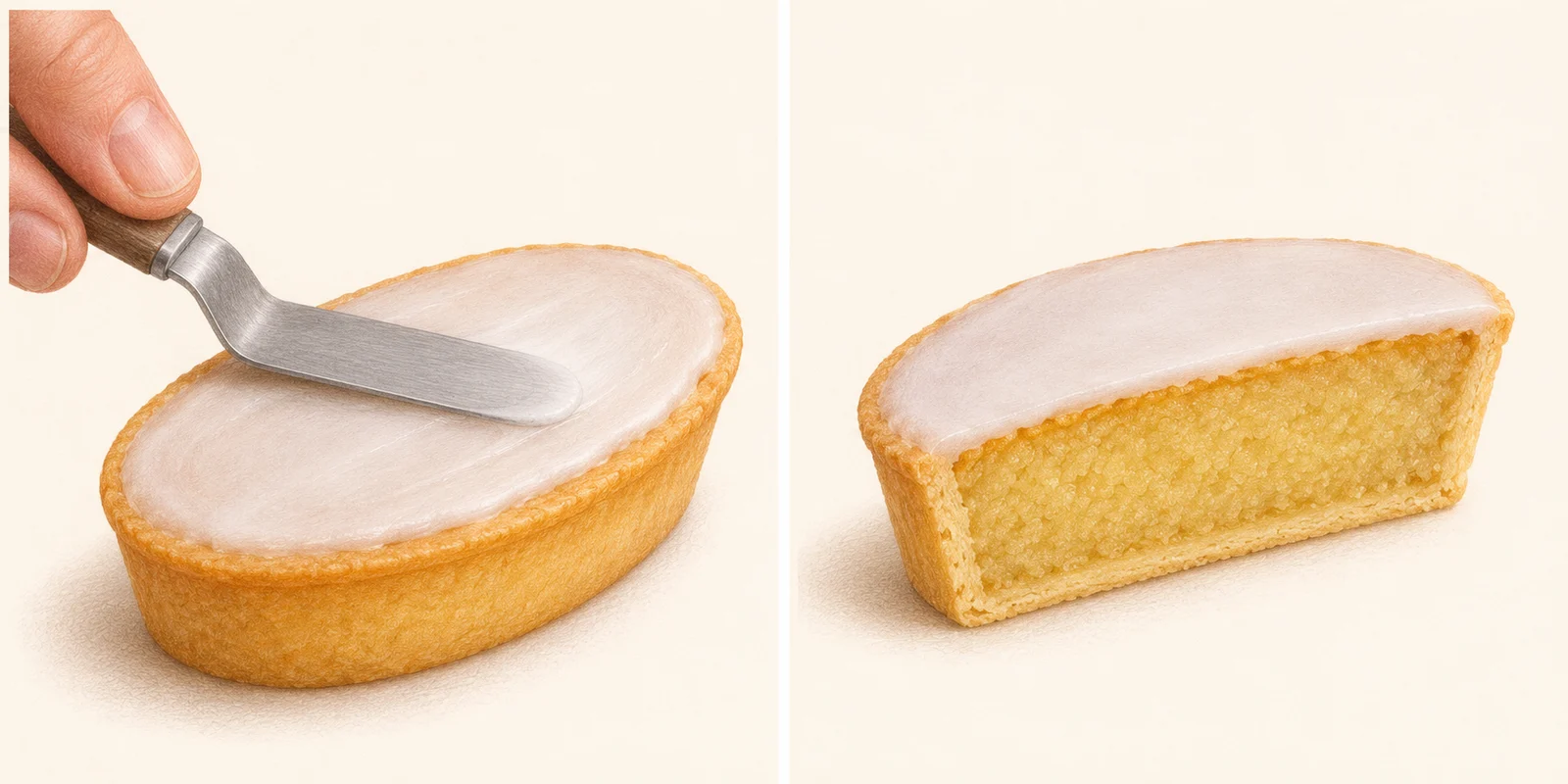
The white icing goes on the surface after the pastry has been baked and cooled completely. ICA dissolves powdered sugar in water. The Skåne home recipe adds powdered sugar and a few drops of vinegar to lightly whisked egg white to make a glossy icing. How far the icing spreads when spooned on, and how the dried surface feels, differ between one dissolved in water and one that contains egg white. The water icing in Iduns kokbok is a finish chosen according to taste. Whether to show the color of the baked almonds, or to place white in the middle after cooling, was a choice in the 1911 kitchen as well.
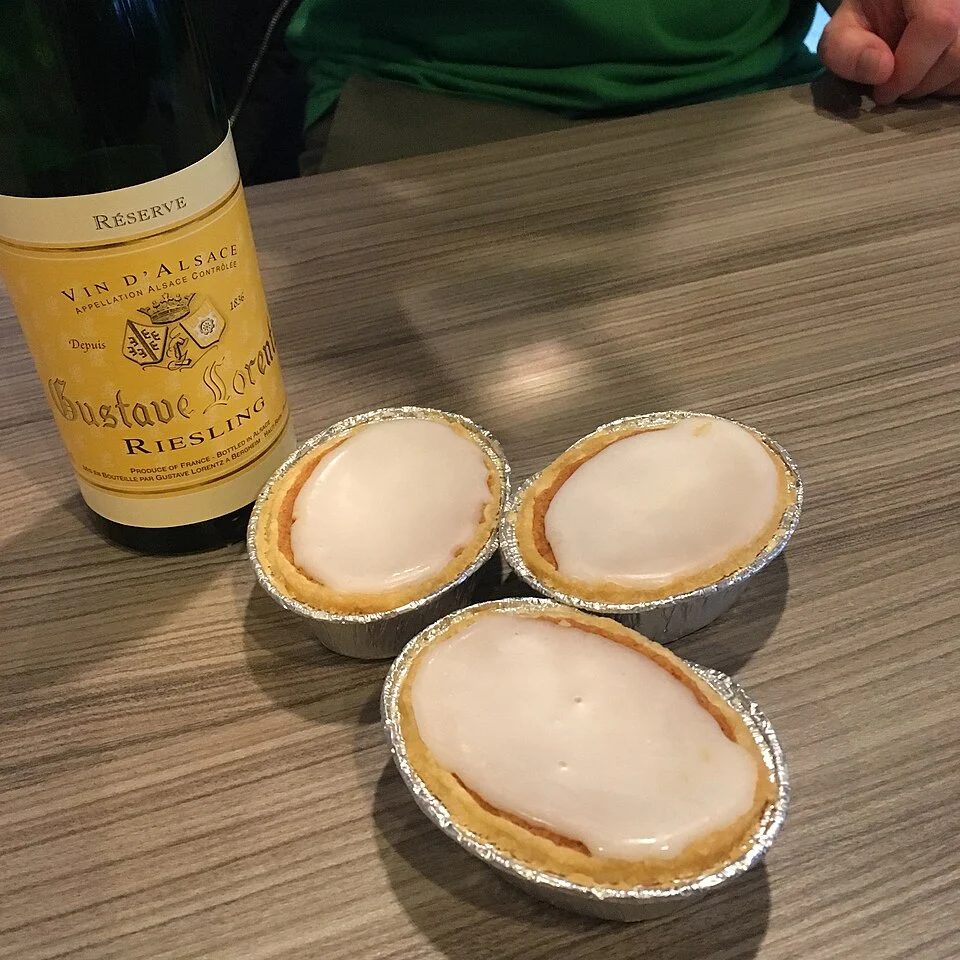
In a version where the white icing does not reach the outer edge, the pale shell, the baked color of the almonds and the white surface can be seen all at once. When the pieces are lined up on a baking sheet, the thickness of the dough pressed up the sides of the mold before baking is a separate matter from how far the icing was spread after baking. Bite in from the edge, and the shell and the baked part touch the mouth first; break in from the center, and the white icing and the filling arrive together. By leaving room to rise before baking, and making the center white once cooled, a single small pastry keeps two finishes.
A small fika plate and a glass dish at Christmas
The Stockholm tourist guide lists the mazarin among fika pastries. The intangible cultural heritage inventory describes fika as the habit of taking a break, for example in the middle of work, and talking over a drink and something light to eat. If a single-portion pastry is put on a small plate, it can be eaten once you sit down, without waiting for a slice of a large cake. When you prepare a few at home, too, you can line up oval molds, bake the number you need, and serve each with its white surface left as it is.
The historical dictionary of the Swedish Academy describes the mazarin as a pastry of mördeg filled with almonds, eggs and sugar, and cites usages from 1886 and 1927. In the 1886 edition of the second collection of short stories and sketches, Profiler, a glass dish of pastries stands before two people celebrating Christmas, and after Carlsson toasts with punsch, he puts a large mazarin whole into his mouth. What is drunk in the story is a liquor flavored with arrack and the like. This differs from the coffee that appears in modern tourist guides. In both, one piece is taken from a dish, and the cookbook gives the ingredients and steps for making that one piece.
"Tippan’s Mazariner," from a family that grew up near Landskrona in Skåne, is one of the recipes that a grandmother’s notebook, copied into a photo album, passed to the children at Christmas. Tippan had another nickname, Lillan, and the notebook was written under that name. The method combines ground almonds with eggs and butter, and spreads an egg-white icing on each cooled piece. Following the piece that stayed in the family’s memory, the name in the notebook shows not only the quantities but also who taught the recipe.
Where the jam goes, and the pastry baked in a large pan
The 1911 book has strawberry jam placed on the bottom of the mold, if desired, and covered with the almond filling. Smakminnen, which presents a Skåne home recipe, calls a pastry with raspberry jam spread over a baked mazarin and icing on top a katalan. The strawberry jam placed at the bottom of the mold bakes together with the filling. The raspberry spread on top goes on after baking, and appears under the white icing after the first bite. Arla’s katalaner also have jam spread on top and a water icing over it. In ICA’s version, jam goes on the bottom before baking and is spread on top again after cooling, so raspberry lies above and below the baked almond.
In ICA’s example, the large Swedish mazarinkaka mixes grated almond paste with milk and other ingredients, and is baked in a mold about 24 cm in diameter at 175°C for 25 to 30 minutes. Instead of lining individual molds with shells and filling them, one almond cake is cut into slices. The Danish mazarinkage also has a recipe with marzipan baked as a single cake, which Odense Marcipan finishes with white chocolate cream and summer berries. Though the almond fragrance is inside, whether a thin sugar glaze goes on top or fruit and chocolate cream are placed there differs by regional method.
With a mazarinkaka in a large pan, a cake 24 cm in diameter is cooled and cut, so each slice has two cut sides running from the center outward. A small mazarin is already divided into single portions once removed from the mold, and its surface can carry one portion of icing too. In katalaner with jam, since each is made individually in a mold, the cook can decide whether the fruit goes on the bottom or on top. The closeness of the names does not settle the size at which they are placed on the table or the order in which the fruit is handled.
The French name and Gouffé’s two pastries
On the name, the Swedish encyclopedia gives the possibility that it derives from Cardinal Jules Mazarin and from an Old French word for a bowl or cup. The historical dictionary gives the French mazarine. A word for a vessel can be linked to a pastry made by lining a mold with dough to form a small container. Who first used the name for a pastry, and whether that person had a personal name or a vessel in mind, cannot be decided from the similarity of names alone.
The encyclopedia attributes the modern mazarin to the French pastry cook Jules Gouffé. His "Gâteau mazarine" on pages 47–48 of Le Livre de Pâtisserie, published in 1873, is a recipe in which cream is warmed to about 32°C, a sponge is made with part of the flour and yeast, and sugar, salt, the remaining cream, eggs and butter are added. In "Gâteau mazarin" on page 218 of the same book, sliced almonds are scattered in a buttered mold, Solilemme dough is put in and baked. It is then cut crosswise, a sauce made from rum, sugar syrup, fruit and the like is poured on, and it is reassembled and served warm. There are differences from the dough in today’s small Swedish molds and from the step of putting icing on a cooled surface that cannot be traced from the two names alone.
Glossary
- mördeg
- A dough that crumbles lightly when baked. Here it is used for the base and sides that hold the filling.
- mandelmassa
- A paste made with almonds and sugar. In older recipes, a filling mixed by the cook is also called by the same word.
- fika
- A Swedish break habit of spending time over a drink and something light to eat.


