


SweetloreEncyclopedia of World Sweets (834)

Quesadillas de Quito
Quesadillas de Quito
A thin shell folded at five points to hold a baked cheese filling
Tarts / Quito, Ecuador

Quesadillas de Quito are sweets from Ecuador’s capital, in which a thin pastry shell holds a sweet cheese batter as it bakes. A round of dough is rolled out and folded by hand at five points. It goes into the oven with the top left open, so the edge forms a pentagon while the filling at the center puffs up and browns. Biting in from the edge, you meet the thin shell first, then the soft filling inside, made from cheese, egg, sugar and achira starch. The wheat-flour shell and the cheese filling are prepared separately and put together one piece at a time.
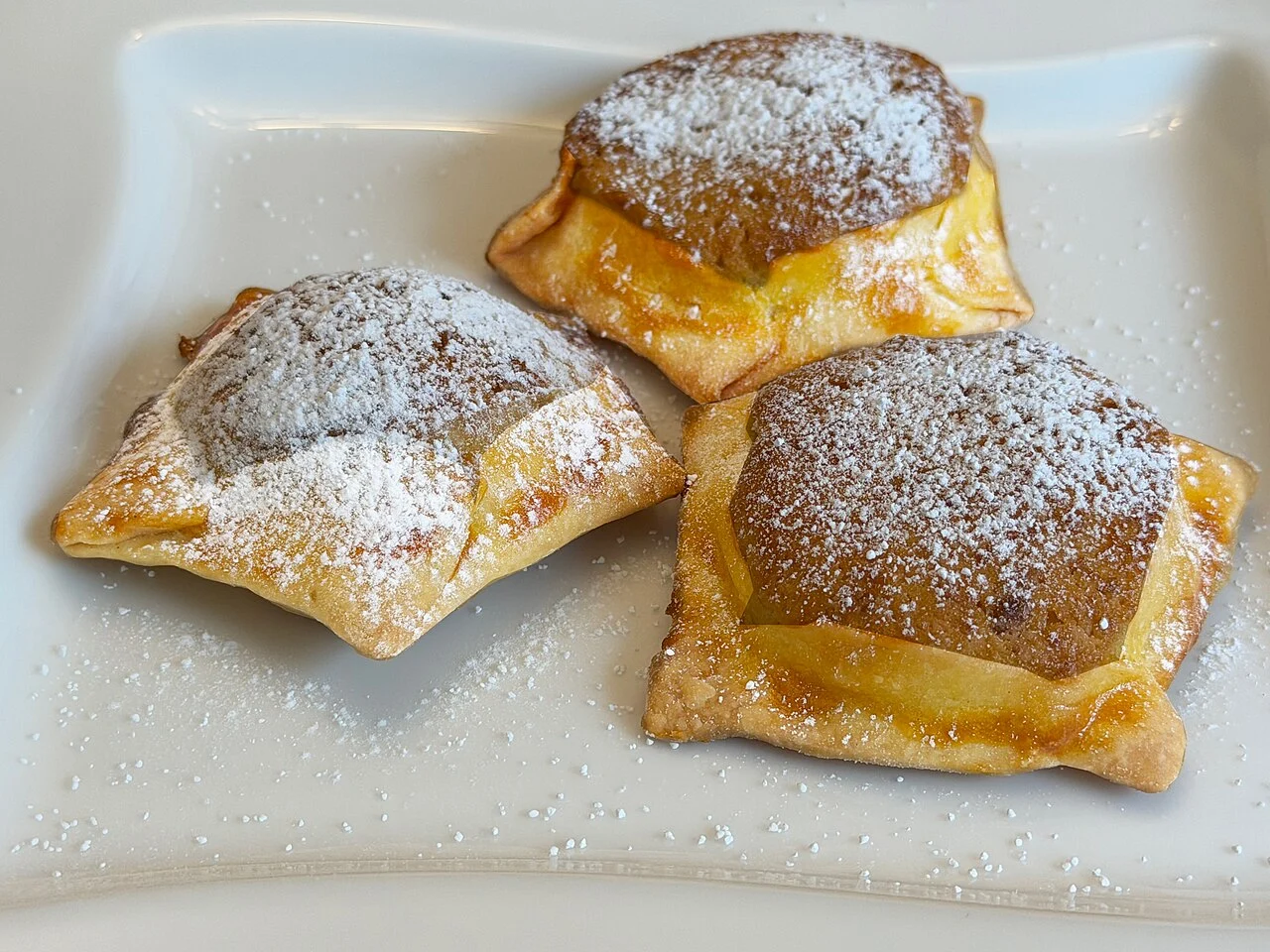
A Thin Folded Shell and a Puffed Center
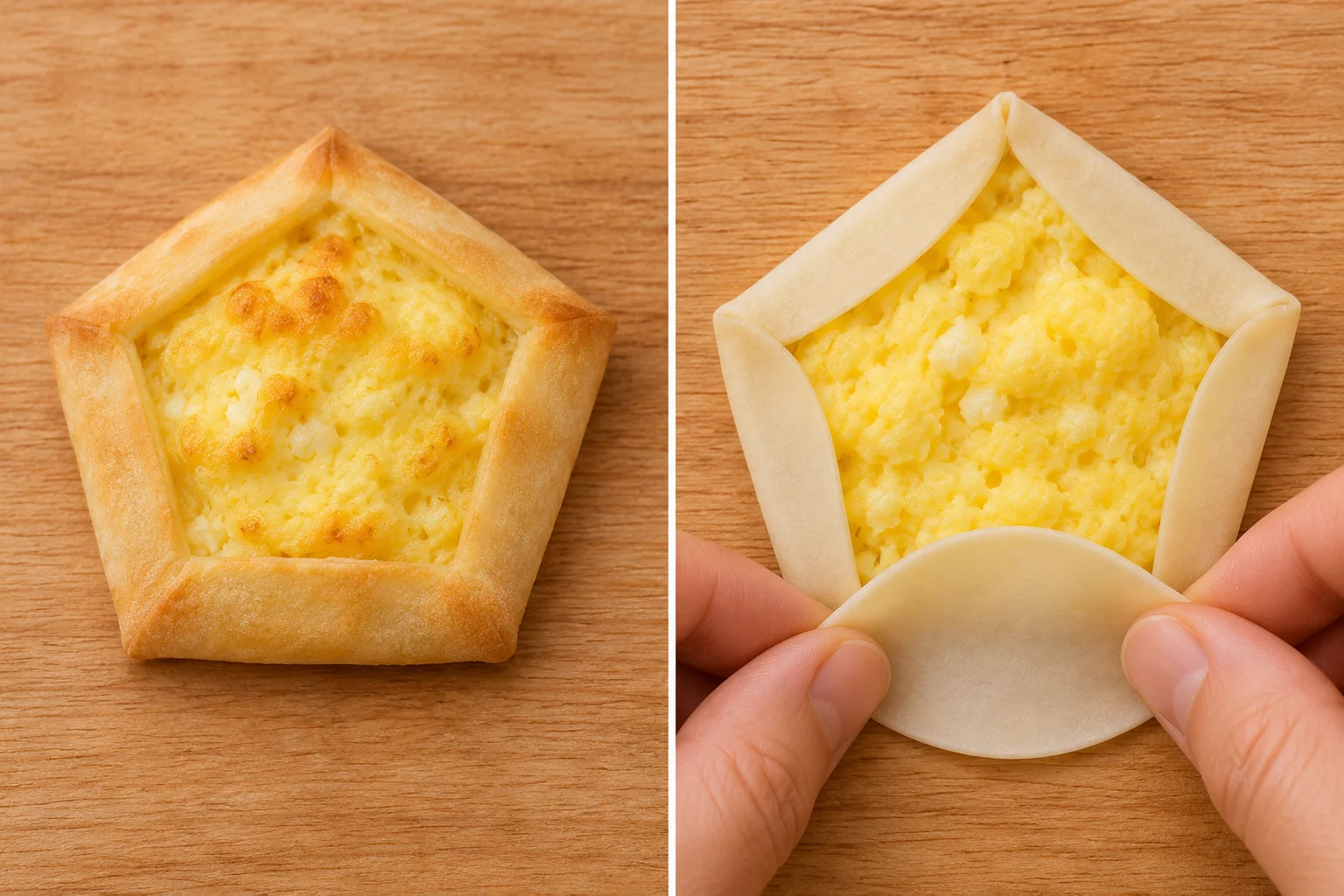
In the university source that examined the San Juan method, filling scooped up with a spatula is placed on a round shell, and the edge is folded at five points. The folded shell supports the filling at its sides, while the top surface is exposed directly to the heat of the oven. The pentagon is not a shape produced by pouring batter into an angular mold; it is the trace left by folding each round shell by hand, one piece at a time. The overlapping edge and the puffed center visible from outside show differences in how the pastry was shaped before baking.
At the edge, the shell overlaps where it is folded, and the tips that do not touch the filling receive the oven’s heat directly. The center is thicker than the rim and contains moisture-bearing ingredients such as egg and cheese. The crispness of the shell and the airy softness of the filling described in a feature on the shop are tied to this difference in thickness and ingredients. Unlike a pastry in which shell and filling are mixed into a single dough, one piece lets you bite through a thinly baked edge and a thickly cooked center.
The five folds at the edge come not from pouring filling into a pentagonal mold but from repeating the work of folding around a thin circle. In the shop’s demonstration, filling is placed at the center of each shell, one at a time, and the piece is folded and then moved to the baking sheet. Even on days when a lot of filling is made, the method never becomes one of baking shell and filling together as one large piece and cutting it afterward. The five edges visible when a piece is served are the marks of its having been assembled by hand, one portion at a time, before baking.
The shell uses wheat flour, egg and water. In the recipe given in a culinary study from an Ecuadorian university, these are kneaded, left to rest for a while, and rolled out with dusting flour into a very thin circle. The shell alone is flat, but once the filling is placed at its center, the edge can be lifted to hold the filling in. The filling does not use only the same flour as the shell; it includes cheese, egg, sugar, achira starch and other ingredients. Because two kinds of dough are prepared separately, the texture differs between the thin outer part and the thick inner part.
Achira is a plant related to edible canna, and for sweets the starch taken from its underground parts is used. The Ministry of Tourism’s description cites the combination of cheese, egg and sugar with achira starch as a feature of the sweet. In the university’s example, on the other hand, 250 grams of wheat flour and 250 grams of achira flour are weighed separately among the flours used in the filling. This recipe does not divide the flours into wheat flour for the outside and only achira for the inside. Even where achira is shared as a filling ingredient, which flours are used with it has to be read recipe by recipe.
In making the filling, the university’s recipe sheet has flour and other ingredients added little by little and mixed in alternation with milk. Among the working guidelines is that the filling should not become too watery. Because the outer shell is thin and cut into single-portion pieces, there is no time to fold the edge if the filling placed at the center runs straight away. Adding cheese and milk, and adjusting the filling to a thickness that holds its shape inside the shell, are separate roles within the same step. The filling needs to be firm enough to be scooped up in one mass before it is placed on the thin shell.
Comparing the names of the ingredients, a feature on a bakery in the San Juan district explains that unsalted white cheese or cuajada is used. Even when sugar is added to make a sweet filling, the type of cheese changes the milk flavor, the moisture content and the feel of the mixture when it is worked. In this example, the sweetness is not spread evenly through the whole dough; the filling is adjusted with cheese and sugar, and the surrounding part is finished as a thin shell.
Baking One Piece at a Time: Temperature and Time
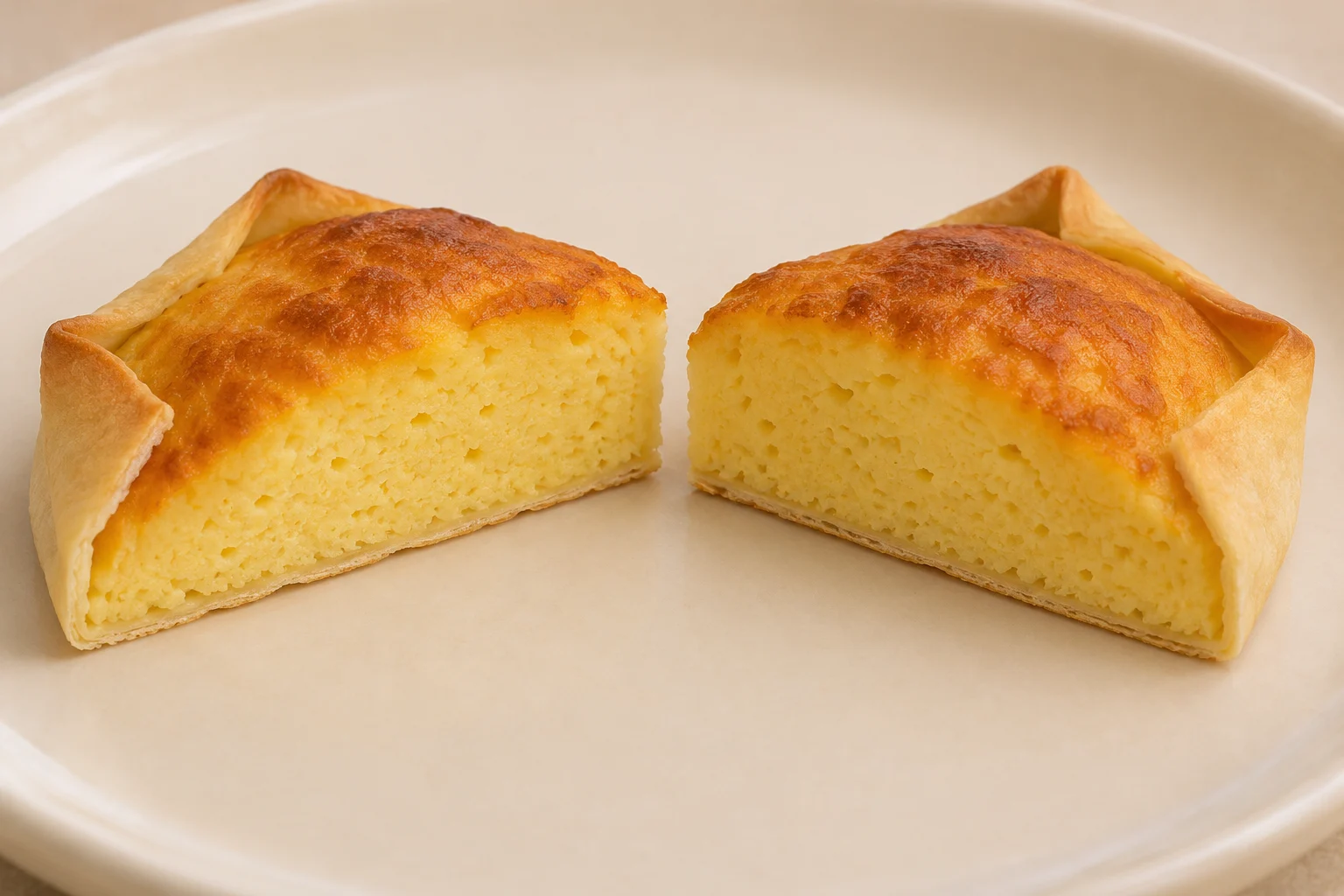
The university’s example brushes egg over the surface and bakes at 180°C until colored. A newspaper article on Manuela Cobo’s demonstration in La Ronda, Quito, says the shaped pastries are placed on an aluminum baking sheet and baked at 180°C for 15 minutes. Another article, a feature on the San Juan shop, gives 240°C for about 15 minutes in a brick oven. There is no single temperature at which the sweet is fixed to be baked locally. In a trial at Universidad de Las Américas, a 15-centimeter circle is folded at five points and baked at 180°C for 25 minutes.
The La Ronda demonstration and the Universidad de Las Américas trial both use 180°C, but the former takes 15 minutes and the latter 25. The figure of 240°C in a brick oven likewise belongs to the equipment and the work of the San Juan shop.
Quito’s Brick Oven and Public Demonstrations
The brick oven in San Juan also appears in features on the shop. The Ecuadorian newspaper El Telégrafo presents the long-used brick oven as something that bears on the taste of the shop’s sweets. In La Hora, Cobo said that quesadillas can be eaten with coffee or herbal drinks and also paired with the ice cream made at the shop. The brick oven is equipment on the production side, whereas pairing with drinks or something cold is a choice made at serving. Even a sweet baked in a hot oven is not fixed to one combination at the point of eating.
Away from the family shop, events showing how the sweets are made have also been held in La Ronda. In a demonstration described in a newspaper, spectators could watch not only the ingredients but also the filling being placed on the shell and the shape being formed. It is an occasion on which handwork said to have been passed down in the family business is performed before visitors’ eyes. In understanding the quesadillas of Quito, seeing the finished pentagon and seeing how a round shell is folded into that shape tell you different things.
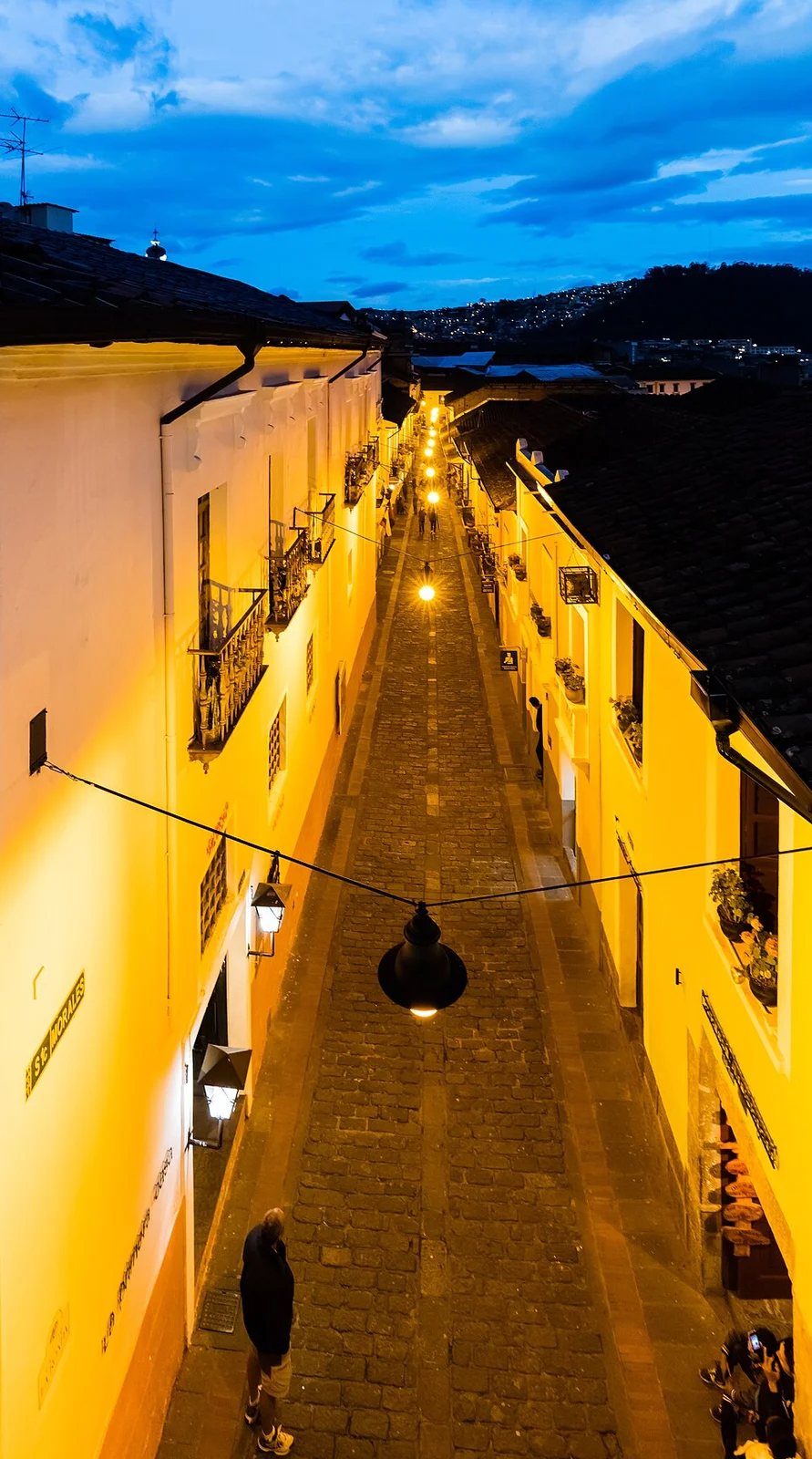
The tourism guide of Pichincha province links the family business of the quesadillas of San Juan to Juan Cobo León in 1935. In an article in which La Hora interviewed Manuela Cobo, it is explained that the first shop opened in La Ronda in Quito in 1935 and later operated in the San Juan district. Tracing back from today’s sweet that bears the name San Juan, the place of the same family’s trade also changed. The year 1935 marks the history of this family’s shop; it does not mean that all quesadillas in Quito originated in that year.
In interviews, Manuela Cobo has said that as a child she learned the taste of the filling with her siblings and that she keeps the recipe her grandfather wrote by hand. Besides quesadillas, the shop has baked other sweets such as aplanchados and rosquetes. It is not that only the pentagonal cheese sweet came down from her grandfather; it is an example of a sweet known by the shop’s name growing among the several items made in a single bakery. The grandfather’s written record and learning at the shop the actual work of folding the shell were separate ways of inheriting the formula and the folding.
The Same Five Folds, but Dusted with Powdered Sugar in Cuenca
Cuenca, which the Ecuadorian Ministry of Tourism lists alongside Quito, also has a version in which the shell is folded at five points. A source from the Universidad de Cuenca gives a version that calls the thinly rolled outer dough tela and the filling placed inside condumio. The outside contains wheat flour, water and egg, plus lard, butter, sugar and a leavening agent. Because the Quito university example records the shell’s steps as flour, water and egg, the formula of the outer dough differs even though it is likewise rolled into a thin circle and folded at five points.
In the version by Ana Mercedes Astudillo cited in the Universidad de Cuenca study, 1 libra of mashed quesillo is used with half a libra of sifted achira starch. Ten egg yolks are beaten until pale, and the sugar, starch and quesillo are added. In the San Juan recipe sheet from Quito, sugar, cheese and butter are beaten first, and the eggs are added one at a time. The hand movement of folding a thin shell at five points is shared, but the ingredients beaten first and the point at which the cheese is mixed in differ.
For the five-fold sweet treated in the Universidad de Cuenca source, one version is complete only when it has been cooled and dusted with powdered sugar. Because the Quito university recipe states that egg is brushed on before baking, in one case the surface is treated before it takes color, and in the other after the sweet is baked and cooled. Even when five corners are visible from outside, what is put on the top surface, and when it is added, changes the sweetness that reaches the teeth and the appearance. That both use achira in some versions does not mean that the shell or the finish is the same.
In Cuenca, quesadillas are also recorded as a sweet of the feast of Corpus Christi. The university study describes festival-sweet stalls lined up around Parque Calderón, and the local newspaper reported that, besides quesadillas, cocadas, alfajores and others are also sold at the festival. In Quito, what visitors can seek out is not only a stall open on particular days of the year but a neighborhood bakery that has carried on a family business. For a similar shape using cheese and achira, the setting in Cuenca is a place to choose festival sweets, and in Quito a place to eat them with coffee at the shop.
A Namesake Sweet Baked in a Mold in the Canary Islands
The version given by the tourism body of El Hierro combines 1 kilogram of the island’s fresh cheese with 3 eggs, 250 grams of wheat flour and 500 grams of sugar. Anise seeds, lemon zest and cinnamon are added for aroma. In the island’s version, a thin laminated dough is laid in a mold, and the cheese mixture is poured over it and baked. Compared with the Quito version, in which the shell is folded at five points, this one uses a mold to form the outline. Whether achira starch is used and what spices are added also differ in the recipes compared.
An educational source from the Government of the Canary Islands presents the sweet of El Hierro as flower-shaped. Depending on the version, besides laying a thin dough in the mold, it also mentions a method of greasing the mold and putting the filling in directly. Both places use cheese and sugar, but in Quito the outline of the folded edge of a thin shell remains, while on the island a mold can produce a flower shape. Even with the same name and similar ingredients, comparing how the shell is folded and how the mold is used shows differences in appearance before the sweet is eaten.
The Ecuadorian Ministry of Tourism, noting that a sweet cheese pastry of the same name exists in the Canary Islands, presents a theory seeking the origin of the quesadilla in the Canary Islands. Manuela Cobo’s interview also includes an account linking the sweet of El Hierro to Ecuadorian ingredients. It can be compared that both places have a sweet of the same name that uses cheese, egg and sugar.
Both places have a sweet of the same name, but when and from whom the formula and folding method kept in each family were handed down is not known.
Glossary
- Achira
- A plant related to edible canna. Here, starch taken from the underground part is used in the cheese filling.
- Cuajada
- Curdled milk. In the feature on the San Juan shop, it is listed as a milk ingredient for the filling.
- San Juan
- A district of Quito. It appears in the history of the operations of Manuela Cobo’s family’s shop.
- El Hierro
- An island in the Canary Islands. It has a sweet of the same name made with the island’s cheese.


