


SweetloreEncyclopedia of World Sweets (834)

Pantxineta
Pantxineta
A San Sebastián pastry of custard baked between sheets of puff pastry
Baked Sweets / Spain, Basque Country

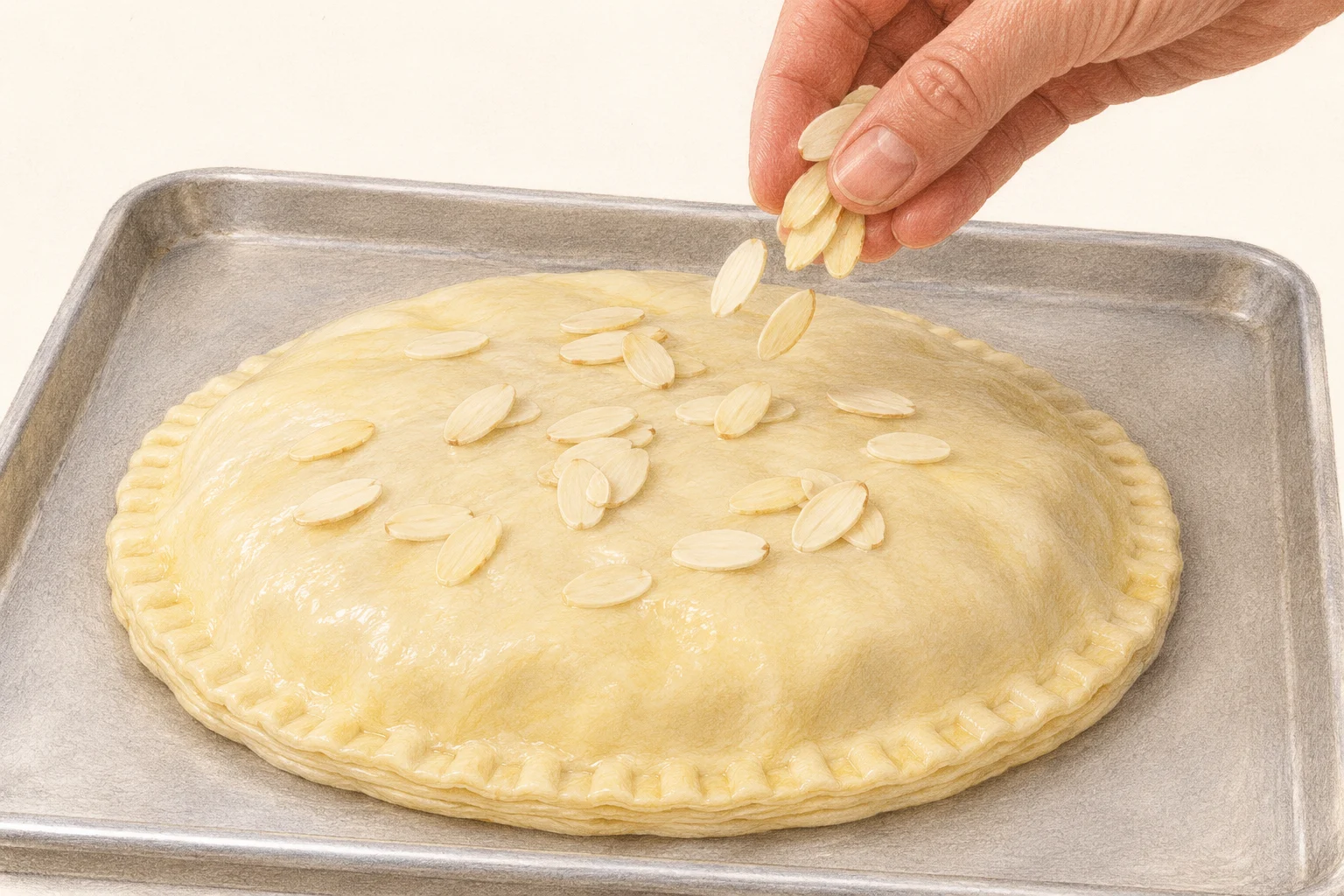
Cut into a pantxineta (Pantxineta; Spanish spelling Panchineta) and you see a thick layer of pale custard between thin sheets of pastry. The first bite smells of almonds, the pastry shatters beneath them, and the soft filling, cooked from eggs and milk, meets the tongue. It is a sweet loved in San Sebastián, in Spain’s Basque Country. In its basic form, custard is enclosed between a top and a bottom sheet of dough, almonds are scattered over it, and everything is baked together. When it comes out of the oven, the rim is left as a band of plain pastry, and cutting through the center reveals the cream that was wrapped in from the start.
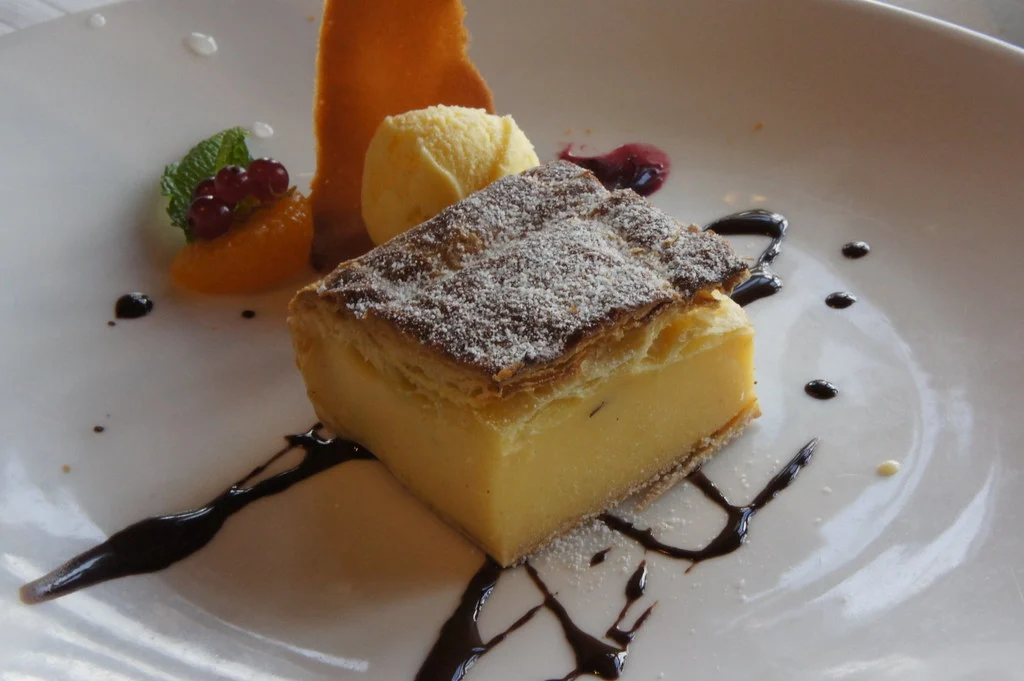
Two sheets of dough and a rim kept free of cream
In the home recipe from Spain’s tourism board, 125 grams of flour is brought together with water and salt and rested; an equal weight of butter is then added and the dough is rolled out. A drinking glass serves as the cutter for the rounds. Where one large pie would be moved to a plate before cutting, this version prepares two small rounds and bakes each as a single portion. Because the rounds are cut first, the baked rim runs all the way around each portion. Cream lies under the area covered by the top sheet, and at the sealed edge, pastry meets pastry.
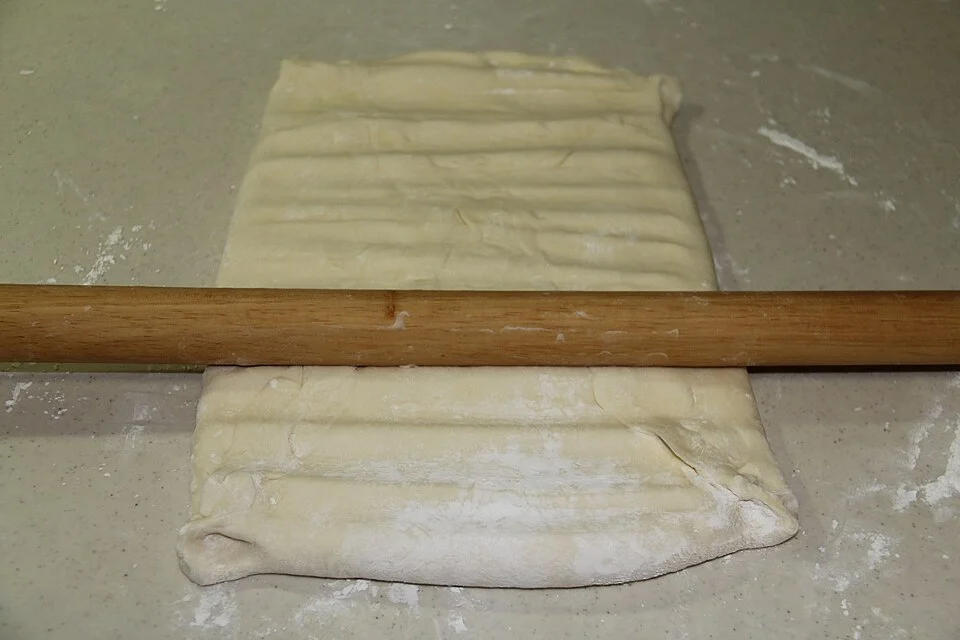
In the home recipe published by the Donostia tourist office, one sheet of puff pastry is divided in half and moved to the work surface, with one half used for the base and one for the top. The base is laid on a baking tray lined with paper beforehand. After the custard is spread, only the top sheet is lifted into place, and the assembled pastry is baked on its tray. When rounds are cut one by one with a circular cutter, each edge has to be sealed individually. When one sheet is halved, the only edge to seal is the outside of the single pie.
In the recipe from the pastry school TdEs, a single sheet of dough is trimmed about 1 centimeter in from its outer edge and laid down as the base. The custard, cooked and cooled beforehand, is placed inside so that the border of dough remains visible. Egg is brushed on the margin, the top pastry is laid over it, and the edges are sealed, which makes it harder for the cream to work its way between the layers. In the example from RTVE, which visited a workshop, the two sheets of dough are moistened with water before being joined, and beaten egg is brushed over the top after sealing. Whether the two rounds differ in size or the edges are moistened and pressed together, both methods serve the same purpose of keeping the filling inside the rim.
Cooking the milk and choosing the eggs that go inside
The custard from Spain’s tourism board starts by infusing milk with cinnamon, then combines it with a mixture of eggs, sugar, and flour. TdEs puts vanilla, cinnamon, and lemon zest into the milk, mixes a separate portion of milk into the egg yolks and cornstarch, and then combines it with the warmed milk. When the starch is dispersed in cold milk first, it is less likely to clump in one spot when the hot milk is added in the pan. The aroma left in the milk and the starch that sets it are prepared separately before being brought together as cream.
Joseba Arguiñano cooks 1 liter of milk, flavored with lemon and orange zest and cinnamon, with sugar, refined corn flour, and the whites of five eggs. He keeps the yolks and brushes them on the rim and top of the pastry. TdEs uses five egg yolks to 500 milliliters of milk, so the color and richness of the yolks go into the cream inside. In a recipe that uses whites and yolks separately, the filling carries the aroma of milk and citrus, while the yolk that browns the pastry stays on the outside. The preparation of the pastry to be baked is completed once the cream has been cooked and cooled.
In the Donostia home recipe, 500 milliliters of milk is combined with three egg whites and 35 grams of refined corn flour. Citrus zest, cinnamon, and a little butter are added to the pan in which the milk is heated, and sugar and flour are dissolved in a separate container with some of the flavored milk. The egg whites are mixed in there too, and the mixture is returned to the rest of the milk; once it boils, the heat is lowered. The thickening is checked in the pan before the cream is moved to a dish to cool, so by the time it goes onto the pastry it is already firm enough to spread. Time is set aside for the filling to cool between cooking the cream and baking the two sheets of dough.
José Mari Gorrotxategi, a confectioner from Tolosa, said that when Casa Otaegui bakes with the cream already inside, it uses more flour so that the filling does not run out in the heat. When that house bakes the pastry first and fills it afterward, it can finish the cream with less flour. For this frantxineta, there are examples in which ground almonds are added to the filling, and a version with pine nuts on top and whipped cream inside. Some combine almonds with custard. Differences between shops can be told by where the nuts are and whether the milk is exposed to heat inside the pastry.
The interview also touches on gâteau basque. It mentions an older form made with fruit jam, and a dough closer to pâte brisée, made with butter, that came later. Even though both involve wrapping a filling, pantxineta has two thin sheets of puff pastry that rise with fat laid between the layers, and almonds are visible on top. When you break off a piece and eat it, what reaches the mouth in gâteau basque is the crumbling surrounding dough with butter worked into it, whereas in pantxineta the thin pastry separates layer by layer from above and below.
Almonds before baking, white sugar after
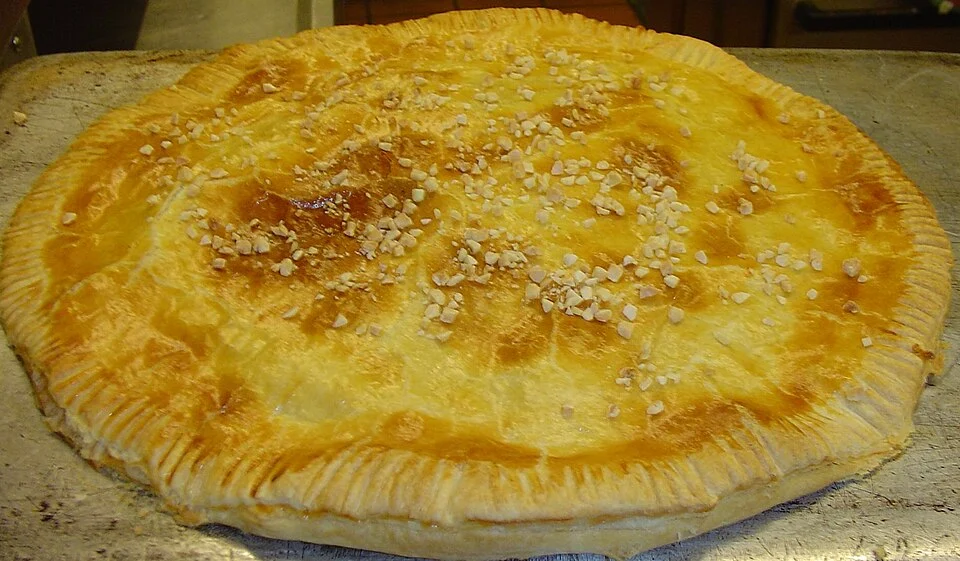
In the workshop recipe from RTVE, beaten egg is brushed over the top, chopped almonds are scattered on, and it is baked at 180 °C for about 45 minutes. According to the San Sebastián tourist office, the top of the Casa Otaegui pastry uses chopped, lightly toasted Marcona almonds. TdEs uses sliced almonds. Where thicker pieces are sparse, the crunch of the nuts remains after the pastry is broken, and on a surface covered widely with thin flakes, the nuts lie over the slice you pick up. The almonds give a clue for telling pastries apart by their surface before they are cut.
The same Donostia home-cooking account brushes yolk on the rim, uses the rest on the surface, and sprinkles almonds and icing sugar on before baking. It bakes at about 160 °C for 40 minutes. The small version from Spain’s tourism board instructs the cook to scatter chopped almonds and place it in a moderate oven, and gives the cooking time as one hour. Between workshop and home, and between one whole pie and individual portions, the thickness of filling prepared before baking and the proportion of edge exposed to the air change. The temperature and time in each recipe go with the shape and finish used in that recipe.
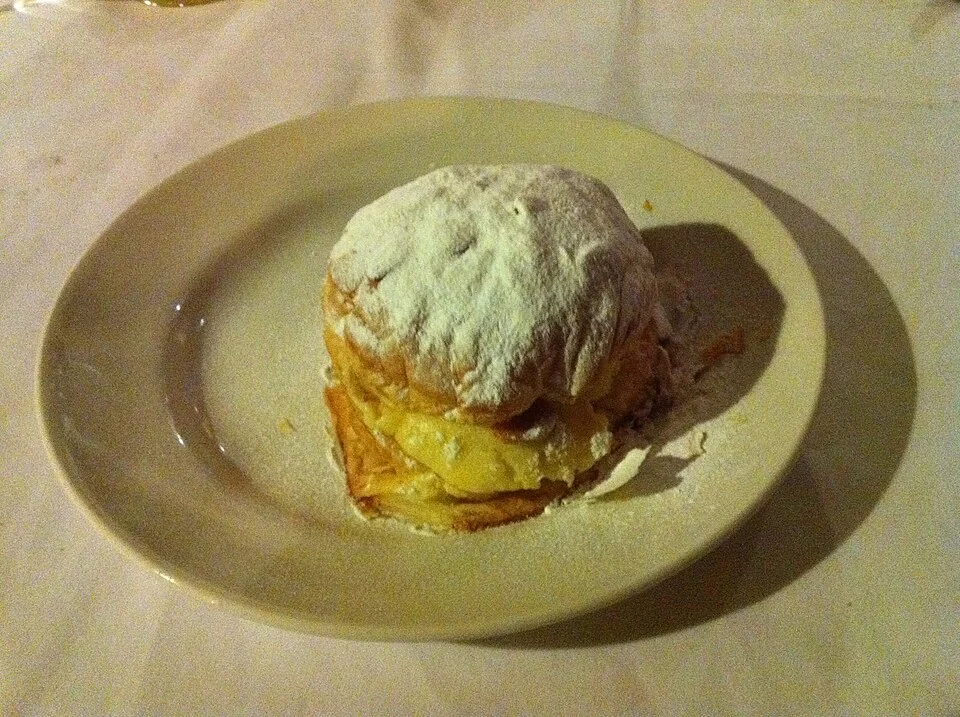
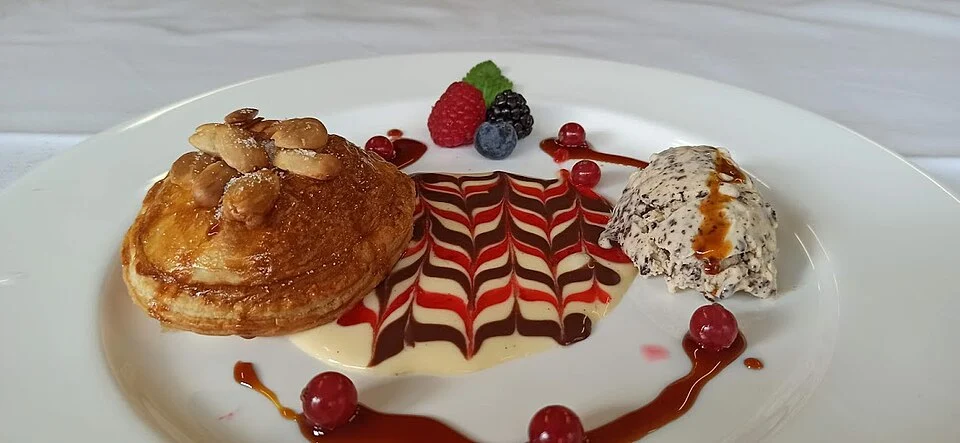
Arguiñano places sliced almonds, sprinkles on half of the icing sugar, and bakes at 160 °C for 40 minutes. The rest goes on after baking. The sugar sprinkled first goes into the oven with the almonds and pastry, and the sugar added later lays a pale whiteness over the top. In a photo of an individual round pastry dusted with icing sugar, you can even see the baked layers standing up around the sides.
A shop in the old town, and how the name came to stay
According to the San Sebastián tourist office, Casa Otaegui began in 1886, when Pedro Otaegui and Josefina Marcola opened a grocery store. After her husband died, Emiliana Marcola ran the shop with her children and put "the widow of Otaegui" in the shop’s name. The tourist office says that in the basement there remain the long wooden table used for the work and the shelves where the customers of the tearoom left their hats. Even before the pastry existed, the town had a shop that sold ingredients and also did the baking work.
The large wooden workbench in the basement tells of a place behind the shop front, where ingredients were sold, in which flour was rolled out and pastries were made. A 2026 tourist guide counts 140 years since the shop’s opening and says that, of the three shops in the city, the one on Calle Narrika keeps the design of the original building. On the ingredients the shop uses today, the present owner, Iñigo Otaegui, names flour from Navarre and milk bought from Kaiku. His account of current sourcing shows that even for the same milk and flour, the workshop chooses its suppliers.
María Otaegui, of the family, says the pastry was devised with ingredients that could be had, such as flour and eggs, and under the influence of the work of confectioners from abroad. The tourist office sets this against the background of the visits of foreign craftsmen during the First World War and the supply conditions of the Spanish Civil War. The source introducing Gorrotxategi’s writings gives about 1915, RTVE gives 1929, and Casa Otaegui and the town’s tourist office say the 1930s. The year the shop opened and the year the pastry came into being are recorded separately, and pantxineta is passed down as the work of the shop in the first half of the twentieth century.
In the interview with Gorrotxategi, there is also an explanation that "franchipan" turned into "pantxineta". A link with French pastry is raised as a possibility in the same interview. The frangipane of the French pastry school Valrhona is one example, in which two-thirds almond cream is mixed with one-third pastry cream. The cream, made of ground almonds, butter, sugar, and eggs, goes on the inside. In the Otaegui shop’s account, the inside of the pastry is soft custard, and the toasted almonds are on the outside. Even when tracing the closeness of the names, there is a difference between putting the nuts inside and leaving them on the baked surface.
One baked all the way around, and a slice cut from a round
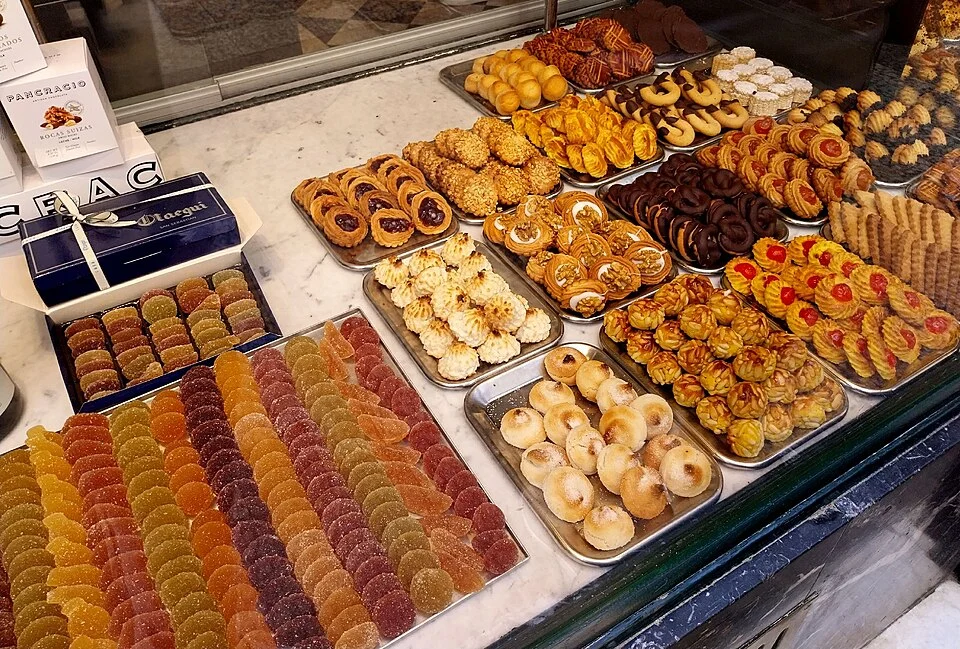
San Sebastián is called Donostia in Basque, and Casa Otaegui stands on Calle Narrika in the old town. According to an article from the tourist office, on busy weekends the shop receives more than a thousand pantxinetas. Because the workshop and shop are close, pastries delivered in several batches become a slice eaten in town and also a whole pastry taken home. The shop’s pantxineta is also served after meals at restaurants in the city. The city’s tourist guide lists two ways of eating it: a slice with coffee at the mid-morning snack, hamaiketako, and a whole pastry taken home to share with family and friends. If an individual portion is baked small and round, a rim runs around it beneath the almonds. When a large round is cut, the outer rim and the cream exposed by cutting lie in different places on a slice.
According to the tourist office, pantxineta carried by hand from the workshop arrives at the Calle Narrika shop several times a day. Around it are bars serving pintxos, and people who want something sweet after a snack can buy a pastry that has just come from the workshop here. The city’s tourist guide notes that the shop also takes orders for family celebrations and weddings, and the home recipe from Spain’s tourism board gives the season as year-round. It is a pastry portioned out according to the number of people celebrating, yet it is also the town’s mid-morning snack in any weather.
Casa Otaegui says it can be eaten cold or gently warmed. The TdEs recipe is for eating it lukewarm. In a warmed slice, the first thing the hand meets is the baked pastry, and inside the cut the warmth of the milk lingers. You can set a single slice beside a coffee, or cut the round to suit the number of people in the family. Beneath the nuts scattered on top is a soft layer set with flour and milk.
Glossary
- Pantxineta/Panchineta
- The name of the San Sebastián pastry, spelled with tx in a Basque-style form and with ch in the Spanish form.
- Frantxineta
- The name of a related pastry from the Gorrotxategi family. In some versions, the pastry is baked first and the filling added afterward.
- Emiliana Marcola
- The person who, according to Casa Otaegui, began making pantxineta there.
- Marcona
- A variety of almond. The San Sebastián tourist office explains that it is used chopped in the shop’s pantxineta.
- Hamaiketako
- The Basque word for the mid-morning snack. The town’s tourist guide mentions the pairing of coffee and pantxineta.


