


SweetloreEncyclopedia of World Sweets (834)

Pastéis de Vouzela
Pastéis de Vouzela
Layered, extremely thin pastry wrapped around an egg filling in Vouzela
Baked Sweets / Vouzela, Portugal

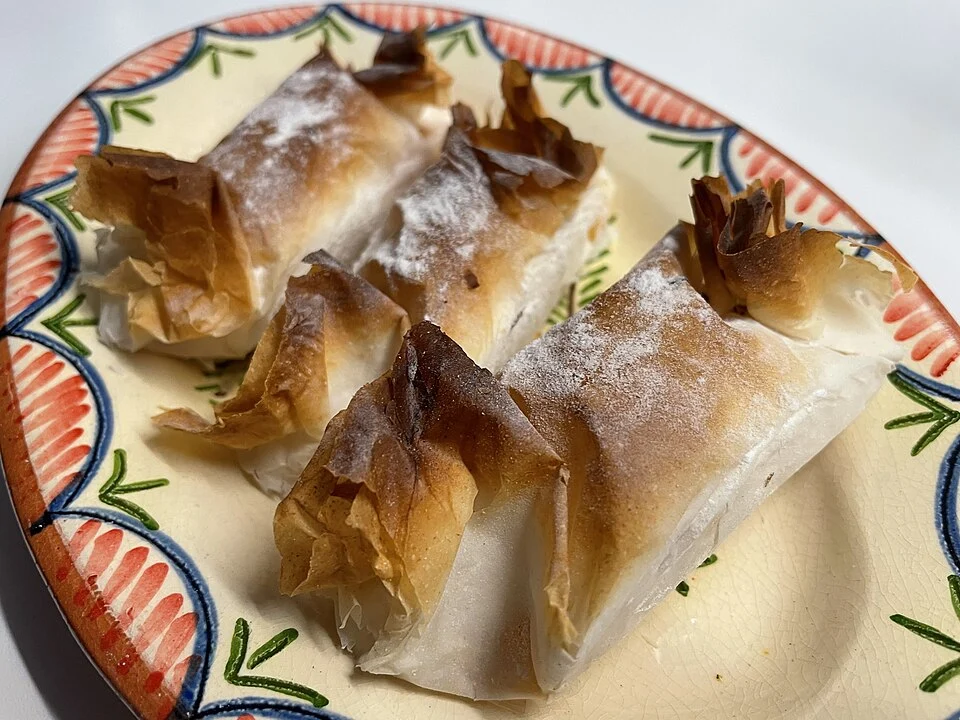
Beyond the white sugar, the folded ends of the parcel are baked a deep brown. This is the pastéis de Vouzela, made in Vouzela in north-central Portugal. Paper-thin sheets of pastry are layered and wrapped into a rectangle around a soft egg filling. When you bite in, the outer pastry shatters first, and then the moist filling follows. The pastry is stretched and dried on cloth, and the egg yolks are cooked in a pan. The two jobs go on separately, and once they are combined in a single pastry, it is baked until the ends take on color.
Stretched Thin on Cloth and Dried Until Workable
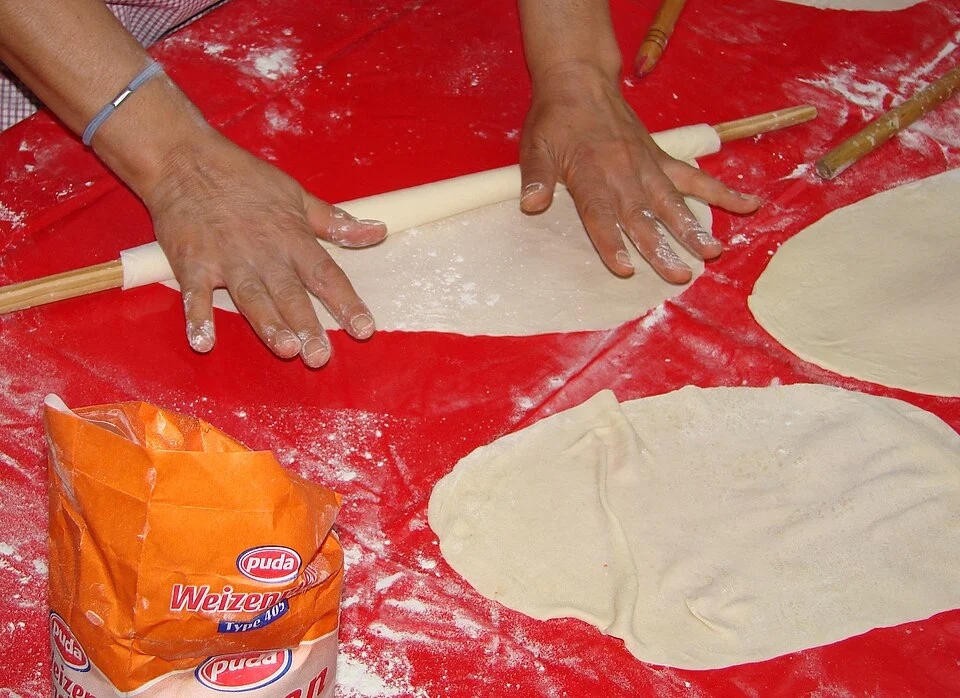
The Portuguese agricultural authority’s document on traditional products states that the pastry is stretched on a special cloth and dried there. In the recipe published by Foodlab in Cascais, 125 ml of water and 250 g of flour are first combined and rested, then stretched on a fine cotton cloth until almost translucent. The sheet is dried briefly at room temperature and stopped at the point where it does not yet crack when handled. Instead of specifying a time or a paper-like thickness, the recipe relies on how the dough looks through the cloth and how easily it can be cut and moved.
In this example, the hydrated and rested dough is stretched, and only the amount needed is then cut into rectangles. The butter brushed on at the end is listed separately in the ingredients. The English version of the traditional products document uses the term "puff pastry" for the dough, but it does not confirm a step of folding cold butter into it. What the published recipe does confirm as the start of the layers is that the dough is stretched on cloth into a thin film, the films are stacked, and the filling is folded inside. In the baked pastry, the edges of several flakes can be seen in the colored folds.
The specification issued by a producers’ association likewise says the pastry is made by hand and that the cloth on which the dough is stretched and dried is central to production. According to the specification, the dried sheets are folded so that several overlap, cut, and then filled. In Foodlab’s example, six rectangular sheets are stacked for each pastry. For both, the layering before baking can be confirmed. Because the account gives the handling of the cloth and the order of stacking, when an outer flake is lifted from the finished pastry, it can be tied back to the fact that each original sheet was thin.
Cooked Egg Yolk, Wrapped in Six Layers of Pastry
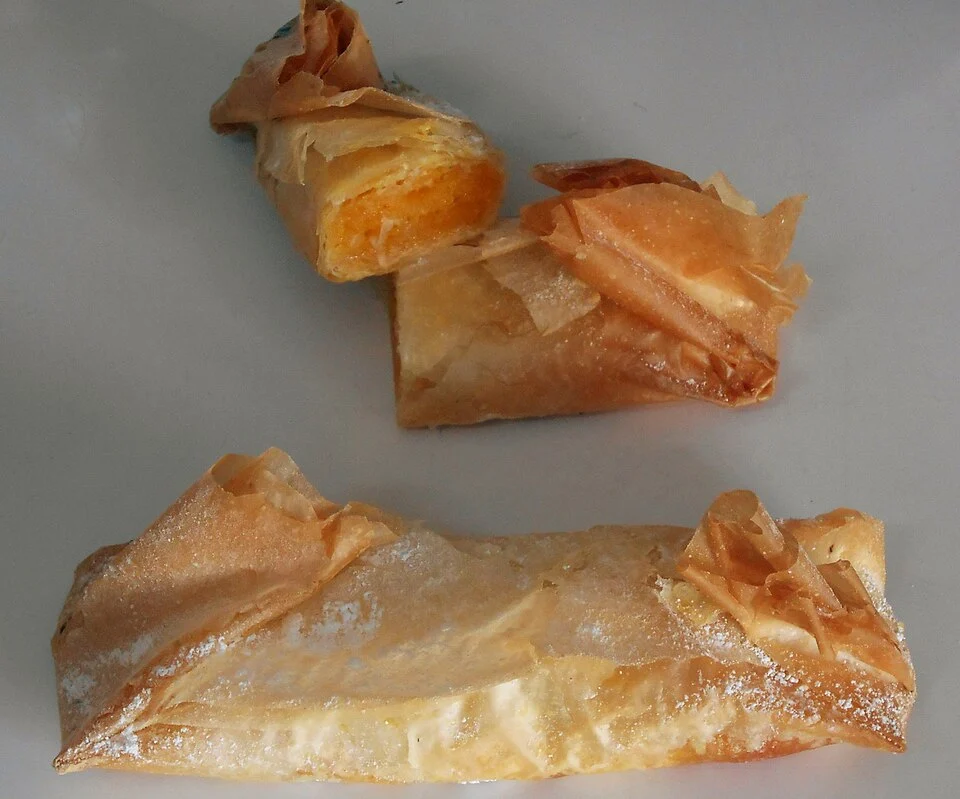
Doce de ovos is the name for a sweet filling made with eggs, especially egg yolks. In Foodlab’s example, 125 g of sugar and a separate 50 ml of water are boiled in a pan, and the syrup is reduced to the consistency called ponto de espadana. The egg yolks are added one at a time, stirring quickly without changing direction, and the mixture is brought together into a filling over low heat. The ingredient list gives the yolks as 60 ml. Because the filling is made to its final firmness before the sheets are stacked, there is separate time for coloring the pastry and for cooking the yolks in the pan.
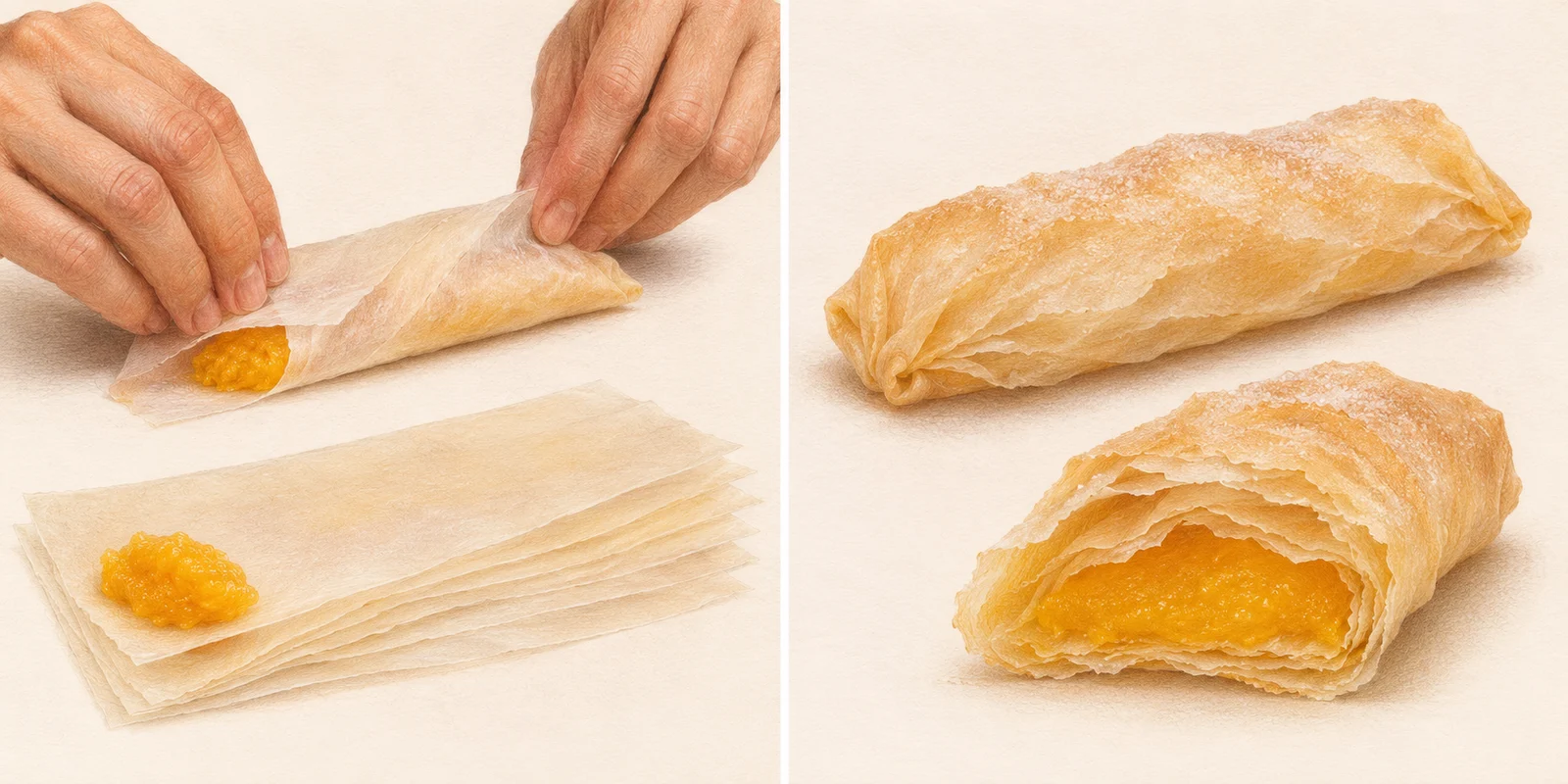
Each of Foodlab’s sheets measures about 15 × 10 cm, and each pastry has six layers. The prepared egg filling is placed in the center, along the long side. The sheets are folded together from both sides like a pillow, the ends are pressed lightly, melted salted butter is brushed on thinly, and the pastries are moved to a baking tray. They are baked at medium heat until the ends turn pale gold. These dimensions and the number of layers come from a recipe published through a municipal project, and they are not a count applied uniformly to the work of every local shop. The flakes left at the ends show both where the pastry was pressed in wrapping and where in the oven the baker checked its progress.
The powdered sugar is sprinkled on after baking and cooling. On the surface of the parcel is powdered sugar that touches the fingers and tongue, and inside is the sweetness of a filling made by cooking sugar and then combining it with egg yolks. The pastry itself is a dough of water and flour made thin. In a rectangle formed with the egg filling set at the core before baking, the same sweetness has not yet blended through the edges and center, so dry flakes and cream are felt in sequence. The town’s guide also describes both the crispness of the pastry and the egg yolk filling, because two separately made components are combined into one pastry.
In the producers’ association specification, the filling is described as bright yellow, soft and melting on the tongue, with a light caramel note behind the aroma of egg. The filling, made by reducing sugar to a suitable consistency and then cooking the yolks in it, and the powdered sugar sprinkled over the baked and cooled pastry differ in both color and the way they take heat. The same specification lists two methods of presentation: arranging the pastries on trays at the workshop’s sales counter, and packing them in boxes made of materials suitable for contact with food. Whether you choose a single pastry on the spot or carry a box home, you reach the egg filling only after breaking the long end.
A comparable sweet that uses thin pastry is the pastel de Tentúgal. The specification for Tentúgal published in the EU gives the thickness of the stretched pastry as 0.06–0.15 mm. For Vouzela, what the sources confirm is the drying on cloth and the assembly of many layers into a parcel. Figures from another place cannot be used as if they measured Vouzela’s pastry. In both, the filling and thin pastry can be compared in cross-section, but the basis for any measurement goes back to each town’s own sources.
An Egg Sweet and the Town’s Easter Bread
The Viseu Dão Lafões gastronomy guide also presents the queijadinha of Oliveira de Frades and the castanhas de ovos from the Viseu area. In a sweet that makes the shape of a chestnut from eggs, the egg-based dough and filling form the visible outside. In the Vouzela parcel, what shows first is the pastry and sugar, and the egg lies in the center, which you open by breaking it. The list of ingredients alone, flour, eggs and sugar, does not tell you the shape of the sweet or the order in which it is eaten.
The folar, which also bears the name Vouzela, is a sweet bread leavened with yeast. The municipality’s guide states that it is based on flour, water and eggs, and a wider regional guide ties it to Easter. When folar and pastel are seen in the same town, one is a dish made by cutting leavened dough, and the other is made by stretching many thin layers and rolling egg filling inside. For the pastel, what appears in the guides is the producers and a walk through the town, including the station, with tastings. The production methods and the occasions for eating that follow the place name each retain the way of life in the town.
The municipality notes that the folar contains sugar and butter, and records that at Easter godchildren gave it to their godparents. While the folar was used as a gift at that time of year, the places where the pastel is bought and sold in the sources include not only the town’s pastry shops but also the square in front of the church and the railway station. Even when the two are compared within one town, they differ, beyond flour, eggs and sweet filling, in where they were sold and to whom they were given.
A Family Story of Convent Origins, and the Station Stall
According to the wider regional guide, in the 19th century two former nuns of the Convent of Santa Clara in Porto passed the recipe on to Vouzela, and their nieces and a relative began a small business. A record from the agricultural authority, which draws on a document published in 2001, says the pastry was made in two houses in the town at the beginning of the century and mentions an account tracing it to an old convent. The stories of people and families who moved here tell how the method was handed down. These sources contain no record showing in what year it took its present rectangular form.
The municipality of Vouzela also gives an account of a woman who lost her family as a child and was taken in by nine sisters, two of whom were at the Convent of Santa Clara in Porto. When she grew up, the story goes, she made and sold sweets from the recipe she had been taught, in order to support a large family. The municipality’s text gives fourteen people to support, and the producers’ association material gives fourteen children. Learning the skill of stretching pastry on cloth is tied to a move from making food for the household to starting work that answers other people’s orders.
Casa Museu, which guides walks through the town, also records a legend that someone learned how to make it by peeking through a hole in the floor. The same guide includes an account that the method was revealed to a limited number of houses as thanks for help received. Both are stories that tell who cooked the eggs and where, and to whom that hand movement was taught, together with the relationships between households. Even as the places where the sweet itself could be bought multiplied, the step of drying the pastry without tearing it was described as work learned from other people and acquired by hand.
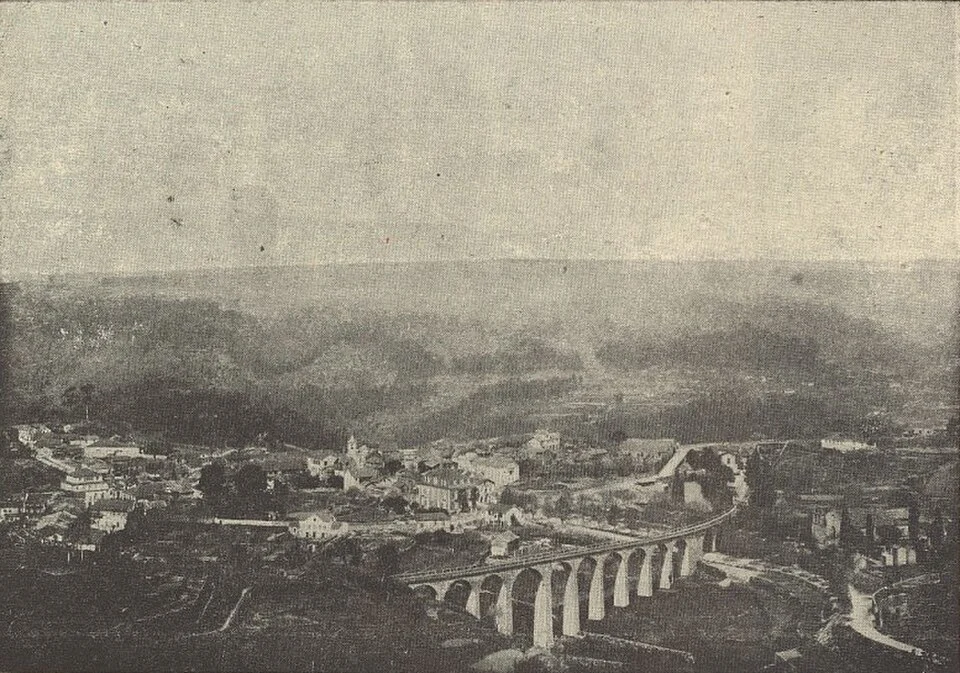
According to Casa Museu, it was first made at home to order, and later also sold where people gathered, such as the square in front of the church. When the railway arrived, the station also became a place of sale and is said to have supported household income. When customers are awaited in a kitchen for orders, buyers know where the house is. When sold at a church or station, even someone visiting the town for the first time can meet the thin-pastry sweet on the spot. Apart from the route by which a household’s method was handed down, the places where the sweet could be picked up widened within the town.
The agricultural authority’s document mentions four families at the time of recording, and the producers’ association’s regional description names the municipality of Vouzela as the place of production. In the family business described in the association’s document, once the number sold grew and employees were hired to help with production, the method could no longer remain solely a family matter. For the work once learned by people entering the shops, Casa Museu’s walking material names Casa Castanheira, Fernando Cardoso and Vouzelpastéis. One is a record that counted families, and the other names producers presented at a different point in time. Neither is a source that matches names to show how shops increased or decreased. What the two share is that this signature dish of the town remained in several houses and workshops.
Walking Twelve Places, Then Eating One
The pastel walking route begins at the Largo do Convento, which keeps the convent’s name. It passes through twelve places, including the house made by Casa das Cardosas and Terezinha Castanheira and others, a church and chapel, and the old station. On the map you can walk not only the convent tradition but also the houses said to have been taught the method and the places where the sweets became available to buy. Near the end there is an opportunity to see production, and the tasting recorded in the guide was accompanied by white wine from Lafões. In that day’s tasting, one pastry of the sweets seen on the walk through town is served.
The singular form pastel, meaning one pastry, is used for the title of the walking route, while the traditional products document and the wider regional guide introduce the sweet in the plural, pastéis. In the days when it was sold at the busy station, the work of counting six sheets of thin pastry or weighing flour was invisible to buyers. Picking one up from a plate, you find powdered sugar and a folded end on the surface, and the sweetness of the egg appears at the point where it is broken. Within one pastry called by the town’s name are two preparations taught in the home.
Glossary
- Pastel / pastéis
- The Portuguese singular and plural. Here, followed by the town name Vouzela.
- Doce de ovos
- A sweet filling made with eggs. Here, the creamy filling wrapped in thin pastry.
- Lafões
- The name of the region that includes Vouzela. On the sweet’s walking route, white wine from this region was served.


