


SweetloreEncyclopedia of World Sweets (834)

Peni Walalu
Peni walalu
Rings drawn from bean batter and soaked in sap syrup
Fried Sweets / Sri Lanka

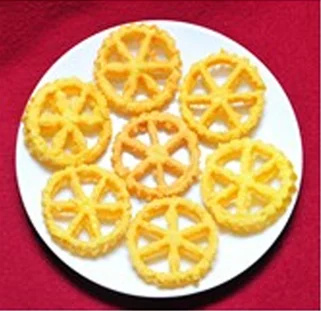
Bite into a fried ring and the surface of a thin strand cracks, releasing sweet syrup from inside. Peni Walalu (පැණි වළලු) is a Sri Lankan sweet made from a batter based on urad dal and other ingredients. The batter is piped into hot oil, fried in a spiral and soaked in warm syrup. Also called Undu Walalu and Undu Wel, it appears alongside other sweets at the April New Year. The outer ring and the several strands curling inward from it have many surfaces that set on contact with the oil. When the piping and the soaking time change, so does the balance between the surface that cracks in one bite and the sweetness that comes out from within.
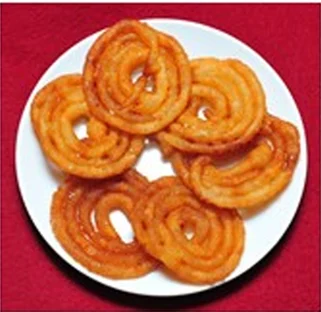
Rings Drawn on the Surface of the Oil
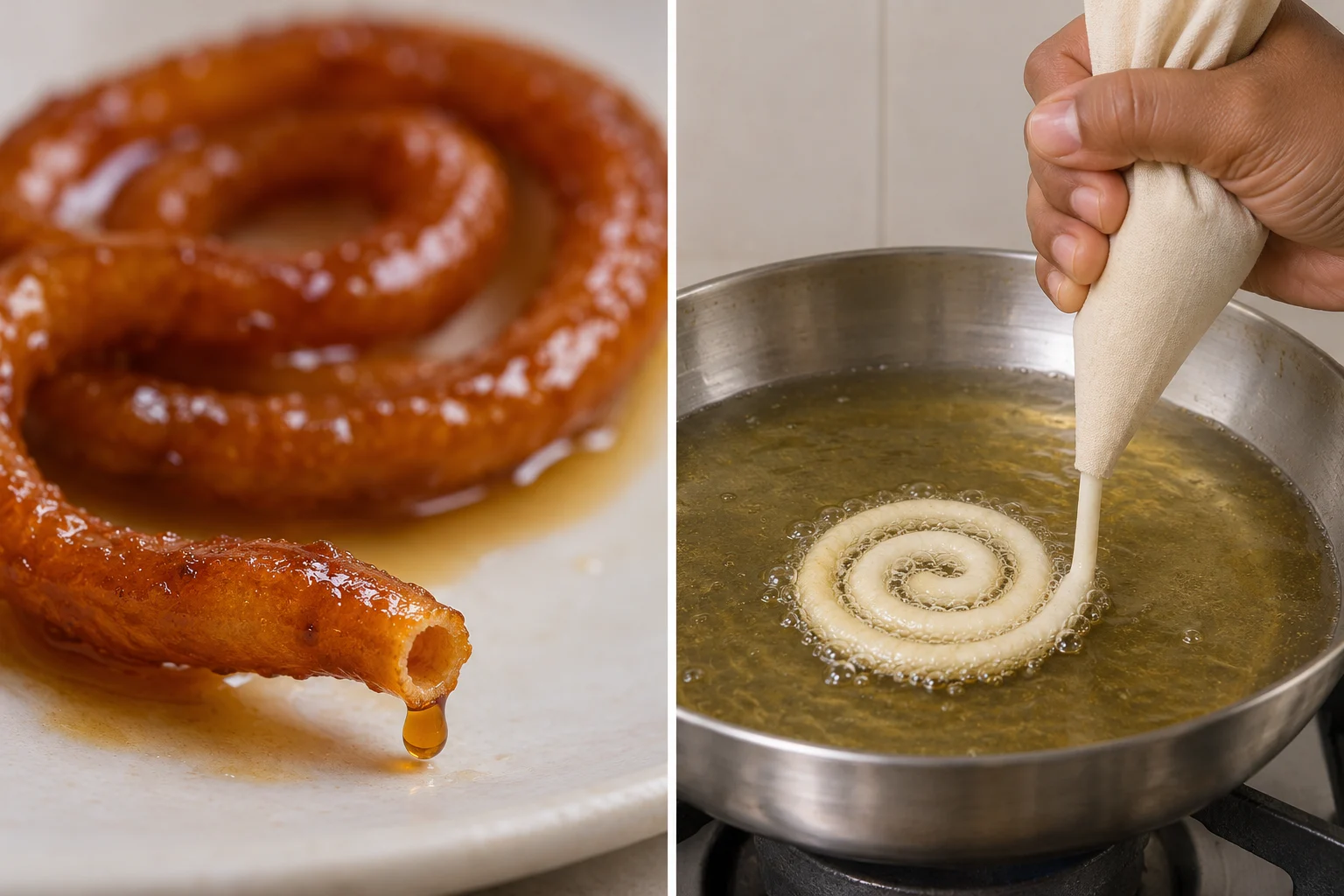
P. D. Somawathie, a maker in Galapitamada, Kegalle District, makes a hole about 5 mm in diameter in the middle of a thin cotton cloth. She places batter on the cloth and gathers the edges around it like a bag, so that as she squeezes, batter keeps coming out of the hole. Moving her hand in circles over the oil, she makes a spiral with an outer circumference of about 6–8 cm. In her own explanation, the size of the ring also affects how well it takes up syrup: if it is too large, the syrup does not penetrate easily, and if it is too small, the ring turns limp. Making the outer diameter of a ring larger is a separate matter from making the piped strand thicker. Without widening the hole, a larger circle of the hand makes a wider ring. Some versions use a dedicated piping tool, and others use a piping bag.
Roshani Wickramasinghe of Hungry Lankan uses a flat-bottomed pan over medium-low heat and drops in a little batter to check the heat of the oil. The dropped batter first sinks to the bottom, then after a while floats up and puffs. If it floats immediately, the oil is too hot, so she waits for the temperature to settle a little. She brings the opening of the bag close to the surface of the oil and moves it so that the line is laid where she intends before it spatters, and so that the ring can be drawn before the batter floats up. She does not pipe too many into the pan at once, and she moves the rings that have fried golden into the syrup. Somawathie also turns the rings over so that both sides are evenly browned.
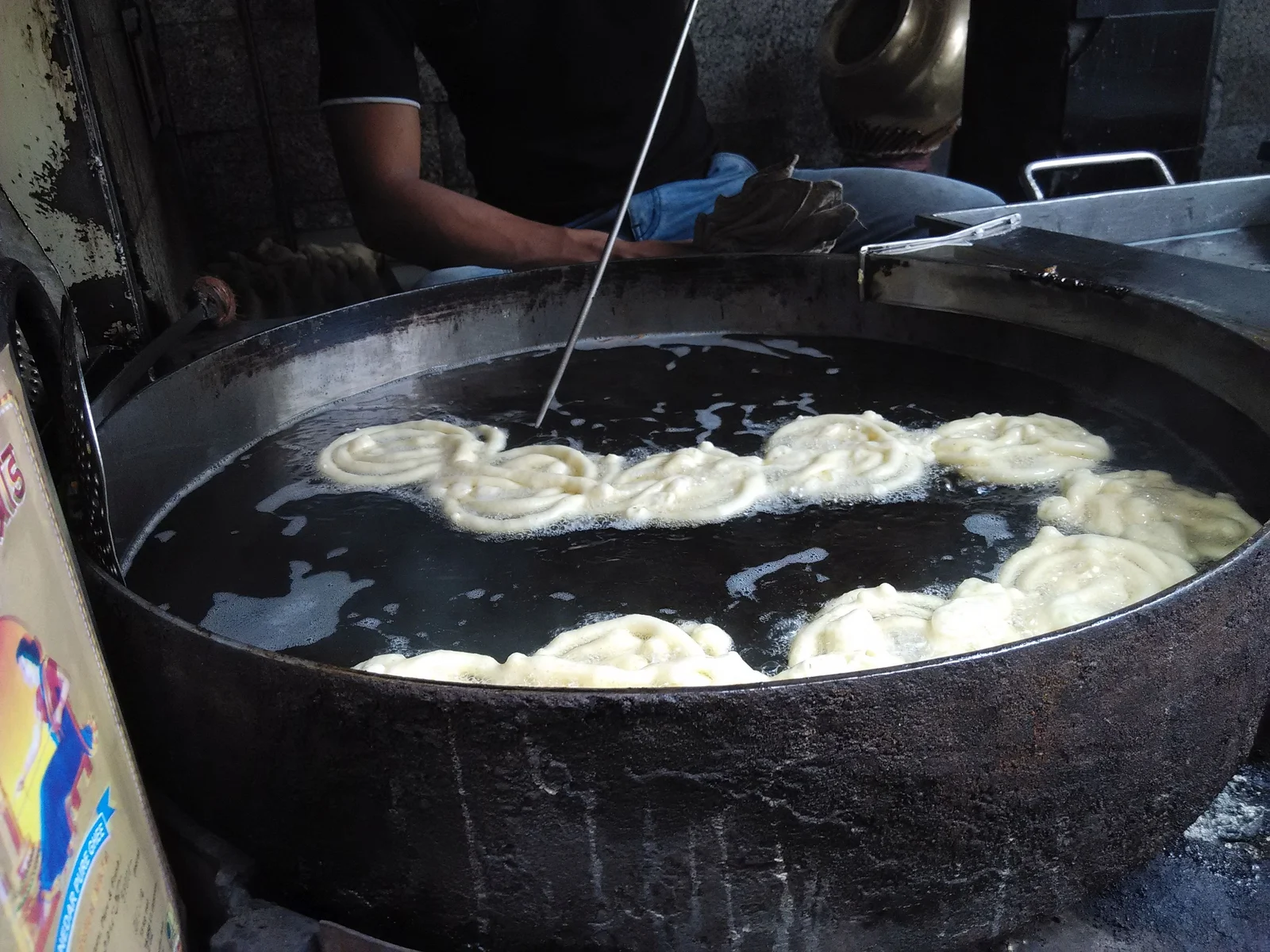
The hole visible at the center of a ring and the gaps between strands arise differently from the voids inside a single strand. The former are determined by the path of the piping opening; the latter are thought to be related to air bubbles in the rested batter and to steam produced during frying. Somawathie says that if the batter is too stiff the ring is heavy, and if it is too loose the lines spread and the ring collapses easily. The surface that sets on contact with the oil is not only on the outside of the outer edge but also in the gaps next to neighboring strands. When you bite and break that surface, the crispness of the surface is followed by the syrup that has soaked into the strand.
Beans Soaked Then Ground, and Batter Rested to Hold Bubbles
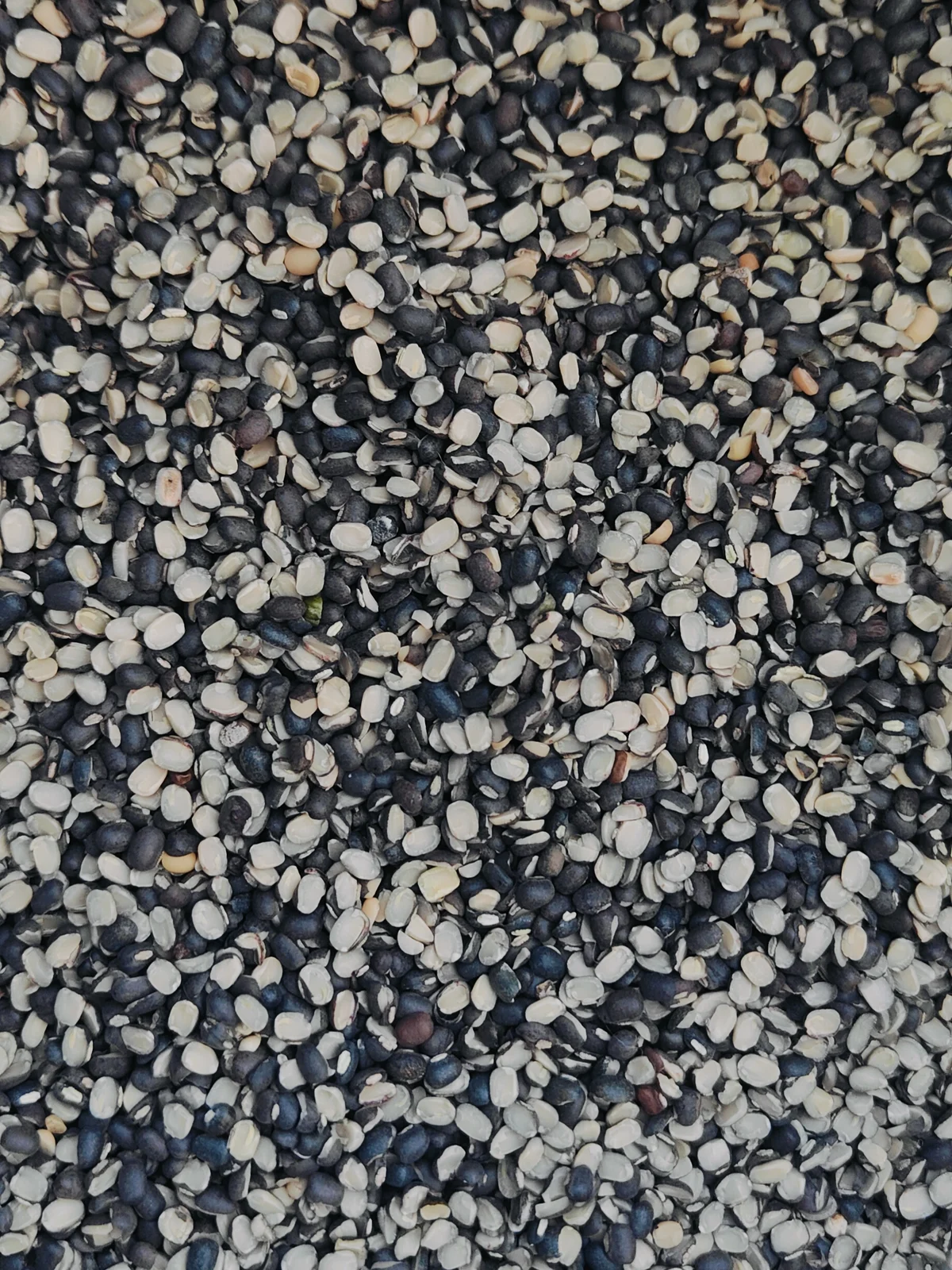
Undu in the name refers to urad dal. The beans are sold in English as black gram or urad dal, and Wickramasinghe soaks the split ones overnight or for 8–10 hours. She drains them and grinds them into a smooth, thick paste, adding water one tablespoon at a time when the machine has trouble turning. After mixing in rice flour and wheat flour, she leaves the batter for about 12 hours, until fine bubbles can be seen in it. The long soaking in the first stage is so that the water-swollen beans can be ground, and the resting in the second stage lasts until bubbles appear in the paste. She explains that in a hot, humid place, about ten hours of fermentation may be enough.
After fermentation, Wickramasinghe mixes in salt and thick coconut milk to make a batter thick enough to push out of a bag. She adds the thick milk one tablespoon at a time and avoids overmixing so that the bubbles do not collapse. If the batter becomes too loose, a little rice flour can be added, but she notes that too much makes the fried rings hard. The amount of rice flour or liquid is an adjustment so that the lines dropped into the oil do not spread too much and do not become thick lumps when bitten.
Wickramasinghe gives an oil depth of about 3.8 cm and fries only a few lines at a time. If the strands cover the whole surface of the pan, they tangle when turned, or other rings continue to cook until one that has browned is taken out. Rather than quickly dropping thick strands from a distance, join the lines of batter near the surface and judge how many can be carried to the syrup in order as they finish frying. To move rings to the syrup right after frying, watch the temperature of the second pan as well as the state of the oil.
Somawathie also owns an electric appliance, but for the interview she uses a stone tool, the mirisgala. She places the soaked beans on it and grinds them with a little thick coconut milk at a time, producing a paste stiff enough to be gathered with a spatula rather than flowing. Her ingredient list combines 250 g of urad dal flour with 125 g of rice flour, along with brown sugar and turmeric. After grinding on the stone, she mixes in salt, sugar and turmeric, adds thick coconut milk a little at a time, and ferments the batter for about 12 hours. Wickramasinghe uses 1 cup of urad dal with ¼ cup each of rice flour and wheat flour, and says either all-purpose flour or bread flour can be used. Volume and weight cannot be compared directly, but two differences can be read from the versions: whether wheat is used in addition to rice flour, and whether sugar is also put into the batter.
The version in Recipes for Reconciliation starts from 200 g each of rice flour and wheat flour and 100 g of urad dal flour. Yeast dissolved in water and coconut milk are mixed into the flour, and the smooth batter is fermented for more than 1 hour. There is no step of soaking the beans overnight and grinding them, and the proportion of urad dal flour is smaller than that of rice or wheat. A method of coloring the batter, if desired, is also given. Comparing these three versions shows that both the steps that make the batter smooth and the steps that make it hold bubbles change along with the proportions of flour. To draw continuous lines, whether from a cloth or from a bag, look at the batter just before piping.
Fresh from the Oil into Sap Syrup or Sugar Syrup
When the rings are called honey rings in English, the honey includes syrup made from palm sap collected from the flower stalk. Somawathie uses 750 ml of kithul treacle, scented with cardamom and cinnamon. Kithul is the palm Caryota urens; the sap collected from it is boiled down into liquid treacle and, boiled further until it sets, becomes jaggery. Sap can also be collected from the flower stalk of the coconut palm to make sugar. The coconut milk used in the batter is the liquid pressed from the flesh, containing water and fat, while the syrup made from sap provides the sweetness of the fried ring.
Wickramasinghe’s syrup combines 2 cups of dark brown sugar, ½ cup of water and salt. She says the sugar can be replaced with white sugar, jaggery or treacle, and the syrup is kept at a very low heat, without boiling, while the rings are fried. Recipes for Reconciliation uses 750 g of sugar with 2 teaspoons each of liquid glucose and potassium bitartrate. The latter is an acidic powder also called cream of tartar. Salt is added to taste, and ground pepper is added too if some heat is wanted. A syrup built from sugar offers ways to adjust color, aroma and sweetness with ingredients different from a syrup of boiled-down palm sap.
Somawathie moves the rings from the oil into warm syrup, leaves them for 3–4 minutes and drains off the excess liquid. Wickramasinghe dips one ring in the warm syrup for a few seconds and moves it straight to a plate. A longer time in the syrup extends the time the syrup stays on the surface of the ring, but versions that differ in the type of sugar, the thickness of the ring and the voids in the finished batter cannot be ranked by sweetness on the seconds of dipping alone. Somawathie says that keeping the syrup warm makes it easier for the rings to absorb it and less likely to crystallize. She also gives a proportion for brown sugar in place of sap syrup: about 500 g of sugar dissolved in 1 cup of water and heated until it dissolves and thickens slightly. With either sap syrup or dissolved sugar, the liquid is not poured over the rings after it has thickened and set; it is kept warm while the rings are fried. In both cases, the fried rings are carried one at a time into the warm syrup, so the syrup is placed beside the frying pan and sweetness is added right after the oil has set the surface.
Both the frying oil and the syrup touch the surface of the finished ring. When it is lifted from the oil, the strands are crisp, and just after it is soaked in syrup, the liquid also enters the gaps between the strands. Draining the excess from the soaked ring separates the sweetness it has absorbed from the part that runs out onto the plate. An article that watched Somawathie’s demonstration also reports tasting the crispness from freshly made to cooled.
Among rice sweets of the same New Year, Konda Kavum is fried from a batter of rice flour and sweetener. Kokis is made by dipping a mold in a batter of rice flour and coconut milk and frying it, and its crispness comes from the thin parts of the openwork pattern. Peni Walalu also has gaps in its batter, but the movement of the hand drawing the lines creates the outline, and the syrup is added after the ring comes out of the oil. Comparing the three shows differences in when the rice flour is sweetened and in how thin lines and gaps are made.
Homes That Fry It at New Year, and Places Where It Is Made Beyond Its Home Region
The article about the visit to Somawathie reports that at the Sinhala New Year in April, she prepared Peni Walalu together with Konda Kavum and Kokis. Because the method of soaking the beans, fermenting them and then frying requires starting well in advance, and once the pan is in use, the rings are turned while watching their color and moved to the syrup. The same article says they are available at sweet shops outside the season. Whether a household sets out plates once a year at home, or buys them at a sweet shop at other times, the same ring can be picked up and tasted one at a time.
Accounts of the origin of Peni Walalu include an introduction describing it as a sweet of Matale, and a story that it was made at the royal court of Kandy and then passed to upper-class households. Recipes for Reconciliation gives, along with that story, Komala Wadam as an old name. No primary source linking a date to a recipe is offered. The article from Kegalle District, where Somawathie actually ground the beans and piped the rings with a cloth, is reporting that can trace the present-day method in a specific place. The story handed down about the court, the introduction calling it a specialty of Matale, and the record obtained by meeting a maker differ in what can be verified.
In Monaragala, Uva Province, Peni Walalu was demonstrated at a food-culture exchange event where dishes of separate communities were made and tasted. The booklet of the organizing group records the event, which had 57 participants, and on another page gives the proportions of the batter and syrup and the piping method. The booklet does not show who piped which ring, but it is a record of the method being passed on at a gathering of people, outside the home New Year table. A cloth with a hole is moved to draw a ring, and when the color of the oil changes, the ring is moved to the syrup. A hand movement that can be learned by watching remains on the plate as a single sweet ring.
Glossary
- Urad dal (black gram, undu)
- The bean used in the batter for Peni Walalu. Some versions soak and grind the split beans, and others use flour.
- Mirisgala
- A stone tool for grinding ingredients by hand. In the Kegalle maker’s demonstration it was used to make the bean paste.
- Kithul treacle
- A syrup made by boiling down the sap from the flower stalk of the kithul palm. It is used as the syrup in which fried rings are soaked.
- Cream of tartar
- Potassium bitartrate. Some versions add it to a syrup made from sugar.


