


SweetloreEncyclopedia of World Sweets (834)

Sucre à la crème
Sucre à la crème
A bite-size sweet on Québec tables, made by boiling and beating sugar and cream
Sugar Confections / Québec, Canada

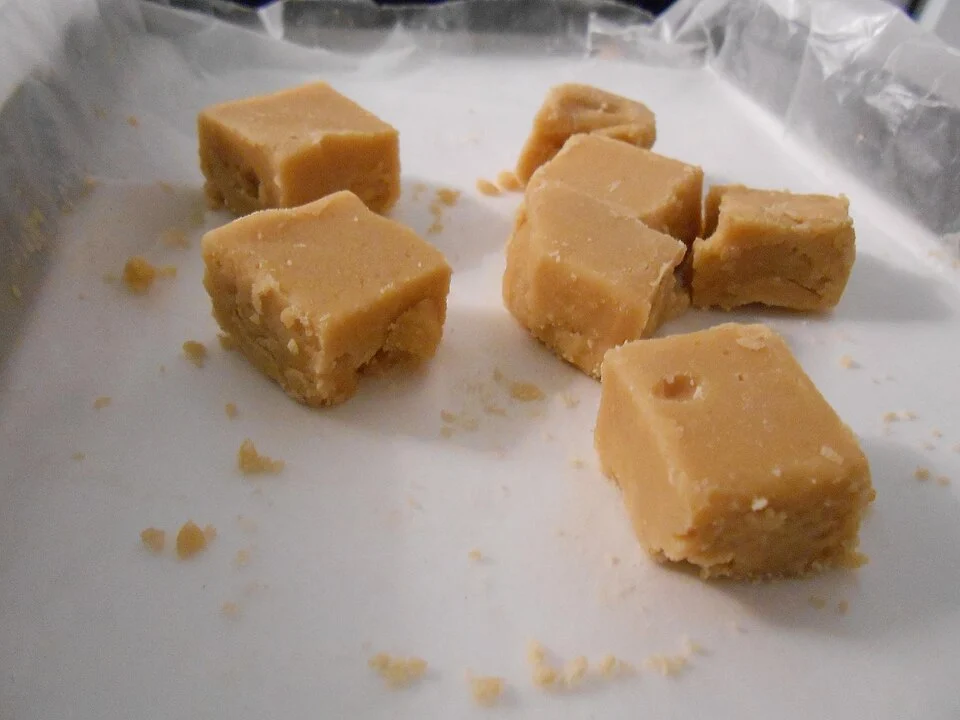
Sucre à la crème is a confection of French-speaking Canada: sugar and cream are boiled down, cooled, beaten, and cut into bite-size squares. When maple sugar or maple syrup is used, the scent of boiled-down sap lingers within the mellow butterfat. Versions made with white sugar and cassonade also exist, and the flavor of the sweetness changes with the sugar used. Each piece holds its shape, then the fine crystals dissolve in the mouth. For a smooth result, what matters is not only the cooking temperature but also the point at which, once the mixture has cooled, the beating begins.
Two Temperatures That Make It Smooth
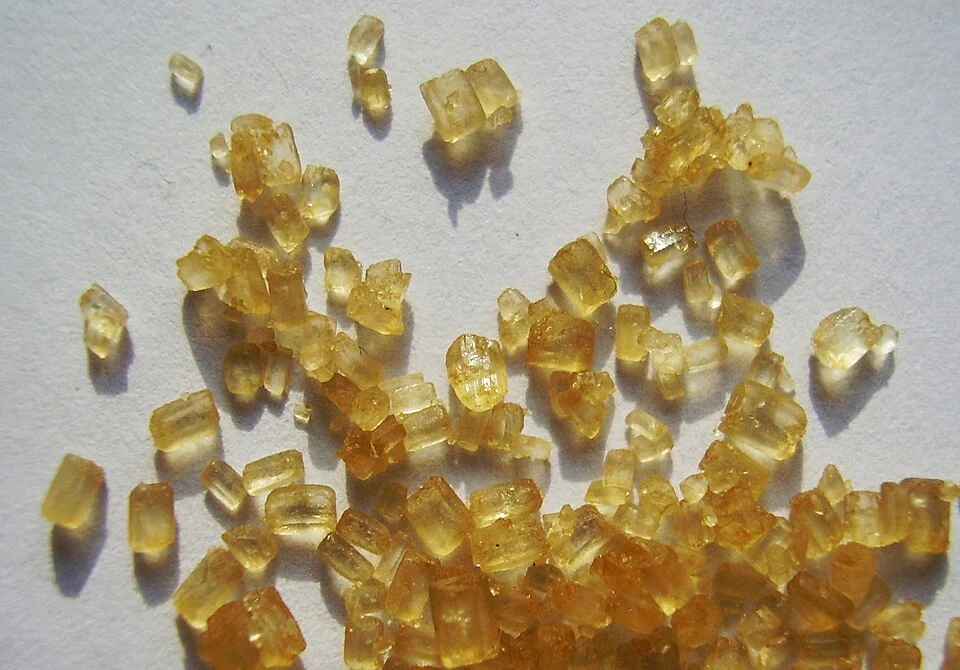
In the recipe published by the Québec food media outlet RICARDO, cream, cassonade, white sugar and salt are heated in a heavy-bottomed pot, stirring at first to dissolve the sugar. If necessary, a wet brush is used to wipe the sides of the pot and wash down any crystals clinging above the surface of the liquid. Once the sugar has dissolved, the mixture is boiled without stirring and taken off the heat when a thermometer reaches 114°C.
The vanilla is added at that point, but the mixture is not stirred right away. Although it may look like one continuous task in the pot, the hand movements change at each stage: dissolving the sugar, boiling it down, cooling it, and beating it.
What changes during boiling is the ratio of sugar to water in the pot. As the water evaporates, the syrup becomes more concentrated and its boiling temperature rises. Christina Blais, who taught food science, reported that with the same formula but different cooking endpoints, the sample stopped at 108°C was too soft, while the one taken to 118°C was hard and brittle.
If excess water remains, the mixture is slow to set firmly enough to cut; if too much water is driven off, there is less syrup to fill the spaces between the sugar crystals. The degree of boiling affects both whether the corners hold and whether the piece crumbles lightly in the mouth.
There is also a way to judge doneness without a thermometer. Drop a bit of hot syrup into cold water and see whether the cooled bead can be picked up with the fingers. Blais’s guideline is a small ball that can be lifted out and is firm enough to be squashed easily when pinched.
If the syrup disperses in the water or loses its shape on the bottom, it is undercooked; if it forms a ball that resists crushing under finger pressure, the boiling has progressed. This method translates a difference that is hard to tell from the bubbles in the pot into the feel of cooled sugar. In French, this stage of boiling is called petit boulé.
The next temperature to watch is the one after the pot comes off the heat. In RICARDO’s recipe, the pot is set in cold water and left undisturbed; once the syrup reaches 43–50°C, it is beaten vigorously with a wooden spoon.
In Blais’s comparison, the batch stirred right after heating had crystals large enough to notice on the tongue. This is because sugar readily gathers on the few crystals that form while the syrup is still warm, so the grains grow easily.
In the sample cooled to 43–45°C before beating, many crystals formed at once in the thickened syrup, and each stayed fine. Whether one beats early or waits a little, the same ingredients yield sweets with different degrees of graininess.
A guide for when to stop beating is when the mixture turns heavy and starts to lose its gloss, yet still flows enough to be transferred to the mold. The walnut recipe published by the Québec maple producers’ association instructs the cook not to scrape the sides of the pot at this stage. Sugar left on the walls can have set coarsely, and if it goes into the mold, large grains mix into the smoothly beaten portion.
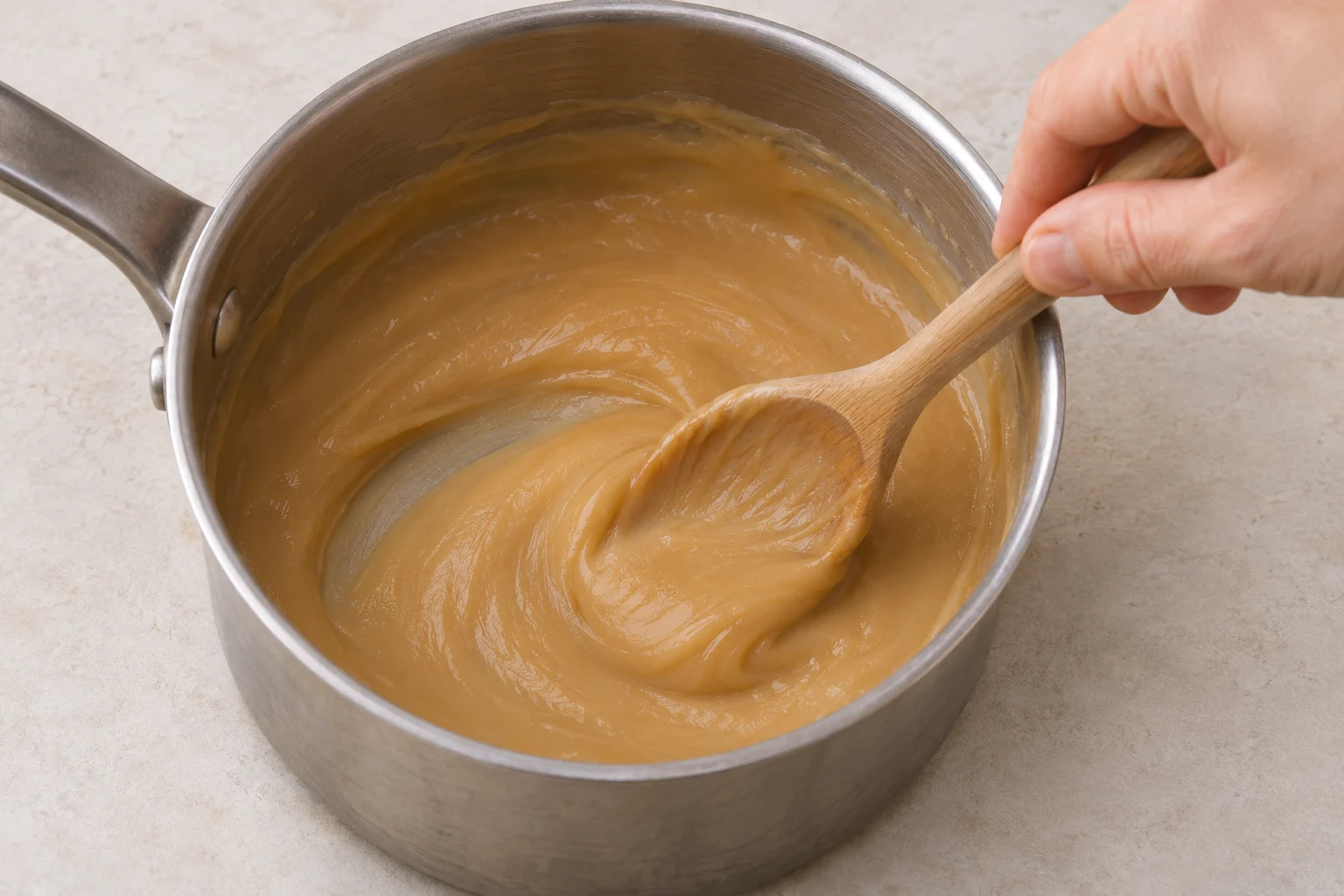
For the syrup to take the shape of the mold and be cuttable with a knife once cool, it must be transferred before crystallization in the pot has run its course. The small squares are made with the timing of the move from pot to mold included.
A Method from 1844, with Snow and an Icehouse
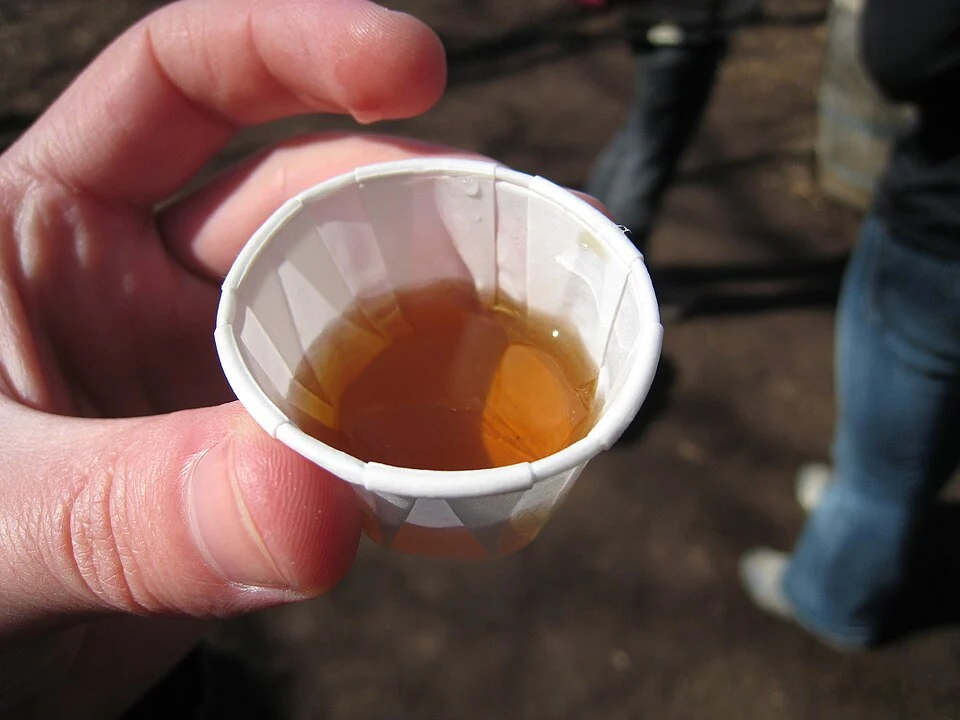
The earliest method confirmed by Patrick Charbonneau, who has studied food history, appears in an 1844 Montréal newspaper, L’Aurore des Canadas. Fresh cream is added to chopped maple sugar, and the mixture is boiled until the syrup threads or can be made into tire.
Once the pot is off the heat, it is moved to a cellar or icehouse in summer, or onto snow in winter, and cooled while being turned constantly with a spoon. It is then beaten further, taken out of the pot, and shaped as desired. The newspaper compares the result to a soft sugar made from sap.
Winter snow and the summer icehouse are both places to cool the pot in the newspaper’s procedure. Like the cold-water bath described by modern cooks, they serve to draw heat from the syrup after it comes off the heat.
The order in which stirring begins differs. The newspaper keeps the spoon moving even while the mixture cools, whereas modern recipes measure the temperature and let the mixture stand until a set temperature before beating.
Also, the threading that the newspaper uses as a guide and the soft ball made in today’s cold-water test remain distinct as described. Because the old text records no temperature, a modern temperature cannot simply be applied to it.
What Charbonneau compared with the 1844 account was an ethnography of sugar made from maple sap. According to it, besides the firmly set maple sugar, there was sucre mou, which was beaten hard during cooling to make it soft.
Because the texture is created by combining cooling and agitation, Charbonneau links the technique of sucre à la crème to maple sugar making as practiced in the St. Lawrence valley. Tracing the technique back to before cream was added helps explain why the old newspaper refers to a different maple sugar.
As for when it arose, the study estimates the late 18th to early 19th century. For example, the recollections of François-Xavier Prieur, published in 1864, state that the children of people who settled west of the island of Montréal in the 1820s and 1830s could get hold of sucre à la crème in sticks.
Several decades lie between the period the recollection describes and the year the text was printed. The recollection therefore supports the possibility that the sweet existed before 1844, while the 1844 newspaper provides a published example in which both ingredients and procedure are given.
Those who passed down cooking knowledge included religious orders, but the year of publication and the year of a manuscript each need to be checked. The Augustinian community in Québec City has a cooking manuscript dated 1858, and a recipe for this sweet appears in its latter half.
Charbonneau points out that the handwriting changes before that point, that the ingredients in the surrounding recipes are closer to a later period, and that the content resembles an example published in a magazine in 1901. The date at the front of the manuscript alone does not establish that the page was written in 1858.
Ingredients and Shapes Vary Across Cookbooks and Newspapers
An expanded edition of Mère Caron’s cookbook, published in 1883, has a procedure in which sugar is boiled with a little water and cream is then added. Doneness is judged by dropping the syrup into cold water; it is taken off the heat and stirred until grains form in the syrup.
In an example printed the same year by a Philadelphia newspaper, maple sugar is used, cream is added to a pot warmed in a water bath, and the mixture is spread on a buttered plate and cut into squares. This shorter account has no instruction on beating, unlike Caron’s. Set side by side, the two show that even in the 19th century the type of sugar, the way heat was applied, and the wording used to describe the finished sweet varied.
In 1888, an English-language cookbook from Halifax included, under the name sucre à la crème, a recipe boiling grated coconut with maple sugar. An English-language cookbook from Montréal the same year gives, under the name maple cream, a recipe combining maple sugar and cream with butternuts. The latter adds that walnuts can be substituted.
Even the early sources alone show differences in the nuts added and in the names used. Rather than regarding any one recipe as the rule for the whole region, reading each as a choice made by a cook and preserved in a regional cookbook gives a more concrete picture of how the sweet spread.
Beyond books, occasions when the sweet was eaten are also recorded. In sources cited by Charbonneau, it was served at a banquet celebrating a bishop’s consecration in Saint-Hyacinthe in 1876; a confectioner in Sherbrooke sold it in 1884; and around 1891 it appeared at the dedication of a church in Saint-Lin-des-Laurentides. In addition, an 1888 American newspaper carries an article under a pen name saying that young women from Canada sold it in New York.
The reliability of individual anecdotes varies, but they show that the name of the sweet had reached beyond the places where the cookbooks were published.
In English, this small sweet is rendered as maple fudge. The Office québécois de la langue française explains that its method is close to that of American fudge in making use of fine sugar crystals, and that French-speaking Canada used its own local name before the American name fudge became established.
On the other hand, an 1888 Montréal English-language cookbook calls even a recipe that allows a choice of molasses or maple syrup maple cream. Even when an English name contains the word maple, one has to read the maker’s recipe to learn the ingredients.
From Cut Squares to a Holiday Dish
In present-day Québec, too, recipes that combine white sugar and cassonade stand alongside recipes that put maple flavor front and center. The walnut version from the Québec maple producers’ association recommends dark syrup, boils it first with butter, adds the cream afterward, and takes the mixture off the heat at 114–115°C.
The association’s Christmas booklet calls for a pale golden syrup, beats a mixture heated to 118°C, and scatters pretzels, chocolate, dried cranberries and pistachios over the surface. Both the temperature figures and the use of nuts are given together with the formula and the finish.
As a Christmas sweet, the Centre d’archives régional de Portneuf in Québec presents an entry of the same name from the 1948 recipe book of Marie-Anna Trottier, who ran the household at the presbytery in Deschambault. The same exhibit also includes fudge from another recipe book, as well as a rolled cake and a chocolate sweet by the same Trottier. Setting a dish from a recipe book presented by the archive beside one that today’s producers’ association decorates for the holidays shows that it has been handed down locally as a sweet prepared at the end of the year, and that its finish has changed over time.
The glossary of the Office québécois de la langue française lists, besides the sweet cut into squares and served, uses of the same name for an icing poured over cakes and a filling for tarts and small pastries. Some modern recipes use sweetened condensed milk instead of cream, and examples with nuts mixed in can be found as early as the 19th century.
The name covers a range of sugar choices and uses. When eating a bite-size piece, the sugar that determines the aroma and the beating that determines the grains left on the tongue can serve as clues, so that on meeting a sweet of the same name you can tell the differences between makers.
Glossary
- Cassonade
- Here, the brown sugar used alongside white sugar in Québec recipes.
- Petit boulé
- The stage of boiling at which syrup dropped into cold water forms a soft little ball. The temperature specified for the finished syrup differs by source and recipe.
- Tire
- In the 1844 newspaper, another maple confection, cited to indicate how far the syrup should be boiled.
- Sucre mou
- A sugar made from maple sap and stirred during cooling to make it soft.


