


SweetloreEncyclopedia of World Sweets (834)

Tarte à la tome
Tarte à la tome
A sweet curd tart of the Carladès, known by the names of its places
Tarts / France, Auvergne

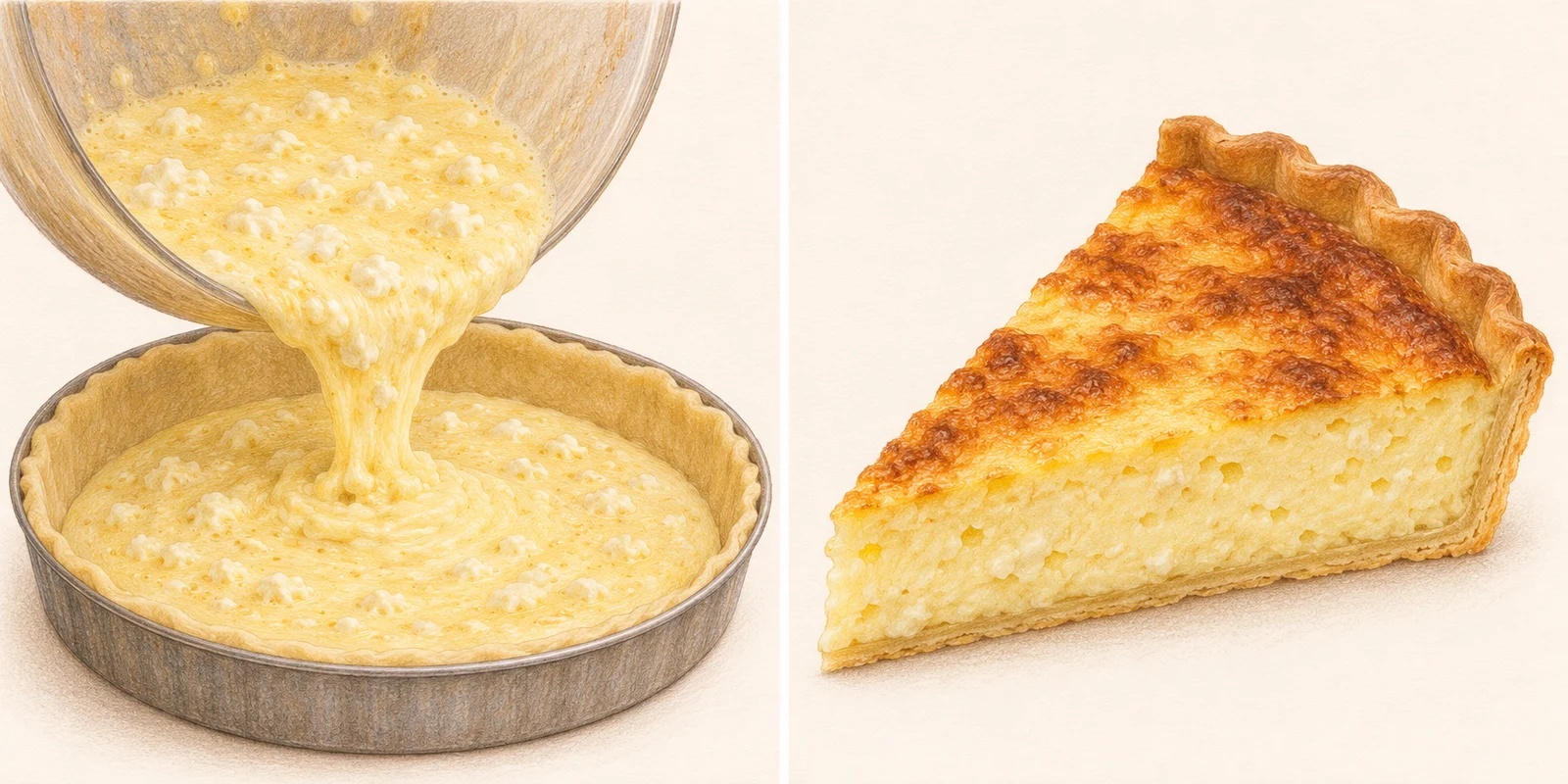
The day before baking a tarte à la tome, milk is warmed, set into curds and drained. The next day the curds are broken up, mixed with eggs and sugar, and poured into a shortcrust pastry shell. The surface turns golden, and when the tart is cut, the sweet, milky filling sits neatly within the edge of the pastry. In the Carladès, which spans the departments of Cantal and Aveyron in south-central France, the tart has also been called by the names of the villages and towns where it is made.
From the Previous Day’s Milk to the Next Day’s Tart
The Aveyron tourism body’s method begins the day before: 2.5 litres of raw milk are warmed to about 35°C, and 4 to 5 drops of rennet, which contains a milk-clotting enzyme, are added. Once the milk has set after a few hours, it is drained, and 500 g of the curds are used for the next day’s tart. The recipe specifies curds that are well drained but not too dry. By taking curds from liquid milk and using them with some moisture left in, the filling is made from an ingredient far removed from aged cheese. The quantities and temperature are the conditions given in this recipe.
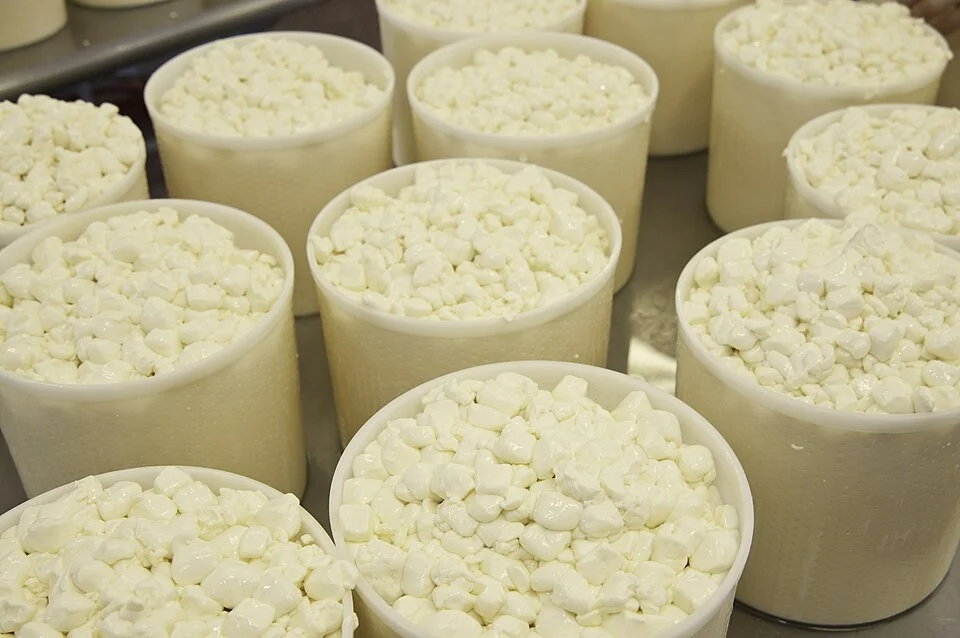
The next day, the set milk is broken up with a fork or pressed through a sieve. Five eggs are separated; the whites are whipped, and the yolks are well beaten and added to the curds. Five to six tablespoons of sugar and one sachet of vanilla sugar are added. Breaking up the curds and whipping air into the whites can each be done before the pastry is lined into the tin. The separately prepared components are combined in one bowl and poured into a tin lined with a shortcrust pastry known as pâte brisée, then baked for about 40 minutes in an oven preheated to 200–220°C, until the surface is golden brown. There is no step in which the filling is first cooked to set it; the pastry and filling bake together in the same tin. The recipe also lists the option of sprinkling sugar on top when serving.
A Version with Only Egg Yolks, and One with Whipped Cream
Although the drained milk, eggs and sugar are common to all versions, what follows differs from one maker to the next. In the example from a Cantal regional website, whole eggs are broken one at a time into smoothly blended curds, and flour and sugar are added. Whipped cream is then folded in, along with vanilla and rum for flavour. Where the tourism body’s example whips the egg whites, here it is a separately prepared cream that is whipped. Although both involve whipping, they differ in which ingredient is mixed in with air incorporated.
The Cantal recipe also serves six, and uses 1 litre of raw milk for the curds. The curds are placed in a muslin-lined colander to drain one hour before cooking. For the base, flour, egg yolks, sugar and chopped butter are worked by hand until crumbly, with water added if needed. The dough is shaped into a ball and rested for 15 minutes, then rolled out with a rolling pin and fitted into a buttered deep tin. As a guide, it is baked for 25 minutes in a moderate oven and removed when the surface has coloured. Browning as the cue is shared with the tourism body’s example, but the way the temperature is given, the time and the depth of the tin differ.
In the version for six given by L’OPT, a regional-product information site, four egg yolks go into the filling. One cup of curds, 50 g of flour, 10 cl of thick cream and 100 g of sugar are mixed with the yolks using a whisk, until the mixture can be poured. It is flavoured with vanilla sugar or orange blossom. The pastry is made by mixing 250 g of flour with 150 g of butter, then adding egg, water, sugar and salt to bring it together, and resting it in the refrigerator. It is rolled out with a rolling pin and fitted into a buttered 22 cm tin, and the fluid filling is then poured in. It is baked at 180°C for 50 minutes and served at room temperature. When the tin is specified, one can also tell how large the layers of filling and pastry were when baked and cut.
Seen from the outside, they look like the same pastry-enclosed tart, yet the filling for a single slice may be made by whipping the egg whites first, by mixing in whole eggs one by one, or with egg yolks alone. Cream, too, is added in different ways, and there is a range of choice among rum, vanilla and orange blossom as flavourings. When studying the filling, it helps to link the differences in method with how the finished tart made from those ingredients looks, which also makes it possible to compare how much of the drained curd grains is left in.
The Cheese Workshop Also Bakes a Sweet Tart
In Thérondels, in northern Aveyron, milk from local dairy farmers is processed by a cooperative. The village guide says that this milk is made into cheeses such as Cantal and also into sweet tarts. At the Thérondels workshop of the dairy cooperative Jeune Montagne, the curds for the tarte à l’encalat (tarte à l’encalat) are taken from the same milk used to make cheese. The cooperative explains that “encalat” is an Occitan word for fresh white cheese. Knowing that the same milk is divided between tart and cheese makes it clear that the local word is tied to both the sweet pastry and its milk ingredient.
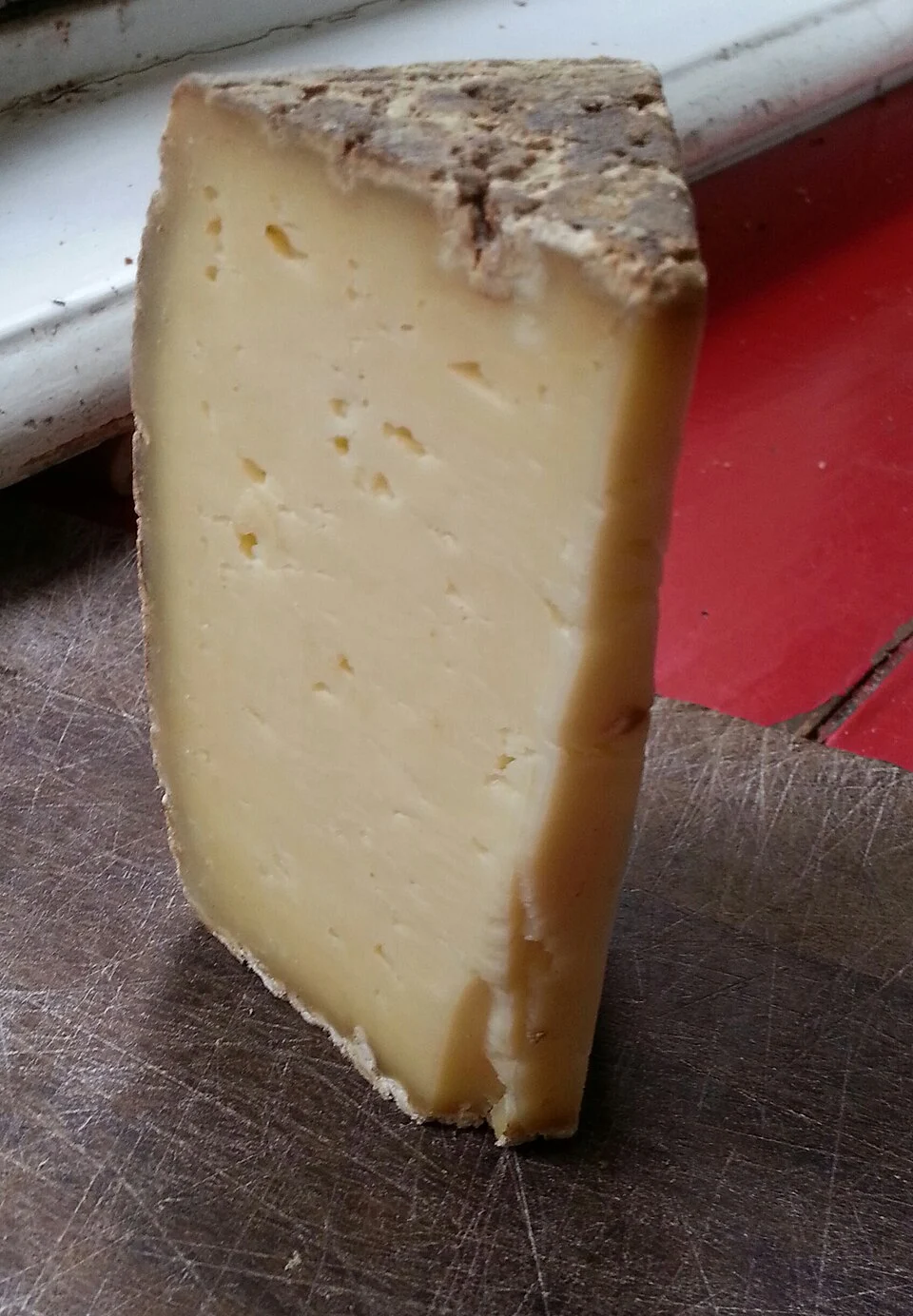
The Thérondels village guide says that cattle farming supports the area and that milk collected from local dairy farmers is processed at the village cooperative. What comes out of this workshop includes the cheese that bears the village’s name, as well as Cantal made from raw milk, and the tart. The photograph of Thérondels cheese shows a dry rind and a firm cut surface. A piece of such cheese is not chopped into the pastry; rather, the young curds taken from the milk are set aside for the sweet.
The pastry introduced by the cooperative has a sweet curd filling on a butter-based sablé dough, and it is suggested that it be lightly warmed in the oven or over a wood fire before eating. It differs in its base and manner of serving from the home recipe that uses shortcrust pastry and, if desired, sprinkles sugar on top at the end. In Mur-de-Barrez, the Maison des Délices, introduced by the tourism body, bakes the tart over a wood fire. Which milk is used, which pastry is laid in the tin and what is used for heating are details that remain in each workshop’s or recipe’s description. The cooperative states that it sells this tart at the Thérondels workshop and also at Jeune Montagne in Laguiole. Even when the place where it is made and the place where it is eaten are far apart, a tart that has cooled can be gently warmed and brought to the table.
Sliced in the Village, with a Second Dish on Feast Days
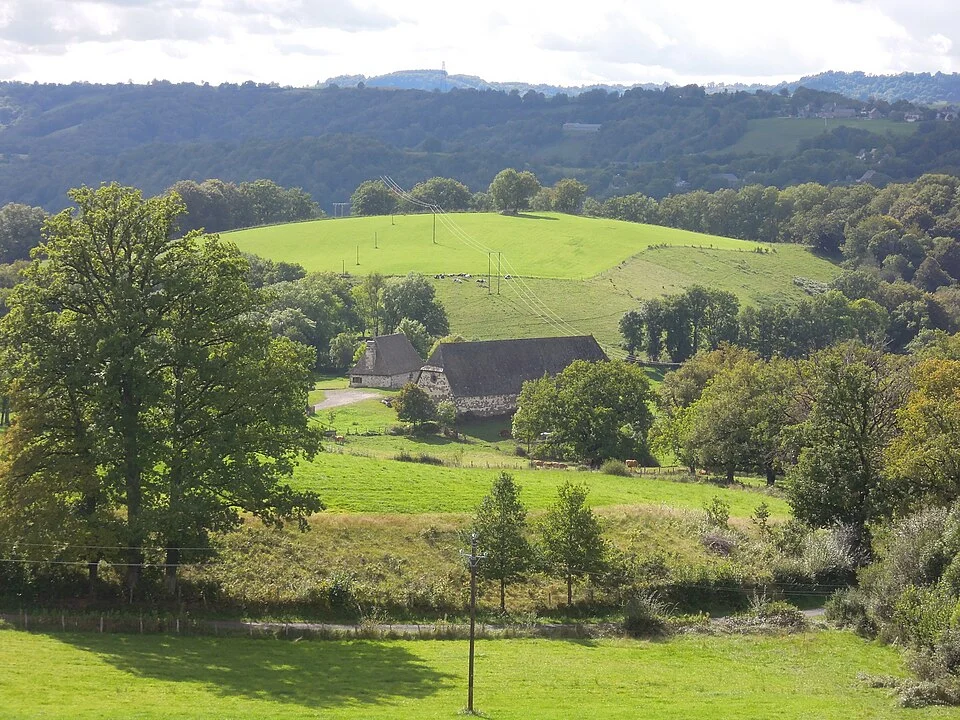
For the Carladès, which stretches from Cantal to northern Aveyron, even the regional name has two spellings, Carladès and Carladez. Tarte de Vic, tarte de Mur and tarte de Raulhac carry the place names Vic-sur-Cère, Mur-de-Barrez and Raulhac respectively, and the name tarte à l’encalat appears alongside them. The names offer clues for tracing links to several towns. To pin down the origin of the tart town by town, records that show when it was made and by whom are needed in addition to place names.
The tourist guide for Aubrac describes a custom of serving a prune tart alongside the tart on feast days. For those who do not care for dairy products there is a fruit dish, and both can be sliced and eaten by the people gathered. It is also usually sold at local bakeries and pastry shops, and the Carladès tourist office introduces shops that make it their signature item in Vic-sur-Cère and notes that its main ingredient is drained and pressed curd. The office reports that the organiser of the Raulhac festival and the Thérondels dairy cooperative have registered the brand “Tarte à la Tome du Carladès”. The conditions of use of the registered brand are not given in the office’s guide.
The office’s 2020 article presents the Raulhac event: on Saturday a walk of about 20 kilometres exploring food and heritage, and on Sunday a programme of tasting the tart with a market and music. According to José Boissier, a former organiser, curds taken from raw milk are combined with eggs and sugar to make a tart in which the grains remain. A 24 cm tin serving 6 to 8 people is the example given. What can be read in the article is the content of the programme; whether it took place in 2020 cannot be confirmed. The Cantal department’s 2019 list of grants includes a grant to an association in Raulhac for a tart festival. This is a document recording a funded event, and it does not indicate the year the festival began.
Separately, a class held on 20 February 2024 in the village community hall has a report of its running. The local social centre recorded a day on which people from children to older adults gathered and, watching a demonstration by Ginette Fresquet and others, prepared and baked a vanilla-flavoured tart, making the pastry, the curds and the filling. How raw milk is set, and to what texture the curds are drained, are steps that are hard to convey with numbers alone. At the hall, people who stood together in the kitchen had the chance to watch the work and try it right away. Ginette Fresquet, in the role of instructor, was assisted by Mr Tralieu and Mr Lavergne, and participants could take part at every stage from the pastry to the baking. It is reported that they not only tasted the tart they had made but also listened to cooking advice so that they could make it the same way at home.
A Tart That Sets Cow’s Milk, and a Tart That Warms Whey
Around Millau, in the southern part of the same department of Aveyron, sheep are raised for their milk, and recuite is made from the whey left over from cheesemaking. The flaune (flaune), introduced by the farm network Bienvenue à la ferme, combines 400 g of recuite, obtained by heating that whey again, with 3 eggs, 70 g of cream, 50 g of sugar and orange blossom flavouring. The mixture is poured into the pastry and baked at 180°C for 40 minutes. In a presentation of South Aveyron cooking there is also a choice between using shortcrust pastry for a crisp base or puff pastry for light layers.
In the Carladès tourism body’s method, rennet is added to cow’s milk the day before to obtain curds. What is used in the flaune example above is a dairy product gathered again from the sheep’s whey left after cheesemaking. Since sugar and eggs are mixed in and both are poured into a tin and baked sweet, they look alike if one looks only at the cut slice. By contrast, among tarts named “tome” in the Bauges in Savoie there is a savoury version using Tome des Bauges and tomatoes. The Annecy tourist guide suggests cutting it small and serving it cold as a starter, or serving it warm with a salad. The rind is removed from the cheese, which is cut into thin slices and arranged on the pastry; slices of tomato and thyme are placed on top, and it is baked at 180°C for 40 minutes. The description of the dish explains that the cheese is soft while warm and firm when cooled, so even the same dish changes in mouthfeel with the temperature at which it is served. If one traces at which step the maker draws the milk off and puts it to use on the plate before the tin is filled, one can see the differences that come out of the single form of a tart.
Glossary
- Curds
- Milk that has been set with an enzyme or similar agent. In the Carladès examples presented here, they are drained and used as the tart filling.
- Rennet
- A preparation containing an enzyme used to coagulate milk.
- Recuite
- A dairy product obtained by heating whey. It is used in the flaune of South Aveyron.
- Flaune
- A sweet tart made in southern Aveyron using recuite.


