


SweetloreEncyclopedia of World Sweets (834)

Touton
Toutons
Newfoundland's yeasted dough, cooked in a morning frying pan
Fried Sweets / Island of Newfoundland, Canada

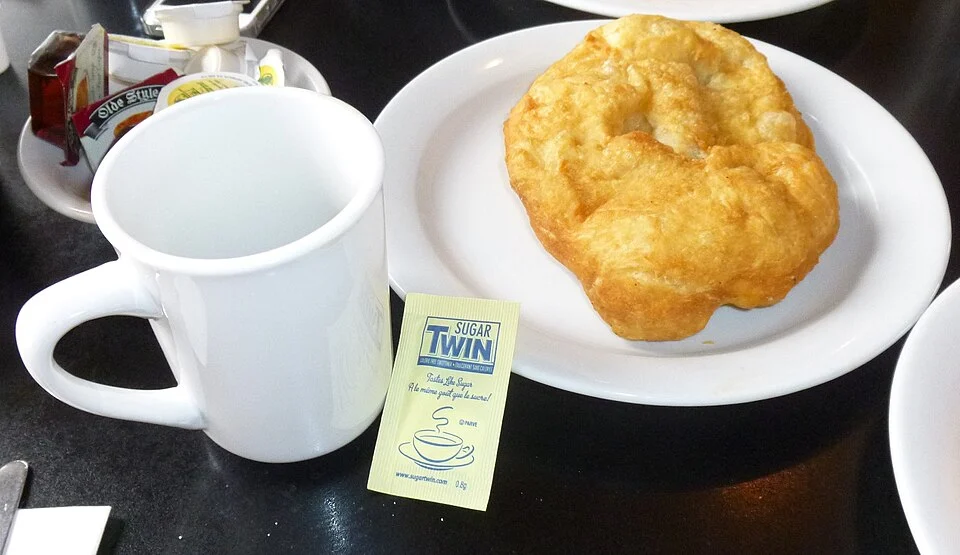
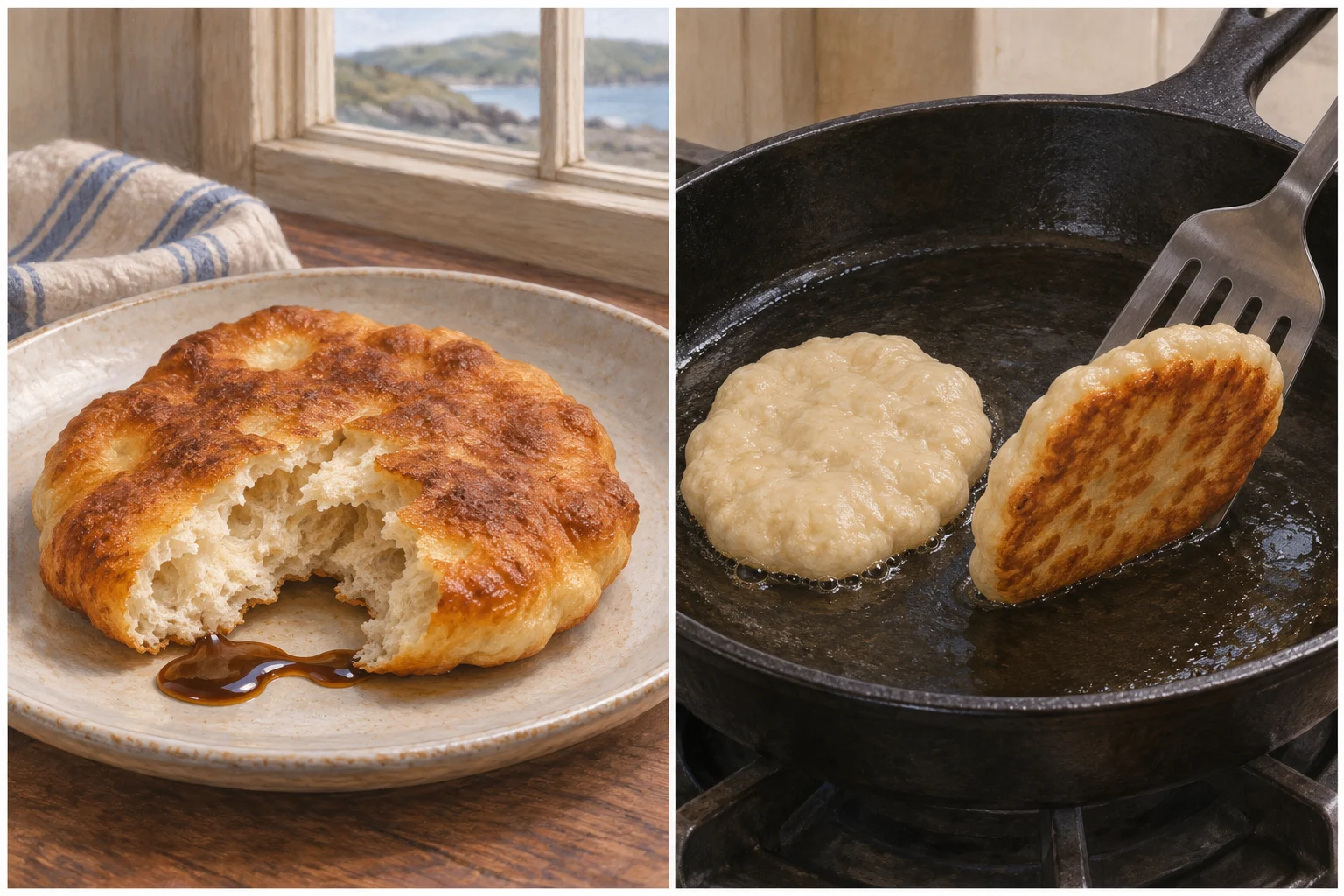
On the island of Newfoundland, touton is yeasted bread dough divided into small pieces, flattened, and cooked in oil or pork fat. The side that touches the pan turns golden, and when a piece is broken open, soft dough with air pockets remains inside. Topped with butter just after cooking and drizzled with thick molasses, it lets the sweet liquid seep slowly into the fragrant surface. Touton often appears at breakfast in the province, and the provincial tourism guide also describes serving it with corn syrup as well as molasses.
Making Breakfast from One Batch of Dough
One record also conveys the way the dough is portioned off. In the account of Emily Mardell and her mother, Joy, making touton from the family’s white bread dough, the risen dough is cut into pieces and stretched lightly into rounds without being pressed flat. Joy tells her grandchild not to press too much of the air out of the dough.
If the stretched dough is rested for about ten minutes before cooking, the pieces visibly puff up in the pan. A photograph of a finished touton broken open also shows a thin golden-brown exterior and a puffed interior.
Diane Tye, a scholar of food culture, uses interviews and folklore sources to trace how bread sustained everyday meals in Newfoundland households. In the fishing season, people had bread and butter with tea early in the morning, sometimes with a little jam or marmalade.
Although touton is also a morning food, it differs from bread that is baked and then sliced: the dough is portioned off before baking and cooked as it is. Drawing on Bill Casselman’s writing, Tye describes a method in which dough made with yeast the night before is cut into small pieces the next morning, fried in pork fat, and served with molasses and butter.
According to what cookbook authors heard on Fogo Island, the mother of a resident named Sandra tore small pieces from risen dough, pressed them round by hand, and fried them for breakfast.
If risen dough is already on hand, there is no need to measure out flour and start a new dough from scratch while a small piece cooks. Nor is it necessary to shape a large mass, as for a loaf, and wait for the heat to reach the center. The point at which the dough is set aside is what separates two dishes made with the same flour.
Skillets for Pork Fat and for Vegetable Oil
An April 1980 issue of the magazine Decks Awash, held by Memorial University, includes a method for toutons on a page of home cooking from Bauline. Leftover dough is rolled and flattened, and fatty pork is first fried in a frying pan. After the pork pieces are removed, four or five pieces of dough go into the hot pan and are cooked until golden brown. Molasses is warmed in a separate pan, poured over the cooked dough, and served with tea.
The ingredient list in this example gives no measurements for flour or yeast. Because it assumes bread dough prepared at home, the short article centers on how to render the fat and bring the dough to the table.
When liquid fat is rendered from salted pork fatback, the pieces of meat left in the pan have a use too. In the Mardell family’s method, salt pork is heated to render its fat, the crisp small pieces are removed, and the dough is cooked in the liquid fat. These pieces are called scrunchions and are sometimes served alongside the cooked toutons.
Next to sweet molasses, a small piece of salt pork against the teeth adds a texture different from the softness of the dough. Fish and brewis, another dish of the province, made with salt cod and hard bread, also has versions served with both the fat and these pieces.
The recipe in A Rising Tide (2021) prepares a dough for touton from the start. Flour is combined with sugar, fast-acting yeast, and salt, then milk and melted butter are added and the dough is kneaded. The dough is left to rise in an oven that has been warmed and then turned off, cut into eight pieces, shaped to a thickness of about 1.3 cm, and rested for ten minutes.
The authors also give a method of letting the dough rise in the refrigerator overnight, then bringing it to room temperature and shaping it in the morning. Even for someone who does not plan to bake bread at home, the same sequence works: prepare the fermented dough ahead and cook it in the morning.
The book uses a mild-flavored oil, enough to cover the bottom of a heavy frying pan. Each piece is cooked for two to three minutes until one side puffs and turns golden brown, then for one to two minutes on the turned side, and it is finished through in an oven at about 121°C while the rest are cooked. Because the surface browns faster than the center cooks, the heat of the frying pan gives the color and the oven finishes the interior.
The Mardell family’s record also shows the heat being lowered partway so that the dough cooks through without burning on the outside. To cook thick dough while keeping its interior puffed, the duration and strength of the heat matter as well as the amount of oil.
The depth of oil varies from cook to cook. The Dictionary of Canadianisms on Historical Principles places photographs of a home version fried in shallow oil beside one deep-fried.
When the dough is cooked in oil at the bottom of the pan, the side touching the oil colors first, so the piece is turned partway to heat the other side. In deep frying, with the dough submerged, more of the surface touches the oil and the heat reaches the edges. Even with small pieces of the same dough, this difference shows in where the browning occurs and in the texture of the surface when eaten.

Serving with Molasses, Topping with Jam
If butter and molasses are put on the hot dough separately, the thick molasses flows to where the butter has begun to melt. In the Bauline record, only the molasses is warmed, a step done so that it can be poured over each cooked piece.
In A Rising Tide, butter is whipped first, molasses is mixed in little by little, and flaked sea salt is scattered on top before serving. The dough is cooked in a mild-flavored oil, and the final sweetness and saltiness are adjusted on the butter side. Molasses running in single streams across a plate and sweetness dispersed through whipped butter and spread on the dough give a different intensity in each bite.
Homemade fruit jam is also used. In the Mardell family’s demonstration, besides butter and molasses, homemade partridgeberry jam is put on freshly cooked pieces.
Because each round of dough is held in one hand and given its own topping, toutons from the same pan can be dressed to suit each person eating them. Jam and marmalade also appear in Tye’s account of how morning bread is eaten, which shows some overlap between what goes with bread and what goes with fried dough.
In Newfoundland regional English, molasses is also called lassy. The Dictionary of Newfoundland English quotes a record that molasses arrived at the harbour of St. John’s from the West Indies in 1677. There are 19th-century records of it being put in tea instead of sugar, and 20th-century uses of lassy bread, in which molasses is worked into the dough.
Touton served with molasses as a sweetener on the plate is one example of this ingredient being used at the table. Besides molasses bread, in which it goes into the dough before baking, there was also the practice of pouring it over cooked dough, so the aroma and color of the same molasses show up in different places.
Shipboard Meals, Wood Stoves, and Small Pork Breads
Holly Branch (1891), recorded in the Dictionary of Newfoundland English, has a scene on the fishing grounds in which the crew cook toutons in smoking fat. In a 1907 example too, the smell of pork fat rises from below on a sailing vessel while those aboard wait for the toutons to be done. In a 1915 reminiscence, toutons were served morning and evening to suit an older skipper who could not eat hard bread.
The three passages convey the name used on ships and the occasions on which toutons were eaten. Set beside the Bauline record, which conveys the method in the kitchen, they show that soft dough cooked in fat served as both a breakfast at home and a meal at sea.
Dough cooked on a wood stove has its own name: damper dog. In a case Tye describes, so that children would not eat up all the freshly baked bread, a small piece of dough was quickly cooked on the lid of the hot stove and given to them first. In an interview with a Mi’kmaq resident of Cape St. George, too, a mother is described placing leftover dough directly on the hot stove and turning it over to cook.
This speaker compares what was cooked on the stove to bannock and distinguishes what was cooked in a frying pan with pork fat as touton. The Dictionary of Canadianisms on Historical Principles, on the other hand, also lists damper dog as another name for touton. Reading as far as kitchen memory shows that even between names that sit side by side in a dictionary, there were differences in which surface met the heat and in how the pork fat was used.
A spelling close to touton can also refer to small breads with pork mixed into the dough. In his 1896 dialect survey, George Patterson recorded towtents as finely chopped pork mixed into flour. The 1967 Newfoundland Quarterly gives a method heard from an older local resident, using flour, a little water, baking soda, baking powder, molasses, and fatback.
The amount of flour is matched to the number wanted, and the molasses is adjusted by the cook. Between a breakfast in which pork fat is spread in a pan to cook the dough and a small bread with bits of pork and molasses inside the dough, what differs is where the fat and sweetness sit in the dough.
One audio source describes cutting small pieces from fermented dough, poking a hole through each with a finger, and cooking them with bacon or pork fatback. Compared with the Fogo Island example, in which a flat disc is spread out by hand, the final shaping motion differs even though both use fermented dough.
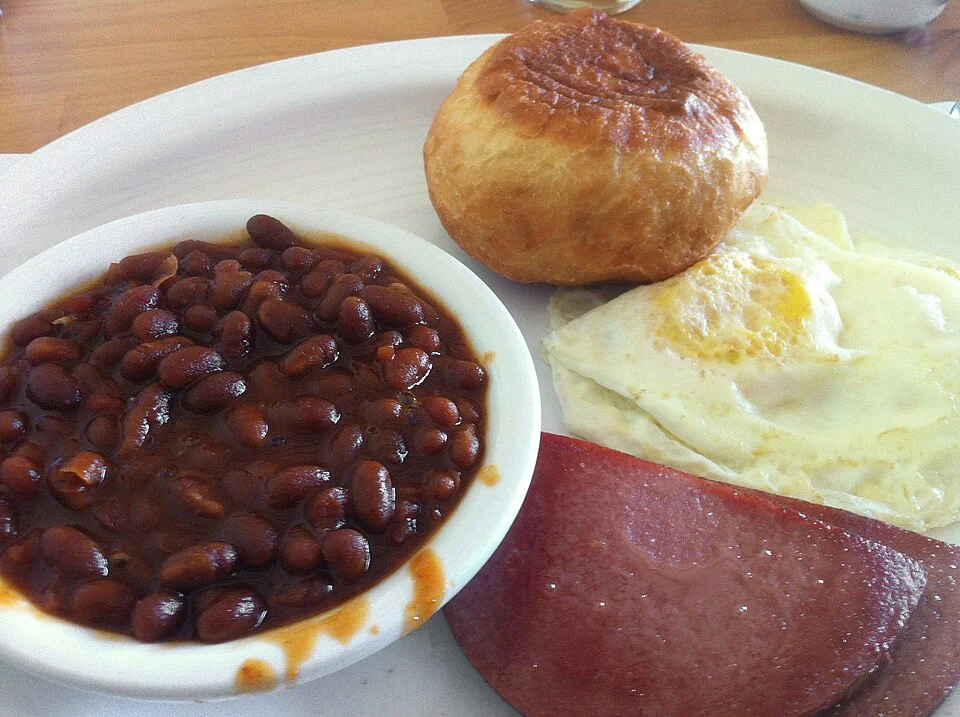
The Dictionary of Newfoundland English also records touton as the name for bologna sausage wrapped in bread dough and fried. Here, unlike when only fat goes into the pan, a filling comes out when the dough is broken open. Following the interviews, one sees, beyond the breakfast with sweetness added afterward, the hands of households that make meals from fermented dough.
In a 1971 example, small pork breads that trappers and hunters carried as emergency food are called pork toutens. Those made with pork and molasses were said to freeze less readily, and they were spoken of as food for a rest, when water was boiled partway through a long trek.
The touton introduced for breakfast in the provincial tourism guide is bread dough lifted from a hot frying pan and served with molasses. Names of the same family remain for both a kitchen dish eaten straight away and a portable food made ahead before setting out.
In the Dictionary of Newfoundland English example of fat-pork touton, a small molasses bread with bits of pork fat in it was packed in the lunch tin of someone going fishing or woodcutting. Spreading butter on the bread or pouring warmed molasses from a separate container is work that is not needed at the time of eating.
With sweetness and fat mixed into one small piece of dough, it can be picked up between tasks. When reading the records, it helps to look at both what was served at the breakfast table and what was mixed into dough taken outdoors, which reveals the settings of daily life in which one name produced different forms.
Glossary
- Molasses
- Thick sugar syrup that remains after the crystals are separated out in sugar making. It is poured over touton or mixed into whipped butter.
- Scrunchions / scruncheons
- Crisp small pieces left after salt-cured pork fat is fried and its fat rendered.
- Damper dog
- Name for dough cooked quickly, for example on top of a wood stove. Some sources use it interchangeably with touton.


