


SweetloreEncyclopedia of World Sweets (834)

Bienmesabe Venezolano
Bienmesabe venezolano
Liquor-soaked sponge with coconut and egg yolk cream
Cakes / Venezuela

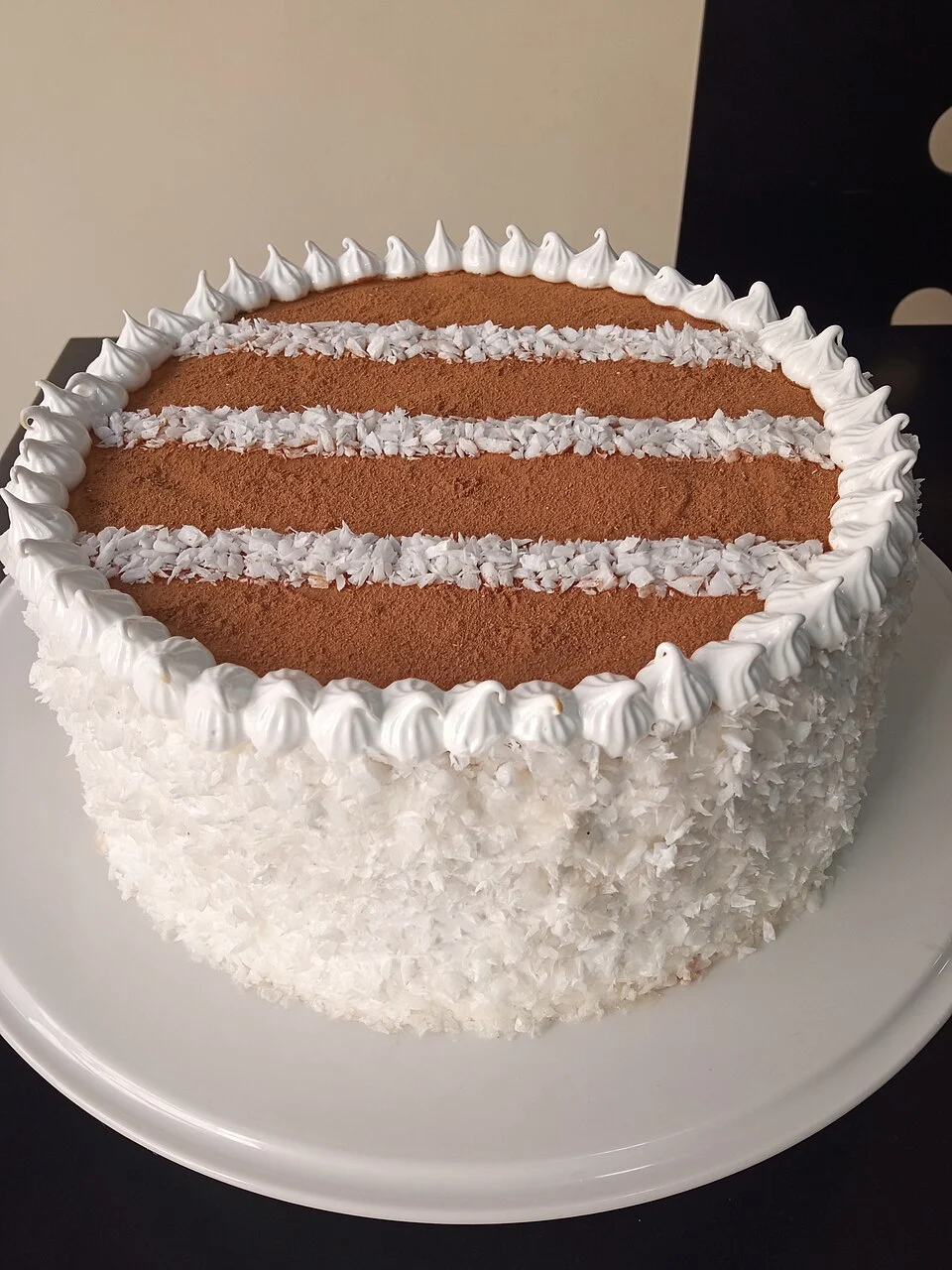
Bienmesabe venezolano is a chilled Venezuelan dessert made of liquor-soaked sponge cake topped with a cream of coconut milk and egg yolks. When a spoon goes in, it passes through a cold, smooth layer to the sponge beneath, which has softened by absorbing the cream. In a version from the coastal state of Vargas, sherry scents the cake, and meringue may be added on top. Some Caracas shops leave the coconut cream exposed on top, and the final layer changes what reaches the mouth first.
Pouring Liquor and Coconut Cream Through the Cuts
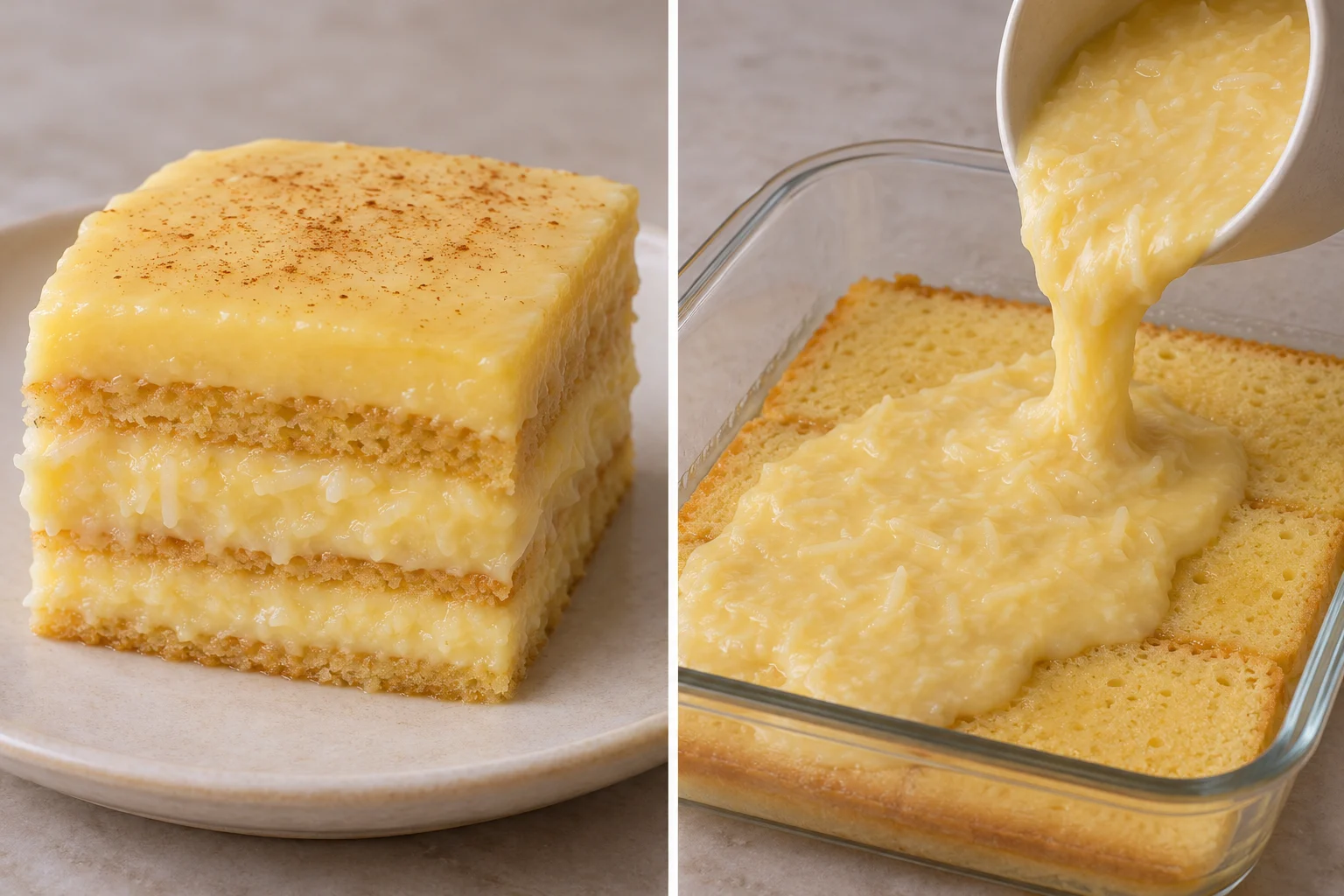
In the Vargas method, about 500 g of sponge cake goes into a dish such as a glass one, and several cuts are made in it with a blade. Sherry is poured in first, then the coconut cream. With the cuts, the liquid reaches not only the surface but also the spaces inside the cake. Left overnight, the liquid soaks in, so a spoonful brings up the softened sponge as well, not just the flowing cream.
According to the cooks, choosing a sponge recipe that will be soft and letting the cream soak in after assembly are separate decisions. A whisked sponge has fine air pockets, and cutting it, as in Vargas, adds more surfaces for the liquid to enter. Even after thorough chilling, the sponge on a plate is softest where it touches the cream. In versions with more cream layered on top, the ratio of cake to cream varies with where the spoon goes in.
In a 2016 interview, Oropeza recommended the fat-free bizcochuelo recipe of Armando Scannone, so that the sponge absorbs the cream more easily. She also said that some cooks use rum, which is easier to obtain, in place of the cognac used before. This is a change described by one cook in an interview. Set beside the records of moscatel in the central region and sherry in Vargas, it shows that the same brand or type of liquor is not used across the country; rather, the step of soaking the cake in liquor survives in several versions.
José Rafael Lovera, who wrote on the food culture of central Venezuela, centered on Caracas, cites a version in which sponge soaked in moscatel wine is covered with a cream of coconut, egg yolks and sugar and dusted with ground cinnamon. Vargas uses sherry, and the Caracas interviews also mention cognac and rum. The liquor is not a liquid for simmering the coconut in a pot; it is an ingredient that adds aroma to the baked cake. A different liquor changes the sweet aroma and the cask character that the cake gives off.
Turning Coconut Milk from the Flesh into a Pourable Cream
The milk for the cream is taken separately from the clear water that comes out when a coconut is cracked open. In Vargas, the outer part of a ripe coconut is removed, the white flesh is crushed with water, and the mixture is strained little by little into coconut milk. Sugar and egg yolks are combined with this fat-rich white liquid. A Caracas pastry chef therefore describes the cream as close to a crème anglaise, which is thickened with milk and egg yolks.
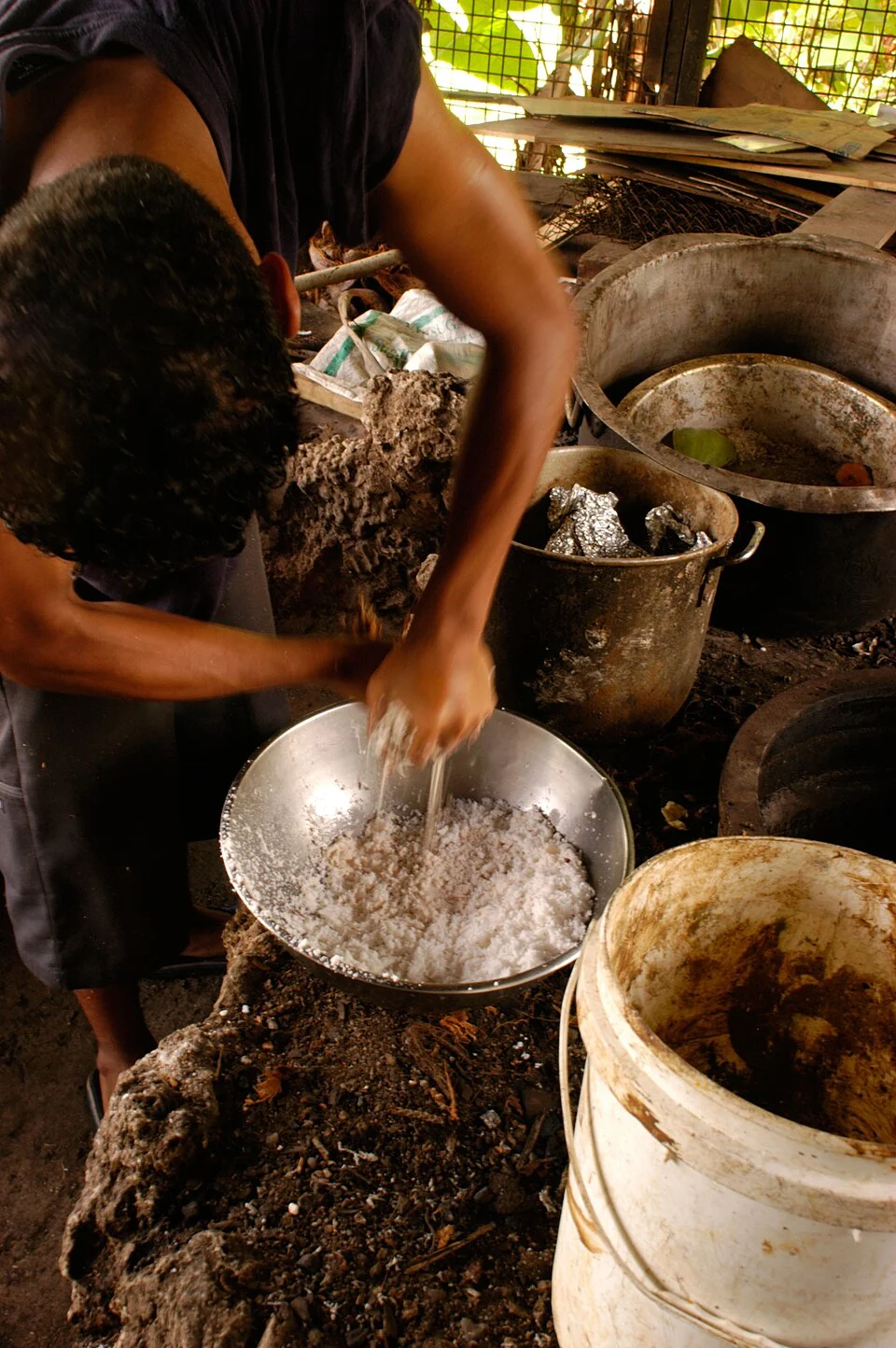
A Vargas source gives a recipe that uses 1 kg of sugar for the milk from 6 coconuts, with 5 strained egg yolks added. Sugar is combined with the milk and heated; once the yolks go in, the pot stays over the heat and is stirred vigorously, and stirring continues for a short time after it comes off the heat. Because straining the yolks and stirring them in the pot are separate stages, the large lumps of yolk are removed first and then spread through the milk and sugar mixture. The finished cream is not set in a separate container; it is poured over the sponge cake.
Mercedes Oropeza, a cook at the Caracas restaurant Amapola, said in a 2016 interview that the sugar syrup is boiled until a drop forms a ball in cold water, and that the cream is made from coconut milk, sugar and egg yolks. The syrup is described differently in her method, which fixes the degree of reduction first, and in the Vargas record, where sugar is added to the coconut milk before heating. The thickness of the syrup and the number of yolks affect the stage at which the cream stays pourable yet gains body.
A recipe used in another part of the Caribbean has the syrup cooled before the egg yolks are added. In the recipe of the Puerto Rican cookbook author Carmen Aboy Valldejuli, coconut milk boiled with sugar is left for about 1 hour and added little by little to the yolks, then heated again and strained. Compared with combining hot liquid with yolks all at once, the step of letting the temperature fall is clearly defined. The dessert is finished not by layering it over a large sponge cake but by serving it in a dish with small baked cakes.
Aboy Valldejuli’s recipe measures the coconut milk by the cup and uses 6 egg yolks for 2 cups. The Vargas record counts the coconuts by number and does not state the final amount of strained milk. The same number of coconuts can yield different amounts of milk, depending on how much flesh each contains and how much water is added, so the richness of the yolks cannot be compared directly between a count of coconuts and a number of cups of milk. What to check by eye is that the milk and sugar have reduced properly and that the cream with the yolks flows over the surface of the sponge without falling like water.
Presentations That Change: Platter, Cup and Sphere
The same 2016 article also describes a version by Leonor Zambrano of the confectionery business Asukaruto, in which sponge and cream are layered in two tiers in a small single-serving cup and topped with baked coconut meringue. Compared with the Vargas dessert, which is assembled in a wide dish and served from it, the layers are arranged in advance within each portion. This avoids collapsing the layers when serving from a dish afterward, and because baked meringue is used, the texture on top differs from a broad spread of whipped cream.
In the Vargas cultural heritage inventory, meringue may be placed on top as decoration after the sponge has rested overnight. Julieta Lares of the Caracas pastry shop Sulú Pastelería Artesanal explains that she follows the method in Scannone’s cookbook and serves it without meringue. With the surface left as coconut cream, that smoothness is felt from the first spoonful, whereas with meringue the spoon reaches the cream through a layer of whipped egg whites. A white surface in a photograph alone does not tell you what cake or liquor lies underneath.
Oropeza relays what she heard from Scannone about putting meringue on top: it began to be used around the 1960s in places such as Portuguese-run restaurants, to hide cracks on the surface of refrigerated sponge. This date and purpose are hearsay preserved in the 2016 article. The beginning has not been confirmed from contemporary menus or cooking notes.
In the Vargas version recorded after this account, meringue is likewise an optional decoration, and in Caracas the sponge Lares bakes is layered only with cream. Even around the same capital, topping the dessert with meringue is not a fixed rule of the dish.
A version by Pascal Shelanse presented around Caracas uses coconut flesh, cream and syrup, but bakes the dessert into a sphere, adds a rum jelly and attaches several meringues to the outside. The cook recalls that Scannone, on tasting it, approved of the flavor but did not agree with its appearance. This is an example that records an exchange between the maker and the taster. Compared with versions layered and spooned from a dish, it shows that even when the flavors of the same ingredients are kept, the form and the order in which it is eaten change greatly.
From a Caracas Gathering to an Island with the Same Name
70 años de crónicas gastronómicas, a collection of writing on Venezuelan food, includes a piece in which Francisco Javier Pérez recalls a family gathering in Caracas and lists bienmesabe among the dishes on the dessert table, alongside rice pudding, a guava sweet and quesillo. This is a recollection of what was served, not a family recipe. The interviews with cooks and shops, on the other hand, describe how the same dessert is served in a large dish or in small containers.
A dessert of the same name also survives in publications in Puerto Rico. The cooking column of Puerto Rico Ilustrado for 21 February 1948 gives a recipe using coconut milk, sugar, egg yolks and small sponge cakes. The coconut milk is obtained by a procedure described separately: grate the flesh, wrap it in cloth, and squeeze it after adding a little warm water or milk. The Vargas record has a step of crushing and then straining, and the two sources confirm that, under the same name, milk extracted by processing the flesh was used. The 1948 issue is a record of a publication in Puerto Rico.
The dessert of the same name made in Tejeda on Gran Canaria is a cream of ground almonds combined with sugar and egg yolks. A guide to the island’s products also presents it as an accompaniment to flan and ice cream. The bienmesabe recorded in Vargas uses strained coconut milk and places liquor-soaked sponge cake in a dish. Both use egg yolks and sugar, but they differ in mouthfeel and in the structure of the dish, depending on whether ground almond particles are left in or strained coconut milk is used.
Rubén Rojas, who writes about Caracas sweets, gives an explanation that the dessert crossed the Atlantic from southern Spain and the Canary Islands, and that in the Caribbean almonds were replaced by coconut. The Canary Islands and Venezuelan recipes can indeed be compared for differences in ingredients, but the sources compared contain no contemporary recipe showing when and by whom the dessert was brought in this form.
The account in which the dessert crossed the Atlantic and almonds were replaced by coconut is an origin theory presented by Rojas. Comparing the Tejeda and Vargas recipes, the difference is whether ground nuts are left in the cream or the milk strained from the flesh is mixed with egg yolks.
Under the same name, one finds versions in which coconut cream is the main part of the dish, versions layered with sponge, and versions that add the texture of meringue. In Venezuelan versions, the core of assembling the dish is to lay down liquor-scented sponge and then soak it with coconut cream. In a single slice, the impression changes depending on whether cinnamon is sprinkled on the surface or meringue is placed on top. When the lower layer is spooned out, the liquid-soaked cake keeps its shape even within the cold cream.
Glossary
- Bizcochuelo
- Sponge cake made with eggs and other ingredients. In this article, it is the base that is soaked with liquor and cream.
- Coconut milk (leche de coco)
- In the versions described here, the white liquid obtained by crushing or grating the flesh with water and straining it.
- Almíbar
- A syrup made by dissolving sugar in a liquid and boiling it. Some versions boil it in water, and others add sugar to coconut milk.
- Meringue (merengue)
- Whipped egg whites. In some versions it is layered on top as a finish or baked and used as decoration.
- Moscatel
- In this article, the wine used to soak the sponge in versions from central Venezuela.


