


SweetloreEncyclopedia of World Sweets (834)

Cassatelle Trapanesi
Cassatelle trapanesi
Fried half-moons wrapped around ricotta in western Sicily
Fried Sweets / Trapani, Sicily, Italy

A fried half-moon with a thin rim and a swollen center holds a pale, milky filling. These are cassatelle trapanesi, from Trapani and its surroundings in western Sicily. The dough is rolled thin and cut into circles, wrapped around sweetened ricotta, and fried. The rim breaks crisply, while the soft filling stays just inside the shell at the center. When chopped chocolate is mixed in, bits of cacao turn up here and there in the milky sweetness. Sicily also has the cassata decorated with fruit, but this is a small fried pastry, eaten by hand, one per person.
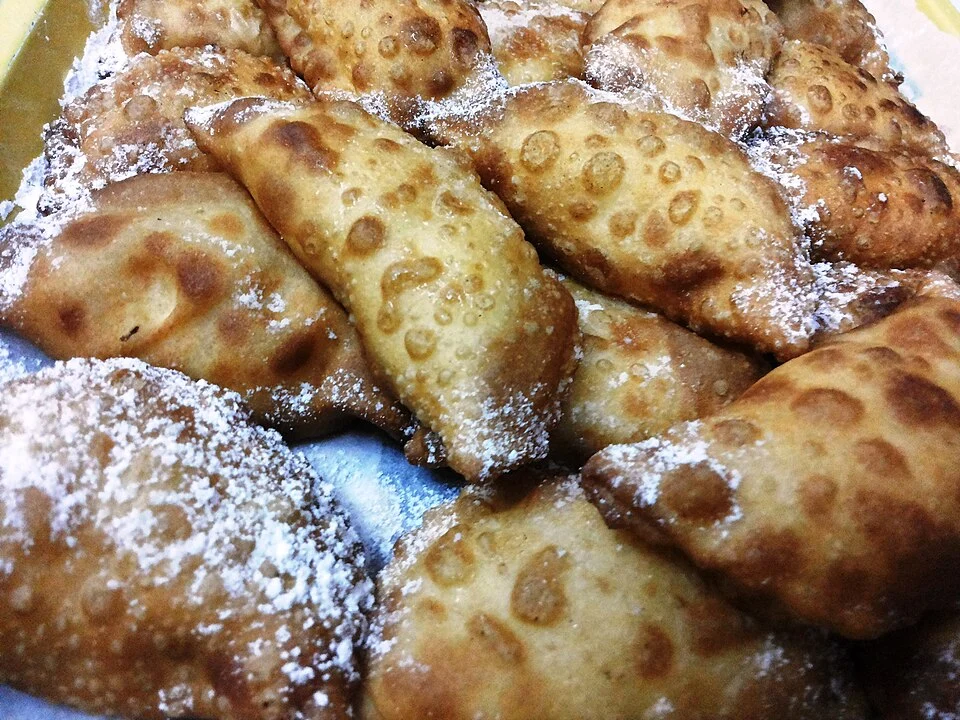
A Milky Filling in a Single Thin Sheet
In a recipe from AIES, the Italian sommelier association, the quantities for about 30 pieces are 300 g flour, 2 eggs, 50 g soft butter or lard, and 2 tablespoons Marsala. The shell takes 30 g sugar. Grated lemon and orange zest are mixed in with salt, and the dough is gathered into one mass, wrapped, and rested at room temperature for about 1 hour. The citrus and the liquor go into the shell. This keeps the flavor of the ricotta at the center, while the thin part that the mouth meets first carries the fragrance. Because the dough rests before rolling, it shrinks less than when pulled right after kneading, and it is easier to get a surface that fits a 10 cm cutter. AIES has the dough cut into several pieces and rolled thin and even with a rolling pin or a pasta roller, and notes that the scraps left after cutting the circles can be kneaded together again. Working in small portions rather than rolling out one large sheet evenly at once leaves fewer circles of uneven thickness.
The filling uses 350 g ricotta, 90 g powdered sugar, 90 g dark chocolate, and cinnamon. Ricotta made from sheep’s milk or mixed milk is drained and pushed through a sieve, then mixed with the powdered sugar and cinnamon, and the chopped chocolate goes in last. Sieving is meant to break up large curds, and the chocolate is left in pieces rather than melted. If a watery filling is combined with sugar, it runs toward the edge even when placed at the center of the circle, wets the dough, and becomes hard to wrap. Draining first keeps the milky filling smooth and lets it hold its shape on the dough.
The filling is placed at the center of a thin circle, only the rim that was left clear is moistened with water, and the circle is folded in half and pressed shut. The water is there to join dough to dough; if filling spills over the edge, there is less surface left to seal. Unlike a pastry covered top and bottom by two circles, this one is made by folding a single circle, so it has a seam along the arc and a straight edge on the folded side. With a 10 cm cutter, the straight edge is also about that long. The center, where the filling sits, is rounded, while the rim stays flat with two layers of dough, so even within the same half-moon the thickness meeting the teeth differs from bite to bite.
In the AIES recipe the pastries are fried in peanut oil, dusted with powdered sugar once taken out, and eaten warm. The surfaces touched by the hot oil lose moisture, while the side against the milky filling stays moist. If left to stand, moisture moves from the filling into the shell, and it breaks differently from when freshly fried. The softness of the chocolate pieces also depends on how much warmth remains. Because there is more sugar in the filling than in the shell, the sweetness comes across differently when biting the rim and when reaching the ricotta.
Same Province, Different Ways of Putting Together a Thin Shell
Cassateddi di Calatafimi of Calatafimi Segesta, listed in the Sicilian regional register of traditional foods, is a version in which oil and some of the old wine are brought to a boil, the flour is kneaded with that liquid, and the dough is left for about 2 hours. The AIES recipe does not heat the ingredients before adding flour; the shell is made by mixing eggs, butter, and Marsala. Although both are half-moons before frying, they differ from the start in the state of the fat and the liquor added before rolling.
The Calatafimi filling is 500 g sugar to 1 kg ricotta. Lemon zest and dark chocolate are added to the sieved milky filling. Using the zest rather than pouring in juice adds fragrance without increasing the moisture of the sieved, smoothed filling much. Because the chocolate goes into the white filling in pieces, a broken pastry shows milk and cacao in separate places. This amount of sugar is one example from the regional source. It is not fixed that other towns use the same quantity; makers adjust it to the dampness of the ingredients and the sweetness they want.
The same regional source also lists Cassateddi from San Giovanni Gemini and Cammarata. The dough column gives 1 kg flour, 2 to 3 eggs, 250 g sugar, a leavening agent for pastry, and other items, and ricotta with added sugar and cinnamon is wrapped and fried. Dusting powdered sugar over the browned spots is a similar practice, but what goes into the dough differs from the wine-based dough of Calatafimi. In Montevago in the Belice Valley, a thin double layer of dough wraps ricotta, sugar, chocolate, and cinnamon, and the pastries are fried in local oil. A regional guide cites the crisp exterior and soft interior, and the Kernos material records that, besides the area around Castellammare del Golfo, other names are used in Marsala and Mazara. According to the Belice guide, in some cases they are called cappidduzzi in Marsala and raviola in Mazara.
In the concrete Montevago example, 500 g flour is combined with 120 g lard and 1 egg yolk, and Marsala is poured in a little at a time while kneading. After resting in the refrigerator for at least 1 hour, the dough is cut into rounds 10 to 12 cm in diameter, filling is placed on one half of each, and leftover egg white is brushed on the rim. The edge is pressed with the fingers and then finished with a fork or a pastry wheel, and the pastries are fried in oil, turned, until golden. They are drained on paper and dusted with powdered sugar and cinnamon. Whereas AIES uses water to seal, this example uses for the seam the egg white left over after the yolk goes into the dough.
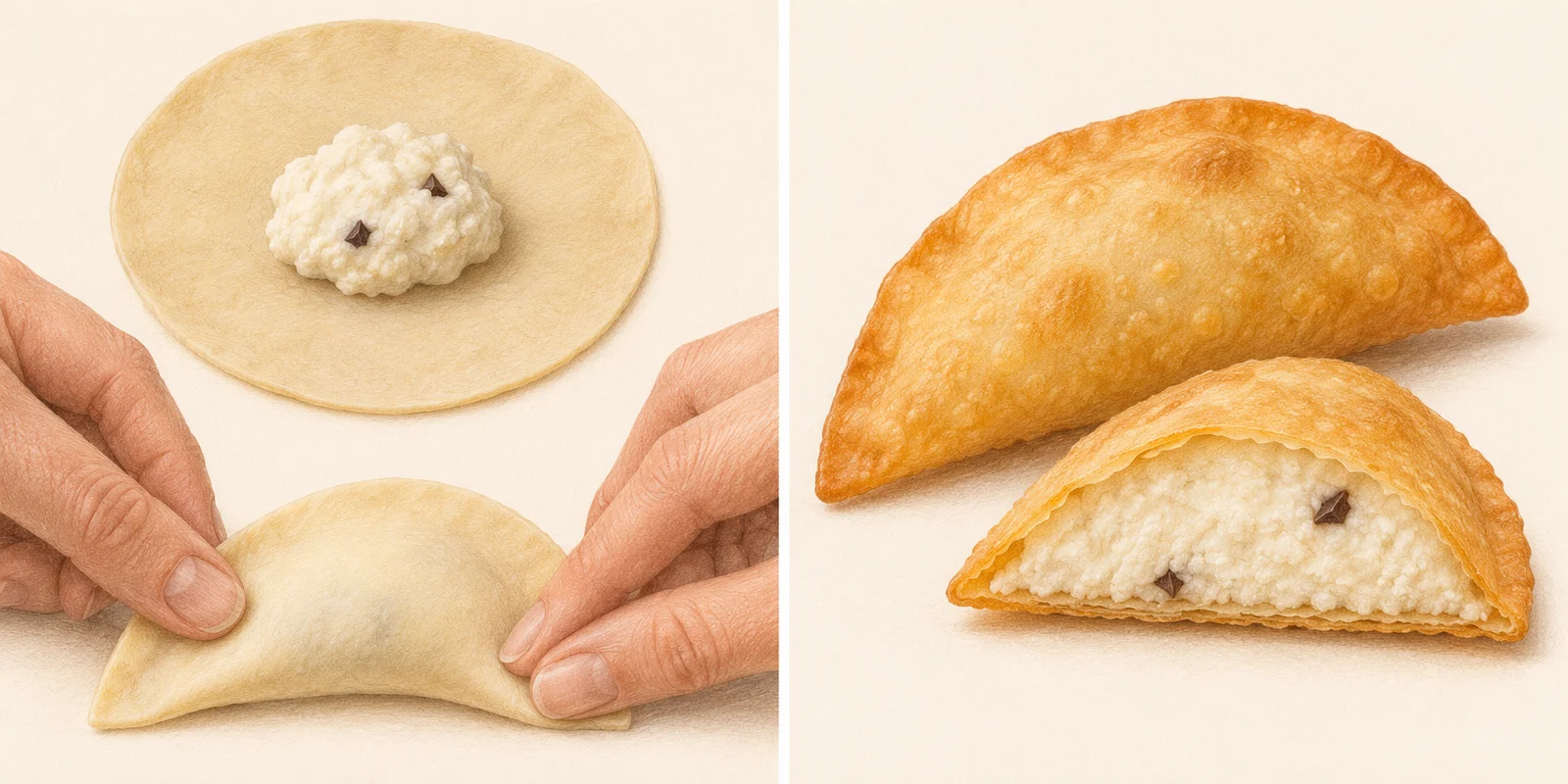
A Filling You Cannot Know Until the Half-Moon Is Opened
The chickpea half-moons of the Palermo area look from the outside much like Trapani’s fried pastries. In the western example in the regional source, a chickpea purée is mixed with dark chocolate, honey, cucuzzata (candied long gourd), and cinnamon, and the shell uses lard, honey, and white wine. Some formulas let this dough rest for at least 3 hours before rolling. Once the seam is closed the filling cannot be seen, but when broken open it shows a difference between a filling thickened with chickpea particles and sugar and one made of drained, sieved milk. Even when chocolate and cinnamon are used in the same way, the base of the filling’s flavor differs. Against fillings made from mashed chickpeas or thickened with chickpea flour, the Trapani style keeps the softness of drained cheese at its center. Even where powdered sugar hides the color of the fried shell, the color of a broken piece and the grain felt on the tongue show how the ingredients were arranged.
In Cassatella di Agira, from Agira in the province of Enna to the east, the half-moon is not fried in oil; the shell, made with lard, is baked in a wood-fired oven at 180 to 200 °C. Toasted almonds, cacao, toasted chickpea flour, sugar, lemon zest, and cinnamon are cooked in a pot, cooled, and wrapped in a round of dough. The regional source says 13 points are made along the edge. Even when you hold a similar half-moon, the steps that create the texture of the outside differ: frying gives an even color from contact with the oil, while the points are added before the pastry goes into the oven.
The cassatella of Catania associated with Saint Agatha is a small sweet whose round dome is covered with white icing and topped with a red cherry. Even when ricotta or chocolate is used, it can be told apart from the style wrapped in a thin half-moon shell. The large cassata, in the example from the region’s culinary source, is made by layering sponge and ricotta in a mold and chilling it, then decorating the outside with green almond paste and the surface with candied fruit. When you hear the name cassatella, looking at the place name together with what holds the milky filling, whether thin dough, sponge, or icing, tells you what the piece in your hand will look like.
Fried in Spring, Eaten at the Town Bar
The traditional food register for Calatafimi says the pastry originated around 1700 and was made especially at Carnival and Easter. This is a modern register recording local tradition; no contemporary document showing the kitchen procedure of that year is cited. Because Sicily also has cassatelle baked at Easter, as in Ragusa and Modica, the same spring-festival name alone cannot distinguish them from a record of fried half-moons. The Ragusa-Modica style in the regional Terrà has the dough rolled to about 2 mm, circles of about 15 cm cut, and the edge raised and pinched about every 2 cm. Ricotta is put in through the open top, and the pastry is baked at 180 °C for about 20 minutes, so the milky filling is not closed inside a half-moon but visible from above. In a spring kitchen, even with the same dairy product, what reaches the table is either an open pastry like a small sun or a closed, fried half-moon. AIES also mentions Carnival and Easter, while noting that today the pastries are found throughout the year.
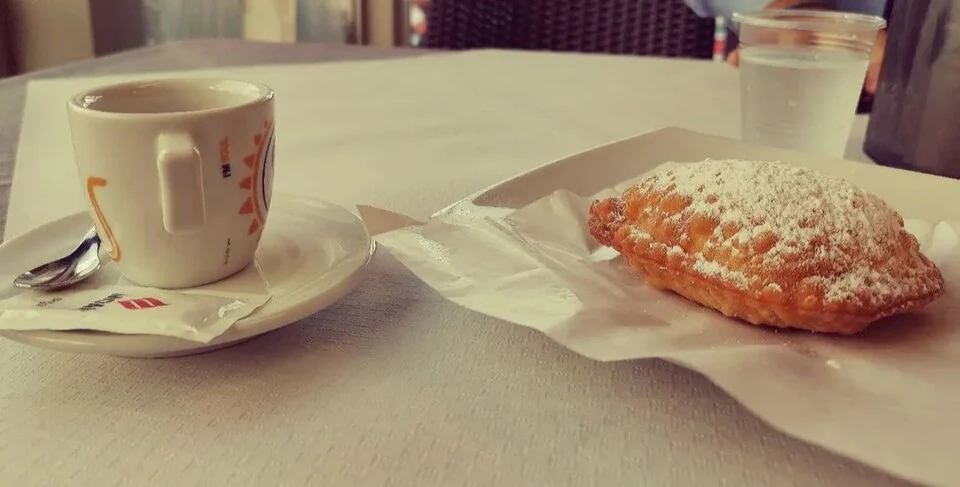
To make many for a spring gathering, you cut and line up the circles, divide the filling, close the edges, and put the pastries into the oil in turn. Because the powdered sugar goes on last, a little sweetness is added even to the shell held in the hand. They can be served one at a time in an everyday bar because there is no baked base to cut up according to the number of guests; each is already a single package from the making stage. When you taste the thin shell and the milky filling, eating the rim and then the center shows that the sugar is both outside and inside. As another way of serving, AIES names the sweet Malvasia delle Lipari passito made in Salina, the island to the north. The Marsala in the dough becomes the fragrance of the shell, and a wine served in a glass alongside can be matched at the table with the cinnamon and orange notes.
A Wrapper of the Same Name, Set in Broth
Around Erice there are also savory versions, filled with meat ragù or ricotta, boiled in broth and served as the first dish of a meal. Where a fried sweet drives moisture out from the surface, in a broth dish the shell takes in the liquid around it. There is also a Trapani example of ricotta wrapped and served in fish broth; even though the same dairy product goes in, the texture asked of the shell as it enters the mouth differs from that of a half-moon coated in powdered sugar and picked up by hand. A parcel floating in broth is taken up with the soup on a spoon, while a powdered-sugar half-moon is held by the end and the shell broken. At a restaurant and at a bar serving sweets, you may see the same place name and the same name for the pastry yet be brought a different dish.
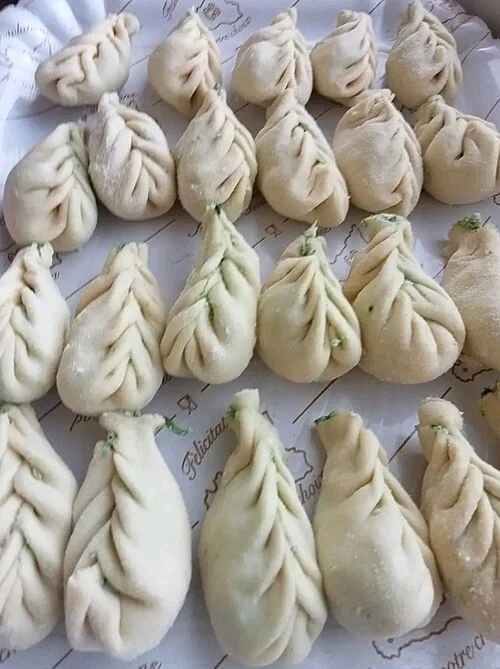
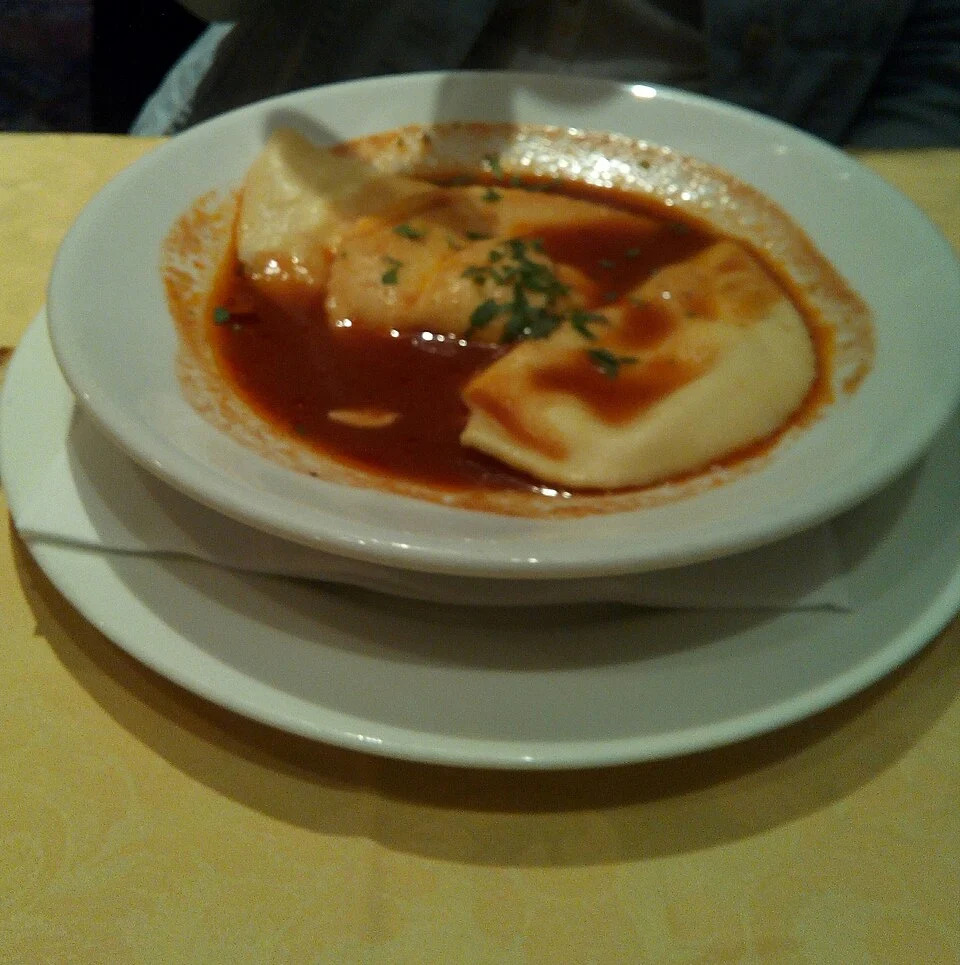
When the edge of a fried half-moon is broken, you can see where the thin shell snaps and where the white filling shows at the center. In versions with cacao added as pieces, dark spots remain on the white surface. Eaten warm, the crispness of the shell and the softness of the milk arrive together, so a single bite lets you trace the difference in method from the similar-looking oven-baked chickpea filling and from the broth dish that wraps the same milk.
Glossary
- Ricotta
- A dairy product made by heating whey and similar liquids. When used as a pastry filling, it is drained and combined with sugar.
- Marsala
- A fortified wine of western Sicily. In the AIES recipe it is mixed into the thin shell, not the filling.
- PAT (Prodotti Agroalimentari Tradizionali)
- An Italian category for traditional agri-food products. In the regional source, several pastries with similar names are listed separately.
- Cucuzzata
- Candied long gourd. It is recorded as an ingredient of the chickpea filling in western Sicily.


