


SweetloreEncyclopedia of World Sweets (834)

Chess Pie
Chess pie
A pie of baked, set eggs and sugar, beloved in the American South
Pies / Southern United States

Chess pie is an American pie in which a filling built on eggs, sugar, and butter is baked together with the crust beneath it. When the lightly browned surface is cut, a softly set layer of egg remains in the center. Some Southern recipes add a little cornmeal and balance the sweetness with vinegar or lemon. The same name appears in old sources, yet a Texas contribution from 1866 sprinkles nutmeg on top, while a Boston cookbook from 1884 covers the pie with meringue. There are many choices in what forms the top and where the eggs go.
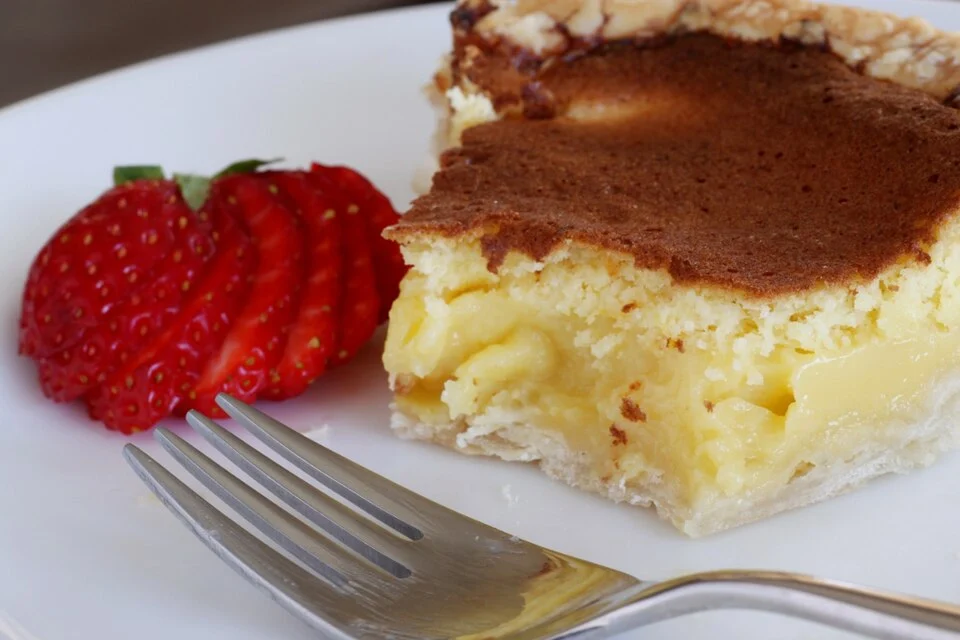
Pour the Egg Mixture into the Crust and Bake Until the Center Sets
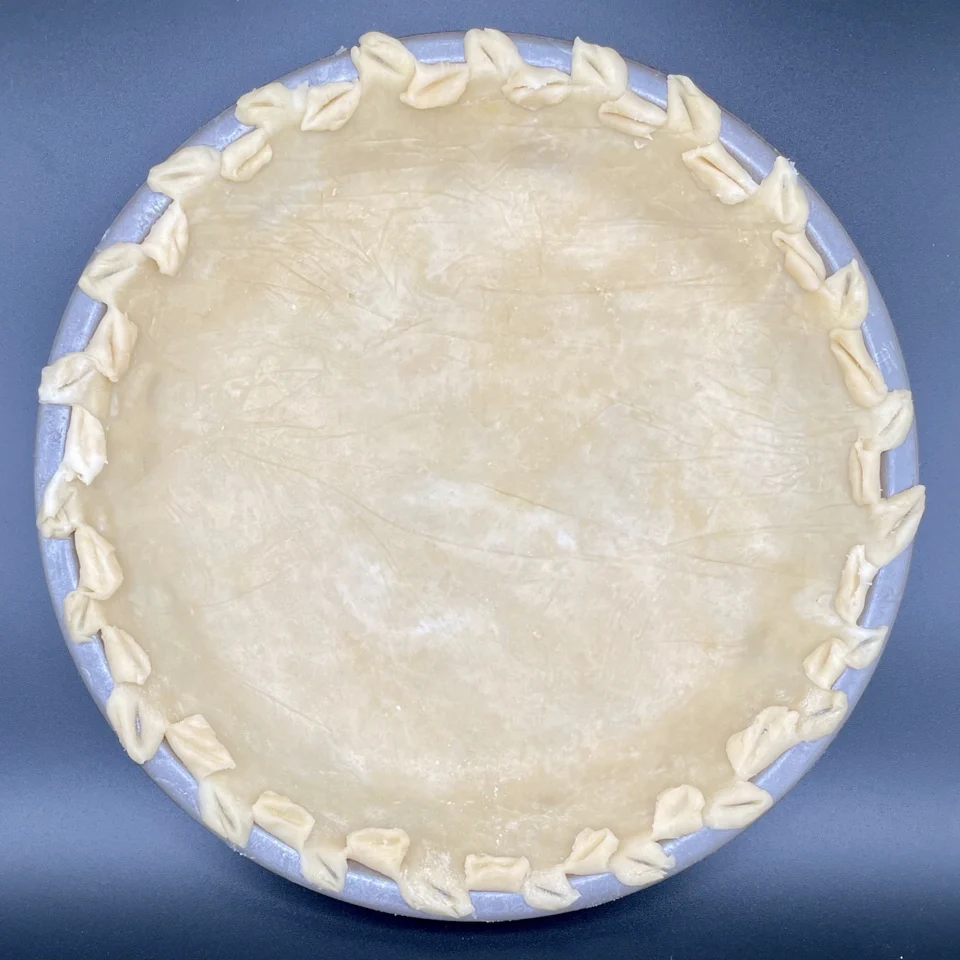
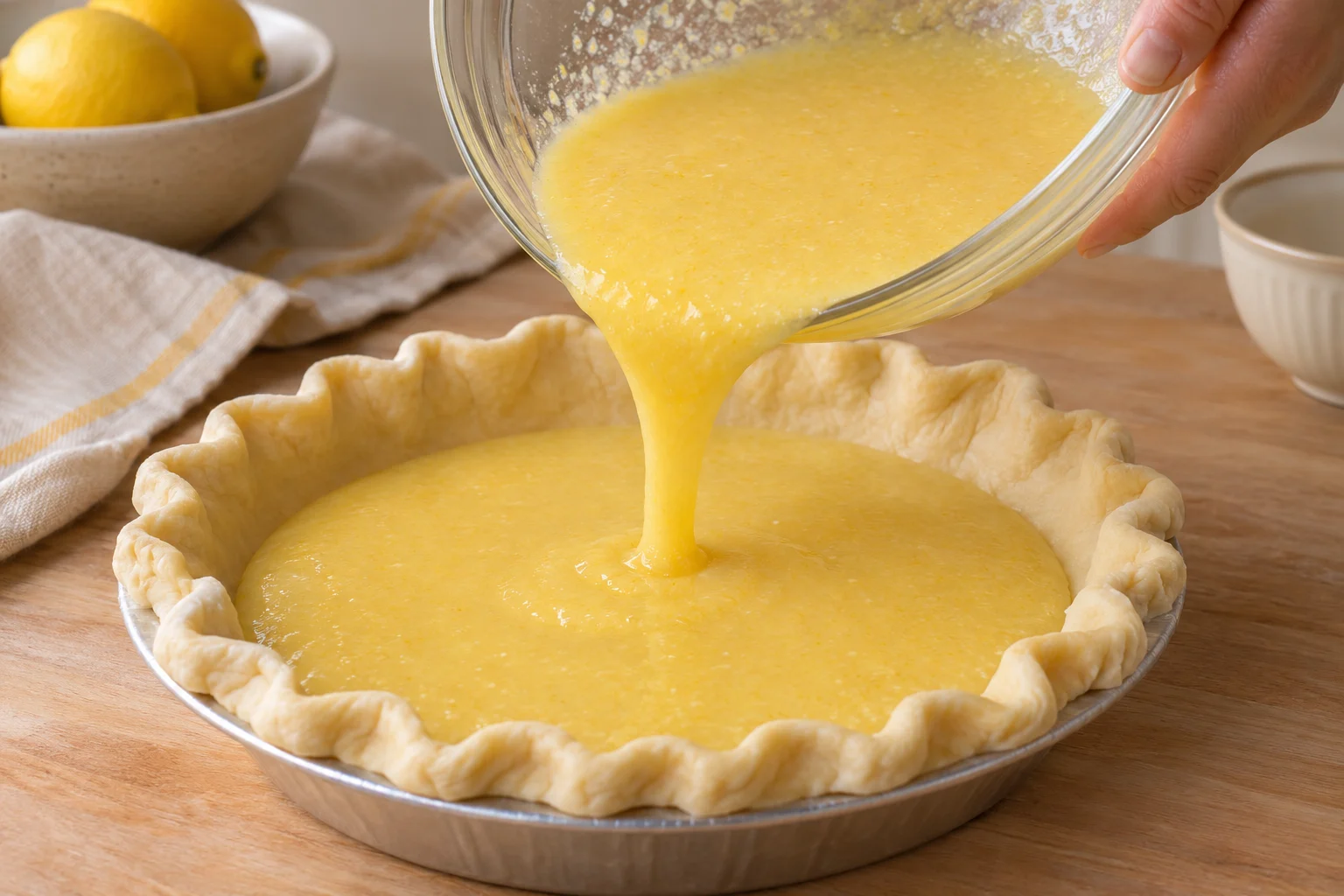
In King Arthur Baking’s lemon version, melted butter, lemon juice, and eggs that have been mixed beforehand are added to yellow cornmeal, cornstarch, sugar, and salt. Cornmeal is dried corn that has been ground, and cornstarch is the starch extracted from corn. In this example both are stirred into the filling. There is no step of placing pieces of fruit or nuts as a separate layer; the lemon’s fragrance and tartness run through the whole filling. Before baking, the crust-lined dish is placed in the refrigerator, and the filling is made and then poured into the chilled crust.
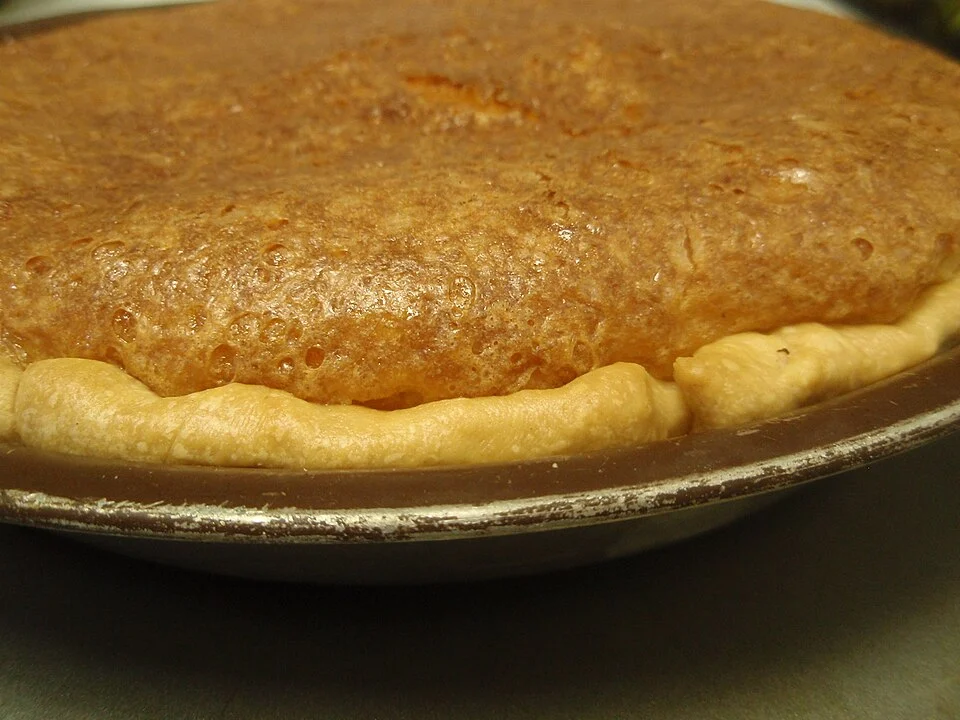
For the crust, use a pan no more than 9 inches (about 23 cm) in diameter and 1.5 inches (about 3.8 cm) deep. Chill the dough once, roll it into a rectangle, fold it in thirds like a letter, turn it, and fold it in thirds again. Bake the pie, in its crust, on the lower rack of a 375°F (about 191°C) oven for a guideline of 45 to 50 minutes. What to check is a golden-brown surface and a filling that has come together through the center. The James Beard Foundation presents it as a custard-like pie thickened with cornmeal. The browned surface and the soft egg layer beneath it come from the same filling but differ in texture on the palate. The pie is cooled before slicing so that the crust and the inner layer can be lifted out together as one slice.
A Household Recipe with Vinegar, and a Recipe That Toasts the Cornmeal
In a booklet from the Sebastopol House, a historic site in Texas, butter, sugar, and eggs are beaten until fluffy, and cornmeal, white vinegar, and vanilla are added. The mixture is poured into a raw crust in a deep dish and baked at 425°F (about 218°C) for 10 minutes, then at 350°F (about 177°C) for about 30 minutes. The booklet says to shake the pan gently and watch for the point at which the center no longer moves, and explains that the filling firms up further as it cools. The recipe appears alongside an account of a pie eaten in local homes, but the original family’s recipe has been lost, and what appears here is the recipe the booklet offers in its place.
The method of Alma Ruth Bond, who was born in Kentucky and moved to Akron, Ohio, in the 1920s, is likewise an example of a family’s taste crossing state lines. The family record in the same magazine also mentions that her husband, Durbert, got a job at Goodyear, and the family was one of the Southern families that moved to Akron looking for work in the rubber industry. The procedure printed in the 2023 Ohioana Quarterly mixes sugar, eggs, and vanilla, adds vinegar, melted butter, and cornmeal, and pours the mixture into an 8-inch (about 20 cm) dish. It is baked at 350°F (about 177°C) for 10 minutes, then the oven is lowered to 200°F (about 93°C) and the pie is heated until it has color and the center is set. Although vinegar is added, as in the Texas method, the initial heat and the temperature after the drop partway through are not the same.
The procedure from Anson Mills in South Carolina includes a step in which only the meal is heated first. Fine cornmeal is toasted in a skillet over fairly low heat to bring out its aroma without letting it take on color. Warmed milk and butter are added little by little to the eggs and sugar, the mixture is strained, and white or apple cider vinegar is stirred in. The toasted meal is combined immediately with that egg-and-milk mixture. Because the crust is blind-baked and used hot, the temperature at which the filling is poured also differs from the chilled crust of the lemon version and from the raw crust used by the Bond family. In an oven at about 177°C, the pie is first set on a pizza stone on the lower rack, moved to the upper rack after 20 minutes, and baked a further 5 to 8 minutes, until the surface shows scattered spots of browning and the center is set. Heat is used again just before the filling goes in: the cornmeal is toasted for about 5 minutes, without letting it brown. The baked pie is cooled to room temperature on a rack and served with lightly sweetened whipped cream or seasonal fruit.
Nutmeg Grated on Top in 1866, a Topping of Beaten Egg White in 1884
On page 365 of the October 1866 issue of American Agriculturist, Mrs. Samuel P. May of Grimes County, Texas, sent in a method for "Chess Pie." For two pies of ordinary size, it uses eggs, sugar, cream, butter, and flour. The mixture is poured into a crust-lined plate and nutmeg is grated over it, with no top crust. When the pie has browned, the center is tested with a spoon, as for a custard. It contains no lemon juice, vinegar, or cornmeal; it is a layer of egg, including cream, scented with nutmeg. What can be known is that the same name and method reached readers in 1866, and the county where the contributor lived. That is different from a record showing who invented the pie or in what year.
In Mary J. Lincoln’s Mrs. Lincoln’s Boston Cook Book of 1884, egg yolks are beaten and sugar is added, then butter creamed to a soft consistency and vanilla are mixed in. A plate is lined with puff paste and the yolk layer is baked; then beaten egg whites, with powdered sugar and lemon juice added, are spread over the surface. The foam is lightly browned, and the pie is cut while still hot and brought to the table cold. Mrs. May uses eggs on the inside and sprinkles nutmeg on top, but Lincoln handles the yolks and whites separately, so the blade cutting the surface first enters the foam layer. This is also a finish unlike the modern recipes that mix lemon through the whole filling, and unlike the Bond family’s pie, in which the filling itself browns.
The "Jeff Davis Pie" in a 1921 home cookbook from Fredericksburg, Texas, also spreads a topping of beaten egg white over a baked egg-yolk layer. Mrs. Ed Winkel adds milk and a flavoring of choice to egg yolks, butter, sugar, and flour, pours the mixture into a crust, bakes it, and then spreads a foam of egg white and sugar over it and browns it. Its filling of milk and flour differs from Lincoln’s recipe, but the structure, with yolks inside and whites on top, is similar. It is a case in which a sweet under a different name takes a form more like Lincoln’s than another method that shares the name does.
A Close Relative Thickened in a Pot
"Transparent Pudding" in the 1860 edition of Mary Randolph’s The Virginia Housewife adds sugar, melted butter, and nutmeg to well-beaten eggs and thickens the mixture in a pot while stirring. It is then poured into puff paste laid in a shallow dish, baked for about 30 minutes, sprinkled with sugar, and served warm. Holding eggs, sugar, and butter in a crust is close to chess pie; compared with Mrs. May’s method, no dairy such as cream is added, and the mixture is thickened first in a pot.
Dixie Cookery, published in 1867 by Maria Massey Barringer of North Carolina, also has a pudding of the same name. Eight eggs are beaten well, half a pound each of sugar and butter and a flavoring are added, and the mixture is put on the fire. After it has thickened it is cooled, poured into a crust-lined plate, and baked for 30 minutes over a gentle heat. Randolph also cooks in both the pot and the oven, but Barringer builds in a cooling step between the two heatings. Compared with Mrs. May’s pie, in which the mixed eggs go straight into the crust, the temperature and firmness of the filling when it meets the crust differ.
Under the same heading in The Carolina Housewife, candied fruit and the like are placed on the bottom of a deep dish, and beaten egg yolks, sugar, and butter are layered over them. After baking over gentle heat, the pie is turned over twice while being moved between dishes, so the fruit is again at the bottom at the table. An icing is applied after it has cooled completely, and the spoon takes up everything from the top surface down to the fruit beneath. Randolph and Barringer pour eggs in a thickened state into a pie crust. The example in The Carolina Housewife has a different structure, and the shared heading of a transparent pudding alone does not settle that all three were forerunners of chess pie.
Well-Known Places, and Households That Remembered the Name
The Library of Congress’s introduction to the history of pie links Kentucky with chess pie. The Bond family, who moved from Kentucky to Ohio, also passed down a recipe with vinegar and cornmeal. On the other hand, the 1866 contributor was in Texas, and the 1884 book was published in Boston. Although there may be one answer to where in the South the pie is best known, the places where the people who wrote down the methods lived, and where their writing could be read, were not limited to a single state.
In The American Home in 1938, Marion W. Flexner recalls that when she tried to make the chess pie she had eaten in New England, the people who gathered told her of several different recipes. Some used pecans, black walnuts, or jelly, and a guest living in Alabama said that a little cornmeal is added. They cannot be called the representative recipes of each state, but they preserve how, for a sweet with the same name, different ingredients come up depending on the memories of those who ate it.
As for the origin of the name, there are accounts that link it to the pie chest, a cupboard for storing pies; to a word for a sweet resembling cheese; and to chestnut flour. Another theory ties it to the answer "jes’ pie" (just pie) given when someone asked what kind of pie it was. In a report by WFDD, the public radio station in North Carolina, the cook Don McMillan said that when he was a child, before refrigerators became common in kitchens, his family stored pies and bread together in a cupboard. That the household had a pie chest, and that the sweet’s name arose from it, would need separate evidence. From the 1866 pages, what can be seen is at least that the spelling "Chess Pie" was in use by then. A slice of 1866 with grated nutmeg, a modern slice with lemon mixed in, a slice of the Bond family’s pie with vinegar and cornmeal: even under the same name, differences among the makers show in the crust and baked surface met first, the egg layer beneath, the aroma that reaches the nose, and the tartness that stays in the mouth.
Glossary
- Cornmeal
- Flour made by grinding corn. In chess pie examples, a small amount is added to the filling of eggs and sugar.
- Cornstarch
- The starch of corn. In King Arthur’s lemon version it is used together with cornmeal.
- Puff paste
- Here, the pie dough that the cookbooks of Lincoln and Randolph specify for lining the pan.
- Transparent pudding
- In Randolph’s cookbook, a sweet in which eggs, sugar, and butter are thickened in a pot, then poured into pastry and baked.


