


SweetloreEncyclopedia of World Sweets (834)

Shoofly Pie
Shoofly pie
A molasses-and-crumb pie handed down in Pennsylvania
Pies / United States, Pennsylvania

Shoofly pie is a molasses pie from the tables of the Pennsylvania Dutch, the German-descended people of Pennsylvania in the United States. A filling made with dark molasses is poured into a pie crust set in a pan, topped with crumbs made of flour, sugar and fat, and baked. When cut, some pies keep a sticky layer just above the bottom crust, while others have a filling baked firm and close to cake. Either way, a slice with coffee has long been eaten from the morning on.
A Raw Crust or a Pre-Baked One to Receive the Liquid
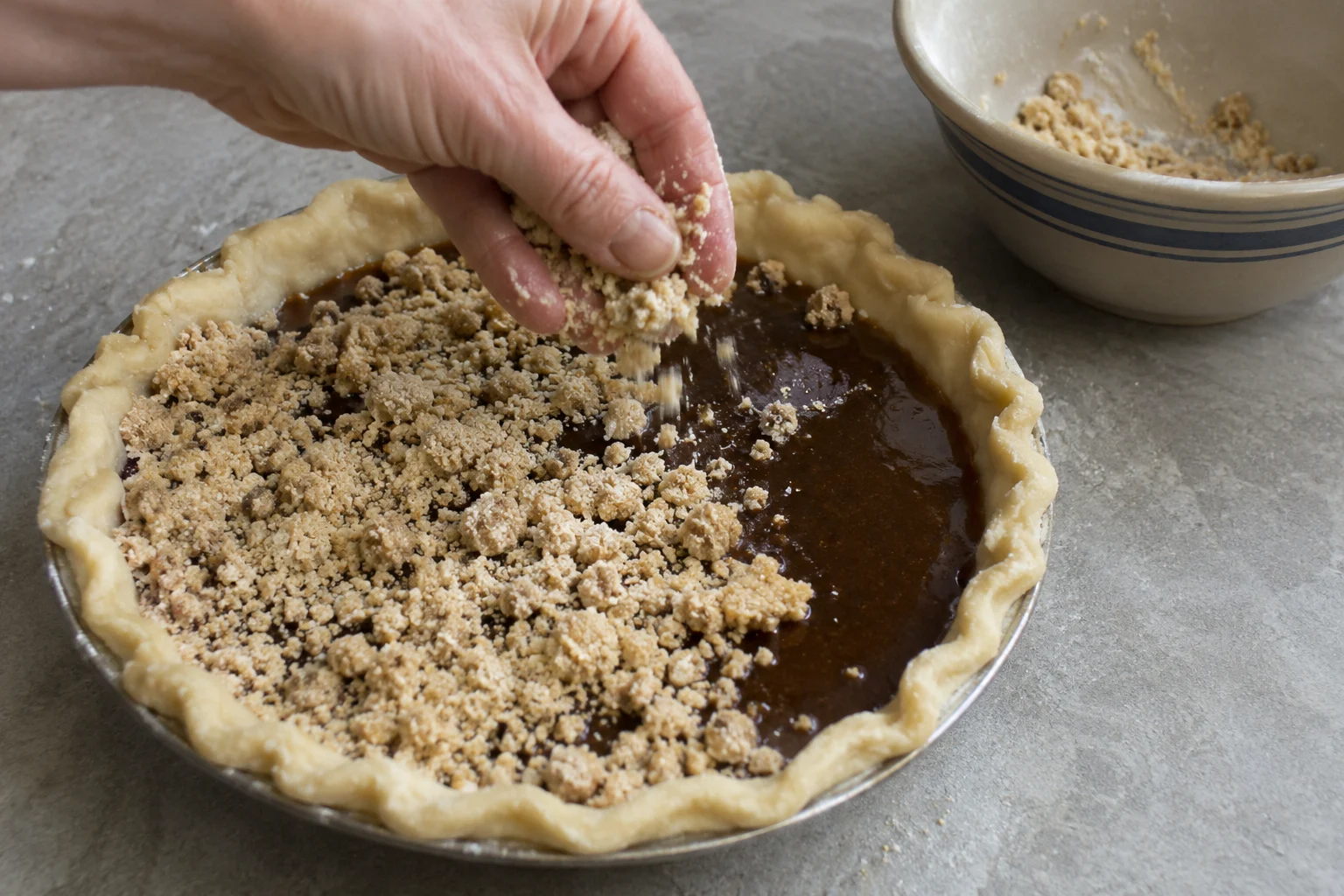
James Beard’s method starts by fitting unbaked pie dough into the pan. The base of the filling is light corn syrup and dark molasses, combined with baking soda dissolved in boiling water. The cooled liquid is poured over the dough, and a crumb topping of flour, brown sugar and shortening, mixed coarsely, is spread over it. When the pie goes into the oven, it consists of a single continuous outer crust, the liquid inside it, and dry crumbs on top.
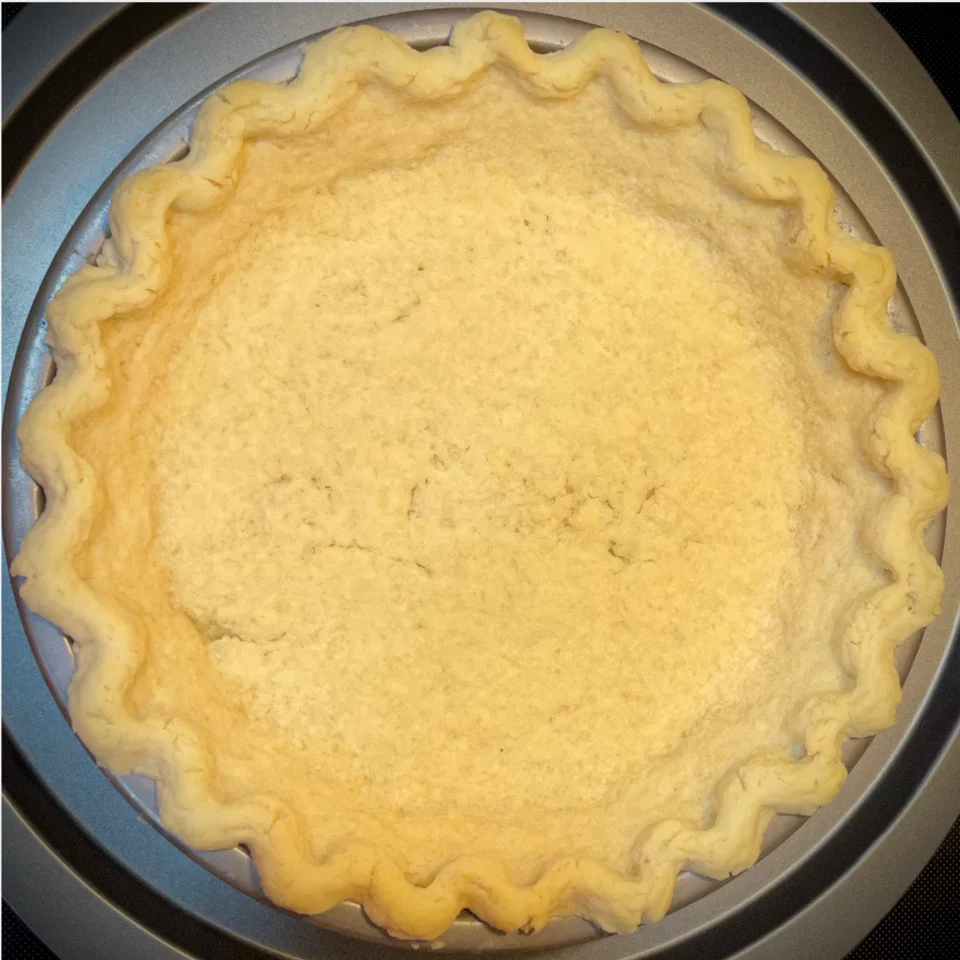
The method presented by the Lancaster County tourist bureau bakes the crust alone first. Dough fitted into the pan is covered with foil and baked at 350°F (about 177°C) for 10 minutes. The cover is removed, the crust is brushed with egg yolk, baked for 5 more minutes, and then cooled. This crust, already cooked, receives the molasses liquid, which has been cooled to room temperature. Besides molasses, the liquid contains egg and flour, and it is topped with a crumb mixture into which cold butter has been cut. Set beside Beard’s example, in which the liquid goes into an unbaked crust, the two look alike in having three layers, but the crust is in a different state of firmness at the moment it meets the molasses.
Beard bakes the pie at 375°F (about 191°C) for the first 10 minutes, then lowers the oven to 350°F (about 177°C) and bakes it for 30 to 35 minutes. To judge doneness, he gently shakes the pan and checks whether the filling has set. He advises avoiding overbaking and serving the pie cooled. In the Lancaster County method, after the liquid and crumbs go in, the pie is baked at 350°F for 45 to 50 minutes, until the surface is golden brown and the filling has set. The color of the surface, the way the filling moves when the pan is shaken, and the clock are each separate cues.
Where the Crumbs Go Changes the Cross-Section
The crumb topping is made by cutting fat into flour and sugar to form coarse crumbs. Beard uses a fork or a pastry blender; in the method handed down in the family of Jason Lewis, a Pennsylvania cook, the mixture is worked by hand or with the same tool until it resembles coarse sand. The outer crust, by contrast, gathers flour and fat together and is rolled into a single sheet that follows the pan. Although the ingredients are similar, here the aim is loose, separate crumbs. Whether all of those crumbs go on the surface or some are mixed into the molasses liquid changes the boundary visible in the cut slice.
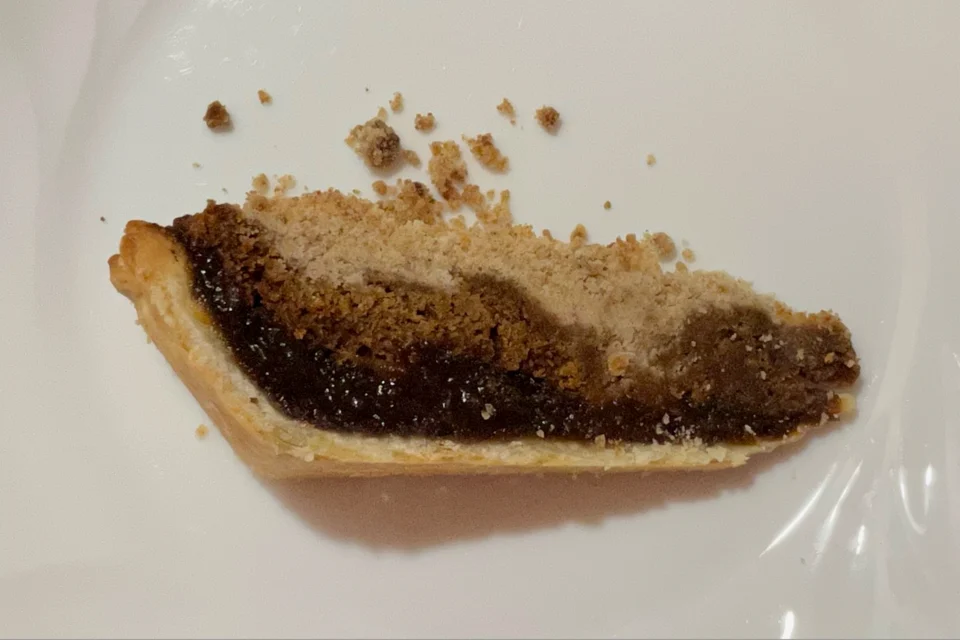
A pie in which a sticky layer of molasses remains just above the bottom crust is called a wet bottom. A dry bottom is one in which the filling bakes firm throughout, close to cake. The "bottom" in these names refers not only to the crust itself but also to the state of the molasses layer just above it. Both have crumbs on top, and from the outside they can be hard to tell apart. Pressing in a fork shows the difference: either the lower layer is sticky and reaches the mouth separately from the crumbs, or it breaks apart together with them as a molasses-soaked baked batter.
The wet bottom presented by the Messiah University library in Pennsylvania is a formula passed along in the state’s Mennonite church, from Ron and Rhoda Hershey to a faculty member. From the crumbs made at the start, the portion for the topping is set aside. Molasses, syrup, egg and hot water are added to the rest, along with baking soda dissolved in separate hot water, and the mixture is poured into a raw pie crust. Even with egg and some of the crumbs in the filling, this formula leaves a sticky layer at the bottom.
In the Lewis family’s method, the filling and the crumbs are layered in alternating small amounts, and the pie is finished with a covering of crumbs. The guide is 35 to 40 minutes at 350°F, baking until a bamboo skewer or similar inserted comes out almost dry. This differs from Beard’s method, in which the liquid is poured in at once beneath the crumbs and doneness is judged by how the pan moves, both in the way of layering and in how doneness is read. How far the crumbs sink into the liquid, whether egg is added, and how much the molasses liquid is thinned also vary from cook to cook, so baking time alone does not determine the texture.
A cookbook compiled in the 1980s by a women’s club in Middletown, Pennsylvania, includes a version that divides the crumbs in two and uses them both at the bottom and on top. Cinnamon and allspice are added to flour, brown sugar and shortening, and half is first placed on a raw pie crust. A liquid of molasses, boiling water, baking soda and egg is poured over it, and the remainder is laid on top. The guide is 35 minutes at 400°F (about 204°C) followed by 25 more minutes at 350°F (about 177°C), and the book says a deep pan should bake a little longer. This too is an example of a wet bottom that differs from the method of simply scattering the crumbs over the surface.
The Official Pennsylvania Dutch Guide-Book, published in 1962 and revised in 1972, features both people who want to dunk the dry kind in a drink and people who prefer the sticky kind. At Messiah University, a faculty member used a wet bottom handed down from home as a tasting sample in class, and also brought it to the library to share at a coffee break. Both a piece for dunking in a drink and a soft piece served with coffee are preserved in regional records.
How Dark the Molasses Is, and How Bubbles Are Introduced
Molasses here means the thick syrup produced in the course of sugar manufacture. Regional guides distinguish between table molasses, which goes with buttered bread, fried foods and fritters, and baking molasses, which is used in cookies, cakes and pies. Beard combines dark molasses with light corn syrup. A cookbook published in 1915 thins the baking molasses with hot water. While keeping the flavor of molasses, cooks varied in which syrup went into the liquid before baking and how concentrated it was.
The order in which baking soda is added is not uniform either. In the 1915 example, a few drops of vinegar are used to dissolve the baking soda, which is then combined with molasses thinned with hot water. In the Lewis family’s method, an acidic powder, potassium bitartrate (cream of tartar), is used together with baking soda, while Beard first dissolves the baking soda in boiling water and then adds the syrup. The Pacific Science Center uses this pie as a subject to explain that mixing vinegar and baking soda releases bubbles of carbon dioxide. Comparing the methods, they differ in what dissolves the baking soda and at which stage the acid is combined.
The 1915 Book That Called It "Pebble Dash"
In Edith M. Thomas’s cookbook Mary at the Farm, the 1915 edition carries the heading "Pebble Dash or Shoo-Fly Pie." In the story, Aunt Sarah lines three smallish pans with dough. She rubs flour, brown sugar, butter and lard together with her fingers into crumbs, divides among the pans a liquid of molasses, hot water and baking soda dissolved in vinegar, and then sprinkles the crumbs on top. It bakes for about 30 minutes in a moderate oven. The author describes the baked result as resembling a molasses cake, and placed it in the pie chapter because it is made with a crust.
In the same book, "Vanilla Crumb Crust" briefly cooks molasses, egg, sugar, flour and water, lets the mixture cool, flavors it with vanilla, and pours it into a shallow crust, over which separately made crumbs are scattered. "Rivel Kuchen" spreads a thick layer of hand-formed crumbs on a crust, with molasses poured over the top if desired. Within a single book, differences remain: molasses poured beneath the crumbs, poured over the crumbs, or combined with egg and cooked separately in another pot.
The William G. Pomeroy Foundation, which erected the historical marker in Lancaster, presents an account that seeks a precursor in the Centennial Cake, associated with the 1876 Centennial Exposition in the United States. According to the foundation, a person who contributed a recipe to the agricultural magazine Pennsylvania Farmer on May 21, 1927, said that a grandmother had brought it back from the 1876 exposition. What can be confirmed differs between a recipe from the time of the exposition and a family memory that appeared in print half a century later. The foundation also notes that the name appeared earlier, in a Wilkes-Barre newspaper on August 10, 1881, and that a formula was published in a newspaper in the state capital, Harrisburg, on March 31, 1897. The 1915 book separately contains the name Shoofly and a formula, and in May 1920 Good Housekeeping named it among the state’s favorite dishes. According to the foundation, the March 1923 Ladies’ Home Journal presented it as one of the old Pennsylvania Dutch dishes. National food articles show it as a regional sweet, while texts sent from homes to farm magazines also preserve how the method was passed on.
One story about the name Shoofly is that people shooed away the flies drawn to the sweet molasses. Another comes from the regional official guide, which likens the crumbs on the surface to cauliflower, links the name to the French chou-fleur, and says the origin is unsettled. The James Beard Foundation writes that a song composed by Guy Wood, also known through Dinah Shore’s singing, spread the name of the sweet. That a name carried by a song travels far, and learning where and when the word was first used, each call for different sources.
From Greeting Cards to the Coffee Break
The Pennsylvania German Cultural Heritage Center at Kutztown University holds the greeting cards of Paul Wieand, who conveyed regional folklore. No. 80 in the online exhibit has a recipe for shoofly pie together with a linoleum block print. The formula alternates a molasses liquid and crumbs in four pans about 15 cm in diameter and bakes them at about 177°C for about 20 minutes. The exhibit also shows a newspaper advertisement for the same person’s cards and a card featuring another regional sweet. Besides cookbooks, there was another way of handing on a formula: on a small card, together with regional words and prints.
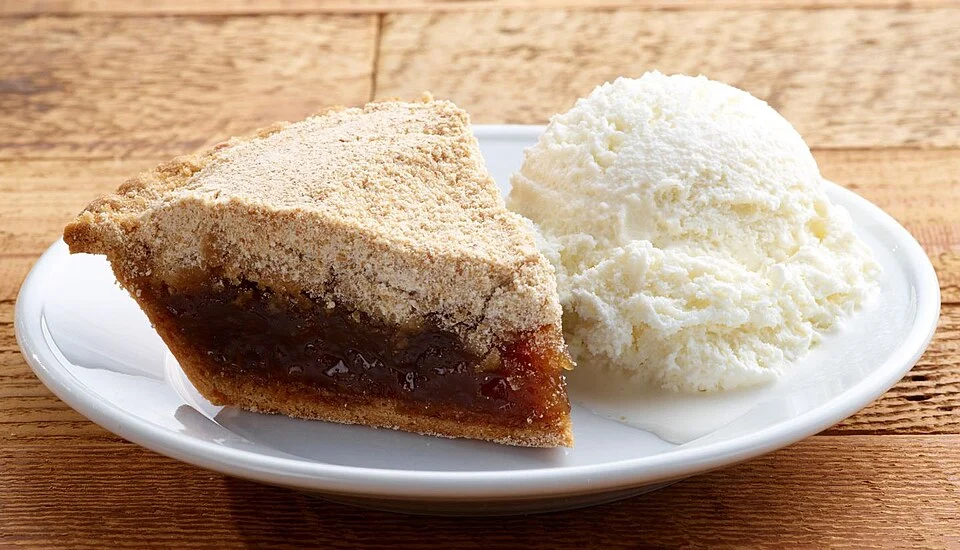
The Lancaster County tourist bureau publishes a formula for home cooks and also guides visitors to compare the pie at shops in the county. Lewis conveyed his family’s way of layering in a state food-culture project, and a university library recorded a formula received through a church. There is the custom of taking it with coffee in the morning, and some shops serve a plate with ice cream alongside. How the surface crumbs break apart, the aroma of the molasses, and the stickiness or firmness near the crust all come into play. When the sweet of the same name is compared at homes and shops, how the liquid and crumbs were layered shows in each slice.
Glossary
- Pennsylvania Dutch
- The name for the German-descended people of Pennsylvania and the culture inherited from them.
- Molasses
- Here, the molasses produced in the course of sugar manufacture. An older regional guide distinguishes between table use and baking use.
- Rivel
- In the 1915 cookbook, a term for small crumbs made by working flour, sugar and fat together by hand.
- Wet bottom / dry bottom
- A pie in which a sticky layer remains near the bottom, and a pie baked firm through, close to cake.


