


SweetloreEncyclopedia of World Sweets (834)

Mississippi Mud Pie
Mississippi mud pie
Two mud pies: baked chocolate and frozen ice cream
Pies / United States, centered on Mississippi

Mississippi mud pie is an American chocolate dessert. In the baked version, eggs and chocolate are mixed and baked, leaving a soft, sticky center under a crisp top. In the frozen version, fudge and coffee ice cream are layered in a crust of crushed chocolate cookies. The dark surface of the baked pie has long been compared to Mississippi River mud cracked in the sun. Both versions are dark, but the steps that determine the temperature and texture of each bite are different.
Soft Beneath a Cracked Surface
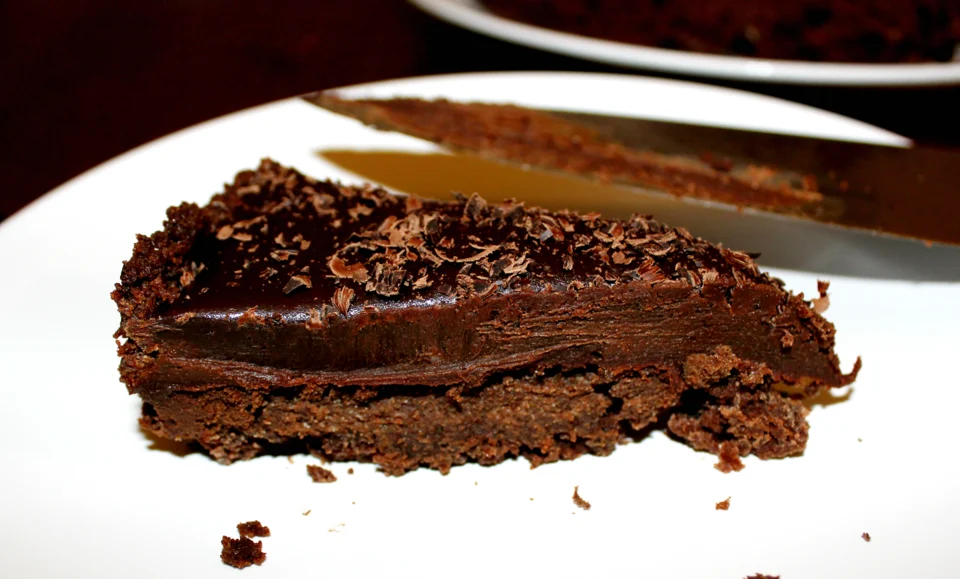
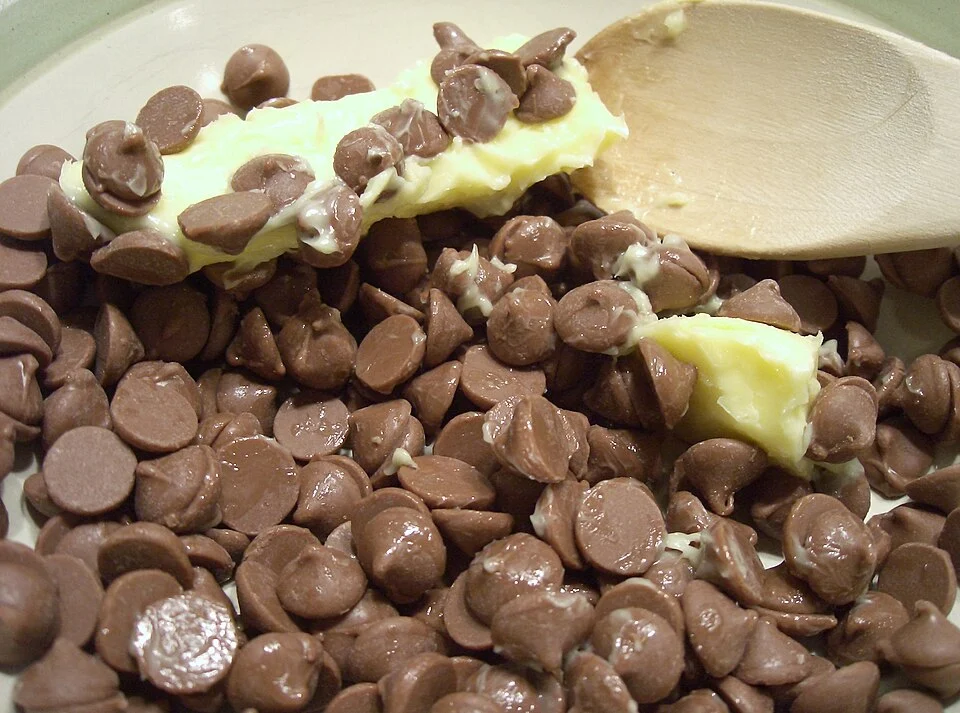
Dorothy Ann Webb, a Mississippi native, lines a 9-inch (about 23 cm) pan with a crust of flour and butter. Cold water is added a little at a time, and she stops once the flour comes together. The crust contains no chocolate, so when the baked pie is cut, the color is concentrated in the filling above it. For the filling, butter and unsweetened chocolate are melted gently in a pan. Separately whipped eggs are mixed with corn syrup, sugar, and vanilla, and the melted chocolate is stirred in as it is poured. The mixture goes into the crust all at once, so there is no step of stacking separate fillings before baking; the flour crust receives a single continuous layer.
Webb’s recipe bakes at 350°F (about 177°C) for 35 to 40 minutes. Even after the surface has a light crispness and the filling has set, the center stays soft. Craig Claiborne and Pierre Franey, who presented this version in 1981, say it can be served warm with vanilla ice cream on top, cooled to room temperature, or served cold. They explain that the cooled filling takes on a texture like that of a chocolate candy. Even for the same pie, how long it cools before serving changes how the filling holds up when lifted and how firm it feels in the mouth.
The baked pie that Mark F. Sohn describes in the Mississippi Encyclopedia is likewise made by pouring sugar, melted butter, chocolate, and eggs into a crust and baking over gentle heat. The dry, cracked top has some bite, and the center is soft and sticky when chewed. It is served with whipped cream, cooked custard, vanilla yogurt, or vanilla ice cream, and some versions add sliced banana or strawberries. With fruit, the flesh adds to an intensely chocolate bite. With strawberries, tartness also spreads from where you bite. With custard, the soft center and the egg sauce can be taken up on the same spoon.
Chill the Fudge First, Then Layer the Ice Cream
The Bon Appétit recipe, based on the 2010 cookbook Baked Explorations by Matt Lewis and Renato Poliafito, puts coffee ice cream inside the pie. The original chocolate wafers, which are no longer sold, were replaced by the editors with chocolate sandwich cookies of similar color and crunch. The cookies are ground fine, mixed with a little sugar and melted butter, and pressed onto the bottom and sides of the pan. The crust is not baked but chilled in the refrigerator. Unlike Webb’s baked crust, the outer crumbs themselves are chocolate-flavored.
The magazine recipe uses 24 cookies and 6 tablespoons of melted butter, and the bottom of a measuring cup is used to press the cookie crumbs evenly into the pan. Compared with Webb’s crust, in which a flour dough is formed into a ball, bound with water, and rolled out, the work of evening the thickness of the bottom and rim begins once the crumbs are in the pan. This crust is chilled for 30 minutes to 12 hours, so it can be made ahead. Webb’s crust uses 6 tablespoons of chilled butter and 3 to 4 tablespoons of cold water, and the chocolate filling is poured in before the dough lining the pan is baked. Even with the same amount of butter, whether it is cut into the flour cold or melted to bind crumbs changes how the crust looks as it goes into the pan.
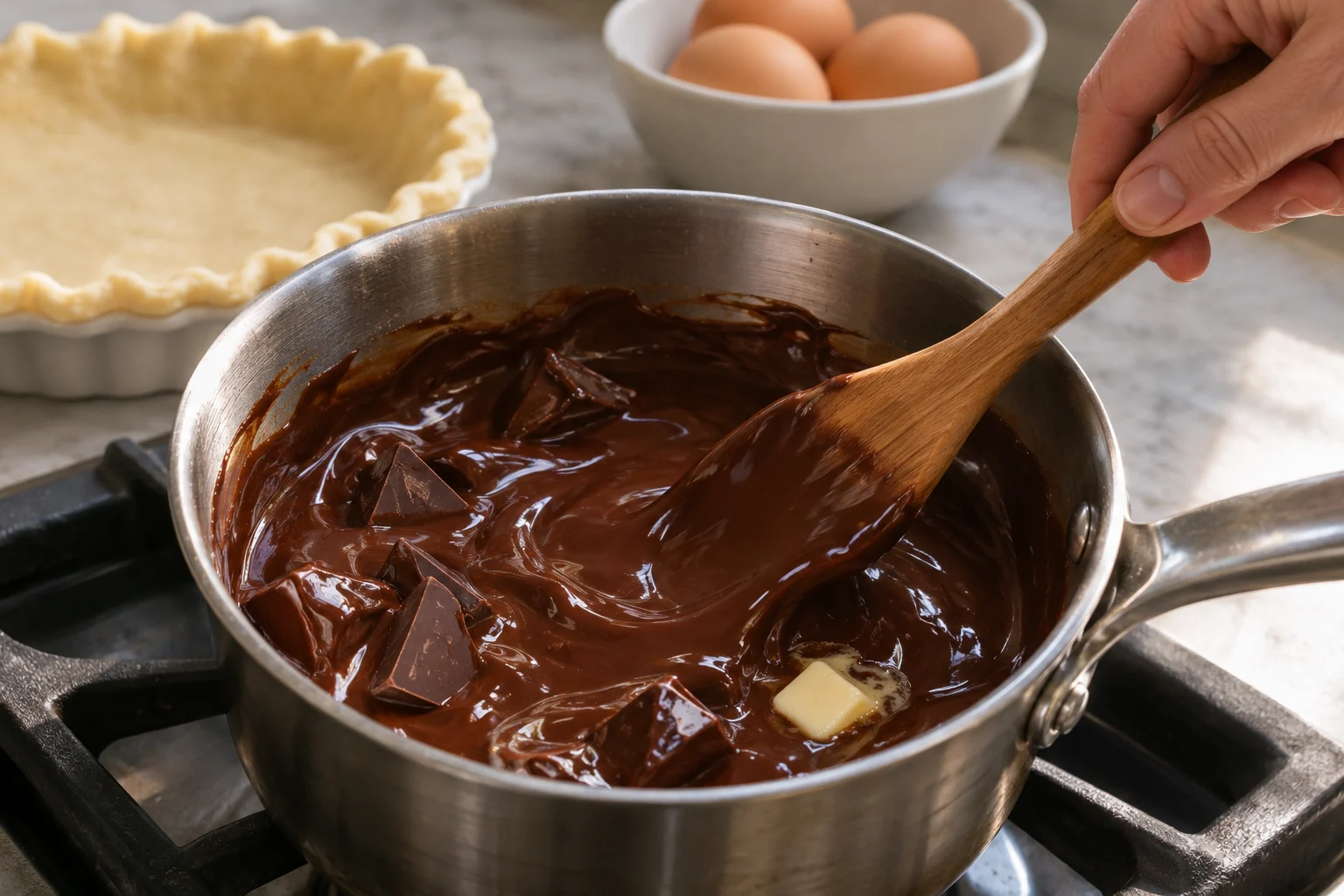
Inside the crust, a fudge is spread: chopped chocolate melted with warmed heavy cream, butter, and corn syrup, then mixed with confectioners’ sugar and bourbon. After about 2 hours of chilling, coffee ice cream, slightly softened, is smoothed over it. Because the lower layer is chilled first, the boundary between the colors survives even when the upper layer is spread with a spatula. Pecans, toasted until fragrant and chopped, are pressed into the ice cream, and the pie is frozen for 1 to 2 hours until firm enough. When it is eaten, the pieces of nut meet the teeth at the same time as the cold layers.
To finish, a separately made bourbon chocolate sauce is drizzled over the top in a lattice pattern, and the pie is chilled again to set. Cut into slices with a warmed, sharp knife, it yields the outer cookie, dense fudge, cold, smooth ice cream, and toasted pecans in a single piece. Webb’s version serves cold ice cream with a warm filling. In the frozen version, the ice cream is part of the pie, and what is warmed is the blade used for cutting. The bitterness of the coffee echoes the chocolate and bourbon, but the editors say it can also be made with vanilla or chocolate ice cream. The final freeze to set the finishing sauce is at least 20 minutes, and if the pie is wrapped, it can be assembled up to 4 days ahead. At the table, rather than allowing time for a pie fresh from the oven to cool, you keep it frozen and serve it with a warmed knife.
Pie and Cake Divided in Local Cookbooks
Barry Popik, who researches food terms, transcribes, with page and column, an entry for Olive Mae Fore’s "Mississippi Mud Pie" in a cookbook compiled in 1975 by the Marshall County Historical Society of Holly Springs, Mississippi. Crushed chocolate sandwich cookies and melted butter are pressed into a pan and chilled in the freezer, and the crust is filled with coffee ice cream. Fudge sauce is poured over the top, and the pie is frozen again until the sauce sets. Fore uses 16 cookies and chills the pressed crust for about 20 minutes. The pie, with its ice cream filling and set sauce, is presented as one suited to entertaining guests. Although the ingredients (cookies, coffee ice cream, and fudge) resemble those of the later magazine recipe, Fore puts the fudge on top of the ice cream.
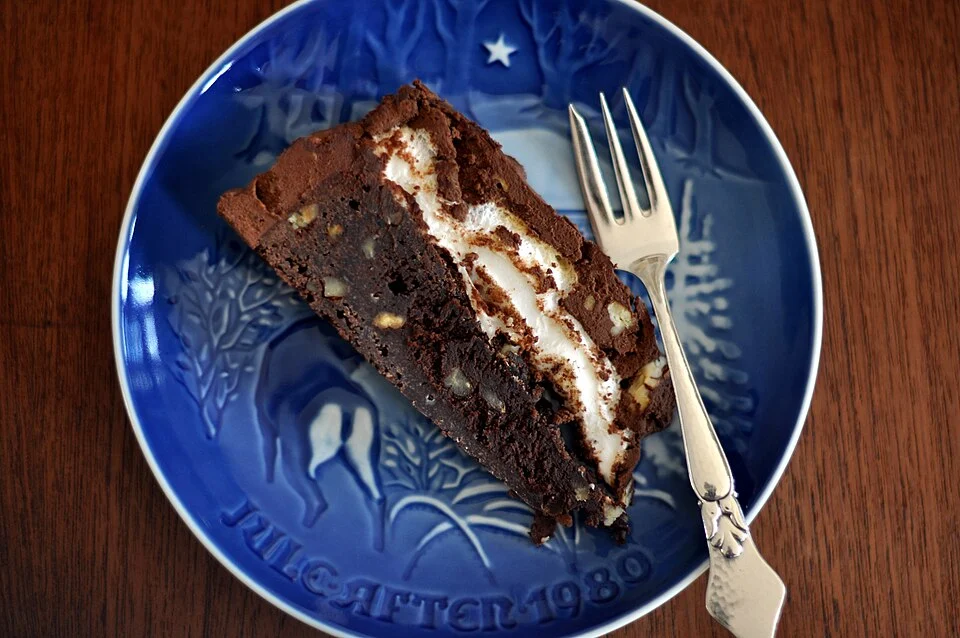
On another page of the same cookbook is a "Mississippi Mud Cake." In Popik’s transcription, its recipe of cocoa, butter, sugar, eggs, nuts, flour, and other ingredients comes with a baking time. Within a single book, the pie, with a cold filling in a cookie crust, and the cake, made by mixing flour and eggs and baking, are under separate headings. Fore’s cake bakes at 350°F (about 177°C) for 35 to 45 minutes. Small marshmallows are scattered over the still-warm cake, and an icing of cocoa, butter, milk, and confectioners’ sugar is spread over them. Picturing a slice being served to a guest makes the difference clear between a pie covered with chilled fudge and a cake whose topping is made right after it comes out of the oven.
Popik also records the ingredients and the headline of a "Mississippi Mud Pie" in the Northwest Arkansas Times of April 30, 1971. Cocoa, sugar, eggs, flour, pecans, and other ingredients can be made out, but the full method on the page and the appearance of the confection have not been confirmed. Setting the frozen pie of 1975 beside a different form printed later shows only similarity of ingredients; it does not establish that one gave rise to the other.
Texas Bakes Only the Base; Michigan Cooks the Filling in a Pan
The letter-style recipe column in The Rising Star of Texas, January 31, 1980, includes a three-layer "Mississippi Mud Pie." A base of chopped pecans mixed with margarine is baked and cooled, and cream cheese mixed with confectioners’ sugar and whipped topping is spread over it. Instant chocolate pudding made with milk is layered on top, and the remaining whipped topping and shaved chocolate go over that. Only the base is baked. Scooping from the top, you reach the soft layers of cheese and pudding, then the firm layer with pecans. In the frozen pie, where pecans are pressed into the ice cream, the nut pieces sit near the surface.
In The Observer of Michigan, December 6, 1993, graham cracker crumbs and butter are pressed into a pan and briefly baked to make the crust. Heavy cream and marshmallows are melted in a pan and combined with separately melted semisweet chocolate. Eggs are added, and the filling, made with coffee liqueur if desired, is poured into the pan and chilled overnight. Before serving, whipped cream is piped on and toasted coconut is sprinkled over the top. Both are served cold, but Fore freezes the ice cream and sauce, while the Michigan recipe lets a chocolate filling cooked in a pan settle in the refrigerator. Webb’s recipe bakes the crust and the egg layer together, and the cooling time can be chosen.
The Color of the Riverbank and a Baked Surface That Cracks
When Claiborne and Franey presented a mud pie with ice cream in a chocolate cookie crust, they wrote that recipes for pies and cakes had arrived from across the United States. Webb’s example, which they ran in 1981, differs from the frozen pie they had presented earlier in that the egg layer is set in the oven. What they had presented first was a pie using chocolate ice cream or ice cream flavored with coffee and brandy. The cake they presented, citing a recipe sent in by a reader, has marshmallows on a cocoa-and-nut batter, with a cocoa and pecan icing. In the newspapers too, the differences among confections known and loved under the same name were recorded, down to the order of ingredients and the method of baking. Claiborne, who grew up in the Mississippi Delta, recalled in a later cookbook that he learned the names of the pie and the cake only after he moved north.
In evoking Mississippi River mud, Sohn’s Mississippi Encyclopedia entry points to the dry, cracked baked surface, while the magazine presenting the frozen version mentions the dark fudge and a color reminiscent of a riverbank. Even with the same riverbank comparison, different writing about the dish looks at different places. In the oven, the baked crust and egg layer develop a difference in texture between the top and the center. On the cookie crust and fudge, layered while chilling, colder ice cream is stacked. The same name conveys the deep color of chocolate, and which parts are baked and which are chilled makes the difference from bite to bite.
Glossary
- Filling
- The mixture placed inside a pie crust. In this dessert, examples include a chocolate-and-egg mixture that is baked and coffee ice cream that is frozen.
- Fudge
- Here, a dense layer made by combining chocolate with heavy cream and sugars and chilling it.
- Pecan
- A kind of nut. In some versions it is chopped and put into the crust, and in others it is pressed onto the ice cream as a finish.
- Corn syrup
- A sweet syrup made from corn. It is used in some baked fillings and in the fudge of the frozen version.


