


SweetloreEncyclopedia of World Sweets (834)

Dom Rodrigo
Dom Rodrigo dessert
An Algarve sweet of egg-yolk threads and filling, wrapped in coloured foil
Sugar Confections / Portugal, Algarve region

Open the coloured metal foil and you find a mass of fine orange threads, tangled in many layers. Dom Rodrigo is an egg-yolk sweet of the Algarve in southern Portugal, associated especially with Lagos. The threads are egg yolk dropped into hot sugar syrup and cooked there. They are combined with a separately cooked soft egg-yolk filling, almonds and cinnamon. The threads that remain visible even after a spoon goes in, and the filling left between them, contain egg yolk that was prepared in different forms before being combined. The outline of the mound when the paper is closed also differs from the roundness seen once it is opened.
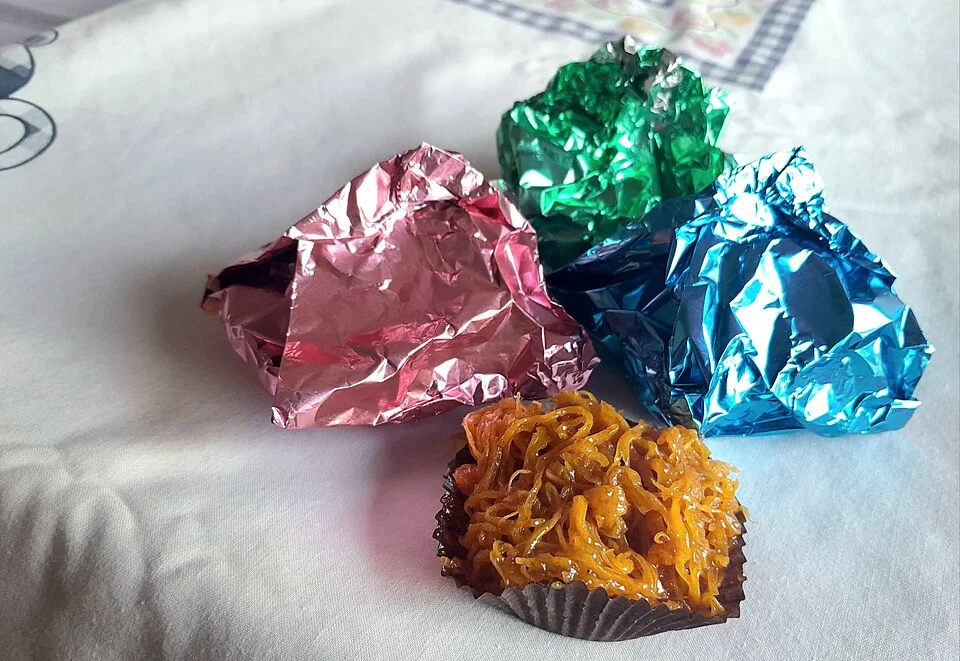
Dividing the Yolk in Two: Threads and Filling
Fios de ovos refers to threads of egg yolk. When yolk is dropped into hot syrup in a thin stream, heat reaches it from all sides at the thickness at which it fell, and it can be lifted out in a long form. Unlike noodles, which are made by kneading flour and water and then cutting, here thinning the stream and cooking it both happen over the same pan. Yolk dropped thickly and set as a single mass makes it hard to form threads that still stand out as separate strands after the filling is added. Sugar serves as the sweetener and, at the same time, becomes the liquid in which the yolk is cooked.
In the Lagos municipality’s description of the method, the water and sugar for the threads are boiled to the stage called ponto de pérola (the "pearl stage"). A funnel with more than three spouts is moved in circles, dropping the yolk into the hot syrup. The threads are lifted out with a strainer so that excess syrup drains off. Moving the funnel’s spouts produces long threads, and when lifting them out, care is taken not to scoop up too much surplus syrup with them.
The Portuguese public broadcaster RTP has a demonstration of threads made to accompany crêpes. The yolks are passed three times through a mesh sieve and dropped into the syrup from a special funnel for making egg-yolk threads. After a few seconds of heating, they are scooped out with a strainer. What this demonstration shows is the movement of giving liquid yolk a thin form and lifting it straight out of the syrup. Because RTP’s proportions are meant for crêpes, this example cannot settle how much of anything goes into the syrup for Dom Rodrigo. That the sweet threads can be taken out as an independent ingredient partway through cooking, however, offers a clue for reading the Dom Rodrigo process.
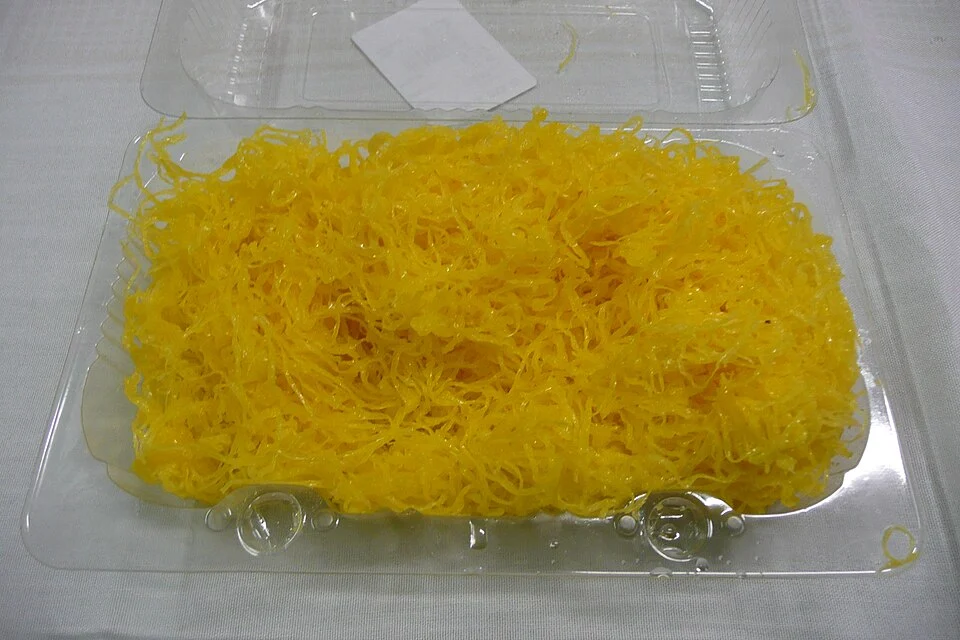
Ovos moles, made separately, is a filling in which syrup and yolk are cooked to a soft consistency. Unlike when making threads, the stream is not set strand by strand; the yolk in the pan is brought together as a whole. When threads and almonds are combined with this filling in Dom Rodrigo, the filling settles between the threads, and the threads loosen finely when bitten. The almonds are not placed on the outside, as in marzipan, where they are kneaded with sugar into a shell; they are added on the side where the yolk is combined. The shape holds even when the paper is removed before eating, and in the mouth, what meets the teeth and tongue changes in the order of nut pieces, threads, then filling.
In the Lagos municipality’s example, the yolk filling made in a separate pan also begins with water and sugar. Here a cinnamon stick goes in with them, and at the same stage of thickness, ground cinnamon and roasted, ground Algarve almonds are added. The beaten yolks are mixed in only after the syrup has cooled to lukewarm. The mixture is then cooked over low heat. In the pan for the threads, yolk is dropped into boiling syrup; in the pan for the filling, the syrup is first cooled, the yolk is mixed in, and the pan is put back on the heat. Even with the same sugar and yolk, this difference is where thin threads and soft filling part ways.
In trouxas de ovos from Caldas (Trouxas de Ovos das Caldas), an egg sweet, eggs are heated in syrup into a thin sheet, and the sheet is folded. Lifting threads out unbroken, as in Dom Rodrigo, differs from lifting a sheet as a surface and folding it: even with the same syrup and eggs, the unit of form in which the heat takes effect is different. The colour of the egg is similar, but in Dom Rodrigo, strands curved one by one remain on the surface of the mass and can be recognised when the wrapping is opened.
Colouring the Surface of the Round Mass in the Syrup Used to Cook the Threads
According to the Algarve traditional-food source, the egg-yolk threads are combined with the yolk filling, almonds, cinnamon and syrup and shaped into a round mass. This already-assembled combination is then moved to a frying pan. The place where it meets the heat is the syrup in which the threads were just cooked. Unlike the case where an oven’s heat makes a flour dough rise, here the soft filling and the threads have already been brought together, and the surface is lightly browned in the pan. The syrup is used twice: when cooking the threads, and later when colouring the surface.
In the Lagos example, the yolk filling is cooled and then formed with the threads into small round masses. A little of the earlier syrup goes into a frying pan, and four to five masses are placed in it at a time, the description says. After they are moved around so that both sides take colour, they are transferred to a tray and left to cool fully. What receives heat again here is not a thin stream, as when the yolk was dropped from the funnel, but a form that has been made into a single piece by hand. From the work of putting a few at a time into the pan and turning them, it can be seen that colour is applied to the visible surfaces while the masses stay round.
The same source also notes that commercial caramel is not used. Because the syrup from which the fine threads were taken is put on the heat again, the surface of the round mass has places that have deepened in colour from the fire and places where the colour of the threads can still be seen. The cinnamon visible over the surface colour also appears when the threads and filling are combined, and its sprinkling at the end is recorded as well. Both the powder added for aroma and the colour produced by the heat of the pan are visible when the paper is removed. The source does not give the pan temperature or the number of seconds each piece is left. The photograph likewise shows places where the threads stand out strongly and places that have taken a deeper colour.
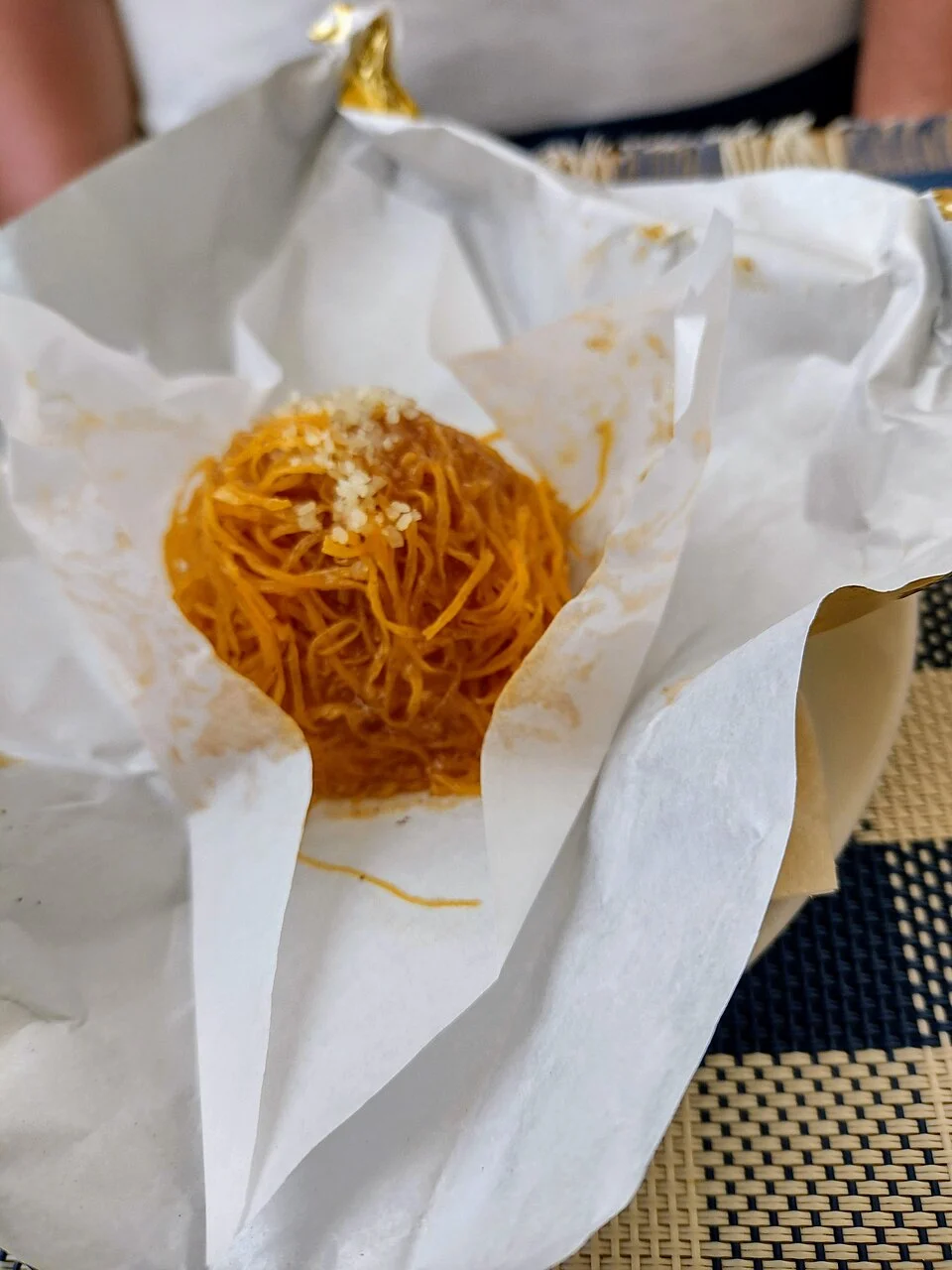
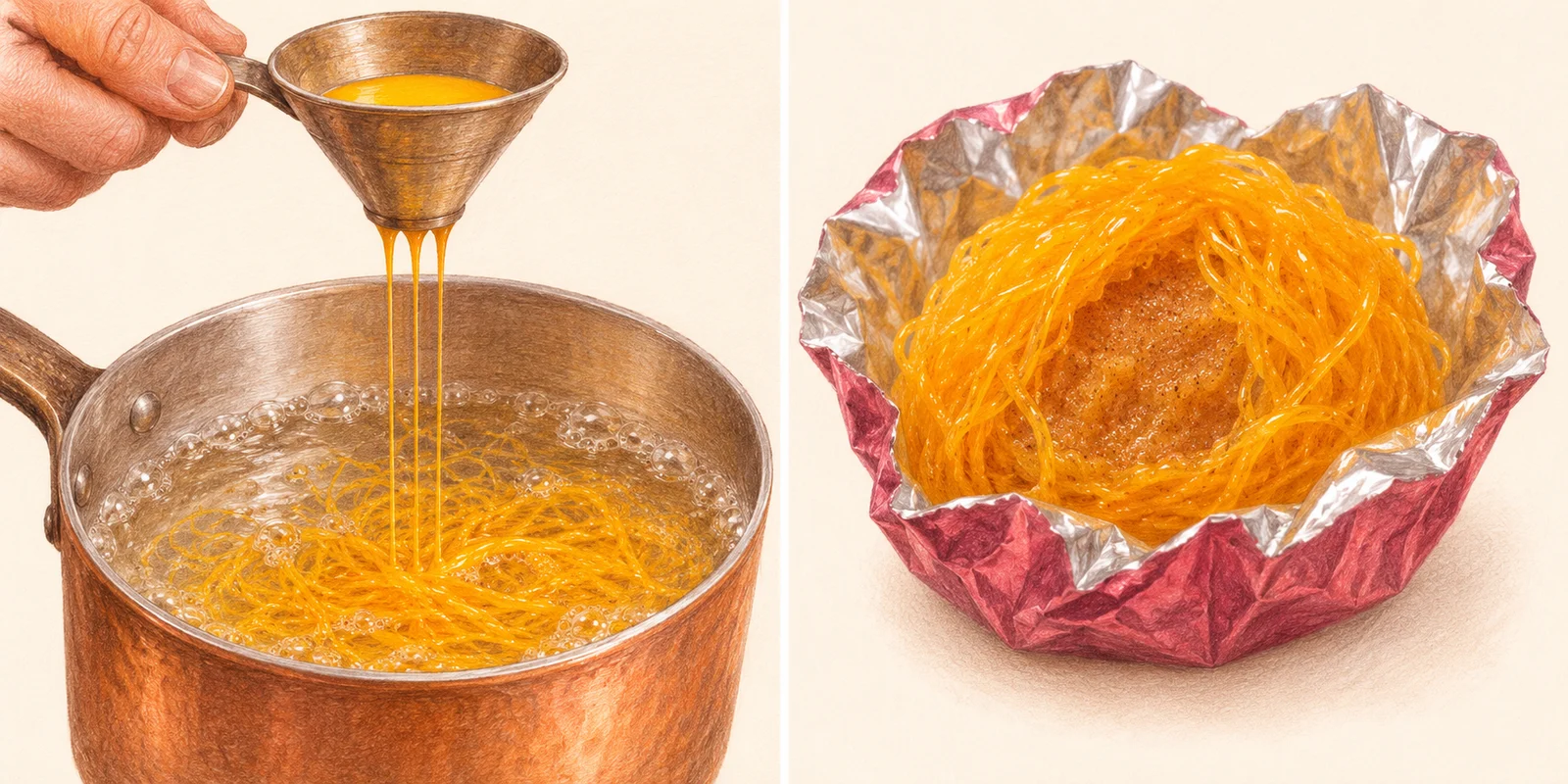
A Sweet Eaten After Unwrapping, and a Sweet Broken Open Shell and All
The Algarve source explains that the round sweet is wrapped in food-grade paper and coloured metal foil. Gathering the paper together makes a mound shape and hides the round form of the contents. The sheen and the folds seen when the piece is picked up give way, once the wrapping is removed, to the colours of the threads and filling. If each piece is wrapped separately in paper, a set number can be put in a box. In the example presented as served in a dish, there is no unwrapping of an outer paper, but the egg-yolk threads can be seen separating from the filling when it is divided with a spoon.
In the municipality’s explanation, thin paper and coloured aluminium foil are each cut into squares, the paper is placed at the centre of the foil, and one piece is set on top. The four corners of the foil are gathered upward and the tip is closed, then lightly pressed to shape. Among the traditions the municipality presents are an instance of serving it at celebrations in glass or porcelain dishes and eating it with a spoon, and an instance of wrapping portions for eating at home in coloured paper, like a sweet. The spread of wrapping in silver aluminium foil is explained as dating from the introduction of aluminium foil in the 20th century, after which several colours came into use. There is a gap between the story of the monastery said to have handed down the method and the period when today’s coloured wrapping came into use.
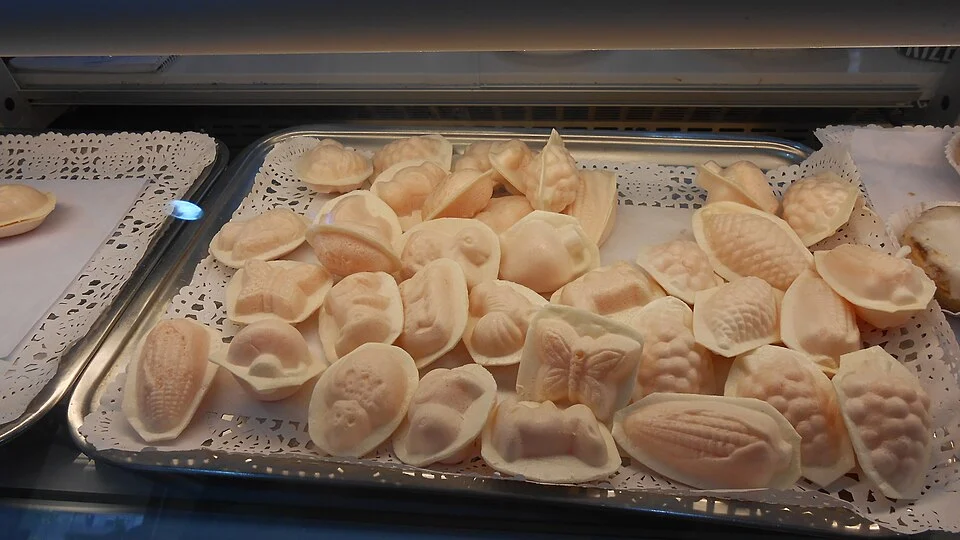
The ovos moles of Aveiro also contain a yolk filling of the same name, but it is packed into wafer shells in shapes such as seashells, and the shell is broken and eaten together with the contents. What encloses the yolk filling in Dom Rodrigo is a mass that includes fine threads made from the same eggs. The food-grade paper is removed before eating, and the outside one bites into is the part coloured in the frying pan. Even though the yolk fillings are called by the same word, in Aveiro one puts a white shell in the mouth, whereas with the Lagos sweet one removes the paper and eats the threads.
A Name Tied to a Monastery, and the Large Package Opened in Lagos
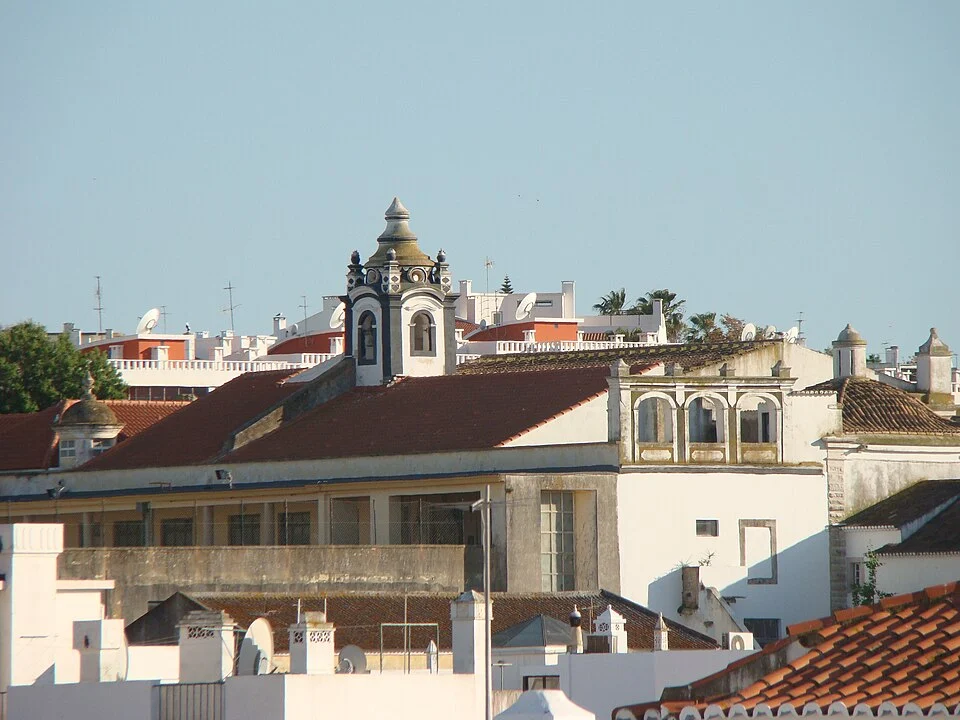
In Lagos, the sweet is said to have been made at the monastery of Nossa Senhora do Carmo. The regional traditional-food source explains that the method was passed to a local family in the 19th century. The Lagos municipality’s photographic archive carries, as tradition, the story that it was made to please Rodrigo de Meneses, governor of the Algarve, and took his name. The story of how the name came about and the account of when the method was passed to a family appear separately in the sources. From these two accounts, the day on which the sweet was first made cannot be determined.
In 2019, at the 32nd Arte Doce, the Lagos municipality’s sweets event, eight local pastry makers spent three days from 24 July making a large Dom Rodrigo. Guinness World Records certified the sweet itself at 125.4 kg on 26 July. Including the paper, the weight in the municipality’s record is 126.7 kg. After being weighed, it was shown at the opening of the festival and, once the outside had been unwrapped, was shared among visitors. A sweet that one person opens as a single piece resting in the hand became, in a large venue, a sweet from which one package was opened and shared, and the weight including the paper was also measured separately.
Two technicians and a Guinness witness took part in the three days of work. It was shown on 26 July, the first day of the Lagos event. That year, Lagos’s Dom Rodrigo had also appeared in an RTP programme that selects Portuguese sweets from around the country. Apart from being presented on a programme as the town’s sweet, at the local event one package was actually opened, and visitors to the town ate it on the spot.
The ingredients the municipality listed for this batch include 372 whole eggs and 2,940 egg yolks, along with 229 kg of sugar, 18 kg of almonds, 45 litres of water and 360 g of cinnamon. The quantities are totals for ingredients prepared by many craftspeople, and they cannot be applied directly to the weight of the edible portion or to household proportions. The sugar used for the syrup and the figures for the eggs and almonds that remain inside appear on the same list. Because the municipality’s source follows the process through to the tasting by visitors, one can check where each figure was measured: the preparation, the outer paper, or the portion eaten.
Lagos’s Origins and the Application for the Algarve Name
The agricultural authority’s traditional-food source treats it as a sweet of the Faro district area. ADRA, a local association of confectionery producers, applied for "Dom Rodrigo do Algarve" as a Protected Geographical Indication (PGI, or IGP in Portuguese) name. According to the Portuguese official gazette, following a decision of 18 August 2025, objections were accepted at national level for 30 days from the notice published on 27 August of that month. The national positive decision of 17 November of the same year was published on 9 December. What can be confirmed here is a record of the review within Portugal. To confirm registration in the EU, EU registration documents are needed separately from the national notices.
The sweet, told in association with the Lagos monastery, was also applied for under the name of the Algarve, where several producers work. The place name shown on packaging is a clue for confirming the scope of production. Pick up a single piece and unwrap the paper, and you see egg yolk cooked into fine threads and the filling that binds them together. That two differently formed egg yolks remain inside, and that the colour from the pan and the cinnamon lie over the surface, is work you can see when eating this sweet, and it is hard to grasp by simply reading down the names of local ingredients.
Glossary
- Fios de ovos
- Egg yolk dropped in fine threads and heated in syrup. In Dom Rodrigo it is combined with a separate yolk filling.
- Ovos moles
- A soft filling made with egg yolk and sugar. The term is also used in the name of an Aveiro sweet, but in this entry it is one of the component ingredients of Dom Rodrigo.
- Arte Doce
- The Lagos municipality’s sweets event. In 2019 a large Dom Rodrigo was made there and shared among visitors.
- IGP (Indicação Geográfica Protegida)
- Portuguese for Protected Geographical Indication (PGI). A decision on a national application is distinct from registration in the EU.


