


SweetloreEncyclopedia of World Sweets (834)

Gil-e-Firdaus
Gil e firdaus
Gourd, rice, and translucent pearls cooked in milk
Desserts / Hyderabad, India

When you put a spoon into the white milk, soft gourd fibers come up together with smooth little grains. Gil-e-Firdaus is a milk-based sweet that is served even at weddings in Hyderabad, in southern India. The gourd is bottle gourd, shaved thin. Small starch pearls are added. Some cooks also use broken rice, while others use no rice and thicken the milk with concentrated milk or nuts. If you thicken the milk first and then wait for the gourd to cook through, the milk around it becomes too thick. Some methods therefore start the work of softening the gourd and the work of thickening the milk in separate pans.
Lubna Karim writes that when she first ate it at a wedding in Hyderabad, she did not realize there was gourd in it. The ingredient kaddu is bottle gourd, which the English field of her recipe gives as "bottle gourd" and also lists under the alternative name lauki. In some regions kaddu means pumpkin, but the gourd shaved thin for this sweet has pale flesh. Unlike orange flesh that is mashed in to color the milk, the whitish shavings stay thin and blend into the milk as fine strands.
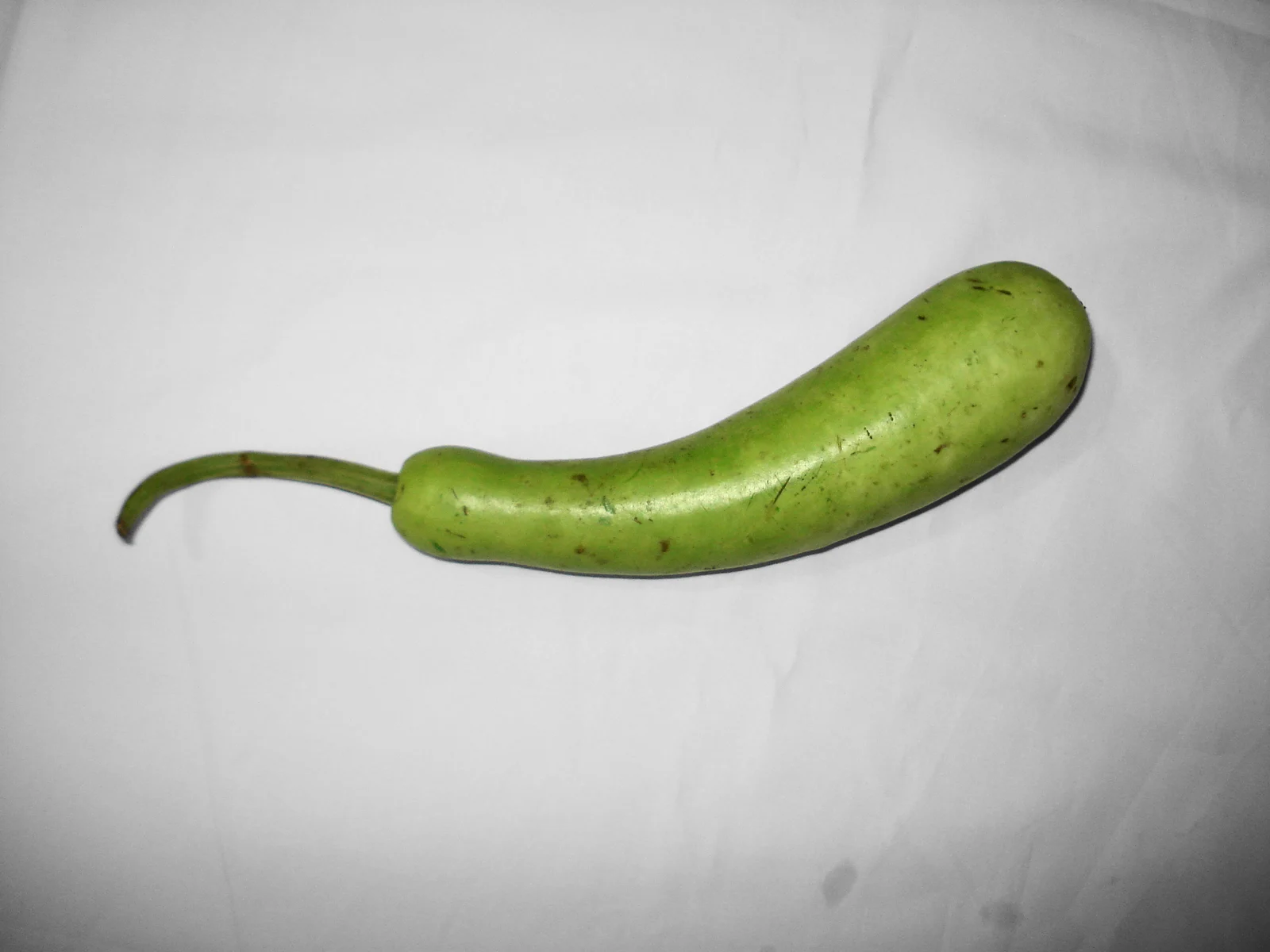
Shaving the Gourd Thin and Cooking It in a Separate Pan
In Karim’s method, nuts are fried in ghee and the shaved gourd is then sautéed in the same ghee for two to three minutes. Half of the milk and some water are added and simmered, so the sautéed gourd is not simply scattered over finished milk. Rice and starch pearls are cooked in a separate pan and combined with the softened gourd. The gourd that has absorbed milk does not sit on the spoon as large, separate cubes; it comes up together with the other grains.
In Shravani Abhishek’s method, the gourd is peeled and halved, the core and seeds are removed, and the flesh is shaved. It is rinsed, squeezed, and rinsed again in fresh water. The gourd and a little water then go into a heavy pan, which is covered and heated over low heat for about ten minutes. When the gourd is soft, it is coarsely mashed and cooked until the water is gone. Karim uses ghee and milk, whereas Abhishek sets aside gourd braised in water. In both methods, the gourd does not need a long cooking time of its own when the whole pan of milk is later thickened.
Nestlé’s professional formula for twenty servings puts the gourd into the pan used to fry the nuts, sautés it, and then pours in milk. Starting from ghee is similar to Karim’s method. Because the milk containing the separately cooked rice and pearls is combined later, the first pan lets the cook watch only the gourd as it cooks. The lightly browned nuts return at the end, but the gourd is simmered with the other milk before serving. The shreds of gourd left in the white milk are not set aside separately as a topping.
Grinding the Rice Coarsely and Soaking the Starch Pearls
Karim washes basmati rice, spreads it on a cloth to dry, and grinds it coarsely. Because it is not made into fine flour, small grains of rice remain, and their broken surfaces are easily reached by the milk. The round starch pearls are called sabudana; they are soaked separately in water and then added to the milk together with the rice. The fragrance of basmati is not only from the spice scattered at the end; it is also added when the rice is cooked in the milk.

Under a standard of the Food Safety and Standards Authority of India, the food called tapioca sago is starch obtained from cassava root and formed into pearls. Even if an English recipe says "sago," it cannot be assumed to be starch from the trunk of the sago palm. Karim and Abhishek list tapioca pearls as an ingredient, while Nestlé gives only "sabudana." That entry does not reveal the plant source. Even when the pearls look alike, the name used for them and a product’s ingredient labeling are separate pieces of information.
When the white, uncooked pearls are soaked in water, water enters them, and when they are heated in milk, the starch takes in more water. An analytical manual of the Food Safety and Standards Authority explains how tapioca starch changes with moisture and heat. In Abhishek’s method, the soaked pearls are drained, added to boiled milk, and simmered over low heat for about ten to fifteen minutes. The guide is when the pearls turn translucent and soft. They do not simply set the milk uniformly; smooth grains that can be taken up with a spoon remain in the milk.
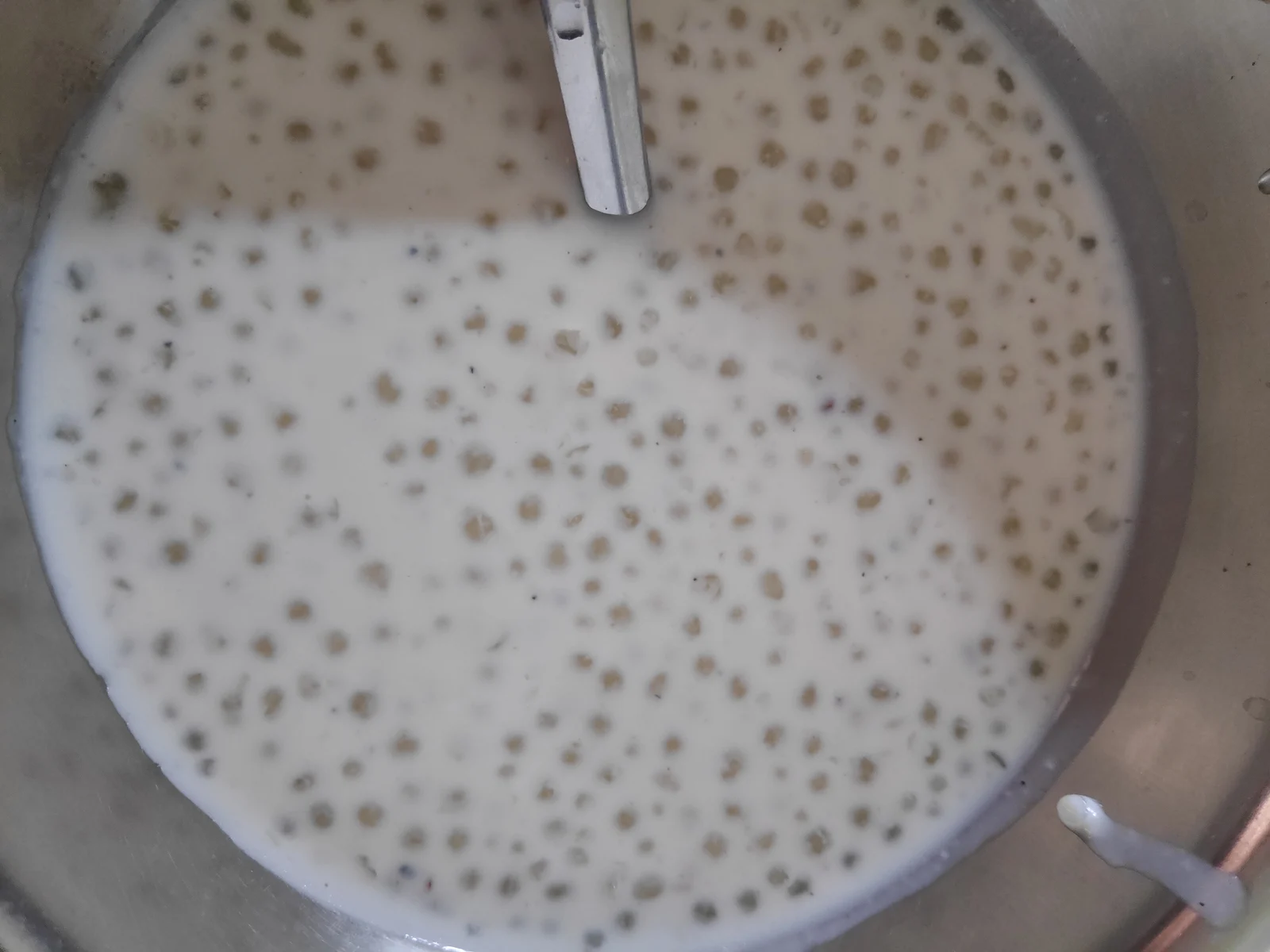
For Nestlé’s twenty servings, the ingredients are 750 g of shaved gourd, 150 g of sabudana, and 2 tablespoons of basmati rice. The rice and pearls are soaked for about an hour, and the rice is made into a coarse paste. The starch pearls are first cooked in milk with water added, and then sweetened condensed milk, the rice paste, and cardamom are added and cooked. The result is combined at the end with a separate pan in which gourd sautéed in ghee is simmered, and the thickness is adjusted. This differs from Karim’s method, in which rice dried on a cloth is coarsely ground and put into the milk together with the pearls, in when the rice enters the pan and how its moisture is handled.
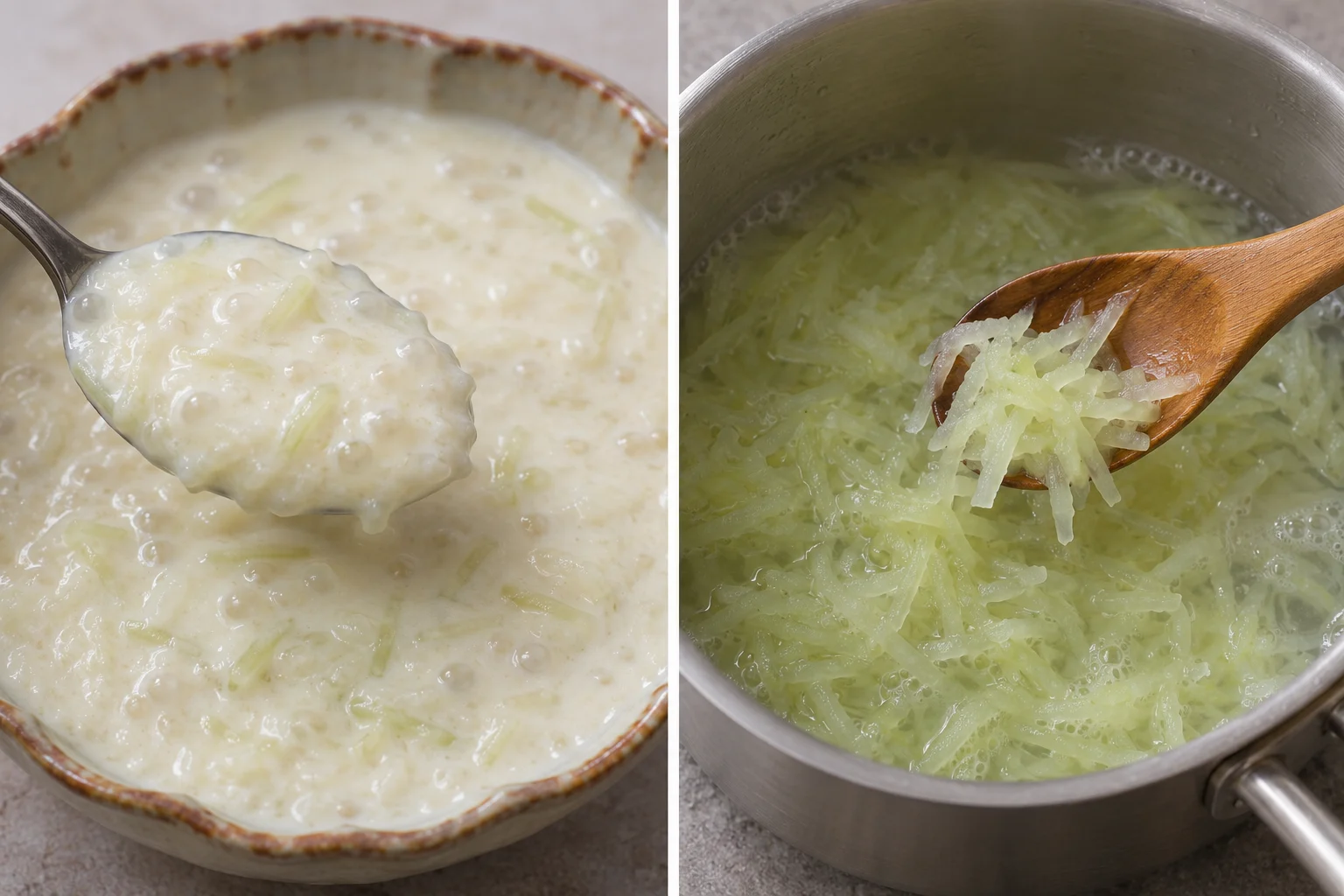
Thickening with Milk and Nuts Instead of Rice
Abhishek’s recipe for six contains no rice. Whole milk is boiled with cardamom, some of the warmed milk is taken into a bowl, and khoya is dissolved in it. Because khoya is milk whose water has already been driven off, it adds milk solids with less liquid than adding more milk would. To the milk-cooked tapioca pearls go that khoya and a cashew paste made after soaking cashews in hot water. There are no coarsely ground rice grains, but the milk that receives the sautéed, softened gourd and the tapioca pearls turns thick.
When adding the cashew paste and concentrated milk, stir so that no lumps remain. The cardamom pods that were in the pan are removed, the gourd and sugar are added, and the pan is set over low heat and stirred so that nothing sticks to the bottom. In the earlier stage only the gourd is softened with water; here, the cook watches the shape of the gourd while also thickening the milk around it. With these two steps, one can make a thick bowl holding two kinds of solid components without adding coarsely ground rice or rice flour.
Karim’s rice-based version also includes sweetened condensed milk and almond flour. If milk alone is boiled down, the more it reduces in volume, the more concentrated its components become. Adding sweetened condensed milk later adds solids and sweetness at the same time. Karim writes that if the pan becomes too thick, half a cup of milk or water may be added. Because this version is served chilled, deciding how far to thicken it in the pan means considering both the moment just off the heat and the cooled bowl.
If almonds are ground to a flour, they mix into the milk and are tasted together with it when the spoon goes in. If they are browned in fat and thin slices are placed on the surface, they add a texture different from that of the soft gourd and the pearls. Karim also adds edible silver leaf. The leaf-thin foil is a decoration applied after the heat is turned off. It differs from the rice and starch pearls that go into the pan, both in when it is used and in what it does for the finished sweet.
In the home method of Mona of Zaiqa, the gourd is not sautéed in a separate pan; instead, sabudana is first cooked in milk for about ten minutes. Khoya or milk powder is dissolved in a little milk set aside, then added together with the shaved gourd, sugar, cardamom, nuts, and so on, and cooked for about ten more minutes. Here the pearls are cooked first, and the gourd softens along with them once the milk is warm. The milk and solid components prepared for that pan differ from those of both the version using sweetened condensed milk and the version that first braises the gourd in water.
A Celebration Bowl and Kheer Bought in Town
What Karim ate was a bowl served at a wedding, and she notes that it is also served at family celebrations. Nestlé presents its professional twenty-serving recipe as suited to events and weddings. It is not simply Karim’s six-serving recipe scaled up: in one, the rice is dried and added at the same stage as the pearls, and in the other, the rice is soaked, made into a paste, and added later. Whatever the number of servings, if the gourd can be softened separately and set aside, then once the two components come together the cook can attend to the thickness of the milk and the finishing fragrance.
Mona writes that on the second day of the festival that follows the fasting month, she came home from work and put that pot on the heat. A bowl that Karim ate at a wedding in Hyderabad and a bowl that Mona, who lives in Canada, made after work are each preserved in a record of celebration. Reading only a professional formula for twenty servings in a large pot makes it hard to see the scene in which a sweet of the same name is made in small amounts late in the evening at home.
Abhishek writes that in Hyderabad bottle gourd is called kaddu, and that this sweet is also understood by the name kaddu ki kheer. During Ramadan, she says, it appears at small eateries and street stalls as well. A local Urdu-language newspaper also lists kaddu ki kheer as a Hyderabad food. The name used when buying it in town tells you about the gourd, but whether coarsely ground rice went in, or whether khoya and nuts were added, cannot be known without looking at the maker’s recipe.
Karim recommends serving it chilled, and Abhishek notes that it may be served warm or cold. The thickness of cold milk and starch, and the flowing quality of a bowl just off the heat, are both well suited to dividing with a spoon. Whether the milk is loose depends not only on temperature but also on whether rice was used and whether the water the gourd held was driven off in a separate pan. It is not shaped and cut; components cooked separately are brought together in a bowl for a single mouthful.
Telling It Apart from Another Milk Sweet Served in Clay
An Indian government tourism guide introduces Hyderabad’s phirni as a street sweet made from rice, milk, and sugar and served in an earthen vessel. The almond phirni in a textbook from Uttarakhand Open University, which covers another region, also mixes soaked rice, made into a smooth paste, into milk and is chilled. What it shares with the rice-based versions of Gil-e-Firdaus is that ground rice goes into the pan of milk. This phirni recipe has neither shaved gourd nor separately soaked starch pearls.
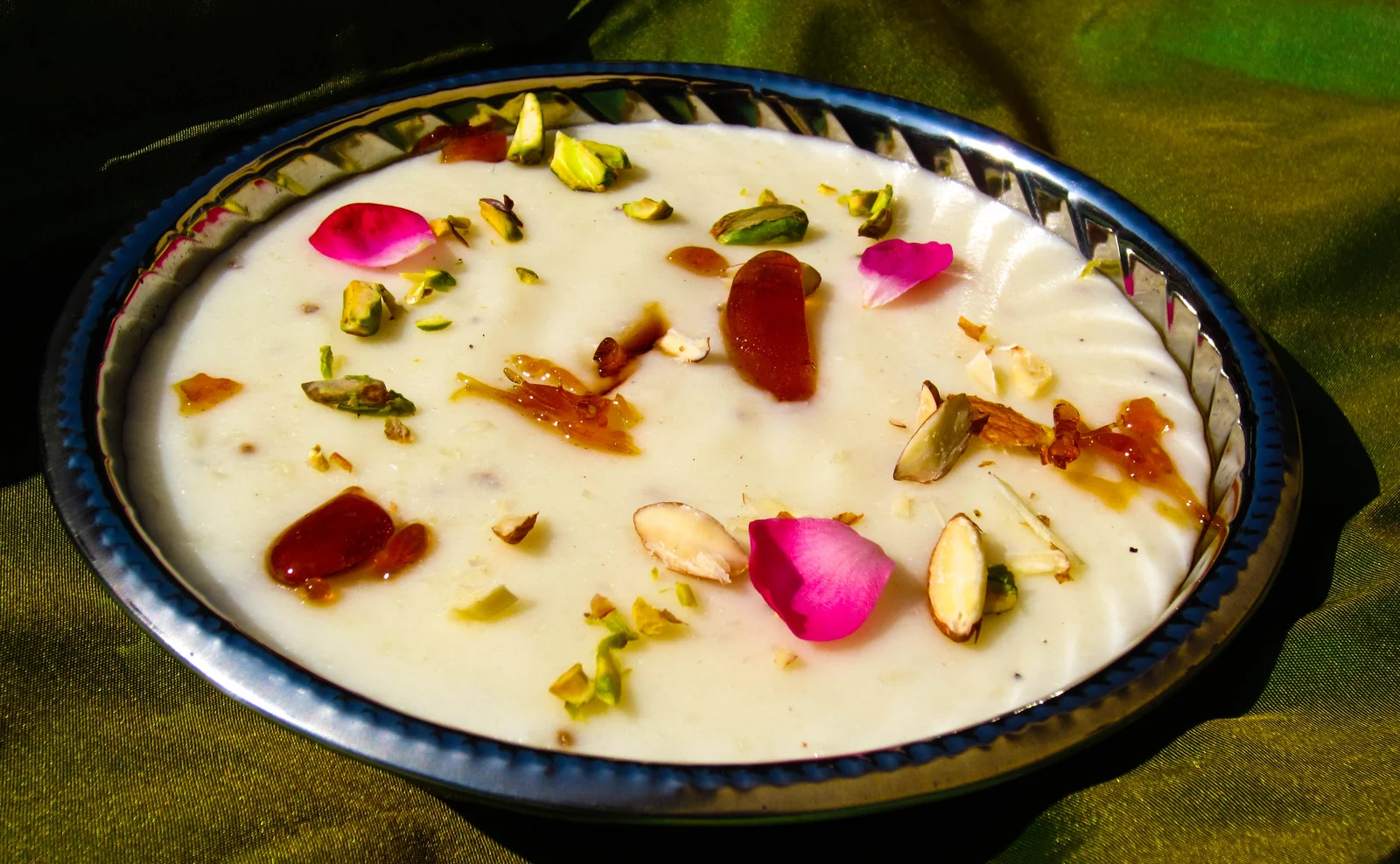
When a sweet is served in an earthen bowl, it is hard to tell which it is from the color visible at the side of the vessel alone. When you put in a spoon, in phirni made with rice paste, it is the rice that thickens the surrounding milk. Even in the rice-free version of Gil-e-Firdaus, you can scoop up soft gourd fibers and pearls turned translucent by heating, along with the thick milk. To learn the name of a sweet served in clay, look both at what thickened the milk and at the components that keep their form until the moment it is eaten.
A teaching material from Chhatrapati Shahu Ji Maharaj University that deals with Hyderabadi cuisine also explains shaving white gourd, boiling it with milk and sugar, and thickening it with sago and khoya. Rice is not mentioned in its description of the ingredients, and the sweet is finished with cardamom, rose fragrance, and thinly sliced almonds and pistachios. Returning to the home examples, even for the same milk sweet, whether to add rose fragrance or decorate with silver leaf was chosen separately from the method itself.
The "Earth" in "Earth of Paradise"
If gil is read as the Urdu-script گِل, it is a word of Persian origin meaning earth or clay. Firdaus (فردوس) means paradise. Abhishek explains the name "earth of paradise" by linking it to the earthen vessel in which the sweet is served. Earth is not an ingredient mixed into the milk; it touches the sweet as the vessel. What this explanation shows is that people still link vessel and name when they speak of it today; it does not indicate who coined the name or in what year.
In introducing kaddu ki kheer, Mona of Zaiqa lists Gil, Gul, and Dil together. The Uttarakhand Open University textbook writes Dil-e-Firdaus in its Hyderabad section. گِل, meaning earth, and گُل, meaning flower, are not the same word in Urdu. When different spellings are used, one can check which ingredients went into the milk rather than deduce the method from the meaning of the words. What remains in a spoonful is the work of shaving the gourd thin and keeping the separate grains’ texture in the milk.
Glossary
- Kaddu / lauki
- Here, bottle gourd. It is written as "bottle gourd" in English ingredient lists, and it is shaved and cooked until soft.
- Sabudana
- Small starch pearls. Those made from cassava starch are called tapioca sago in Indian standards.
- Kheer
- The name for a sweet made by cooking rice or other ingredients in milk or the like and finishing it sweet. The alternative name of this dish, kaddu ki kheer, indicates the gourd.
- Khoya
- A material with a high solids content, made by heating and concentrating milk. In the rice-free version, it is dissolved in warm milk.


