


SweetloreEncyclopedia of World Sweets (834)

Chakka Pradhaman
Chakka pradhaman
A jackfruit preserve, thinned with coconut milk
Desserts / Kerala, India

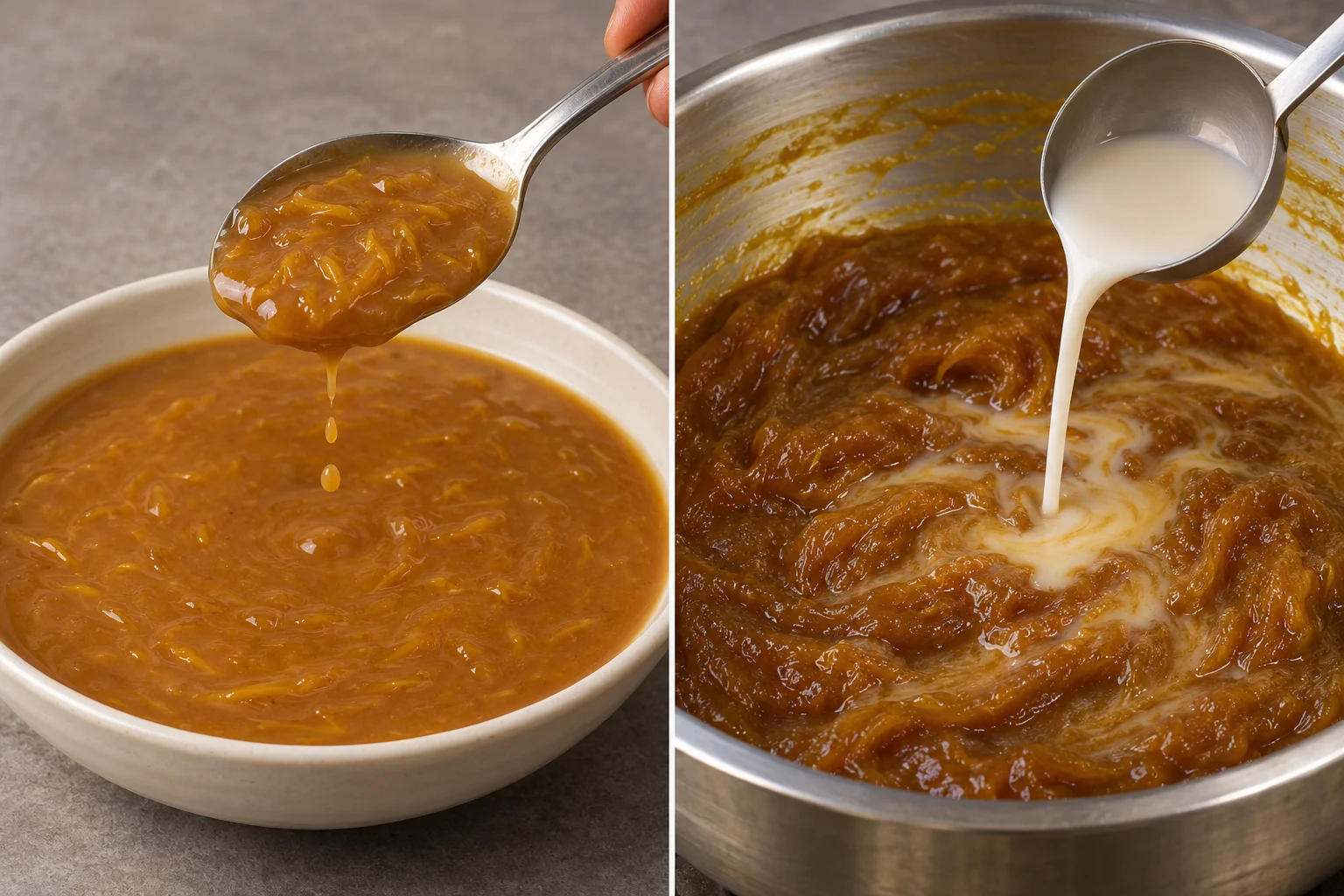
When a spoon goes into the bowl, fine pieces of fruit rise from the tawny, thickened liquid. Chakka Pradhaman (ചക്ക പ്രഥമൻ) is a sweet from Kerala, in southern India, in which ripe jackfruit is cooked with jaggery and thinned with coconut milk. The color and fragrance of the fruit remain even after it has been mixed with sugar and heated. In the method that uses coconut milk in sequence from thin to thick, the mouthfeel of the final, thick extract is added around the fruit that was loosened at the start.
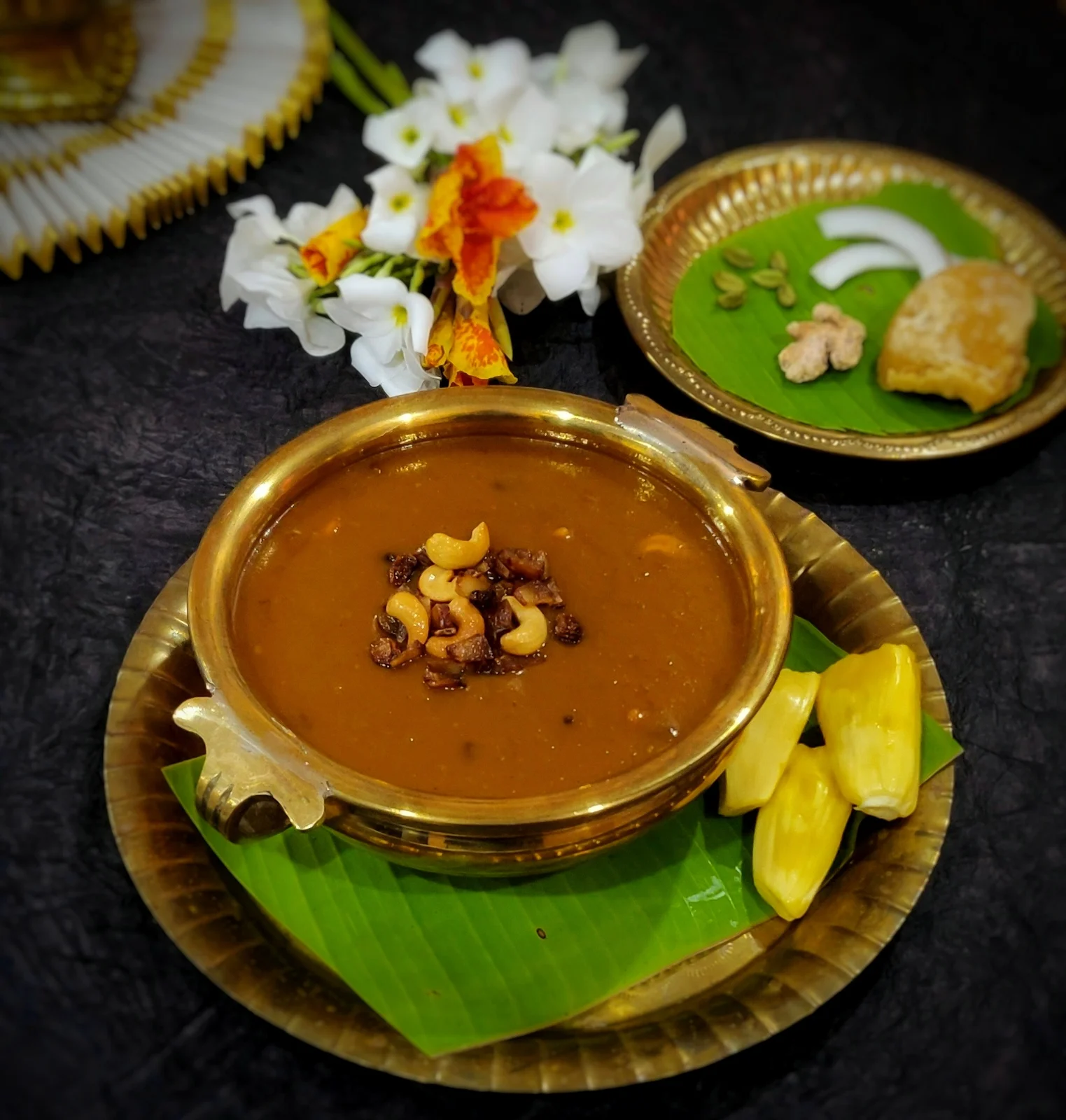
In Malayalam, chakka means jackfruit. Pradhaman is a sweet, simmered dish served in Kerala, and there is also a way of making a sweet from the same fruit that is called chakka payasam or jackfruit payasam. Whatever the name, there are versions that begin by cutting open a ripe fruit, and versions that put into the pot a thick preserve made during the fruit season. Whether the cook starts from taking the pulp out of the fruit or thins pulp that already contains sugar changes the work to be done once the pot goes on the heat.
Splitting the large fruit and taking out the yellow pulp
The outside of a jackfruit is green, but when a ripe fruit is opened, yellow pulp surrounds the seeds in rows. The edible part is what is taken for pradhaman. The cook K. M. Mathew, who passed on her proportions in Malayalam, chops the pulp of a well-ripened varikka jackfruit into small pieces and grinds it so that no noticeable bits remain. Before the pot is heated with sugar, it does not receive large chopped chunks as they are; the pulp is prepared finely enough to be cooked down and blended in.
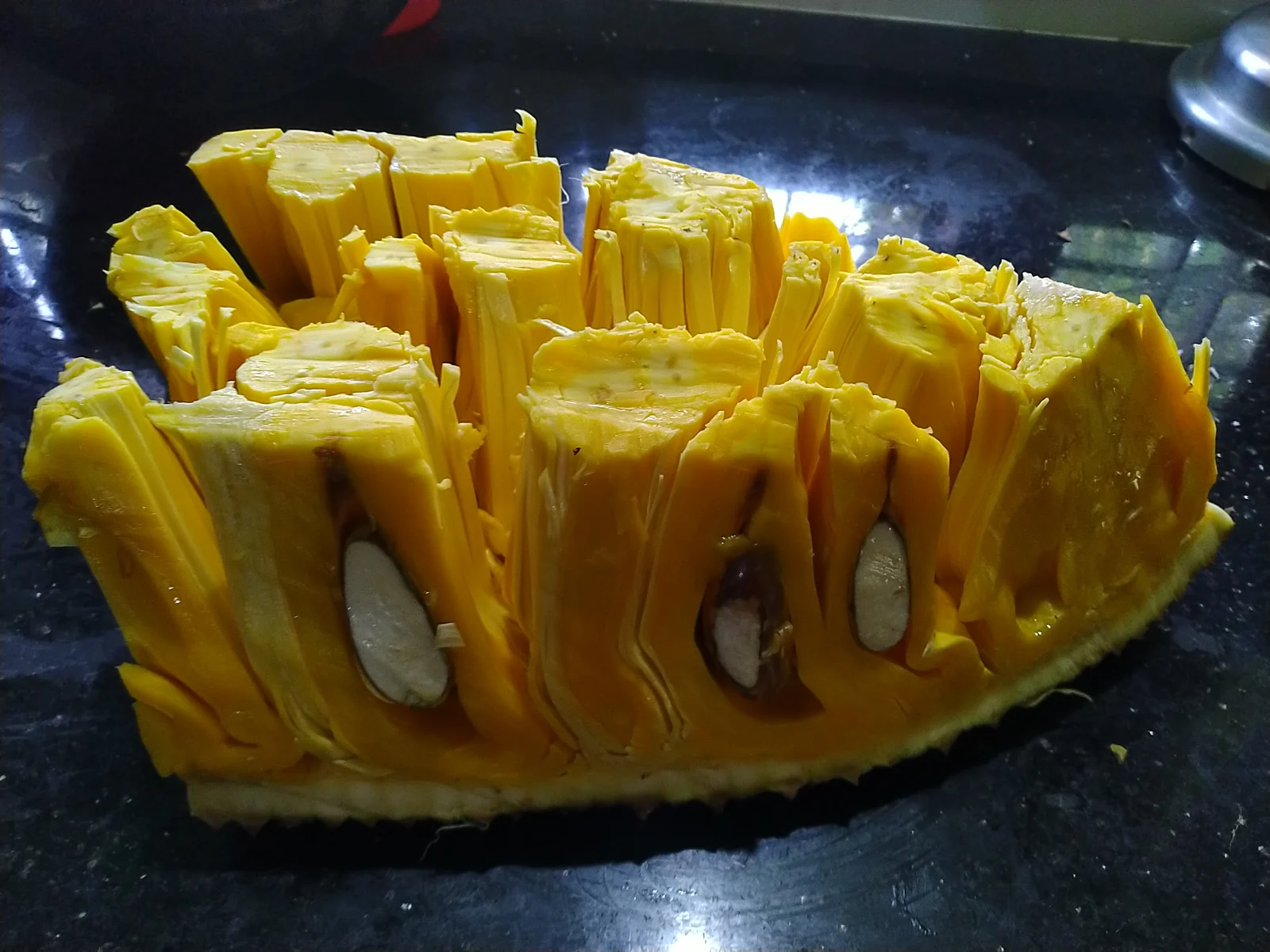
A study of jackfruit in Kerala records a broad division into varikka and koozha. Varikka has firm pulp, while koozha is soft and fibrous. This classification is a rough one based on the character of the pulp, and even among fruits that go by the same name, the fibers left after grinding and the state of the finished cooking vary. A document from the state’s Department of Industries and Commerce lists, besides eating varikka fresh, a use in which the pulp and jaggery are heated to make chakka varattiyathu. Mathew’s recipe is an example that specifies varikka for this thick preparation.
Making varatti in the fruit season
When ripe pulp is cooked down with jaggery and ghee, the result is chakka varatti, also called chakka varattiyathu. If the fruit and sugar have been thickened in advance, they can be loosened with coconut milk on another day to make the sweet. In Mathew’s article, the guide is 1 kg of jaggery to 6 kg of ground ripe fruit, with ghee added as well. These quantities belong to the preparation of the preserve. The same article also gives a pradhaman recipe in which freshly dissolved jaggery is mixed into the finished varatti. Both appear: the sugar packed in with the fruit, and the sugar that later builds the sweetness of the bowl.
Jaggery is a minimally refined sugar made by boiling down the pressed juice of sugarcane and similar plants. In Mathew’s pradhaman, dissolved jaggery is strained, a wide pan is set over the heat, and the varatti is melted in it. At Lathi’s Kitchen, the preserve is warmed in thin coconut milk, and jaggery is added if the sweetness is not enough. The author did not add any, because the varatti on hand was already sweet. Even when a preserve is taken into the pot, the decision to add more is made after checking its thickness and sweetness.
At Lathi’s Kitchen, the varatti and the second extract go into a heavy-bottomed pot and are whisked until smooth. The medium heat is not for cooking the already-cooked fruit again for a long time, but for blending it into the thin liquid. Even as the consistency changes, tasting at this point lets the cook decide whether to add dissolved sugar before the first extract goes in later. Compared with Mathew’s ingredient list, which also uses jaggery equal in weight to the varatti, the amount of sugar added to the pot itself differs, quite apart from the sugar used to preserve the fruit.
In the Kurryleaves method, dissolved jaggery is added to jackfruit that has been cooked beforehand, ghee is put in, and the mixture is cooked while being stirred. Instead of preparing and storing the fruit on a separate day, the day on which the sweet is made includes time for simmering pulp and sugar together. The work already finished by the time the pradhaman begins to simmer differs, and so does the amount of sugar already in the fruit at hand. In both cases, the coconut milk used afterward brings the thickened pulp back to a state that can be taken up with a spoon.
Loosening with the third extract, adding the first at the end
In the method that separates the coconut milk into extracts, the watery, thin liquid goes into the pot first. Lathi’s Kitchen combines the varatti with thin coconut milk, adds the first extract once the pulp is even, and takes the pot off the heat as it begins to boil. Kurryleaves likewise simmers in the thin liquid until it thickens, then adds the thick one and turns off the heat at once. After the richest liquid goes in, the cooking time is short. The liquid that first loosens the mass of fruit and the liquid that finally rounds out the surroundings differ in richness and in the time they spend on the heat, even though both come from the same coconut.
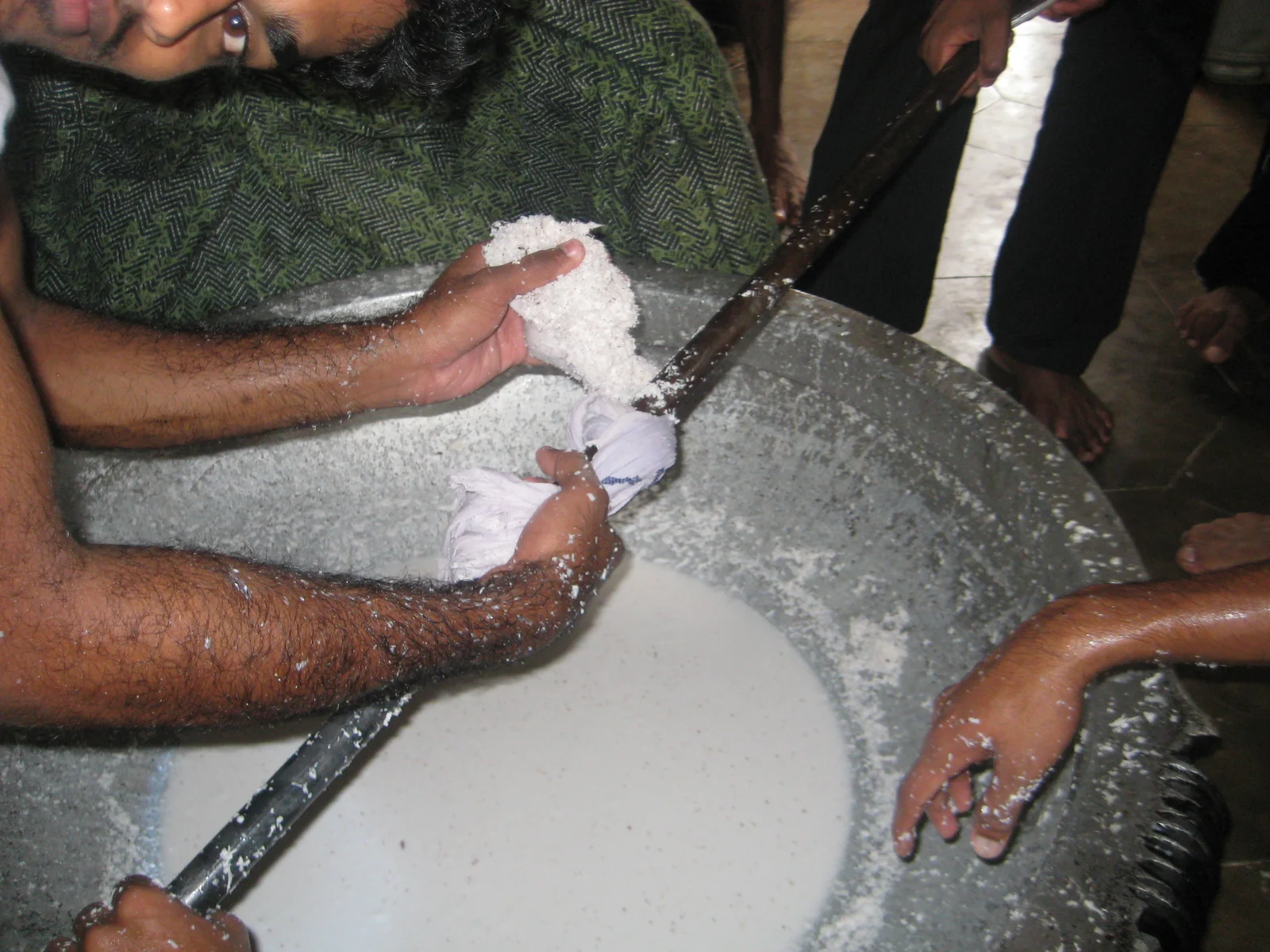
In the home procedure at Lathi’s Kitchen, which extracts twice, grated coconut is first blended with a quarter cup of water and strained, and then half a cup of warm water is added to the remaining pulp and strained again. Although the same pulp is used, water is added after the first liquid has been taken out, so the second extraction yields a thinner liquid. Mathew’s three stages use this difference in richness at three points. Even after the work of squeezing the pulp, as in the photograph, there remains the question of which container’s liquid goes into the pot first.
In Mathew’s method, liquids of different richness are taken from four grated coconuts. The third extract goes first into the pot of dissolved sugar and varatti and is cooked down, and then the second extract is added. When it has reduced, the first extract, mixed with cardamom, is added and the pot is taken off the heat. If everything were mixed at the same richness from the start, it would no longer be clear which liquid had loosened the fruit. Dividing the milk into three stages means that once the mass of fruit has been loosened, a separate portion is kept to lay the fragrance on at the end.
The home version at Yummy O Yummy also uses the third, second and first extracts in that order. Here the varatti is soaked beforehand in the third extract, while sabudana, soaked separately in water for about one hour, is boiled for about 15 minutes. After the starch pearls known as sago have cooked, strained jaggery syrup is added and cooked down, and the varatti goes in together with the thin milk. After the medium extract is added, the heat is lowered, and when the mixture thickens again, the thick first extract is added and the pot is taken off the heat. To a style that relies only on the body of the fruit and the milk, smooth pearls cooked in water beforehand are added.
The aroma of the pot, and what meets the teeth last
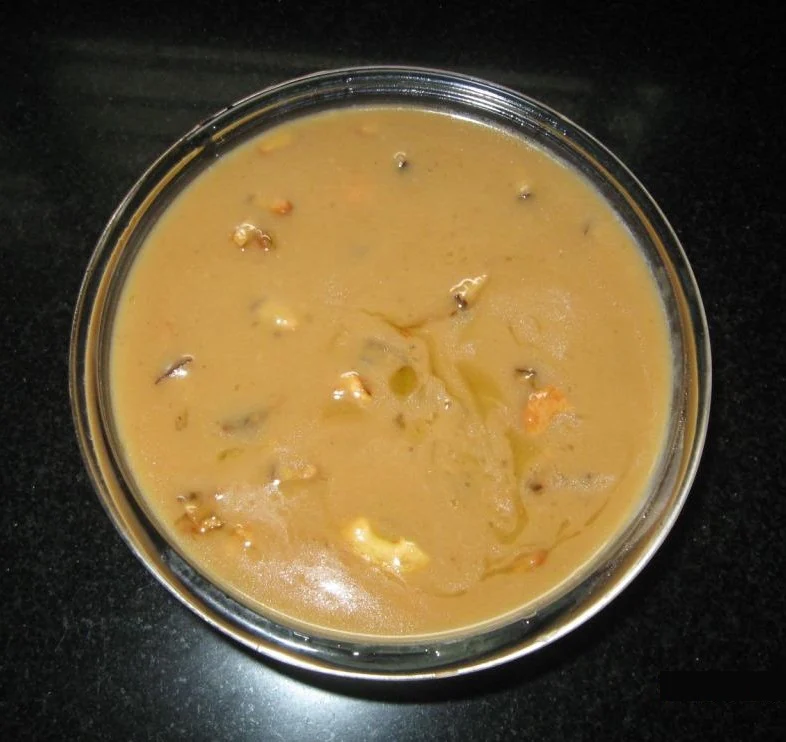
Some versions are scented with cardamom alone, while others add cumin and dried ginger. The recipes from Kurryleaves and from Asianet News in Malayalam include cardamom, cumin, dried ginger powder, and cashews and raisins fried in ghee. Nuts cooked in ghee are not made as smooth as the cooked pulp but are returned to the surface. A spoonful takes up the thick pulp together with the fried nuts, and their toasty flavor comes through after they meet the teeth.
In Priya Shiva’s version for four servings, half a cup of varatti is smoothed with 1 cup of coconut milk. Separately, cashews and chopped coconut are colored in ghee, the heat is lowered, and the thinned pulp and the remaining half cup of milk are mixed in. Cardamom is added after the pot is taken off the heat, and the pradhaman is served warm. Although the steps are separated in time, there is no instruction to press the milk into three degrees of richness. It is a version in which the amount of liquid that smooths the pulp and the amount added later are set apart from the start.
At Yummy O Yummy, small pieces of coconut are fried until brown and set aside. Raisins are then heated until they plump, and cashews are fried until golden. The spices are mixed in after the thick coconut milk, the fried ingredients are added on top, and the pot is covered and left for 15 minutes before the pradhaman is served warm or chilled. Raisins, cashews and coconut are not fried together until they are the same color; each is judged by its own state and set aside, which also leaves a different texture in the last spoonful.
The harvest season, and the tables of Onam and Vishu
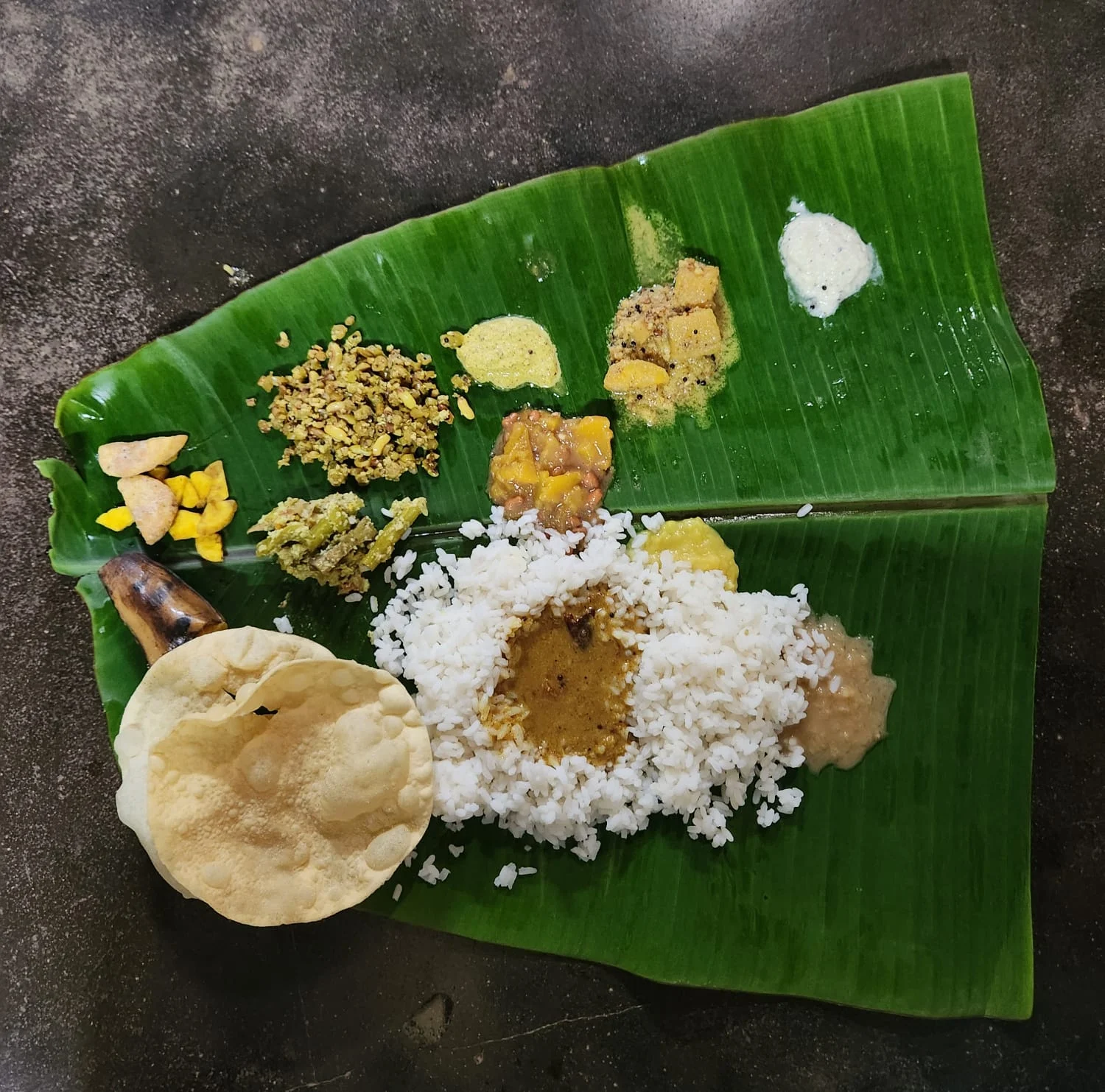
In sadya, the celebratory meal of Kerala, rice, side dishes, pickles, sweets and other items are arranged on a banana leaf. There is an article presenting Chakka Pradhaman in an Onam menu, and a household record of making it for Vishu. The sweet of this name is not served at every celebration. A Kerala tourism guide mentions, for the Onam meal at Guruvayur Temple, Pazham Pradhaman, made with ripe cooking bananas that have been offered at the temple. Among such bowls, the name chakka refers to the one made with ripe jackfruit.
The Vishu recipe that Muthu’s Kitchen presented in 2008 steams and mashes jackfruit, fries it in ghee, and then simmers it with dissolved jaggery. The second extract is warmed before use, and the first extract is added after the heat is turned off. The author wrote that at the time it was also possible to start by buying varatti at a market in Kerala. Starting from the fruit and obtaining thickly cooked pulp at a market both appear in the same record. Whether the cook simmers ripe fruit at home or buys it at a market, the harvest of the fruit and the day the bowl is made do not necessarily coincide.
The 2008 procedure steams the fruit for about 10 minutes and lets it cool, and the mashed pulp is then fried in a heavy-bottomed pot. Jaggery dissolved in water and strained is added, and low heat is used. Because the second extract is made by adding water again to the grated coconut left after the first extract, there is the effort of pressing in addition to the steaming of the fruit. Choosing commercial varatti skips the first two stages in the text, but the work of bringing it to a consistency that can be taken into the bowl, and of adding the cashews and cardamom, remains.
Mathew’s article of 2019 links words in praise of the taste of pradhaman to the poet Irayimman Thampi. All that can be learned from the article is that the words are quoted when the dish is introduced; it cites no contemporary source from which the first appearance of the poem, or the period when the sweet was devised, could be confirmed. Read together with the Vishu household record, the recipes whose publication years are known leave two things: the order in which the pulp goes on the heat, and the people with whom the finished dish is shared.
Whether a cook starts the pot on the day the fruit is cut open, or takes out varatti packed down earlier, the spoon is taking up pulp that has been returned to coconut milk. The color, body and aroma of the bowl differ according to where the cooked-down sweetness was added and how much heat the last-added extract received. Pulp that loosens during cooking and nuts that keep their texture all the way to the table come together in the same spoonful.
Glossary
- Chakka
- Jackfruit in Malayalam.
- Chakka varatti
- A preserve made by cooking jackfruit, jaggery and other ingredients down until thick.
- Jaggery
- A sugar made by boiling down the pressed juice of sugarcane and similar plants.
- Sadya
- The celebratory feast served in Kerala.


