


SweetloreEncyclopedia of World Sweets (834)

Grands-pères au sirop d’érable (Maple Syrup Dumplings)
Grands-pères au sirop d'érable
Dumplings simmered in maple syrup at the spring sugar shack
Desserts / Quebec, Canada

Spoonfuls of flour dough are dropped into steaming maple syrup. While the pot is covered and the dough cooks, it swells into soft rounds, and the sweet scent of maple passes into the surfaces that touch the cooking liquid. Grands-pères au sirop d’érable is a sweet known in the food culture of Quebec and Acadia in Canada.
Served on a plate with some of the cooking liquid, the dumplings are coated in syrup on the outside, and soft dough shows inside when one is broken open. The dish is eaten by cutting the dough with a spoon and scooping it up together with the warm syrup left on the plate. In Quebec, it also appears on the table in spring, during the season when maple sap is collected.
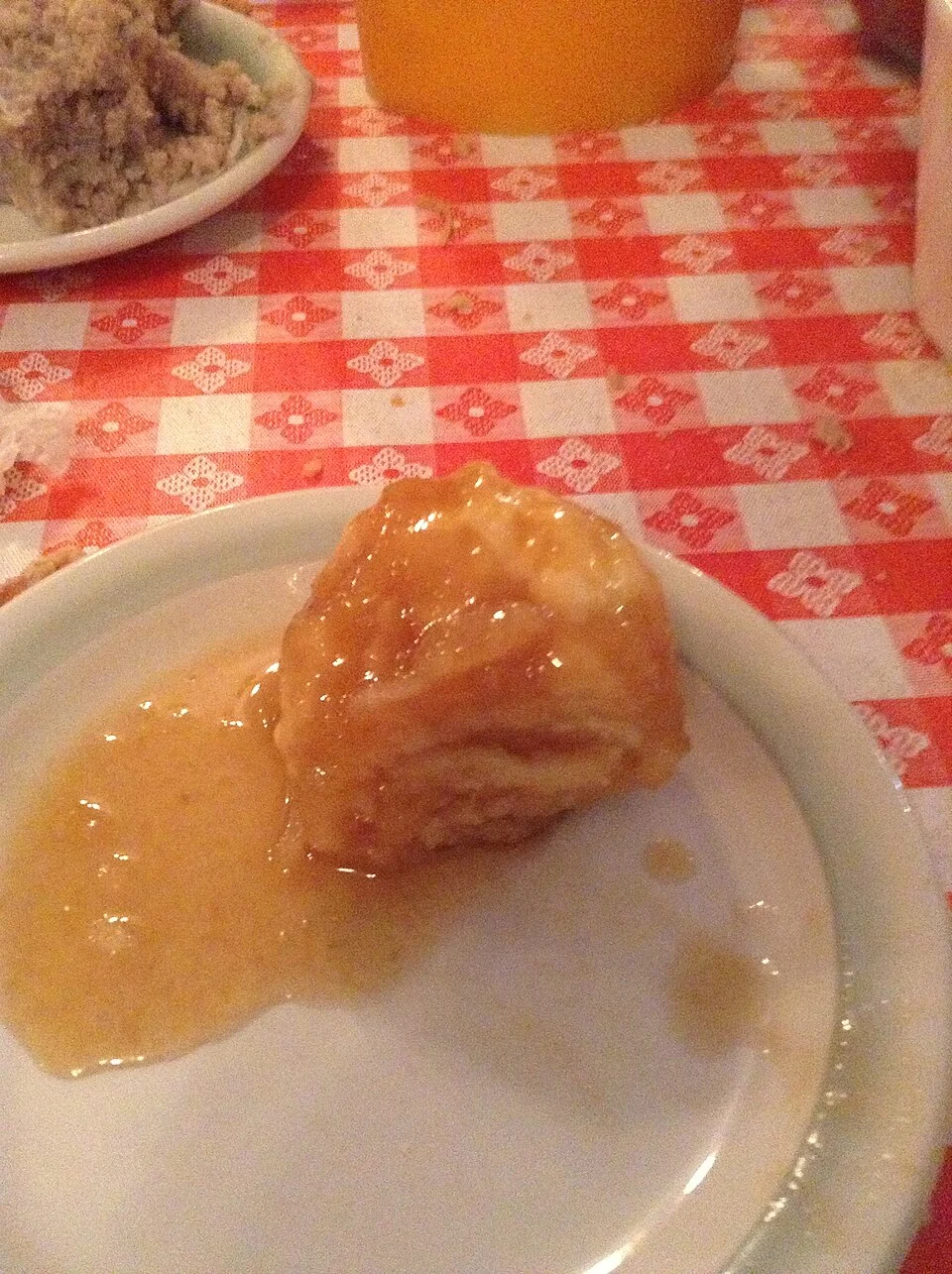
Dropping the Dough into Boiling Syrup
In the method of the Louise Marc-Aurèle family, presented by the public markets of Montréal, softened butter or margarine is creamed with sugar, the dry ingredients are added, and milk is mixed in last. Baking powder is combined with the flour beforehand.
Once the maple syrup and water in a large pot come to a boil, the dough is dropped in one spoonful at a time. Space is left between neighboring spoonfuls so that each has room to swell in the pot. The pot stays covered over medium heat for about 15 minutes. Because there is no step of rolling the dough by hand or cutting it with a cutter, the shape each spoonful takes as it falls from the spoon becomes its outline.
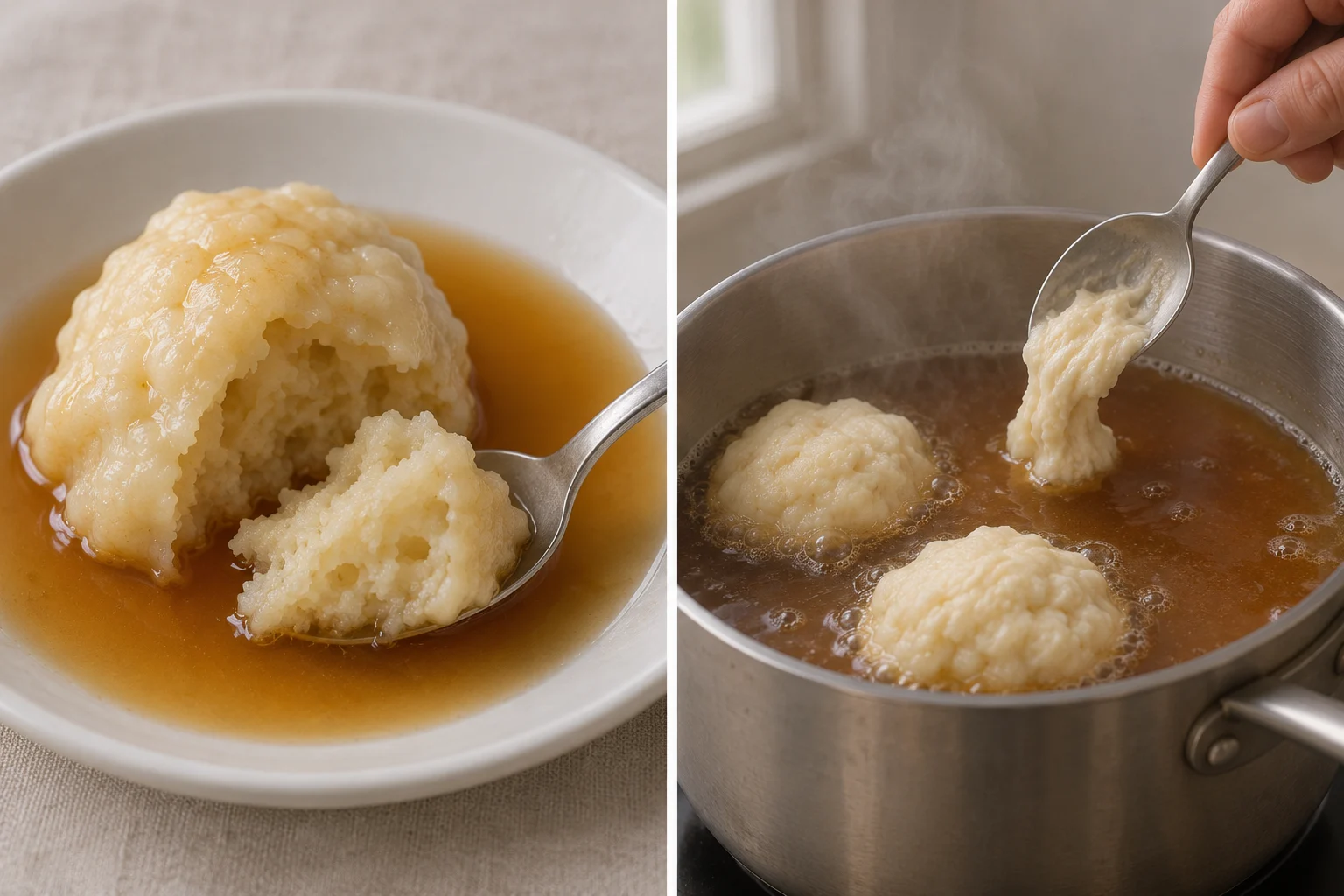
In an example from the culinary magazine Debeur, cold butter is cut into small pieces while being worked into the flour, and milk is poured in and lightly mixed. In the Montréal household method, butter and sugar are first creamed until smooth; in this method, cold fat is first distributed through the flour and the milk is added afterward. The two differ in the order in which the dough is brought together.
In both, the pot is set on the heat first, and the mixed dough is dropped into the boiling syrup. Once the dough is in the pot, it cooks with liquid below and steam above. Unlike a biscuit, whose doneness is judged by the color of its surface, the dough is given time to swell under the lid.
A 1966 household recipe booklet from the Quebec Department of Agriculture and Colonization also gives this order. Butter is cut into the flour with two knives or similar, and as soon as the milk is added last, the dough is dropped by spoonfuls into boiling syrup. The booklet warns that the dough turns hard if the liquid is not boiling well, and the pot is then heated for 20 minutes without being opened.
In this booklet, the flour and milk are not mixed first and left while waiting for the pot to boil; instead, the last of the milk is mixed in once the pot is ready. The dough is not left to stand for long before it is moved by spoon, and the recipe is written so that the steps continue until the lid goes on.
For timing, there is a household recipe that gives 15 minutes and an example that gives 15 to 20 minutes. The Montréal household and the student publication of the Université du Québec à Montréal both instruct that the pot not be overcrowded, which also leaves space for the liquid and steam to reach the swollen dough.
While the center of the dough cooks and swells, the parts in contact with the liquid take on sweetness. Breaking one open when eating brings the inside of the dough and the syrup into the mouth together, and pouring over the plate some of the same liquid, set aside separately, adds another layer of sweetness.
Water, Sugar, and Fruit: What Decides the Sweetness
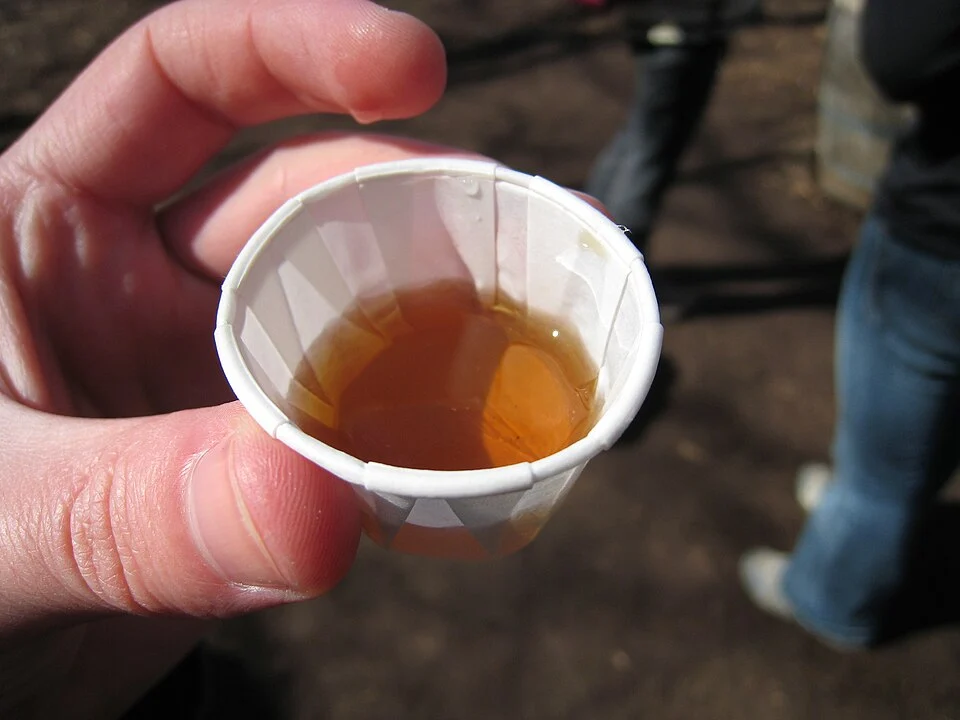
The amount of water in the pot differs from one recipe to another. The Montréal household uses equal parts maple syrup and water, while the example in the student publication uses three parts syrup to one part water. Different amounts of water added to the maple syrup make a difference in the sweetness and the strength of the aroma before the dough goes into the pot.
Maple syrup is both the liquid in which the dough is cooked and the sauce poured over it at the table. How much water is combined with it affects not only the quantity put on the heat but also the taste of the plated dish.
The Department of Agriculture and Colonization booklet lists side by side a cooking liquid of maple syrup combined with water and raisins, and one of brown sugar dissolved in hot water with raisins added. The dough of flour, butter, and milk is the same in both; only the sweetener for the pot is chosen.
The raisins are not kneaded into the dough but go into the sweet liquid outside. When the dish is portioned onto a plate, bits of fruit cooked separately from the dough remain in the sauce. Because the two liquids appear under the same entry, a 1960s provincial household publication is shown to have also presented a way of making the same sweet without maple syrup.
In Renée’s recipe, published on a Quebec cooking site in 2002, blueberries, strawberries, blackberries, and the like are boiled with maple syrup for about three minutes, and a dough of flour, milk, and unsalted butter is dropped into it. The fruit is not a garnish on a separate plate but an ingredient put on the heat first, in the pot where the dough is cooked.
When some of the berries break down and mix into the liquid, the color and tartness of the syrup change, and pieces of fruit also end up on the portioned plate. This recipe also adds a method for when no maple syrup is at hand: simmering white sugar and brown sugar in water.
The same fruit version says the dish can be eaten warm or cold, and suggests fresh cream, whipped cream, or ice cream as accompaniments. When cold ice cream is placed on the cooked dumplings, it melts from the point of first contact and mixes with the fruit juices. When the dish is eaten cold, the cream is added after the liquid and dumplings have cooled, so the plate has a smaller difference in temperature.
Compared with the Debeur example, in which larger dumplings are coated in boiling maple syrup and eaten hot, there is a choice not only of whether to put fruit in the pot but also of the temperature at which the dish is served.
In the 2019 newsletter of the City of Duparquet, the dish appeared in a column in which Claudelle Gilbert presented a method handed down from her mother. Soft butter is cut into flour and sugar until the mixture resembles coarse breadcrumbs, and the dough is brought together with milk. The liquid is two parts maple syrup to one part water; once it boils, the dough is dropped in by spoonfuls, the heat is lowered, and the pot is covered.
A procedure passed down from a parent became, in the city newsletter, a recipe with a ratio and a time of 15 minutes. It is an example of a dish made repeatedly at home being written down so that others in the same town could make it in their own pots.
In an example in the municipal newsletter of Grosses-Roches, on the Gaspé Peninsula side, a vegetable shortening is used in place of butter. It is cut into the flour with two knives and the milk is then mixed in, and chopped nuts may be sprinkled, as desired, over the dough dropped into the liquid. The dish goes to the table as soon as it is cooked, and one suggestion is to serve it with whipped cream or a fruit sorbet.
In examples where fruit is cooked in the liquid, the color and tartness of the fruit pass into the dough as well, but the sorbet served alongside is added after the heat under the pot is off. Both bring a fruit flavor to the dish, yet how the flavors layer differs with the order of steps up to serving.
The Sugar Shack and the Home Table
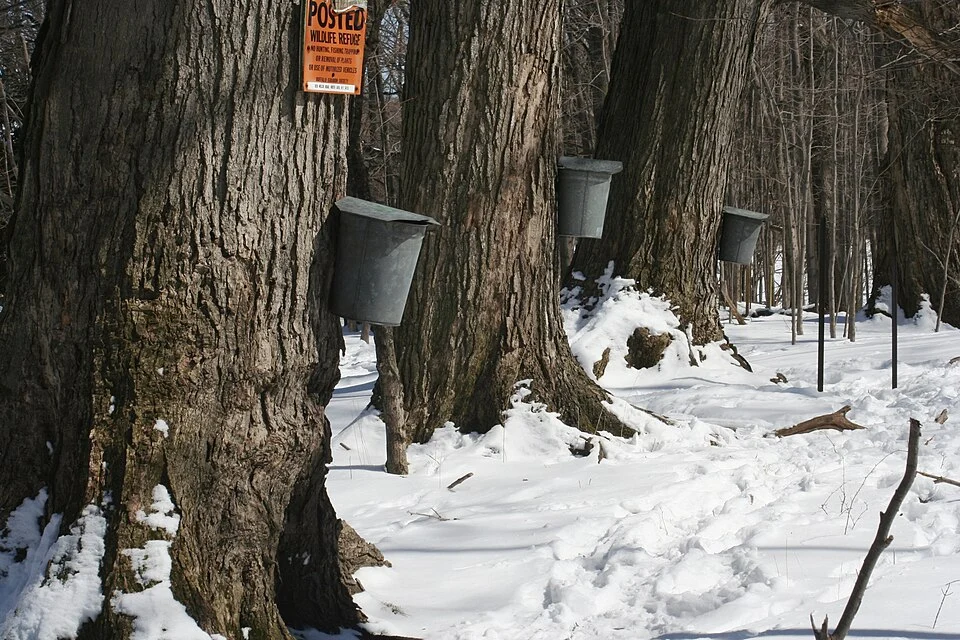
The inventory of Quebec’s cultural heritage describes the season, around the spring thaw, when sap is drawn from maple trees and boiled down, and calls it temps des sucres. At the sugar shacks where people gathered for the work, meals were served to those who went around collecting the sap.
Meals at present-day shacks are likewise inspired by a menu of pea soup, eggs, ham, baked beans, and crêpes, and grands-pères simmered in syrup are among the dishes listed. Sweet dishes are not always limited to dessert; there are tables where maple sweetness accompanies eggs and crêpes as well.
The changes in tools traced by the heritage inventory include the use, from the late 19th century, of wooden and metal spouts and containers for the sap, and changes in the equipment for processing it. Different equipment changes how the sap is collected and boiled down, but when the resulting syrup reaches the table, each dish has its own use for it.
In tire sur la neige (maple taffy on snow), boiled-down syrup is dropped onto cold snow to set and eaten, whereas for grands-pères the sweet liquid is kept in the pot to cook a flour dough. Sweetness boiled down in a single shack can serve both a sweet that is cooled to set and a sweet that uses the hot liquid.
Jacques Rousseau, who in 1961 wrote about Canada’s forests and the life lived in them, lists as foods eaten at the spring sugar shack an omelette with salt pork, baked beans, and crêpes with syrup. After tire, in which boiled-down syrup is poured onto snow, he also names eggs cooked in syrup and grands-pères.
This is a contemporary account showing the link between spring sap collection and meals. In the 1966 provincial booklet, the grands-pères recipe is not limited to the menu for a particular event but is placed in the same group as sweet dishes made with fruit and milk.
Martine Bérubé, who researched the family history of the Hôtel Clarendon in Québec City, writes that the family that acquired the hotel in 1924 had the cooks serve Canadian dishes. The dishes listed included tourtière (a meat pie), stewed pigs’ feet, and boudin from the Île d’Orléans, along with grands-pères in maple syrup.
This record comes from an article in a regional-history publication compiled in later years, and it gives neither a menu card from a day when the sweet was served nor a recipe. What can be read from it is the tradition that grands-pères were found not only in the spring sugar shack and the home but also at the tables of a hotel in the city serving regional cooking.
Grands-pères and Pépères
In French, grand-père means “grandfather.” The dish appears under names such as grands-pères au sirop d’érable, grands-pères dans le sirop, and simply grands-pères, and a terminology resource of the Government of Canada gives the example of pépères as the name used in places such as the Beauce region of Quebec.
The dish is described as a traditional sweet of both Quebec and Acadia, and in English it is known as maple syrup dumplings, a name that conveys a flour dough cooked in maple syrup. The name carries different information depending on whether the dough shaped in the pot is called by its English name or by the name the local French speakers have long used.
A collection of family recipes compiled by the Madawaska Historical Society in Maine, in the United States next to Canada, includes Rita Hebert Michaud’s Grandpère’s Dumplings. In the recipe reproduced by the Terriot family society, flour is bound with shortening and milk, maple syrup and water are brought to a boil, and the dough is dropped in. The pot is covered while the dumplings simmer, and the dish is served warm with chopped hazelnuts.
A title that follows the French word for grandfather with the English word dumplings shows that this family’s dish was passed down under a name that mixes two languages.
On why the dish is called “grandfather,” Debeur gives several explanations: the softness, which can be eaten even when the teeth have weakened; the resemblance of the dough’s surface to a grandfather’s face; and the story that the name is a French rendering of an English name used in Acadia. The same source states that the origin cannot be settled on a single account.
Quebec publications from the 1960s show how the pot for dropping the dough was handled and what the spring sugar shack menu included, but they do not tell when or where the name arose. What appears in common in the local recipes is the gesture of dropping the dough by spoonfuls into hot sweet liquid and scooping out the swollen dumplings together with the liquid.
Glossary
- cabane à sucre
- A place where maple sap is collected and boiled down into syrup and other products. Some also include a facility for serving meals.
- temps des sucres
- The early-spring season when maple sap is drawn and processed. The term is also used for the meals eaten at the shacks.
- poudre à pâte
- The name for baking powder in Quebec French recipes. Mixed with the flour, it makes the dough swell as it cooks.


