


SweetloreEncyclopedia of World Sweets (834)

Gundpak
Gudpak
Concentrated milk and plant gum, kneaded and packed in trays or jars
Sugar Confections / Kathmandu, Nepal

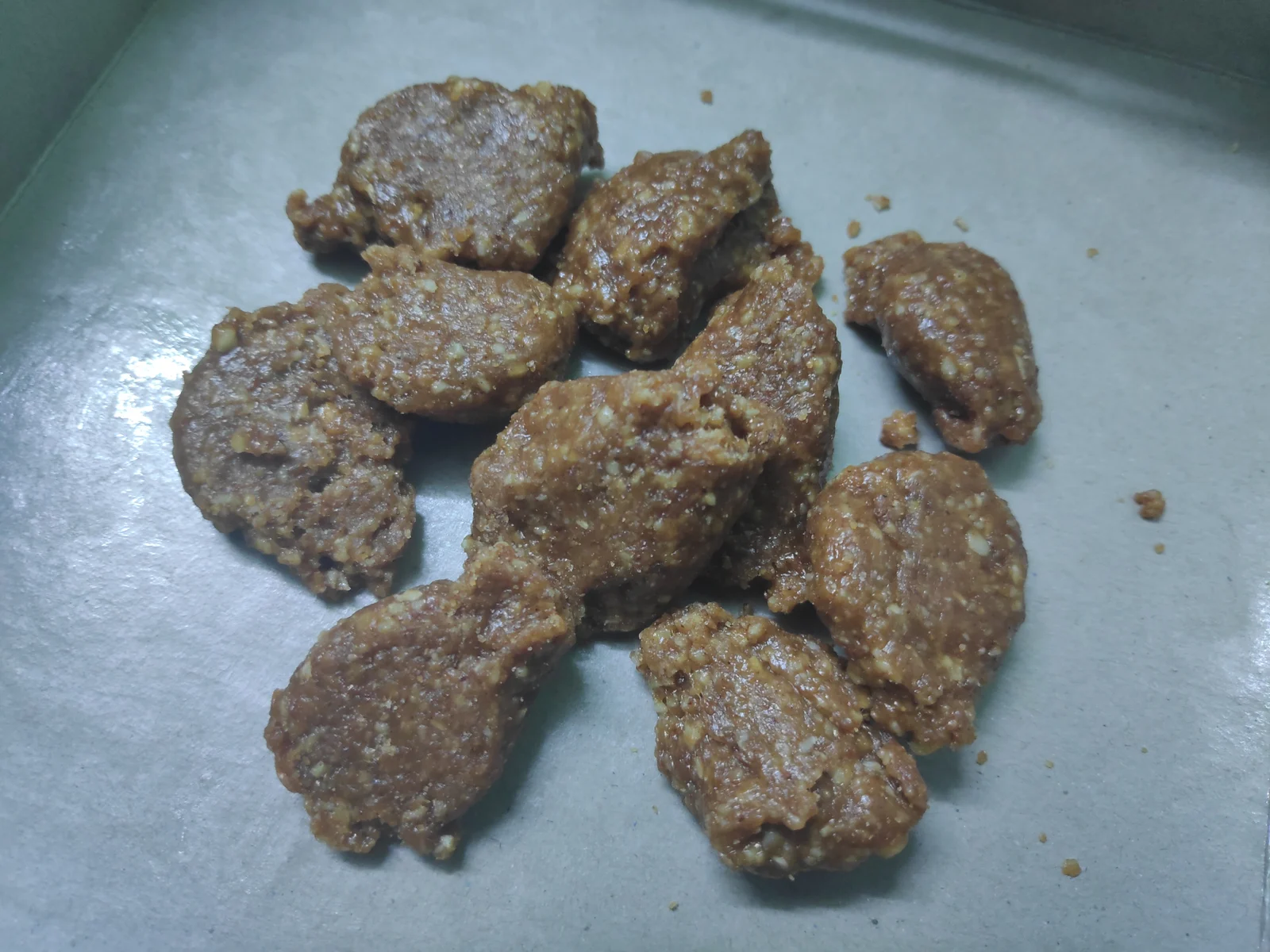
Scoop up the brown paste spread on a metal tray, and the aroma of reduced milk comes with the scattered seeds and raisins. Nepali gundpak (Gundpak, Gudpak, गुँदपाक) is a sweet made by kneading khoa, a concentrated milk core, with sugar and ghee and then adding gund, an edible plant gum, and nuts. Shops in the Kathmandu Valley have sold it spread on a metal tray called a kisti. Some makers also pack it in jars as a gift to be eaten with a spoon. It comes dark brown or pale and soft, and its colour and texture change with what is heated first and when the pan is taken off the heat.
Until the Khoa Leaves the Pan
Khoa is cow’s or buffalo’s milk, among others, heated until the water evaporates and the milk solids are concentrated. In Nepal it is also called kuwa. The pan for gundpak receives an ingredient that already has less water and more concentrated milk solids than if the cook began with liquid milk. According to a production survey in the Kathmandu Valley, which kuwa is used affects how well the mixture holds together when kneaded in the pan and how firm the sweet is. In Banepa and Panauti, east of Kathmandu, kuwa has been eaten as it is and has also been used as an ingredient of gundpak.
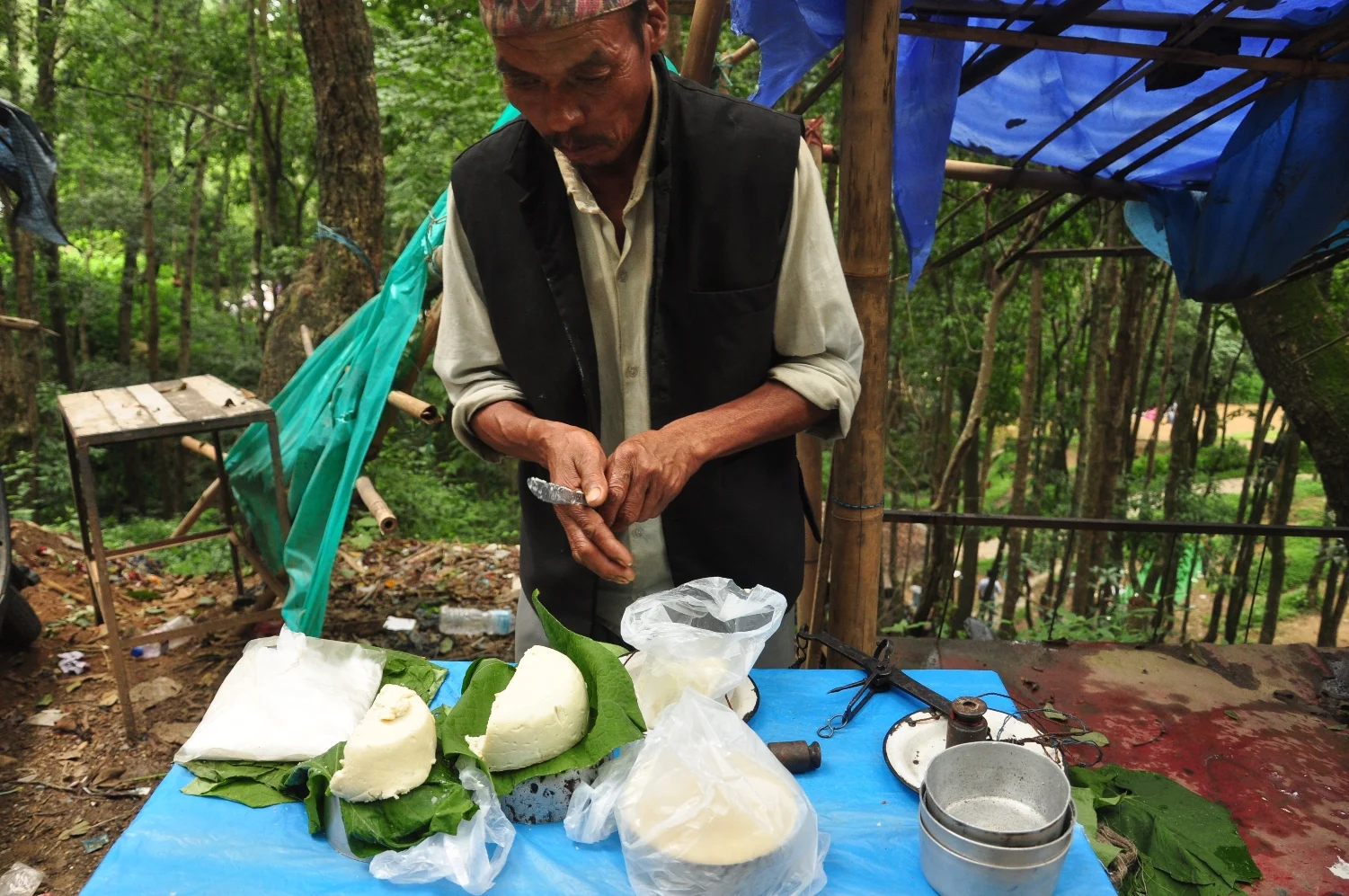
In a 2010 survey, Acharya and colleagues obtained from producers a formulation of 30–35 parts sugar, 5–10 parts ghee, 1–5 parts gund, and 5–10 parts fruit, nuts and spices combined, per 100 parts khoa. Ghee is milk fat made by removing the water and other components from butter. Khoa also retains some milk fat, but the separately added ghee has several uses: cooking the add-ins in the pan, mixing into the dough, and greasing the tray afterwards. What the ratios alone do not make clear is where the milk fat meets the heat and which tray the sweet finally touches.
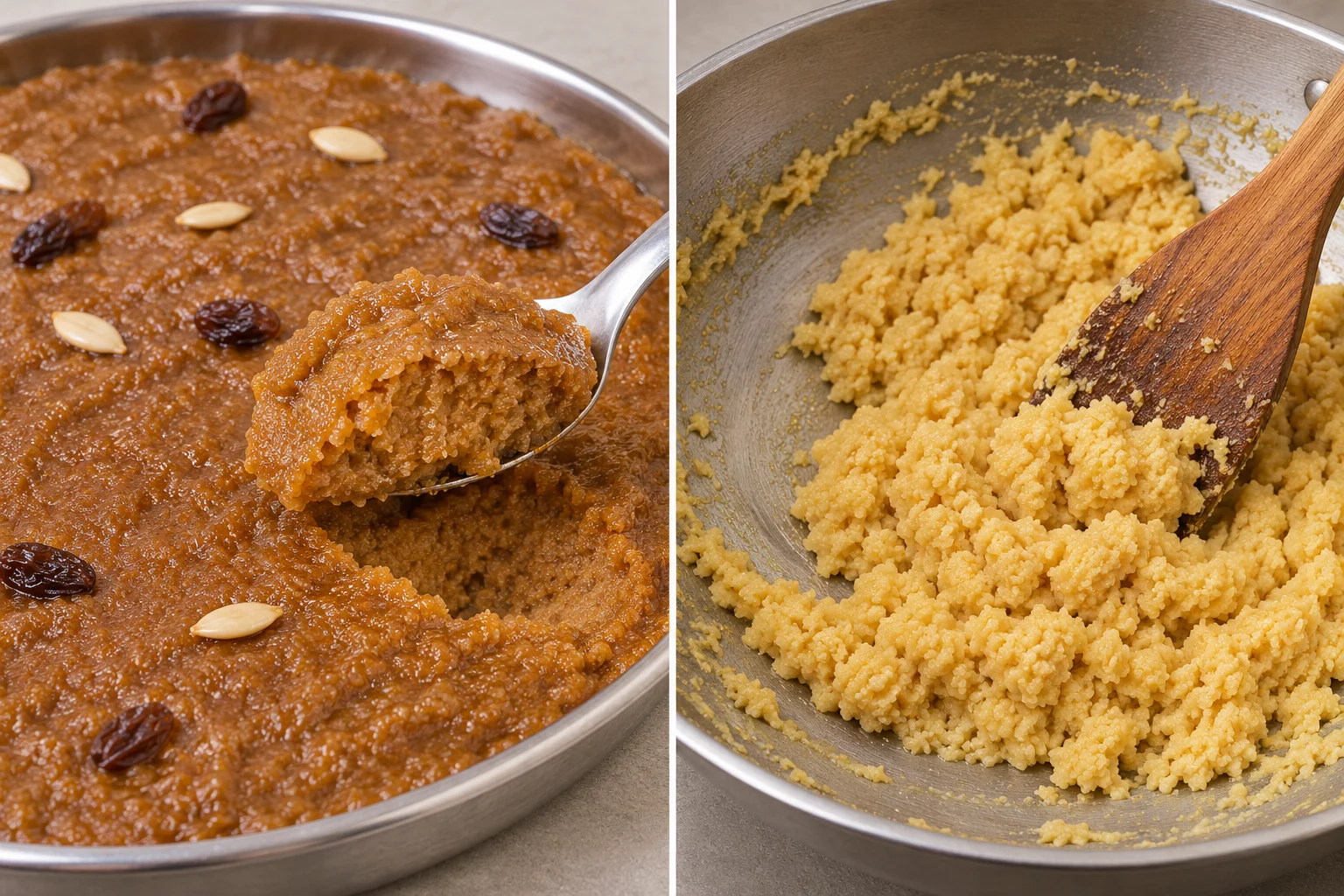
In the 2008 trial production, the edible plant gum is first heated in ghee for about 5 minutes and scooped out with a spoon. The seeds and nuts are also cooked separately, and the khoa is put into the remaining ghee. As it is stirred and scraped from the sides of the pan, the khoa takes on a golden colour, gathers into a single mass and comes away from the bottom and sides of the pan. The process then moves to the next step, adding the sugar syrup and the gund. In the trial, a thick sugar syrup was strained to remove undissolved material and heated until it thickened. The report notes that refined, high-purity sugar can also be used directly. The dough, kneaded to the chosen colour and texture, was poured onto a tray, cooled for one hour and wrapped in high-density polyethylene. If the dough and the add-ins are mixed in one step, it is hard to follow how each browns separately. By taking the add-ins out first, one can see how the khoa holds together where the khoa and ghee remain in the pan.
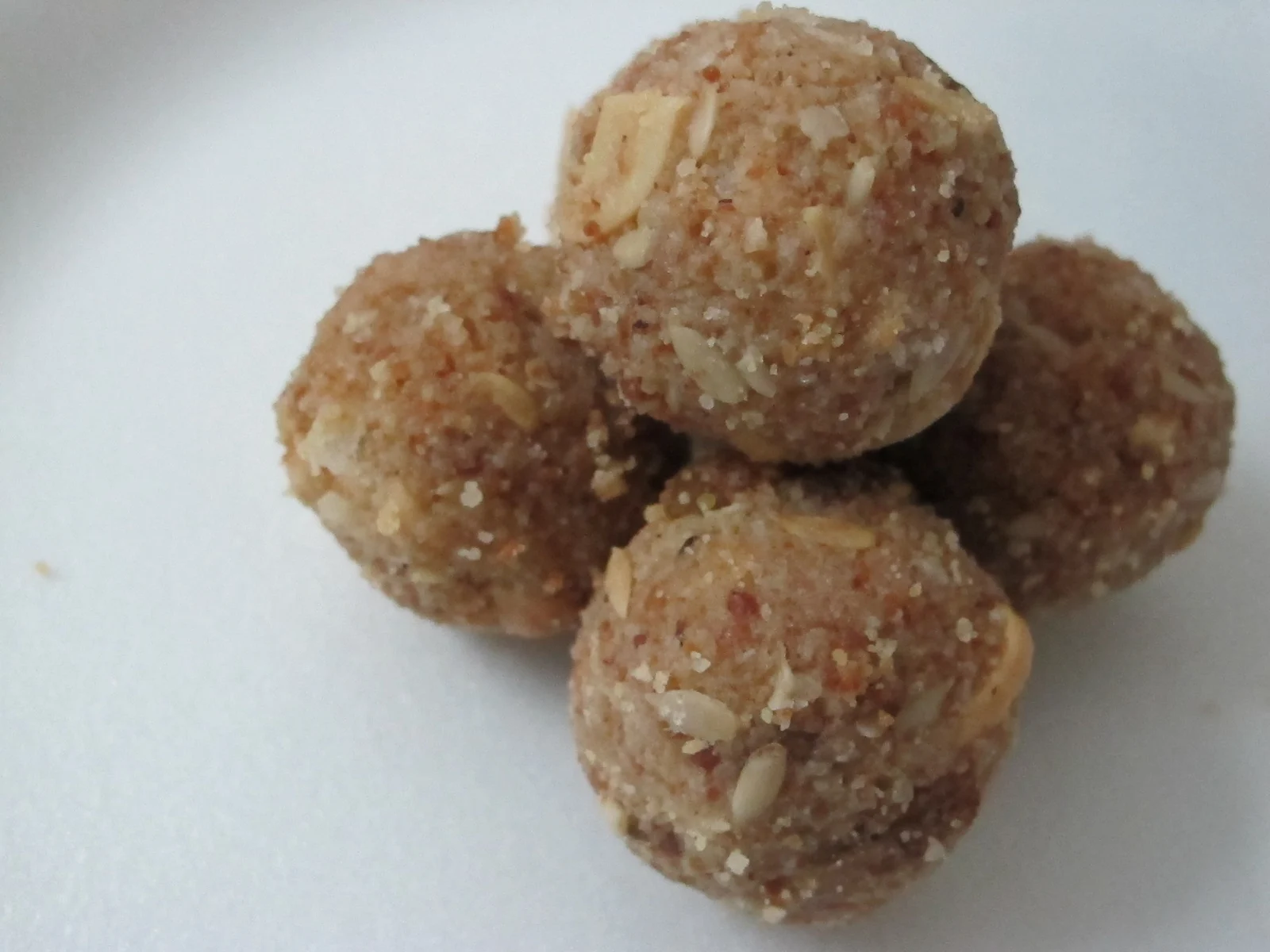
The point at which watermelon seeds, coconut, pistachios, raisins and the like are mixed in changes where they turn up in a mouthful. If fine seeds or powdered dried dates are mixed in partway through, the add-ins are scattered through the soft interior as well. If seeds or raisins are placed on the surface after the dough is spread on the tray, they are the first pieces to touch the teeth when it is scooped up. The process chart of the trial scatters fried ash gourd seeds and cucumber seeds on at the end. Even when the ingredients are similar, the fruit that goes into the dough and the pieces visible on top are added at different stages.
Sugar and Milk: Which Browns First
In a food-technology book compiling traditional Nepali foods, the sugar is melted first, and once it turns yellowish brown, crumbled khoa, fried edible gum, fruit and nuts are added. The sugar has already coloured before the milk goes in. In the trial production in which the khoa is first kneaded in ghee, the cook watches for the khoa to gather into one mass until it comes away from the pan wall. Both methods end in brown, but depending on whether sugar or milk is in the pan first, the moisture and the state of the ingredients before colour develops differ.
The formulations also vary. The traditional-foods book gives an example using 1 kg each of khoa and sugar, with ghee, edible gum and a powder of crushed flattened rice added. Another process table in the same book gives 600 g of khoa and 400 g of sugar. Together with the example from producers of 30–35 parts sugar per 100 parts khoa, the proportion of sugar alone differs. Adding edible gum, flattened rice and nuts further changes both the stickiness of the dough in the stirred pan and the mouthfeel of a cooled piece. A single formulation does not determine every finish seen at the point of sale.
In their trials, Acharya and Prabin Sapkota compared dough heated to 105, 110, 115 and 120 °C. They also varied the proportions of sugar, unrefined sugar and ghee, and evaluated colour, texture, aroma and taste. From that trial they chose the example heated to 120 °C and give 20% sugar, 2.5% unrefined sugar and 10% ghee. The trial varies the heating while knowing the formulation. For a sweet sold in a shop, how far the original milk was concentrated, which fruit went in and when the heat was turned off all overlap, so it cannot be said that the same temperature is used as a guide.
A 2015 study of commercial products reported moisture of 10.1–21.2% and hardness, measured by pressing, of 31.7–245.3 newtons in 12 samples from the Kathmandu Valley. The browns also ranged from light to dark. The hardness figure is the value obtained when a set method is used to press the dough. The researchers consider that the differences seen when the samples are pressed also involve moisture, how far the mixture was boiled down and where the pieces of fruit lay. If a product sold in a shop contains fruit, the probe may strike a hard piece in one case and only the milk dough in another. This range of hardness does not show which product used how much sugar. In the 2010 interviews, the answers of 180 people, of whom 54.4% preferred a medium-soft product and 28.9% a soft one, are the words of those who eat it. Set side by side, they show that differences in softness appear both in measurements of the dough on sale and in the conditions eaters choose.
The Story of the Name Kept in the Asan Shops
Manil Ratna Maske, who keeps a shop on New Road, says that his grandfather, Panna Lal Maske, began selling gundpak in Asan in 1933. In the story, his grandfather made the name by combining gund, the edible plant gum, with pak, which refers to something cooked down. Although there is a similarly sounding word for a kind of sugar, this family takes the gum cooked in ghee as the clue to the name. The year 1933 appears in material recording the history of the shop, and no record has been found that confirms the year the sweet was first made. The traditional-foods book also gives the year "1993", based on another source. Without choosing a single year of origin from these accounts, the 1933 that the shopkeeper gave can be read as testimony about when the shop began selling it.
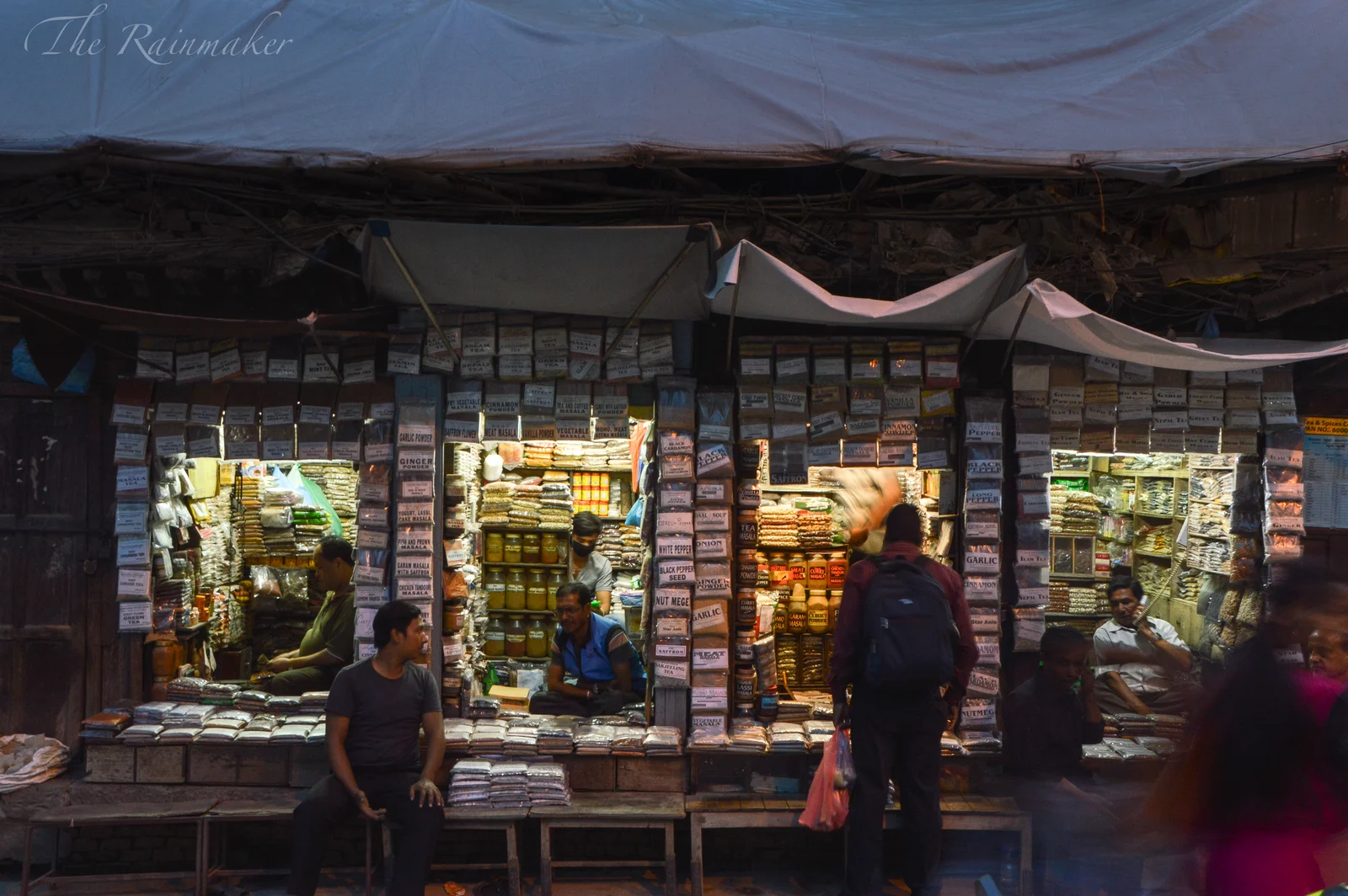
The food expert Sharada Gyawali also raises the possibility that it came about by mixing sweets left over in shops. In interviews with confectioners who actually make it in Dhalko and Nardevi, they said that they themselves do not know when or by whom it was devised. The Maske family also has a story that Panna Lal’s maternal uncle was an Ayurvedic practitioner and that the idea came from a powder of plants he blended for women after childbirth. The formulation tables in the studies include both a postpartum type, sukeri gundpak, to which battisa and other ingredients are added, and a general type that uses khoa, sugar, edible gum and nuts without such a blended powder. A custom of bringing it as a gift when visiting a woman after childbirth has also been recorded.
Weighed from the Tray, Handed Over in a Jar
The production survey found many shops selling the dough left spread on a metal tray, the kisti, greased with ghee. Seeds and nuts can be seen on top, and customers buy the amount they need. Some makers had begun packing it in plastic containers of various sizes. For the Kathmandu Valley at that time, the survey estimated production of about 579 tonnes a year and sales of about 550 tonnes. The estimates cover Asan and Nardevi in Kathmandu, Bhaktapur, Lalitpur and other places, and current production volume cannot be read from this source. Both the shops that put trays out at the point of sale and those that pack containers had makers and customers in several districts. The report’s sales table lists about 226 tonnes for New Road and about 32 tonnes for Asan, so even within Kathmandu the scale differed according to the district surveyed. The place names in the table of production sites and the table of sales sites partly overlap, and production within the valley and the places to which it is sold are recorded separately.
It is said to have been made mainly in winter in the past because of the need to preserve it, but at the time of the survey it was sold throughout the year. Sales are reported to have risen on days for giving gifts to mothers and fathers, and at Teej, Dashain and Tihar. A 2021 Nepali-language article also quotes the confectioner Manjit Lal Maske on demand at Dashain and Tihar and lists khoa, sugar, plant gum, watermelon seeds and raisins as ingredients. At Tihar it also becomes a souvenir carried from town to village. Scooping it out for guests, wrapping it to visit relatives and taking it to a woman after childbirth are different destinations, even when the same sweet is bought from one tray.
In an interview with the Nepali-language Setopati, Anushka Shrestha said that before starting the confectionery company Makkuse in 2020, she went around the old confectionery shops of Kathmandu to learn how the sweet is made. The company packs gundpak in glass jars, wraps the lid in Nepali paper and ties it with string. It has made varieties with rose water and pistachio, mocha and others, as well as an unscented product. A gift box holding pustakari and two varieties comes with a spoon. The gundpak is scooped from the jar, while the pustakari, wrapped one piece at a time in gold paper, is eaten after the wrapper is opened. The way a soft sweet is taken from a tray at the point of sale continues in the jar.
With a jar, instead of showing the whole tray with its nut-topped finished surface as in a shop, the customer scoops from a single opened jar. In the two milk sweets that Makkuse’s gift box combines, a scooped mouthful and an unwrapped mouthful are likewise in the same box. Packaging changes the appearance, but it also relates to the form in which the sweet is carried and to who takes out a single portion.
Pustakari, which uses the same khoa and sugar, has a type that is divided into small pieces while still warm and hardens as it cools. The Nepal Gazette of Nepali year 2077, which corresponds to 2020, asks for a characteristic softness in gundpak, hardness in pustakari, and a natural brown colour and aroma in both. For sale, they are sealed with clean, dry food-grade materials. In the Gazette’s collection of standards, gundpak also has an item of 8.0% or more fat and protein by dry weight. The single formulation mixed in a trial, the figures measured on commercial products and the conditions required of packaged products each measure a different thing. In the standards for packaged products, the upper limit for moisture is 25% for gundpak and 6.0% for pustakari. The form scooped from a tray with a spoon and the form wrapped piece by piece show the firmness chosen for each sweet.
Glossary
- Khoa (khoa, khuwa)
- Concentrated milk solids made by heating milk to drive off the water. It forms the base of gundpak dough.
- Ghee (ghee)
- Fat made by heating milk butter to remove the water and other components. It is used in the dough, for cooking the add-ins and to grease the tray.
- Gund (gund, gundh)
- Edible plant gum added to the sweet. In the trial described here, it is heated in ghee before use.
- Kisti (kisti)
- A metal tray on which the kneaded sweet is spread to cool. It is also used for sale at the shop.
- Battisa (battisa)
- A blended powder of several plants. Some postpartum types of gundpak have it added.
- Pustakari (pustakari)
- A Nepali sweet made by boiling down sugar, milk, fat and other ingredients. This article compares an example made as hard small pieces.


