


SweetloreEncyclopedia of World Sweets (834)

Hininy
Hininy
Baked wheat bread, worked with dates and served warm
Desserts / Najd region, Saudi Arabia

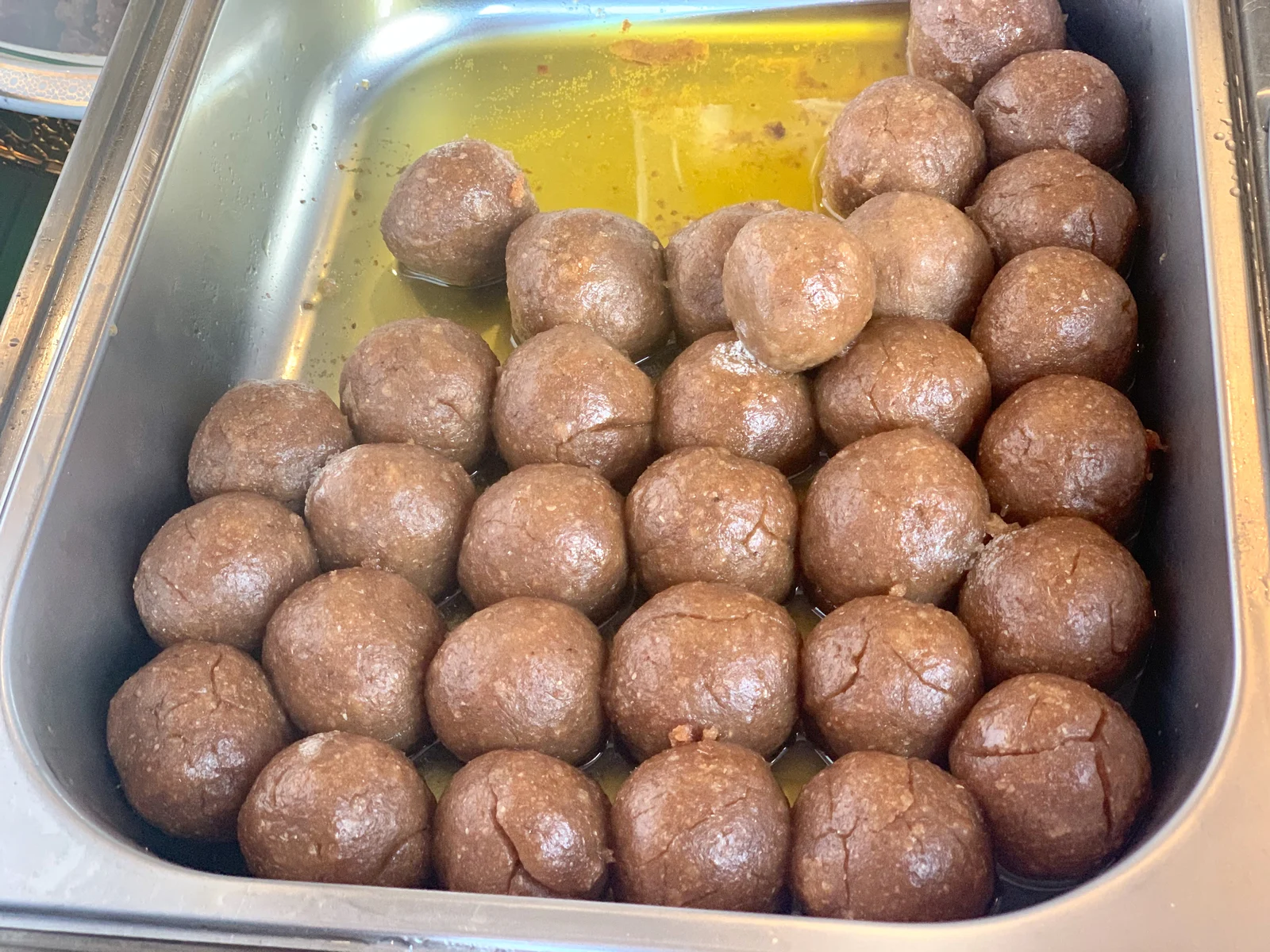
Golden fat gleams around the rounded brown balls of hininy. Hininy (الحنيني, Hininy) is a sweet Saudi Arabian preparation made by crumbling baked wheat bread and working it together with dates and samn. It is familiar in Najd, the central region of the Arabian Peninsula that includes Qassim, and in the cold season it is served warm. The dates sweeten the dish and bind the wheat crumbs, while the samn carries its aroma through the mass. Baked bread and fruit pulp are combined once more to give a mass that holds its shape on the plate.
Baking the bread first, then crumbling it
The method described by Saudipedia begins with removing the grains from the ears of wheat. The wheat is threshed, the whole grains are ground into flour, and the flour is kneaded into a dough. The dough is not mixed with dates as it is. It is first baked into bread, and the worked pulp and samn are added from that point. Considering the three ingredients, the wheat does not serve merely as a flour that adds bulk; it brings the toasted aroma of baking into the dish. A 2004 Saudi Press Agency report likewise says that makers attach importance to how well the brown whole wheat is baked, the quality of the dates, how finely the combined mixture is ground, and the ratio of dates to baked wheat.
Tammar, a date seller, describes a method in which whole wheat flour is kneaded with water and a little salt, rested for about fifteen minutes, rolled into thin rounds, and cooked on both sides on a hot griddle. The baked bread is cooled, cut into small pieces, and put into a grinder together with dates from which the pits and stems have been removed. It also lists the option of using ready-made qurṣān (qurṣān). The hospitality menus published by the Culinary Arts Commission of the Ministry of Culture also use a thin flatbread, which the ingredient list calls qurṣān. The work differs depending on whether one starts by baking the bread or prepares thin baked bread, but the order is the same: cooked wheat is combined with the date pulp.
Saudipedia’s entry on other Qassim dishes also includes qurṣān, a whole wheat dough spread on a hot griddle, browned, and cut into small pieces. Whether it is mixed with vegetables and spices to make a savory dish or combined with mashed dates to make hininy, the two paths diverge only after the same baked bread. The baked bread used here is not meant to keep the shape of a single sheet. It keeps its color and aroma before grinding, and at the next stage each piece loses its outline.
Pitting the dates and grinding them alternately with the bread
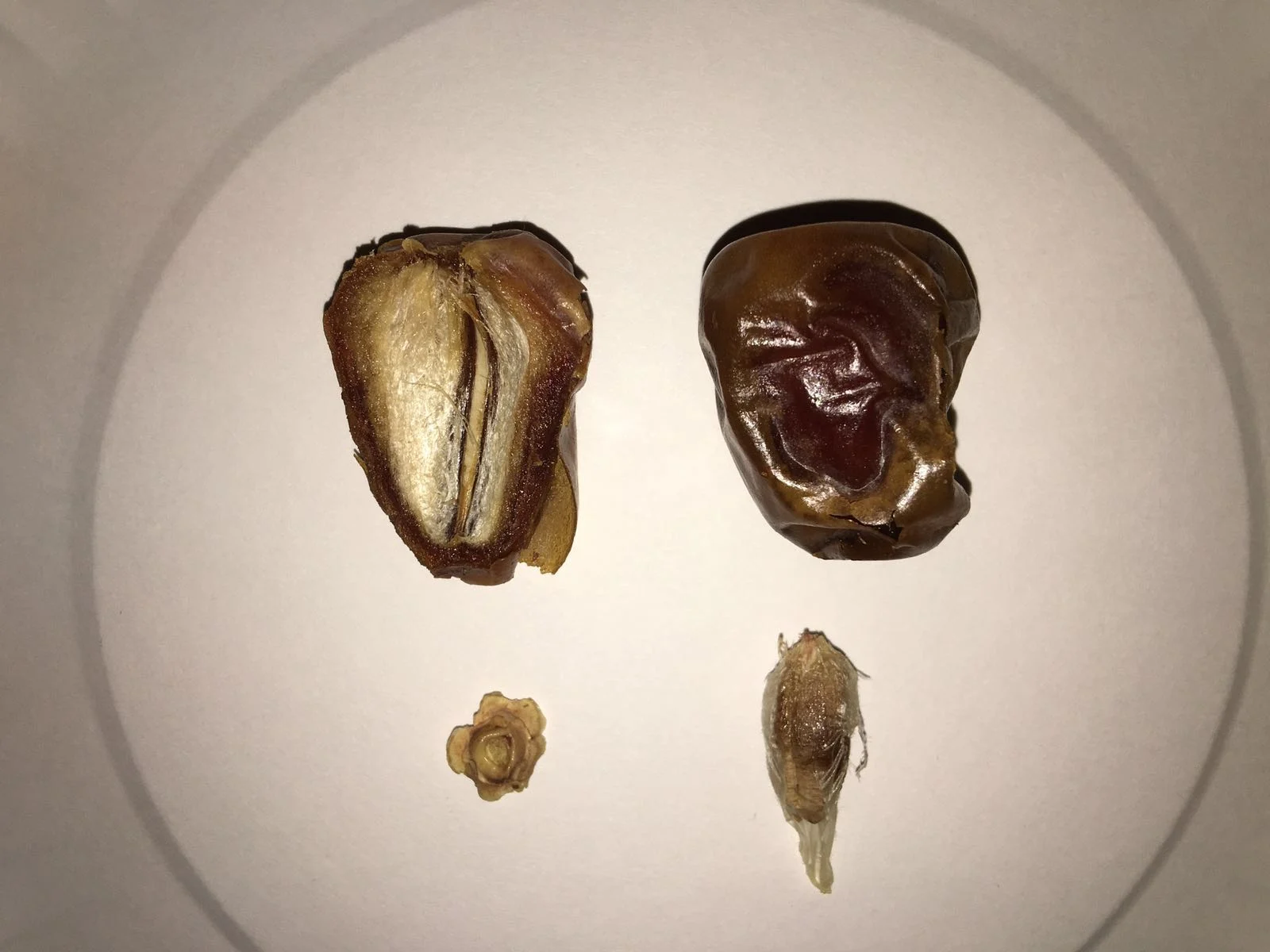
The date is the fruit of the date palm. Saudipedia calls the worked pulp abīt and gives the yellow Sukkari variety as a favored example. The hospitality menus use a paste of the Khalas variety, and Tammar suggests soft Sukkari or Khalas. The Maktoum variety also appears in Saudipedia’s article on Qassim dishes. Looking beyond sweetness and color to how soft the dates are once pitted, and how well they bind when ground with the bread, makes clear why makers’ accounts name varieties.
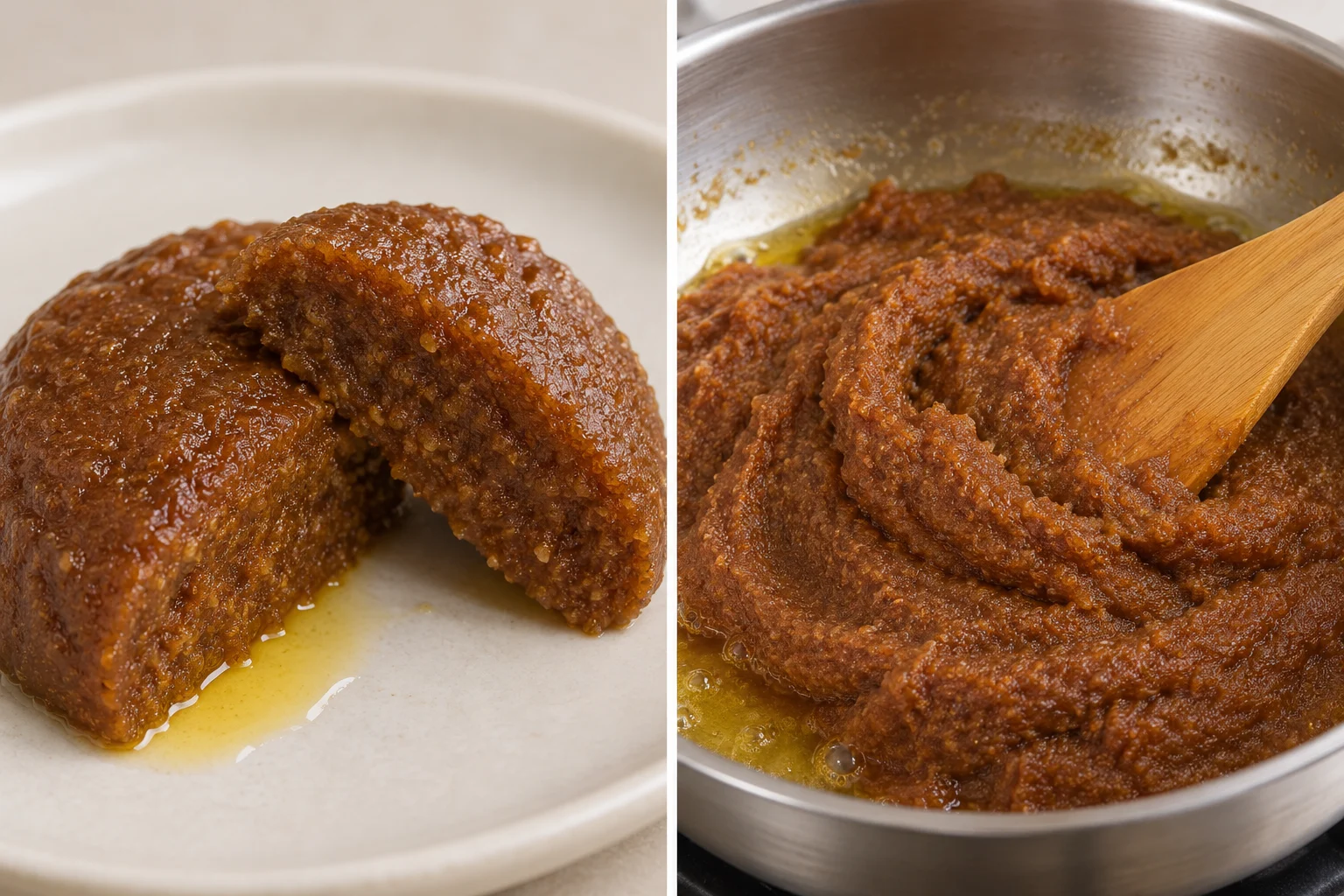
In Tammar’s version, finely cut bread and pitted date pulp are fed into the grinder in alternation, and the mixture is passed through two or three times to adjust its smoothness. Samn or butter is then melted over low heat in a heavy-bottomed pot, the ground mixture is added, and it is stirred with a wooden spatula so that the fat blends in. Tammar explains that after about 15 to 20 minutes of stirring, the whole mass takes on color and sheen. If the pieces of bread stay large, there are spots where the bread is tasted first; if more pulp is ground in, the sweetness and stickiness of the dates spread more readily through the whole. A little lukewarm water can be added if needed. The quantities belong to the method given by this shop, and they cannot be equated with the proportions that a maker interviewed in 2004 named as her secret.
Hissa al-Humaidan (حصة الحميدان), interviewed in Qassim in 2014, cut thin whole wheat flatbread into small pieces, mixed it with pitted dates, poured in a cup of milk, and ground the mixture several times until smooth. She then warmed it over the fire and added butter and lemon. The milk is not a liquid poured over the finished plate; it goes in before the baked bread and pulp are ground. In its report on the Qassim exhibit at the 2018 national cultural festival, Janadriyah, the news agency likewise records a cup of milk, several rounds of grinding, and the order of warming, then adding butter and lemon. It is a dish in which the sweetness centered on the pulp is changed again and again: in baking the flour, in evening out the bread crumbs, and in combining the fat.
Umm Muhammad al-Mahlasi (أم محمد المحلسي), who had a stall at the third Unaizah festival, prepares round loaves of baked whole wheat bread and combines them with pitted dates that have gone through a step called ʿabṭ (العبط), the working of the dates. The steps in her account are grinding and straining the dates with hot water, moistening the bread, grinding the bread with butter three times, and then combining it with the pulp and rolling it. She finishes it with cardamom or lemon. At the interview she said she had made the dish for more than fifteen years and that preparation can take seven hours. The round shape can be compared with the photograph, but the photograph is from the following year’s festival, so it is not clear whether it shows the same person’s dish.
Fat in the pot, sourness on the plate
Working fat into the bread and dates carries the aroma of butter or samn through to the interior. Saudipedia also mentions a method of pouring samn over the top after the dish is served. Poured over the top, the fat leaves a sheen on the surface that the diner meets first. In the Ministry of Culture’s hospitality example, both butter and samn appear, and lemon is also used. In versions where the date pulp needs no separate sugar, the fruit’s sweetness is inside, and the fat at the end wraps it in aroma.
In versions served with lemon or citron, sourness is added to the rich mouthful of sweet pulp and fat. A 2024 Saudi Press Agency article reports that, among the citrus fruits harvested in winter in Qassim or bought at the market, lemon and citron go into dishes such as hininy. Some sources on Qassim dishes also show citrus placed at the center or the edge of the plate. Adding sourness at the end and adding a cup of milk before grinding both use a liquid, but they do different work. The milk goes into the bread and dates, whereas when citrus is placed on at the end, each mouthful can be adjusted for sourness.
Dates, wheat, and fat also appear in muhalla, a dish of the same region. Tammar contrasts it as a softer dish, in which flour is added to a paste of water and dates as it is heated. In Saudipedia’s description, dates are soaked in water for 6 to 8 hours, the strained liquid is warmed while whole wheat flour is sprinkled in, the mixture is stirred for 2 to 3 hours, and butter or samn is added. The flour is heated in the pot that holds the dates. In hininy, bread that has already been baked is ground with the pulp and warmed again. The difference in how the two hold together can be understood less from the names of the ingredients than from the order in which they reach the pot.
Tammar also lists serving warm hininy with Arabic coffee. Warming it so that the aroma of samn or butter comes through more strongly, and shaping the date-bound mass into rounds or serving it on small plates, are different steps for the same ingredients. Tammar’s method, stirred over low heat until glossy, and al-Mahlasi’s, rolled and finished with cardamom or lemon, differ even in how the mass is handled by hand after cooking. Arranged in rounds as in the photograph, it can be divided one piece at a time from the plate, whereas in servings scooped from the pot, the person portioning each mouthful decides the amount.
From winter households to festival stalls
In 2004, the Saudi Press Agency reported on a Qassim market at a time when the approach of winter overlapped with the approach of Ramadan, with home-made goods and factory products on sale side by side. It also mentions a period when families took on the work of grinding dates by hand and combining them with whole wheat bread moistened with water. Even now that machine-grinding methods exist, the way the mass holds together differs from household to household, depending on how the bread is baked and the ratio of bread to fruit. The ready availability of commercial products and the presence of people at home who teach the method can now be seen side by side in the same town. There are also accounts from Qassim of eating it early in the morning or at dinner, and a record from Hail of serving it at breakfast, made with whole wheat, dates, and samn. Which household in which place first made it cannot be determined from the records I have checked.
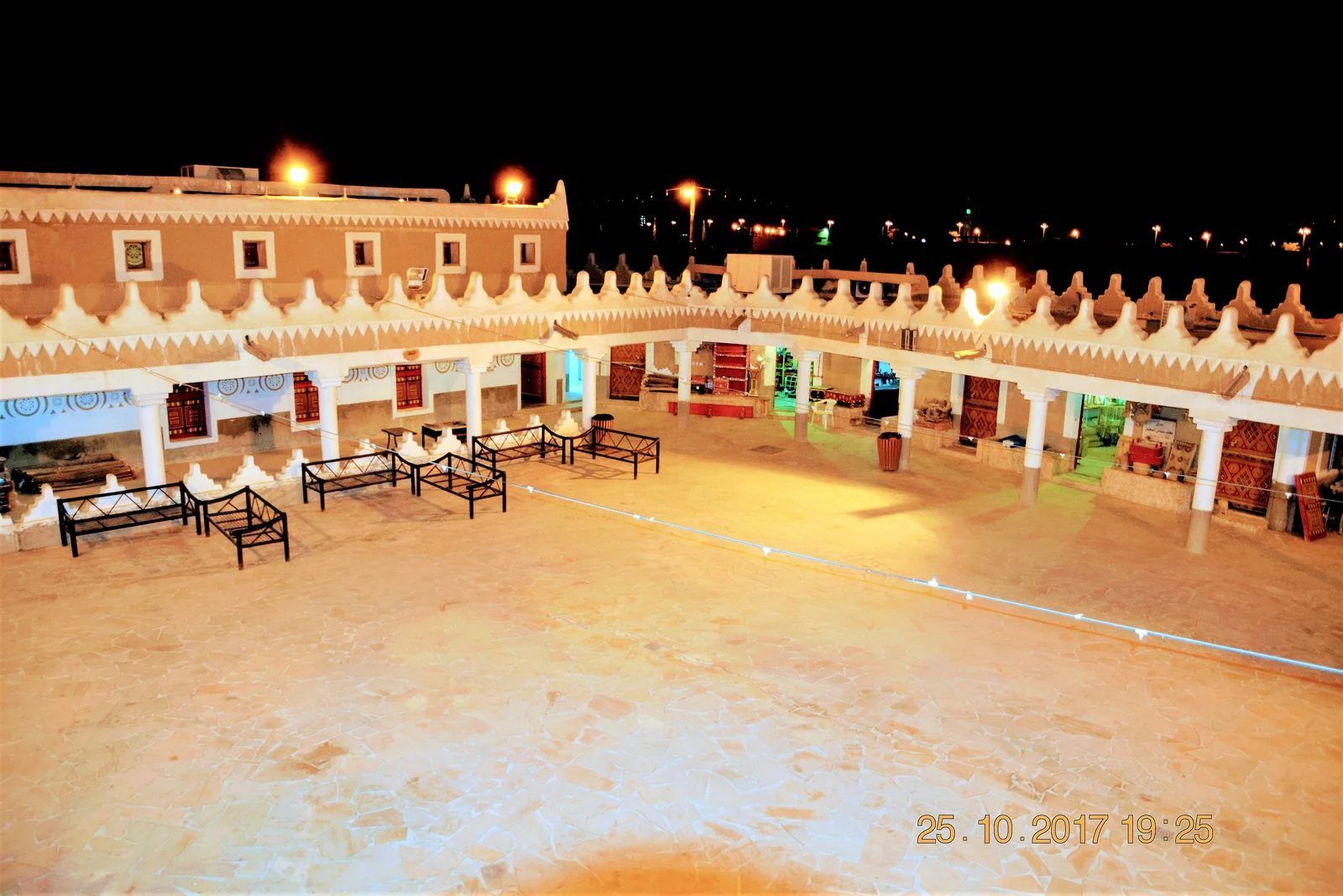
Regarding the Musawkaf market, the festival venue, Saudipedia records that the old market was demolished in 1968 and that a market rebuilt on the basis of the earlier design opened in 2009. The festival is a new use of a historic market. The first venue also had a section serving Arabic coffee, in addition to the household stalls. The 2004 report on household and factory products in a Qassim market and the festivals held later in the city belong to different points in time, but they connect when one follows the places where home cooks hand their goods to outside customers.
At the first hininy festival, the Unaizah Chamber of Commerce created a space in the Musawkaf market to display goods from local households. In 2022, at the sixth festival, the Saudi Press Agency recorded more than 110 producing and selling households taking part. The prepared sections presented ingredients and methods as models and in video, and included a section on the dish’s history as a winter food. The provincial tourism listing likewise describes an event in which traditional dishes and crafts, along with stalls of home producers, gather in the same market. Once the bread has been baked, the sequence of preparation is hard to see at a stall, and visitors who come to buy a winter dish can learn it there.
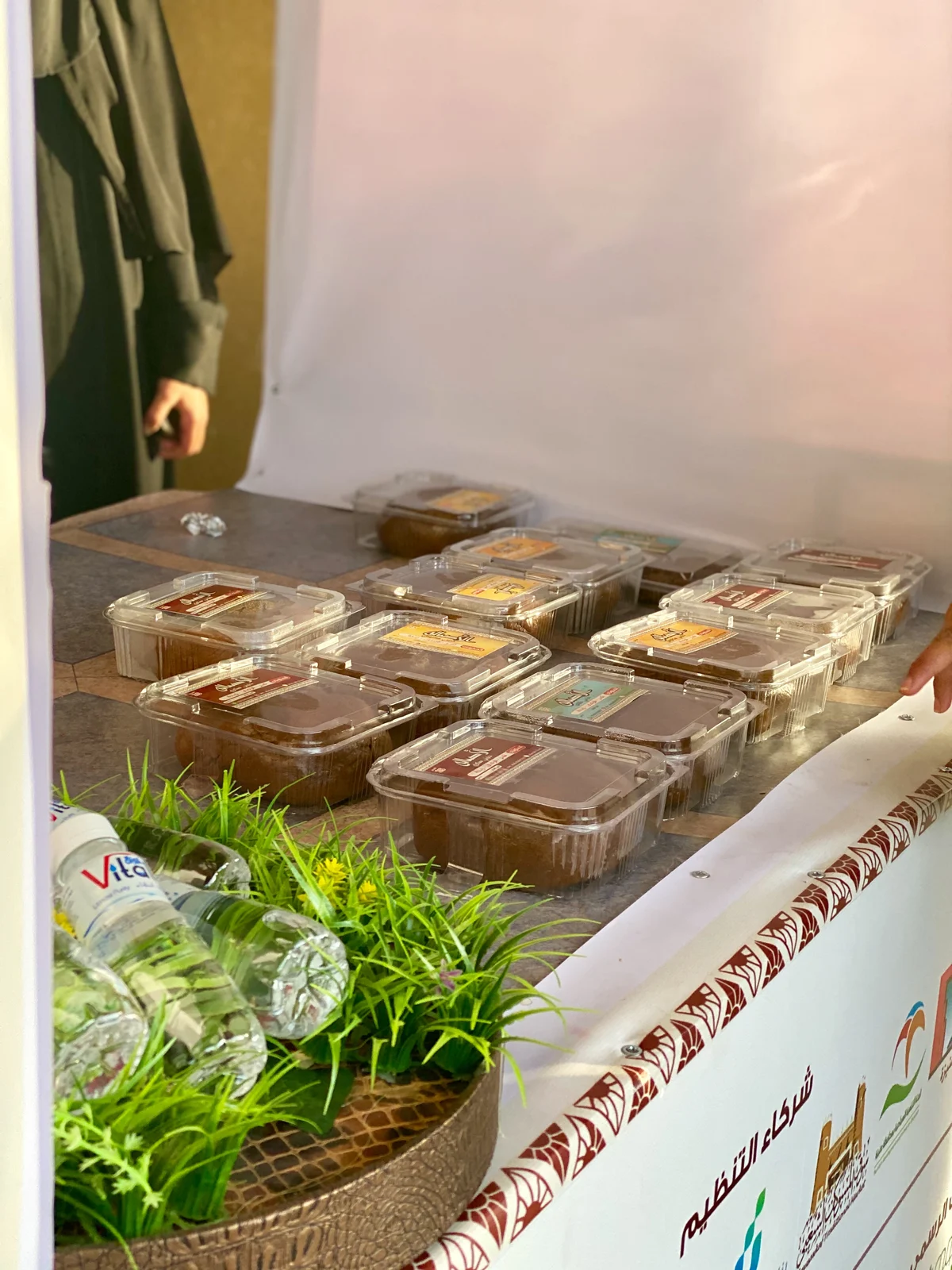
From the first festival, home cooks brought finished goods and handed them to visitors. As the festival was held repeatedly, the venue came to offer a place for teaching the craft, much as the steps are passed on within households. Al Riyadh’s report on the seventh festival describes experienced women teaching younger makers the ingredients, cooking, and preparation. Alongside the place where households sell hininy, there is now a place to learn the handwork, from the ground mass to warming it into a single plate. A report on the eighth festival, a market event lasting six days, introduces examples in which household makers adapted hininy for other sweets and ice cream. The aroma of fat in a warm dish and the sweetness of pulp folded into a cold sweet differ from the first mouthful, in temperature. Although its form changes between a plate eaten at home and a stall that portions it into containers or uses it in cold sweets, the mass made by combining baked wheat and dates supports each new form.
Glossary
- Dates
- The fruit of the date palm. The ripe pulp is sometimes worked into a paste for use.
- Samn
- Clarified fat made from butter or similar. Its flavor varies with the region and the ingredients.
- Qurṣān
- A type of thinly baked bread.
- Najd
- The name of a region in the center of the Arabian Peninsula. Qassim lies in its north.


