


SweetloreEncyclopedia of World Sweets (834)

Dibyaza
Debyazah
Soaking dried apricot sheets and simmering nuts and fruit
Desserts / Saudi Arabia, Hijaz region

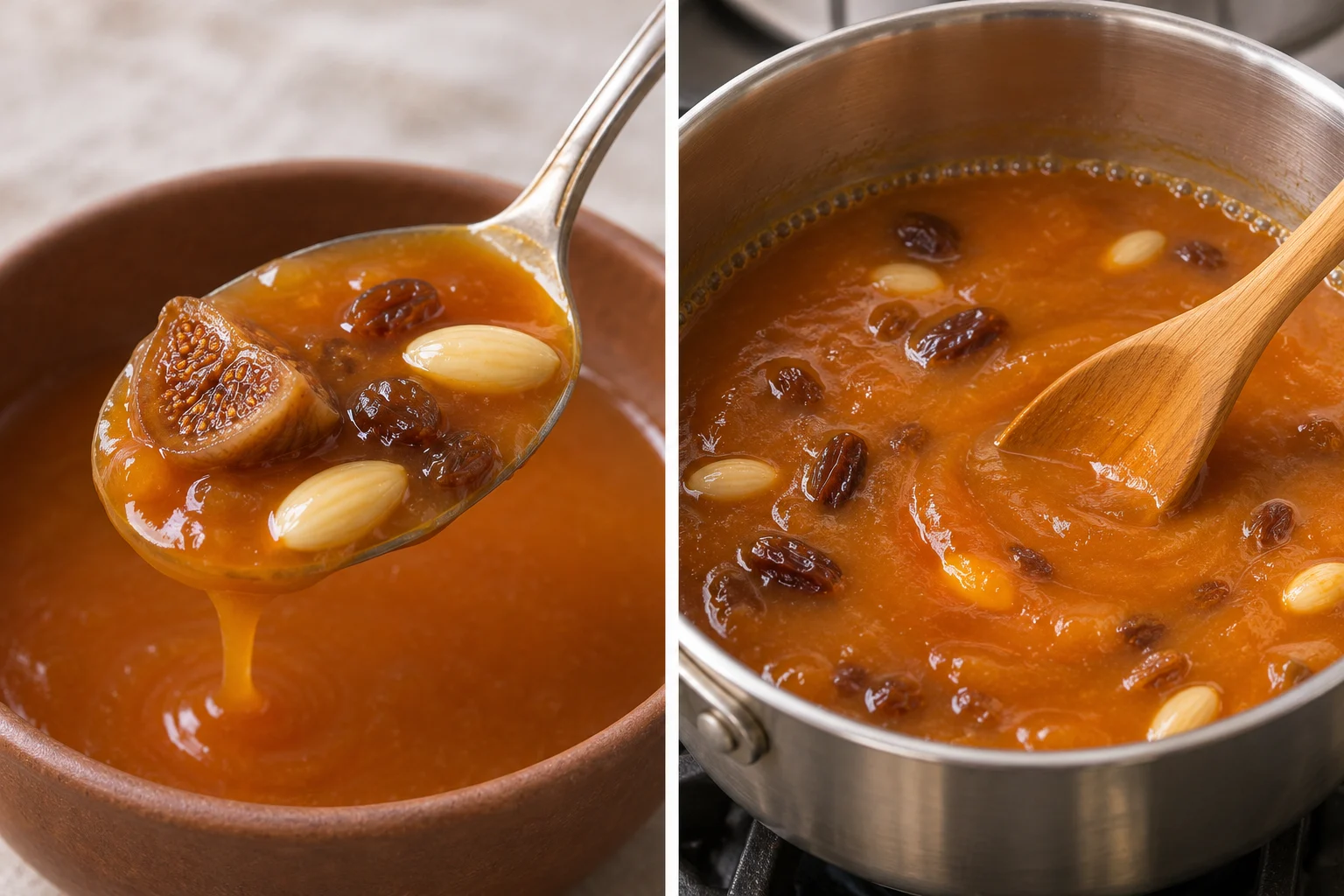
When a spoon goes in, it comes up with raisins, dried figs and almonds mixed into a thick, apricot-colored liquid. Dibyaza (الدبيازة) is a sweet eaten in the Hijaz, in western Saudi Arabia. Dried sheets of apricot pulp are soaked in water to make the cooking liquid, while the nuts and dates are prepared separately and then combined with it. Records from Mecca, Medina and Jeddah describe it as a sweet dish on the morning table around which families gather after returning from the Eid al-Fitr prayer. It is set out with bread and cheese, and the liquid and solids are taken together from a deep bowl.
Soaking the Apricot Sheets to Make the Liquid in the Pot
Kamar al-Din (قمر الدين), used for the cooking liquid, is apricot pulp dried into thin sheets. The stiff sheets are left in water to soften, then blended and heated. The Okaz recipe soaks one roll in boiling water for about 1 hour, or 30 minutes if it is soft, and then puts it in a blender. In another Okaz interview, the dietitian Nuha Bukhas describes leaving cut sheets in hot water overnight and stirring them partway through. Even a "roll" is not necessarily uniform in size or hardness, and the examples differ even in when the apricot is blended.
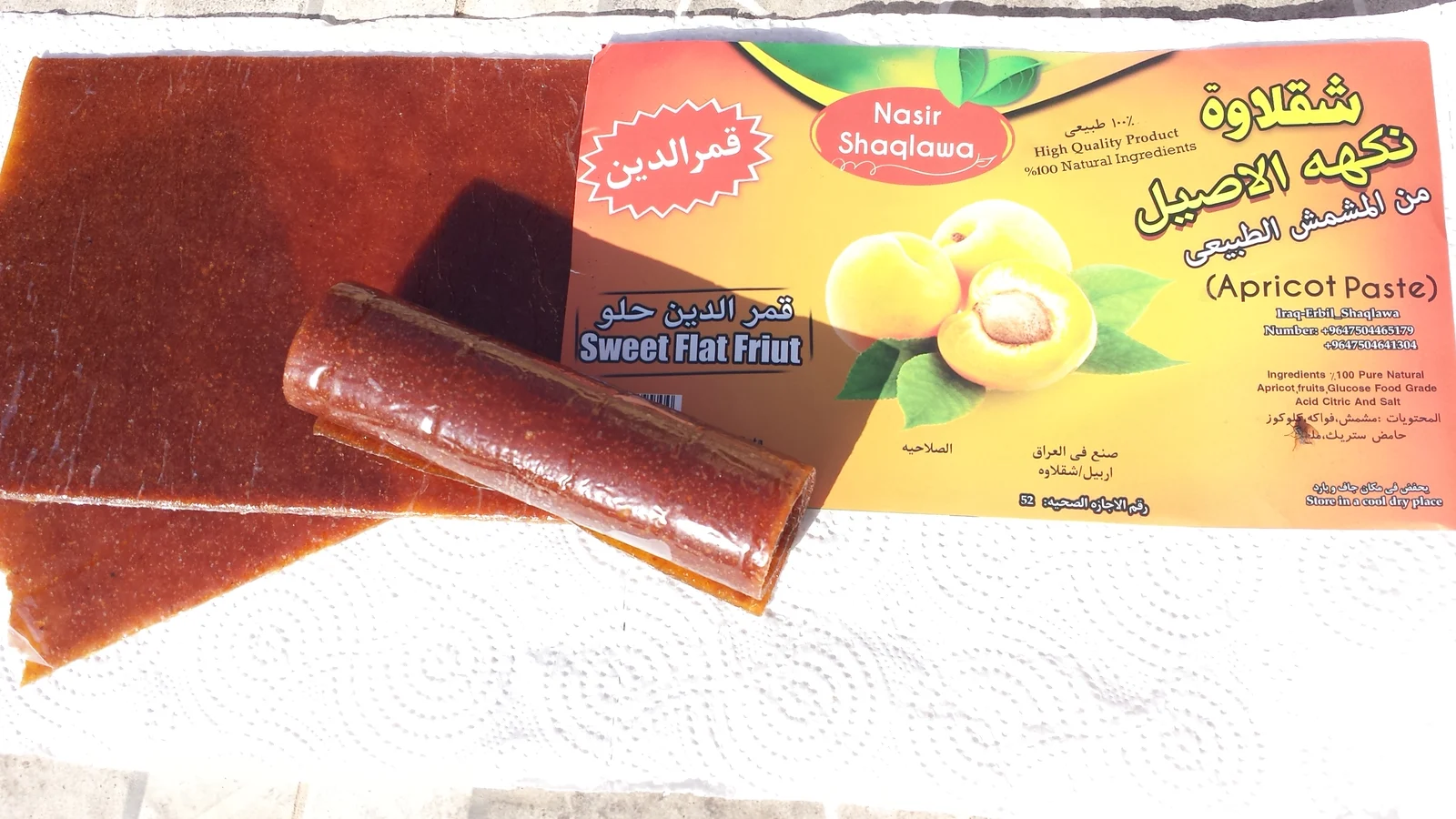
The softened pulp blends into the water, so the liquid takes on color and apricot flavor. A Mecca tourism guide says to use dried dates, raisins and nuts and to simmer over low heat until the liquid thickens. The Saudi Culinary Arts Commission’s National Day recipe gives, as the sign of doneness, a consistency like whisked, smooth yogurt or thick syrup. Bubbling alone does not show how much will cling to the spoon. The mixture is cooked down, reducing the liquid until the apricot liquid holds the solids.
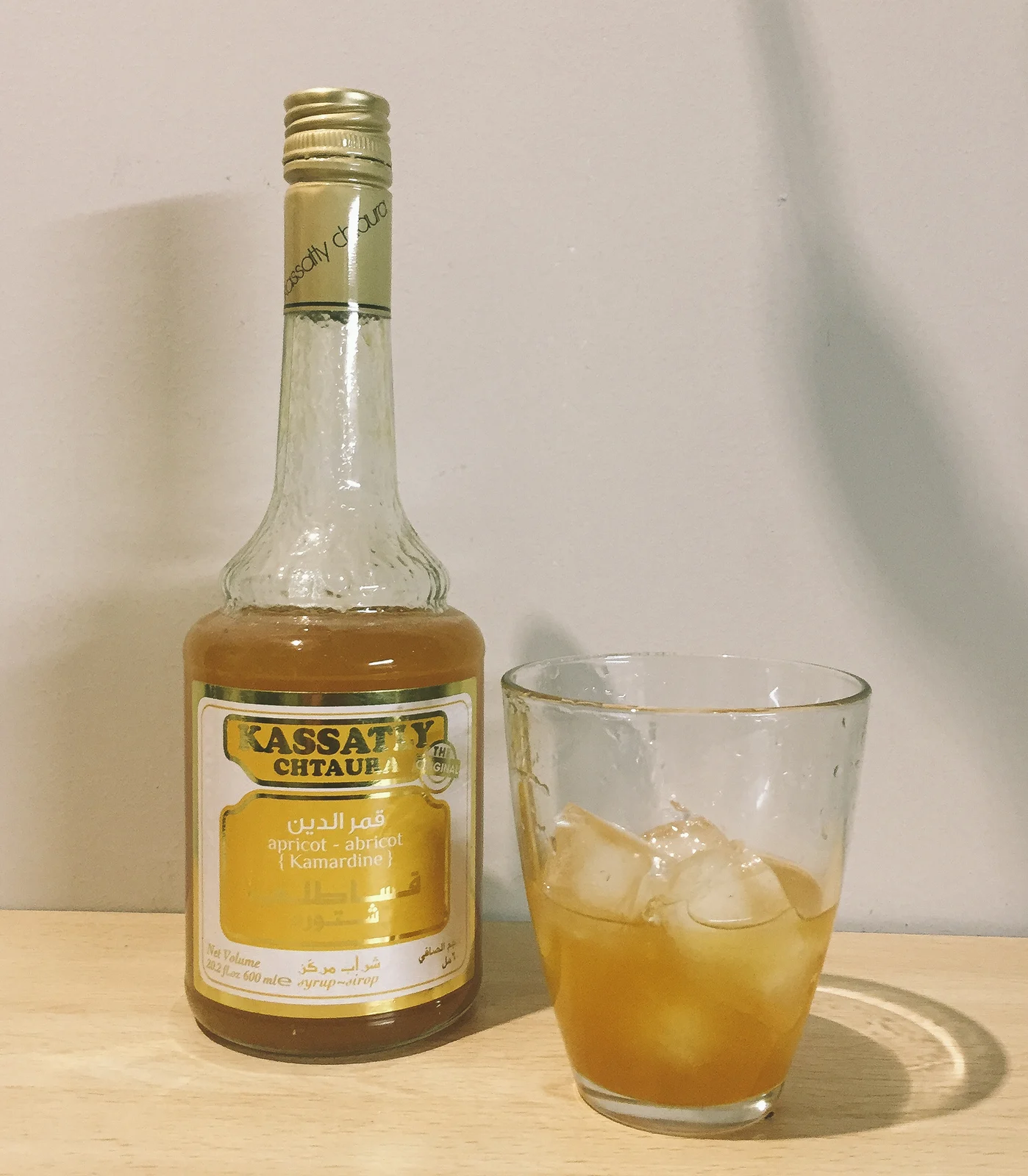
Soaked apricot sheets can also be used for a drink. For dibyaza, the liquid left after soaking and blending is heated until it is thick enough to hold the fruit and nuts. The commission’s recipe collection describes Mecca’s dibyaza as a dish similar to khushaf, or to a compote of apricots, dates and nuts. This offers a way to compare the sweetness of cooked fruit, but here the liquid is also made from apricot pulp, and some recipes first cook the nuts in ghee. Set beside other compotes, the dish is seen to contain both the pulp dissolved in the liquid and the pieces that can be picked out one by one.
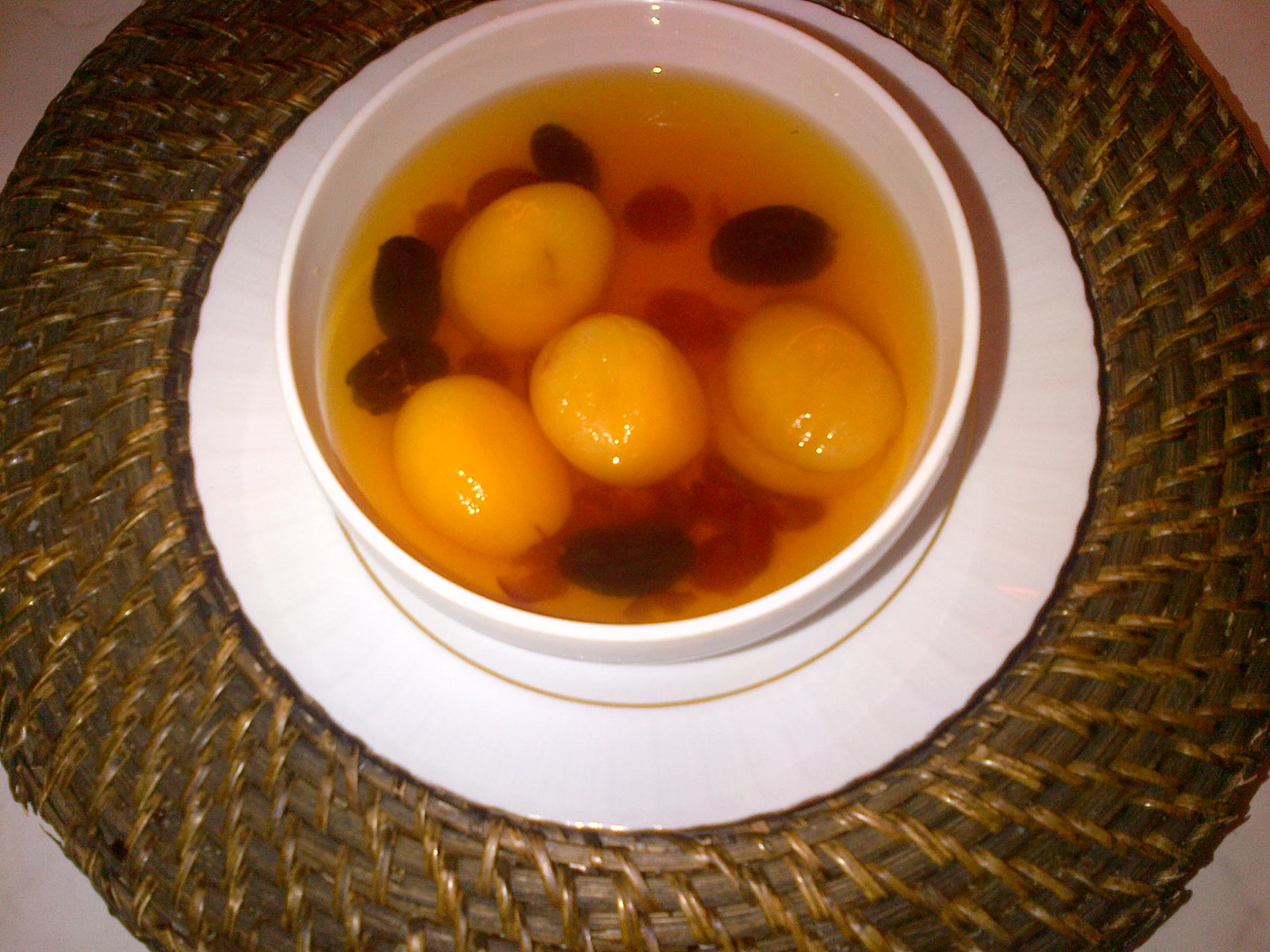
The Mecca encyclopedia also lists khushaf, under a separate entry. It is a sweet made by boiling black raisins, straining the liquid, adding sugar and nuts, and cooling it in a large bowl. Some accounts have people eating it to break the fast in Ramadan, and also before dawn. Even when a liquid-and-nut sweet is made in the same city, what goes into the pot first changes depending on whether raisins or apricots supply the color and flavor. In dibyaza, there are versions in which apricot makes the liquid and raisins are added later as whole pieces.
Nuts Browned First, Fruit Left Whole
In the Okaz recipe using almonds, pine nuts, pistachios and cashews, each kind is browned separately in ghee. Because they differ in size and surface, each kind is lifted out before it colors too deeply. The recipe’s caution is that if the browning goes too dark, the whole dish also turns dark. Nuha Bukhas recommends lightly roasting the nuts over a fire and then, if needed, putting them in oil. The Medina tourism authority gives an example of roasting the nuts with a little ghee. If the heat under the apricot pot and the heat for browning the nuts are kept separate, the liquid can simmer gently while the toasty aroma of each kind of nut is controlled.
Umm Abdulghafur, interviewed in Medina, describes the method she learned at home. The apricot liquid is simmered over low heat, the nuts, dried fruit and dates are boiled and then added, and everything goes back on low heat. The advice to roast nuts in ghee and the method of boiling the fruit and nuts before cooking concern different steps. If the dried fruit is soaked beforehand, the amount of liquid it absorbs in the apricot pot also changes. This approach allows separate time for thickening the liquid and for softening the dates and figs until they can be chewed.
In the Okaz recipe, five pieces of qalada, a dried date, are soaked in warm water for 2 hours. In the same recipe, soft apricot sheets are soaked for 30 minutes, so the dates can be put in water earlier. According to the encyclopedia of Mecca’s food from the King Abdulaziz Public Library, qalada takes its name from the practice of selling the fruit strung on thread like a necklace. The apricot sheets are blended after soaking, but the softened dates, dried figs and raisins remain in the liquid as solids. Some spoonfuls hold more nuts and others more fruit to chew because the pieces of fruit are not all crushed at once.
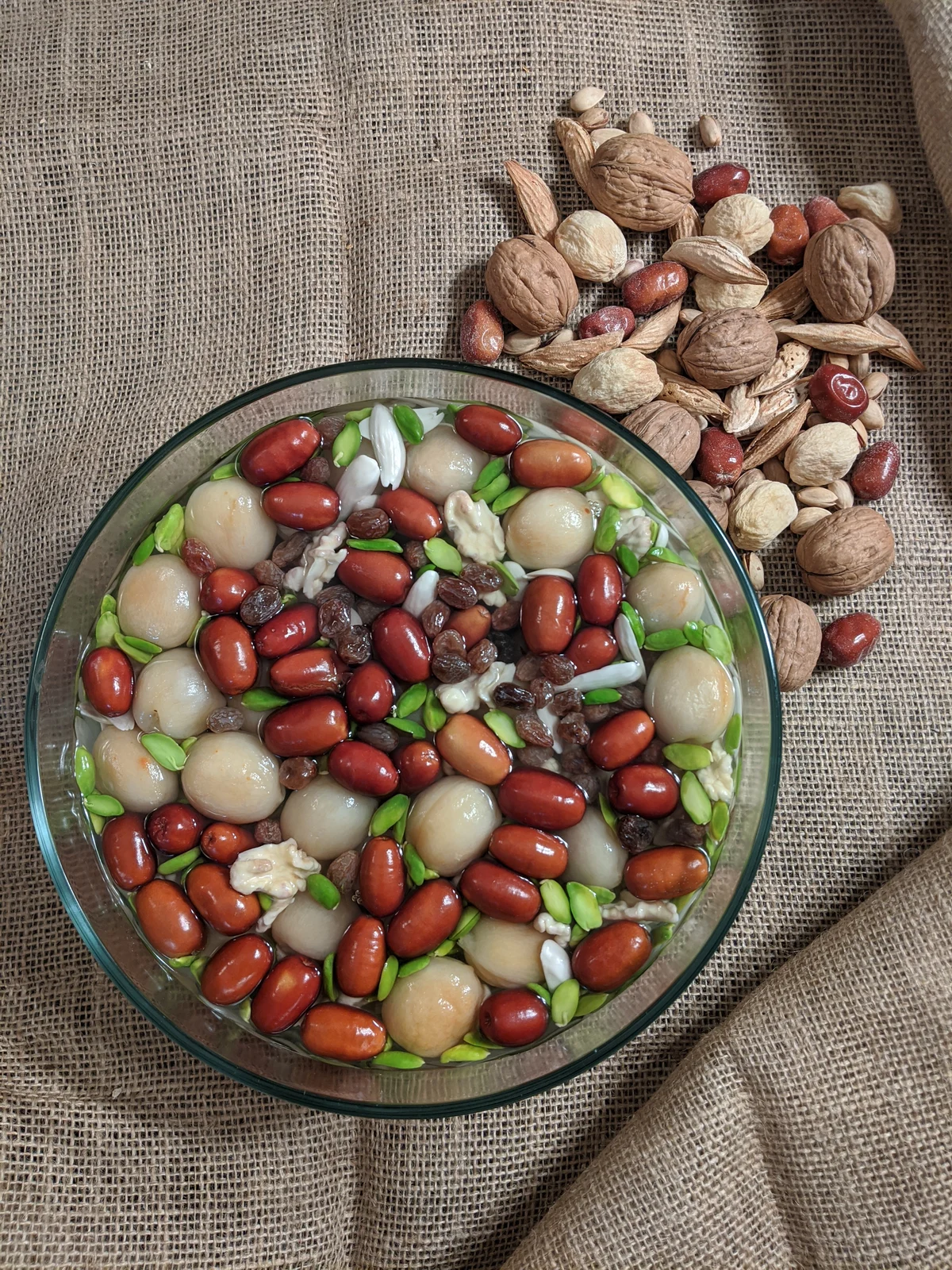
Cooks also differ on when the spices go in. In the Okaz recipe for one roll, a quarter cup of sugar is added, ground cinnamon, cardamom and nutmeg are stirred in, and the mixture is brought to a boil once. The National Day recipe first puts cinnamon sticks, cardamom and cloves into ghee to release their aroma, then adds apricot purée, soaked dates and sugar. Toasted nuts go in and cook for about 10 minutes, and chopped dried apricots and dried figs are added last. Mixing ground spices into the liquid and first infusing the fat with them leave different aromas, even in the same spoonful of apricot. When making a large batch of this home-style stewed sweet, one kind of nut can be prepared at a time while the sheets soak. The sweetness of the dates and raisins also adds to the liquid, so even in a recipe that uses sugar, the result is not the same if the dryness of the fruit or the sweetness of the sheets differs.
The Morning Bread After Prayer, and Serving Temperature Chosen at Home
In Medina, which Okaz visited in 2011, the dish is prepared on the eve of Eid al-Fitr and served at the morning table after people return home from prayer, according to those interviewed. Izza Faruq, a teacher, learned the recipe from her mother. She says that, besides a bread called sharik, dishes of beans, cheese, and pickles such as olives and amba, a mango pickle, are set on the same table. Abu Umar, a retired school principal, buys nuts and dried fruit the day before and starts his breakfast with dibyaza. After that he eats bread with amba, cheese, olives and meat dishes; that is his morning. The time and the menu differ from those of the meal eaten after sunset during Ramadan.
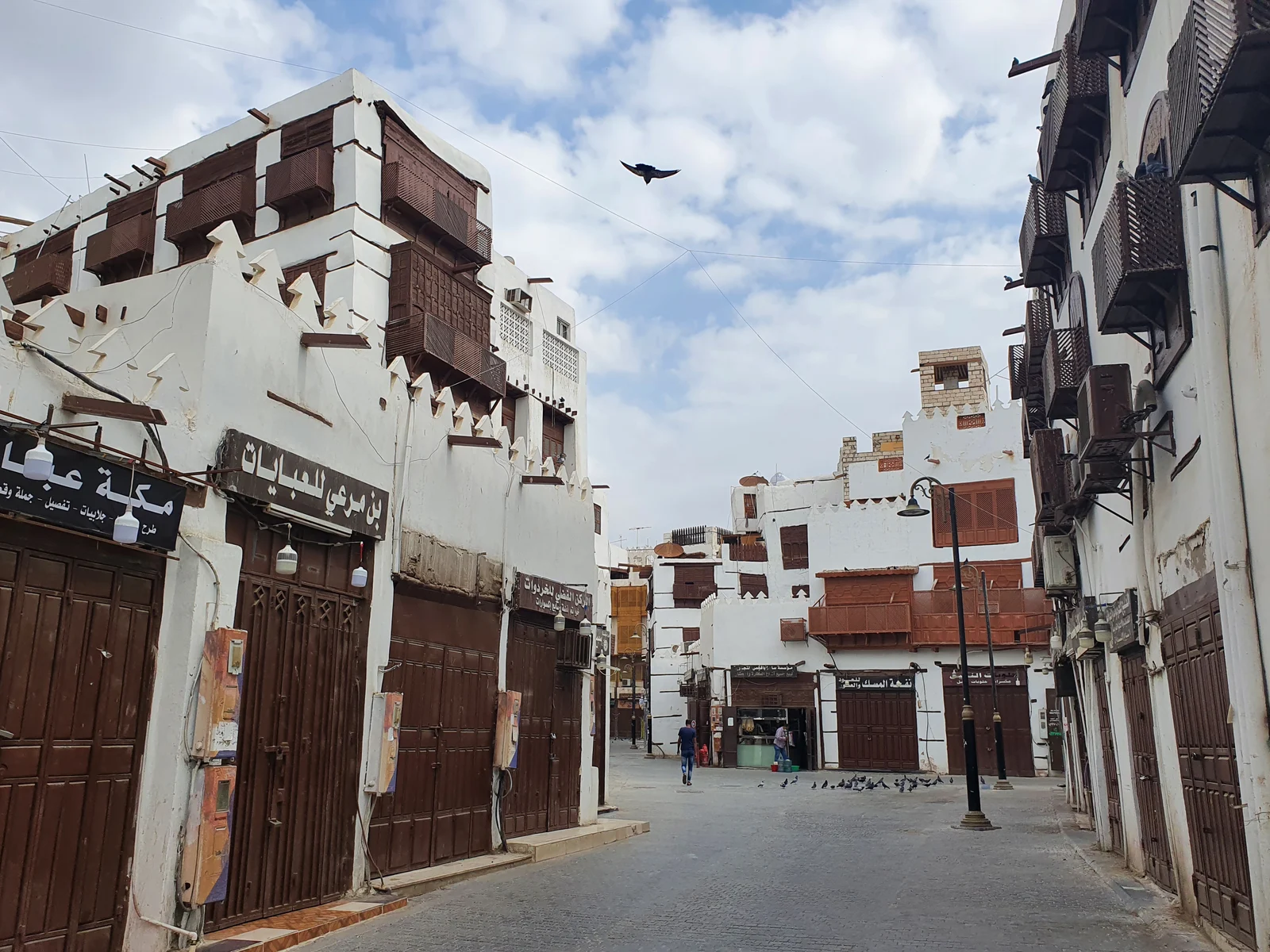
In the old town of Jeddah and elsewhere, families gather at the homes of parents and elders after prayer for the breakfast of the first day of Eid, according to an interview by the state news agency. At the home of Sami Said Bazhayl, interviewed in 2021, dibyaza and sharik were served, along with a jam made from quince. A large dish of dark apricot liquid with nuts and dried fruit and a jam made by cooking a different fruit are prepared on the same morning. The Mecca tourism guide lists hazelnuts and walnuts in addition to almonds and pine nuts. Across the tables of the three cities, the choice of fruit and nuts is made by whoever prepares the dish.
The Medina tourism authority describes serving it either warm or cold and says it can be eaten with a spoon or with bread. At the same degree of reduction, the liquid flows more easily when warm, and as it cools the thickness and the mouthfeel of the ghee change. When a dish prepared on the night before the prayer is served in the morning, its temperature also depends on whether it is heated again that morning. The authority gives examples of serving it at breakfast on both Eid al-Fitr, at the end of the fast, and Eid al-Adha, the Feast of the Sacrifice. What the home interviews specifically report is a dish made on the eve of the end of the fast and portioned out on the morning of the first day.
When Jeddah’s Al-Watan newspaper reported in 2012, some homes in the old town still kept the custom of exchanging dibyaza and maamoul at Eid. In the old market recalled by the historian Amira Mustafa, the sellers of nuts for dibyaza called out the names of qalada and raisins to attract customers. The sweet, served at breakfast or offered with coffee to visitors during the day, thus had ingredients that were bought ahead of time at the market. A dish from which pieces can be taken one by one could be carried to other households as well as set on the family’s own breakfast table.
Al-Madina’s interview with a Mecca ingredient seller also lists qalada, dried fruit, almonds, pine nuts, pistachios and ghee. The state news agency records a custom of cooking it on the night when the start of the month of Shawwal is announced in the Mecca area. One account says nuts were costly and that only some households could once afford them; today the dish can be bought and prepared, though there are also cases of cooking it at home and adding one’s own preferences. The flavor of the dish on the table that morning differs according to who made it and what was bought beforehand.
Preparation That Continues in the Hijaz, and Single Servings Elsewhere
The Medina tourism authority notes that similar sweets exist in the Ottoman sphere and in Egypt and suggests that the dish may have been influenced by one of them or by both together. A Mecca guide includes a theory about the name that links it, through the step of soaking the ingredients, to a word associated with tanning. Neither offers a record that identifies a date of origin or who introduced the dish. The way dried dates were sold, preserved in the Mecca encyclopedia, and the procedure a Medina cook learned from her mother are concrete examples of how, in this region, ingredients have been prepared and made into a home sweet.
The tourism authority says it is also eaten at markets and confectioners in Mecca and Medina. In the old-town interviews, shopping for salty cheese, olives and pickles for the meal, and shopping for qalada and raisins, each take place before breakfast. The sharik that the Bazhayl family of Jeddah describes is a round baked bread lightly sprinkled with sesame. Rather than topping the bread with pulp alone, one can let the liquid soak into it as one eats, and a spoon takes up nuts and fruit together. Adding bread is also one way of serving this cooked sweet. In the Culinary Arts Commission’s National Day menu, 20 grams is put in each glass, with two long, thin breads colored with ghee and cardamom. For a large morning dish, the diners decide how much liquid and how many solids to scoop; for small glasses, the person serving decides first. What stays the same is that apricot is soaked to make the liquid and that roasted nuts and soft dried fruit are combined separately. The work of soaking the sheets and dates separately the night before and removing the browned nuts from the pan remains in the morning spoonful and in the small portion at a shop or event.
Glossary
- Kamar al-Din (قمر الدين)
- Dried apricot pulp in sheet form. It is soaked in water and used as the base of the cooking liquid.
- Qalada (قلادة)
- The name for dried dates in Hijazi examples. It appears as an ingredient added to the cooking liquid.
- Ghee (سمن)
- Clarified milk fat. Some recipes use it to brown the nuts.
- Sharik (الشريك)
- Bread served with dibyaza at the Eid breakfast. It appears in the Medina and Jeddah interviews.


