


SweetloreEncyclopedia of World Sweets (834)

Khurmi
Khurmi Chhattisgarh
A sweet fried confection set beside salty Thethri at festivals
Fried Sweets / India, Chhattisgarh

A flattened oval of dough is pressed against a bamboo basket to leave ridges before it is fried. This is one way the surface of Khurmi (खुरमी) from Chhattisgarh is made. It is a sweet fried confection in which wheat flour and other ingredients are combined with water in which jaggery has been dissolved, plus fat, and then divided into small pieces and fried. In Japanese, the name is written クルミ, which sounds the same as the word for walnut but is unrelated. Some versions use only wheat flour, and others add rice flour or seeds. On Teej, Pola and Diwali, it is set out on the plate alongside the salty Thethri.
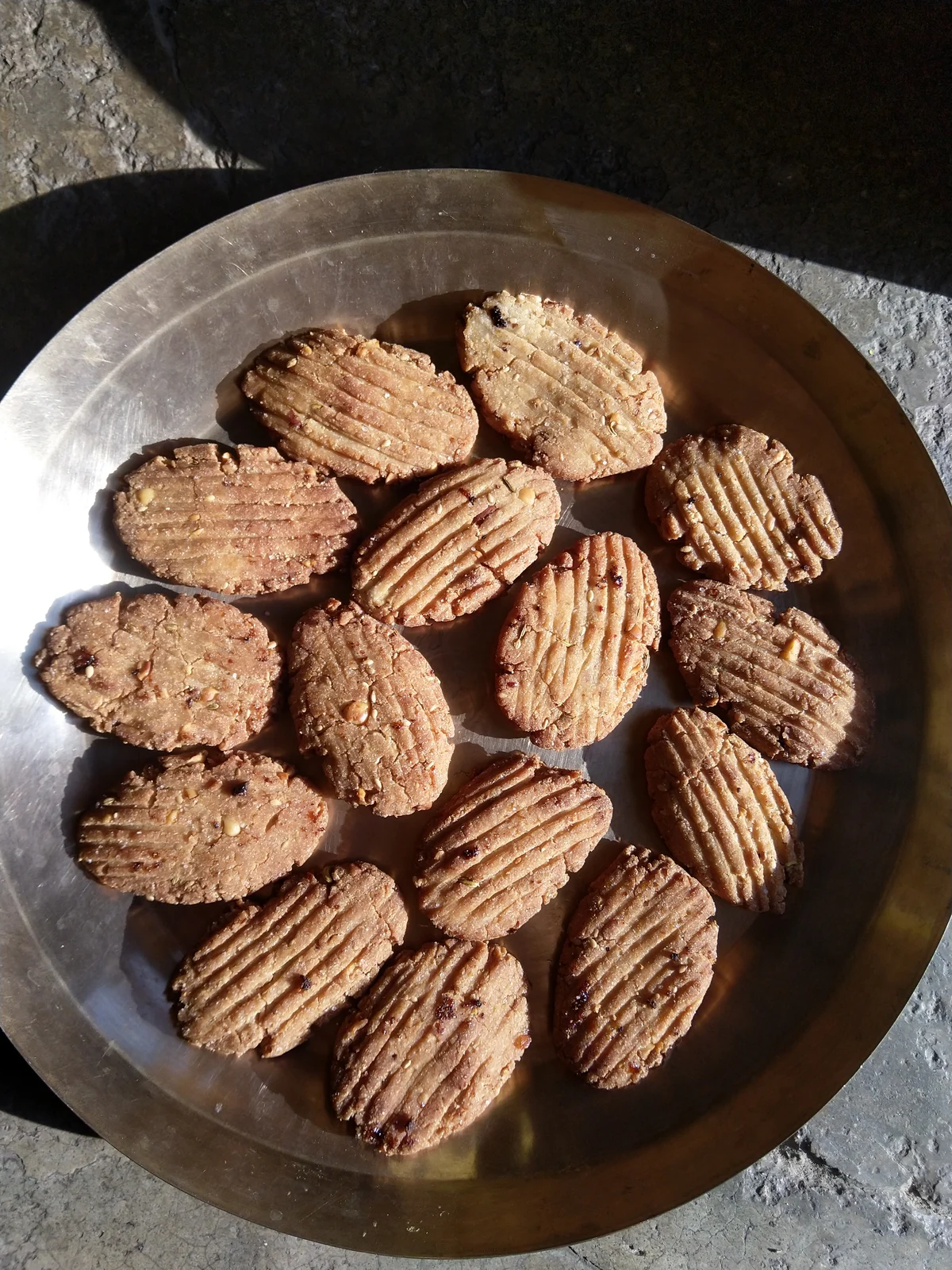
Kneading the Flour with Water in Which Jaggery Is Dissolved
In the method given in a 2021 study of food culture, a small amount of ghee is mixed into wheat flour, and the dough is kneaded with water in which jaggery or sugar has been dissolved. It is divided into small pieces, shaped, and fried in ghee over medium heat. Jaggery is a sugar made by boiling down sugarcane juice and similar liquids. When a lump is dissolved in water and added, the liquid that binds the flour also brings sweetness. Ghee is a fat made by heating butter to remove the water and other components. In this example it appears both in the flour mixture and in the frying pan. This is the formulation the study recorded; it does not mean that every household fries in ghee.
A state educational teaching material says that wheat flour is combined with ghee and sesame, bound with jaggery water, cut into small pieces and fried in oil. Even among versions that use only wheat flour and sugar, some include sesame, and the frying fat differs. Geeta Panchbhai’s home method also includes coconut along with wheat flour and jaggery. She explains that the cooled sweet is crisp on the outside and slightly soft inside. What the cook describes here is the texture after frying in oil and cooling. A local food profile also cites the crispness of cooled Khurmi and says it is served together with Thethri. Because there is also a version by Seema Rajput that is served warm, when comparing the texture of the exterior, check whether the description refers to just after frying or to after cooling on a plate.
Panchbhai strains the jaggery water before adding it to the dough a little at a time. She first works oil into the flour and mixes until it can be gathered into a clump in the hand, and only then adds the strained liquid. The jaggery liquid is used not to be boiled down into a syrup that forms threads, but to bind a sweet dough firmly. If the dough breaks apart during frying because it contains too much sugar or fat, she says to add flour and knead it again. This shows that, before judging the texture once cooled, she also checked along the way whether the kneaded dough held its shape in the oil.
Basket Marks, Knife Lines and Hand-Shaped Forms
In Keshma Raichura’s recipe, the kneaded dough rests for about 10 minutes and is then rolled into a slightly thick oval. Pressed against a bamboo basket, it takes the pattern of the basket’s surface; by another method, shallow lines can be cut into it with a knife. It is then fried over medium to low heat until both sides are golden brown. The lines are made while the dough can still be pressed with a finger. The side that will brown already has ridges, so the order of the work, shaping first and then applying heat, can be read from the surface.
Panchbhai flattens a rolled ball of dough and makes leaf-like lines with the tip of a spoon. She writes that the shape and pattern can be varied to taste. In her example, five or six pieces go into the oil at once and are fried over low heat, turned, until golden brown. Whether fine lines are made with a knife or leaf shapes with a spoon, the lines visible on the surface are not cracks that formed naturally during frying. However, a single photograph cannot tell us which tool was used to make the same pattern.
In Jyoti’s method, 50 grams of coarsely ground semolina is used for 200 grams of wheat flour. Dried coconut, crushed peanuts, sesame and ghee are also mixed in, and jaggery water is added a little at a time to make a firm dough. After resting for 15 minutes, the dough is shaped and fried in oil. The coconut and peanuts are not garnishes placed on the surface afterward but ingredients kneaded in with the flour. The ratio of wheat flour to semolina is a condition of this particular recipe, not a standard shared across the region. Both the grains of the flour and the crushed bits of peanut and the like go into the dough.
Seema Rajput, who conveys the flavors of Chhattisgarh, uses rava, sesame and dried coconut in addition to wheat flour. The rava, peanuts and sesame are each dry-roasted, and the peanuts are coarsely crushed. The dough kneaded with jaggery water is formed by hand into an oval, then pressed against the side of the bowl in which it was mixed to flatten it, and fried until golden brown. Where a bamboo basket is used to make marks, the surface is pressed after the dough is shaped; here, the wall of the bowl at hand is used to flatten it. The writer on regional foods Ashok Tiwari also describes a method in which the kneaded dough is gripped in the hand and then fried.
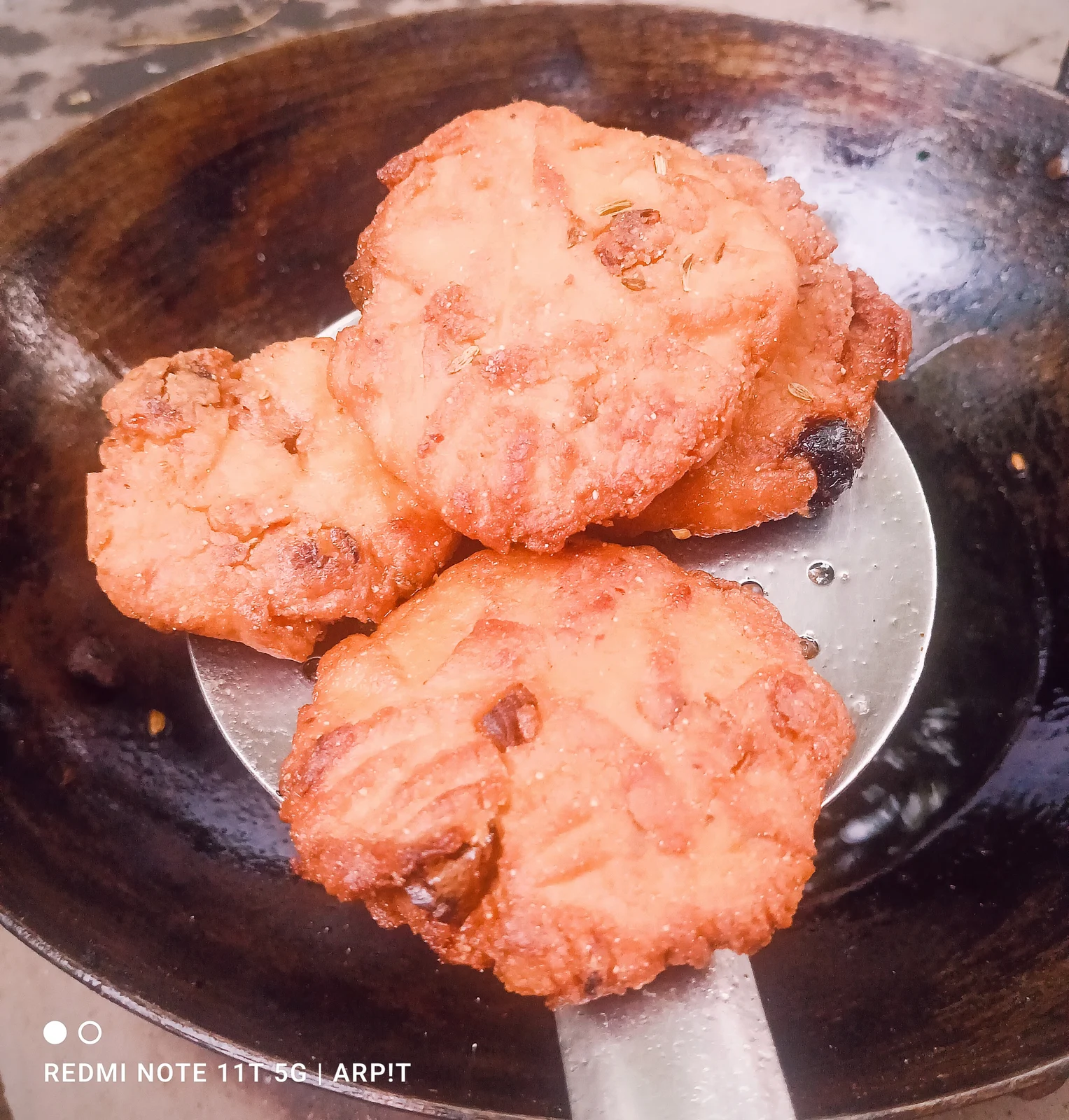
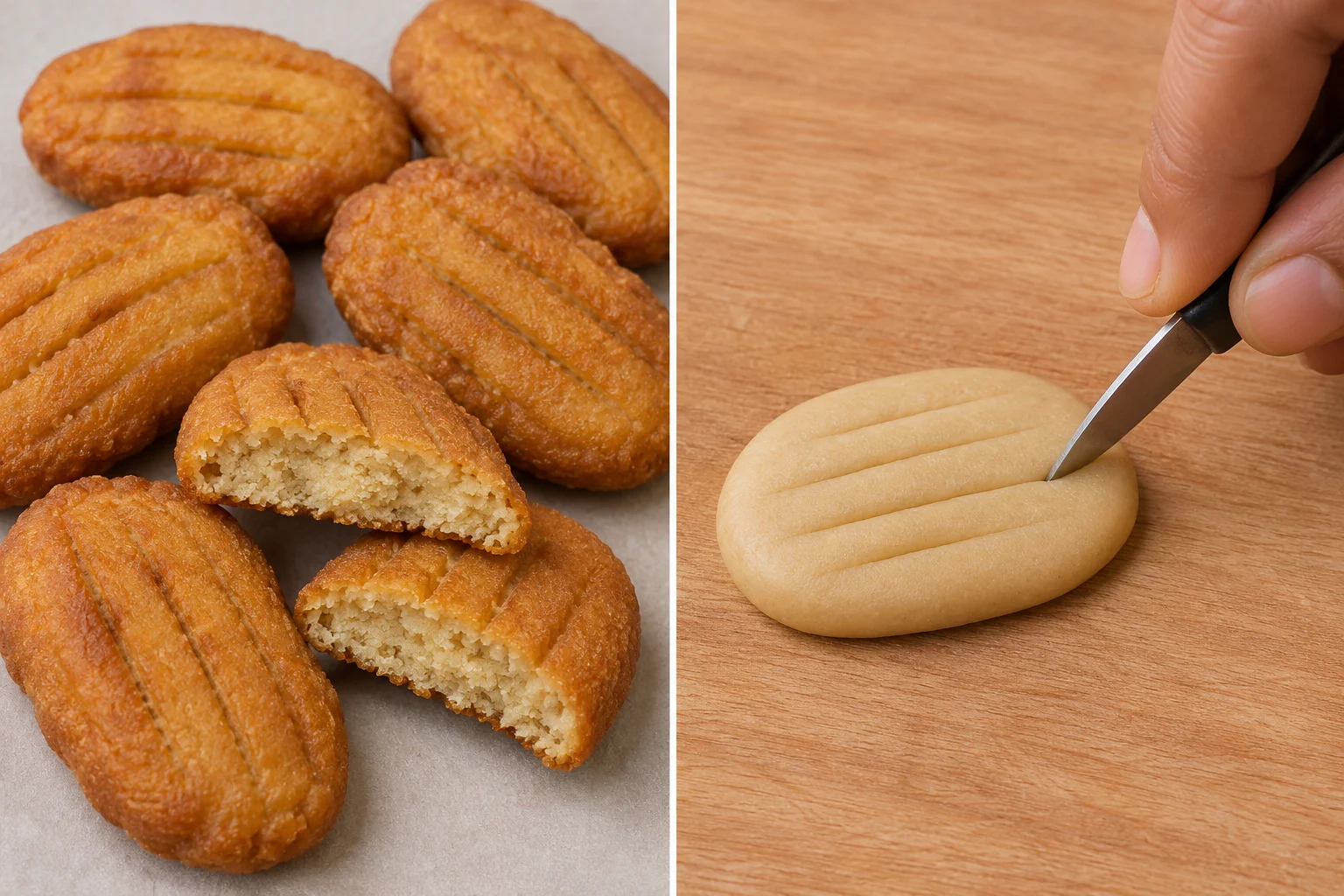
Wheat with Rice Added, and Another Sweet That Takes Up Sweetness Afterward
The Khurmi described by the state Department of Culture contains both wheat flour and rice flour. Besides jaggery, chironji, a small seed, and coconut provide flavor. The proportions of the flours and the frying time are not given. The 2021 study, which centers on wheat flour, does not give this same formulation, and it is unclear in which parts of the state rice flour is used. Among the rice-flour fried foods the department describes, Chausela is in some cases served with jaggery or pickle. Among dishes that use rice, then, there are those in which flour is mixed in and sweetness goes inside the dough, and those in which a rice-flour item is served with a different flavor on the side.
In Dehrori, made in the state, coarsely ground rice and fermented milk are combined and lightly fermented, and the fried dough is soaked in jaggery syrup. This differs from Khurmi, in which wheat flour is kneaded with water containing dissolved sugar, in the point at which the sweetness is introduced. For Gulgula, another fried sweet that uses wheat and jaggery, there is a method that adds grated coconut, cardamom and fennel and forms the dough into balls about 2–3 cm in diameter. Even with the same wheat and jaggery, the action involved, whether rolling into balls, stretching and patterning, or cutting off pieces, remains in the shape of each piece.
Set Beside Salty Thethri on Festival Plates
In the state’s educational material, Khurmi and Thethri are foods made for Teej, Dussehra, Diwali and Holi. Thethri is made from a dough of chickpea flour with salt and ajwain, rolled out thin, shaped into rounds and fried. Ajwain is a strongly aromatic, seed-like spice. The state Department of Culture describes Thethri as a salty food in a long, thin or round shape. Because some Khurmi are also rounded, even when the two look alike on the plate, what the dough is made of makes it possible to explain whether a piece is salty or sweetened with jaggery.
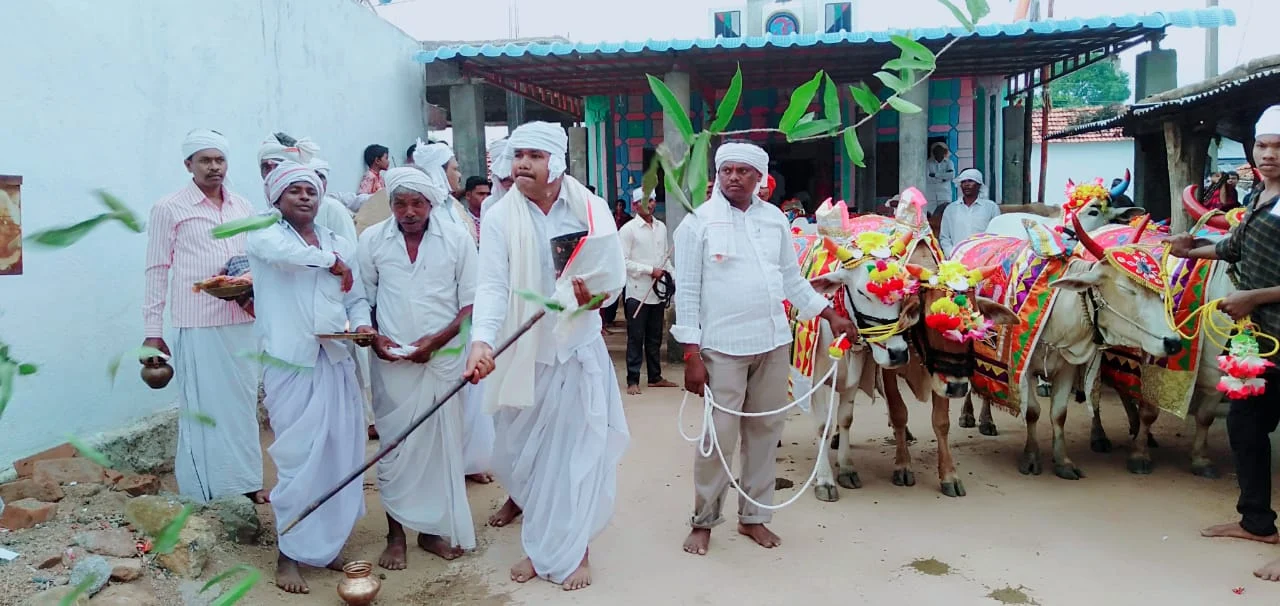
An events guide from Incredible India says that on Pola, the oxen and ploughs involved in farming are honored, and children display clay bullocks and toys. It says that chilla, Chausela, Thethri and Khurmi are made on this day. An oral account of Chhattisgarh festivals mentions, besides clay bullock figures, setting up small clay vessels and putting Thethri and Khurmi in them. This is a scene in which sweets are offered not only for the family to eat but also as part of the arrangements for the event. The tourism guide and the oral account have different subjects, and not every village in the state uses the same decorations or meals.
For Teej, the tourism guide introduces the custom of married daughters and women returning to their parental homes, and offerings of Khurmi, Thethri, Chausela, fruit and other items to the god Shiva and the goddess Parvati. Rajput, in describing how it is made in her village, recalls eating Khurmi with the women on the day after the end of a fast. Both can be confirmed: a scene in which the name appears in the tourism guide as an offering, and a scene in which one person ate it after a fast. Khurmi and Thethri are also named in an event at the state Chief Minister’s residence, but the guide gives no formulation or shaping method for what was served at that event.
Rajput’s recipe is included in a cookbook as a household recipe from Chhattisgarh, but the place where she told it was Mumbai. The cookbook says that she spoke of memories from a village in Chhattisgarh and that she crushed peanuts with an oval stone she found at a construction site in Mumbai. The hand motion of pressing the dough against the bowl in which the flour was mixed was also recorded. Even when it is explained away from local festivals, it conveys concretely the tool picked up at home and how the firmed dough was handled.
In the state’s 2023 public-relations magazine, Khurmi and Thethri appear on the menu of Garhkalewa, a restaurant serving regional dishes. The 2021 study takes Khurmi up as a sweet made mainly at Diwali, and the state material lists it for Holi and several other festivals as well. The state’s 2026 magazine lists Thethri and Khurmi, alongside fara and other dishes, as foods of February and March, when the month of Magh ends and Phagun begins. While there are ways of eating on days such as Pola, when farm oxen are decorated, the names also remain in spring menus. Event names and recipe details cannot be matched one to one.Even where the season of home frying, the people it is offered to, and the settings in which food is bought outside the home differ, there are several tables at which sweet Khurmi and salty Thethri can be found together.
In Old Villages, Cut into Small Rectangles
The village survey accompanying the 1961 Census includes the example of Tilaibhat village, which lies in present-day Chhattisgarh and at that time belonged to Bilaspur district in Madhya Pradesh. Khurmi and Thethri are listed among the sweets made at home for celebrations or bought at the market. The village’s Khurmi was sweetened with jaggery (gur) in wheat flour, cut into small rectangles of about 1–2 inches, and fried in oil. Today’s teaching material also includes the step of cutting into small pieces, but there are also ovals patterned with a bamboo basket and examples shaped by gripping. From the rectangles of one old village, neither the first shape to appear in the region nor the period of origin can be determined.
The festival section of the same survey treats Pola, on which farm oxen are decorated and led in a line and children carry toy bullocks made of clay or wood. Among the special foods was "Thethri-Khurmi": a sweet wheat confection eaten together with a salty fried food. The Thethri recorded there is made by adding water, salt and chili to chickpea flour, rolling it thin, cutting it short, twisting it slightly and frying it. Some examples use wheat flour, in which case the flour overlaps with that of Khurmi. Both are fried in oil, and even where the shapes are close, the taste in the mouth changes depending on whether sugar or gur is mixed in, or salt and chili.
The food-culture study also states that Khurmi can be kept for 2–3 weeks. This is a clue that the fried sweet suits not only eating right away on the day it is made but also being shared out later. It is not presented as the result of a storage test with controlled temperature, humidity and formulation, so the same number of days cannot be applied to something made in another household. Whether a piece cut into a rectangle or an oval with basket marks, they share the points that sweetness is worked in when the dough is kneaded and that each piece out of the oil is divided among plates.
Glossary
- Jaggery/gur (jaggery/gur)
- A minimally refined sugar made by boiling down sugarcane juice and similar liquids.
- Ghee (ghee)
- A dairy fat made by removing the water and milk solids from butter.
- Chironji (chironji)
- A small seed used in Indian cooking and sweets.
- Thethri (thethri)
- A salty fried snack made with chickpea flour and similar ingredients, which is set beside Khurmi in Chhattisgarh.
- Ajwain (ajwain)
- A strongly aromatic plant whose seed-like fruits are used as a spice.
- Teej / Pola
- Festivals celebrated in Chhattisgarh. Khurmi and Thethri appear among the offerings and meals.
- Recipe
- The proportions of ingredients and the method of preparation, taken together.


