


SweetloreEncyclopedia of World Sweets (834)

Mote con huesillos
Mote con huesillos
Cooked dried peaches and wheat grains, eaten in a cold syrup
Desserts / Chile

Drink the amber syrup and a layer of boiled wheat is left at the bottom of the glass, while the rehydrated peaches can be scooped out with a spoon. Mote con huesillos is a cold Chilean sweet made from husked wheat and peaches dried with their pits. The water used to rehydrate the dried fruit is kept separate from the water used to boil the wheat. The syrup, which keeps the aroma of the peaches, and the slightly firm grains are chilled separately and combined only at the end, in the glass, so a serving could be assembled on the street once an order was taken.
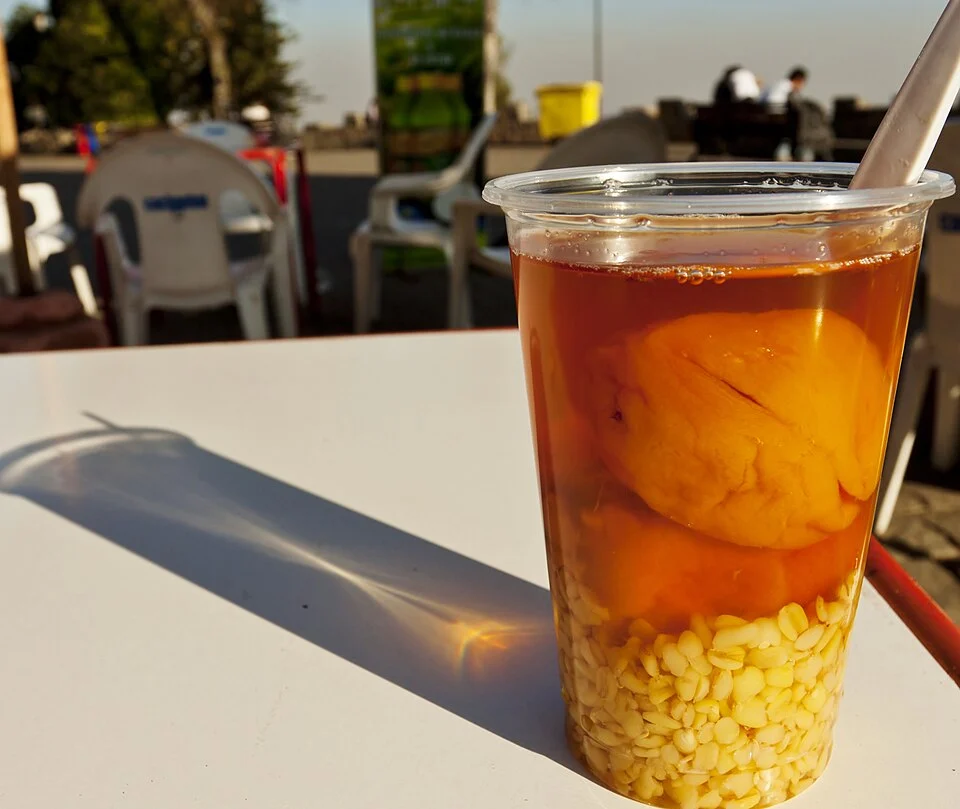
Wheat and peaches are prepared separately and assembled glass by glass
In Hernández’s recipe, half a cup of boiled mote goes into a tall glass, two peaches are set on top, and chilled syrup is poured over them. The ingredients are not finely mixed before serving, so the wheat stays at the bottom and the peaches remain larger than the grains. Drinking, cutting up the fruit and picking out the grains at the bottom of the glass all happen within a single serving.
In Hernández’s home recipe, the prepared mote is boiled separately in water and stopped while it is still slightly firm. No sugar or salt is added to the cooking water, and the wheat and the peaches are chilled without being mixed. If the wheat is cooked in the fruit pot, the firmness of the grains cannot be adjusted independently of the fruit. Hernández advises tasting the grains about 10 to 15 minutes after the water comes to a boil. Whether this is done before or after the syrup is finished, the texture can be adjusted using the mote pot alone.
The sources also describe when to stop cooking the wheat. In the Típico Chileno recipe, the grains are taken out when they split open, then run under cold water to stop the cooking. Hernández’s cue is the point at which a tasted grain still holds a little firmness. In a sweet where the grains are found and scooped from the bottom of the vessel, the wheat does not need to be cooked until it breaks down to match the softness of the fruit. To keep the bite of the grains even after the syrup has been drunk, they are cooked by a different standard from the fruit.
Chilling the wheat and the peaches separately also makes it easier to fix the amount in each glass at serving, which suits a way of selling in which each serving is assembled to order.
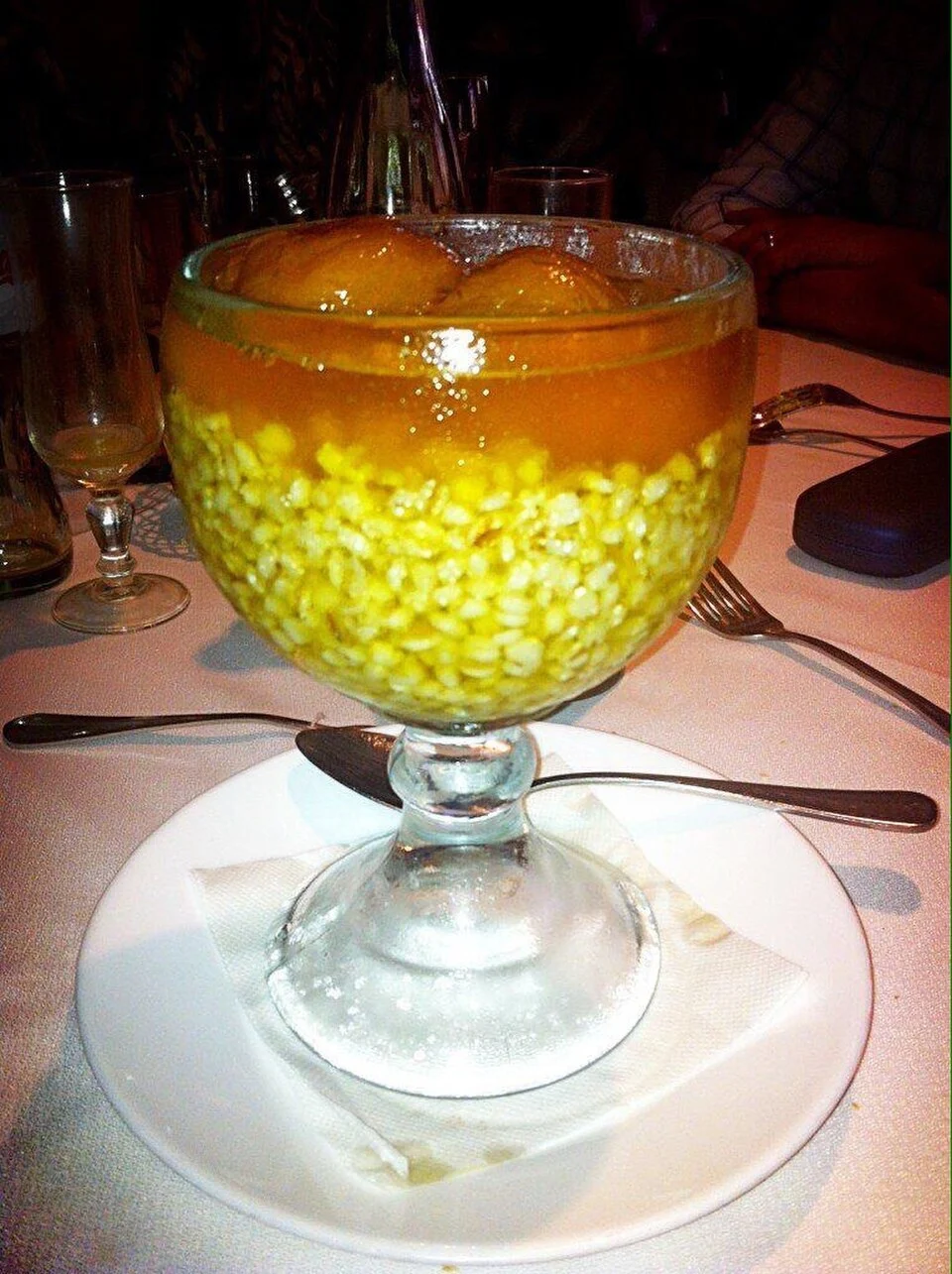
The water that rehydrated the dried peaches gives the amber color
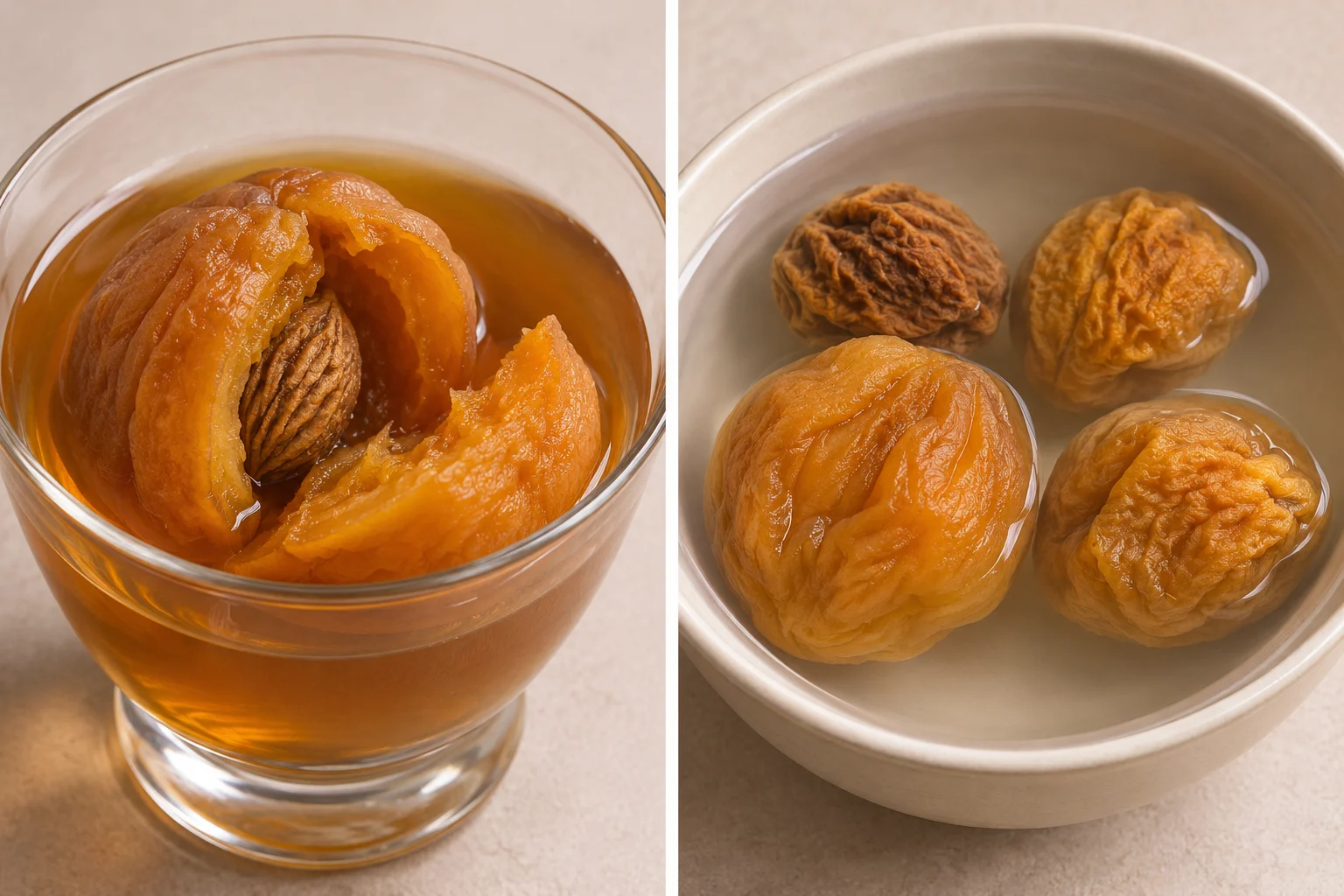
Huesillo is a peach dried with its pit. Oreste Plath, who documented folklore, calls peaches that were pitted before being sun-dried descarozado and the like, distinguishing them from those dried with the pit left in. The appearance of the dried fruit alone does not make it easy to tell how thick the flesh is or whether a pit is present, but once the fruit is rehydrated and split, there is a difference between those from which the flesh must be scooped around the center and those that can be divided with a spoon as they are. The word "little bone" in the name also relates to the hard pit one touches inside the peach while eating.
In the recipe by the cook Pilar Hernández, 12 dried peaches go into 1 liter of water with cinnamon and orange peel and soak overnight. The next day the water is not discarded; it is heated together with the rehydrated fruit. About 15 to 20 minutes after it comes to a boil is the guide for cooking the peaches. Because the aroma and color of the fruit also pass into the water during soaking, using that water for the syrup keeps the flavor of the peaches in the liquid in the glass as well. Unlike methods that purée the fruit into the drink, the flesh stays at a size that can be taken with a spoon.
In the same recipe, sugar is put in a separate pan and made into a dark caramel, which is then combined with the cooked peaches. Because the caramel is dissolved into the syrup rather than brushed directly onto the fruit, the whole liquid poured into the glass takes on color. Hernández explains the effect of the caramel in terms of color as well as sweetness, and also mentions adding sugar at serving, to taste. Because the water for rehydrating the fruit and the sugar for making the color are handled separately, the aroma of the peaches and the color of the syrup can each be adjusted.
Instead of caramel, Hernández also gives a method of dissolving chancaca in the hot peach syrup. Chancaca is sugar made by concentrating sugarcane juice and letting it set. Here there is no step of burning sugar alone in a separate pan; the colored sugar is dissolved in the fruit pot. Although both produce what looks like the same amber drink, the stage at which the color is added differs. The source also suggests molasses, which is easier to obtain in the United States, but color and sweetness do not change in the same proportion, so the final taste is adjusted separately.
Another Típico Chileno recipe uses 20 dried peaches and 5 liters of water, adds cinnamon and orange peel, combines sugar and chancaca, and simmers for about 45 minutes. Hernández’s recipe uses 12 peaches to 1 liter of water, and the heating after the boil is also shorter. When the ratio of fruit to water differs, even a glass with the same two peaches changes in the amount and strength of the syrup that can be served with them. The heating times are not the results of an experiment in which the size and rehydration of the fruit were matched, so neither can be taken as the cooking time for all huesillos.
There are also differences in the dried peaches themselves. The Chilean food outlet Sabor & Saber publishes an example that uses peaches dried with the pits removed. Even with pitted fruit, the steps of rehydrating and cooking remain, and the cooked fruit, the syrup and the mote are chilled before serving. With huesillos dried with the pit, a spoon avoids the hard center and takes the flesh. With descarozado, although the same fruit syrup is used, the way the spoon divides the fruit changes.
The work of removing the husk from the wheat
In Chilean food culture, what is called mote includes husked corn and wheat. For mote con huesillos, versions using wheat are the best known. The wheat is not ground fine like flour to cloud the syrup; the grains are boiled and used whole. In food-culture sources, wheat mote is used not only in sweet syrup but also in stews and bean dishes. Seen in that light, sweetness is not inherent in mote itself but comes from what it is served with.
A survey of food heritage in the O’Higgins Region includes an account of wheat processing by Prosperina Quijada of Marchigüe. Wheat is put into lejía, made by combining sifted ash with water; the grains, their husks loosened, are rubbed against a stone and washed repeatedly in water. Francisca Carrasco of Quinta de Tilcoco also says that the grains were passed over a stone and then combined with syrup. These interviews are clues to how grains were processed in the past. Boiling in a pot mote that is already sold with its husk treated is a different step from removing the husk from wheat.
In the same survey, Rosa Galaz of Pumanque explains that mote from which the husk has been fully removed has the flavor of wheat, and that exposing it too much to water or lejía weakens the flavor. The question here is not how sweet to make the fruit syrup but how to finish the grain itself. Galaz also speaks from her own experience about the kind of ash added and the temperature of the water. Rather than turning the procedure in one interview into a recipe common to the whole country, it fits the content of the record better to read it as showing that, in a sweet where the grains stay in the mouth, makers also paid attention to the condition of the wheat after the husk was removed.
The interviews in the O’Higgins Region also include an example of mote eaten with water and syrup. It is a version without dried peaches, in which well-processed grains are eaten like a sweet drink. When peaches are added to the glass of mote con huesillos, the whole fruit and its cooking syrup are added. Compared with wheat and syrup alone, the same bite of the grains is joined by the action of scooping up and eating the fruit and the action of drinking the liquid in which the peaches were cooked.
For readers who do not live in Chile, Hernández also touches on handling wheat berries and barley, which are easy to find in the United States. Because the wheat berries sold there are not processed in the same way as Chilean mote, she also lists barley as an ingredient with a similar texture after cooking. This is not an explanation that barley is the standard ingredient of the Chilean drink. It is an adaptation for when the place changes: how to reproduce the bite of the grains with the grains one can obtain.
Street-corner sellers who announce summer
In Plath’s record of "the mote seller," a table set on the street corner holds a large earthenware pot of peach syrup, with a separate vessel of wheat beside it. A damp cloth covered the mouth of the pot, and when a customer came, the seller put in the syrup and fruit with a wooden ladle and added the wheat with another wooden spoon, he writes. A metal spoon was also handed to the person drinking. Adding the components in front of the customer is shared with the modern home recipe’s practice of keeping the wheat and the fruit in separate pots.
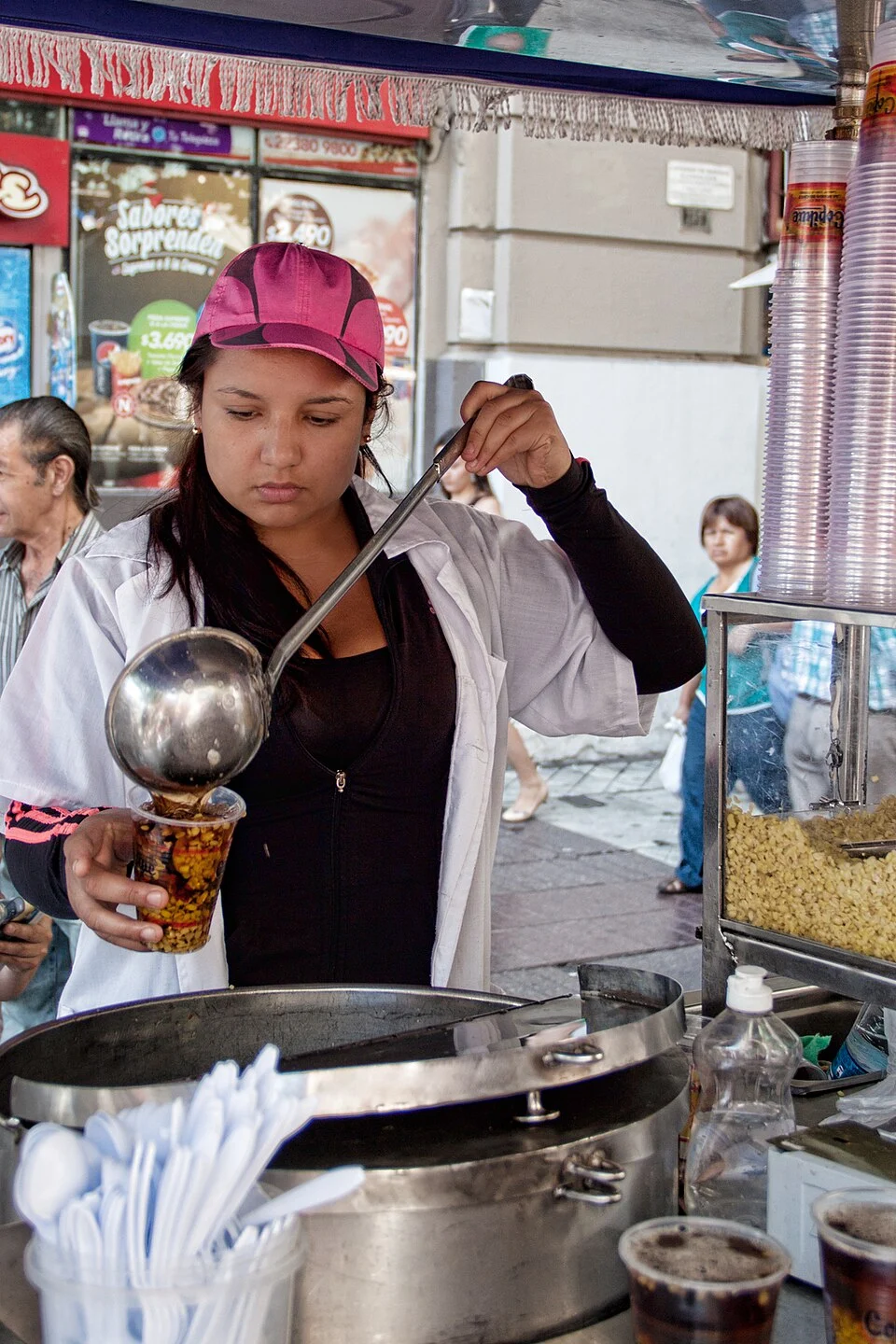
Plath distinguishes those who sell on foot and stop in front of factories and the like from those who sell to regular customers at a fixed street corner. In his record, wheeled stalls carrying a water container appeared later, and sellers came to buy mote by weight from wholesalers who carried out the work of removing the husk from the grains in bulk. Once the processing of the wheat is separated from the selling of chilled syrup and fruit in glasses, a street seller can work with grains that have already been processed.
Plath writes that when such sellers appear in the hot season, one knows summer has begun. Hernández also lists it as a drink enjoyed during the Fiestas Patrias in September and from spring through summer. Preparing a glass for a holiday and buying one from a street-corner seller in the heat are different occasions for holding the same glass. Putting the old records of street selling together with modern home recipes also shows a seasonal way of eating that is not limited to a particular anniversary.
The folklore entry in the Enciclopedia Chilena records that, besides being made at home, it was peddled from wooden carts and gradually came to be seen at fixed storefronts as well. It says the drink is widespread and especially favored in the central part of the country, while its origin cannot be determined. The tools and the differences among sellers that Plath describes are a record of how such selling worked. The two sources show that the method of pouring fruit syrup existed both at home and at points of sale, but they do not say where peaches and wheat were first combined.
Records of selling and home recipes can differ in how the glass is finally assembled. One modern home example chills the mote and the peaches separately and assembles them in the glass at the end. In the pitted-out (descarozado) example, boiled mote is first combined with the cooked fruit and syrup, and the whole is chilled for several hours before serving. How the fruit was dried and when the mote is combined are separate choices. In a glass in which the grains and the flesh are eaten while the syrup is kept, differences appear according to how a household prepares it and the equipment at the place of sale.
A play introduced by Radio Universidad de Chile in 2014 set the scene in which this drink came into being within the story of a family living in the countryside. The playwright, David Gajardo, explains that it is a fictional origin inspired by real life. It is an example of a dish of fruit cooked and served with wheat being chosen as a subject for depicting a family’s work. If one separates the origin created on stage, the unknown origin reported by the encyclopedia and the record of seeing sellers on the street, each leaves its own clue to the food’s cultural position.
Glossary
- Mote
- The name for a grain with its husk removed. The cold sweet in this article uses boiled wheat.
- Huesillo
- A peach dried with its pit left in. The version made with the pit removed has the name descarozado.
- Lejía
- In this article, a liquid made by combining ash with water. In regional interviews it is used in the process of removing the husk from wheat.
- Chancaca
- Sugar made by concentrating sugarcane juice and letting it set. Some recipes dissolve it in the peach syrup.
- Oreste Plath
- A writer who documented Chilean folklore. He described street-corner selling and ways of eating.


