


SweetloreEncyclopedia of World Sweets (834)

Ranfañote
Ranfañote
Baked bread coated in sugarcane syrup and combined with nuts and cheese
Desserts / Peru, Lima

Ranfañote is a Peruvian sweet made of cubed bread coated in sugarcane syrup and combined with nuts, raisins, cheese and other ingredients. The bread, toasted or baked, keeps its edges. Bite into a piece the syrup has soaked, and a nut may crack crisply nearby or the saltiness of the cheese may come through. Although the sweet uses dry bread, how far the syrup soaks in also changes with how long after the syrup is added the sweet is served. It appears in nineteenth-century literature depicting Lima street vendors, as a sweet whose name is called out in the street.
The Edges of the Bread, and Scooping Up Cheese and Nuts
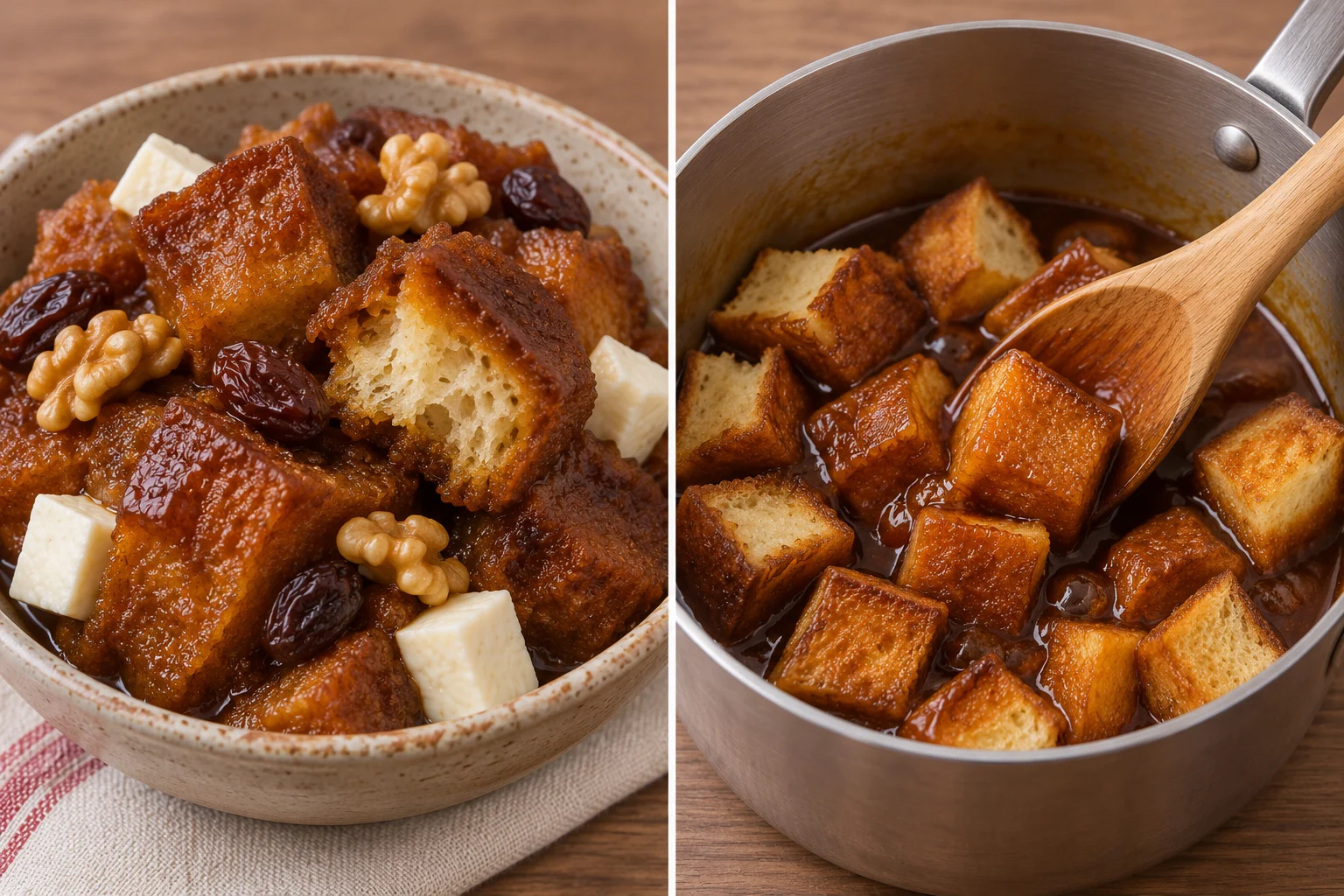
In the recipe (ingredient proportions and method) in Cumanana, the magazine of Peru’s Ministry of Foreign Affairs, cubes of a cheese called queso paria are first mixed with the bread and the other ingredients, and the syrup is stirred in afterward. In the Ministry of Culture’s recipe collection, the cheese is added as a garnish after the sweet is plated. In the former, syrup and saltiness come together in the same bite; in the latter, the cheese meets the tongue first, on the surface. In the example where the nuts are chopped and simmered, the cut surfaces are coated with syrup as well. Coconut also appears in two forms: toasted and mixed in, or grated and scattered on at the end.
In both recipes the bread is handled in pieces that can be picked up one at a time, and the cheese is added as an ingredient with a different flavor and texture. The syrup ties the flavor of the whole together, while the raisins give a fruity sweetness when chewed and the nuts add firmness. In a sweet whose ingredients are thoroughly mixed and ground fine, the differences from bite to bite are small. Here, the cut-and-combine method leaves the ingredients with their shapes intact. For example, a bite that scoops up bread and cheese together and a bite in which raisins and coconut sit on the bread leave different flavors in the mouth, even though the same syrup is used.
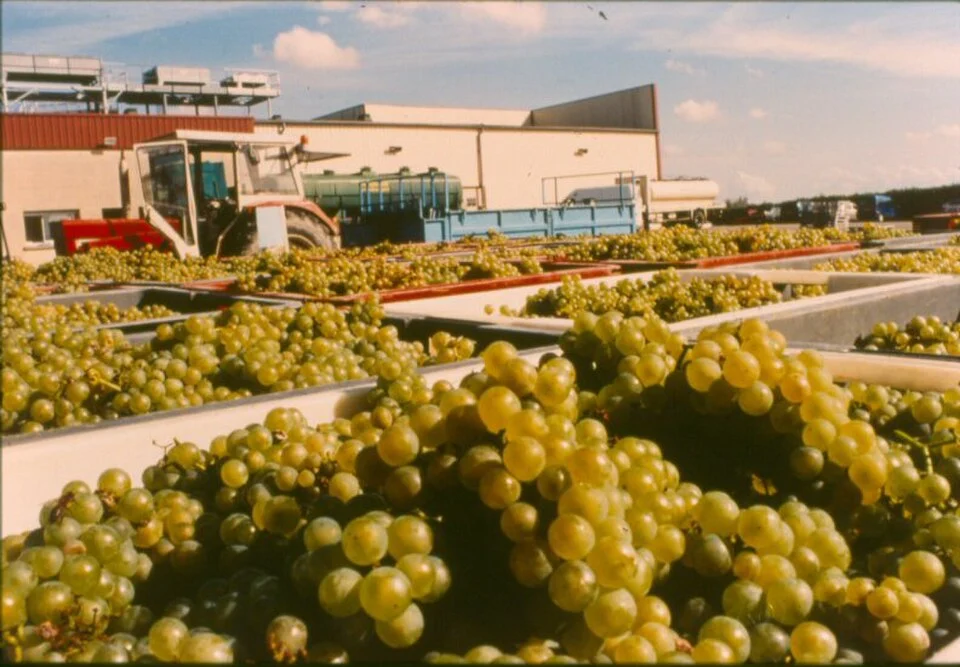
In the Cumanana example, four day-old loaves of bread are cut into cubes and browned in a buttered frying pan. The syrup is made in a separate pot, and the finishing is done in a bowl. The browned bread, nuts, raisins, cheese and toasted coconut go into the bowl first, and the syrup from the other pot is poured in last and mixed through once more. The browning of the bread and the reduction of the syrup can each be adjusted before the two are combined.
Cutting day-old bread into cubes creates surfaces to take up the syrup. The syrup touches the cut faces as well as the crust. Unlike breadcrumbs, cubes can still be scooped up as single pieces after the syrup is poured on, and carried to the mouth together with nuts and cheese. In Cumanana the bread is browned and set aside, and no heating is specified after the syrup is added. While the syrup-coated surfaces soften, how much shape remains inside the bread also depends on the size of each piece and the time between mixing in the syrup and serving.
The recipe collection of Afro-Peruvian sweets published by Peru’s Ministry of Culture also starts with stale bread cut into cubes. Here, instead of browning the bread in a buttered frying pan, the cook bakes it in the oven. Chopped pecans, almonds and walnuts are simmered in the syrup with raisins and butter added, then combined with the baked bread. In Cumanana the nuts and raisins are mixed with the bread first; in this example, the nuts and raisins meet the syrup in the pot first. This changes how moist the raisins are and how long the syrup has to soak into the surface of the baked bread.
Simmering the Chancaca and Infusing the Aromas of Peel and Leaves
Chancaca, the base of the syrup, is sugar made by boiling down sugarcane juice and letting it set. In the Cumanana example, one cup of water is combined with two blocks of chancaca, cloves, anise and orange peel, and simmered to a syrupy consistency. Dissolving the chancaca and infusing the aroma of the spices and peel proceed in a single pot. Mixed while still fluid, the syrup gets into the cut faces of the bread more easily; a more reduced syrup coats the bread and the other ingredients. The "syrup stage" in the recipe is a judgment made on the premise that the syrup will next be coated onto the ingredients.
The Ministry of Culture’s recipe collection gives a method that simmers cinnamon and fig leaves in addition to orange peel and cloves. Chancaca and sugar are added to water and reduced, left to rest, and strained while still warm. The peel and leaves are not eaten as ingredients; the method passes the scented syrup on to the bread and nuts. Even with the same chancaca, one recipe scents the syrup with cloves, anise and orange, while the other’s method includes fig leaves and cinnamon.
In the example by the cook Stephanie Pellny, the juice as well as the peel of the orange goes in, along with cinnamon, cloves, anise and allspice. The syrup is stirred constantly over medium heat and taken off the heat when it has thickened slightly and the bottom of the pot shows. When the bottom of the pot can be seen in the trail left by the spoon, the syrup can be judged to have begun to thicken. The amount of syrup added is also to taste. In this example, how far to reduce the syrup and how much to coat each piece of bread are separate decisions.
Whether cloves and anise alone are simmered in one pot, or fig leaves and cinnamon are added as well, changes the aroma that clings to the bread, even with the same chancaca.
The Spanish name for this syrup is miel. What ranfañote recipes call miel de chancaca is syrup made by dissolving chancaca in water and simmering it with peel and spices. The boiled-down cane sugar is first measured out as a block, and the finished product is judged by the thickness of the liquid. Cumanana gives the number of blocks, while the Ministry of Culture’s recipe collection indicates whether they are slab-shaped or round. Some older recipes start from sugar that is already syrup. Reading the solid sugar in the ingredient list separately from the syrup at the moment the bread goes in helps in tracing the differences among the descriptions.
Cooking the Syrup in a 1926 Pot
César Coloma Porcari’s study of food culture quotes a ranfañote recipe from Nuevo manual de la cocina peruana, a cookbook published in 1926 by the Rosay house in Lima. There, chopped nuts, butter, hard cheese, cloves and cinnamon go into a not-too-thick chancaca syrup. When the syrup begins to reduce, small pieces of cold bread and sweet wine are added; after a short while the pot is taken off the heat and the mixture is served on a shallow platter. By the time the bread and wine go in, the hard cheese has already been cooked in the syrup. This differs, in which ingredients are cooked, from the method in Cumanana, where the bread is browned first and everything is combined once it is off the heat.
The sweet wine goes in not in place of the water at the start of simmering, but together with the bread at a stage near the end. If one reconstructs the 1926 example, the order, with liquid added after the syrup has been reduced, is also a clue for imagining the state of the pot. The two modern official recipes give no instruction to add wine. Of these, Cumanana uses orange and anise for the aroma of the syrup, and the Ministry of Culture’s example uses fig leaves and other ingredients. Setting the three examples from different periods side by side shows that the structure of bread and syrup is shared, while the point at which the sweet aroma is created has shifted.
In the 1926 account, the bread is added once the syrup has begun to reduce, and the heat is turned off shortly afterward. No step of simmering the bread for a long time and working everything into a mass is described. Taking into account the serving in a shallow dish, one sees bread and nuts bound with syrup and served without being shaped like a cut, molded sweet. The modern examples likewise mix in a bowl and portion out, or plate the sweet and top it with cheese or coconut. Once one notes at which stage the bread pieces touch the syrup, the softness of the bread in the mouth cannot be fixed uniformly, even for sweets of the same name.
A Sweet Seller on the Streets of Lima
In Ricardo Palma’s nineteenth-century work "Con días y ollas venceremos," there is a recollection that people in Lima knew the time of day by hearing the cries of the vendors walking the streets. The sweets of the seller said to pass at around eleven in the morning include, besides ranfañote, cocada, a coconut sweet, and bean sweets. Here ranfañote does not appear in order to teach how it is made. It appears within memories of daily life: a seller of several sweets passing along the street at a set time. This is a passage in which one can see the distance between the way a sweet was sold and the people who ate it, something that cannot be learned from a cookbook’s ingredient list.
The year 1821, which appears in the first half of the work, is the date of events concerning independence. The vendors’ cries belong to the recollection of the city of Lima that follows.
The passage listing the sweet sellers is in the latter half, in a section where Palma looks back on the vendors’ cries of old Lima. The dates of the political history in the first half cannot be linked to the year a sweet was invented or first sold. The text portrays the vendors in connection with convents, but it does not say where the vendor learned the method or from whom. What the work left is the memory that the name ranfañote was known and that the sweet was sold in the city alongside other sweets.
What a Chincha Family Sold at a Festival
Cumanana, from Peru’s Ministry of Foreign Affairs, carries the story of Agustina Reyes Ballumbrosio, known as a maker of ranfañote in Chincha, south of Lima, and Pamela Cartagena, a member of her family. Cartagena relates two accounts: that the sweet was made by Afro-descendant women enslaved in Chincha, and that it originated during the War of the Pacific. The same page also links the sweet with Lima. The origin that the Chincha family hands down is material for learning who is said to have made and passed on this sweet. The place and period of its beginning are matters to be confirmed from contemporary sources, separately from tradition.
In 2011, at Mistura, Lima’s food festival, Cartagena sold ranfañote made with baked bread, chancaca syrup, coconut, pecans, walnuts, raisins and cheese. The characteristic of the flavor that she cited in press coverage is the saltiness of the cheese within the sweetness of the syrup. The articles of the time also record that some people who bought it at the venue recalled the sweet that an older relative used to make at home. In 2014, at a fair held in Chorrillos, Lima, Cartagena’s stall also sold ranfañote and a bean sweet. It is an example of a sweet inherited from a Chincha maker being served plate by plate at an urban event.
Just as a visitor who bought ranfañote at a food event remembered what an older person had made at home, the Cartagena family of Chincha had the work of continuing to make it themselves. The Ministry of Culture’s cookbook counts this sweet among Afro-Peruvian sweets, and the 1926 Lima cookbook preserves one method, using sweet wine, for a sweet of the same name. From the vendor’s cry heard in town to the steps of rebaking the bread at home and coating it with syrup, the sweet appears in records from different periods.
Glossary
- Chancaca
- Sugar made by boiling down sugarcane juice and letting it set. For ranfañote, it is dissolved in water and made into a syrup with spices and other additions.
- Queso paria
- A Peruvian cheese added in cubes in the Cumanana recipe.
- Cocada
- A sweet made with coconut. In Palma’s work it is listed among the sweets sold by the same vendor as ranfañote.


