


SweetloreEncyclopedia of World Sweets (834)

Arroz con dulce
Arroz con dulce Puerto Rico
Sweet rice cooked in coconut milk, shared on festive days
Desserts / Puerto Rico

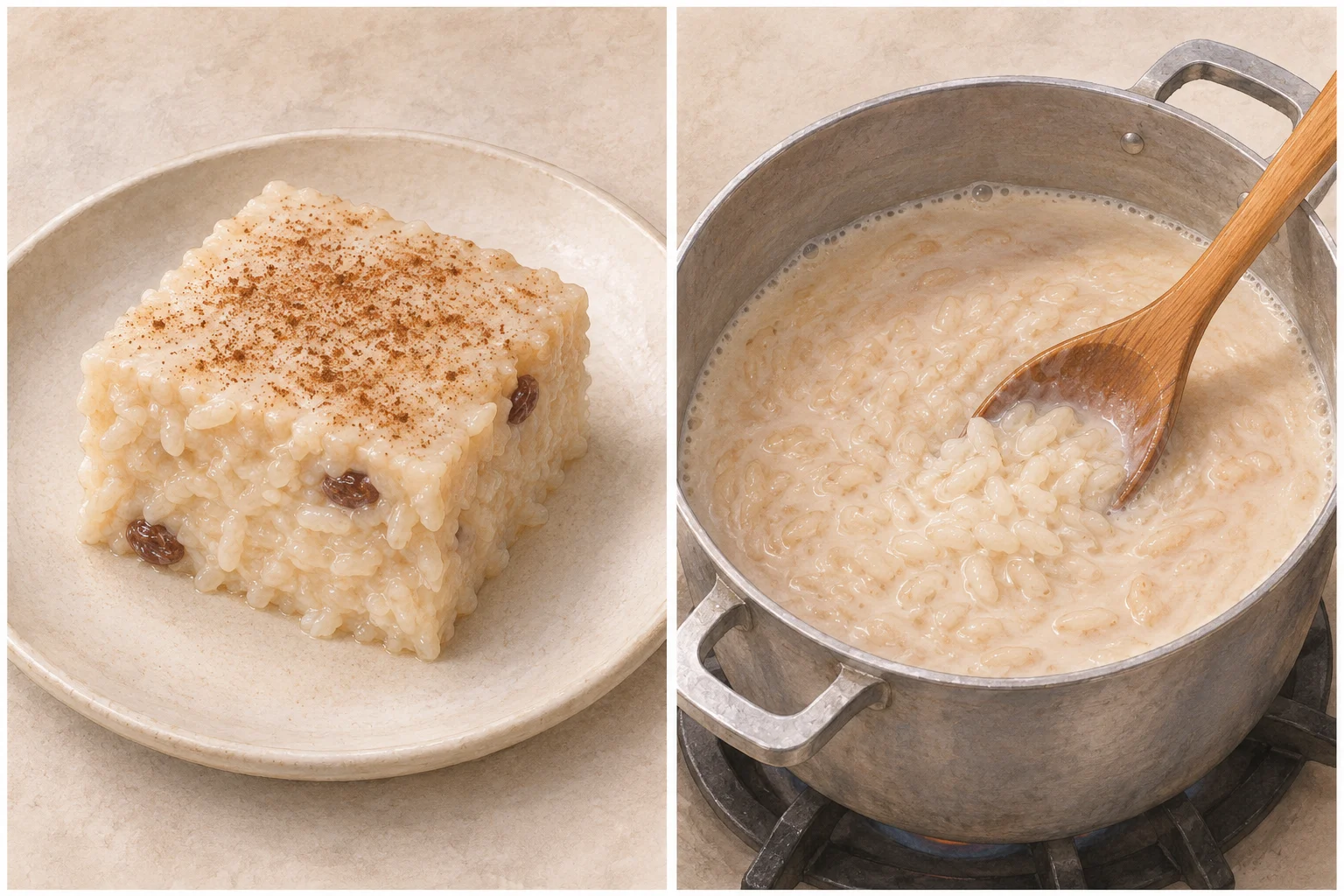
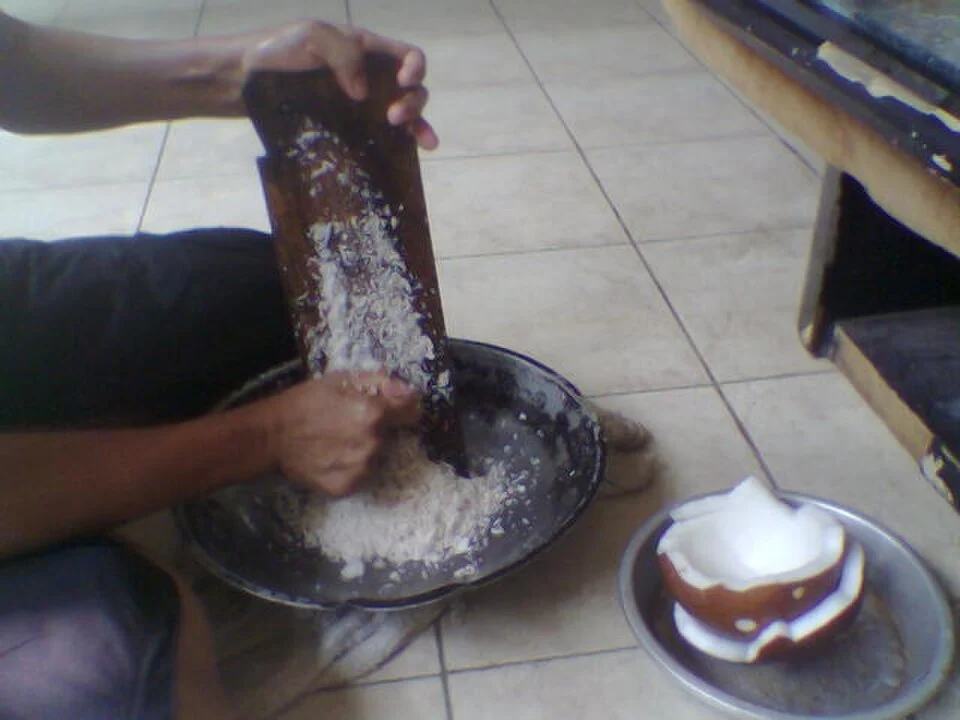
Scoop it from a chilled plate, and a sweet, thick body remains between the grains of rice that have absorbed coconut milk. Arroz con dulce is a Puerto Rican sweet in which rice is cooked in a liquid infused with spices. It is simmered until the grains can be portioned onto plates without being crushed, so the plate a family eats and the plate given to someone else can be taken from the same pot. Cookbook records of this sweet, made from the end of the year to Three Kings Day, describe cooks on the island grating the coconut flesh and extracting the coconut milk themselves.
Simmering the Rice in Scented Milk Until the Grains Remain
The sign that it is done is not rice that can be lifted out and floated in another liquid, but a thickness that lets the rice and liquid be scooped up together. In Jiménez’s version, the rice is stirred over heat lower than medium and finished in about 30 to 40 minutes to a creamy consistency, then put into a container and chilled. The rice grains are cooked until soft, but there is no step in which the grains are made to disappear by straining.
In the mouth there are two things: rice that has taken in coconut milk, and the sweet, thickened part that remains between the grains. In a version with raisins, there is another fruit to bite into among the whitish rice.
In the recipe (the proportions of ingredients and the method) by Eric Jiménez, presented by Puerto Rico’s tourism agency, 1 cup of short- or medium-grain rice is used with 4 cups of coconut milk. The rice is first washed and drained, and the spices are separately simmered in water.
The method does not begin by putting the rice and spices into the pot at the same time. The aroma is first transferred to the liquid, the coconut milk, sugar and salt are combined with it, and only then is the rice added. Apart from the cinnamon scattered on the surface after cooking, the liquid that the rice touches while it cooks already carries the spices’ aroma.
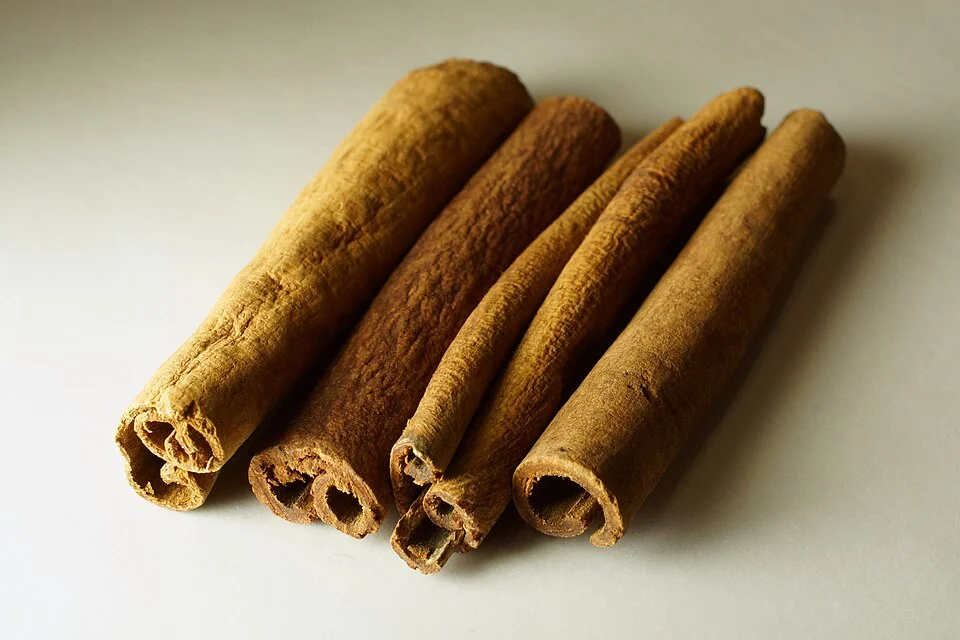
Another version soaks the rice for 1 hour, crushes ginger, and simmers for about 15 minutes a liquid containing cinnamon sticks, cloves and, if desired, star anise. The liquid is strained before it is moved to the pot. Unlike a method in which the rice is cooked in a pot with the sticks and pods left in, this one uses the aroma that has passed into the liquid and removes the spices themselves.
Soaking the rice beforehand and simmering the spices in water both use water, but they serve different purposes. The water from the soaked rice is drained off, while the spice liquid remains in the pot in which the rice is cooked.
The three stages at which aroma is added appear separately in the finished dish. Ginger and cinnamon sticks can be put on the heat to pass their aroma into the liquid. In the tourism agency’s version, vanilla is added once the mixture has been cooked and has thickened.
Ground cinnamon is used only after the cooked rice has been put into a dish and cooled. There is an aroma that pervades the whole, but where the powder is dusted over the surface, some scent reaches you first when the dish is scooped. The spices simmered in the liquid and the spice that enters the mouth as powder are not added together to a single pot.
There is also variation in the order in which the coconut milk goes into the pot. In the tourism agency’s version, the coconut milk is combined with the spice liquid to cook the rice, and the raisins are added once it turns sticky.
The RecetasPuertoRico version prepares 5½ cups of coconut milk and first adds 4 cups to the spice liquid. Partway through cooking, ½ cup is added along with the raisins and sugar, and the rest is added with butter after the heat is turned off. Because the amount that goes into the first pot and the amount that adjusts the richness just before serving are separate, the coconut milk listed as one ingredient is cooked for a different length of time in each portion.
When it is moved from the pot to a dish, it flows while keeping its thickness. Some versions divide it among several plates, and a type that is cut once it has cooled and set is also known. Even with the contents of the same pot, whether it is handed over on shallow plates or scooped in small amounts from a bowl changes where the ground cinnamon is dusted and how thick each piece is.
Because of the rice grains, the shape of the grains can be seen in the cross-section even after the surface has been leveled. The change from a state with cooking liquid to one that can be carried on a plate involves the step of finishing the cooking and cooling.
Puerto Rico also has tembleque, which is likewise made with coconut milk and topped with cinnamon. In it, cornstarch is dispersed in the liquid and heated, and the mixture is set evenly in a mold. What is added to the coconut milk to thicken it is the difference from arroz con dulce.
Arroz con dulce involves a period of cooking the rice, and it is chilled with the grains still in it. Tembleque has a method in which cornstarch is dispersed and then warmed, and a cut surface shows no grains. Even where appearance and aroma are similar, the structure that the tongue meets is not the same.
Grating the Flesh and Extracting Milk for Cooking
In twentieth-century cookbooks, more space is given to the spices used and to the preparation of the coconut milk. In the 1950 Cocine a gusto and Carmen Aboy Valldejuli’s 1954 Cocina criolla, which Hernández compared, aromas such as ginger, cloves and nutmeg appear, along with raisins.
Compared with the combination of rice, coconut milk, sugar and cinnamon reported for the 1859 book, the twentieth-century versions layer more kinds of aroma in a single pot. This is a difference between the printed books compared, and it does not show that every household changed its recipe at the same time.
Hernández explains that Valldejuli’s cookbook describes cracking the coconut, taking out the flesh, grating it, passing it through hot water and squeezing out the amount of milk needed. In versions that begin cooking the rice from coconut milk that has already been prepared, cooking time is mainly counted as time spent standing at the pot. In a kitchen that extracts milk from the flesh, there is first the work of opening the shell and finely grating the flesh before squeezing.
Jiménez’s version presented by the tourism agency also comes with a method of grating fresh coconut and extracting the milk with hot water. Before the question of how many cups of coconut milk to use comes the question of how that liquid was prepared, and this changes the labor of making the sweet.
The 2007 book Puerto Rico, sabor criollo, which Hernández consulted, also has an example in which whole milk and evaporated milk are added to the coconut milk. For the same rice sweet, there is a method that uses only milk extracted from coconut and a method that combines it with cow’s-milk dairy. Evaporated milk is unsweetened concentrated milk from which part of the water in cow’s milk has been removed.
Even when a milk other than coconut is used, how long the milk touches the rice and how the spices are used are left to each recipe. One cannot neatly divide the dish into a coconut-only formula as the old one and a formula that also includes cow’s milk as the entire present, and Jiménez’s modern version is cooked mainly with coconut milk.
A Poem of a Wedding and the Sweet Rice of the Nineteenth Century
Manuel A. Alonso’s El Gíbaro, published in 1849, collects works depicting the customs of the island. In its poem "Un casamiento jíbaro" (A Jíbaro Wedding), the wedding music and dancing are followed by a scene in which relatives and the bride and groom sit at a table.
At that table, rice, meat, coconut and milk appear in the lines of the poem. Soon afterward, a fried yam sweet and oranges stewed in sugar are also listed. The poem does not record a recipe, but the text confirms that a rice dish combining coconut and milk appears among the words describing a celebratory meal.
The food historian Cruz Miguel Ortiz Cuadra introduces the anonymous 1859 cookbook El cocinero puertorriqueño, which has, under the heading arroz con coco, a method that leads to today’s arroz con dulce. José Hernández’s comparison of cookbooks cites rice, coconut milk, sugar and cinnamon from this recipe.
Ortiz Cuadra also sees in this edition a suggestion to add lime peel in place of ginger. An old rice dish is not always listed under the same name as today, and even in descriptions of the same cookbook, there are differences in what is counted as a basic ingredient and what is treated as a choice of aroma.
Ortiz Cuadra compares the milk and aromas used in Spanish sweet rice dishes with Puerto Rico’s coconut milk and ginger. He does not assume that every ingredient of a dish that crossed the sea was available as it was, and considers the possibility that it was reassembled from ingredients available on the island.
The combination of coconut aroma and rice also appears in nineteenth-century records, but it is not known whether every household of the time made it the same way. A poem depicting a wedding, a cookbook that passes a method on to the home, and modern sources dealing with Christmas menus each capture sweet rice in a different setting.
Ortiz Cuadra further notes that Luis Bonafoux’s 1882 work Carnaval de las Antillas also has a scene at the end of a dance in which a young man offers arroz con coco to a girl. Listed alongside it are pasteles and majarete.
In Alonso’s wedding scene, the bride and groom, relatives and a table are depicted. In the later work as described, food is offered to a partner at a dance. A combination of rice and coconut appears not only in scenes of eating at home on holidays.
Christmas Gift Plates and Town Festivals
Hernández writes of his memory of exchanging plates of arroz con dulce with family and friends in the period from Christmas to Three Kings Day on January 6. Rice cooked in a single pot can be served onto several plates before it cools.
Scooping it with family at an end-of-year meal and taking one plate’s worth outside the dining table follow from the same preparation. The procedure of cooling the cooked rice and serving it with cinnamon scattered on the surface also yields a form that can be handled when it is given already plated.
In San Germán in the west, a festival of arroz con dulce and almojábana was held in 2021. According to local reports, cooks, bakers and members of the community made it using more than 100 pounds of rice. Household recipes begin with 1 cup of rice, but at the festival, a quantity is made for many people to share.
What the mayor explained in the report is the custom in San Germán of serving almojábana with arroz con dulce. What is served together here is not an ingredient in the pot, such as the coconut milk liquid or ground cinnamon, but another food set out on the table.
San Germán’s 2024 ordinance made the festival an official event on November 22–24 of that year, and it also lists a form called shinda (シンダ), in which arroz con dulce is stuffed inside almojábana. When served alongside, the amounts of rice and almojábana can each be chosen.
In the stuffed form, biting into the outside releases rice containing coconut milk from within. Sweet rice that can also be scooped from a plate can serve as the filling of another dough because it holds together after being cooked and cooled.
Glossary
- Arroz con coco
- The name of a rice dish made with coconut. In sources introducing a Puerto Rican cookbook published in 1859, the sweet that leads to today’s arroz con dulce appears under this name.
- Tembleque
- A Puerto Rican coconut milk sweet. Some versions use cornstarch to set it evenly.
- Almojábana
- A pastry served with arroz con dulce in San Germán. The form with the rice sweet stuffed inside is called shinda (シンダ).
- Manuel A. Alonso
- Author of El Gíbaro, which depicts Puerto Rican customs. The 1849 book contains a poem describing a celebratory meal.
- Cruz Miguel Ortiz Cuadra
- A Puerto Rican food historian. He compared rice dishes found in nineteenth-century cookbooks and literature with modern methods.
- Luis Bonafoux
- Introduced as having depicted, in his 1882 Carnaval de las Antillas, a scene in which a rice and coconut dish is offered.
- Carmen Aboy Valldejuli
- Author of Cocina criolla. A method that includes the steps for extracting milk from coconut flesh is cited in a later comparison of cookbooks.
- José Hernández
- Compared recipes in Puerto Rican cookbooks from the nineteenth century to the present, and wrote of the custom of year-end gift-giving.
- Eric Jiménez
- The cook who presented a method for arroz con dulce in the Puerto Rico tourism agency’s Christmas food guide.


