


SweetloreEncyclopedia of World Sweets (834)

Nicuatole
Nicuatole
An Oaxacan sweet of corn strained, thickened over heat, cooled and cut
Desserts / Mexico, state of Oaxaca

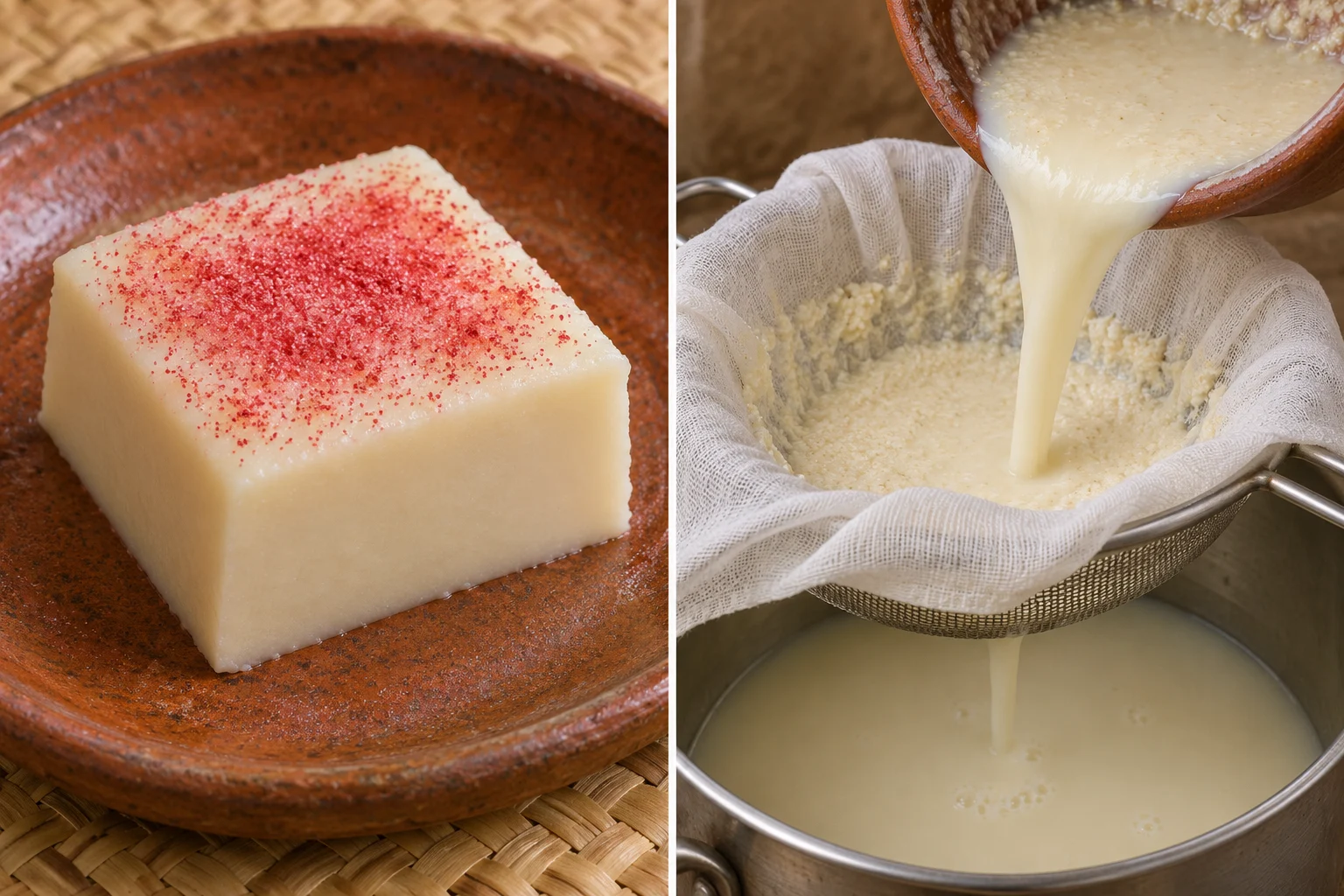
Smooth on the tongue, it keeps the shape of a single piece even when moved to a plate. Nicuatole is a corn sweet from the state of Oaxaca in southern Mexico. Boiled kernels are ground and the liquid is strained, then returned to the heat and cooled until it is firm enough to cut and portion. Some versions use corn and water, others add milk, and some are finished with a red color on the surface. In San Agustín Yatareni, some makers use native corn in different kernel colors and keep the color through the inside of the sweet.
Grinding the boiled corn and straining the liquid
In the method given in a food science study, the corn kernels are first boiled, blended with a small amount of water, and the liquid is strained through cloth. The solids that remain are returned to the blender with more water. Large pieces would be felt on the tongue, but the straining leaves the portion that goes back on the heat as fine components dispersed in the liquid. Although kernels are the raw material, this is different from a sweet whose cut surface still shows rice-like grains.
The strained liquid goes back on the heat with cinnamon and cane sugar. In the study’s sample, the cinnamon was removed after the liquid came to a boil, and stirring continued. As the corn starch absorbs water and is heated, the liquid gradually becomes viscous. There is a time gap between the thickening that happens while it is hot and the change that makes it cuttable after it is poured into a mold and cooled.
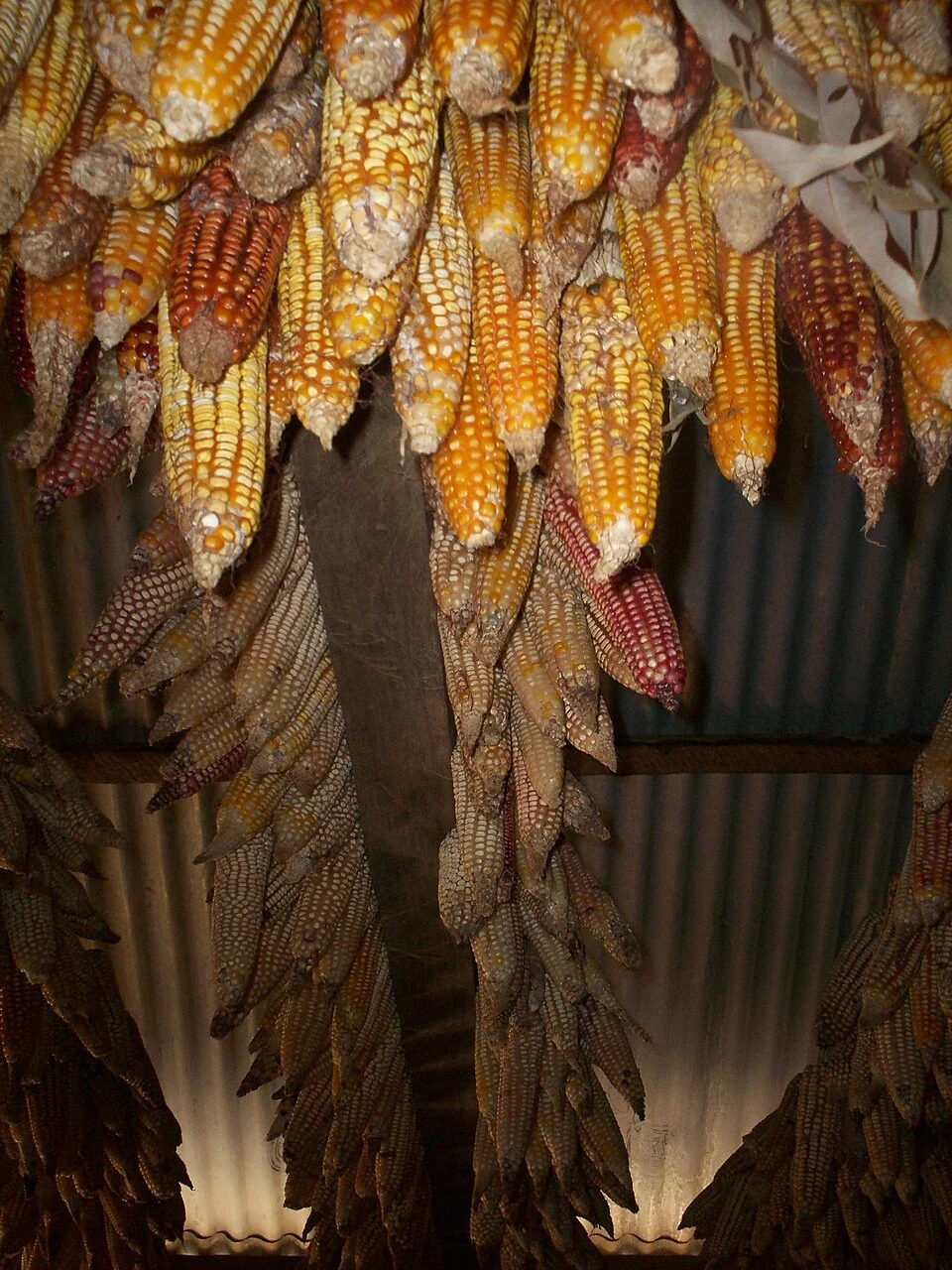
Susana Morales, a maker in Yatareni, uses native corn grown locally and presents kernels in different colors: red, yellow, blue and black. Even when grouped together as native corn, the kernel color and the blend are not a single fixed thing. Choosing local kernels means choosing not only the flavor but also the color of the finished sweet.
Thinned with water, or combined with milk
There is a method that thins the corn with water and a method that adds milk. In the food science study, the kernels were processed with water, and cane sugar and cinnamon were added. Muñoz Zurita’s version combines flour with milk, sugar and vanilla. Although both set when cooled and can be cut, the flavor in each piece changes depending on whether the corn is thinned with water or with milk, and on what supplies the fragrance.
In Ricardo Muñoz Zurita’s recipe (the proportions of the ingredients and the method), fresh corn flour for tamales is thinned with milk, mixed with sugar and other ingredients, and cooked. The ingredient list gives 1½ cups of flour to 1 liter of milk and ⅓ cup of sugar. Compared with the research procedure of blending boiled kernels, preparation here begins at the stage where the corn is already flour. The method describes no straining step; the mixture is thickened by stirring in the pot. What the two have in common is that the fine components of the corn are dispersed in the liquid and thickened by heat.
In Muñoz Zurita’s version, the ingredients are combined in a pot and cooked over low heat for about 30 minutes, stirring constantly, until thick. The hot mixture is poured into a rectangular mold 20 cm long and 5 cm deep. After it cools, the set rectangle of sweet is cut into portions and transferred to plates. The 30 minutes is the time in the pot when the flour has already been prepared. Starting from kernels also requires steps before and after boiling.
In Muñoz Zurita’s version, vanilla provides the fragrance, and the chilled sweet is cut and served with fresh fruit. Ariana, a maker in Yatareni, gives the example of white corn paired with coconut. Mixing fruit flavor into the sweet itself and adding fruit after the sweet is cut differ in what appears at the cut face. There is also a choice, while keeping the texture of the corn, about which ingredients go into the pot and which are eaten together on the plate.
The food science study measured the moisture, protein, fat and other components of its nicuatole samples. The moisture of that sample was about 66.4 percent and the protein about 2.1 percent. That it is firm enough to cut yet holds a lot of moisture sets it apart from baked, dry corn sweets. The values given in the study are the composition of the sample that was measured. These figures alone do not show which is softer, a version made with milk or one made with water only, or whether every maker in Yatareni finishes with the same proportions.
The 1989 cookbook Dulces mexicanos also includes a nicuatole from the state of Michoacán. In this version the kernels are boiled without lime, ground with milk and water, and cooked with cinnamon and sugar until thick. Pouring into a mold and cooling can be compared with the Oaxacan versions, but the ingredients and their order cannot simply be substituted for a Yatareni household’s formula. It shows that a sweet of the same name is recorded in cookbooks from different regions.
The red on the surface, and the color that comes from the kernels
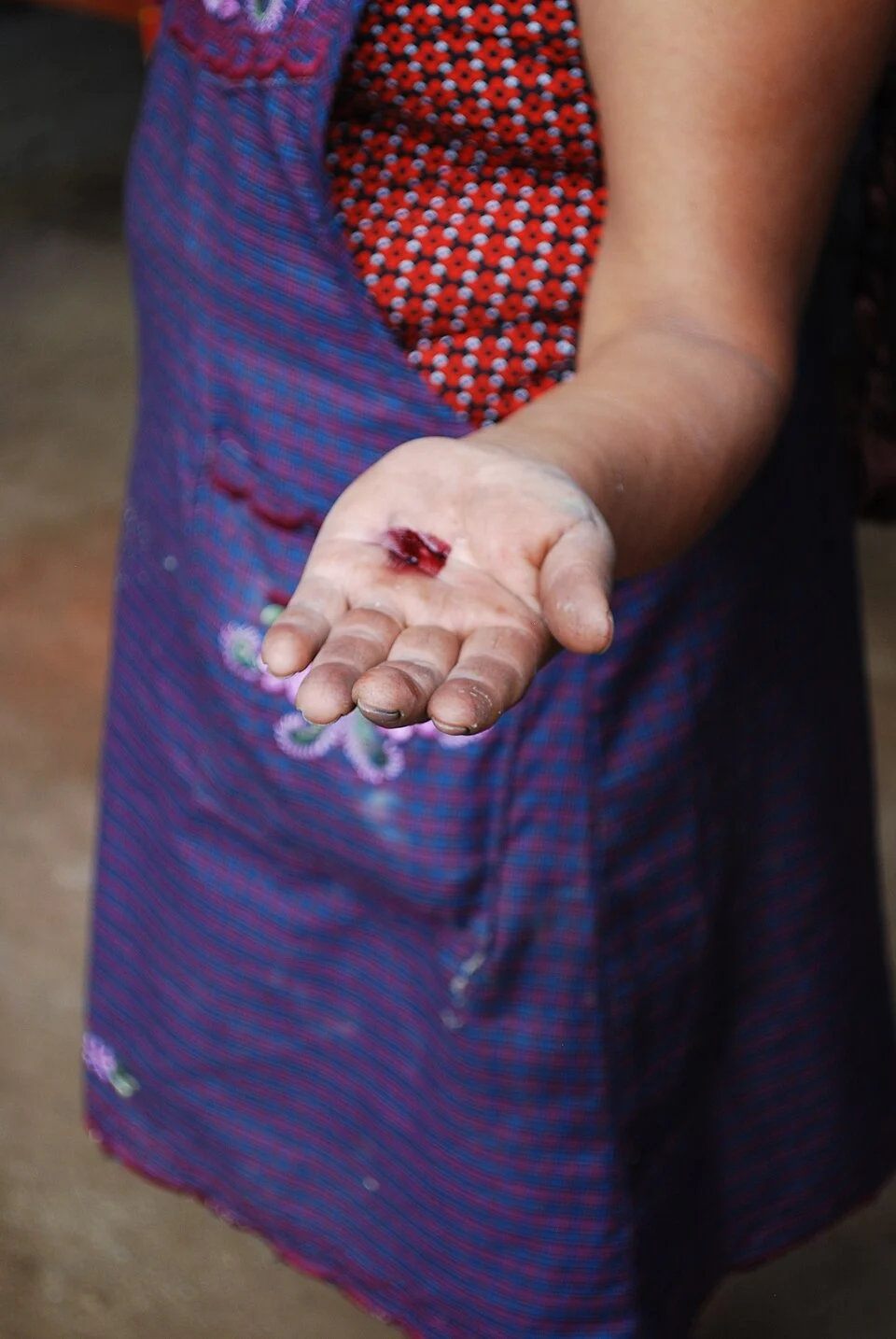
Some nicuatole are decorated on the surface with a red color derived from cochineal. Cochineal is an insect that lives on cactus and yields a red pigment. In what Yatareni makers say, red appears as a color applied on top. When the surface and the interior are different colors, a pale band appears in a cut piece. This is a different finish from boiling white corn so that the color runs through the interior.
Describing the square nicuatole sold in the markets of the Central Valleys of Oaxaca, Muñoz Zurita cites an example in which colored sugar forms a red edge, and he omits this step in his own version. The samples in the food science study include a separate step in which sugar and red color are combined and placed on the surface. Even among versions with a red surface, the ingredients the sources reveal differ between colored sugar and a household example that speaks of using cochineal. There are also versions, like Muñoz Zurita’s, that omit the red finish. Where red is used, the range of ingredients stated differs from one method to another.
In Gueta, a family enterprise in Yatareni, Susana Morales and her daughter Quetzalli Uriarte pass on a method that uses red, yellow, blue and black corn. Morales’s interview says they use kernels grown locally and kernels their own family produces. Unlike a color applied only on top, grinding colored kernels carries the color into the liquid as well. Looking at whether the color is inside the cut sweet or only in the top layer shows the difference between the stage at which the corn was chosen and the stage at which color was added at the finish.
Ariana, a maker interviewed by the local press, gives examples of black corn paired with chocolate, yellow kernels with pineapple, and white kernels with coconut. Because a different flavor is paired with each color, telling the cross-sections apart is linked to choosing a flavor. She also says that at first the corn did not set well. Choosing the color of the kernels alone does not produce a sweet that can be cut; the skills of boiling, straining, cooling and shaping underlie each flavor.
Cut into squares for sale, and handing down the method
Muñoz Zurita says that in the markets of the Central Valleys, nicuatole is sold cut into squares. Rather than scooping everything in the mold out of one vessel, it is cooled and then cut into pieces that can be handed over. Cooling in a large mold is linked to buying the sweet one piece at a time at the market.
According to Ariana’s interview, makers in Yatareni sometimes go to sell in places such as the city of Oaxaca. She says her mother made and sold nicuatole for 40 years and she herself for about 20. This is one household’s experience up to the time of the interview. The same article describes the work of makers who travel to other towns to sell. Some people are involved from start to finish, from grinding the kernels into a liquid to going out with the cut sweet.
The state tourism agency presents the Nicuatole and Corn Festival held in San Agustín Yatareni. A Gueta maker says that the festival takes place during the year and introduces visitors to the colors of corn and to its dishes. At the festival, visitors can choose a finished piece, and at the makers’ experience sessions they can also learn that several colors of kernels exist in the same locality. The name Gueta means tortilla in Zapotec. The daughter, Quetzalli, proposed a place to share local food, and with her mother Susana and her aunts she introduces regional dishes to visitors. The cooking sessions cover not only nicuatole but also tortillas and the moles each family does best. Susana speaks of it as a joy when participants say they want to make the dishes they learned themselves. Handling kernels of different colors and learning the methods together with local dishes is a way into the background of a single piece. Behind the different colors lined up at nicuatole stalls lies not only the method of coloring in the pot but also the difference in which kernels are brought in from the field.
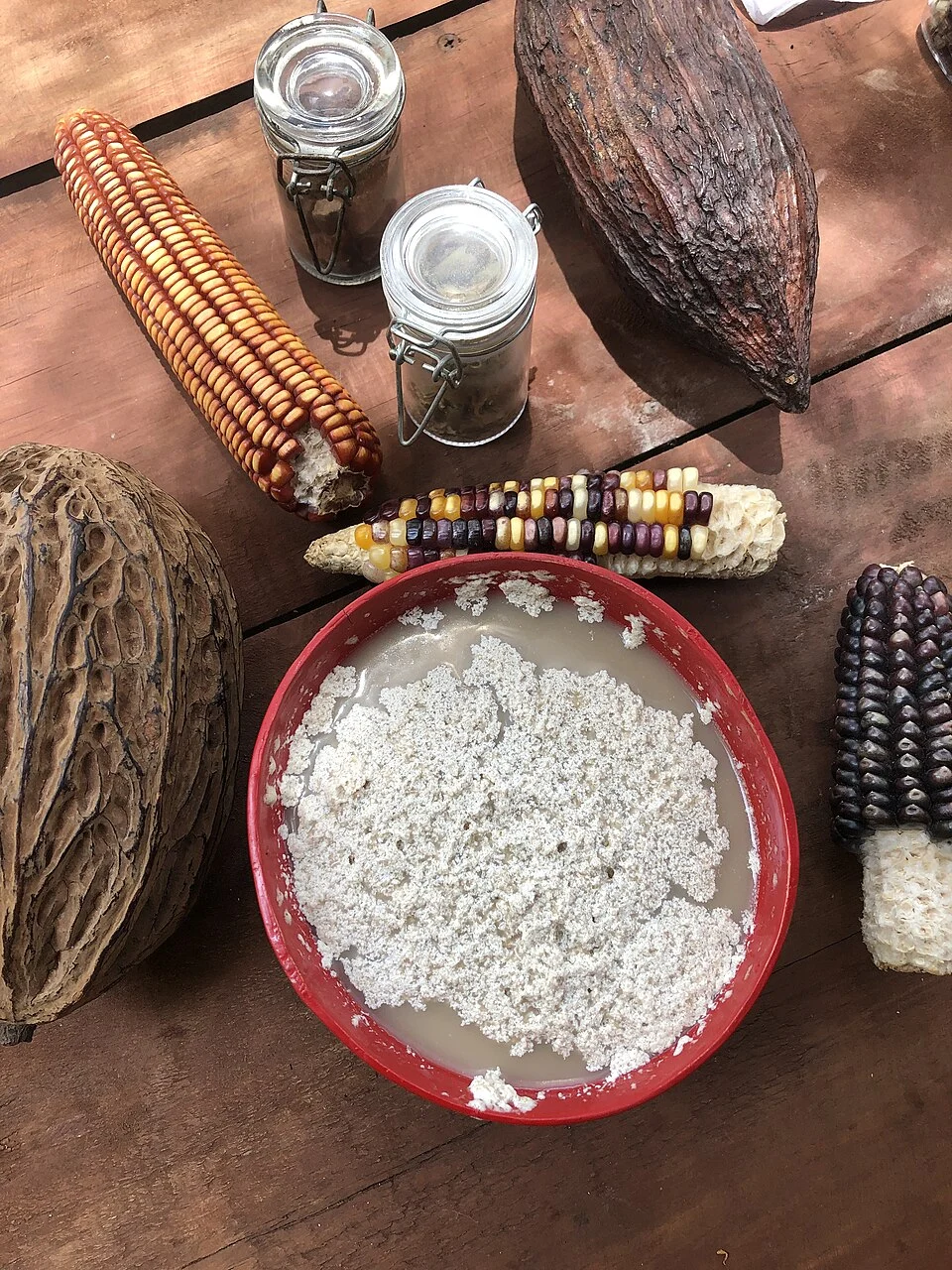
The announcement for the seventh festival, in 2018, also lists nicuatole flavored with coconut, pineapple and nuts, as well as with tejate. Tejate is a drink long made in Oaxaca from ingredients such as corn and cacao. The same event also features tejate to drink and tamales. It is a place where one can see both a flavor going into nicuatole and a drink received in a separate container. Corn is not eaten only as a sweet solid piece; it appears alongside drinks and steamed foods from the same locality.
Dates passed down in Yatareni, and the food culture of corn
As for the origins of nicuatole in Yatareni, there is an account that Juana Agustín Martínez made it in the 19th century and left a record of it. Ariana, speaking to the local press, explains that the festival continues in honor of her. The report also gives the year 1876. The dates that makers pass down are a clue for thinking about since when nicuatole has been made and sold in this town. What the formula was in that year, whether the surface was reddened, or what kind of mold was used for cooling cannot be determined from present-day interviews.
The technique of heating corn into a viscous food is a premise for thinking about present-day nicuatole. The food science report links it to an older corn food culture, while the local press carries the account, passed down in Yatareni, of a 19th-century origin. The age of the use of the grain and the date of the sweet as told by local makers indicate different things. In the work in Yatareni that can be confirmed today, kernels are chosen, boiled and made fine, and the strained liquid is cooled into pieces that can be sold. That process is handed down as household work and is applied to kernels of different colors and to new combinations.
Glossary
- Tejate (tejate)
- A drink from Oaxaca made with ingredients such as corn and cacao. At the Yatareni festival, nicuatole with its flavor was also presented.
- Cochineal (cochinilla)
- An insect that lives on cactus. Its red pigment has been used to decorate the surface of nicuatole.
- Ricardo Muñoz Zurita (Ricardo Muñoz Zurita)
- A chef who presented a method for nicuatole using corn flour, milk and vanilla.
- Susana Morales and Quetzalli Uriarte (Susana Morales, Quetzalli Uriarte)
- The people who run Gueta, a family enterprise in Yatareni that introduces dishes made with local corn.
- Ariana (Ariana)
- A person who makes and sells nicuatole in Yatareni. She spoke to the local press about inheriting the work from her mother, kernel color and flavor, and the festival.
- Juana Agustín Martínez (Juana Agustín Martínez)
- A person said to have left a record of nicuatole in 19th-century Yatareni.


