


SweetloreEncyclopedia of World Sweets (834)

Guava Duff
Guava duff
Fruit-filled rolled dough cooked in water, served with a butter and rum sauce
Desserts / The Bahamas

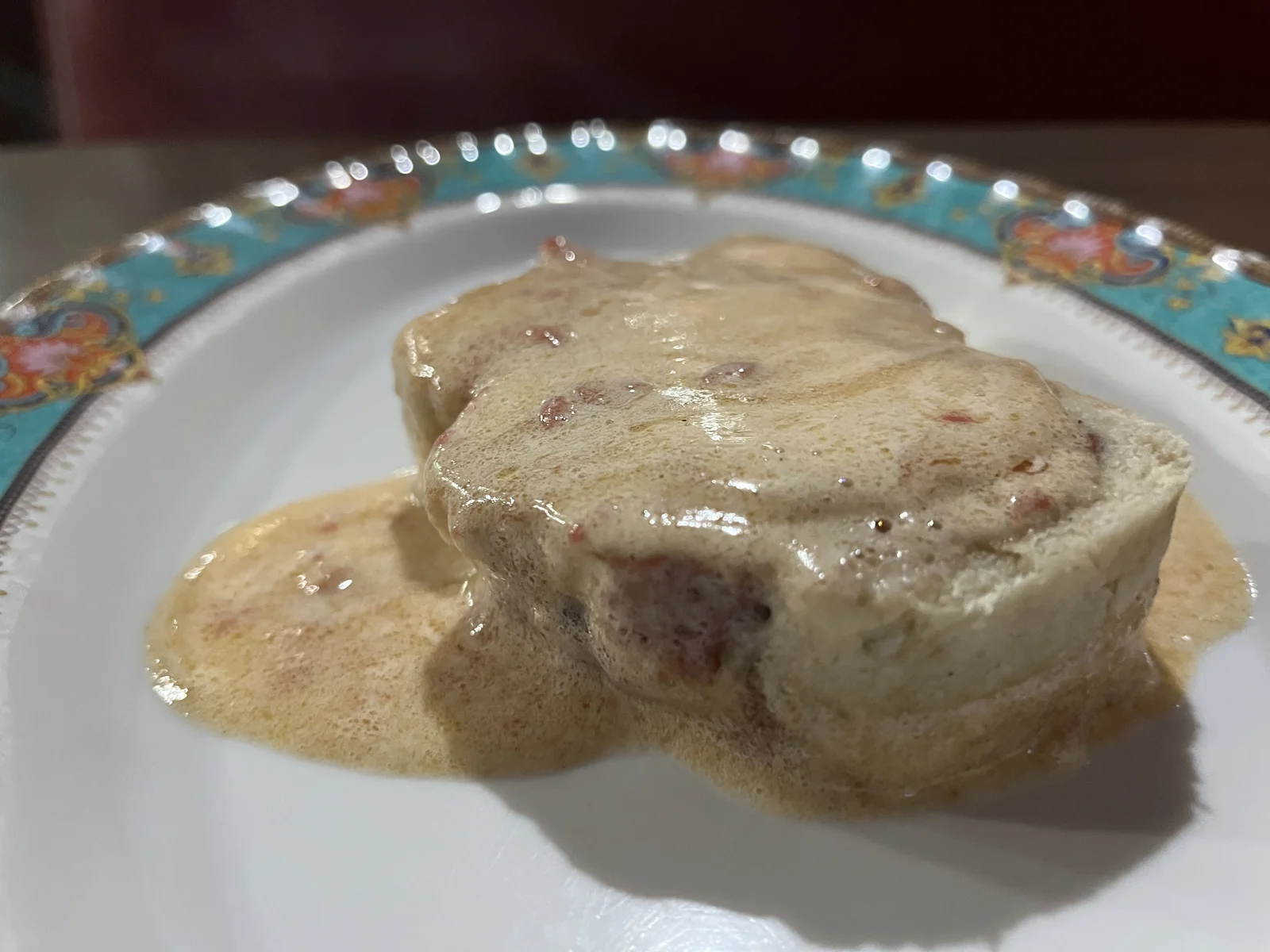
Guava duff is a Bahamian sweet in which fruit is rolled into dough, wrapped, cooked, and served with a sweet sauce. When sliced, the guava forms spirals inside the pale dough. The aroma of the fruit and the mild dough are paired with a sauce made with butter and rum. It can be boiled, or baked in the oven in a pan filled with water, and the preparation of the fruit and the contents of the sauce differ as well.
Chopping the Guava and Rolling It in Dough
The recipe (the proportions of ingredients and the method) in the cookbook published by the Grand Bahama Museum begins by peeling, seeding, and chopping the guavas. Water is added along with sugar, cinnamon, and allspice, and the fruit is simmered until soft, then left to cool. It also notes that canned, seeded guava pulp can be used in place of fresh guavas. In this method, the fruit is cooked once before it is placed on the dough.
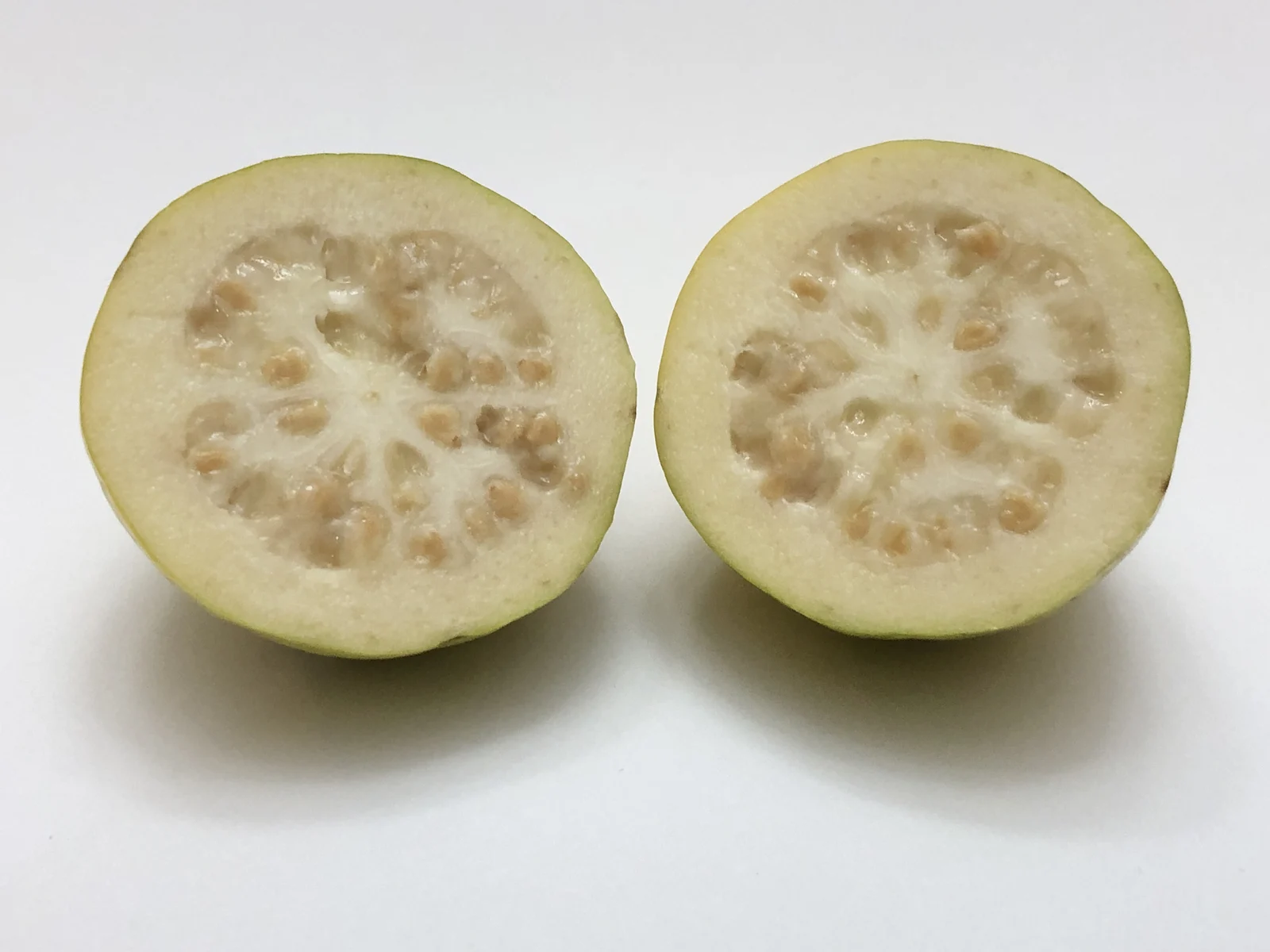
This recipe says that the juice set aside when the fruit is strained may be kept and used to flavor the sauce. The pulp becomes the filling that is rolled in, and the reserved juice may return at the finish. Rather than putting all of the fruit into the dough at once, this version gives the pulp and the juice separate roles, which shows the ingenuity of the recipe.
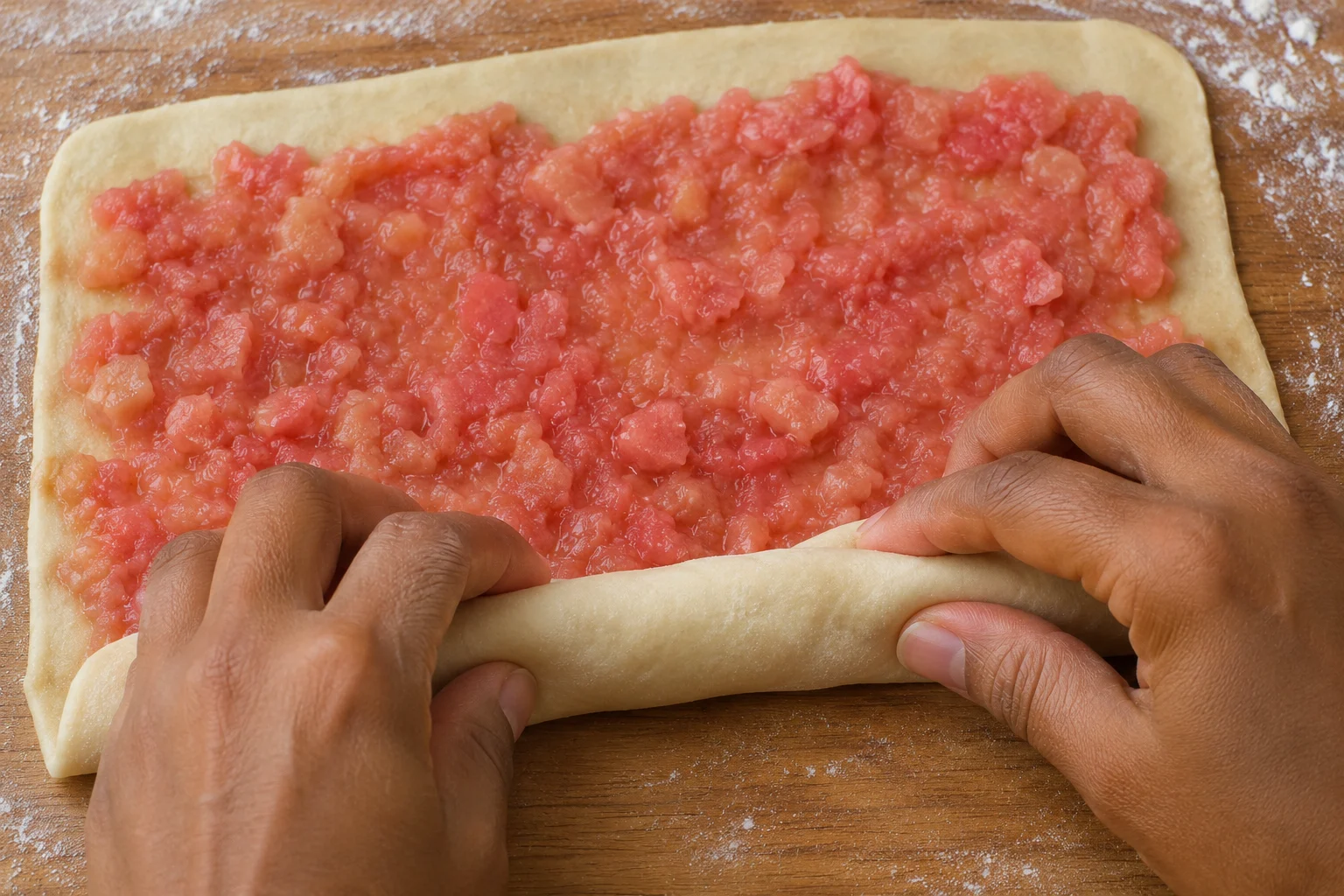
The dough is made by cutting shortening into flour, baking powder, and salt, then adding milk and egg to bring it together. After it is kneaded until smooth, it is rolled out into a rectangle, the prepared fruit is placed on it, and it is rolled up. The seam is closed carefully, and the roll is cooked inside a wrapping. Although the dough contains baking powder, the order of rolling differs from that of a Swiss roll, in which a thin sheet is baked large first and then rolled around the filling.
Rolling the dough before cooking places the fruit between the layers of dough, and the dough sets in that state. The pattern visible when the roll is cut results from layering dough and fruit before heating, not only from sauce applied afterward. Spreading the fruit so that the pulp does not shift to one side, and closing the ends, are steps that bear on the cross-section and on keeping the filling in, respectively.
Guava is not used in only one way. A 2006 Bahamian dining guide mentions guava paste as well as fresh or frozen fruit. Chopped fresh fruit that is stewed and processed paste differ in the moisture and sweetness of the fruit before rolling. Which form of guava is used cannot be told from the shared name “with guava.”
Wrapping in a Bag and Boiling
In the museum’s cookbook, the rolled dough is wrapped in a cotton or linen bag, or in paper and foil, tied tightly, and placed in a large pot of water. It is boiled for about 1 hour to cook the dough through. The dough is not dropped directly into the water; the wrapping holds its shape while it cooks. The 2006 guide likewise presents it as a sweet boiled or steamed in a cloth bag.
When cooking in a bag, closing the seam before the roll goes into the pot is important. There are two enclosures: the dough rolled around the fruit and, outside it, a cloth or similar wrapping. Because the inside cannot be seen until the finished duff is taken out and sliced, shaping it before wrapping also makes the result easier to handle.
Boiling and steaming both transfer heat by means of water, but they are not the same operation. The museum’s recipe puts the wrapped roll into water, while the 2006 guide mentions both methods without prescribing the two together as one specific procedure. When reading a description of duff, looking not only at the wrapping material but also at whether the package is placed in water or heated by steam makes the steps easier to follow.
Wrapping in Paper and Foil and Baking in a Water Bath
The recipe by pastry chef Ivana Moncur, published by the Bahamas tourism office in 2020, shows a different method of cooking. Flour, sugar, butter, shortening, a leavening agent, and milk or water, among other ingredients, are mixed, and the soft, cohesive dough is rolled out to a thickness of about 1 cm. Kneading with a mixer’s dough hook for 2–3 minutes is given as a guide to a soft dough. Up to the point of spreading the chopped guava, rolling the dough, and closing the ends, the assembly arranges the fruit in a spiral.
Next, the dough is loosely wrapped in several layers of baking paper, then in two layers of foil, and the ends are closed. The package is placed in a shallow pan with a shallow depth of water and baked for 1 hour in a 350°F (about 177°C) oven.
The recipe instructs the cook to let it cool, then remove the paper and foil and slice it. Although the name of the sweet is the same as in the cloth-bag version boiled in a pot, the container, the heat source, and the wrapping all differ.
In an interview, Moncur describes duff as lightly steamed dough, but the specific instruction in the published recipe is to place the package in a pan of water and bake it in the oven. Merging the two into a single pot-boiling procedure obscures the actual cooking conditions. The name of a method can be read separately from which equipment is used and how the heat is applied.
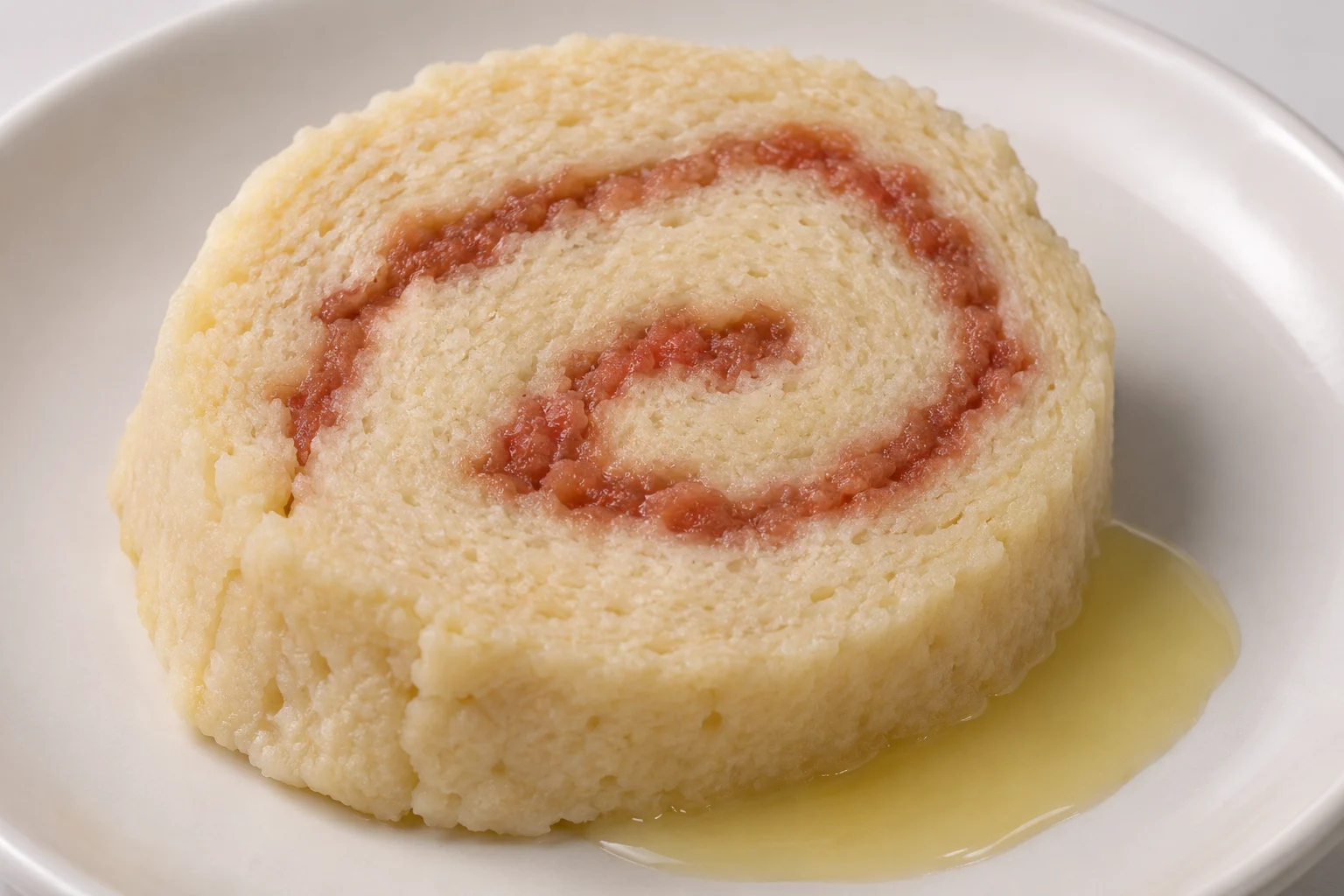
This recipe also instructs the cook to slice the finished roll about 1 inch (about 2.5 cm) thick. Because the cylindrical roll is cut, each slice shows its layers of dough and fruit and has a surface on which to pour the sauce. Rather than being served on the plate as a long piece, it can be presented as an individual cross-section for each person.
Butter and Rum Sauce
The Grand Bahama Museum’s cookbook uses butter, confectioners’ sugar, hot water, a pinch of salt, and rum or brandy for the sauce. The butter is creamed soft without being melted, the confectioners’ sugar is added gradually, and the hot water and liquor are mixed in until smooth. It is served so that it melts over the sliced duff. It is not cooked together with the dough but is added to each plate after slicing.
Moncur’s sauce contains butter, confectioners’ sugar, condensed milk, vanilla, and rum, and also chopped guava. In this recipe, the fruit rolled into the dough and the fruit added to the sauce are measured separately. Guava is tasted in the sauce as well as in the layers of fruit inside. The museum’s cookbook also offers the option of flavoring the sauce with fruit juice, but adding chopped pulp and using juice are different methods.
The 2006 dining guide also says that a guava sauce is served and that it often contains rum. At the same time, individual recipes differ in the type of liquor and in how the fruit is added. The short description “rum sauce” does not settle whether the sauce contains fruit, or whether butter or condensed milk is used. The sauce is the part to consider not only for its aroma but also for what sweetness and mouthfeel it adds to each slice.
The Bahamian Table and Duff
In an interview with the tourism office, Moncur speaks of guava duff as a sweet that her mother and grandmother made at home when she was a child, and that was eaten after dinner. She also says that the aroma during cooking remains in her memory. This account shows how, for one cook, the home table and the sweet were connected. It is not testimony from which to conclude that every household made it with the same frequency or in the same way.
The 2006 local guide states that it is also served in restaurants and that it differs from place to place. Setting the cloth-bag method alongside Moncur’s oven recipe shows that, while both keep the common features of slicing guava-filled dough and eating it with sauce, the cooking equipment and the steps vary.
The Grand Bahama Museum describes Bahamian foodways as the product of overlapping influences from Africa, Britain, the United States, the West Indies, and elsewhere, and it mentions the steaming methods and fruit-based sweets that came from Britain. It also connects guava duff with the arrival of the British, but this explanation alone does not identify a specific person or the year in which the present formulation arose.
In English, “duff” is also used as a word for pudding and appears in names such as the British plum duff. When comparing it with Bahamian guava duff, one finds elements shared in name and cooking method, but the choice of fruit, the rolled structure, and the sauce must be checked individually. A shared word alone cannot prove that individual recipes are the same, or when the present sweet took shape.
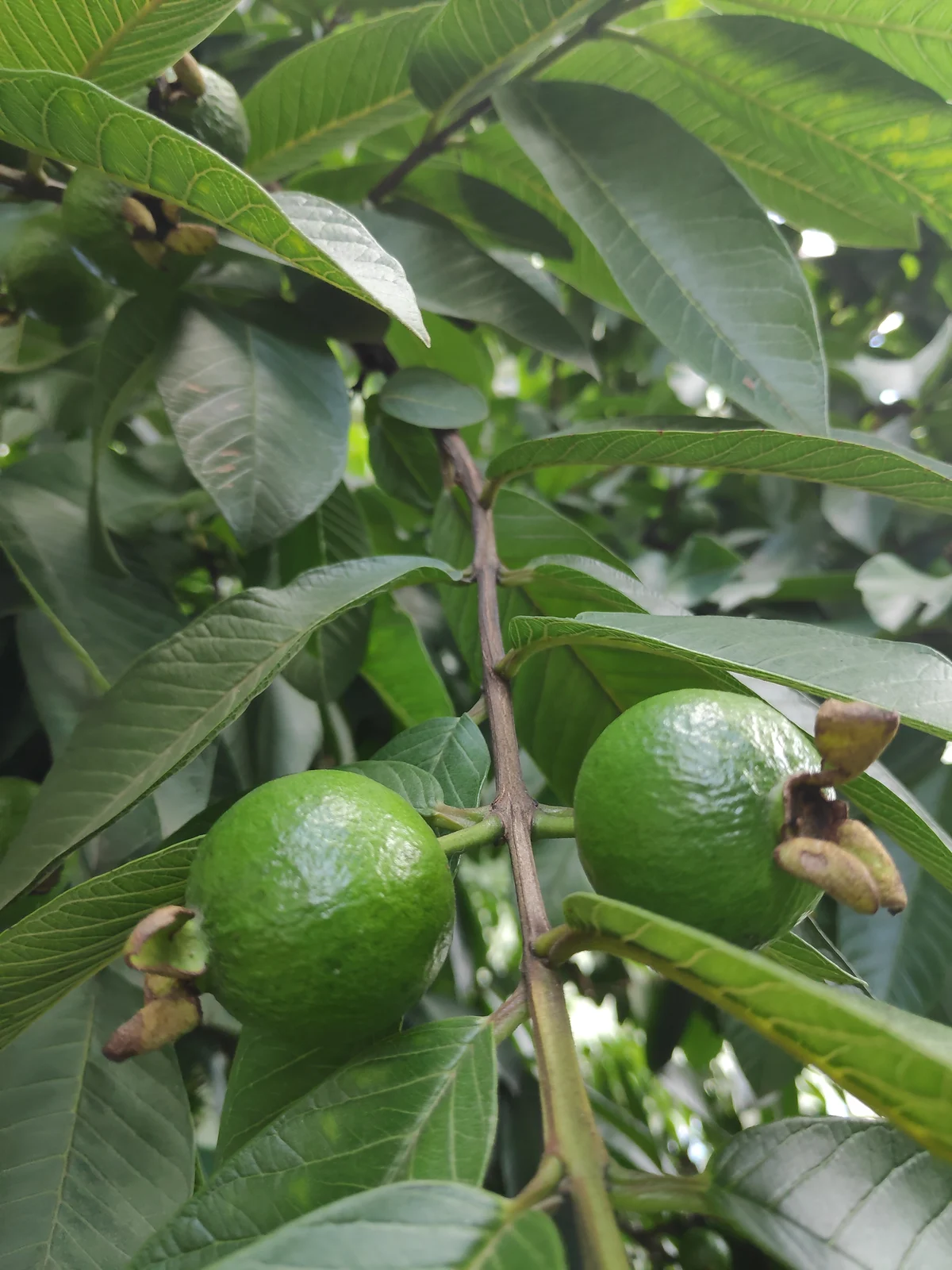
The museum’s introduction to food culture also mentions that fruits including guava were made into jam and that produce grown on the islands was shipped by boat to the market in Nassau. Guava was not an ingredient that appeared only in sweets; it was also a subject of processing and distribution. However, such descriptions of food culture cannot be taken as the process by which a particular duff recipe came about.
The sauce for guava duff is added just before serving, so it shapes how the sliced dough turns out on the plate. In the museum’s example, confectioners’ sugar is added gradually to softened, creamed butter, and in Moncur’s example, condensed milk is mixed in as well. Reading by each formulation makes it possible to distinguish concretely the ingredients and the mixing of what is called a “butter sauce” in both.
Two Methods Preserved in the Formulations
The museum’s cookbook simmers the fruit with spices, cools it, and rolls it in the dough. Moncur’s formulation spreads chopped guava over the surface of the dough, and it has no comparable instruction for pre-cooking. The museum’s example includes cinnamon and allspice, while the ingredient list for the fruit rolled into Moncur’s dough does not list either. There is a clear difference in how the fruit is prepared before heating and how it is scented.
The fat added to the dough also differs. The museum’s example uses shortening, while Moncur combines shortening and butter. The former includes egg and milk, while the latter allows either milk or water as the liquid. Both use baking powder, but because the ingredient lists differ, the same thickness and the same time will not necessarily give the same texture. When comparing recipes, one can look not only at whether it is boiled or baked but also at the formulation of the dough itself.
The museum’s recipe lets the cook choose canned pulp as well as fresh fruit, while Moncur’s published formulation specifies chopped guava. The forms in which guava can be obtained differ by place and season, and the option of a processed product is one way of coping with that difference. Because prepared fruit and fresh fruit need different preparation, it helps to read what each recipe assumes, rather than swapping in the same quantity without checking the form of the fruit.
Dough rolled around fruit pulp is wrapped, cooked, sliced, and served with sauce. Following the museum’s boiled recipe and the pastry chef’s water-bath-baked recipe, the defining feature of this sweet lies not in a single piece of equipment but in the whole sequence of assembling and serving the fruit and dough. Comparing the form of the guava, the wrapping, and the sauce ingredients also reveals the differences among sweets made under the same name.
Glossary
- Duff
- Also used in English as a word for pudding. In the Bahamas, it is used in the names of sweets that put fruit in dough.
- Shortening
- An edible fat added to dough. In the museum’s example, it is cut into the flour.
- Allspice
- A spice used in the preliminary simmering of the fruit.
- Water-bath baking (yusen-yaki)
- Here, Moncur’s method: a shallow pan is filled with water, the wrapped dough is placed in it, and it is heated in the oven.


