


SweetloreEncyclopedia of World Sweets (834)

Banana Pudding
Banana pudding
Sliced bananas and custard, layered on the Southern table
Desserts / Southern United States

Banana pudding is a dessert popular in the American South. Sliced bananas, sweet custard and vanilla-flavored biscuits or similar baked goods are layered in a dish. A spoon pushed into it lifts out smooth cream, soft fruit and biscuits softened by the moisture of the cream, all in one scoop. Some versions top the dish with egg-white meringue and bake it until browned; others cover it with whipped cream or a similar topping and chill it. Before the round biscuits now in common use became widespread, cookbooks and newspapers also printed versions layered with sponge cake.
Thickening Over a Water Bath and Layering Wafers with the Cream
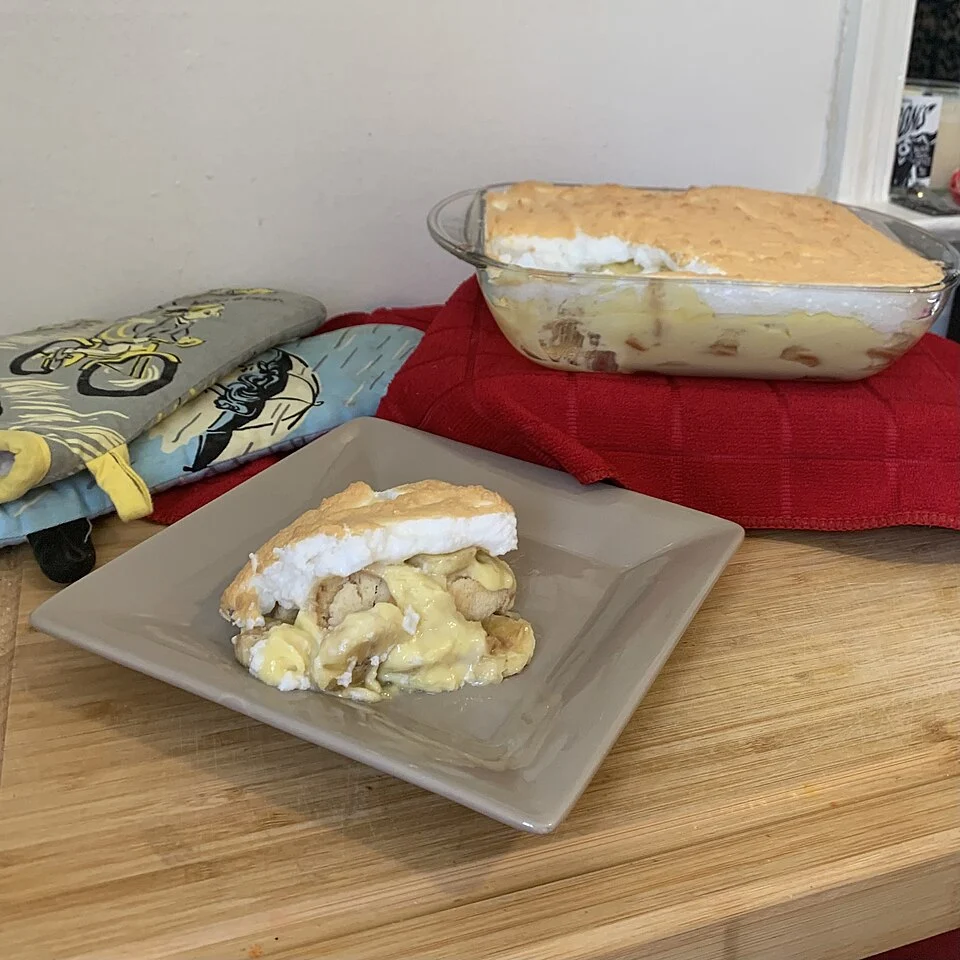
In the "Original Nilla Banana Pudding" published by Mondelēz, sugar, flour and salt are combined with egg yolks and milk, then stirred over a water bath (bain-marie) until thickened. If you use a heatproof bowl instead, set it over a pot of water so that its bottom does not touch the water, and let the steam heat it. Without covering the pot, keep stirring for about 10 to 12 minutes. When the milk mixture is thick enough to coat the bananas and seep into the gaps between the wafers, take it off the heat and stir in the vanilla. The custard thickens during this stage in the pot.
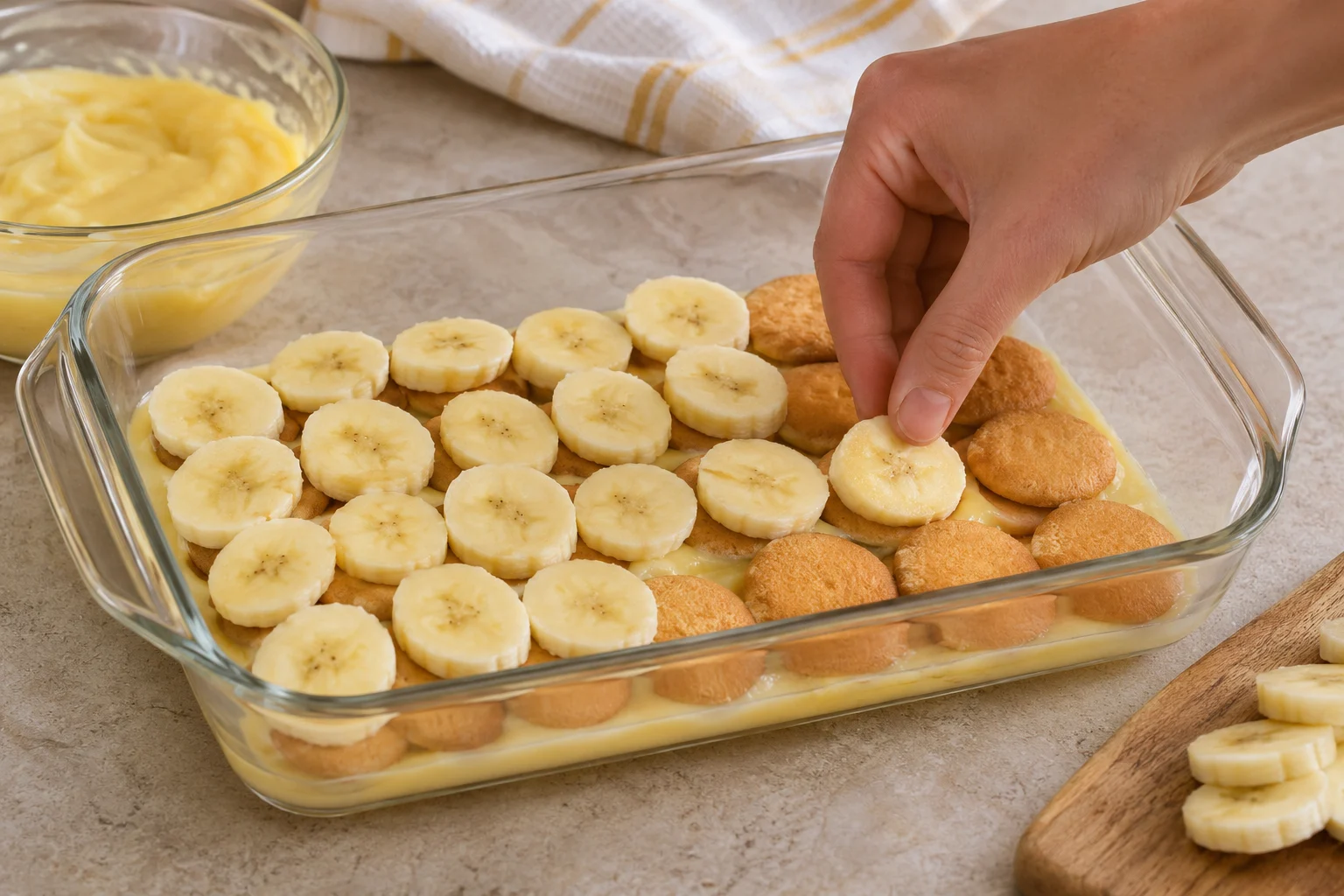
Spread a thin layer of custard over the bottom of a baking dish, then arrange vanilla wafers, sliced bananas and custard in that order. Repeat the same sequence twice more, so that from the bottom of the dish to the top the bananas sit in separate layers between the cream and the baked biscuits. The wafers touch the custard from above and below, and by the time the dish is eaten they have absorbed moisture from the cream and are easy to portion with a spoon. Only 12 wafers are set aside for the surface, and these are added just before the dish goes to the table. Although the same biscuit is used in two places, the different lengths of time it spends in contact with the custard produce a difference in texture.
The biscuits are not the only ingredient put to two uses. The yolks go into the custard, and the leftover egg whites become the topping. Beat the whites until soft peaks form, add sugar a little at a time, and continue beating until the peaks are stiff. Spread the foam all the way to the edge of the baking dish. Put the assembled dish in an oven at about 177°C (350°F) and bake for 15 to 20 minutes, until the surface is lightly browned. Inside the dish is custard that was already thickened in the pot, so the only part that changes in appearance in the oven is the meringue covering the surface. When the dish is made ahead, it is cooled after baking and refrigerated, and the reserved wafers are added later, so the crispness of a baked biscuit remains only in the garnish.
A Cream Cooked in a Pot, a Pudding Mixed and Chilled
Using wafers does not always mean baking the top. The manufacturer’s simple Southern-style method mixes instant pudding mix into cold milk, whisks for about 2 minutes, and lets it stand for 5 minutes. Wafers are lined up on the bottom and sides of the dish, bananas and pudding are layered in two tiers, and the top is covered with whipped topping. During about 3 hours in the refrigerator the biscuits and cream blend together, and the dish never goes into the oven.
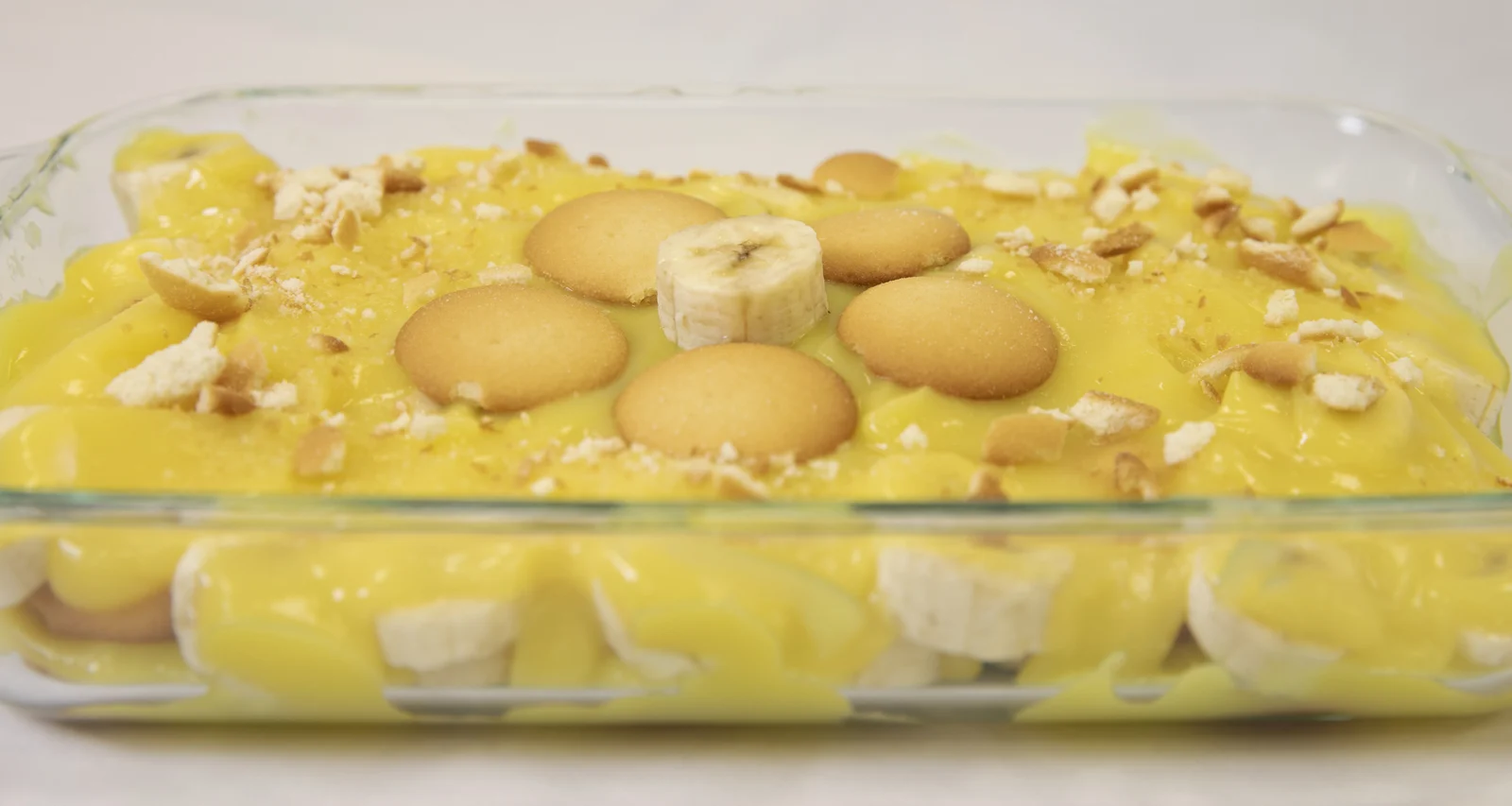
Whipped cream can also be combined with a custard made in a pot. In the recipe from the University of Tennessee’s extension service, sugar, flour, salt and milk are first stirred together in a pot and heated, with stirring, until thickened. The hot mixture is added a little at a time to the egg yolks, returned to the pot and briefly heated again, and butter and vanilla are stirred in. Compared with the manufacturer’s version, which combines the yolks and milk from the start and heats them over a water bath, this method heats the milk and flour first and then warms the yolks in stages. The cream, vanilla wafers and fruit are layered and refrigerated, and whipped cream is added at serving. How the custard inside the dish is made and what covers the surface are two separate choices.
In the African American home-cooking recipe published by the U.S. National Heart, Lung, and Blood Institute, the whipped topping is divided into a portion folded into the instant pudding and a portion left on the surface for the finish. Wafers are lined up on the bottom and sides of the dish and lightly sprinkled with milk, and bananas and pudding are layered over them. The biscuits are moistened with milk beforehand, and after the top is covered the dish is chilled for at least 3 hours. Even though the ingredients are similar to the manufacturer’s simple chilled version, the point at which the biscuits are moistened and the way the whipped topping is placed differ.
A Dish of Sponge Cake and Sliced Bananas Side by Side
The Levine Museum of the New South cites an 1888 issue of Good Housekeeping as an early printed example. The magazine was then published in Massachusetts, in the northeastern United States, and the museum explains that recipes using sponge cake were common at that time. Before the dessert became strongly associated with the South, ways of eating fruit and baked goods in layers were already appearing in printed material from various regions. As banana consumption spread, recipes using the fruit increased, and the museum says they appeared in large numbers in cookbooks, magazines and newspapers of the 1890s.
The system that brought bananas to the table is also preserved in photographs of ports. The Library of Congress holds an early twentieth-century photograph showing a ship moored at a quay in New Orleans, with a United Fruit Company banana conveyor extending toward it. A dessert that keeps its fruit in slices until just before it is eaten requires fresh fruit, unlike one made only from dry ingredients or flour. The photograph is not a record of where the dessert was made in the nineteenth century, but it shows that a port in the American South had equipment for carrying and handling bananas.

In Mollie Huggins’s household guide published in 1897 in Nashville, Tennessee, in the South, thin slices of sponge cake and bananas are placed alternately in a glass dish. The bananas are sprinkled with a little lemon juice and sugar, and a soft custard cooked from egg yolks, milk and sugar is poured over them. At the end, stiffly beaten egg whites are piled on top. Using the yolks and whites separately is the same as in the manufacturer’s recipe today, but sponge cake takes the place of the wafers, and there is no instruction to finish the dish by baking it in the oven. In a glass dish, the layers can be seen from the side even before the first spoonful.
The Sunday Oregonian of November 14, 1920, published in Oregon in the northwestern United States, printed an answer to a reader who had asked about a recipe using sponge drops and whipped cream. In addition to small baked sponge cakes, ladyfingers or stale sponge cake cut into thin, finger-like strips could also be used. Sliced bananas are sprinkled with lemon juice, layered with the sponge and sweetened whipped cream in a large bowl or in individual glasses, and thoroughly chilled. To save cream, the lower layer can be replaced with a thick custard, leaving whipped cream only on the surface. The answer also suggests garnishing with candied cherries, red jelly and chopped nuts, and mentions that some people spread a little red jelly on the sponge. Compared with Huggins’s version topped with egg whites, it shows that even where baked goods and bananas were layered, the choice of foam topping and of serving dish was open.
A Chilled Dessert Holding the Banana Flavor in the Milk
There were also examples under the same name that did not layer any baked goods. In The Good Housekeeping Woman’s Home Cook Book, published in Chicago in 1909, gelatin dissolved in warmed milk and sugar is added and simmered briefly. After cooling, and before the mixture has fully set, bananas broken up with a fork are stirred in, and vanilla-flavored whipped cream is placed on top. It is a different book from the 1888 magazine, though the two share a word in their titles. In this recipe the fruit is not placed in a separate layer from sponge cake but goes into the gelatin-set milk.
In 1921, a home cookbook from Fredericksburg, Texas, included a "Frozen Banana Pudding." Mashed bananas and whipped cream are mixed into a base of gelatin, eggs, milk and other ingredients, and the mixture is frozen. Cherries are used as a garnish, as in the Oregon method, but unlike a dessert in which sliced fruit appears in layers, here the mashed fruit is distributed throughout the cream. If we imagine the wafer layers so common today from the same name in old printed sources, the differences between the gelatin-set and frozen versions become harder to see.
Spread by the Wafer Box and Served in Southern Restaurants
According to the Levine Museum’s exhibit, recipes using vanilla wafers appeared in the 1920s, and in the 1940s Nabisco printed a recipe on its packaging. The museum notes that the product’s name officially became "Nilla Wafer" in 1967. The "Vanilla Wafers" box in the exhibit is dated to the 1930s–1940s. Instead of baking sponge cake separately, a cook could simply open a box and have small, uniform round biscuits ready to place. When the recipe was printed on the box as well, the ingredients and the order of layering reached the home together. The steps the manufacturer gives today also keep the distinction between the wafers sandwiched inside and the wafers reserved to stay dry until the end.
How the dessert came to be known as a Southern dish is not fully understood. The museum explains that a recipe for "Southern banana pudding" appeared in a newspaper syndicated column in 1933, and that by the 1950s newspaper writers had come to associate the dessert with the South. While a Southern household recipe can be read in the 1897 Nashville book, an 1888 magazine from Massachusetts and a 1920 newspaper from Oregon also give instructions under the same name. Separate records survive for the period when the dessert was known by name in various regions and for the period when it was treated as a representative Southern dessert.
In 1977, the dinner menu of Nathalie’s, a Southern restaurant in Harlem, New York, also included a banana pudding topped with meringue. In the menu held by the Culinary Institute of America, the same dessert section lists pecan pie, sweet potato pie and a deep-dish cobbler made with peaches or blackberries, and Southern fried chicken appears among the main dishes. The meringue topping is evident from the menu, but it does not say whether wafers or sponge cake lay beneath it.
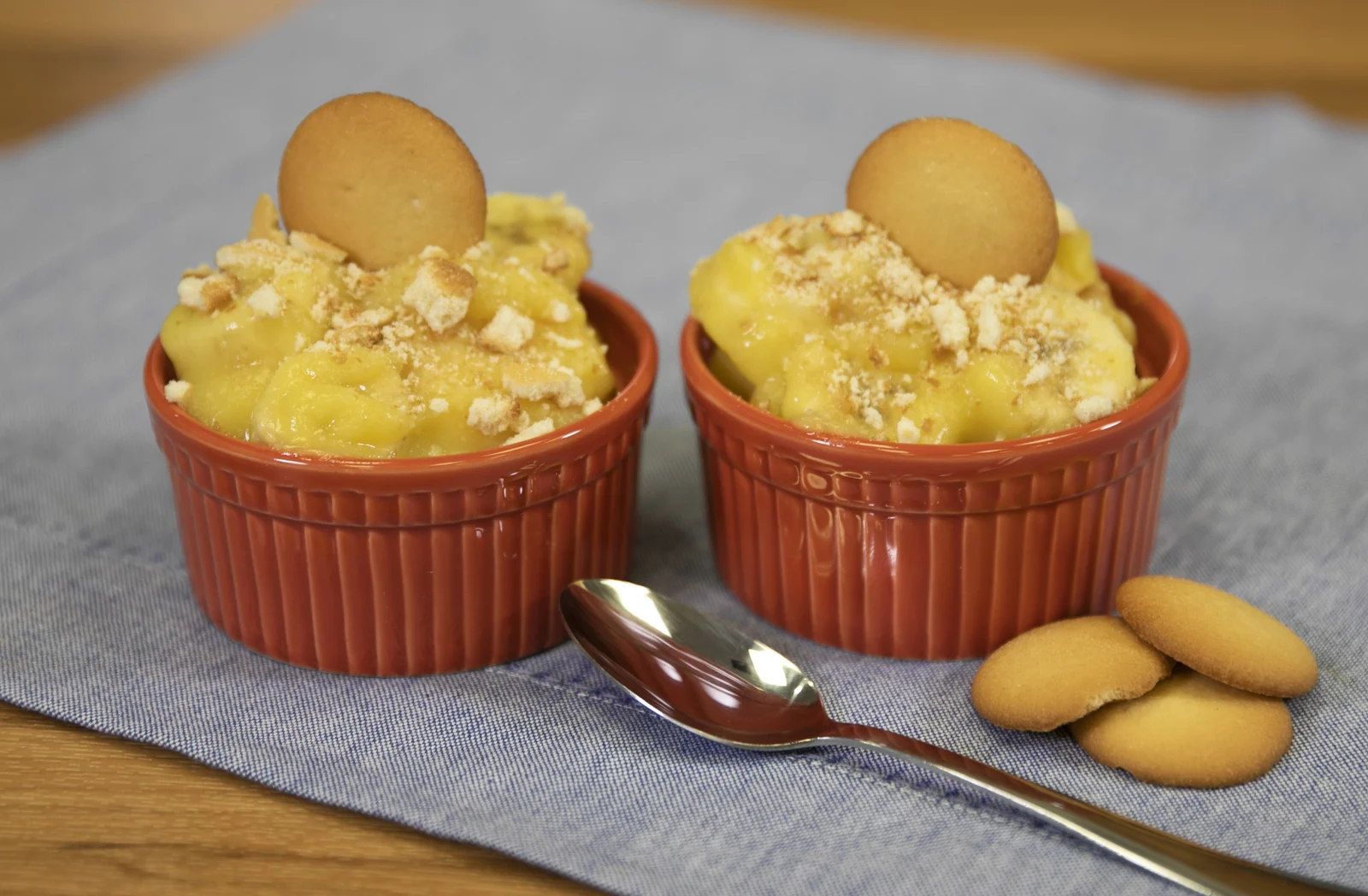
The 1897 household guide used a glass dish, and the 1920 newspaper mentioned individual glasses and a large bowl. Modern baked versions use a baking dish, and some chilled recipes line the wafers along the sides of the dish. The Alabama extension service publishes a version that uses skim milk with vanilla instant pudding. In the photograph, crushed wafers decorate the surface. Whether the dessert is portioned from a large dish or eaten straight from an individual bowl, the depth of the dish and the way the layers are arranged change how they stack, and how long the biscuits were in contact with the cream shows in the texture.
Glossary
- Vanilla wafer
- Here, a small round vanilla-flavored biscuit. A wafer sandwiched in the layers and one added just before serving have been in contact with the cream for different lengths of time.
- Custard
- In this dessert’s typical recipe, a cream made by heating milk, egg yolks and sugar with flour or similar, thickened.
- Meringue
- A foam made by beating egg whites. In the manufacturer’s recipe, sugar is added and the whites are beaten stiff, then spread in the dish and baked until lightly browned.
- Ladyfinger
- A long, thin baked biscuit shaped like a finger. In the 1920 newspaper, it is given as a substitute for small baked sponge cakes or sponge cake cut into thin strips.


