


SweetloreEncyclopedia of World Sweets (834)

Bath Bun
Bath bun
Caraway and Sugar Grains Preserved in Bath's Sweet Breads
Fermented Pastries / Bath, United Kingdom

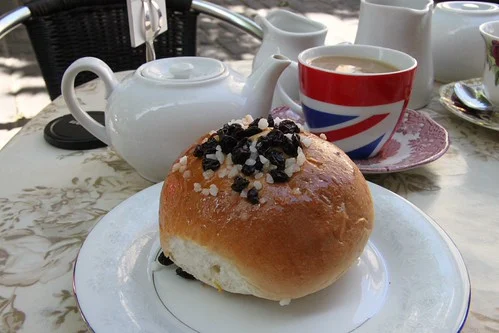
The Bath bun is a small, sweet, yeast-leavened bun known in Bath, in the west of England. Some bakeries in the city today mix in small raisins or scatter crushed sugar lumps on top. When a sugar lump is enclosed in the dough, grains of sugar touch the outside, and there is also sweetness at the center as you eat your way in. Old cookery books include a Bath bun with caraway seeds mixed into the dough and a Bath cake made with sugar-coated caraways. What goes in, and whether its sweetness and aroma sit inside or outside, differs from one method to the next.
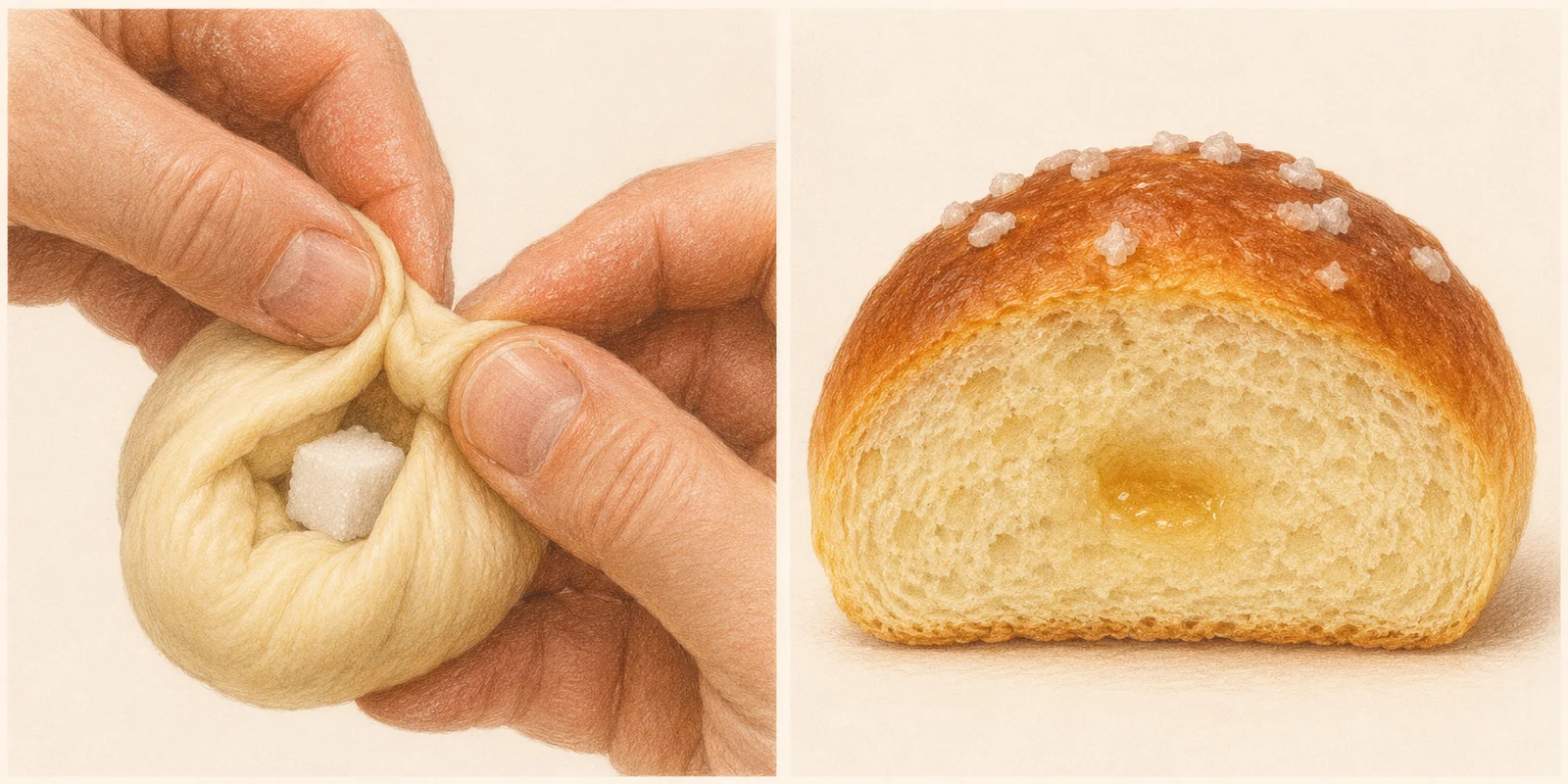
Enclosing One Sugar Lump and Placing More Sugar on Top
The recipe (the list of ingredients and the method) that Georgia Levy built from Elizabeth David’s book begins by mixing yeast into lukewarm milk. Separately, room-temperature butter is added to strong flour, sugar and salt and rubbed in with the fingers until the mixture resembles fine breadcrumbs. Unlike melting the butter and adding it to the liquid, this works the butter into the dry ingredients first. The yeasted milk is then poured in, and caraway seeds are added if desired. The dough looks wet at first; rather than adding flour right away, it is left to rest for about 10 minutes.
The rested dough is stretched and folded back, then kneaded until it is elastic and smooth. It is left in a warm place until doubled in size, then knocked back and divided into 12 pieces. One sugar lump is pushed into the center of each rolled piece, and the dough is drawn up around it and sealed completely. Because each bun is shaped individually and then left in a warm place again, the buns go into the oven larger than they were when the sugar lump was enclosed. The method thus allows separate times: one for the whole batch of dough to rise, and another for each shaped bun to rise.
The buns are brushed with beaten egg and baked at 190°C for about 15–20 minutes, until the surface is golden and the base sounds hollow when tapped lightly. They are moved to a rack and, while still hot, brushed with milk in which sugar has been dissolved, then sprinkled with lightly crushed sugar lumps and, if desired, caraway seeds. The sugar lump sealed in before baking becomes sweetness where the bun is broken open, and the grains applied to the hot surface touch the lips first. A current tourist guide also mentions a bakery that mixes currants into the dough and puts crushed sugar lumps on top. Whether sweet fruit is scattered through the dough or a single sugar lump sits at the center, the same bun shows its sweetness in a different place when you bite into it.
A Morning Bath Cake with Caraway
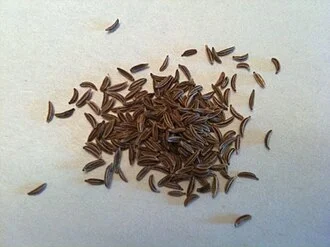
Dorothy Shirley’s manuscript cookery book, held at the Folger Shakespeare Library, contains "To Make Bath Cakes". The book is dated to the late 17th to early 18th century; the date reflects the provenance of the volume as a whole and does not give only the year in which this page was written. Cream, yeast and eggs are mixed and added to the flour together with butter that has been melted beforehand, and the mixture is left near the fire for a while. Caraways coated in sugar are then mixed in, and the dough is formed into small pieces. Aromatic seeds inside sweet grains are what set this apart from the later method of enclosing a sugar lump.
Elizabeth Raffald’s The Experienced English Housekeeper, first published in 1769, also includes "To make BATH-CAKES". In the 1806 edition posted by the University of Michigan Library, half a pound of butter is rubbed into a pound of flour, and a soft dough is made with barm (a fermenting agent) and warmed cream. After the dough has risen by the fire, some of the sugar-coated caraways are worked in and the rest are scattered on top, and the cakes are made round, about the size of a French roll. They are baked on a metal baking sheet and served warm for breakfast. Because some of the sugar-coated seeds are placed on the surface, the aroma reaches you with the first bite as well as inside the cake when it is broken open.
The 1811 The Young Woman’s Companion, or, Frugal Housewife, also posted by the same library, likewise has a Bath cake made with sweet caraways. It uses 1 pound of butter to 1 pound of flour, twice the amount of butter Raffald gives. As in Raffald, the cakes are served warm, and they are offered at both breakfast and afternoon tea. In addition to Raffald’s explanation that they are eaten fresh off the metal sheet in the morning, there is a description of serving them warm at afternoon tea too.
Rolled by Hand, Dropped onto Paper, Baked in Molds
Elizabeth Langley’s cookery book, listed in the Folger catalog as a manuscript of 1757, has both "To make Bath Buns" and "To make Bath Cakes". For the buns, flour is combined with milk, yeast, eggs and melted butter to a stiffness at which the dough leaves the sides of the container. After about 15 minutes by the fire, caraway seeds or sugar-coated grains are mixed in, and the dough is dropped onto paper by the spoonful. Unlike the modern example that encloses a sugar lump, there is no work of closing each bun by hand; the dropped dough goes into the oven without being kneaded again.
In the cake attributed in the same book to Mrs Twisleton, an alcoholic drink called sack goes into the dough. Part of the flour, eggs, yeast and sack are combined and left to rise by the fire, and the remaining flour, with butter worked in, is added. A dough thicker than a pudding mixture is made and baked in a hot oven for about 30 minutes. The bun puts the flour into the milk and melted butter all at once, whereas the cake first makes a starter with the sack added, so the points at which the later-added flour and butter go in differ. Both are fermented in a warm place, but the one book records two separate methods, suited to the two names.
In another manuscript bearing the initials M. W., butter is rubbed into flour, and warm milk, beaten egg and yeast are added to let the dough rise. Sugar and as many currants as desired are mixed in after fermentation, and the manuscript says that, when the dough is put into molds, one batch of the mixture bakes 40 buns. As in Langley’s buns, the filling is added after the dough has risen. M. W.’s approach, adding currants and baking in molds, and Langley’s, mixing in caraways and dropping the dough onto paper, differ in where the shape of each individual bun is decided once the filling has gone in.
Small Pieces of Sugar Inside, Sifted Sugar on the Surface
The second edition (1890) of Robert Wells’s book for tradespeople has two Bath buns. One rubs butter into flour, combines eggs, yeast and warmed milk, and sets the dough in a warm place. After it has risen, finely cut citron peel, lemon flavoring and sugar broken to the size of beans are mixed in, and the formula also includes nutmeg. The dough is then divided into individual pieces, left to rise again, and baked in a gentle heat. Apart from sugar that is worked into the dough with the flour at the start and dissolves into it, this is a method of scattering small pieces inside at a later stage. Wells adds that this formula, made from 1 pound of flour, yields 14 buns at 2 pence each, and says that before the rise that precedes baking, the buns may be brushed with egg and sprinkled with sugar.
In the other, a starter is prepared with warmed milk, sugar, yeast and part of the flour, and butter, eggs and the remaining flour are added later. Currants or peel are optional, and the dough is divided and rolled into pieces of 3 ounces each. Egg and fine sugar are applied on top, and after a short rise the buns are baked. Even for goods that could be sold under the same name, the stage at which butter and eggs enter the dough can vary, depending on whether a starter with no filling is made first or butter is rubbed into the flour before fermentation.
Another confectionery book by Wells says that London bun dough can be used for Bath buns and baked in frames or tart molds. Egg white is brushed on top, and sifted sugar is sprinkled on before baking. The Chelsea bun in the same book is made by placing egg, sugar and currants on a long cut strip of dough and rolling it up. Even if the dough itself can be shared, the Bath bun, made in a frame, and the Chelsea bun, made from a rolled strip, differ in the position of the sugar and in the steps by which the shape is formed before baking.
The Bath buns in the 1907 edition of Mrs Beeton’s Book of Household Management are made by mixing yeast dissolved in lukewarm water with egg and part of the flour and letting it rise. Butter is rubbed into the remaining flour, which is combined with sugar, peel and caraway comfits (caraway comfit: small sweets made by coating the seeds with sugar) and left to rise again. After shaping, the buns are brushed with egg yolk and milk, sprinkled with more comfits, and baked at fairly high heat. As in Raffald, there are caraways on the surface as well, and inside, peel cut into squares is also added. Where the bun is broken open, the peel and the sugar-coated grains are present as separate fillings.
From Letters About Bath to Sales Counters in London
In a letter to her sister Cassandra in January 1801, Jane Austen discusses the two of them going to Bath in the spring. In the course of remarking that two guests burden a host more than one, she jokes that she will eat Bath buns and upset her stomach, to make the difference smaller. Between the sisters in the letter, the name of this sweet enters the talk of visiting Bath without any explanation of what it is.
In 1851, Bath buns were also sold at the Great Exhibition in London. The commissioners’ report to Parliament the following year tallies the Bath buns and plain buns handled at the sales counters separately. A contemporary newspaper also lists Bath buns among the refreshments at the exhibition site. Handwritten cookery books teach how flour and fillings were handled, but to learn what was sold outside the town, records of sales counters like these are useful. Which formula of Bath bun was served there cannot be known from the item names in the tallies alone.
Two More Forms to Eat in the Same Town
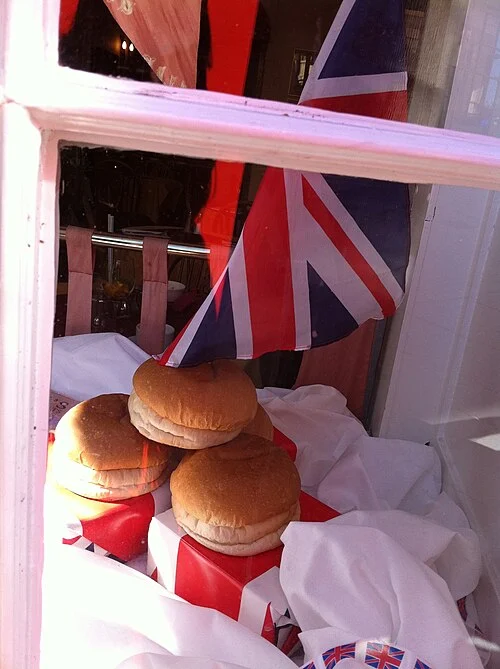
Current Bath tourist guides present the Sally Lunn bun as a large, light, brioche-style bread. At the shop, a half is toasted and paired with savory as well as sweet toppings. Small Bath buns are made either with currants mixed in and sugar sprinkled on top, or with a sugar lump enclosed inside and baked one by one. In telling them apart, besides the size and finish of each piece, there are also differences in what is paired with it once it is split and in whether the sweetness comes from sugar inside.
The Bath Oliver, which carries the town’s name, is presented in tourist guides as a biscuit to eat with cheese. In Wells’s 1890 book, a starter is made from milk, yeast, flour and other ingredients and combined with flour into which butter has been rubbed. The rested dough is rolled out thin, cut into rounds, pricked with holes, brushed with milk and baked. Even when the dough starts from yeast, flour and milk, the form that reaches the mouth differs, depending on whether a small lump is rolled and baked plump like a bun or cut out thin like a biscuit. Among baked goods sold under Bath’s name, a sweet bread for morning or teatime and a thin piece to go with cheese have been made as separate things.
Glossary
- Bun
- A name for a small British bread. Some Bath bun recipes place sugar inside or on top.
- Barm
- A name for a fermenting agent used in old cookery books. Raffald sets the dough in a warm place and leavens it with this.
- Caraway comfit
- A small sweet made by coating caraway seeds with sugar. Besides being mixed into dough, there are examples of its being scattered on top.
- Currants
- Here, small dried grapes. Some methods mix them into the dough.
- Sack
- The name of an alcoholic drink that appears in old British cookery books. It appears in the Bath cake recipe in Langley’s manuscript.
- Sally Lunn bun
- A large, light bread presented as another specialty of Bath. At the shop, both sweet and savory toppings are served with it.


