


SweetloreEncyclopedia of World Sweets (834)

Flapper Pie
Flapper pie
A Canadian Prairie pie of crushed crackers and eggs
Pies / Canada (the Prairie Provinces)

Flapper pie is a dessert of the Canadian Prairies: a base of crushed graham crackers topped with an egg-based filling. In the version made with a vanilla custard cooked in a pot from milk and egg yolks, then covered with whipped egg whites and baked, each slice holds a toasty base, a smooth filling and a soft, airy top. A fork passes through the light foam to reach the cool custard and the crushed cracker crumbs. When the pie is baked in a round dish and chilled before cutting, every layer can be tasted at once.
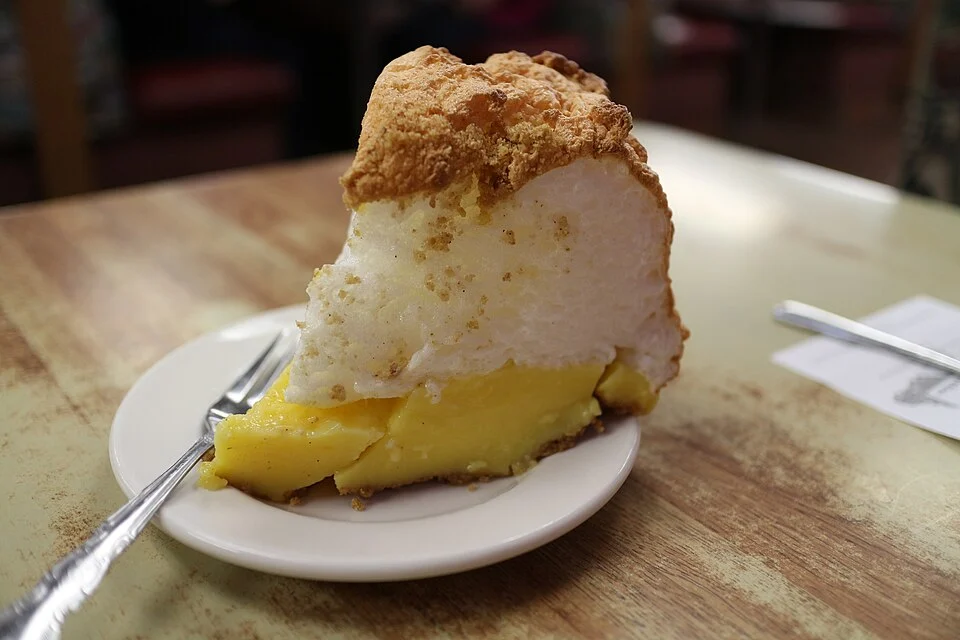
Crushing the Crackers and Baking the Base First
The cooking material from 4-H Ontario, which runs learning activities for young people, combines crushed graham crackers, melted butter, sugar and cinnamon. A small amount is set aside, and the rest is pressed onto the bottom and sides of a pie plate about 23 cm (9 in) across. The crust is baked first for 10 minutes at about 177°C (350°F) and left to cool slightly.
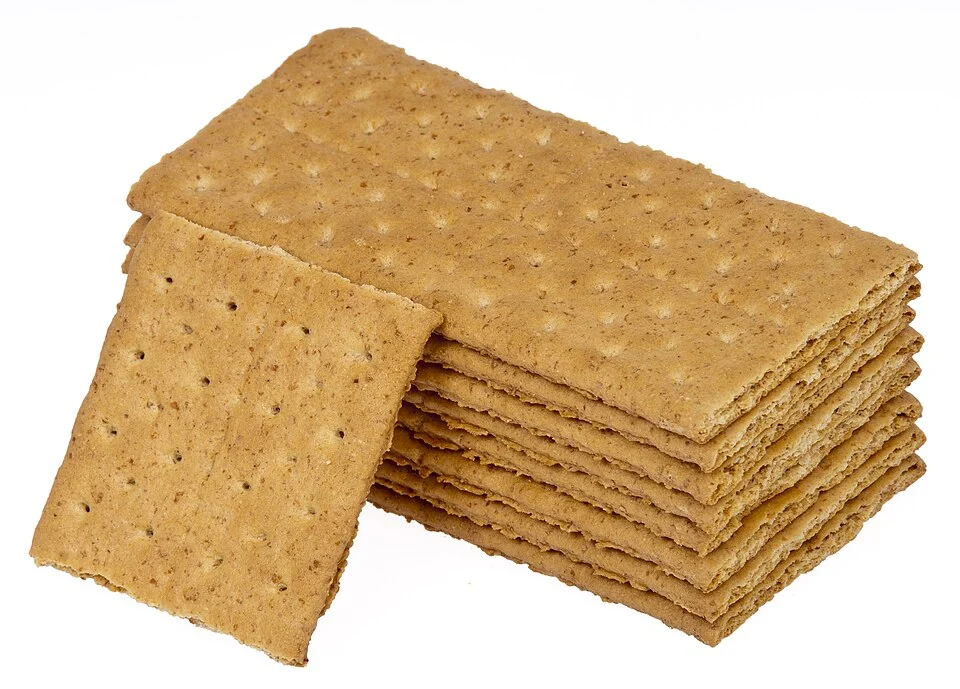
The base is made from crackers that were already baked, ground to crumbs, mixed with fat and baked again. If some coarse crumbs are left, the cracker grains touch the tongue after the smooth filling has been eaten.
For the filling, milk, sugar, cornstarch, egg yolks, vanilla and salt go into a heavy-bottomed pot and are heated over medium heat while stirring. When bubbles rise and the mixture suddenly thickens, the pot is taken off the heat and whisked so that no lumps remain. The filling is then poured into the baked crust and smoothed on top.
Because the filling can be cooked while the base is baking, by the time the pie is assembled in the dish the cracker layer at the bottom is toasty and the filling has already thickened in the pot.
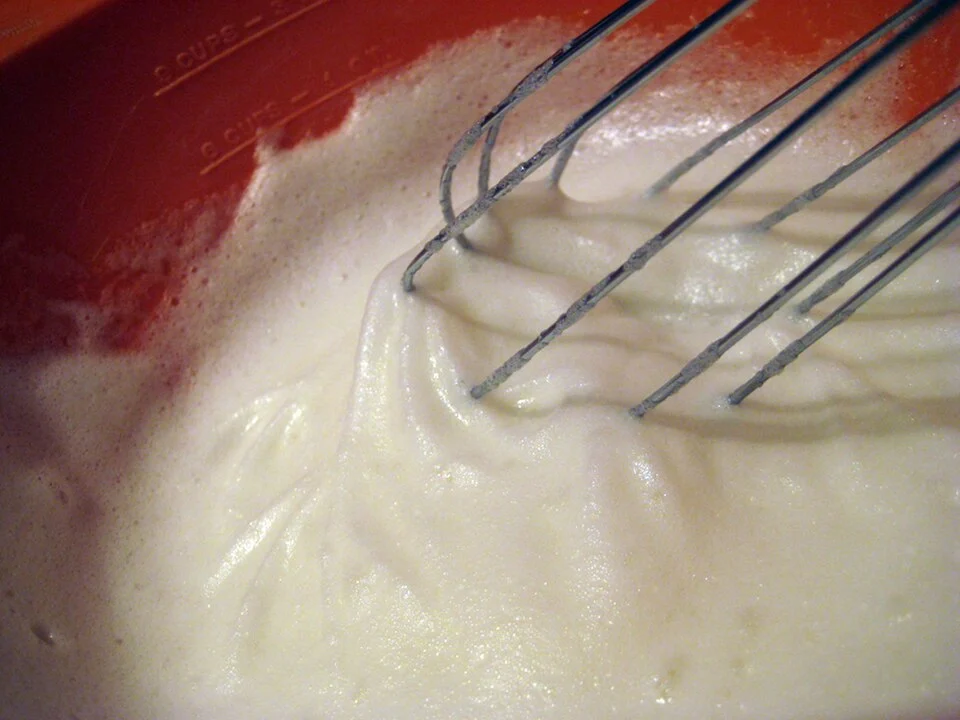
For the top, the egg whites left over from the yolks are whipped, with sugar and cream of tartar added, to make a meringue. The material says to beat until peaks stand when the whisk is withdrawn, and to spread the meringue all the way to the edge of the crust so that it shrinks less in the oven. The reserved cracker crumbs are scattered over it, and the pie is baked again at about 177°C for about 10 minutes, until the surface is golden brown.
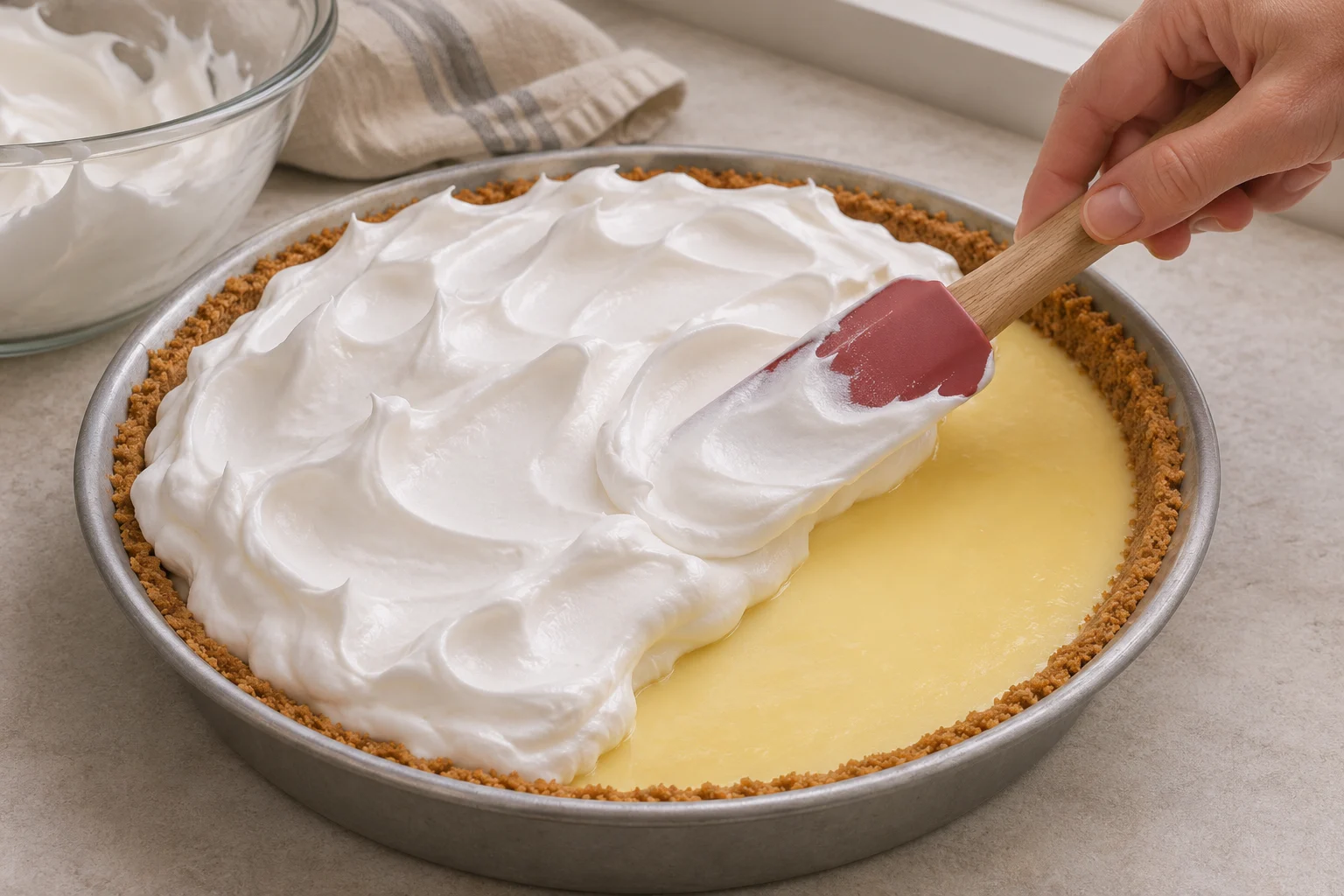
The same crumbs are used on the bottom and the top. Below, they support the custard; above, they add a toasty flavor and a gritty texture between the baked egg whites.
Assembling the pie after baking the base is a separate matter from being able to cut it as soon as the final bake is done. The 4-H Ontario material has the baked pie cool on a rack, stand for several hours, and then be cut with a warmed knife. It notes that the finished pie is soft and may break up somewhat when moved to a plate.
In a test-kitchen account in the Winnipeg Free Press, the writer reports that the heat was turned off when the milk-and-yolk mixture had only just begun to thicken, so the filling was loose when the pie was cut. The time spent thickening the filling in the pot and the time spent cooling after assembly both show in the cut surface.
The 1940 Lemon Version and the Use of Egg Whites
Muriel Copeland of Kindersley, Saskatchewan, contributed a flapper pie to the 1940 United Farmers of Canada Cookbook. Crushed graham crackers are combined with flour, butter and sugar, and part of the mixture is set aside. The rest goes into a pan about 23 cm (9 in) square and is baked for 15 minutes.
Compared with the 4-H material, which uses a round pie plate, Copeland’s version has corners, so the cracker base can be cut into squares.
Copeland’s filling is made by heating lemon zest and juice, egg yolks, cornstarch, sugar and water in a double boiler. Once it has cooled, well-beaten egg whites are added, and the mixture is spread over the baked base, sprinkled with the reserved crumbs and browned in the oven.
In the 4-H version, a layer of egg-white foam is spread as a separate layer over a milk-and-vanilla filling. In this 1940 formula, by contrast, the lemon provides the tartness of the filling, and the foam goes into the filling. The boundary visible in a cross section differs even among desserts with the same name.
The same 1940 cookbook also contains a "Mock Cream Pie." It pairs a crust made with flour and lard with a filling of milk, egg yolks, sugar, cornstarch and flour. The egg whites are to be beaten with sugar into a meringue.
Copeland’s "Flapper Pie" uses graham crumbs and mixes foam into a lemon filling. Because the two headings appear on different pages of the same book, "Mock Cream Pie" cannot be read, at least in this book, as another name for exactly the same formula.
The food column of the Saskatoon Star-Phoenix of July 22, 1939, as transcribed by Popik, gives a formula that combines honey wafers with sugar, melted butter and cinnamon. A hot filling of milk, egg yolks, cornstarch, sugar and vanilla is spread over the crust, and separately beaten egg whites and the reserved crumbs are placed on top before baking. A brief note says that lemon may be used in the filling.
This transcription is not identical to Copeland’s formula of the following year, 1940, but it offers a clue for comparing a vanilla version and a lemon version from the same province in the same period.
Agricultural Fairs and Home Cooking Columns
The Daily Herald of August 5, 1936, which the Prince Albert Public Library has made available online, prints the results of a contest for excellent flapper pies made with Honey Graham Wafers, under the name of the Independent Biscuit Co. of Saskatoon. Of the winners, the top three are given with the place name Prince Albert, and the fourth with Buransupasu (romanized from the Japanese).
Here we can confirm that a competition for a dessert made with a specified product was held, and that the makers’ names appeared in the local paper. The fillings and finishes of the individual winners do not appear in the results column.
The same newspaper’s issue of January 6, 1926, carries an advertisement for Paulin’s graham wafers. The advertisement, which shows the package in a large drawing, presents the wafers as a product made in western Canada. That crackers appear in an advertisement is a separate matter from that advertisement showing how to make flapper pie.
The 1936 contest results print the crackers and the name of the dessert together, so here the relationship between ingredient and use can be read directly. What today’s cooking materials call graham crackers and what the newspapers of the time called graham wafers both appear in accounts of crushed crumbs used for pie crust.
By the middle of that decade, some advertisements showed a dessert and a product together. A grocery store advertisement in the issue of March 16, 1934, announces a demonstration of Paulin Chambers biscuits the next day and invites readers to come and see a flapper pie made with the company’s graham wafers.
The 1926 notice introduced the wafers themselves, whereas the 1934 notice promised a demonstration in the store of their use in the pie. The Independent Biscuit Co., whose name appears in the 1936 contest, is a different company. In the pages of the same town’s paper, accounts survive of products from two companies being used in pie.
The results of the following year’s contest, in 1937, also have a flapper pie class sponsored by the Independent Biscuit Co., and the names Mrs. J. B. Frame and Mrs. M. Stirling appear. In the issue of August 11, 1938, too, the company’s special prize is printed as a flapper pie made with Honey Graham Wafers, and Mrs. Stirling and Mrs. Frame placed among the winners.
The same 1937 page also lists prizes for bread made with a specified flour and for chocolate cake made with a specified cocoa. Flapper pie was an exhibit class alongside such home baking, one that local people entered over several years.
Canada’s History links the name of this dessert to the term "flapper" of the 1920s, when young women’s clothes and bobbed hair drew attention. The magazine also says that prairie newspapers presented the pie alongside advertisements for graham crackers.
A 1931 prize article from Edmonton, Alberta, has also been transcribed, but no contemporary document has been found that records who first gave the dessert its name, or when. What the 1936 Prince Albert paper does clearly show is that the name was used in a heading identifying the class being judged.
Wafer Pie in Manitoba
Travel Manitoba lists flapper pie among the desserts enjoyed at the province’s fall suppers and in its restaurants, and gives wafer pie as another name for it. The Winnipeg restaurant Salisbury House calls one of its staples "Wafer Pie."
In the tourism board’s description, a graham cracker base is filled with custard and topped with meringue and crushed crackers. This name conveys the cracker beneath, more than the visible layer of foam, as the dessert’s distinguishing feature.
When the Winnipeg Free Press asked readers in 2012 for their wafer pie recipes, many of the replies fell into two groups: those using six eggs and those using two. The six-egg recipe uses six yolks in the milk custard and six whites in a separately whipped meringue, which is spread out to the edge of the crust. In the two-egg versions, flour as well as cornstarch is added to the milk and yolks.
This is not an article publishing a restaurant’s method, but among readers who pictured the same dessert in Winnipeg’s food pages, there were separate recipes that varied the height of the foam on top and the thickness of the filling.
4-H Ontario also mentions an example from southern Saskatchewan with whipped cream on top. For a custard cooked from milk and egg yolks, topping it with whipped egg whites browned in the oven and topping it with whipped milk fat give the top a different texture and aroma. The recipe used for practice in the 4-H material is a meringue one.
Old Saskatchewan cookbooks include a recipe for a different fruit pie that says whipped cream can be used in place of meringue. It is possible to distinguish between the existence of a choice to change the topping and the choice of only one finish in a given province.
In a piece cut from Copeland’s square pan, one tastes the pre-baked crackers and the lemon layer mixed with egg whites together. In the six-egg version sent to the Winnipeg newspaper, a separate layer of foam stands over the vanilla custard. Whether the crumbs are pressed into the bottom of a round pie plate or spread in a square pan, and whether the egg-white foam is mixed into the filling or piled on top, the cut slice looks different even within the same regional dessert. By focusing on the cracker base and the egg filling, one can trace the links between the pie known by name from newspaper contests and the several recipes made at home.
Glossary
- Graham cracker (graham cracker, graham wafer)
- In this dessert, a baked biscuit that is crushed to make the base. Some recipes scatter the reserved crumbs over the top.
- Custard
- In this dessert, a filling thickened by stirring milk, egg yolks, sugar and other ingredients in a pot.
- Meringue
- Whipped egg whites. In flapper pie, there are versions in which sugar is added and the meringue is layered over the custard and baked.
- Double boiler (yudosen)
- A method of stacking two containers and heating the ingredients in the upper one with the heat of the water below. It is used in cooking the 1940 lemon filling.


