


SweetloreEncyclopedia of World Sweets (834)

Lahijan Koloocheh
Koloocheh Lahijan
Nut filling wrapped in wheat dough, stamped with a pattern and baked
Baked Sweets / Lahijan, Iran

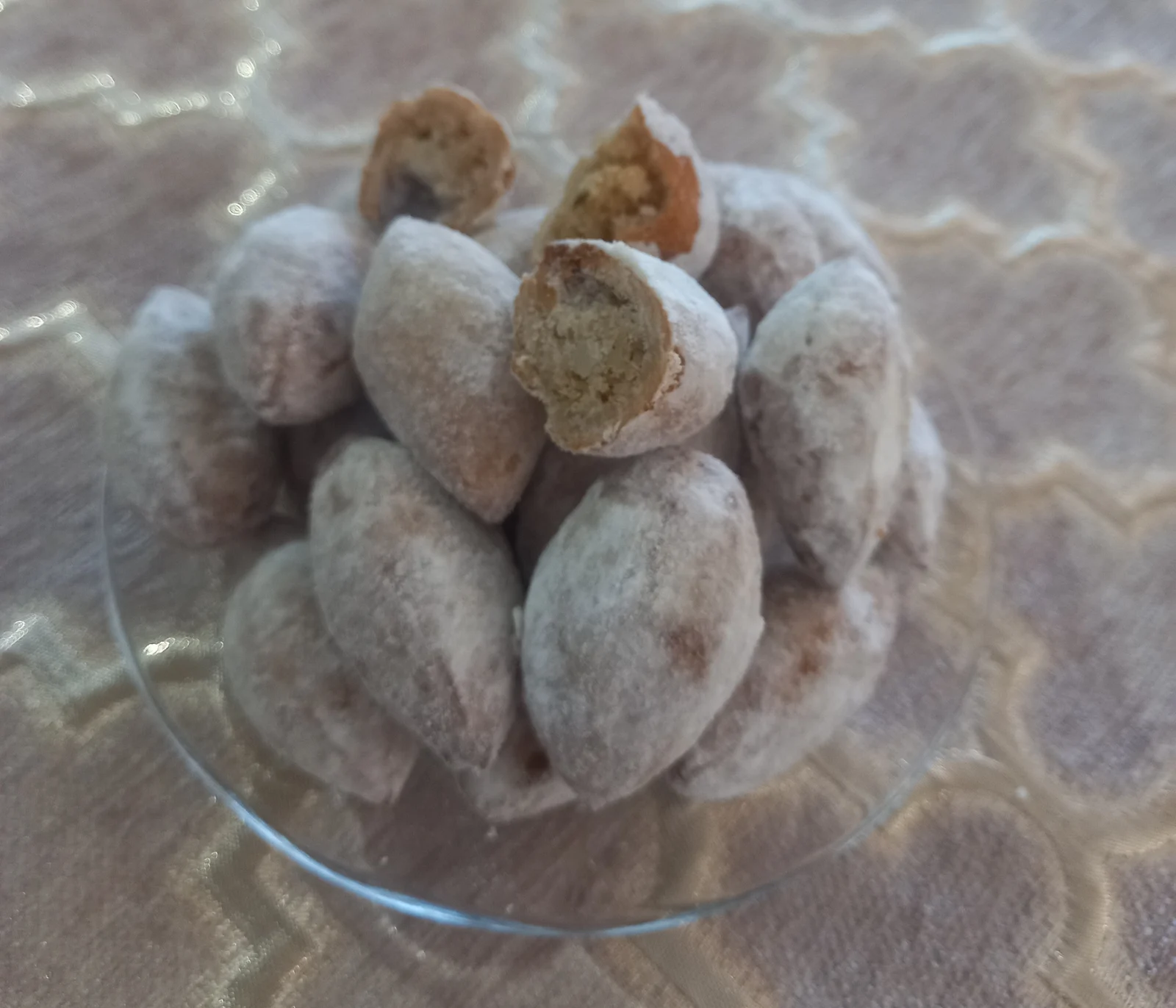
Break open a thick, round piece, and beneath the pressed pattern on its surface you will find a sweet filling of finely ground nuts. Lahijan koloocheh (کلوچه لاهیجان) is a filled wheat-dough pastry known in Gilan Province, on the southern shore of the Caspian Sea in northern Iran. Walnut is the best-known filling, but coconut and pistachio fillings also exist. The pattern is on the outside; the aroma and texture of the filling are inside. In town it is enjoyed with tea, and travelers bring boxes of it home. Fuman, in the same province, also has koloocheh sold with a different pattern.
Closing the Seam, Then Shaping the Face
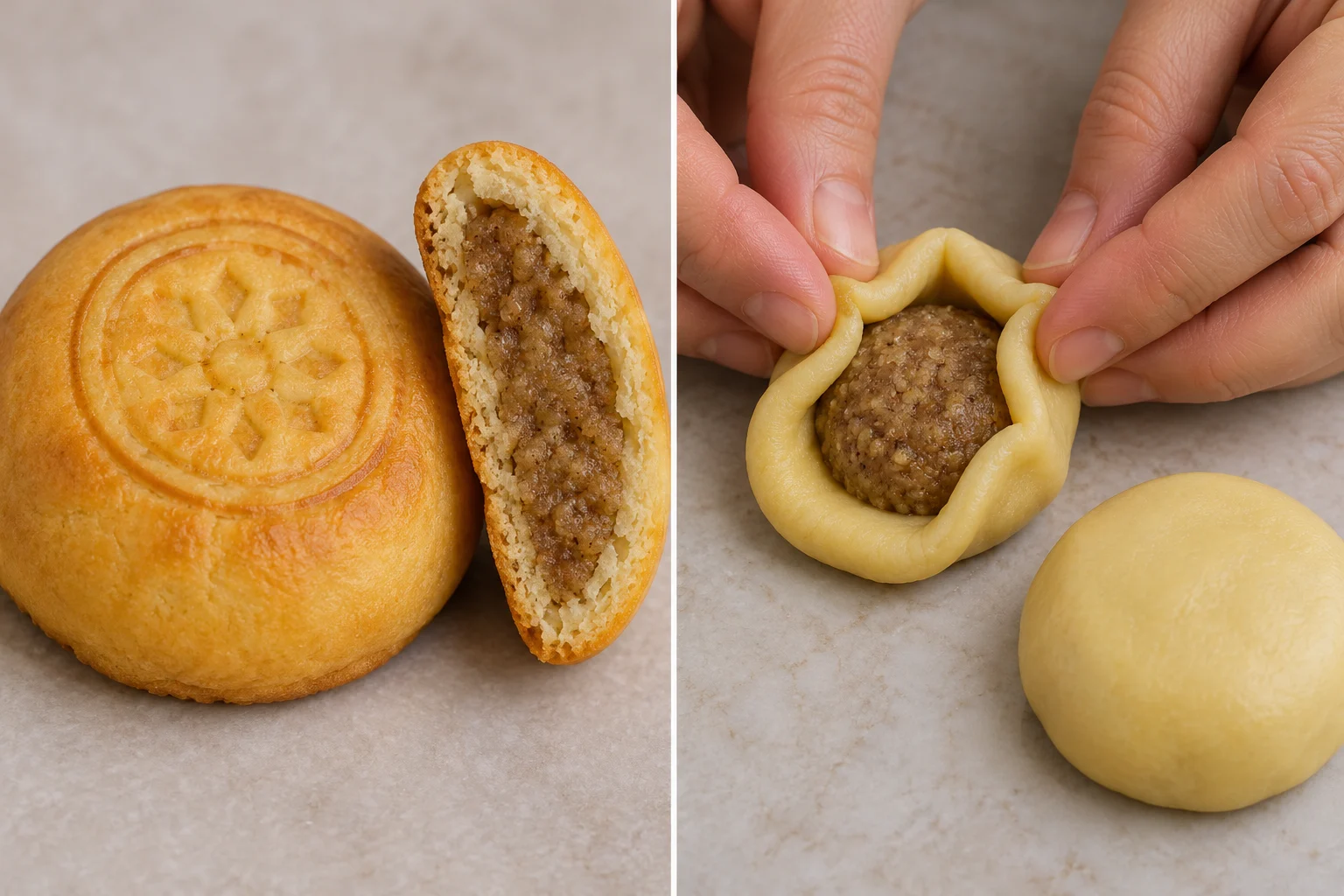
In a Persian-language home recipe for the walnut version, the outer dough is flattened and a sweetened filling is placed in the center. The surrounding dough is drawn up and closed into a single round, pressed lightly, then stamped with a mold and baked. If sweetened flour and nuts are mixed together and baked, the dough and nuts end up scattered through the same piece. This method instead prepares the two separately and encloses one in the other at the end. Each piece has a boundary where the filling begins, so in the mouth the softness of the exterior and the texture and aroma of the nuts are felt separately.
Toktam Najafipour, who posted a home recipe, takes about 50 grams of dough, or an amount about the size of a mandarin orange, and rolls the filling into balls about the size of a hazelnut. The flour and baking powder are combined first, and once the other ingredients are added the dough is not kneaded too much; it rests in the refrigerator for 1 hour. The chilled dough is rolled out, the filling is set on it, and the edges are pulled up to enclose it. The closed piece is flattened again and pressed with a mold coated with a surface mixture of cocoa and oil. In this recipe it is baked in a toaster oven at 180°C for about 30 minutes, and taken out when the underside has changed color slightly and the top has puffed and set.
Another poster, Asadi, makes a dent with the thumb in a piece of dough about the size of a mandarin orange and places about 1 teaspoon of filling in it. The edges are closed, the piece is rounded between the palms and flattened to a thickness of about 1 to 1.5 centimeters, and the pieces are arranged on a baking sheet about 4 centimeters apart. Here the pattern is made with a mold, a mixture of 1 egg, 1 tablespoon of milk and vanilla is brushed on, and white sesame seeds or purslane seeds are scattered over the top. After about 20 minutes in a 160°C oven, on the middle rack, the top is colored. The temperature differs from the toaster oven above because these are two home recipes that differ in equipment, formula and the way the top is colored.
Both cooks flatten the dough once to receive the filling, then flatten the piece again after enclosing it. The first surface is where the filling is received and the edges are drawn together. The second surface is where the pattern appears on top and the height is evened out on the baking sheet. Najafipour lays down plastic film for the first flattening, while Asadi uses a dent made with the thumb. Even when home cooks use the same name for the sweet, where they press and where they gather the wrapped dough changes with the tools they use and the shapes that are easy for them to make.
Spices and Chopped Nuts, Inside the Filling and Outside
Asadi’s recipe, which makes about 30 pieces, uses about 950 grams of wheat flour, 250 milliliters of milk, 300 grams of butter, 100 grams of vegetable oil, 6 eggs and 450 grams of powdered sugar, along with baking powder and vanilla. The flour and baking powder are sifted; in a separate bowl the butter and powdered sugar are mixed, and the oil and vanilla are added. The eggs go in one at a time, mixing for about 30 seconds after each. After the milk, the flour is added a little at a time to make a soft dough that does not stick to the hands. These quantities are an example for baking many pieces at once.
For the filling, this cook uses 100 grams each of walnuts, almonds, hazelnuts and baking-grade coconut, along with 150 grams of sugar, oil, cinnamon and cardamom. Ginger is added if desired. The sugar is ground to a powder, and everything except the coconut and oil is ground first. The coconut is mixed in next, the mixture is moved to a bowl, and the oil is added. If it is dry and hard to shape into balls, a little more oil is added. When loose crumbs are scattered in the center of the dough, they can drift toward the part that has to be closed. If the filling alone is first made to hold together, equal amounts can be set into the dent made with the thumb.
Najafipour’s filling uses ground walnuts, powdered sugar, flour, butter and oil, and cinnamon. Asadi also describes a different filling: dates with the pits and skins removed are mashed, fried in a little oil, and finished with cinnamon or cardamom. A travel guide likewise explains that in Lahijan, besides walnut and cardamom, there are fillings of dates and coconut. Once the filling has been chosen, the wheat dough is closed around it from the outside in the same way, and the top is patterned and baked.
Honey Bird Sweets, which makes Lahijan-style koloocheh in Colorado, likewise aims for a soft, crumbly exterior and bakes three varieties: walnut, pistachio and coconut. It describes its walnut version as fragrant and slightly bitter, the pistachio as mild, and the coconut as sweet and chewy. It mentions cardamom scenting the crust, and presses the word «لاهیجان» in Nastaliq script into the sweets it bakes. Letters and patterns pressed before baking show on the surface, but it is sometimes impossible to tell by sight alone which of the three fillings a piece contains.
Makers also differ in where they use cardamom. Asadi adds cardamom to the nut filling and says cardamom essence was added to the crust as well. When dates are used as the filling, the mashed fruit is not simmered down with added liquid but fried in oil, and cinnamon or cardamom is combined at the end. Some pieces give the scent of nuts only when bitten into; others smell fragrant before the dough is broken. The difference lies not only in the names of the ingredients, but in where the finely ground filling sits relative to the exterior.
A Pattern on Each Piece, and the Contents Written on the Box
The product listing for Lahijan walnut koloocheh sold by Yekta Market shows wheat, sugar, vegetable shortening, starch, oil, eggs, walnuts and other ingredients. Honey Bird Sweets also states that it uses wheat and eggs in its dough. Even when they look like the same northern mold-pressed type, some home doughs use butter or milk, and ingredients differ by producer. Someone who avoids wheat, eggs or nuts should check the label for what is actually in the box, separate from the mark pressed on the outside and from another shop’s formula. The sesame or purslane seeds on the surface are decoration, and the visible seeds alone do not reveal which nuts or other filling are wrapped inside.
As a comparison among filled, baked sweets, the Encyclopaedia Iranica cites northern koloocheh recipes that use walnuts or coconut with honey. The filling is put in, the piece is shaped, and then the mold is pressed on. The entry also notes that old Iranian literary works have a word for this type of sweet, but the range the entry describes is broad, and it does not specify the formula of any single piece sold in town today. At home, some cooks coat the mold with cocoa, and others brush on an egg wash. The mark left on the top of the sweet is common to these methods as a place worked on after the filling is enclosed.
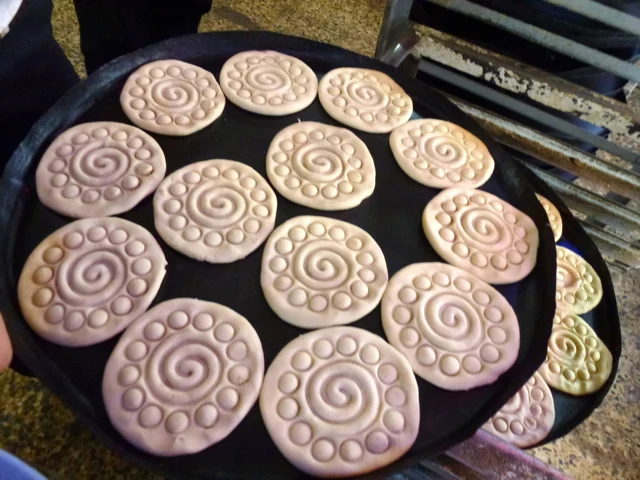
For Fuman in Gilan Province, a travel guide describes koloocheh baked round and golden, with circles pressed into the top and a filling of walnuts mixed with sugar and cinnamon. A pre-baking photo and a shop photo of Fuman koloocheh show examples with round dots set along a swirl. The two photos were taken by different photographers in different settings, so they do not show the same baking, but they let you compare how the shape made by the mold looks before heating and at the point of sale. A photo from Punel likewise shows sweets baked on the nearby Caspian coast laid out in a shop. Including the examples stamped with the word Lahijan, even towns in the same north show differences of place and maker in the marks on the outside.
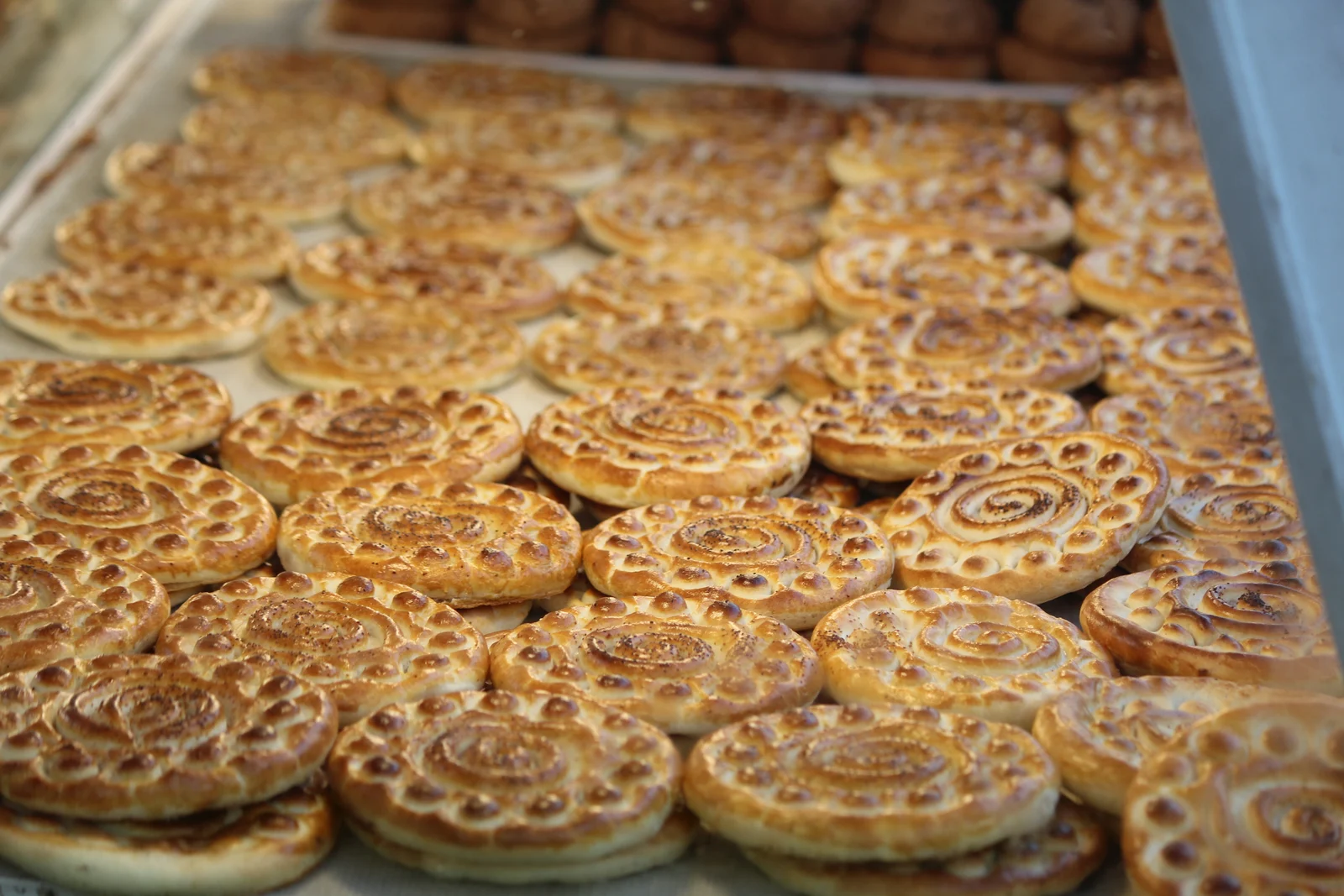
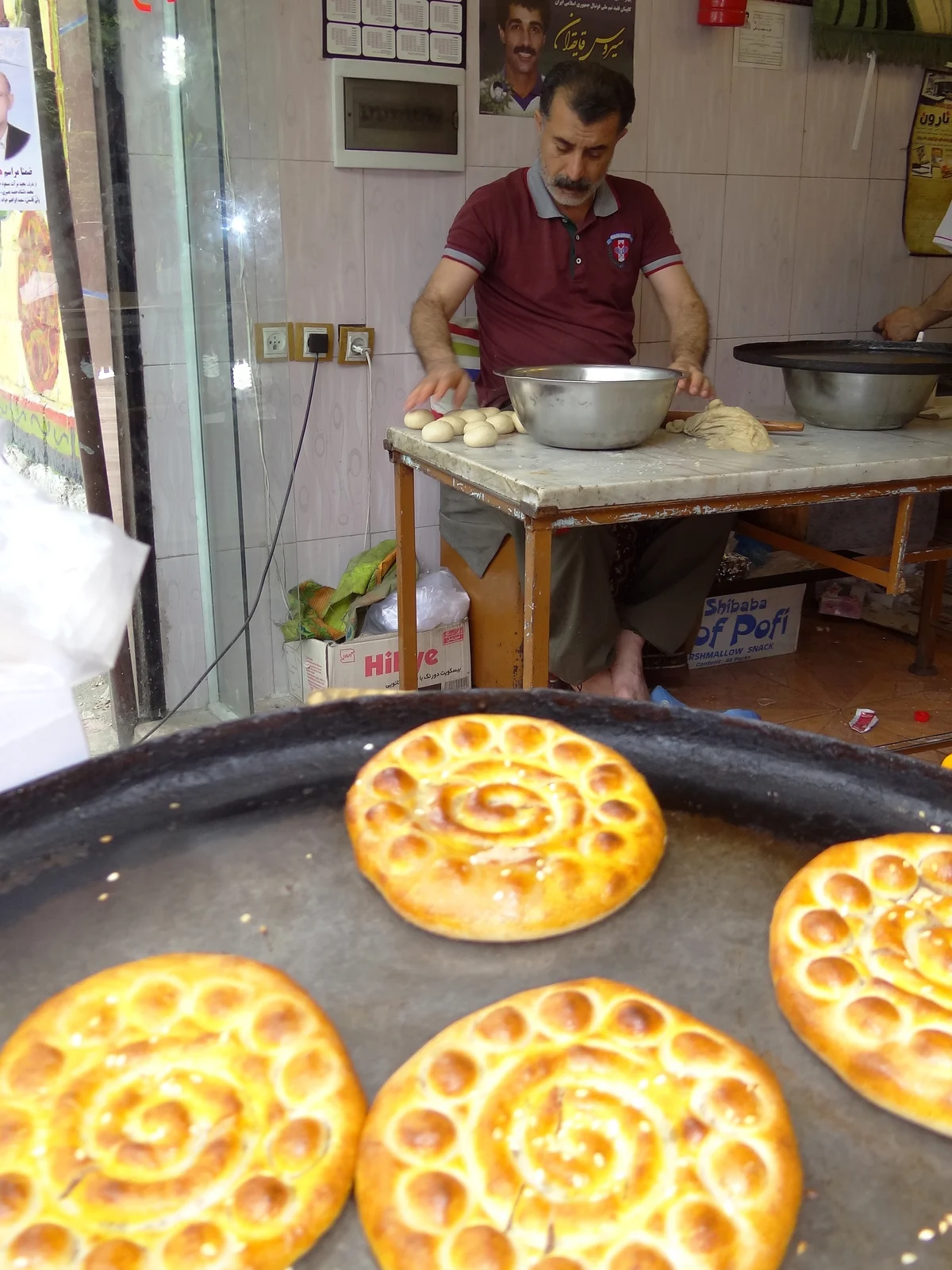
Methods of marking the surface show a difference between decorating after baking and putting the mark on while shaping. In the Fuman comparison photos, swirls can be seen both on pale dough and on browned pieces. In Asadi’s method, the pattern is made with a mold, then a wash is brushed on and sesame or seeds are scattered. Najafipour coats the mold itself with cocoa and oil. In this approach, a mark of incised lines and a mark of color are layered on the surface just before heat is applied.
Qottab, known from Yazd, has a version in which almonds and other fillings are wrapped in a shell and fried. The comparison photo shows a small floury piece and, inside a broken one, a finely ground filling. Compared with the Lahijan home recipes baked in a toaster oven or oven, the work of wrapping is shared, but they differ in whether the outside is cooked in oil or colored on a baking sheet. Not only the name or the town, but also the form in which the filling appears on the broken surface and what covers the outside, offer clues for comparing them side by side.
A Tea-Growing Town, and a Box to Take Home
Lahijan is a tea-producing area of Gilan. An Iranian tourism guide describes statues of a samovar, a teapot and a tea glass at the entrance to the town, and small shops by the lake selling tea and koloocheh. The Encyclopaedia Iranica entry on the town records the tomb of Kashef al-Saltaneh, who built up the tea industry, a tea museum, and the town’s reputation for filled baked sweets. Honey Bird Sweets pairs its koloocheh with Gilan black tea, sets it on the Nowruz table, and mentions carrying a box home from a trip. The company sells boxes of four in the United States and presses the name Lahijan into its sweets. Here the name of the town indicates the style of a product made in Colorado.
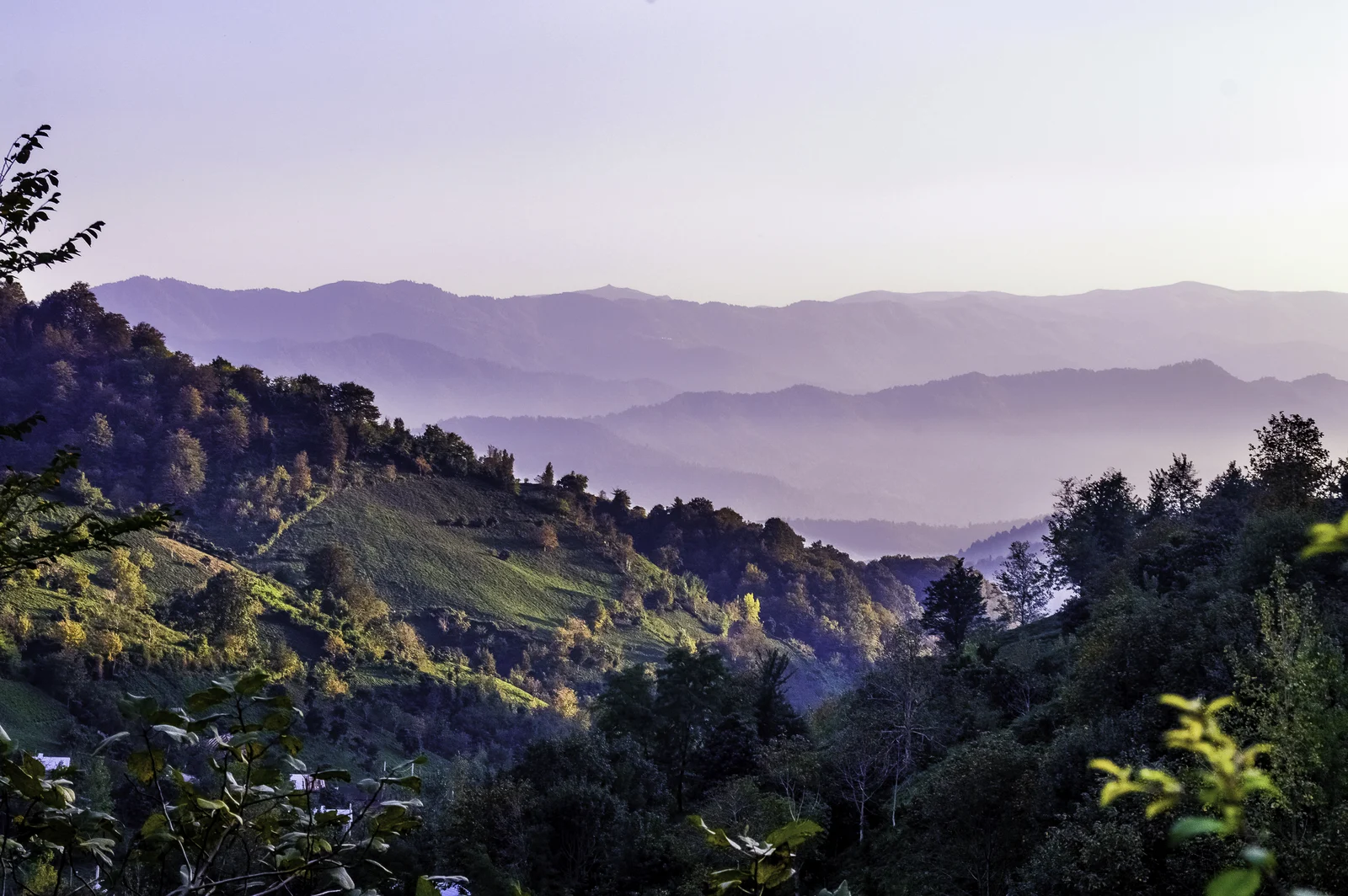
On the road back from the tea fields to town, shops selling tea for drinking at home stand beside shops selling baked sweets to share. Taking tea without sugar and balancing it with a piece of koloocheh for sweetness is presented by Honey Bird Sweets as a Lahijan way of eating. Picture the Nowruz table or the box carried home, and the work of making the mark and the filling separate within each piece continues as far as showing the flavor on the front of the box.
According to the history published by Nadi Foods, its founder, Farvardin Pakdaman Lahiji, began making sweets in 1329 in the Iranian calendar (1950–51 CE), and in 1332 (1953–54) began working with his brothers in a small workshop in town. The company writes that the workshop was expanded and its equipment renewed, moving to industrial-scale production, and that in 1371 (1992–93) the business was launched under the Nadi name. This is an account of how a small workshop in town became a company with manufacturing facilities. Who first baked today’s Lahijan koloocheh is not known. The name of the same place remains in a shop where visitors choose tea and sweets together, in the home method of closing each piece and pressing a mold, and in the records of a workshop that prints its name on a box and sends it to distant places.
Glossary
- Koloocheh
- A name for sweets found across Iran. In Lahijan, a filled and baked type is well known.
- Lahijan
- A town in Gilan Province, northern Iran.
- Cardamom
- A spice used for the aroma of its seeds.
- Nowruz
- The new year, celebrated at the beginning of spring.


