


SweetloreEncyclopedia of World Sweets (834)

Shirini Keshmeshi
Shirini keshmeshi
A thin baked tea cookie with whole raisins
Baked Sweets / Iran

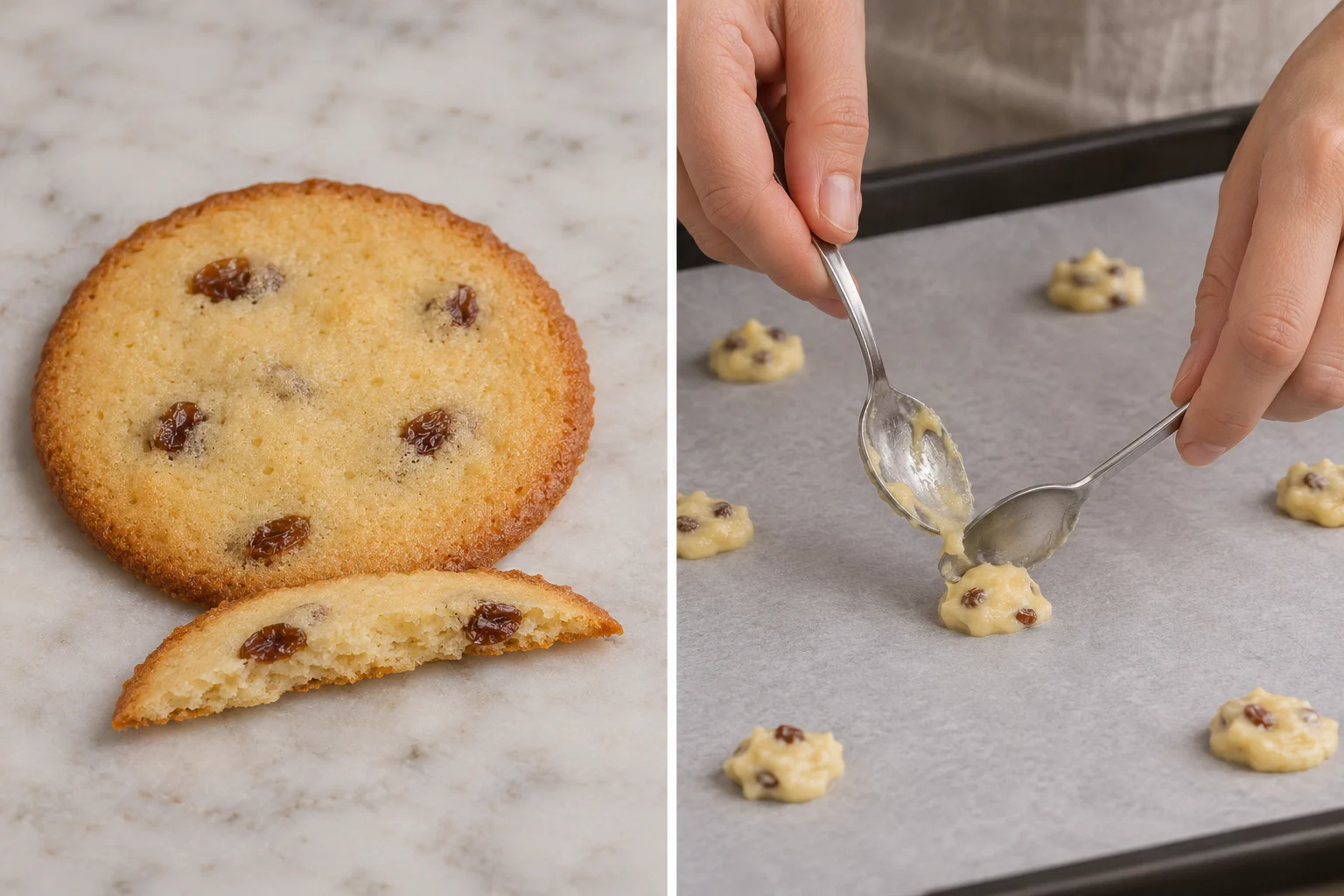
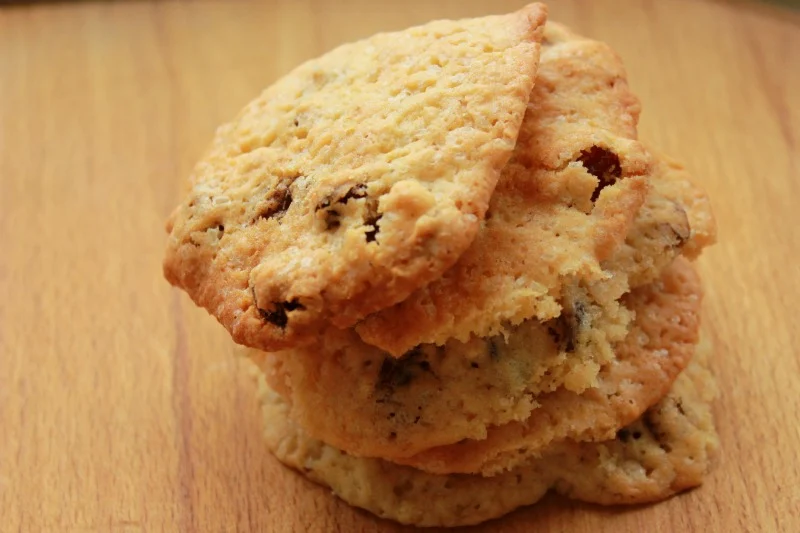
A round, spreading cookie takes on a deep golden-brown edge. A little further in, the dough is paler, and now and then a raisin shows through. Shirini keshmeshi (شیرینی کشمشی) is an Iranian sweet made with flour, sugar, eggs, butter and other ingredients. Bite into one baked the same day, and the thin edge can break lightly while the center stays soft. When your teeth pass through the dough and reach a raisin, the chew changes, and a concentrated fruit sweetness spreads afterward.
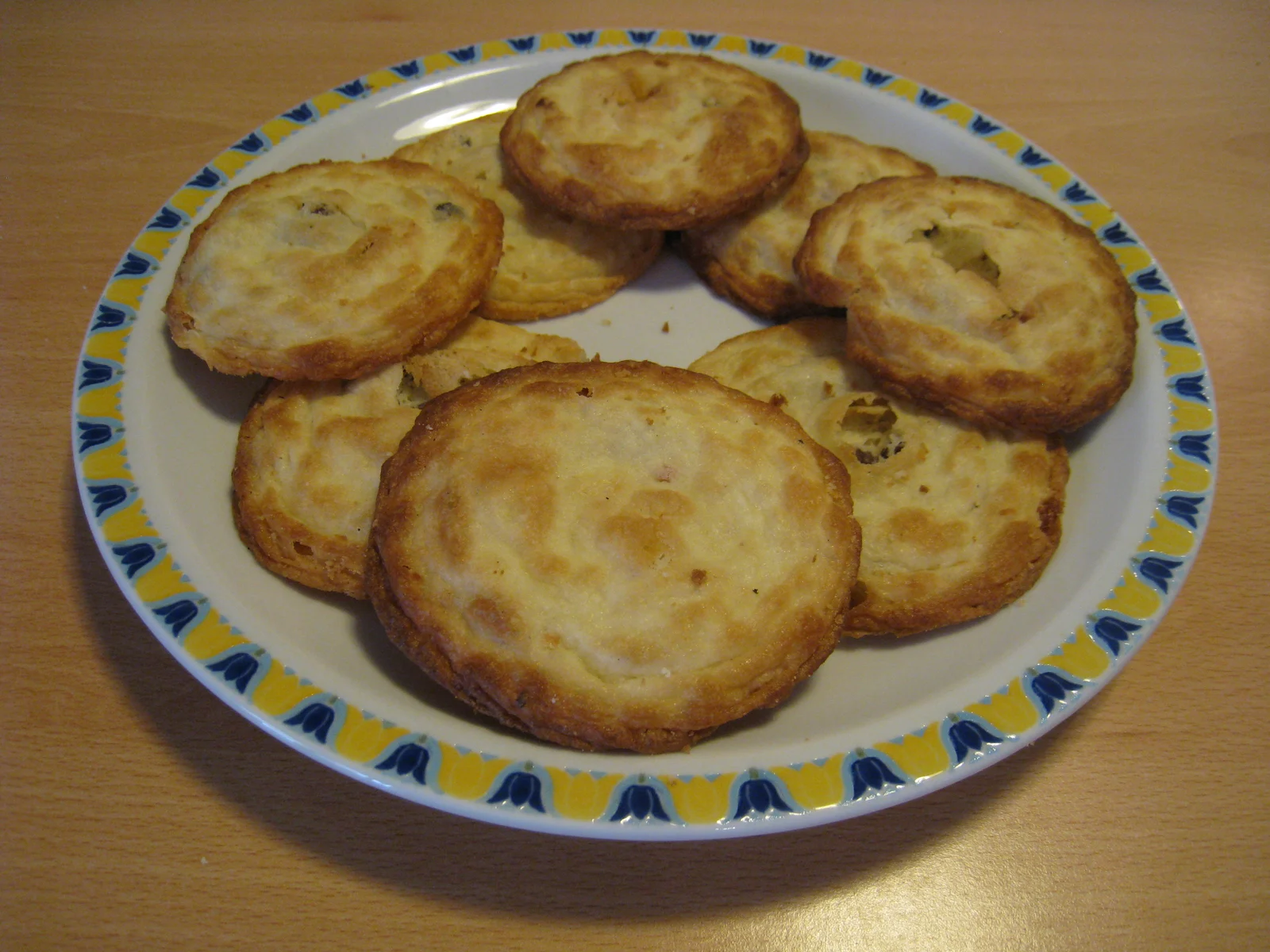
This difference in color relates to the shape of the dough before baking. No mold defines the finished outline; the mixed dough is dropped onto the baking sheet in single-bite portions. As the dough spreads outward in the heat, the edge becomes thin and the center stays relatively thick. A mound that was small when the spoon left it becomes one round cookie on the sheet. Because the outline changes between before and after baking, the amount scooped and the place for the next portion are decided within the same step.
Three Orders for Mixing in the Raisins
Looking at where the raisins are added shows how makers differ even when their formulas are very similar. The cook Homa combines 6 ounces of unsalted butter with 1 cup of sugar and mixes for 1–2 minutes, until the mixture is light in color and fluffy. She adds ¼ teaspoon of powdered vanilla, or ½ teaspoon of liquid extract, then mixes in 3 eggs in total, one at a time. She adds 1.5 cups of flour a little at a time. The 1 cup of raisins goes in last. She turns the dough over with a spatula, lifting what has settled at the bottom of the bowl, so that the raisins are distributed throughout. In this recipe, Homa gives particular weight to the flavor of the unsalted butter.
Ben Mims’s cookbook Crumbs also uses about 170 g of butter and 3 eggs, and starts by creaming 200 g of sugar into the butter. Here the mixer is first run at medium speed for 2–3 minutes, the eggs are added one at a time, and then the flavorings are combined. When the 280 g of flour and 165 g of raisins go in, the speed is lowered and everything is mixed together until no flour is visible. Where Homa uses a spatula after finishing adding the flour, Mims adds the flour and fruit at once and finishes mixing. In both, the raisins end up inside the dough, but the steps leading there differ.
Somayeh Danaa of Masjed Soleyman, in Khuzestan Province, first coats the raisins in flour and sifts off the excess. She combines powdered sugar with softened butter and mixes for about 3 minutes, then adds the eggs and vanilla and mixes for about 1 minute. She combines the flour and baking powder with a spatula, then adds liquid oil and the flour-coated raisins to finish the dough. In this home example, which uses 3 tablespoons of raisins and 1 egg, the floured fruit is kept as a separate preparation in the kitchen until the very end. Whichever procedure is chosen, the finished cookie has some raisins hidden in the dough and some visible on the surface.
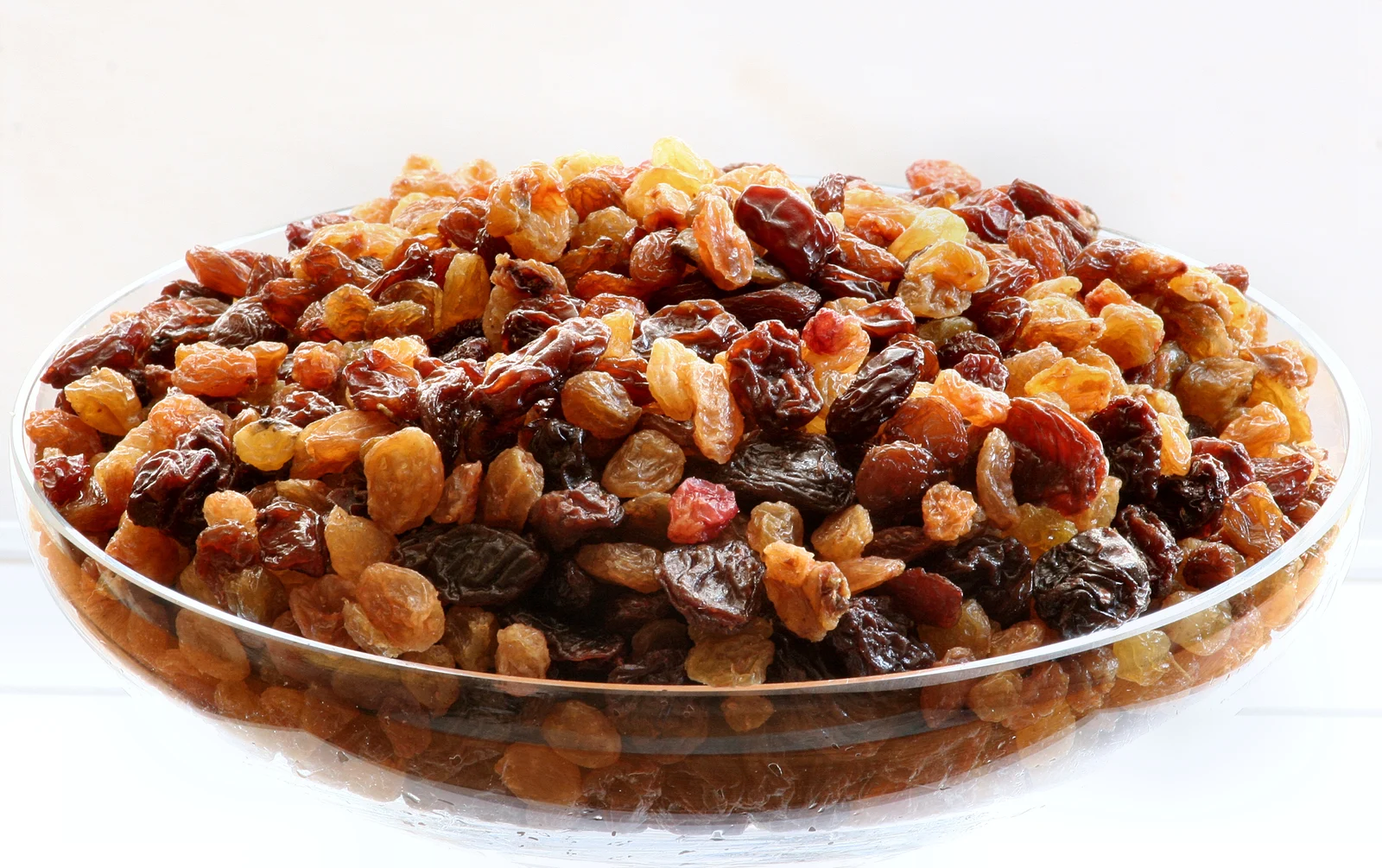
Dark raisins and golden raisins are both used, and the example that Ṣoḡrā Bazargan presents in the Encyclopaedia Iranica calls for small red raisins. If the raisins are small, the places where the teeth meet fruit change even when the same weight goes into each cookie. Where the sweetness comes from is not uniform either. Sugar mixes with the butter and eggs and sweetens the dough as a continuous whole, while the raisins stay in the form of fruit. With each bite, the two sweetnesses layer in slightly different proportions.
A Scoop onto the Baking Sheet, and the Space Beside It
Comparing Homa’s and Mims’s recipes shows a nearly twofold difference in the number of cookies. Homa drops dough by the tablespoon for about 48 cookies, while Mims divides it into portions of about 2 tablespoons for about 24. Both leave a gap of about 5 cm. This is less a figure that specifies a uniform diameter after baking than a spacing meant to keep dough spreading in the heat from touching its neighbor. Danaa makes each portion about the size of a walnut and, after placing it, flattens the top of the mound a little with a spoon or her fingers. So there are two approaches: standardizing by the amount scooped, as in the previous two recipes, and shaping the surface on the baking sheet.
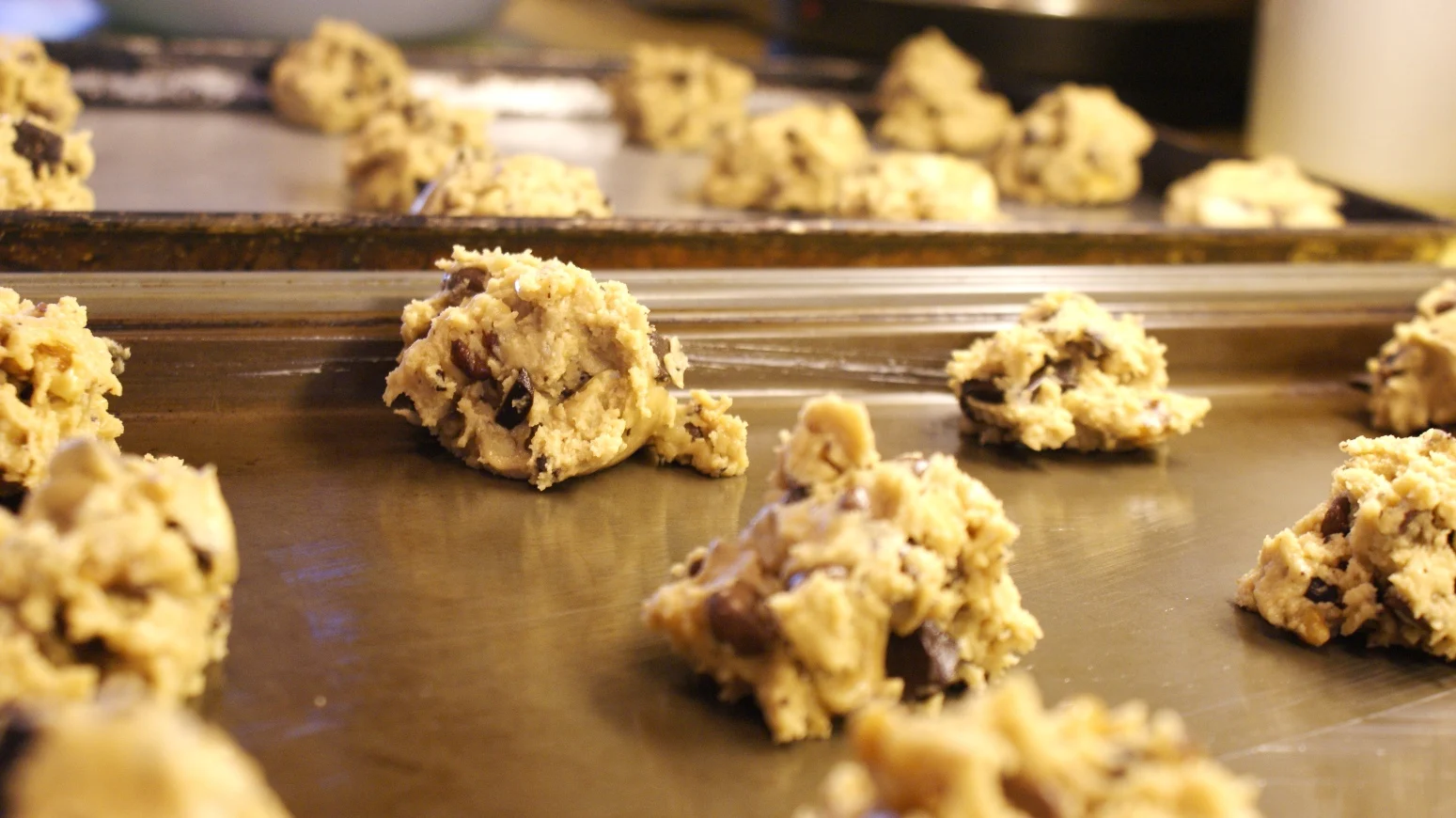
In the example in the Encyclopaedia Iranica, dough dropped from a spoon is baked for about 20 minutes. Where pieces have run into their neighbors, a knife is used to cut them apart. Reading first the methods of Homa and Mims, who set the spacing so that the finished shapes are easier to obtain, also makes clear what this step deals with. An example that includes a step for separating the pieces one by one likewise suggests a dough that stretches sideways as it bakes, rather than one that keeps the shape in which it was first dropped.
Among the other cookies Bazargan presents are flour-based sweets in which the dough is rolled out on a board to a thickness of about 2 cm and cut with round or oval cutters. In the raisin entry, walnut-sized pieces of dough are dropped directly onto the baking sheet. Even among flour-based sweets listed close together on the page, there is a difference between giving the outline before the dough reaches the sheet and having the outline form from the heat after it is on the sheet. Moving beyond the broad category of flour-based sweets that appear at seasonal celebrations, and looking at the stage at which a single piece is made, makes it possible to trace the process of nān-e kešmešī.
When the Edge Colors, Check the Center and Take Them Out
When baking, watch the condition of the dough as well as the time. Homa goes by 10–12 minutes at 400°F (about 204°C) and takes the cookies out when the edges turn golden brown. The top surface does not color in the same way, and waiting for it to color leaves the cookies dry and crumbly. Mims takes more dough for each cookie and bakes at 180°C for 12–15 minutes. Partway through, she rotates the baking sheet front to back and swaps the upper and lower racks. Her signs of doneness are colored edges and a center whose surface is dry to the touch. Although she says to look at the center, what she checks is not whether it turns the same brown as the edge but whether the surface is damp like raw dough.
Each cookie is lifted from the metal baking sheet only after it has cooled to some extent. Homa sets the whole sheet on a rack and waits 3 minutes; once the cookies are easy to handle, she moves them one at a time to the rack to cool completely. Mims leaves the cookies on a baking sheet set on a rack and handles them only after they have cooled fully. Danaa bakes at 170°C for 15–20 minutes and writes that the cookies should be eaten after they have cooled. Each of the three sets of temperature and time goes with the amount and shape of the dough used and the finish the maker is looking for. If only the temperature were swapped, it is unknown whether the result would have the same color and crispness as another recipe.
Homa introduces this cookie as coming either plump and soft or thin and chewy. For her own recipe, she especially likes the moist, light texture on the day of baking, and she gives a guideline of 4–5 days at room temperature in an airtight container after the cookies have cooled completely. This is a guideline for that recipe, including its formula and handling. In photos of finished cookies, you can compare the thickness and baked color of the edges, but how long it has been since baking and the mouthfeel of the cooled center can be confirmed only by returning to the maker’s description.
A Fragrant Dough, and Fruit That Appears as You Bite
Besides Homa’s method with vanilla, Bazargan’s recipe lets the cook choose between vanilla and orange scent, and between oil and butter. Mims adds vanilla and salt after the eggs and, at this stage, also allows saffron water or rose water to be mixed in. For saffron, ½ teaspoon of crushed saffron is steeped in 2 tablespoons of boiling water and cooled; for rose water, 2 tablespoons are used as is. Saffron water passes yellow color to the dough along with fragrance. It is also possible to omit both and, apart from vanilla, center the flavor on the raisins. Danaa treats saffron as optional and did not add it in the one batch she published.
Mims explains that in Iran raisins add sweetness to yogurt, as well as to rice dishes and meat stews. In this cookie, the sugared dough is already sweet, and the raisins add chew and fruit flavor. Compared with, for example, scenting the dough with fruit juice, the characteristic of this cookie is that the sweetness gathers where the fruit can be seen. Mims also mentions Romania’s fursecuri cu stafide, citing the chew left by whole pieces of fruit as what the two have in common. In the sources I checked, I found no material showing the direction of transmission or a shared origin.
Homa’s point of comparison is the oatmeal raisin cookie. The pieces of fruit are shared, but Homa’s own recipe mixes fruit into a flour-based dough. If you first imagine the fine unevenness visible on a surface containing oats and the grain texture that continues as you chew, and then read her description of shirini keshmeshi as moist, soft and slightly chewy, the difference becomes concrete. A clue for telling the cookies apart lies not only in whether raisins are present but also in the dough that receives them.
The Day for Brewing Tea, and the Day for Welcoming the Year
Homa pairs this cookie, familiar since her childhood, with freshly brewed Persian tea. It is a small sweet that lets you put a sip of tea between tastes of buttery flavor and raisin sweetness. Besides examples made for everyday tea and for gatherings, there are home examples baked for Nowruz, the spring new year. The recipe that Danaa published on 14 March 2022 is titled as a new-year celebration sweet. It is an example in which the author’s location and the steps of coating the raisins in flour, flattening a walnut-sized portion, and eating the cookies after they have cooled are recorded together. It can be read as a contemporary example from a known place, but whether this shaping method is shared across Khuzestan Province cannot be told from this post.
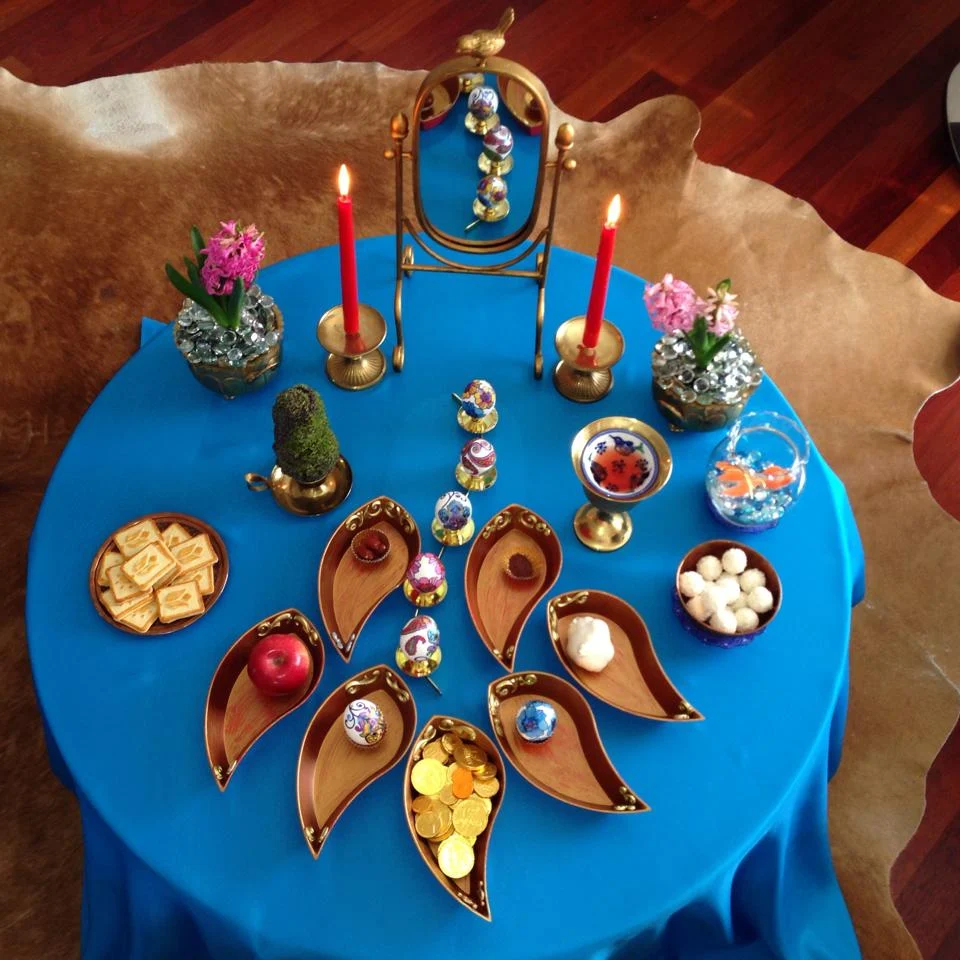
The Encyclopaedia Iranica also lists a sweet whose name is tied to the spring new year. By contrast, the name kešmešī, which refers to raisins, does not reveal the day on which the cookie is eaten. Setting Danaa’s title, which records a festive day, beside Homa’s account of brewing everyday tea shows the same ingredient-named sweet in two settings.
Shirini means sweet, and keshmeshi means containing raisins. In English it is called Persian raisin cookies, and Persian sources also show the name nān-e kešmešī. Nān is a word for bread, but under that name the Encyclopaedia Iranica describes a small baked sweet with raisins. Records like these connect recipes with names. Introductions saying that the cookie has long been loved cannot identify a first appearance or an inventor, and no source assigns differences in formula to particular cities or provinces. Pick up a piece from the table, and you can find the ingredient named in the cookie both in the baked surface and in the fruit that appears as you bite.
Glossary
- Shirini keshmeshi
- A Persian term for a sweet containing raisins. It refers to a baked cookie made by mixing raisins into a flour-based dough.
- Nowruz
- The Iranian new year, celebrated at the beginning of spring.
- Rose water
- Fragrant water obtained when rose petals are distilled.
- Saffron
- A spice made by drying the stigmas of a species of crocus.


