


SweetloreEncyclopedia of World Sweets (834)

İzmir Şambali
İzmir Şambalisi
Coarsely ground wheat baked and soaked in cooled syrup
Baked Sweets / Turkey, İzmir

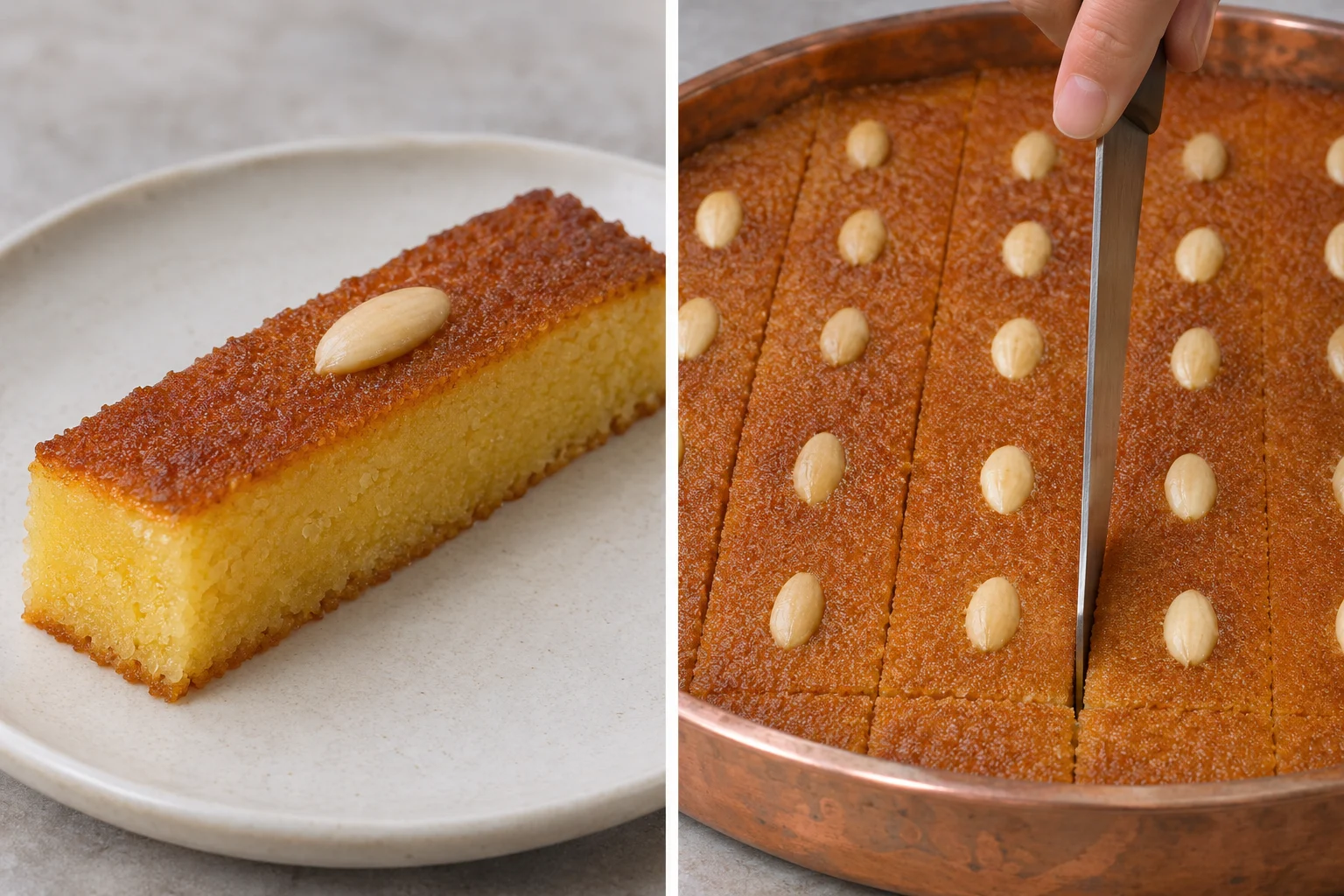
When you lift a narrow piece from the tray, a yellowish cut face shows beneath the brown surface. İzmir Şambalisi is a baked sweet from İzmir, a port city in western Turkey. Coarsely ground wheat flour is mixed with milk, spread in a shallow tray, baked, and soaked with a cooked sugar syrup. It holds its shape in the hand and falls apart in the mouth. In the shops and stalls of the Kemeraltı bazaar, some sellers wrap a single piece in paper and hand it over. The piece is already narrow when you unwrap it, because the knife goes in while the sweet is still in the tray, partway through baking.
Mixing milk and semolina, then pressing it into the corners of the tray
Irmik is the Turkish word for semolina. In the geographical indication specification, 1 kg of wheat semolina is combined with 700–750 g of sugar, 10–30 g of starch and 20–30 g of baking powder. For the liquid, either 250–400 ml of cow’s milk or 400–500 g of yogurt is chosen. The dry ingredients and sugar are mixed first, then the milk is added, and the mixture is worked evenly so that no dry flour remains. The sugar added at this stage becomes part of the dough. The syrup poured on after baking is made separately, so sweetness is added twice.
The kneaded dough is pressed out by hand to the corners of the tray. The specification gives a thickness of 2.5–3.5 cm. It asks not only for a thickness within that range but also for an even dough height within a single tray, so that the distance from base to surface is the same for a piece from the center and a piece near the edge. A soft batter poured into the tray would spread under its own weight. This dough is instead pressed out by hand after kneading, and the whole surface is leveled before any knife goes in. The surface that will take the heat from above, and the syrup poured on later, is set at this point.
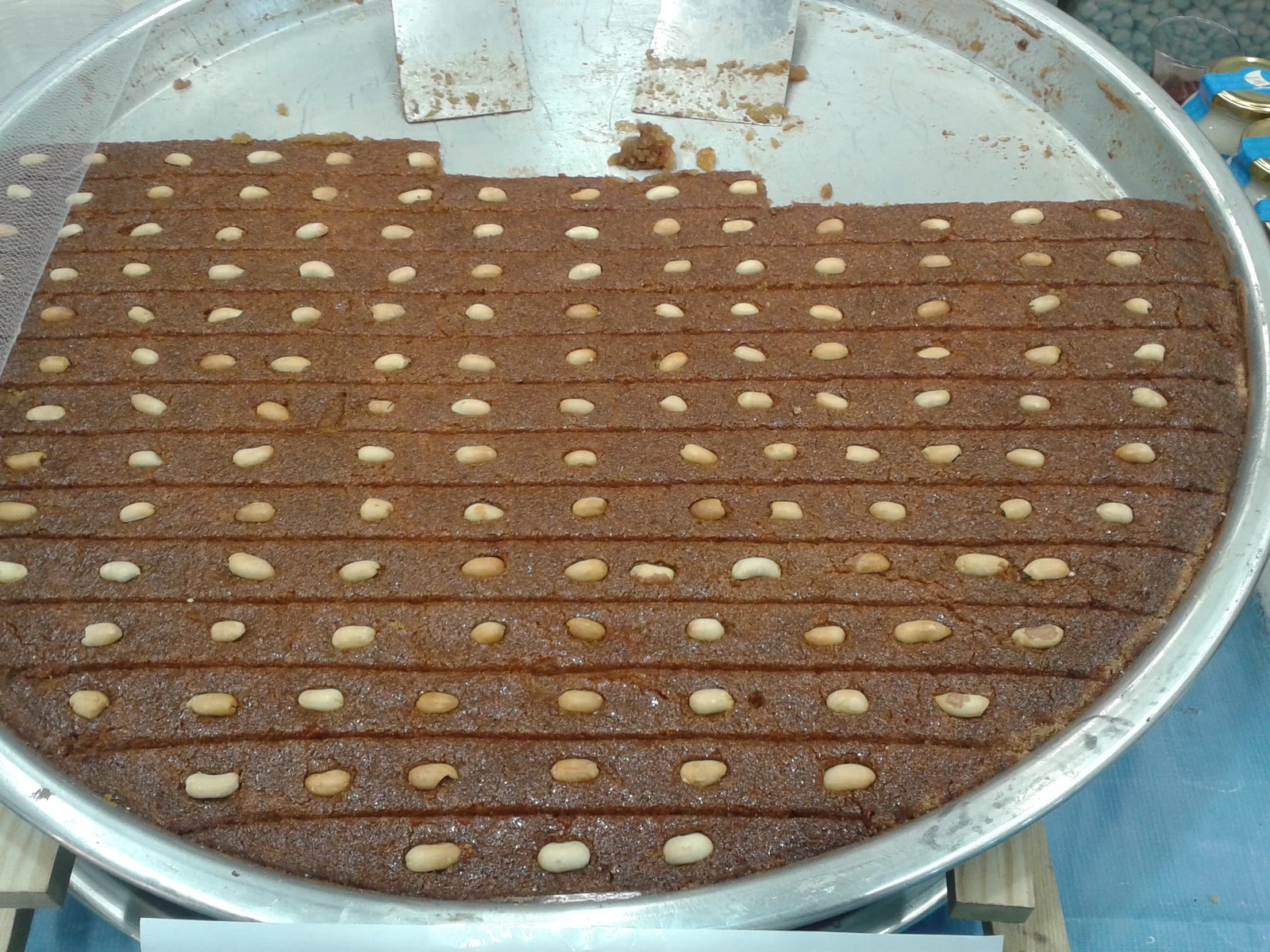
When the sweet is decorated with almonds or other nuts, they are placed before baking, with the position of each piece in mind, and pressed in lightly. Unlike mixing nuts through the dough, this leaves the nuts in fixed places on top after baking. In a comparison photograph taken in Ankara, narrow strips lie side by side in a round tray, each with small nuts on top. Because some pieces have already been removed, the photograph shows the size of a whole strip and the spacing between the pieces sold. The photograph shows an example sold in Ankara. Whether it meets the İzmir provincial standard would have to be judged by checking its dimensions and place of production.
Taking the tray out of the oven once to cut it
According to the specification, the dough is baked in an oven preheated to 180°C for 40–45 minutes, then the tray is taken out and the dough is cut into rectangular pieces. It then goes back into the oven for 15 minutes. A finished piece is 7–10 cm long. During the first bake, apart from the edges, the parts that will later become separate pieces bake side by side. The knife goes in after the dough has taken on color, so by the time the tray comes out, the faces that touched their neighbors become the sides of each piece. The shape in which the sweet is sold is thus made before the final bake.
The Doyurgan shop is said to have used a wood-fired oven and copper trays since the days of Adem Saatçi. The syrup is also cooked in a copper pot. The owner, Can, names the equipment as the reason the same ingredients give a different result at home. The specification, which gives temperatures and times as numbers, shows when in the process the dough is cut. The craftsman’s account of the wood-fired oven shows what kind of oven and trays were used as the work was handed down. Adem, too, carried the sweet in copper trays on a three-wheeled cart.
According to the specification, the crust of the baked sweet should be lightly caramel-colored, without cracks or splits. The inside should remain a yellowish tone lighter than the surface, with no burnt taste or smell, and the crumb should break up easily in the mouth. The colors of the top and bottom may differ, but the mouthfeel should be about the same throughout. Extending the baking time to deepen the color does not necessarily produce the same light texture. Because the syrup is absorbed at the very end, the color seen when the tray leaves the oven and the softness felt in the mouth are separate indicators.
The rectangles described in the specification are not shapes cut from unbaked dough with individual molds. They are divisions made by running a knife through the dough partway through baking, within one large tray. When nuts are placed on each piece before baking, their spacing also serves as a guide to where to cut. When you look at a cut face after baking, you can check how far the yellow continues inside, and you can also compare whether a piece taken from one end of the tray and one from the middle are the same height. The surface and the cross-section each reflect a different stage between shaping and baking.
Pouring cooled şerbet over the baked tray
Şerbet is a syrup made by boiling sugar and water. In the specification, 1 kg of sugar is combined with 650–850 ml of water, brought to the boil, and then heated for 10 minutes. Lemon or citric acid and vanilla are added, together not exceeding 5% of the syrup, and the syrup is cooked for at most 5 more minutes and then cooled. These figures are the proportions measured at the start of cooking and the heating procedure. In the pot, water is lost while the syrup is heated, and the cooled syrup is then used on the baked dough.
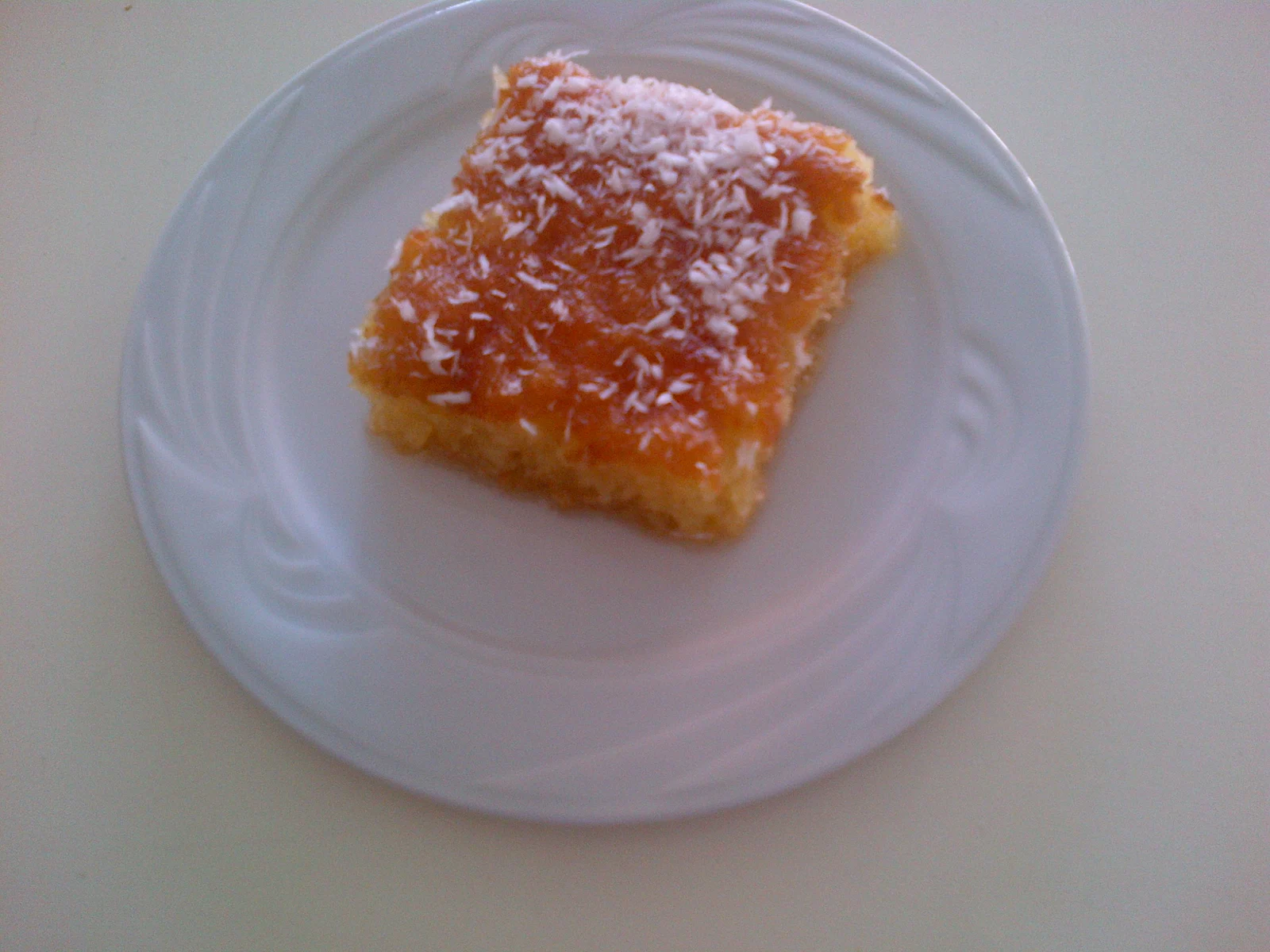
The amount poured into the tray is not weighed piece by piece; the syrup is poured to a height of 5–6 mm from the base. Because the cuts have already been made, the syrup reaches the bottom of the sweet and the sides exposed by cutting. Inside the finished dough, the syrup is meant to spread evenly without pooling. The thickness chosen for the dough, the places where it was cut, and the depth of syrup poured into the tray are all connected. The specification also states that, left in the tray under suitable conditions at about 15–20°C, the sweet can be kept for about one week. These conditions differ from those for keeping days after a piece has been wrapped in paper at a shop.
The sweetness in a piece comes first from the sugar kneaded into the flour and then from the syrup that enters after baking. More syrup does not simply increase the sweetness; it also changes which parts become moist. If the sugar in the dough is changed, the color and firmness after baking may change in turn. With a tray of even thickness in front of you, if some parts take in too much syrup or too little, measuring out the same amount will not give the edge and the middle the same bite.
While the cooled syrup is used on the baked sweet, heat is used in making the syrup to dissolve the sugar and to bring out acidity and aroma. Following the order in the specification, you first set aside the time to stop the pot and cool the syrup, and the time to put the tray in the oven, cut it, and bake it again. When the two are finally combined, the sweet itself also cools in the tray. Before any pieces are wrapped, there is one stage in which the syrup cools in the pot and another in which the sweet cools in the tray.
Comparing cut faces, and sandwiching kaymak
Revani is also made with semolina, baked and then soaked in syrup. In an example published by the agriculture and forestry authority of İzmir Province, eggs and sugar are whipped until creamy, and oil, yogurt, white poppy seeds, semolina, and wheat flour are added. The syrup poured on after baking is scented with mastic resin. The method of whipping air into eggs before adding flour differs from the specification’s method of kneading semolina with milk and pressing it into the tray by hand, and so the dough is in a different state before heating. The İzmir city guide describes şambali as having the firmer texture.
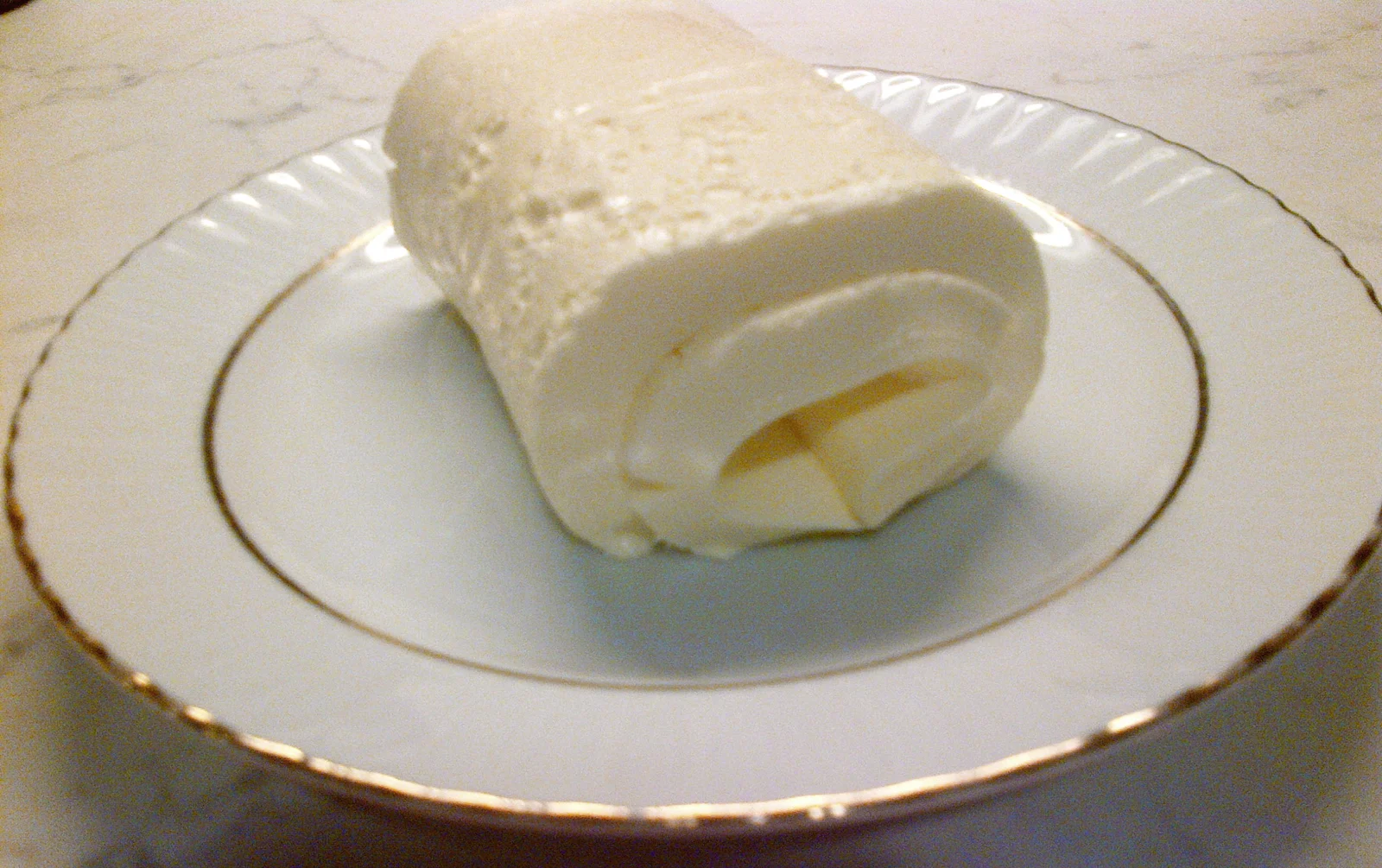
Şambali can also be eaten plain. At Can’s shop, the cut dough is split open, filled with kaymak, a rich milk cream, and sprinkled with cinnamon. The syrup has already spread through the dough, the milk filling forms a layer where the piece was opened, and the cinnamon stays on top. This is not limited to shops near the harbor: another İzmir city guide gives an example from inland Ödemiş, where kaymak is also served alongside. After pieces are cut from the same tray, you can choose between a piece wrapped in paper to hold in the hand and one with an added layer of milk.
From a Hisarönü stall to provincial registration
In Kemeraltı, near the square in front of the Hisar Mosque, there are hans (merchants’ inns), small shops selling leather goods and souvenirs, and eateries where people who trade nearby take their lunch. The İzmir city guide lists şambali as a sweet to eat there, and the English-language guide also mentions Karşıyaka, across the bay. The sweet is not found only on the streets where the shops stand; some people buy a piece between business errands or during a walk around the district.
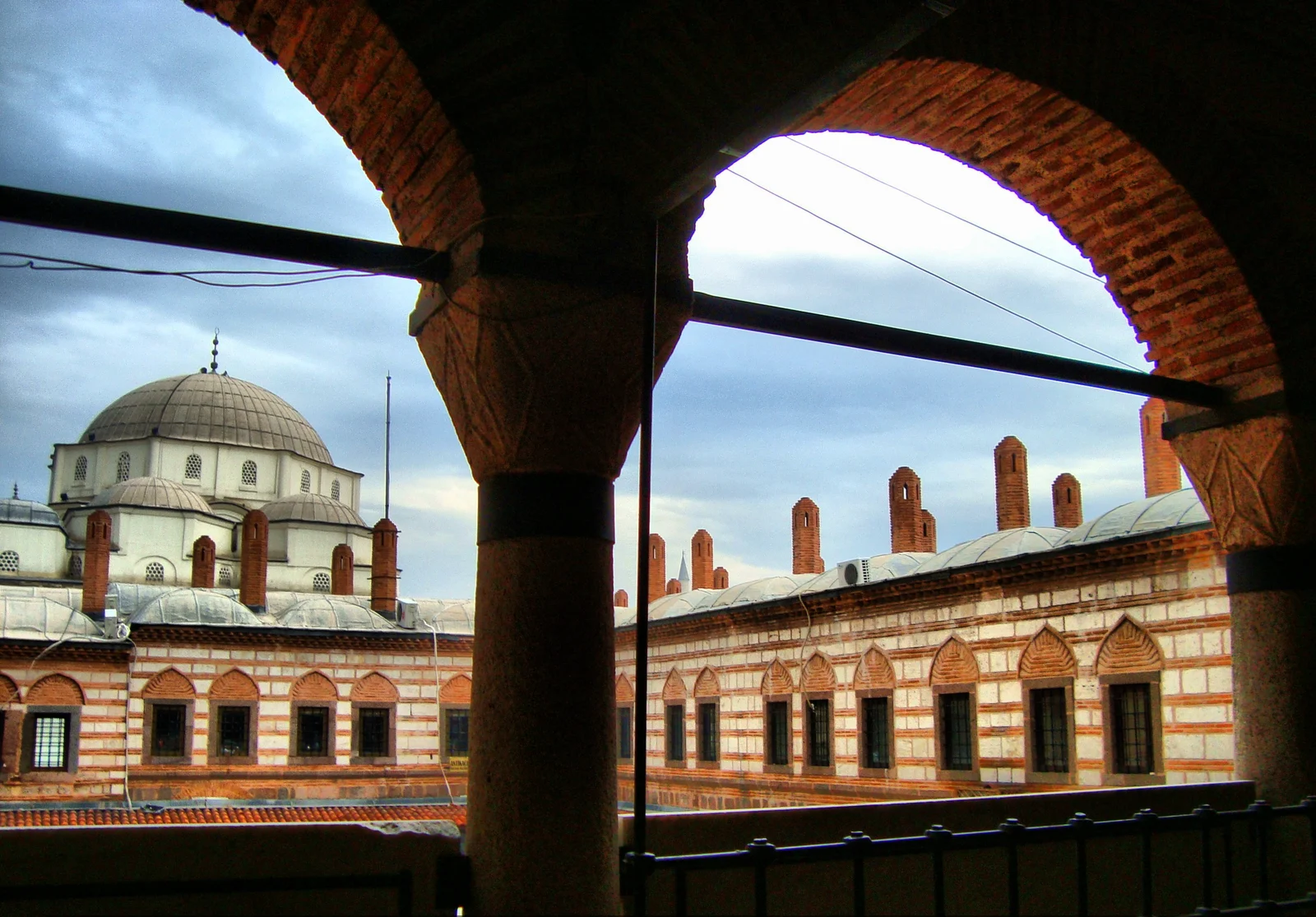
According to the shop’s history, Adem Saatçi moved from Filibe (now Plovdiv) in Bulgaria and began selling şambali from a three-wheeled cart in 1942. A Konak district publication gives 1939 for the move. In 1989 his apprentice Muammer Doyurgan took over the work together with the cart, and Muammer’s sons Aşkın and Can carried on the family business. According to the shop’s history, the first shop in Kemeraltı opened in 1996. In the shop of about three square meters described in a municipal magazine, trays are stacked and the sweet is sold by the piece. At the time of the interview, Can was continuing the work without mechanization, and he said that customers come from Istanbul, Ankara, and abroad and buy many packages at a time.
The Kemeraltı food culture guide explains the sweet as a blend of revani brought by migrants from the Balkans and an Aleppo sweet linked to migration from the Hejaz and Yemen. Another municipal source links the sweet to Damascus and says it is also called Şam Tatlısı or Şambaba. A family record also states that a craftsman from Bulgaria was selling it in the 1940s. Following these accounts does not make it possible to confirm the period in which the sweet arrived or the formulation of that time.
The geographical indication is registered with the Turkish Patent and Trademark Office as No. 205. The register gives an application date of 18 January 2011 and a registration date of 23 December 2016, while the opening of the specification shows publication in the Official Gazette on 21 June 2016 and effect from 18 January 2011. The specification records the date of publication in the Gazette and the date from which the effect applies retroactively; these are in different fields from the application and registration dates in the portal. Amendment notices were issued in 2021 and 2023, and they provide that all production steps are carried out in İzmir Province. The registrant is the İzmir Chamber of Commerce. Inspections are carried out by five people in total from the provincial agriculture and forestry authority, İzmir University of Economics, and the Chamber of Commerce; in addition to the annual inspection, checks are made when necessary or when a complaint is received. The items inspected are ingredients, production method, color and texture, and labeling. The name and labeling must be displayed on the product or its packaging or, where they cannot be shown there, in a prominent place in the shop. With trays carried from a stall, only the portion cut from a single tray could be sold on the spot. A shop’s paper-wrapped piece can also be opened and eaten after leaving the square. In either situation, before a piece is chosen, the maker has pressed the dough out in the tray and decided where to cut it.
Glossary
- Irmik
- Turkish for semolina. A coarsely ground wheat flour, and the main component of the dough for this sweet.
- Şerbet
- a syrup made by boiling sugar and water. Here it is poured over the baked dough to soak in.
- Kemeraltı
- a shopping district in the historic quarter of İzmir. Eateries and confectioners are concentrated there.
- Revani
- a sweet in which a dough containing semolina and other ingredients is baked and soaked in syrup. Some versions are made by whipping eggs and sugar.
- Kaymak
- a rich cream taken from milk. It is sometimes sandwiched in şambali when served.
- Can Doyurgan
- a craftsman who carries on the family business at a şambali specialist shop in Kemeraltı. In a 2022 interview, he described how the sweet is baked and eaten.
- Adem Saatçi
- a craftsman who is said to have moved from Bulgaria and sold şambali in İzmir in the early 1940s.


