


SweetloreEncyclopedia of World Sweets (834)

Akok
Kuih akok
An egg batter that puffs up, then cools and wrinkles
Desserts / Kelantan, Malaysia

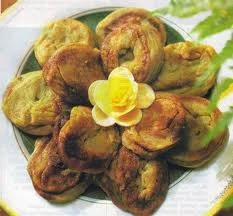
Small ovals with browned edges and fine folds across the surface: akok is a confection of Malaysia’s East Coast made by combining eggs, coconut milk, sugar and flour and baking the batter in small hollows. Akok kedut, the version known in Kelantan, puffs up in the heat of the stove, then shrinks and wrinkles once it is taken off the fire. After the bite goes through the thin baked exterior, the centre stays soft with egg and coconut milk. Besides the wrinkled ovals, there are also pieces with petal outlines and a comparatively smooth top. Looking at where the edge and the wrinkles fall on a single piece lets you trace both the shape the mould gave it and the shape it settled into after baking.
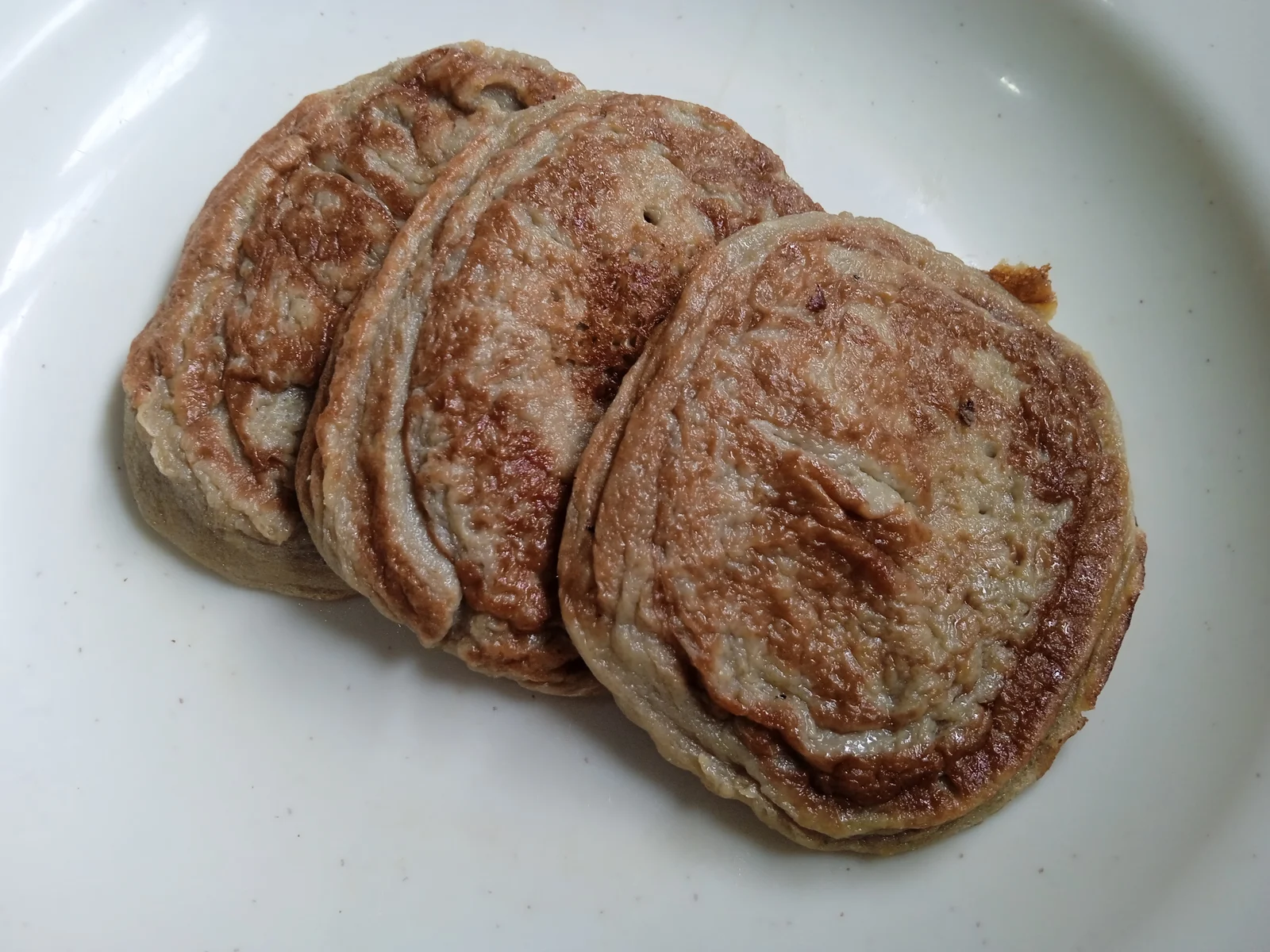
Sugar dissolved into eggs makes the batter for each piece
The ingredients that Malaysia’s National Department for Culture and Arts lists for the Kelantan method are eggs, thick coconut milk, gula Melaka and wheat flour. The eggs are cracked and beaten, and a separate mixture of coconut milk and sugar is strained and poured in. If the sugar is dissolved in the liquid beforehand, the sweetness has already spread through the inside of each piece by the time the batter is poured into the hot mould. When the flour is added, it too is mixed so that no lumps remain. When comparing the brown colour of different akok, you can look at the colour the batter takes from whichever sugar was used, and also at the browning that comes from which faces of the mould delivered heat. Some introductions from the Kelantan state tourism office name rice flour as the flour, so even regional public sources differ in what they record.
The Kelantan-style recipe on the cooking site Kuali combines five eggs, 200 ml of thick coconut milk, 150 g of gula Melaka and two tablespoons of wheat flour. Pandan juice from three leaves and a little salt are added. The sugar is dissolved in a little water, strained and cooled before it goes in. The eggs are stirred gently so that the batter does not form many bubbles, and the flour is sifted in last. A little oil is brushed onto the heated mould, and the batter is poured almost to the rim of each hollow. The statement that akok puffs up describes what happens after it goes into the stove. At the stage of mixing the milk and sugar, the hand movement differs from that of sponge-type confections, in which a whisk is used to work in plenty of air.
Once the batter is on the heat, the egg proteins set, and what was a liquid becomes something that can be lifted out piece by piece. Coconut milk contains oil as well as water, which changes the mouthfeel. The flour also holds liquid and supports the shape that has puffed up in the heat. According to a chefs’ association, one Kelantan example of akok uses more egg relative to flour, while a Terengganu example raises the proportion of flour and bakes a smoother surface. In a batter rich in egg, the surface is lifted during baking by the expansion of air and steam. When the volume shrinks after the akok is taken out, a soft batter with little flour is less likely to keep its high, raised form. The wrinkles that gather on the surface come from this change during cooling.
A publication of the National Heritage Department, based on visits to three makers, reports that duck eggs were sometimes used in the past, but that the three makers interviewed used hen’s eggs because of supply and price. The same source also gives an example that uses 300 eggs and 5 kg each of flour and coconut milk per batch. The sugar is dissolved and cooled, the mixture is stirred with a large wooden ladle, strained, and transferred to a container with a spout. As an old tool, it also describes a handmade implement for mixing eggs in an earthenware vessel, made of iron wire coiled like a spring and attached to a wooden handle. Even when the amount being mixed grows, the task of pouring the strained liquid into each hollow is the same as in the home-kitchen examples.
The petal outline comes from the mould; the wrinkles come after it leaves the heat
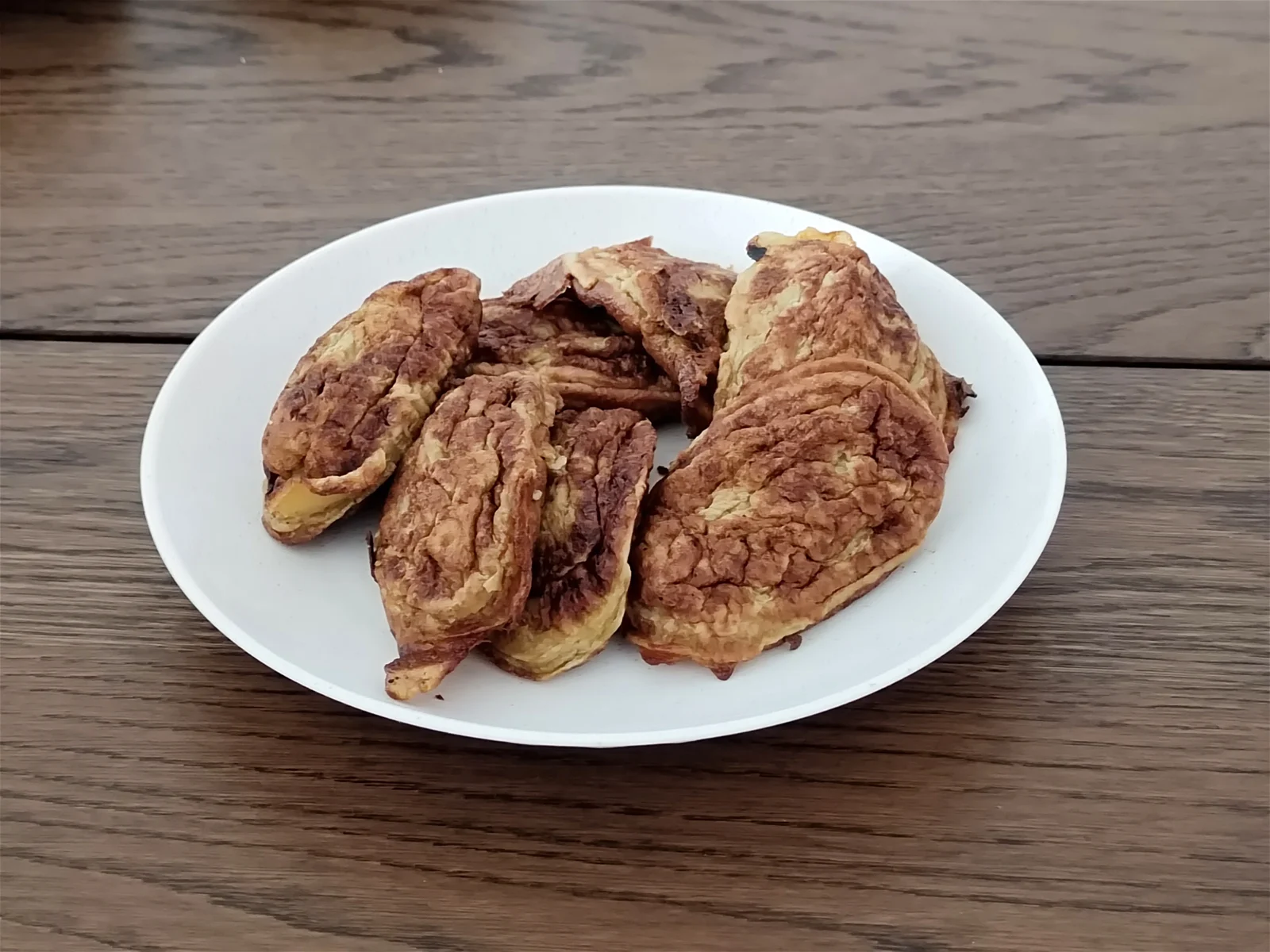
Malaysia’s National Security Council presents the oval form and a flower-shaped form called akok kembojak or akok bunga. The petal tips and hollows are already formed along the mould before the akok comes out of the stove. The wrinkles form from there, as the batter cools. If the centre of the flower is thick and the petal tips are thin, the smaller tips let heat through more easily. Even in an oval, batter pools where the hollow is deep, so even when the browning looks similar, the part that has the toasty surface when you bite into it differs. In comparisons of the cooking of different states, people look not only at how much flour and egg were combined, but also at which moulds were used and which finished results are set side by side.
In an interview with Sarinah Ismail of Universiti Teknologi MARA, the kinds mentioned include akok nisan, akok daun pandan, akok berlauk, akok bunga and akok pisang. Bunga means flower, daun pandan means pandan leaf, and pisang means banana. Some names derive from shape, while others are tied to aroma, ingredients or what the akok is eaten with. In a post from a Kelantan household, the dish called akok/bahulu berlauk places serunding, which resembles shredded meat floss, in the batter in the mould, then covers it with more batter and bakes it. Compared with an oval bite made with sweet gula Melaka, this is an example in which a different ingredient appears at the centre.
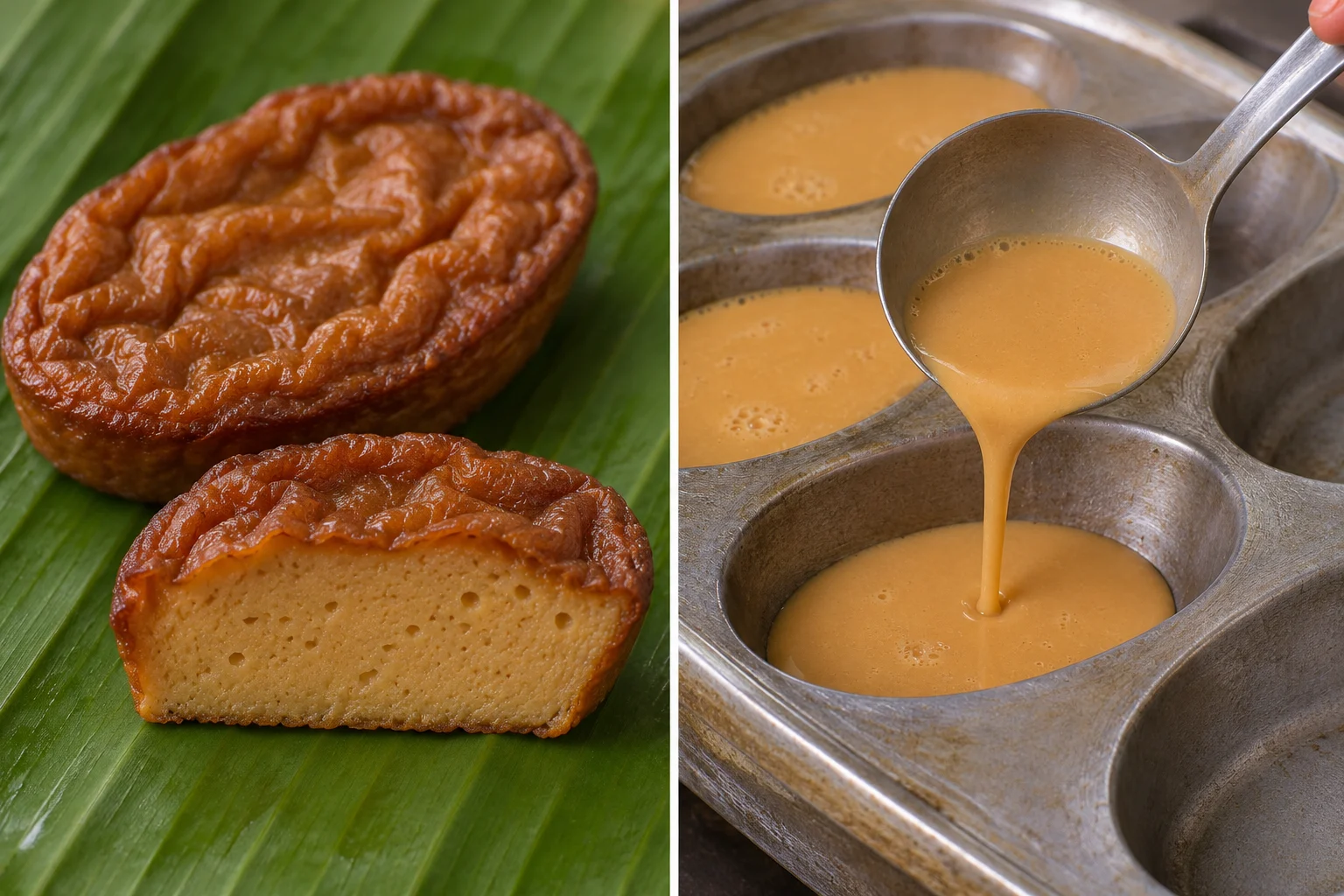
Burning coconut husk beneath the mould and on the lid
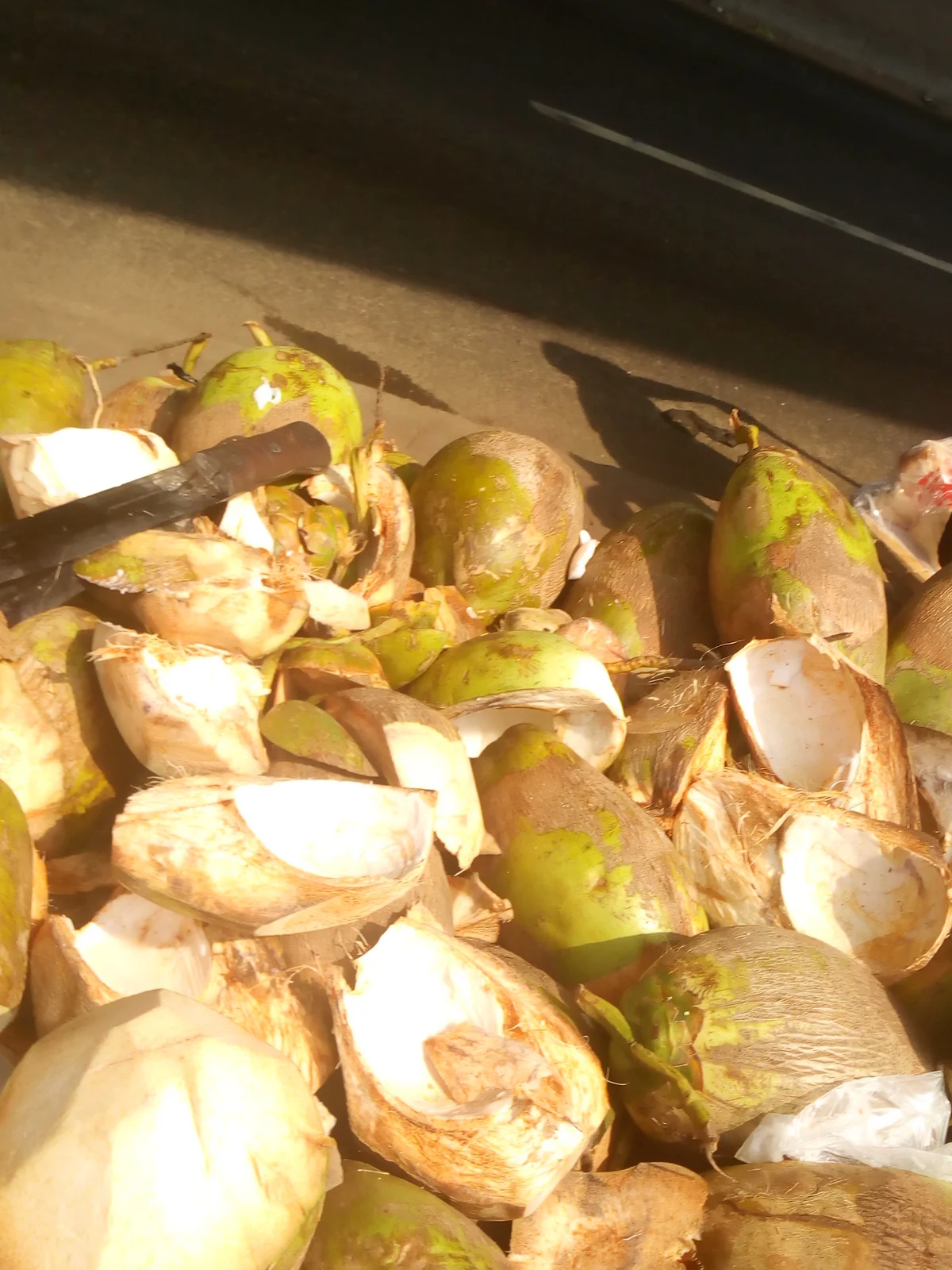
At Kampung Semat Jalar in Tumpat, Kelantan, Shatila Yatim says that she bakes akok over coconut husk (sabut kelapa), a method inherited from her mother. The ingredients of the batter include wheat flour, coconut milk, eggs and a sugar called nisan keret. The milk drawn from the flesh of the coconut goes into the batter, and the fibrous husk sits on the fire side. Sarinah also touches on charcoal baking and the handling of ovens. With a tool in which wood or fibre gives off heat at the fire side, and a tool in which the mould is set in a chosen temperature, the same coconut milk goes into the batter, but what sits near the heat is different.
A study of akok kedut in the National Heritage Department’s publication introduces makers who finely chop dried husk and place it beneath the mould and on top of the lid when baking. In some examples, charcoal is used below and husk only on the lid. The maker in the study uses a copper mould that bakes ten ovals at a time, and brushes oil into the hollows with a knotted pandan leaf dipped in oil. After the batter is poured from a container with a spout and the lid is closed, heat reaches both above and below. The base and edges touch the copper, and the top surface receives heat from the lid side. Applying heat to faces above and below helps keep the browning from collecting only on the bottom and lets heat reach the thick centre.
Even within the same ten-hollow mould, the order in which the pieces finish baking changes with where the husk or charcoal is placed. The study records the lid being lifted about every five minutes, the pieces that are done first being removed with two spoons, and the rest being baked further. Where the fire is too strong, husk is added to cover the burning parts and adjust how the heat reaches the mould. Husk does not burn in the same way when it is dry and when it has been dampened by rain. Judging which pieces can be taken out when the mould is opened, and choosing which to leave over the fire, is also part of the work of those who bake with this tool.
In the home-oven example from Kuali, the guide is 25–30 minutes at 180 degrees, until the top turns brown. The explanation for the charcoal method includes placing fire on the lid as well. Noor Hassan uses a shallow electric cupcake maker; on that appliance it takes about 6 minutes, with one or two minutes added if a darker surface is wanted. Among home posts that bake in an oven, there are also examples that shrink when taken out. The heat setting, the distance between the lid and the batter, and the amount put into each hollow change the point at which the browning becomes visible. Makers in the study who use gas appliances or commercial ovens can reduce the work of drying husk and of waiting until smoke appears. Even when the number baked and the speed change, when comparing whether wrinkles appear, it helps to look separately at the piece while still hot and after it has cooled.
At Ramadan stalls, home recipes line the counter
Sarinah’s interview reports that on the East Coast, akok is especially sought after during Ramadan. At Shatila’s stall, too, customers from the area and nearby come, and those who know the home method come to buy. At places where sweets to be eaten after sunset are taken home, finished pieces can be chosen one at a time rather than by selling a mould’s worth in portions. The state tourism office cites serving akok at festivals, meals and teatime, and another Heritage Department publication mentions giving it at weddings. In efforts to pass the method on to younger generations, what is taught includes not only the names and proportions of the ingredients but also how to warm the mould and at what colour to take the akok out.
The same publication also includes accounts gathered about where the home recipe came from. Three makers in Kelantan said that people from Pattani on the Thai side moved there and made it as a sweet for teatime. Collecting local accounts shows how people believe they inherited the sweets that remain at today’s stalls. The publication also notes that there is no record that can confirm the origin down to a date or a maker. On the other hand, the 2009 published list of national heritage includes the name akok in its confectionery section. Among modern historical sources whose date can be confirmed are this listing and interviews at individual shops, while for older methods there are sources that convey accounts from households and towns.
Mohd Affendi Aziz, interviewed by Utusan Malaysia, took over a family business that had been selling akok in Kubang Kerian, Kelantan, since 1992, and moved to Besut, Terengganu, in 2017. While keeping the family’s ingredients of eggs, sugar, wheat and coconut milk, he offered eight kinds: plain, pandan, durian, corn, chocolate, meat serunding, baulu and red velvet. Even at a shop that cooks a batter of milk and eggs, adding fruit aroma and pairing with a meat side lead customers to expect different flavours when they choose a piece. Describing a recipe together with a place name serves to compare the Kelantan and Terengganu methods. The shop’s records preserve how the same family’s recipe and business continued across state lines, with new flavours added.
Kuali gives a thin baked exterior and a soft interior as the features of akok and pairs it with hot tea. Gula Melaka sweetens the batter through to the inside, squeezed pandan gives off its scent from within the liquid, and the browning remains on the surface from the heat of the mould and the lid. At Shatila’s stall, the scent of burning husk is added. Among traditional ways of using fire, too, there are differences, such as homes that use charcoal and shops that use coconut husk. When you pick up a wrinkled piece, both the thinly baked, folded outer layer and the soft centre in the mouth show traces of working the batter and the heat in the same small hollow.
Glossary
- kedut
- Wrinkle. In Kelantan-style examples with a high proportion of egg, it refers to the shape of the cooled surface.
- akok kembojak / bunga
- Akok made in a flower-shaped mould. The name refers to the shape of the mould.
- santan
- Coconut milk. It goes into the batter together with the eggs and sugar.
- sabut kelapa
- The fibrous outer husk of the coconut. In some households it is used as fuel.


