


SweetloreEncyclopedia of World Sweets (834)

Millas
Millas dessert
A southwest French grain dish cooked in a pot, cooled, and fried
Baked Sweets / Southwest France

Take a pot of boiled cornmeal off the heat and spread it thickly on a cloth laid out on a table. Once cool, the batter is firm enough to lift in the same shape it had when smoothed with a spatula. Cut it into squares, fry them in a pan, and sprinkle them with sugar, and you have a sweet dish. This is one way of eating millas (millas, milhas) handed down in places such as Ariège, at the foot of the Pyrenees in southwest France. Elsewhere, the same name is given to a sweet baked in a mold with eggs and milk. Where the cooked meal is set, and how, shows what millas looks like in each region.
From the Bottom of the Pot onto the Cloth
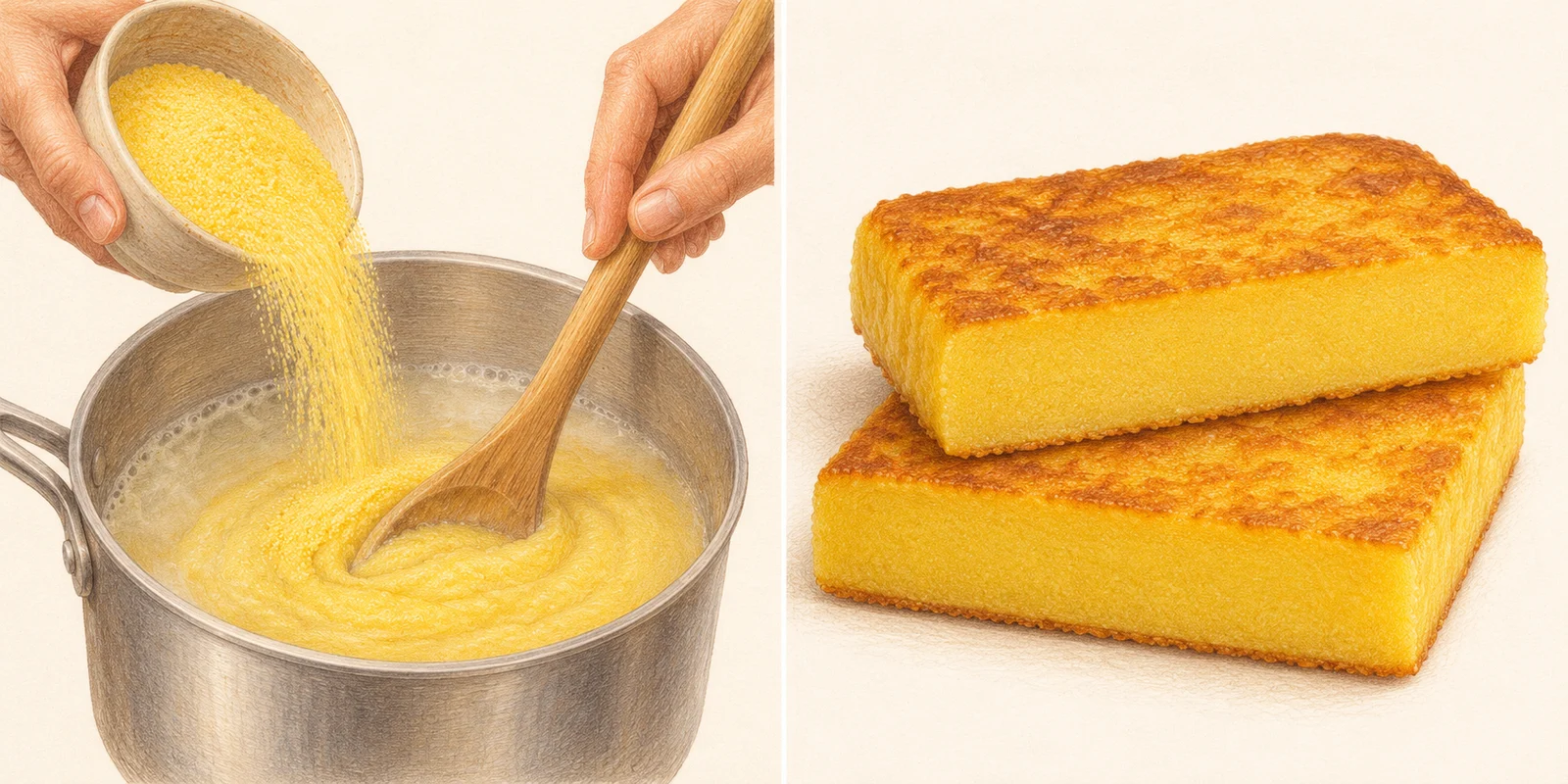
In the method of the Pyrénées audoises (the Aude Pyrenees), water or milk is warmed with salt, and 200 g of cornmeal per half litre is sprinkled in a little at a time. Dropped in all at once, the grains clump easily, so the meal is scattered into the liquid while the pot is kept moving. Stirring continues after the liquid starts to thicken, and when the meal is cooked, it is transferred to a rectangular dish dusted with flour. The layer is 2–4 cm thick. If it is spread while still soft enough to level in the pot, then once cool it can be cut into squares, lifted, turned over and fried. This is a method in which cooked meal changes on the dish from a porridge into something firm enough to handle slice by slice.
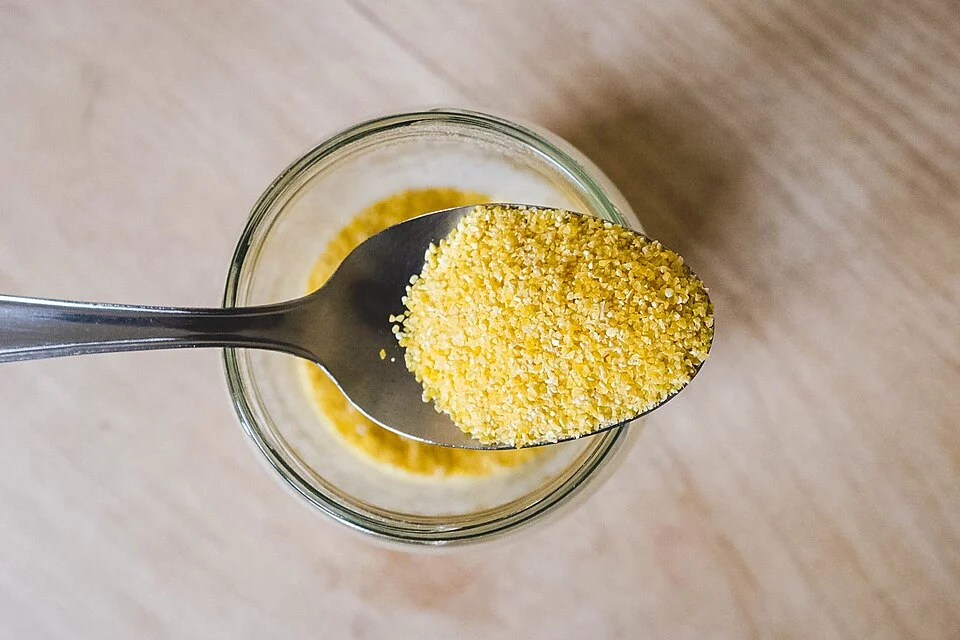
In the sweet millas of Francine Claustres, presented by Pyrénées Cathares in eastern Ariège, 1.5 litres each of water and milk are brought to a boil, 400 g of cornmeal is sprinkled in, and 300 g of wheat flour follows. The butter and sugar added are 120 g each. Orange blossom water is also added at this point, so the fragrance is inside the millas when it is cut. In the Aude example, only cornmeal is scattered into the liquid. In this one, the pot holds two kinds of flour, and the sugar goes in while the pot is still on the heat.
In a deep pot, the batter is moved with a wooden stirring stick called a toudeille (toudeilho, todelha). The Ariège recipe boils the batter for more than an hour, stirring often, and takes it off the heat once it has become so thick that the stick stands upright in it. The stick described in the Aude source is made from the top of a fir or box tree, with the stubs of branches left at the end. With a long handle, both hands can move a batter that grows heavy at the bottom of a copper pot. The same source also records a method of flavoring with smoke by throwing juniper branches on the fire. Set beside the example of pouring orange blossom into the pot, this shows that fragrance came not only from added ingredients but also from the fire that heated the pot.
The sweet millas of Ariège is spread 1.5 cm thick on a floured cloth. This batter, thinner than that in the rectangular dish of the Aude, is cut into small squares once cool, and when fried in a pan it turns fragrant and golden. Another option is to dice it and pour warm sweetened milk over it. Here the milk fills the spaces between the cut faces, and there is no browned surface. The two are identical up to the cooking in the pot. Depending on what size the cooled sheet is cut into, and how it is then reheated, it becomes either a sweet arranged on a plate or a dessert eaten with milk from a bowl.
The Festival Copper Pot and the Sheet Spread at Home
Paul Armengaud, who ran a mill in Belpech in the Lauragais region, described preparations for a festival in a 1999 interview. Coarse salt is added to 30 litres of water in a copper pot, and when the water reaches about 75°C, roughly 7.5 kg of cornmeal is added over about 15 minutes. Throughout, a large wooden spatula is kept moving. Adding the meal without letting the water boil differs from the Pyrénées Cathares example, in which the milk and water are boiled first. For the former, the batch required a surface larger than a tray or dish. The batter was spread on a floured table and, once cool, cut into rectangles of about 13 × 9 cm.
The slices were also served with meat stews, and when fried in a pan or grilled on a grill, they became a sweet dish with sugar, honey, or jam. According to Armengaud, his family began making millas at the mill during the war years. He also related that neighbors brought grain in small sacks, later collected the flour, and cooked it at home. At festivals, a table was prepared from which slices for many people could be taken, while at home the flour received from the same mill went into the family’s own pot.
How a household’s sheet of millas was made also appears in the recollections of the writer Raymond Abellio, who grew up on the outskirts of Toulouse. His grandmother stirred the copper pot with a long stick, and his mother prepared a wooden box lined with a floured cloth. The cornmeal batter was scented with lemon zest or orange blossom. While someone stood at the pot, unable to leave it, a place was prepared for pouring, and the batter, spread about a finger thick, was left to cool. After it was cut into squares and fried in a pan, sugar was set beside it at the table.
The village bulletin of Mercus-Garrabet in Ariège also contains a piece by Josette Richard, who was present when Lucien and Simone Dupuy cooked. What Richard remembered was the softness in the mouth and the faint scent of orange blossom. The bulletin also prints a recipe for six, taken from Claustres’s cookbook, which calls for 15 cl of orange blossom water and 1 teaspoon of salt. It explains that a large pot can be used if there is no small cauldron, and a sturdy large spoon if there is no toudeille, and it records that in some places a short, thick stick called a balejo or menadou was used. The accompanying photographs were taken by Richard, and they document the work of mixing the batter in a home kitchen.
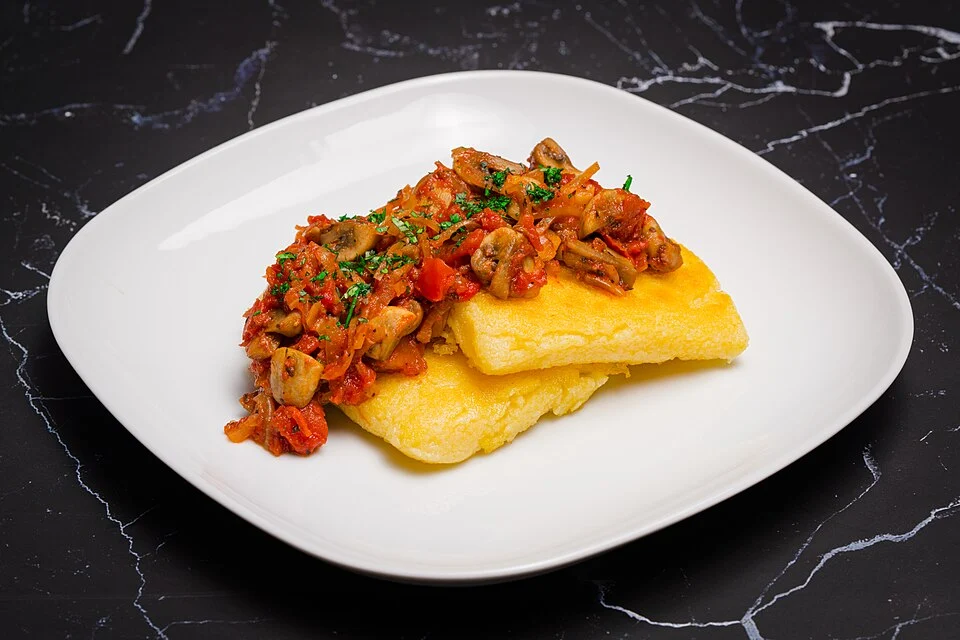
In the Biros valley in Ariège, millas is said to have been made when a pig was butchered at home, and it served both as an accompaniment to meat and as a dessert, fried and served with sugar or jam. A 1901 record from Montauban describes lifting the meat out of the pot in which pork had been boiled, adding cornmeal to the remaining fat, and shaping it into thick slices. The first portion was eaten warm, and the rest was sweetened with a little sugar after it had cooled. Of the two records tied to the day the pig was handled, it is the Montauban one that conveys the step of using the very pot from which the meat was taken.
From a Millet Name to a Slice Compared with Polenta
In Old Occitan, milhas referred to a paste made from millet flour. The dictionary of regional French cites an example written in the Landes in 1480 and an example from 1606 that had entered French. The latter is the name of a millet bread eaten in Béarn and Upper Armagnac. A 1780 record from Castres in the Tarn département has a name of the same family for a dish of cornmeal boiled in water with a little salt. Because the records come from different places, they cannot show the year in which a single kitchen switched flours. They do show that the name is old and that the flours used varied.
The same dictionary also lists similar preparations using buckwheat flour in Ariège, Aude, and Haute-Garonne. The Midi-Pyrénées inventory of culinary heritage also records rum and vanilla added to the yellow millas of Ariège, and lemon added to the white millas of Toulouse. The author of another cookbook, from 1947, compared the millas he ate at Mas-d’Azil in Ariège with Italian polenta, explaining that the former was firmer and was cooled, sliced thin, and fried. Differences in the proportion of meal to liquid show in the thickness and firmness of the batter before it is fried. The Aude and Pyrénées Cathares examples in this article, for instance, share the same cooling step but differ in the thickness to which the batter is spread.
Set in a Mold, It Gains an Edge and a Center
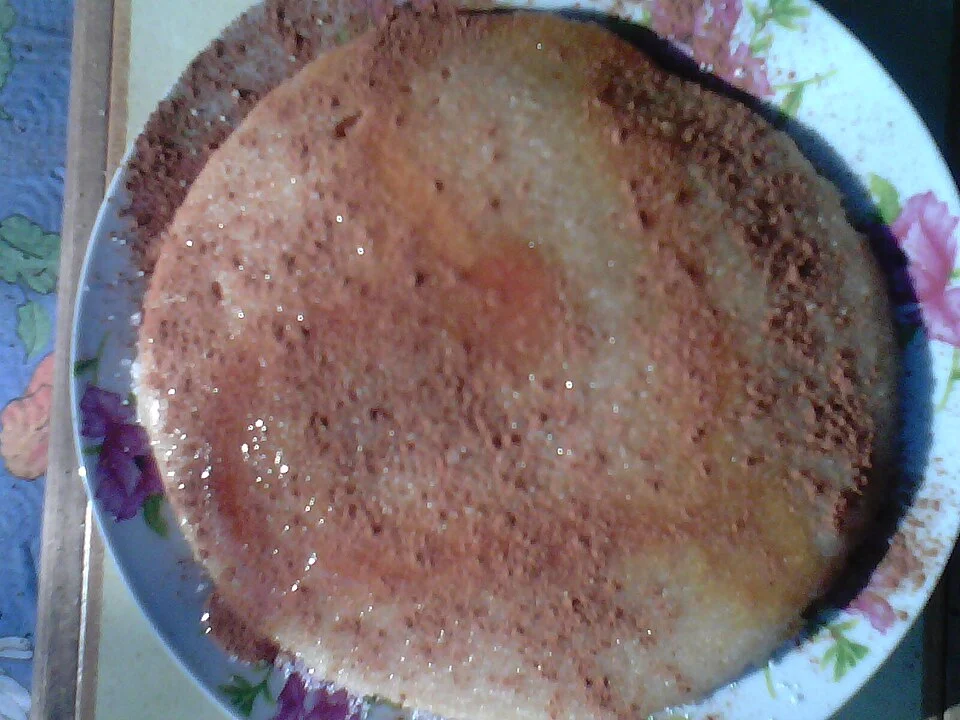
For the millas presented by Couserans in western Ariège, 1 litre of milk is warmed and 250 g of cornmeal is stirred in. With 200 g each of sugar and butter, eggs, and orange blossom fragrance, the batter is poured into a mold and baked at 200°C for about one hour. Even though it is cut after cooling, a single whole cake is baked in the mold first, unlike the method of frying each slice in a pan. As a result, each slice holds both the outer part that touched the mold and the soft part inside. It can be eaten while still warm or after cooling, and an example served with quince jelly is given.
In the Gironde, there is an example in which crushed bitter almonds are put into milk and strained, and that milk is used in a batter of eggs and cornmeal. Whipped egg whites are also added, and the batter is poured into a tall mold and cooked in a bain-marie in the oven. Instead of stirring a pot until it reduces to the point where a wooden stick stands in it, the egg-based batter is moved to a mold and given its form by heat carried through the water bath. Flavoring the milk and handling the egg whites are likewise tasks done before the batter goes into the mold.
In the millas of Brive in the Corrèze département, the ingredient cooked first is 200 g of pumpkin. It is boiled in water, drained, mashed, and combined with 75 g each of cornmeal and wheat flour, sugar, eggs, and cream. Apple is added in dice, and the example is baked in a mold at 180°C. In a single slice, you can compare the pumpkin, mixed through the whole, with the apple, which remains here and there in clusters. Millas with boiled pumpkin mixed in and baked is also recorded in the Dordogne and the Gironde. Draining the pumpkin is a step that prepares the pulp brought into the batter, and it is separate from the task, in the pot-cooked versions, of boiling the meal until it is firm enough to spread.
In Gascony, It Also Becomes a Sweet Galette
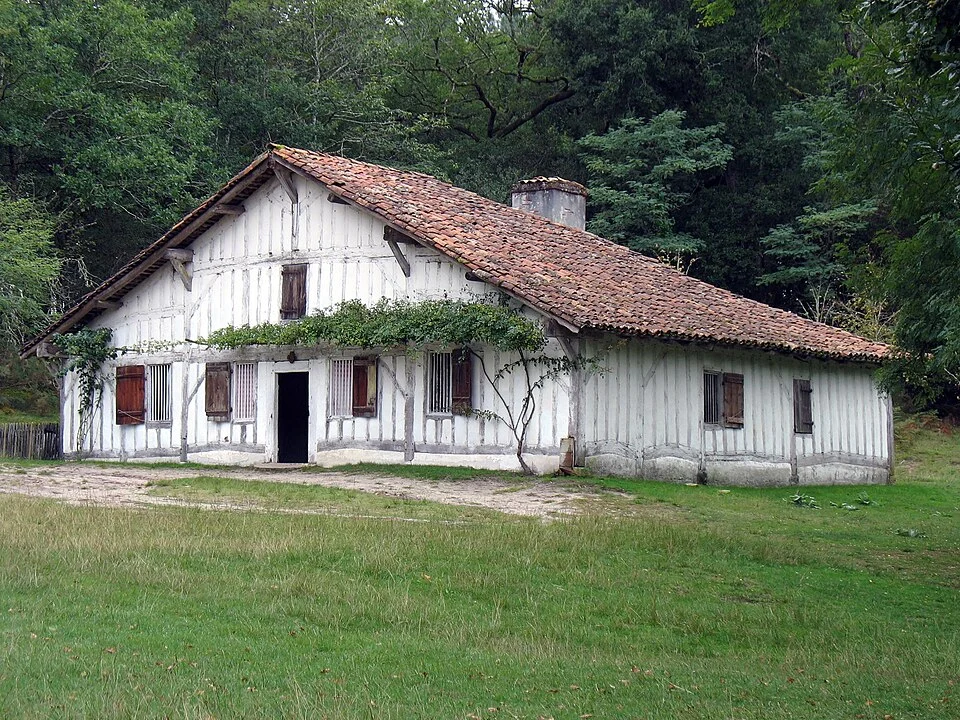
The Écomusée de Marquèze in the Landes announced a tasting of cruchade (cruchade), a sweet galette made with cornmeal, at its 2026 Gascon cuisine event. The museum’s 2025 menu also included a traditional millas. The local name that appears on a thinly cooked dish and the name on a meal’s menu are both recorded in the same place.
In the armotes recorded by Simin Palay in his documentation of Gascon cooking, equal amounts of cornmeal and wheat flour are put into hot water, and milk is added. To sweeten it, sugar and flavoring are added to the milk, or honey is served with it. The procedure of cooling, cutting, and frying in fat or butter overlaps with that of the millas of Ariège and Aude. In the sweet milhas published by Pro Maïs, cornmeal is cooked in milk, flavored with orange blossom, and cooled to a thickness of 4 cm. Fried in a pan greased with lard, its surface turns fragrant, and it is eaten with the tartness of currant jelly.
Families gathered around the pot, mills that ground the flour, and cooks who prepared portions for many people at festivals each set up a place to spread the batter. It was this arrangement that allowed a meal’s worth to be taken from the warm pot and the remaining batter to be cooled for the next dish. Compare Montauban, where the cooked meal was eaten warm on the spot; the Pyrénées Cathares, where diced pieces are covered with sweet milk; and the version in which slices are fried in lard and served with fruit jelly. From one sheet on a table, several ways of eating arise. In regions where millas is set in a mold with eggs, the path through the kitchen differs from the start, before the sheet is ever baked.
Glossary
- Toudeille (toudeilho, todelha)
- A wooden stirring stick that retains the stubs of branches at one end. It is used to stir meal while it cooks in a copper pot or similar vessel.
- Orange blossom water (eau de fleur d’oranger)
- Water infused with the scent of orange blossom. It is added while the millas batter is cooked, or before the batter is poured into a mold.
- Cruchade (cruchade)
- A regional name in southwest France for a thick porridge close to millas, or for a galette that is cooled, fried, and finished sweet.
- Armotes (armotes)
- In Armagnac, a dish made by cooking cornmeal or wheat flour with water or milk. Some versions are served with honey.


