


SweetloreEncyclopedia of World Sweets (834)

Pesada de Nance
Pesada de nance
A Panamanian sweet of cooked yellow nance pulp served with white cheese
Desserts / Panama

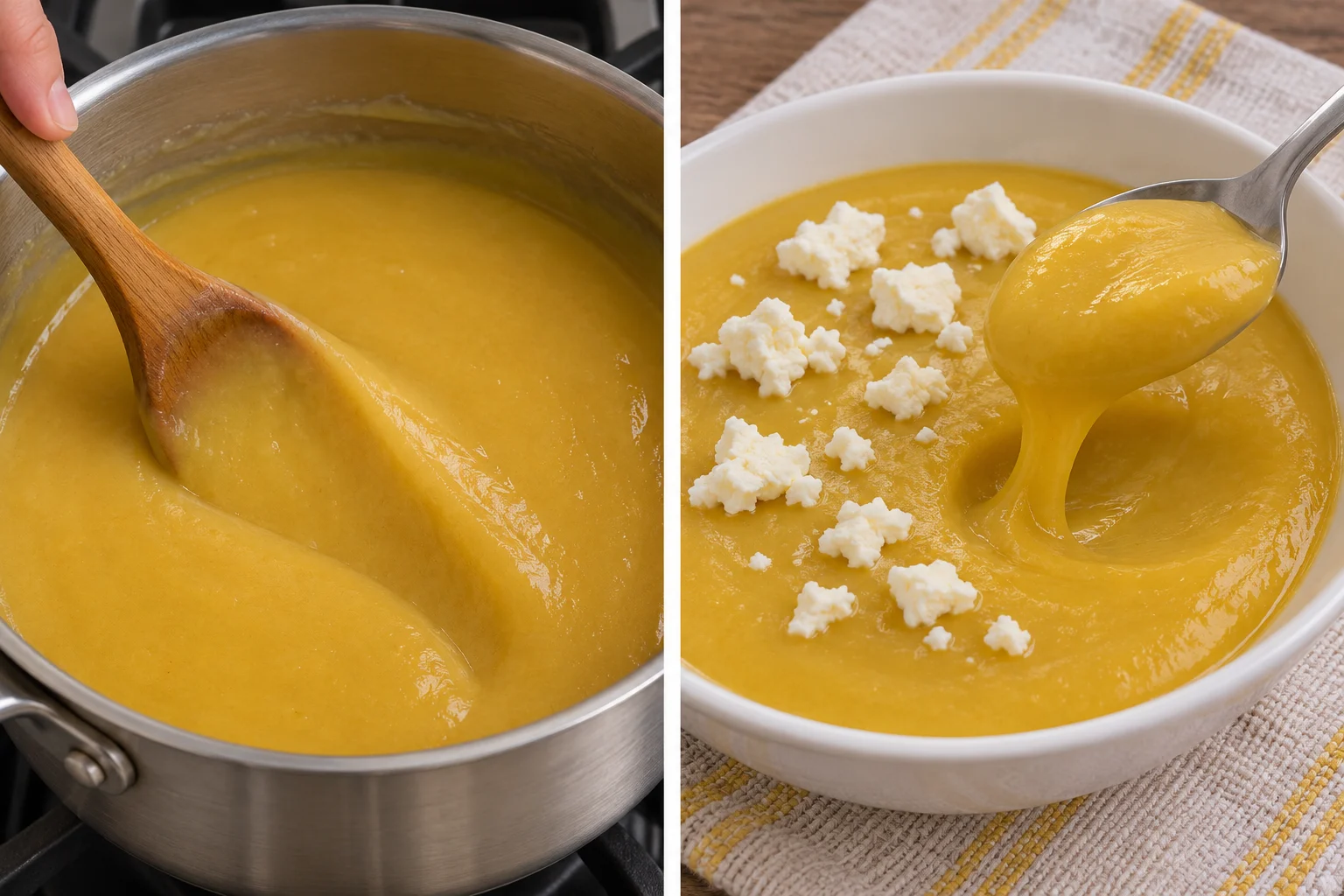
Dip a spoon into the thick yellow pulp and scoop up some of the white cheese laid on top, and sweetness and saltiness come together. Pesada de nance is a Panamanian sweet in which ripe nances are pitted and the pulp is cooked with flour. As it is stirred in the pot, it thickens until it clings to the spoon, and the feel in the mouth changes with the flour used to thicken it and with whether it is served warm.
Choosing fruit that falls from the tree, and separating stone from pulp
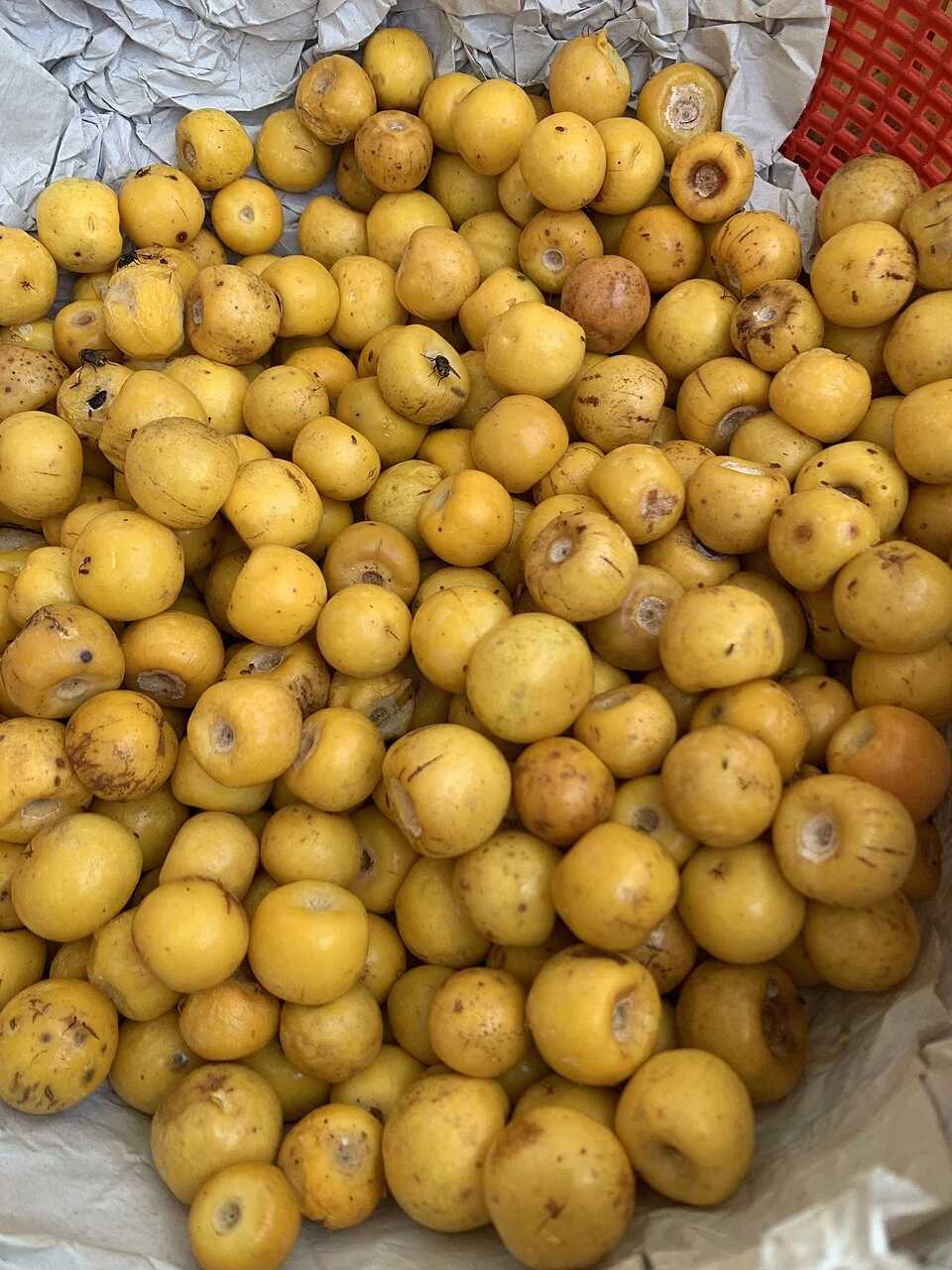
The first choice is the ripe fruit, made before anything goes on the heat. Nance is the fruit of Byrsonima crassifolia, which grows across tropical America, and it turns from yellow to orange as it ripens. A Panamanian newspaper describes it as slightly smaller than an olive, with strongly aromatic flesh around a round, hard stone. Eaten as it is, it can taste astringent as well as sweet, and opinions about its aroma are divided. In pesada, too, the pulp is the center of the flavor, so the first aroma differs from that of a corn sweet thickened in the same way.
Patricia Miranda, a cook based in Volcán, Chiriquí Province, recommends using ripe fruit that has fallen naturally from the tree. She explains that fruit that is not fully ripe turns out bitter. To remove the pulp, she first takes out the hard stones by hand, then blends the pulp if needed. She says that crushing the stones in a machine makes it bitter.
This is the maker’s judgment: before the amount of flour or the cooking time, the way one chooses the part to eat and separates it from the rest changes the flavor that goes into the pot.
A University of Panama study of foodways in Cañazas, Veraguas Province, includes an example made from fruit that has been left in water for a while. Before cooking, the fruit is moved to another container, washed in clean water, and the pulp is separated from the hard stones by hand. The work was not limited to gathering raw fruit and cooking it at once; it also included keeping the fruit in a container before use. Some modern home recipes start from stored fruit, and if you use fruit that is already soaking in water when you buy it, you can skip the first step of gathering the fruit at home.
There is also a method of straining the pressed pulp. A food-manufacturing table in Panama’s 2017 Gaceta Oficial gives an example in which the fruit is pressed, strained to separate the stones, and combined with sugar or molasses. Because even the straining after pressing is listed, the sequence of removing hard matter before the pulp goes into the pot is clear. Miranda removes the stones by hand first and then blends the pulp. Both are ways of keeping the stones out of the pot; they differ in the order of work and in the tools used.
Dissolving the flour to thicken the pulp in the pot
According to interviews in Cañazas, water and either wheat flour or cornstarch are added to the pulp, and the mixture is simmered in a pot for about an hour, stirring. Sugar is added as the cooking proceeds, and the cook judges the sweetness. A step of adding milk is not recorded in this passage. Wheat flour or cornstarch is added to the pulp and water, and the mixture is cooked to a thickness that can be scooped with a spoon. Because both flour options appear in the record for the same town, a wheat-flour version and a starch version cannot simply be assigned to different provinces.
Miranda prefers cornstarch and says that wheat flour tastes bitter to her. She mixes the pulp, water, a little milk, raspadura and starch in a pot and heats the mixture until it thickens. For the raspadura she chooses a pale one made with a wooden press. Here the sweetness also carries the flavor of boiled-down sugarcane. She ties the choice of flour to her own taste and to the ingredients available, so the cook herself chooses the texture and flavor.
In a recipe that uses stored fruit, water is added when the fruit is pushed through a sieve to extract the pulp, and the cornstarch is dissolved in water in a separate container before evaporated milk is mixed in. Rather than dropping the flour directly into the pot of juice, the cook removes lumps beforehand. After the liquids are combined, the mixture is stirred continuously with a wooden spoon. This is a recipe in which the smoothness of the result is built in two ways: by straining out fibers and stones, and by dispersing the starch in liquid first.
The procedure in the 2017 Gaceta brings the sweetened pulp to a boil over low heat, then adds cornstarch and milk. Miranda’s account emphasizes thickening the pulp by stirring it in the pot, while the Cañazas description combines the water and flour with the pulp before cooking. All of these use heat and stirring, but the point at which the flour is added is not the same. The Gaceta entry is a table listing the ingredients and operations for processed foods, and it does not specify whether white cheese is put on the plate at the end.
In a recipe with milk posted on a cooking website, the juice taken from the fruit is combined with milk and cornstarch and cooked for about 15 to 20 minutes, stirring. That is shorter than the hour reported in the Cañazas survey. The 15- to 20-minute recipe starts from putting already prepared juice into the pot. Each cooking time reflects differences in the state of the juice and pulp, the volume of liquid, and the heat of the pot, so a shorter time does not necessarily mean a thinner result.
Yanes, a Panamanian who posts home cooking, shows a version in which evaporated milk and cornstarch are added to nance juice. Compared with Miranda’s use of a little milk, this is an example that uses a concentrated milk product. Caterin, another Panamanian, meanwhile uses sifted wheat flour according to the firmness she wants. Home recipes specify not only whether dairy is used but also what the flour is and how thick the result should be. There are several ways to keep the juice on the spoon while preserving the aroma of the pulp.
The newspaper also relays what eaters say about thickening with wheat flour, cornstarch, or young corn. The account of young corn suggests a choice made in home kitchens, but the article gives no weighed recipe. When reproducing the cornstarch versions from the Gaceta or the cooking website, you can tell at what stage the starch is combined with the milk or juice. To compare whether grains can be felt in the mouth, including whether young corn is strained, another recipe would have to be consulted.
With white cheese, the saltiness changes from spoonful to spoonful
Miranda prefers fresh white cheese made at home. The article in La Estrella de Panamá describes her serving the cheese at a lukewarm temperature. The milk used when cooking the pulp and the cheese scattered before eating go in at different points.
Milk blends into the sweet pulp. If cheese is placed on top, the way the spoon scoops produces some bites of pulp alone and some with cheese, and the places where saltiness and a crumbly texture come in change.
In 2020 the same newspaper also recorded exchanges among Panamanians about whether to include cheese and about serving temperature. Some people, told that the fruit had been harvested, replied asking for it to be sent without white cheese. Some eat it warm, some cold, and some with both milk and cheese. Miranda mentions that people around her say cheese is indispensable, while saying that it can be left out depending on the eater.
In Caterin’s post, which serves the sweet with white cheese, the pairing of the fruit’s sweetness with the cheese’s saltiness appears in the description of the flavor. Unlike the flour that is cooked in to thicken the whole, the cheese on top enters the spoon as a food with a shape of its own. Small grains scatter through the pulp, while an angular piece leaves a texture distinct from the pulp when chewed. From the Cañazas source, which does not mention cheese, one can also read that the pot of fruit, flour and sugar is the core of the sweet.
If the pulp is served warm from the pot, the strong aroma of the fruit and the coolness of the white cheese added on top come together on the same spoon. If it is served after cooling, the pulp and cheese can be eaten at nearly the same temperature. Preferences differ, as the newspaper recorded, but in both versions the work of this sweet lies in separating the pulp from the stones and cooking the liquid with flour to a thickness that sits on a spoon. Even when the sweet is called simply pesa, the aroma of nance characterizes the plate.
The fruit season, from the interior to Chiriquí
The Cañazas study records this sweet as pesada de nance or pesa and lists it as a seasonal sweet often eaten from June to July. The same section describes making sweets from seasonal fruits and root vegetables available at home, including boiled and mashed ones such as cassava sweets and sweets made by simmering grated coconut. For nance, taking the fruit, with its skin and stone, out of the water container, separating the pulp, and putting it in the pot was part of the preparations of this season.
The Gaceta Oficial of Panama dated July 30, 2001 has a section classifying artisanally made foods, and pesada de nance appears there alongside tamales, rice-and-milk sweets, and bread. This shows that a food of that name was included in the administrative categories at that time. The 2017 Gaceta lists, in addition to the name, the work of pressing and straining the fruit and adding milk and starch. What the two official documents confirm is the classification and the listed process in each year. They are not records that establish where or when the sweet originated.
A review of the fruit in a University of Panama journal explains that nance is eaten raw and is also used for drinks and for frozen duro. The photographs show pesada, chicha and duro separately. Pesada, to which flour is added in the pot, has the same fruit aroma as the chilled juice that is drunk, yet the weight of the pulp remains on the spoon. It also differs in temperature and texture from frozen duro, and it is one of the three ways of eating nance in Panama that the review shows in photographs.
Drawing on Smithsonian Tropical Research Institute materials, the review notes that nance trees have also been reported on the Pacific side of Panama and on its Caribbean islands. The dots on the map mark places where trees were seen or specimens were collected. The preparations known in Veraguas and Chiriquí are two examples confirmed within that distribution. A map of where the trees grow does not allow one to conclude that the fruit is harvested at the same time everywhere or cooked with the same flour and sweetener.
In the home records from Cañazas, Veraguas Province, seasonal fruit is kept in a container of water, then cooked with added water and flour. In the example of the cook in Volcán, Chiriquí Province, fallen ripe fruit is selected, and pale cane sugar, starch and a little milk are added. The Cañazas interview touches on adding sugar while checking the sweetness, whereas the interview with Miranda specifies even the color and freshness of the ingredients. What one finds in the two places is the same fruit made spoonable by methods adapted to the materials at hand.
Glossary
- Nance
- The fruit of Byrsonima crassifolia. It turns from yellow to orange as it ripens and has a round, hard stone.
- Pesa (pesá)
- A short way of referring to pesada. It appears in the Cañazas survey and in the newspaper.
- Raspadura
- A solid sweetener made by boiling down sugarcane juice. In Miranda’s recipe a pale one is used.
- Queso blanco
- White cheese. In the recipes described here it is added on top of the finished pulp.


