


SweetloreEncyclopedia of World Sweets (834)

Cholado
Cholado
A Colombian cup of shaved ice layered with fruit and syrup
Desserts / Colombia, Valle del Cauca Department

Cholado is a chilled dessert from southwestern Colombia: shaved ice topped with fruit and finished with sweet syrup and sweetened condensed milk. The spoon first meets the chopped fruit, and beneath it lies finely shaved ice soaked in sweet syrup. The melted ice collects at the bottom of the cup and can also be sipped through a straw. In Jamundí, in the department of Valle del Cauca, and in the departmental capital, Cali, it is sold at street stalls and kiosks. In Cali the d in the middle of the word is not pronounced, and the dish is also called "cholao."
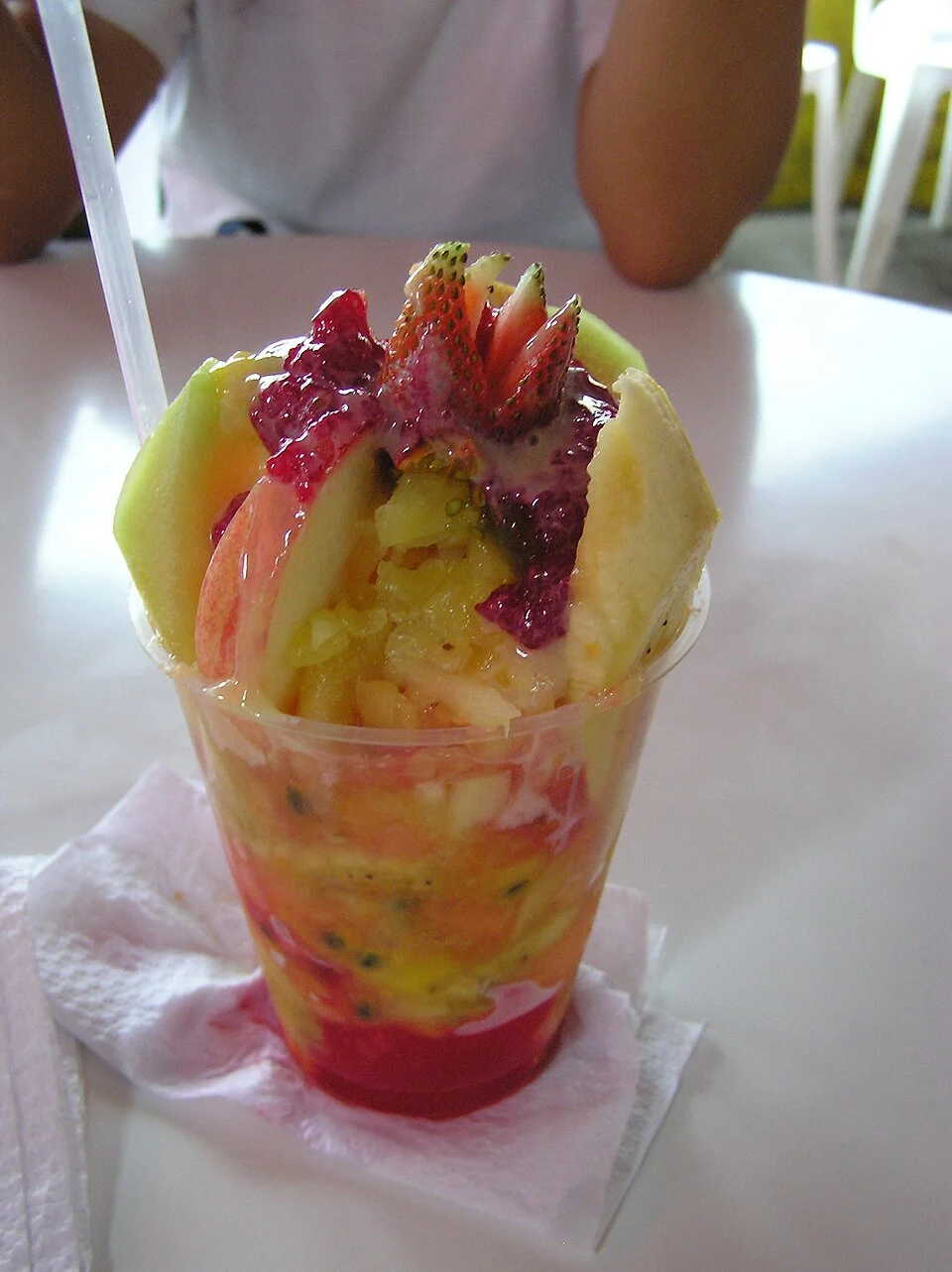
Ice below, fruit above in the glass
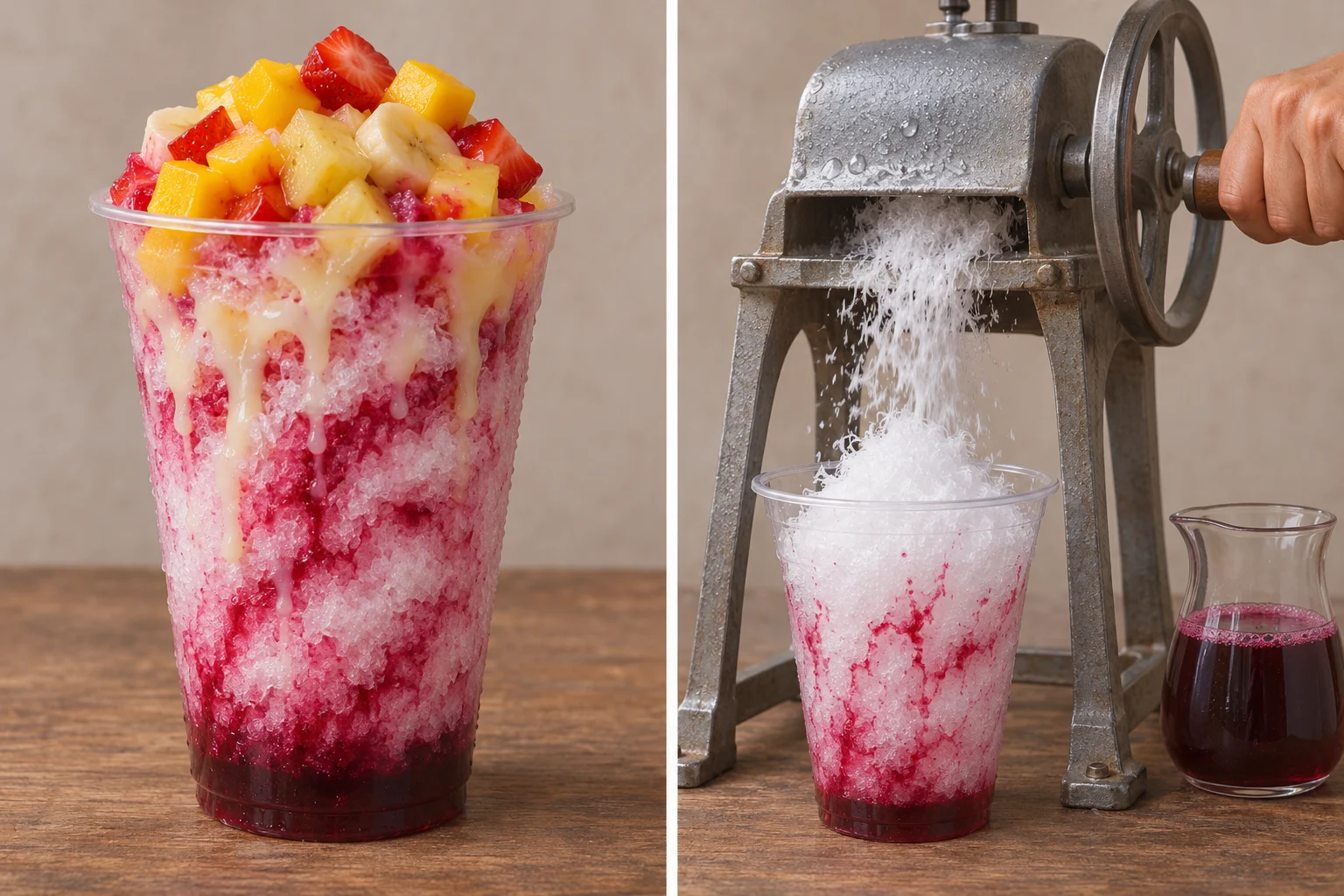
Filling a tall glass about halfway with crushed ice makes a cold base that is hard to achieve on a plate of fruit. In the home-cook version from My Colombian Cocina, syrup such as grenadine and cream are poured over this ice. Separately diced pineapple, mango, banana and strawberry are then placed on top, heaped up to the rim of the glass. The finish is more cream, sweetened condensed milk and a sweet blackberry sauce. The cut fruit is not mixed in but set on top of the already colored ice.
The syrup first runs into the gaps between the pieces of ice and spreads its color, then collects at the bottom as the ice melts. Some of the condensed milk added last stays on the surface of the fruit, so the milk’s sweetness reaches the mouth together with the tartness of the fruit. Some shops also coat the inside of the cup with condensed milk first, leaving sweetness along the rim. Besides the kind of fruit, whether the syrup goes onto the ice first or onto the fruit last changes the taste of the part that reaches the mouth.
A shallow dip of the spoon brings up mostly fruit, while a deeper dip brings up ice that has taken on the syrup as well. Compared with mixing everything together from the start, this arrangement lets the eater scoop the upper and lower parts separately. As time passes, the melted ice dilutes the syrup. The My Colombian Cocina recipe is served with both a spoon and a straw. After eating the chopped fruit, you can drink the cold liquid at the bottom without changing vessels.
In Cali, lulada (lulada) is a similarly cold fruit preparation, made by combining crushed lulo with lemon juice, panela or sugar, and ice. Whereas lulada is a drink in which lulo is mixed into the juice, in cholado the ice goes in first and fruit of different kinds and sizes is layered on top, so that it can also be eaten with a spoon. In Cali both are named as local specialties, and shops in Queens also list them as separate items.
A Fusagasugá cup built on the weight of the fruit
In Fusagasugá, southwest of Bogotá, the owner of the fruit shop Cholados Arite has kept a record of the formula for each cup. In an example for a 12-ounce container included in a 2017 study by the Universidad de Cundinamarca, 66 g of crushed ice is combined with 16 g of flavored liquid, along with 26 g of passion fruit, 34 g of banana, 46 g of pineapple and 48 g of guanábana. These four fruits alone come to 154 g, so the fruit outweighs the ice. The ice supplies the chill and the base, and the fruit can serve as decoration too, but at this shop it is the heart of the cup’s substance.
At this shop the banana is cut into rounds and mixed with milk cream, and small pieces of pineapple are added. The guanábana pulp is taken out and blended, given body, and then layered on. Compared with the home-cook version, which cuts all the fruit into dice of the same size, this shows a method in which the shape changes to suit each fruit. Rounds of banana and pineapple keep a recognizable shape when bitten, while the blended guanábana coats the surrounding fruit. Pineapple sauce and blackberry sauce are added as well, so the pineapple is used in the same cup both as fruit and as sauce.
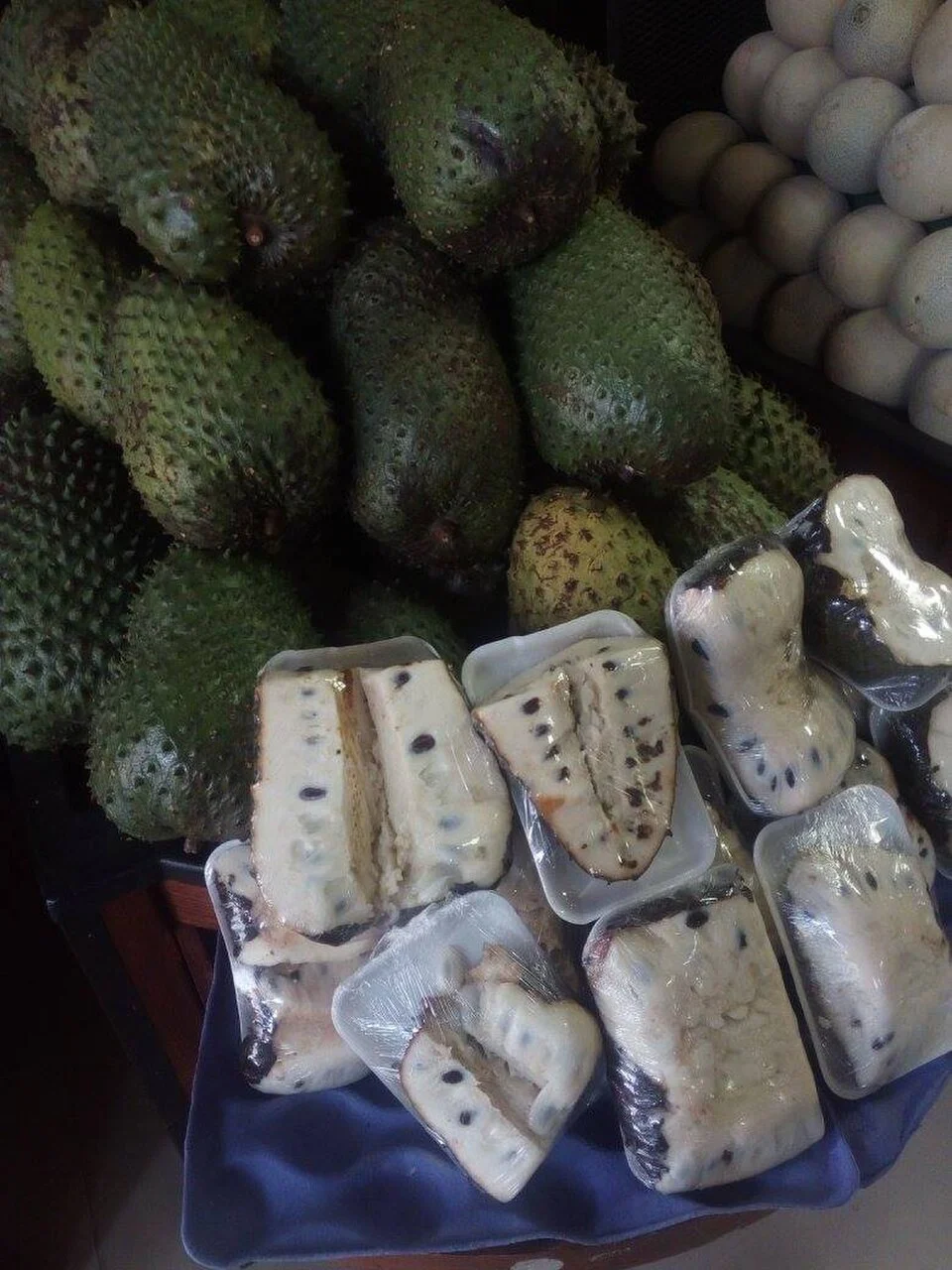
Comparing the shop’s 10-ounce and 12-ounce containers, the passion fruit and banana each double, and the ice rises from 56 g to 66 g. The cream and sweetened condensed milk in the table, by contrast, stay the same.
Even as the container gets larger, the amount covered with milk is kept, and the part to be eaten is widened by adding fruit and other ingredients. These two ratios correspond to the containers and servings at Cholados Arite; they are not standard formulas for Jamundí or Cali.
The finish in this example is sweetened condensed milk and Milo, a malted-drink powder. If the customer wishes, ice cream is added too. This choice adds a smooth, cold layer containing milk fat to the texture of the shaved ice. Set beside the fruit combinations of Valle del Cauca, the Fusagasugá example shows that, besides reproducing the locally known tartness of lulo and lemon as it is, there is another way to build a cup: using passion fruit and guanábana to construct aroma and body.
From ice on a wooden stick to a cup holding three fruits
In the account handed down by the Bonilla family of Jamundí, the beginning was not a cup but ice on a wooden stick. Rosina is said to have pressed shaved ice into small molds and sold it with lemon and sweet syrup. Her son Héctor Samuel Bonilla, who had helped from childhood, later changed it into a form eaten together with fruit. What the Universidad del Valle recorded in a 2015 study was a family account in which Héctor’s son Orlando looked back on his father’s work.
The accounts of Jamundí’s early cups mention three ingredients: pineapple, lulo and lemon. Small pieces of pineapple have fibers you notice when you bite, lulo is a tart-fleshed fruit, and lemon serves as juice that flavors even the ice. In later Cali, green apple, grapes, papaya and other fruits came to be included too, widening not only the number of fruits but also the firmness and aroma of the fruit layered on the ice.
"Las tres niñas," told of as Héctor’s version, contained pineapple, lulo and lemon and was sold in a glass cup. Moving it into a vessel made it possible to serve, together with finely shaved ice, the fruit and juice that a stick alone could not hold. The history section of the Spanish-language Wikipedia also describes a form with red syrup served in a paper cone. Three forms are thus handed down: taken out of the mold and held in the hand, heaped in a glass cup, and handed over in a paper container. The glass-cup version is a record of the fruit and juice being served together with the ice.
Early cholado is also said to have had the name "mataguayabo." In Colombian Spanish, guayabo can mean a hangover, and the name is tied to the local telling that eating something cold and tart refreshes you. In the local newspaper El País, which reported on an event held in Jamundí, sellers distinguish between the old form with pineapple, lemon and lulo and the present form with plenty of fruit. The name conveys the memory of the occasions on which it was eaten.
Some articles introducing Jamundí’s origins give a specific year of founding. However, what is meant changes depending on where one places the "beginning": the ice a mother sold with a stick, the cup in which her son combined three fruits, or today’s form with red syrup and condensed milk. In the Cali municipal economic development office’s introduction of sellers, the Bonilla, Carabalí and other families are said to have moved to Cali at the end of the 1980s and begun selling a version with a wider variety of fruit.
The course by which more families came to trade in Cali and the course by which fruit was added to ice in Jamundí are records from different periods. In the Bonilla family’s account, the history of one family runs from a child learning from a parent the work of handing over ice on a stick to choosing a vessel that holds fruit.
Carrying on a family trade in parks and sports grounds
Today in Jamundí, sellers gather at a park named after cholado. In a 2022 interview, the seller Murillo said that on 20 July a occasion was set up to teach children how to make it. A festival on the same day was also announced in the local newspaper as taking place in the park. Here, people who buy and eat and children learning the order in which syrup and fruit are layered on ice gathered in one park.
One of the places in Cali where cholado stalls cluster is the area around the sports facility known as Canchas Panamericanas. Colombia’s public radio, Radio Nacional de Colombia, reports that sports enthusiasts who pass through regularly spread the stalls’ reputation. At events, makers from around the city gather and compete with their ideas, and differences in combinations of fruit and syrup become visible. A trade that people coming to the sports grounds return to again and again, and the pleasure of choosing a cup to suit a festival, overlap in the same place.
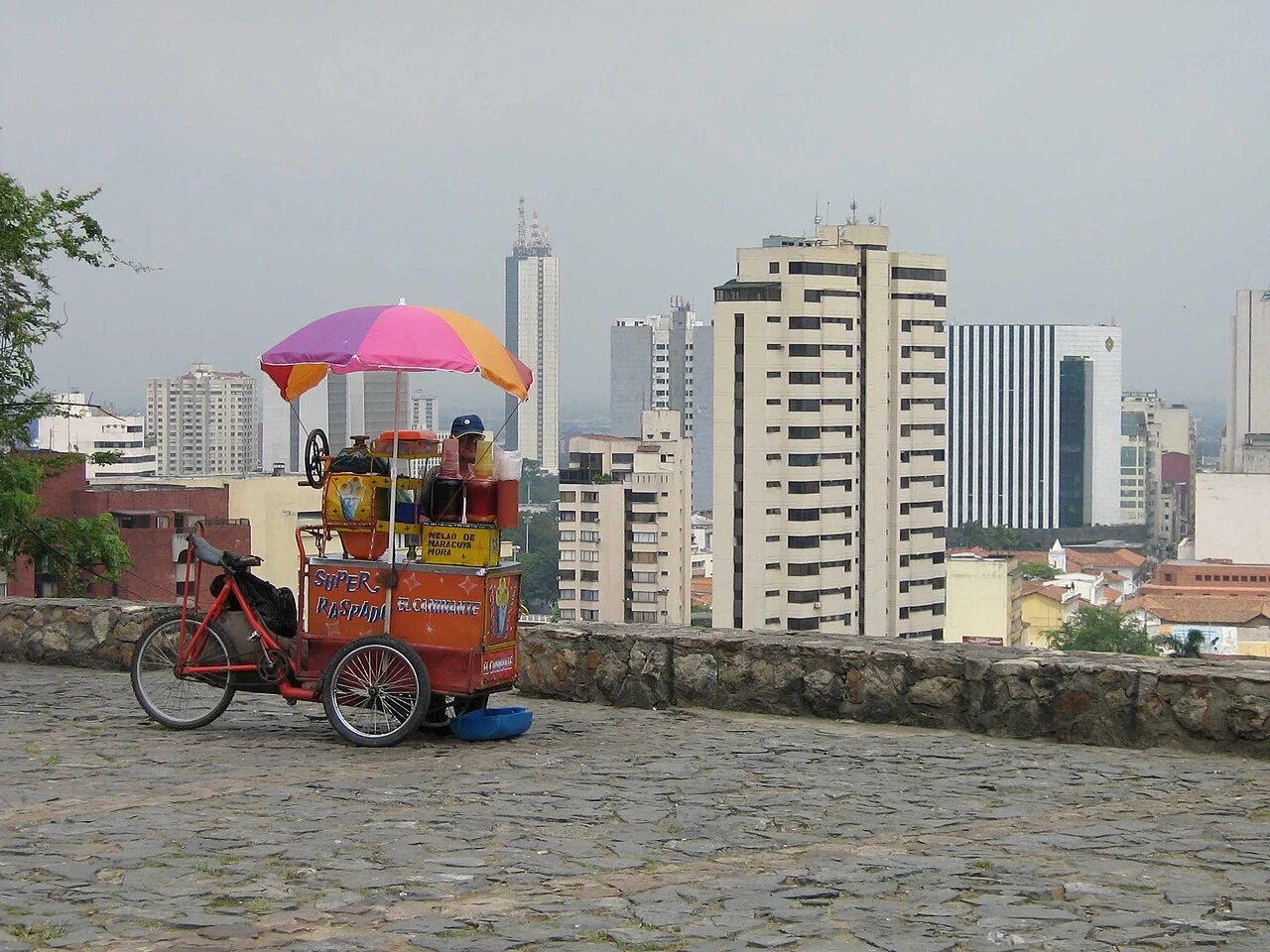
In the family of the Cali seller Nasuri Velasco, her grandfather Pedro Raúl Velasco Montero began selling the cholado he had learned in Jamundí, and the family later moved to Cali. Velasco told Radio Nacional that her father and uncles each opened a shop and worked out different finishes for each. She herself studied industrial design with her sales income and continued to work at the shop afterward. This family’s move is a concrete example of a method learned in Jamundí being brought to Cali and turning into a product particular to each shop.
At La Factoría park in Palmira, northeast of Cali, a Universidad del Valle study covering 2014 to 2015 was carried out. The study targeted ten cholado sellers in the park and recorded cases of people who had inherited a family business as well as cases of people who had started selling a few years earlier with their own funds or borrowed money. In the work of selling cholado there were both a path inherited from relatives and a path of starting anew as a small trade in the park. Reading this park’s example together with the Velasco family of Cali shows that there was more than one route by which shops multiplied in the region.
Serving a Cali-style cup in Queens
There are examples of shops in the United States as well. El Palacio de los Cholados in Jackson Heights, in the New York City borough of Queens, describes as "Cali-style" a form that combines shaved ice with chopped fruit, fruit syrup and sweetened condensed milk, served with a thin wafer. Toppings include coconut and cheese, and the shop also offers separately a lulada made with lulo and a green mango menu. Even among the items that use ice and fruit, cholado keeps its structure of ice, fruit, syrup and condensed milk heaped in one vessel.
In the same neighborhood in 2012, the local news outlet DNAinfo covered cholados sold at several shops along Roosevelt Avenue. The syrup flavors it described included passion fruit, blackberry and strawberry, so choices began at the stage of adding fruit aroma to the ice. At that point, several shops on the same street offered cholado with a choice of fruit syrups. Just as the family histories of Jamundí and Cali show movement from town to town, the Queens record shows that several shops have also handled this chilled dessert outside Colombia.
Glossary
- Lulo (lulo)
- A tart fruit used in Colombia and elsewhere. It appears in the early examples handed down in Jamundí.
- Guanábana (guanábana)
- Soursop. In the Fusagasugá example, the flesh is blended into a thick layer.
- Mataguayabo (mataguayabo)
- A nickname handed down for the early ice dessert, containing guayabo, which means a hangover.
- Choladero (choladero)
- A person who makes and sells cholado.


