


SweetloreEncyclopedia of World Sweets (834)

Gizzada
Gizzada
A Jamaican tart with finger-pinched pleats, filled with sweetly simmered coconut
Tarts / Jamaica

Gizzada is a Jamaican sweet in which grated coconut is simmered in sugar, filled into a small tart shell and baked. The shallow, cup-like shell has pleats pinched all the way around with the fingers, and brown-sugar-coated coconut shows in the center. When you bite into the edge, the pastry breaks crisply, and inside is a filling of coconut with a slight chew. The pinched-up rim holds the sweet filling, so the textures of crust and coconut fiber layer together in a single bite. Some versions are scented with nutmeg, and Jamaican tourism guides also list the sweet under the alternative name Pinch Me Round, which comes from the hand motion of pinching the edge of the dough.
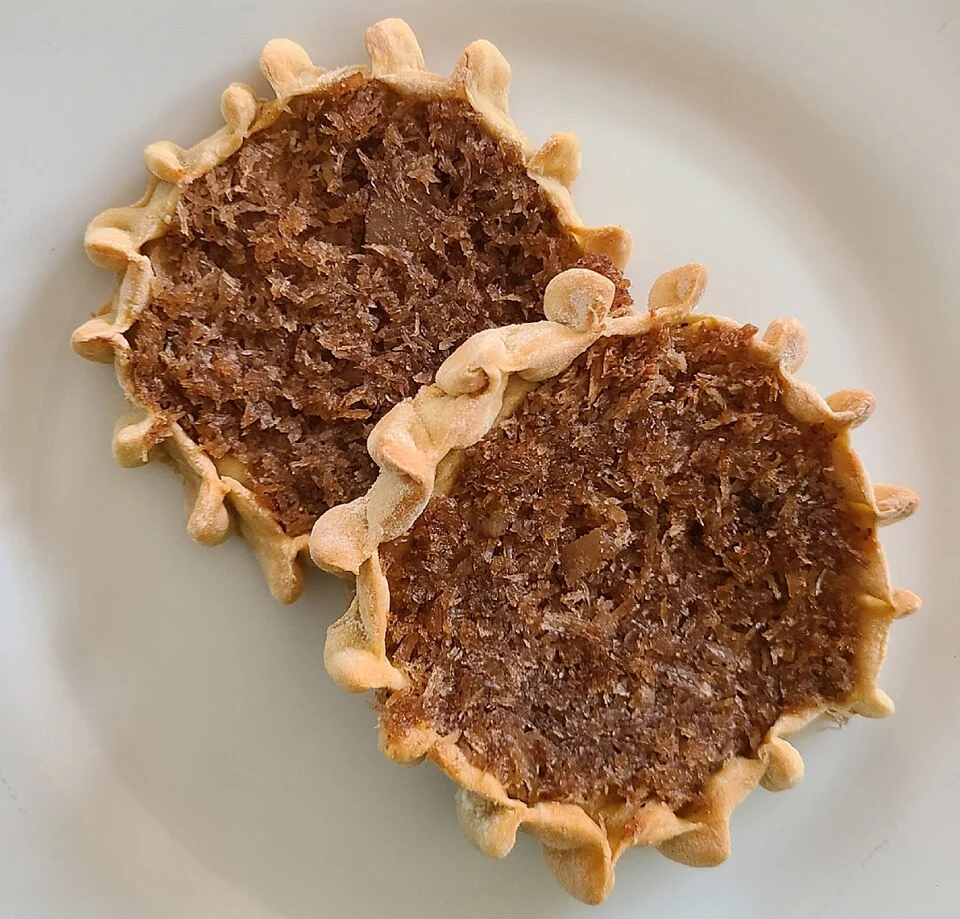
Pinched by Hand, a Round of Dough Becomes a Shallow Cup
In the method of the Jamaican food company Grace Foods, pie flour is combined with sugar and salt, and cold margarine and shortening are broken into small pieces and rubbed in with the fingers. When the mixture resembles fine breadcrumbs, cold water is added. The dough is not kneaded any further; once it holds together, it is rested in the refrigerator for 15 to 18 minutes.
Because cold fat is worked into the flour and water is added afterward, there is no need to whip milk or eggs. The dough is brought together until it can be rolled thin on a floured surface, and the edge is raised only after the resting.
The rolled dough is cut into circles about 9 to 10 cm in diameter. Press the thumb of one hand against the edge of the dough and pinch from the outside with the thumb and index finger of the other hand; the dough gathers at that spot and the rim lifts. Repeating the motion around the circle makes a shallow cup, low in the center, with fine pleats along the rim.
A freshly cut circle of dough is a flat disc. The height that holds the filling is made with the fingers, so the pinch marks remain on the sides even after baking has set the dough.
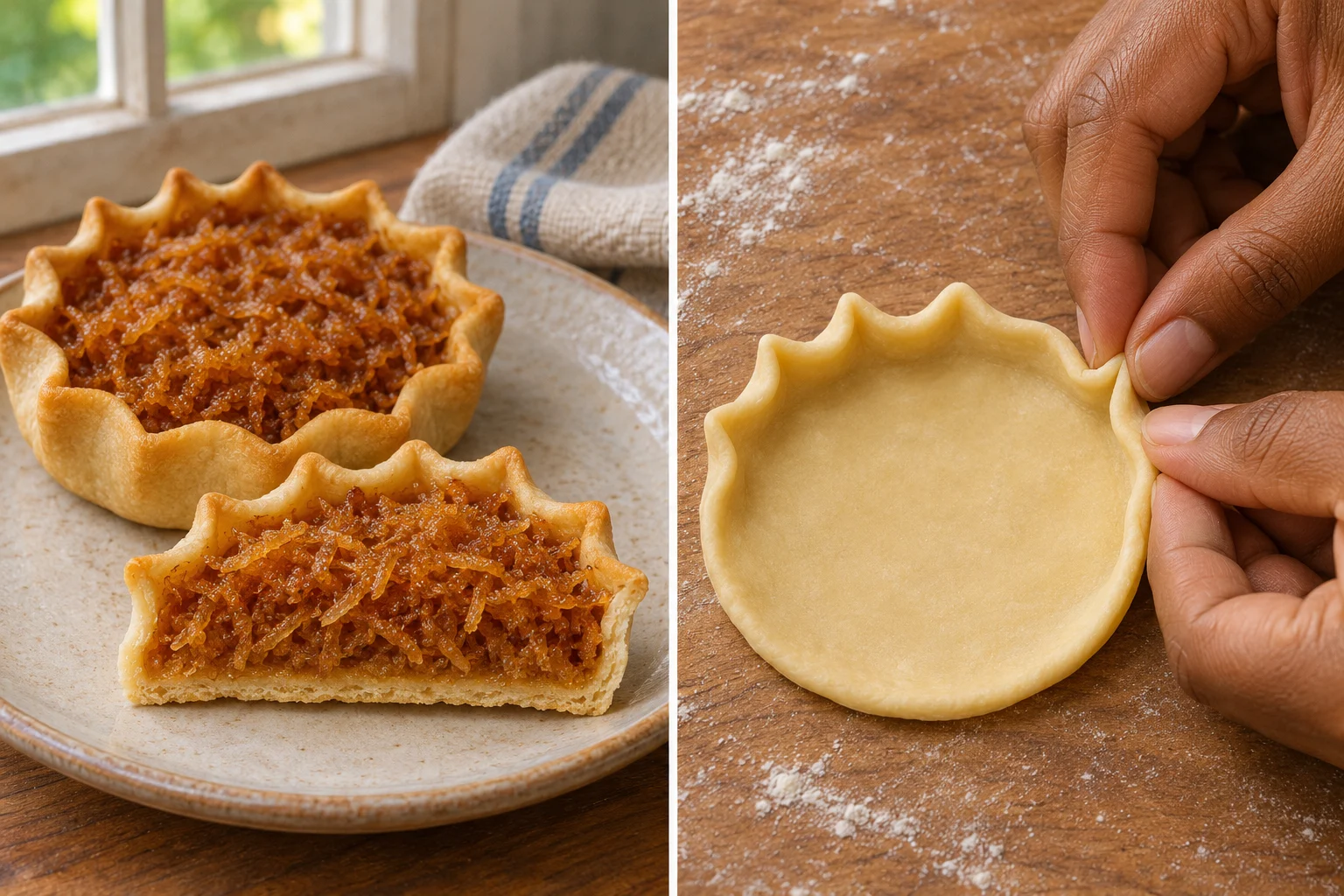
In another company’s formula, the dough is divided into twelve pieces, rolled round and set in the cups of a muffin tin before the edge is pinched. When the tarts are made directly on a baking sheet, the edge gathered with the fingers becomes the rising wall of the small cup. In a tin, the cup supports the outside of the dough, but the upper rim is pleated in the same way.
Whether or not a tin is used, how much filling goes in, and how far, depends on how high the edge of the circle has been raised. Some recipes also advise against overfilling.
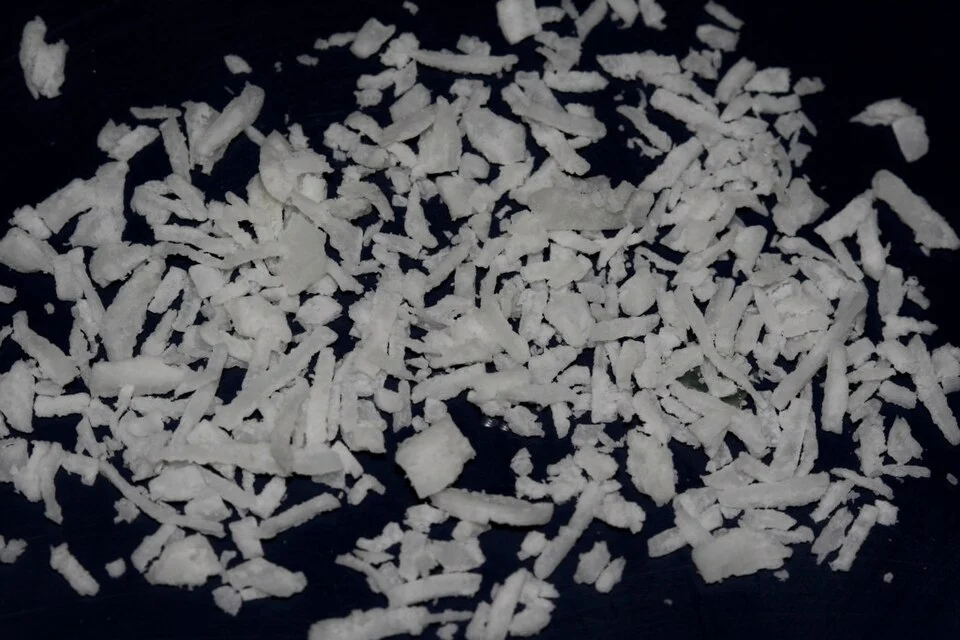
A Pot for the Coconut, an Oven for the Dough
In the recipe by Enid Donaldson-Mignotte, taken from The Real Taste of Jamaica and published by the Jamaican daily newspaper The Gleaner, the flesh of one large coconut is grated and combined with light brown sugar, grated nutmeg and a little water. It is simmered over low heat for about 20 minutes, and butter is then added.
Grating the flesh leaves fibers that can be felt when chewed, while the sugar syrup spreads over the fine surfaces. Because the sweetness and spice are combined in the pot before the filling goes into the dough, the scented coconut can be scooped up in clumps and filled into the shells. This differs from a method in which sugar is sprinkled into each shell one at a time.
The same recipe divides the dough into eight pieces, rolls them by hand into balls, and then rolls each with a rolling pin into a circle of about 7.6 cm. The pinched shells are half-baked on a baking sheet first, then filled with the coconut and baked for another 15 to 20 minutes.
While the empty shell is heated first, no sweet coconut touches the base. Once the shape is set, the cooked coconut is filled in and the tarts return to the oven. The first stage is the time in which the shell is formed; in the second, heat reaches the exposed coconut and the shell at the same time.
In Grace Foods’ baking-sheet method, the coconut filling is put into the shaped dough, which is then baked for 15 to 20 minutes in an oven noted as about 205°C.
In the same company’s muffin-tin version, dried coconut, brown sugar, coconut milk, vanilla, cinnamon and nutmeg are mixed and simmered for 5 to 7 minutes until thickened. After filling, the tarts are baked at about 190°C for 20 to 25 minutes, cooled in the tin for 10 minutes, and then moved to a rack. Of the two examples in which the dough is not blind-baked, the latter explains that excess moisture is cooked out of the filling before it goes in, and that the dough and filling firm up as they cool.
Donaldson-Mignotte’s method grates the fresh coconut and simmers it with water and sugar. The dried-coconut version rehydrates the coconut and also uses coconut milk as part of the sweet cooking liquid. In both, the coconut fibers remain in the filling, so the texture differs from that of a smooth cream made with milk alone.
Bitten together with the shell, the crisply broken edge gives way to coconut coated in brown sugar. Even when the exposed coconut takes on color in the oven, the inside is still packed with fibers sweetened by simmering.
The rest before filling also differs between recipes. Donaldson-Mignotte gathers the kneaded dough into one piece, wraps it and rests it in the refrigerator for 30 minutes. Whittaker grates chilled plant-based butter and rubs it into the flour, adds cold water to bring the dough together, and chills it for one hour.
While it is still cold, the dough is rolled out and cut into rounds, and in Whittaker’s method the scraps are rerolled and used. Because there is both a method of cutting small circles from one large sheet and a method of rolling each piece out individually, there is more than one way to form the dough before pinching.
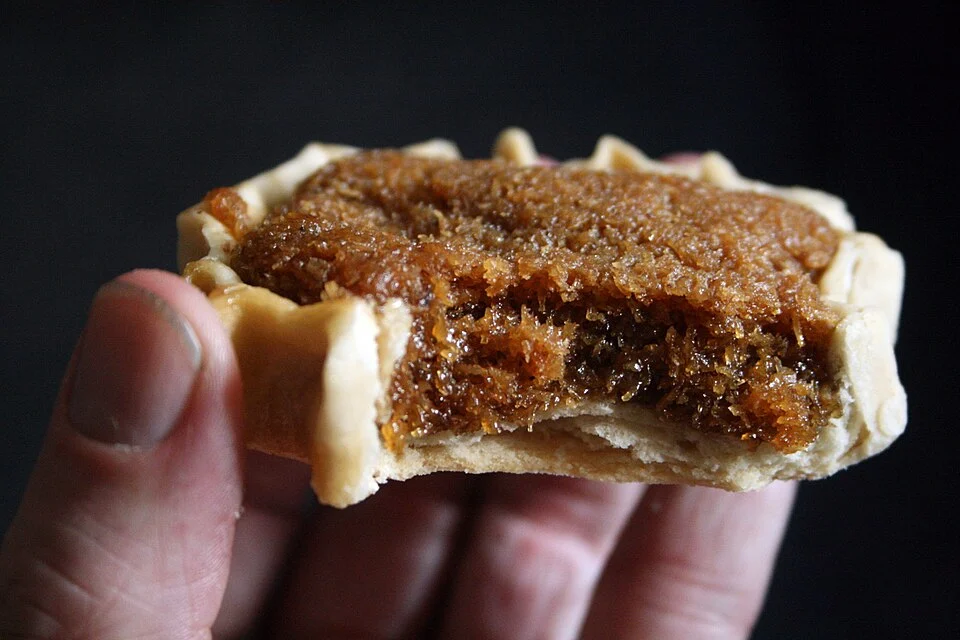
A Family Taste Passed Down, Baked to a Different Recipe
In an interview with the Jewish Food Society, which documents food culture, Christina Whittaker recalls that when she went to the grocery store with her grandmother Gloria, her grandmother would buy her gizzadas. The recipe accompanies an account of her family’s life, which runs from Old Harbour Bay in Jamaica to the Bronx in New York and Davie in Florida.
Whittaker herself simmers chopped dates with honey until soft, then mixes in unsweetened dried coconut, ginger, allspice, cinnamon and nutmeg and cooks the mixture until thick. It is a record of how, in her present-day kitchen, she makes with her own formula the sweet her grandmother used to buy for her.
In this home version, thinly rolled rounds of dough are pleated, the bases are pricked with a fork, and the shells are blind-baked. Once they have taken on a pale color, the filling is spread to the rim and the tarts go back into the oven. If the filling colors quickly, the recipe says to cover it with foil.
Even when honey or dates are combined with the coconut, the sugar-laden top and the thin shell do not necessarily bake at the same rate. The procedure bakes the shell first and adjusts the browning of the surface during the final bake. Heating the shell before the coconut goes in is also a point shared with the method in Jamaican cookbooks.
Among the spices in this interview, nutmeg is shared with the recipe published in The Gleaner. In Whittaker’s formula, chopped dates are mashed and simmered with honey instead of sugar, so part of the sweetness comes from a fruit-pulp ingredient. Ginger and allspice are added as well as nutmeg, so even for the same coconut tart, the sweetness and aroma come out differently.
Read as a modern family example based on Jamaican methods, it shares the pleated shell, the simmered coconut and the blind-baking step with the older recipes, and differs in the choice of sweetening ingredients.
The Name Gizzada in the Record
Frederic G. Cassidy, who documented Jamaican English, describes a tart of grated coconut, brown sugar and nutmeg in Jamaica Talk, first published in 1961, and records Caroline Sullivan’s spelling as gisada. Sullivan’s The Jamaica Cookery Book was published in Kingston in 1893.
Cassidy’s entry shows that an old cookbook used a spelling slightly different from the now-common gizzada. Even when the point about spelling is combined with the tart’s steps as they can be read today, the details of the formula in the 1893 book cannot be known.
The National Library of Jamaica, in its material on food culture, counts gizzada among the dishes of Spanish origin. The West India Committee’s cookery column, on the other hand, reports a tradition linking it to Jews who moved from Portugal. The linguist David L. Gold examines both the Spanish and the Portuguese words for a stew, and leaves unsettled which is the direct source of the borrowing and who brought it.
The method of simmering the coconut in a pot overlaps with the sound of words related to simmering. The route by which the word traveled and the history of how the tart came to be made each need their own records.
A tourism guide for Sintra, Portugal, presents the local queijada as a pastry baked with a thin shell of flour and salt, filled with fresh cheese, sugar, egg yolks, flour and cinnamon. The form, in which a sweet filling is held in a small shell and baked in the oven, overlaps with that of gizzada.
On the other hand, the base of the filling in the Sintra example is a dairy cheese, whereas in the Jamaican newspaper recipe it is sweetened, simmered coconut. When looking for and comparing pastries of the same form, what the filling is made from and how it was heated before baking can serve as clues, in addition to the shape of the shell.
Clinton Hutton, who documented the ceremonial tables of Jamaica, distinguishes grater cake, in which grated coconut is boiled with white sugar and cooled, from drops, in which the coconut is cut into large pieces. He describes the gizzada filling as grated coconut simmered with sugar and finished softer than grater cake, then placed in a small shell.
In grater cake, the cooled sugar and coconut hold the shape of the sweet. Gizzada has a separately baked shell, so even though the same grated coconut is used, the inside can remain a soft filling.
The Jamaica Cultural Development Commission lists gizzada in the traditional dishes category of its culinary arts entry requirements. The same list names other sweets made from the same fruit, including grater cake, coconut drops and toto, as separate items.
The Gleaner recipe for drops simmers diced coconut with sugar and ginger and shapes it by dropping spoonfuls onto a baking sheet. In the gizzada method, grated coconut is sweetened, filled into a pleated shell and baked. The chew of the coconut therefore differs not only by whether it is diced or grated, but also by whether it is bound with set sugar or supported by a separately prepared shell.
The competition rules also include an item in which entrants submit their own standardized recipe for a traditional dish, written so that the yield is clear. Donaldson-Mignotte’s account states that although the formula for gizzada differs from maker to maker, the method has points in common.
When a competition records a single formula, the amount of coconut and the number of finished pieces are stated. When learning shape and heat at home, the action of pinching the edge by hand and raising it to a height at which the filling will not run conveys the method just as numbers do.
Glossary
- Pinch Me Round
- an alternative name for gizzada, from the way the edge of the cut dough circle is pinched up all the way around.
- Blind baking
- baking the dough before the filling goes in. For gizzada, some recipes partially bake the dough shaped into a shallow cup, fill it with the coconut and bake it again.
- Shortening
- a solid fat mixed into the pastry dough. In Grace Foods’ baking-sheet recipe, it is rubbed into the flour together with cold margarine.


